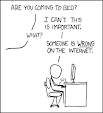
His hot takes on another blog were a rare opportunity for two sides in the comments to agree that he was wrong. I know the drill about "someone is wrong on the Internet," but this sort of thing is referenced now and then. So, let's cover it.
GM sometimes has some interesting comments. Other times, including supporting 14A, sec. 3 disqualification (that had NO realistic chance of going anywhere) over impeachment, he is off base.
He is here regarding televising things.
Does he think the Watergate hearings being televised was problematic, too? Television has long been denounced (back to the "wasteland" days). It is a mixed bag.
Does television lead to "verbal slugfests" in committee hearings? Yes. There is a chicken/egg quality here. Person-based politics is generally the norm today for a variety of reasons.
Most of them, however, get quite limited coverage. Some hearings are available at most online; the three C-SPAN channels only provide so much.
The limits of the information collection value of hearings have often been cited. They are cited as "kabuki theater." There is some exaggeration to such complaints. Plus, the critics are rarely likely to watch many of these hearings.
But television doesn't prevent alternatives, as seen by old-time television hearings back in the day, when the methods used were different than today. For instance, television doesn't prohibit the usage of counsel to be in charge of questioning (or use that much more).
How much more "productive and informative" would daily White House briefings be if they were not televised? The usual suspects would still find ways to keep track, including quoting key bits.
White House press briefings were established in the first place partially to game the system in support of the White House. It wasn't just for a neutral respect of information release.
Meanwhile, the public would not have an easy way to access them. Either way, like the Internet, video is here. We need to use them in the best way possible.
Put another way, has greater transparency improved Congress’s work? I don’t think so. Nobody thinks that Congress is better now than it was in, say, 1980.
Congress not being better now can be explained in various ways. C-SPAN is fairly far down there as a reason. C-SPAN also isn't just about congressional coverage. It has various other benefits that could help balance the books, even if it is "bad for democracy" in some respects regarding televising governmental proceedings.
In that sense, I support the Supreme Court’s exclusion of cameras from argument. (Personally, I don’t like the live streaming of arguments, but it’s not terrible.)
Lots of courts, here and abroad, provide televised coverage. How television coverage there would change things for the worse is patently unclear.
The "playing to the camera" stuff present in Congress also does not have a clear overlap in the courts. Some of that was already present anyhow.
(Supreme Court oral arguments used to be more of a public event, in the early 19th Century, than they are today.)
The streaming of oral arguments being bad warrants more detail. A "hot bench" was present for years, with Scalia basically being a pioneer. Livestreaming has not changed the equation much at all there.
Meanwhile, it gives a chance for legal analysts to comment on the proceedings. This provides the public with more information. How is this bad?
The lack of televised hearings denies the public (and legal minds in particular) a chance to see the Supreme Court at work. This helps to provide an artificial view of the Court.
The press is now a gatekeeper, and it only provides a limited view of things. For instance, there was a non-argument public proceeding on Friday.
What happened? Probably swearing in people. But where has the press noted this? Thus, the Court operates in the shadows. Does GM support that, too?
Fire burns. Sometimes, it can burn your fingers. The aim here should be to improve televised coverage, not provide quixotic appeals to less transparency.
ETA: This follow-up is also unconvincing.
19th-century legislators gave speeches aimed at their constituents. The empty chamber concept is not novel.
Some justices will grandstand. Doesn't change that televised hearings inform the public. Some bitter will come with the sweet. What else is new?
No comments:
Post a Comment
Thanks for your .02!