About Me

My photo
This blog is the work of an educated civilian, not of an expert in the fields discussed.
Showing posts with label Supreme Court. Show all posts

Monday, October 05, 2026

SCOTUS Begins Once More

The Supreme Court has a "long conference" at the end of the term to dispose of a bunch of pending cases left over from the summer. They welcomed the beginning of the new 2026 term with a long Order List,  disposing of most of them.

(The start of the term changed over time.) 

Some conservatives and Kagan, including Alito (who didn't take part in the first argument of the term), didn't take part in various decisions. Kagan and Jackson are the only justices who consistently (referencing the voluntary ethics rules) say why. 

If you skim the Order List, you will notice some odds and ends. Kavanaugh, without saying why, would have granted cert. (argument) in one case. The case involves class actions. You have to go to the docket page since the Order List is just a screenshot without links, as would be the case on a more useful website.

The Supreme Court, since the 1990s, has a policy of blocking in forma pauperis appeals when it believes a person has overused the privilege. Jackson eventually decided not to go along when the person is incarcerated, and it was a noncriminal appeal. 

Sotomayor issued a statement. She was concerned about a judge whose criminal sanction of a juror led other jurors to feel they could not be totally open about their concerns. She explained it was procedurally not a good challenge. But, as she has done before (often involving criminal issues), she emphasized that it is a serious issue. 

Justice Alito is promoting a book. It is a collection of essays. The book's title promotes him as a supporter of originalism. His bona fides there are mixed, but the term is plastic enough that it likely works.

I commented on multiple posts on the website at the link. The conservative-leaning law professor is a tad too enthusiastic. One stupid bit involves him asserting that same-sex marriage cases had many concrete effects, while Roe v. Wade was more about women's position in society. 

As one person noted, there is nothing much more "concrete" than pregnancy. Likewise, it is not like same-sex marriage cases don't have ideological implications. Alito, for instance, has joined Thomas in alleging the cases somehow threaten the liberty of religious believers who disagree with the practice.

The Supreme Court and the courts should be something people keep in mind for the November elections. They, like Congress, are too pro-Trump.

Thursday, October 01, 2026

Two More Executions (Well, One)

I continue to agree with Justice Breyer (and Ginsburg and Stevens) that there are constitutional problems with executing people decades after the trial. 

No justice has agreed with them since. Thus, two more people were executed after thirty years, without any red flags being raised. 

Curtis Wilkie Beasley, 77, is scheduled for execution on Sept. 29 for the 1995 murder of a Polk County woman who was bludgeoned with a hammer in her home.

In 1998, a jury voted 10-2 to recommend Beasley die for the death of 62-year-old Carolyn Monfort of Dundee after he had been found guilty on charges of first-degree murder, robbery, and grand theft in February of that year.

It is becoming a standard practice. Florida executes old men for horrible crimes occurring decades ago. 

Other problems may exist (e.g., non-unanimous jury recommendation). The final appeals raise multiple claims. The time lag, however, stands out most. 

A major argument is that he is a decrepit old man who is not fit to be executed. I consider these types of executions a form of de facto euthanasia. 

Christa Pike, aged 50, is scheduled to be executed in Tennessee, USA, on September 30, 2026. She was convicted in 1996 of a 1995 murder committed when she was 18, barely out of a childhood in which she endured rape, sexual and physical violence, abuse, and neglect. The state failed to protect her as a child despite having knowledge of what she was facing. Her court-appointed lawyers then failed her at her trial, presenting little of the mitigating evidence of this abuse or its psychological consequences.

Tennessee last executed a woman in 1819. An execution of a woman is always atypical. The crime here was horrible.

Pike had accused Colleen of insulting her and trying to steal her boyfriend. Two other residents at the camp later testified that Pike had bragged about the murder before and after, and showed them a piece of Colleen's skull.

She did not act alone in the "torturing and murdering" of the teen. A co-defendant reportedly was the one truly into the Satanic rituals practiced during the crime. Her defense was also suspect, including failure to provide adequate testimony about her problems. 

A very troubled eighteen-year-old committed a heinous crime. She has been in prison for thirty years. Is that not enough punishment? Not according to Tennessee. She failed the death penalty lottery.

A coalition against sexual abuse submitted a striking amicus brief arguing that her past sexual trauma would lead to PTSD while she was being executed. She would effectively feel like she was being raped. 

The justices rejected all the final appeals without comment. I don't like that as a general rule. 

It is a tad worse here. Something worse happened the next day. The court of appeals (2-1) temporarily stayed the execution. The Supreme Court overturned the stay, with Sotomayor dissenting for the liberals.

Two appellate courts splitting on the issue shows room for debate. The Supreme Court's intervention allowed someone to die. The orders yesterday kept the status quo, though one allegation was glaring enough to warrant a response. 

I understand the concern that the court of appeals wrongly stopped things at the last minute. It has been thirty years, and now there is more delay.

I wasn't sure if it made the right call. New evidence might be present, but was it really enough? There was also a procedural debate over the claim. 

Once the court of appeals stayed the execution, the presumption favors the status quo. Lifting the stay would result in someone's death. (Or so it seemed.) The majority should have explained why reversal was warranted. 

The execution was also botched. Media witnesses explained, in brutal detail, how things went down. She was alive over an hour after the execution drugs were administered. I wonder about executions in other states. Were there more problems than apparent? 

They were left in the dark about what exactly happened, including whether she was still alive. 

"No prison officials were outside to tell the media what was happening as the first responders arrived. No time of death has been publicly provided."

A curtain was repeatedly drawn to hide what was going on in the execution chamber. Later, a court reported that the government provided medical attention. Anyway, I guess her concerns about the use of lethal injection weren't totally off base. 

It was not the first botched execution this year. The governor announced that officials will suspend the other execution planned this year while they investigate. 

Some people have denounced capital punishment as "barbarism" tonight. Often, it goes down without looking as horrible. But maybe that is how barbarism works. It seems okay, then they rub in how bad it is. 

==

Meanwhile, the Supreme Court prepared for the new term. A "long conference" examined a bunch of pending appeals, mostly to dispose of them.

Alito recused himself in a major climate dispute. There was some back-and-forth involved. 

Alito (more) and Roberts are the only active justices with individual stocks, which means Alito has to recuse more often. Maybe there is a better way?

Tuesday, September 29, 2026

Shadow Docket Time

SCOTUS is busy doing many things. 

But this is worthy of a stand-alone entry. Chris Geidner has the details. He also summarizes:

SCOTUS allows the Trump admin to restart third-country removals under a policy found by lower courts to violate federal law. The Democratic appointees dissent.

The deportations will be OK'ed at least through the next several months, with SCOTUS agreeing to hear the case in December.

Over the course of the second Trump administration, one study estimates that more than 25,000 people have been deported since 2025 using this process.

The liberals dissented from the granting of the stay. Without comment. The oral argument will be in December. The final opinion will be later. Why not continue the stay until then? 

The Supreme Court provides some questions for briefing, including a catch-all regarding any question the government deems appropriate. Steve Vladeck notes that he never saw that before. 

The removals include sending people to countries for which they have no previous connection. Someone from Latin America, for instance, can be sent to East Africa. The whole thing is simply horrible. 

They might want to call this an "emergency docket" case, but the order has no explanation. It merely provides instructions. It is a shadow docket decision. 

Friday, September 25, 2026

Non-Citizen on Voting Rolls Follies

I discussed a story about the rapidly decreasing number of supposed noncitizens on voting rolls. Voting rolls, not actually voting. 

Coincidentally, the Supreme Court handed down a related order. I updated the piece. The limited immediate reach makes the opinion less problematic (for now), but also makes it even less necessary for SCOTUS (as Jackson argues) to intervene. 

ETA: vs. the second case, where they said: "We meant it, morons." 

Saturday, September 19, 2026

Constitution Day

September 17 was Constitution Day and David Souter's Birthday. Meanwhile, Trump continues to be anti-constitutional, including regarding the Media. Happy Suffrage Day (comments).

Thursday, September 17, 2026

More Executions

Stacy Humphreys 

Georgia planned to execute Stacey Humphreys for a double robbery/homicide last December. 

The press (as discussed here) tried to obtain more information about the execution. Open access is important for due process and public education.  

A state court blocked the execution. He might be eligible pursuant to a state law protecting victims of abuse. Net result: the execution warrant ran out.

Jeffery Lee

Alabama planned to execute Jeffery Lee using nitrogen gas. A lower court, not blocked by the Supreme Court this time, held it was unconstitutionally risky. They used lethal injection.

The final appeal challenged Alabama's ability to switch methods. Lee's lawyers argue the state said "nitrogen gas," and they don't have the right to switch now. Lee offered the firing squad as a backup option (one is required) when challenging the nitrogen gas. 

Denied without comment. The liberals pick their spots. The back-and-forth nature of this execution provides some grounds to drop a statement or dissenting opinion. A statement would flag concerns, but not enough to warrant granting a stay of execution and/or a cert. grant. 

Lee was convicted of a double homicide. The jury (7-5) voted to apply a life sentence without parole. The judge overruled it and applied the death penalty.

If we set twenty years as "too long," the murders took place in 2003. OTOH, the Supreme Court has never accepted the "taking too long" approach.  

Here's a good summary. 

LeJames Norman

Norman and a second person (who is scheduled to die later this month) murdered three people in an attempted robbery twenty years ago. 

They were 19 and 20. The constitutional line has been set at 18. Age is still a mitigating factor. 

See also a citation of "chaotic, impoverished, and violent childhoods." Norman also showed remorse and testified against his co-defendant.* 

The final appeal argued that the prosecutor corruptly baited and switched. They used Norman to convict his co-defendant and then badmouthed him, sometimes with lies, during his own trial.

SCOTUS denied it without comment, which is normal enough, though it did take until late afternoon on the day of the execution. He was then executed. 

I'm sure the lawyers raised various other claims over the years. Overall, the best reason not to execute is that there are enough mitigating factors.

Two people under 21 committed a horrible crime and have been in prison longer than they were alive. Execution does not improve the public welfare.

==

* I will update this entry regarding that execution.

ETA: His final appeal alleged incompetent counsel (from a dentist who did lawyering on the side) and racial discrimination in jury selection. 

Denied on execution day without comment. My general rule is that I support some statement in these final appeals, even if the argument is weak.

The evidence appears clear. I would oppose his execution because of the mitigation of youth, maybe his childhood, and on basic principles. 

Wednesday, September 16, 2026

Mail-In Ballots

Not very verbose, but the Supreme Court (with feeling) held up Trump's attempt to screw over mail-in voting. Kavanaugh concurred while noting the rule change might be okay long-term. Alito (with Thomas) dissented. Vladeck with more. 

The Administration can still cause problems, including pressuring state officials by threatening them with prosecution. 

Thursday, September 10, 2026

Florida Executes Daniel Owen Conahan

Daniel Owen Conahan kidnapped, raped, and murdered someone thirty years ago. He might have murdered someone else. I understand sentencing him to death. 

Justice Breyer explained why it is wrong to execute him now. It was a dissenting opinion, though I wish someone on the current Court took up the cause. Conahan's final appeal argued that he deserves additional DNA testing. It was probably correctly denied. 

It might be good policy to supply the testing. What is the harm? Ultimately, the death penalty is wrong, especially if it is held in abeyance for three decades. More executions to come.

Tuesday, September 08, 2026

SCOTUS Watch: Post Holiday Edition

James Wilson is an interesting guy. I liked the author's book on abolishing the Electoral College. I did not like this one. Charles Pinckney is also interesting. An older book on that guy is almost a monograph or something (it's small). Decent account. 

The Supreme Court didn't block a New York law denying religious exemptions to child vaccine requirements. Alito and Gorsuch, without comment, dissented. Good.

Kavanaugh, by himself, rejected a Republican redistricting lawsuit request. [The Court later also did so.] Limited bit of sanity.

Friday, September 04, 2026

SCOTUS Watch

Trump Ballroom 

I wrote about Monday's order allowing Trump to continue to break the law. I apologize; that is much too vague. It is about the ballroom. 

Roberts and the liberals dissented. Yes. He has done a lot wrong. A few moments don't take him off the hook. But credit where credit is due, and all that.

Court Expansion

House Republicans, who plan to mostly hide out until November, had a message vote against court expansion. More specifically, on an amendment setting the number of justices at nine. 

Two people voted differently than their party, and one is an asterisk. The Republican recently labeled himself an "independent" while still voting with Republicans. 

This sounds like another token way to pretend he is not a Trump bootlicker or something. I don't know why the Democrat voted that way. I won't check. I assume he represents a reddish district. 

It's stupid either way. If you don't like court expansion, which is far from being a thing (one key Democrat said in an interview he is now open to it; okay), don't vote for it. 

The number of justices has changed over time, between 5 and 10 justices. Federalists added a court of appeals, which would have ended circuit riding. The next vacancy would not be filled, resulting in five justices. The law was changed before that happened. 

It is a bad idea to set minutiae in stone in the Constitution. We should allow flexibility. 

I am wary of the 25th Amendment. The concern there is that it was so sensitive; the process for removing a president should be clearly in place. Again, I question if even that was a good idea. It is just too specific. 

Court expansion talk is itself partially a message. If court expansion is even open to the realm of possibility, a lot of other things should be possible. 

The link flags that a key Democrat has now made supportive noises. That's notable. But this seems more a reaction to DSA support of the idea. 

Republicans want to tar Democrats as akin to the most doctrinaire DSA type while the House Speaker pretends not to know most of what Trump is doing. 

Order List

The last scheduled summer order list had the usual housekeeping measures, involving pending cases, rehearings denied, and attorney discipline. Barrett didn't take part (without saying why) in one case. 

The most notable thing, apparently, is what they did not decide. There is a pending case involving New York health workers who were not satisfied with the vaccine exemption process. 

Justices Gorsuch (who wrote one or more opinions on it), Alito, and Thomas have been concerned about this issue. The other conservatives avoided it. 

Election Case

The Supreme Court, with only Jackson briefly dissenting (with no heat), granted a stay in an election case. Rick Hasen briefly summarizes. 

Steve Vladeck on Bluesky notes Jackson has the better argument, but that the case isn't too important. That would help explain why Sotomayor and Kagan didn't join. Since Republicans are involved, some knee-jerk replies figured the fix was in.

It is good that the justices deigned to explain themselves. They are doing that more lately.

ETA: Steve Vladeck's Monday Substack informs me that the Supreme Court also released the schedule for December oral arguments. Two cases: assault weapons and another trans case.  

Wednesday, September 02, 2026

Five Years Later ...

Five years ago, Dobbs was foreshadowed when the Supreme Court (short unsigned opinion) left in place a six-week abortion ban. Roberts and the liberals, in varying degrees, dissented. 

Saturday, August 29, 2026

SCOTUS Reform

Lyle Denniston, the 95-year-old former SCOTUSBlog reporter, conveniently lists possible Supreme Court reforms. They are not comprehensive. 

(He frames it as "changing" the Court.) 

For instance, they can reform qualified immunity or address national injunctions. If you wish to count them as court reforms. But he does generally cover the gambit.

The No King's Act or an amendment doing that also can be tossed in. Ditto something about abortion or some other major "mistake" of the current Supreme Court. These are basically Court reforms. 

We can expand the Court and/or (the first shouldn't foreclose the second) have term limits. Term limits, realistically, require a constitutional amendment. They probably do constitutionally. Also, realistically, it will be hard to pass legislatively since many moderates will think so. 

I have talked about expansion. I respect the demand, though I'm wary about it. I doubt it will happen. If it does happen, we should also have the ability to do many other things. 

Term limits should have broad support. Enough? 

Well, push other reforms; maybe there will be more support for it to be a compromise. It's time for some amendments.

Take away some of the Court’s power to decide specific categories of cases.  The Constitution says that Congress has some power to impose such limits, but how much may depend upon whether the Court would strike down any such measure as an unconstitutional interference with its independence, which the Court vigorously defends.

They can also require the Supreme Court to take more cases. That might not be ideal, though some people do want them to do that. Another approach is to channel certain cases to a particular circuit (D.C. leans liberal) or reduce the power of single judges somehow. 

He also notes Congress can require a supermajority before a law can be declared unconstitutional. I'm not honestly sure about the constitutionality of that approach. Ohio used to have that (see the opinion below in Mapp v. Ohio). 

The Court can be required to explain itself in the shadow docket. That can include providing the votes on certain orders or other actions. I think that might be gamed somehow, such as having one go around and the final on the record vote will largely be unanimous.  

The last three are the most likely. They can "fast track" responses to Court rulings. They can (and very well should) have binding ethics legislation. And they can (the current chair of the Senate Judiciary Committee supports this) require video. 

If the Democrats do win control of one or both houses, they should significantly focus on the Supreme Court, including investigations and fact-finding. That includes hearings about specific cases and issues.


Prof. Melissa Murray, a co-host of the Strict Scrutiny Podcast, took part in a pre-Dobbs hearing about abortion access. This is the sort of thing we need. 

Some people are PASSIONATE that we need court expansion. Well, I doubt it will happen. But okay.

But there is other stuff to do. 

Tuesday, August 25, 2026

SCOTUS Mail-in Voting Ruling


Various preliminary takes on yesterday's order (though it is on the opinion page) have already been provided by my usual sources. 

The general conclusion: it might have limited effect, it might be a red flag, and overall, the dissents are correct. 

Trump is clearly wrong and the Supreme Court should not do anything to give him aid or comfort, however limited. And this isn't the first time. To be continued. 

Friday, August 21, 2026

Quickies

I re-read The Sunflower Forest. I wrote a review. Overall, I enjoyed it. Not sure about the triple murder.

Roberts handed down an administrative stay in the Trump Ballroom Case. Such stays often are only temporary. The litigation has been going on for a while as illegal construction occurs. Congress has the best ability to address this. But Trump Republicans control. 

The Mets are playing well. Oh well. Credible shot at .500 or close. 

Tuesday, August 18, 2026

Florida Executes William Frances Silvia

He murdered his wife about twenty years ago and seriously hurt his mother-in-law. 

The jury later decided it warranted a death sentence, 11-1. His lawyers tried to challenge the unanimous jury finding, but a court held that he waived the challenge.

It does sound like he had mental health issues:

In 1999, Silvia's mother was killed by a drunken driver, and two years later, his brother John died from a drug overdose. According to defense psychologist Deborah Day, Silvia has a history of mental illness in the family, with his sister suffering from bipolar disorder and having been committed multiple times. Silvia himself attended sessions with a psychiatrist during his first marriage and was put on medications for six months.

The final appeal flagged that Silvia, in the end, had to rely on a lawyer also defending another person recently executed. This allegedly resulted in inadequate representation.

The Supreme Court, as usual, rejected this final appeal (this morning) without comment. These last-minute appeals are often somewhat desperate. This one isn't much different.

I still would have liked at least some justice to discuss the matter since we are talking about a final appeal, the end result being the deprivation of life. Oh well.

This is another case where people won't cry much for the person executed. It also does not appear to be a "worst of the worst" case. 

He viciously murdered his spouse. There is a lot of domestic violence, often by people with a lot of issues. This was murderous. Warrants a long prison sentence. Instead, he lost the execution lottery. 

Florida has been the busiest again, executing 13 of the 23 people executed this year. Texas had four and still has multiple scheduled for later this year. Oklahoma had three. Three states had one each. This is partially a game of catch-up. But still. 

Monday, August 17, 2026

SCOTUS Reminds Us To Be Ashamed (Yes, About Trump)

The second (of three) scheduled Supreme Court summer order list was released today. 

The usual housekeeping dominated the short list of orders. Alito didn't take part in one case. The usual "rehearings denied" (they are nearly never granted) were included. 

The list started this way:

REHEARINGS DENIED

25-432 PUCKETT, CARL E., ET UX. V. AIN JEEM, INC., ET AL.

25-567 VERIZON COMMUNICATIONS INC. V. FCC, ET AL.

25-573 TRUMP, DONALD J. V. CARROLL, E. JEAN

As noted by my local paper:

WASHINGTON (AP) — The Supreme Court on Monday again rebuffed President Donald Trump’s push to throw out a jury’s $5 million finding that he sexually abused the writer E. Jean Carroll at a New York City department store in the mid-1990s and later defamed her.

Many people alleged* that Trump, in various respects, sexually assaulted women. Trump has been accused of trying to see teen beauty contestants in a state of undress. He bragged about being able to do these things with impunity.  

The "grab the pussy" talk received some attention. We know how things have gone. See also, Thomas and Kavanaugh.

E.J.  Carroll, taking advantage of a New York law that extended the window, was able to obtain a jury verdict that Trump sexually assaulted her. 

He denied it. Toss in defamation. He kept it up after the civil judgment. Another jury found defamation again. This time with a much higher financial judgment. The appeal for that is still pending. 

People, if they are halfway honest, don't have the vapors about either charge. Defamation? 

To slightly paraphrase a Supreme Court opinion, "Lying was and still is his habit." 

The denial of rehearing is not truly news. There was no real chance that it would be granted. 

(Trump already gave her the money, but it was held in trust until the finalization of the appeal.) 

What it does help remind us is the nature of the person in the Oval Office. The election of Trump will be a blot on our country for time immemorial. 

Sexual wrongdoing has been a major concern in multiple political races this election cycle. The Democratic candidate for governor in California and for Senate in Maine are different than expected for that reason. OTOH, we have Max Miller. 

Trump remains a symbol of what not to do. 

===

* One woman, someone who would otherwise be a Trump supporter, particularly comes to mind.

She alleged wrongdoing. Trump defamed her. She sued. The litigation went on and on and on.

She finally gave up. It wasn't worth the hassle, including not being able to openly talk about it. The Trump side alleged total vindication. 

Thursday, August 13, 2026

August Executions

Three executions in three states. None in Florida or Texas.

Anthony Darrell Dugard Hines (TN)

These lengthy delays create two special constitutional difficulties. First, a lengthy delay in and of itself is especially cruel because it “subjects death row inmates to decades of especially severe, dehumanizing conditions of confinement.” Second, a lengthy delay undermines the death penalty’s penological rationale.

Hines was sentenced to die for a rape/murder committed forty years ago. I hold to my repeated concern, with the usual Breyer reference, about these delays. Sotomayor and/or Jackson should support it. 

Various reasons to suggest he is guilty, but he claims innocence. The final Supreme Court appeal cites red flags as to state execution procedures, including not supplying enough details about them. 

The Court, per curiam (Sotomayor dissented), earlier overturned a lower court holding of ineffective counsel. This time, as usual, they rejected the final appeal without comment. 

The execution occurred later that morning. 

Carlos Cuesta-Rodriguez (OK) 

Rodriguez opposed commutation of his death sentence from over twenty years ago for murdering his girlfriend (common law wife). He's 70. The execution is a semi-voluntary euthanasia move. 

The main argument against execution is that there are possible mitigating factors, including acceptance of his guilt. Another "lottery" pick for execution. 

Jeremy Williams (AL) 

Williams admitted guilt of a truly horrible crime: the rape and murder of a young child. He waived appeals. 

Remarkably, the crime took place less than five years ago. I complained about delays. So, yes, that is good on some level. There was some time to ensure the execution is appropriate, even if he accepts it.

(If you want to click, you can see the details of the crime. I'm not avoiding them. I accept hard cases. The details are horrible, especially who helped him.) 

His remorse is a reason not to execute him. Alabama also has had multiple problems with execution procedures. That is a problem, even if the person is crystal clear guilty and worthy of death.

Williams was the last of the three to be executed. Alabama used lethal injection; nitrogen gas was blocked in an earlier case in court. 

===

Another execution is scheduled next week.

We also have a schedule of the current November oral arguments. For completeness, let's toss in that Kagan provided a one-day administrative stay here. 

Friday, August 07, 2026

SCOTUS Watch

On Tuesday, the Supreme Court released its calendar for the October argument session, which lasts from Monday, Oct. 5, to Wednesday, Oct. 14. 

The beat goes on. A notable environmental case is one of the first big cases. 

The link goes to a conservative who signed a letter in 2016 explaining why it was essential for conservatives to be against the election of Trump. 

He has been praised as a fair conservative mind. 

I have found him generally so (he had his bad moments), though I am annoyed at how little he responds to Trump shenanigans. 

This is a theme on that website, which has a few Trump loyalists (Josh Blackman), but many who don't care for him much. Other than one person (and one person who sometimes pops up), they rarely say anything.

This is not an appropriate response to the times. 

==

BJC has a podcast discussing religion and the Supreme Court. It was on hiatus until the new term. They had a special SCOTUS preview and announced a co-host is leaving.

==

Precedent and Personnel: When the Justices Change so Does the Constitution

Prof. Eric Segall is a liberal law professor. 

I disagree with him from time to time, including on some of his hobbyhorses. This one, which he has been on for decades, is rather tedious.

He LOVES the Legal Tender Cases example. It's not a normal one. The Chief Justice ill-advisedly decided a significant case on a short bench. 

He was on notice and did so anyway. When two new justices joined, the cases went the other way.  

Compare this to what John Marshall and Warren Burger did. Marshall held cases over in the 1830s when the justices divided, and a new membership might change the result. 

The Burger Court had a special committee when they had seven justices to decide what to hold over if the two might change the result. 

What does ES want? Abraham Lincoln in his first presidential inaugural address argued:

At the same time, the candid citizen must confess that if the policy of the Government upon vital questions affecting the whole people is to be irrevocably fixed by decisions of the Supreme Court, the instant they are made in ordinary litigation between parties in personal actions the people will have ceased to be their own rulers, having to that extent practically resigned their Government into the hands of that eminent tribunal. Nor is there in this view any assault upon the court or the judges. It is a duty from which they may not shrink to decide cases properly brought before them, and it is no fault of theirs if others seek to turn their decisions to political purposes.

The justices on a short bench by a closely divided vote held one way. The majority arguably was quite off base on an important constitutional issue. 

A single case should not be the immediate end of the line. Stare decisis is important. But the issue wasn't firmly established. New justices, selected by people we elect (if indirectly, especially pre-17th Amendment), will factor into this equation.

This case is a rather incomplete example to examine the wider question. It might have been wrong. It might have been right. It still is a special case.

New justices over time do change the law. It is a significant way the law changes over time. Likewise, legislatures and executives change over time. Their view of what the Constitution means also changes. 

Justices, even the current bunch, also don't simply ignore precedent. It would be tedious to list the number of things, including some things of importance, that are basically the same now.

We can also list a bunch of things the current majority has done that significantly disrespect precedent. I find many of these cases dead wrong. 

Nonetheless, the fact they are making new law alone isn't the problem. The way they are doing it, both procedurally and substantively, is the problem. The problem here is the merits. 

What happens, imagine with me, if the Supreme Court eventually is ideologically reasonable? Liberals and moderates have a supermajority. This happens because of new membership. Look at the early 1960s.

A nuanced approach can result in liberals cautioning courts to be conservative. At some point, a conservative approach is ill-advised. But that would at least make more sense than this simplistic take. 

The law is not obtained by looking at the sky, entrails, or original understanding. I repeat myself. It is a value judgment that significantly depends on the judges.

We should be open about this. We should carefully handle the situation. Judges should still act like judges. And, yes, ES, life tenure and so forth give the justices much more power to act arbitrarily.

This warrants special attention. I still don't accept simplistic cant. With respect, #JustSaying. 

===

On my Substack ... comments on a pending Massachusetts abortion bill. 

Tuesday, July 28, 2026

Florida's Double Execution

Carrying out multiple executions within a day is rare in the modern era, with only two states doing so in the past 26 years: Arkansas in 2017 and Texas in 2000. Florida hasn’t executed more than one person in a single day since 1964, according to the state’s correctional records.

The Supreme Court rejected final appeals in two death penalty cases from Florida. A core concern: Florida was executing two people on the same day. 

Questions have arisen about the state's lethal injection execution protocols after execution logs were released last year that seem to show cases where insufficient or even different chemicals were used, and autopsy records for 33 executed inmates that showed each one suffered flash pulmonary edema, which causes a feeling like drowning.

That makes it more likely for problems to occur. Problems repeatedly alleged to have been ongoing. Not that anyone, except for Sotomayor (once), said a word about such claims.

Occhicone, convicted of the 1986 murder of his ex-fiancée's parents, is scheduled to be executed by lethal injection six hours after the planned execution of another man, former Lake County police officer James Duckett, convicted of the 1987 rape and murder of 11-year-old Teresa Mae McAbee. If both executions go as planned, it would be the first multiple execution in Florida since 1964.
 
Florida continues to execute people first sentenced years back. They keep on having a new "oldest inmate to be executed," this time someone eighty. That adds another layer to the reasons for complaint: older people having various ailments affecting the execution. 

These lengthy delays create two special constitutional difficulties. First, a lengthy delay in and of itself is especially cruel because it “subjects death row inmates to decades of especially severe, dehumanizing conditions of confinement.” Second, a lengthy delay undermines the death penalty’s penological rationale.

There remains the general concern regarding executing people after such a long time, which no current justice has deemed problematic. The second crime specifically is particularly heinous. But it happened 40 years ago.

Volokh Conspiracy had several Supreme Court posts, including talking about leaks. One comment (not from a troll) noted that the justices explained their "decisions." 

That is bullshit unless you are using it narrowly to apply to a small subset of decision-making. Steve Vladeck's book covers that ground. Today's "no comment" orders underline the point. A "decision" was made. No explanation.

Many will say that the final appeals were weak tea. They don't deserve any comment. 

I disagree, including when the challenge regards something occurring only for the third time in sixty years. The last time didn't go smoothly. 

Either way, a decision was made. No comment. It's the shadow docket. Sorry, Justice Kagan. 

Florida executed both. 

One thing that stands out in that discussion is that a jury split 7-5 on giving one of the two the death penalty. This sort of thing repeatedly occurred. But it doesn't really become less troubling. 

The other (more heinous) defendant partially alleged innocence. DNA evidence that might provide proof, however, was at best inconclusive. 

I have not found a comprehensive take on how recent executions in Florida match the allegations of problems. Each article I see simply states the person was executed. 

Friday, July 24, 2026

SCOTUS Watch: Summer Order List

The Mets came back and played competitively against two good teams. A misplayed ball by Baty, who shouldn't have been playing the outfield, was a major reason why they didn't win both series. 

Order List

Oh. This is supposed to be about the Supreme Court. Well, the week was somewhat bland. 

The big news was that they granted cert in a case involving the Excessive Fines Clause. It is somewhat unclear why it did so now, but it isn't shocking or anything. They, for whatever reason, got it over with. 

The first scheduled summer order list was otherwise, as usual, basically a housekeeping matter. As noted here, did provide a way to finalize some things sooner rather than later. Nothing special, though.

The cert grant had a catchy hook about someone's plane being seized for illegally transporting a "six pack of beer" to a dry town in Alaska. That is more sloganeering than the full story. There was much more beer involved. 

OTOH, along with them taking the case when the lower court ruled against the defendant, it might have been a sign of what is to come. 

Kagan Spins 

Justice Kagan, during her joint testimony with Barrett, pushed against the "shadow docket" label since they have been doing a better job at transparency. 

It is a work in progress. It was as much spin as truth.

I re-read Steve Vladeck's book on the subject. He's writing a new one on judicial reform. A new edition of The Shadow Docket would have a new introduction, which would show that there are a lot of shadows remaining. Sorry, William Baude.* 

She also told the Ninth Circuit, where she's the circuit justice, that the Supreme Court is not a "rubber stamp" for Trump. Hey, look at the tariffs and birthright citizenship decisions!

Kagan has to work with these people. She is trying to win as much as she can. She can't say they are just a rubber stamp. They acted like one regularly, though. 

And Also ...

Thomas Goldstein, previously of SCOTUSBlog, has been sentenced. Sounds like a prime candidate for a Trump pardon. 

Upcoming

There are two more scheduled summer order lists. Two executions are likely next week. 

The Nixon Tapes case was handed down fifty-two years ago. Nixon resigned soon afterwards.


Wasn't that fun? 

---

Shadow Docket: Let's do a bit of a deep dive here on this issue. The "shadow docket" is, as Steve Vladeck notes in his book, a collection of things. 

It would include the choices made in the Order List, such as choosing this specific Eighth Amendment case over numerous others involving a person serving a long prison sentence. 

The shadow docket is not just the "emergency docket," though final death penalty appeals both fit that bill and underline that the term still fits. If anything, we have less transparency; Sotomayor, for instance, provides fewer statements in such cases.

Baude (and the new SCOTUSBlog) wants to use "the Interim Docket," which is bullshit. 

As Vladeck and others note regularly, the things decided there are effectively final. We saw that with a lot of the Trump administrative state destruction. 

Baude (see the link in the main discussion) is upset—is he afraid of Alito? -- that the term sounds "nefarious."  Also, we see what they do (often digging deep on the docket pages, not linked to the main orders, where their bare decisions are noted), so it is not really "hard to see."

Again, that is bullshit. We do not know a lot about their decision-making. They still largely work in the shadows, including decision-making (this is cited in the book) by not posting transcripts on the website.

Ginsburg did so. Kagan, after defending her colleagues for being more transparent, did not. 

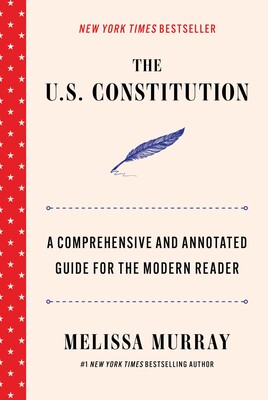
ETA: I also was excited about Melissa Murray's new constitutional commentary. Eh.

The preface was a quick summary of its creation that seemed like forcing a bunch of stuff into a few pages. And doing so in a somewhat simplistic way.

The summary of each section is helpful, if often a tad too basic for someone who already has more than a passing understanding. It isn't meant to be comprehensive, but sometimes it seems a tad thin. 

It serves its function as a one-volume reference book for the average reader (though now and then tossing in words like "chattel" without comment). Sometimes, there are particularly interesting discussions, at times, with very up-to-date material. 

Murray provides a balanced view, including points of view that she personally doesn't support. At times, you do get the idea she isn't some originalist. 

The subtitle is "A Comprehensive and Annotated Guide for the Modern Reader." It does cover the whole document in annotated form and is written for the modern reader. It has Civics 101 potential.  

The book is formatted comfortably. OTOH, there are no charts, pictures, or anything of that sort. 

I enjoyed Linda Monk's books better.