Five years ago, Dobbs was foreshadowed when the Supreme Court (short unsigned opinion) left in place a six-week abortion ban. Roberts and the liberals, in varying degrees, dissented.
About Me

- Joe
- This blog is the work of an educated civilian, not of an expert in the fields discussed.
Showing posts with label abortion. Show all posts
Showing posts with label abortion. Show all posts
Wednesday, September 02, 2026
Friday, August 07, 2026
SCOTUS Watch
On Tuesday, the Supreme Court released its calendar for the October argument session, which lasts from Monday, Oct. 5, to Wednesday, Oct. 14.
The beat goes on. A notable environmental case is one of the first big cases.
The link goes to a conservative who signed a letter in 2016 explaining why it was essential for conservatives to be against the election of Trump.
He has been praised as a fair conservative mind.
I have found him generally so (he had his bad moments), though I am annoyed at how little he responds to Trump shenanigans.
This is a theme on that website, which has a few Trump loyalists (Josh Blackman), but many who don't care for him much. Other than one person (and one person who sometimes pops up), they rarely say anything.
This is not an appropriate response to the times.
==
BJC has a podcast discussing religion and the Supreme Court. It was on hiatus until the new term. They had a special SCOTUS preview and announced a co-host is leaving.
==
Precedent and Personnel: When the Justices Change so Does the Constitution
Prof. Eric Segall is a liberal law professor.
I disagree with him from time to time, including on some of his hobbyhorses. This one, which he has been on for decades, is rather tedious.
He LOVES the Legal Tender Cases example. It's not a normal one. The Chief Justice ill-advisedly decided a significant case on a short bench.
He was on notice and did so anyway. When two new justices joined, the cases went the other way.
Compare this to what John Marshall and Warren Burger did. Marshall held cases over in the 1830s when the justices divided, and a new membership might change the result.
The Burger Court had a special committee when they had seven justices to decide what to hold over if the two might change the result.
What does ES want? Abraham Lincoln in his first presidential inaugural address argued:
At the same time, the candid citizen must confess that if the policy of the Government upon vital questions affecting the whole people is to be irrevocably fixed by decisions of the Supreme Court, the instant they are made in ordinary litigation between parties in personal actions the people will have ceased to be their own rulers, having to that extent practically resigned their Government into the hands of that eminent tribunal. Nor is there in this view any assault upon the court or the judges. It is a duty from which they may not shrink to decide cases properly brought before them, and it is no fault of theirs if others seek to turn their decisions to political purposes.
The justices on a short bench by a closely divided vote held one way. The majority arguably was quite off base on an important constitutional issue.
A single case should not be the immediate end of the line. Stare decisis is important. But the issue wasn't firmly established. New justices, selected by people we elect (if indirectly, especially pre-17th Amendment), will factor into this equation.
This case is a rather incomplete example to examine the wider question. It might have been wrong. It might have been right. It still is a special case.
New justices over time do change the law. It is a significant way the law changes over time. Likewise, legislatures and executives change over time. Their view of what the Constitution means also changes.
Justices, even the current bunch, also don't simply ignore precedent. It would be tedious to list the number of things, including some things of importance, that are basically the same now.
We can also list a bunch of things the current majority has done that significantly disrespect precedent. I find many of these cases dead wrong.
Nonetheless, the fact they are making new law alone isn't the problem. The way they are doing it, both procedurally and substantively, is the problem. The problem here is the merits.
What happens, imagine with me, if the Supreme Court eventually is ideologically reasonable? Liberals and moderates have a supermajority. This happens because of new membership. Look at the early 1960s.
A nuanced approach can result in liberals cautioning courts to be conservative. At some point, a conservative approach is ill-advised. But that would at least make more sense than this simplistic take.
The law is not obtained by looking at the sky, entrails, or original understanding. I repeat myself. It is a value judgment that significantly depends on the judges.
We should be open about this. We should carefully handle the situation. Judges should still act like judges. And, yes, ES, life tenure and so forth give the justices much more power to act arbitrarily.
This warrants special attention. I still don't accept simplistic cant. With respect, #JustSaying.
===
On my Substack ... comments on a pending Massachusetts abortion bill.
Friday, May 15, 2026
SCOTUS Watch
The Supreme Court is beginning its final end-of-term push. They will meet on Thursdays until the end of June. Opinions dropping will be likely.
More VRA News
They had no Order List on Monday. No problem. They often make news outside of those often no-drama orders.
For instance, the aftermath of a major Voting Rights Act decision continued. It involved Alabama. Sotomayor dissented for the liberals.
The conservatives didn't explain themselves. Bad decision, but not the end of the line. Meanwhile, there continues to be a lot of jockeying in multiple states.
The Virginia state supreme court ruling was not a good decision. The Hail Mary federal challenge was also not good. It was rejected without comment.
Arguments
We don't get video or even audio (for opinion announcements) of the proceedings.
Amy Howe showed up since we cannot. She promoted, as a witness, greater transparency during the proceedings of the Biden Supreme Court Commission. Her summary of this term's arguments is interesting.
Opinions
The usual practice is for the justices to drop a limited number of opinions in late May and early June. Then, we will have an influx, with multiple decision days in one week to complete the job. Late term rush.
There are worse things to worry about. All the same, this is a bad job of pacing yourselves.
Anyway, as expected, the two opinions (both unanimous with one concurrence) are non-controversial. The usual sentiments about how such opinions are still of some significance aside, neither is not a "high profile" case worthy of much attention.
Abortion Pill News
The Fifth Circuit dropped a ridiculous opinion preventing Mifepristone from being prescribed by telemedicine and delivered by mail. The decision is bad both procedurally (standing) and on the merits.
Justice Alito, in charge of the Fifth Circuit, granted a temporary halt (administrative stay). He (selectively) had it expire on Monday afternoon and then extended it to Thursday afternoon. So, after two opinions few cared about dropped, bigger news was forthcoming.
(The link underlines how the change in Administration matters.)
The Court, about a half hour late, granted a regular stay. Thomas and Alito dissented for different reasons. Alito noted the Court did not explain itself (which is unfortunate), which he did not find problematic about an hour later, when an execution was involved.
One notable thing about Alito's dissent is that he references how a change of policy in the Biden Administration helped protect the supply of abortion pills after Dobbs. State shield laws, including in New York, were also quite important.
Michael Dorf has more, including a reference to a good article on the Comstock Act. A previous discussion, which includes a reference to a Biden DOJ policy statement, is also worthwhile.
Busby Execution
A murder apparently motivated by robbery led one person to be sentenced to death, the other to prison.
After over twenty years, too long (Breyer), Texas was ready to execute him. There was a claim of intellectual disability, which even the state witness granted.
The Supreme Court has held that intellectual disability at a certain point will make execution unconstitutional. It is also a mitigating factor.
The seriousness of the claim is suggested by the fact that even the conservative-leaning Fifth Circuit at least temporarily held up the execution. The justices overturned the stay without comment.
Kagan dissented without comment. Jackson (with Sotomayor) briefly noted how gratuitous it all is.
He was the 600th execution in Texas since 1982.
Upcoming
Order List on Monday, and another opinion day on Thursday. Who will buy Souter's home?
Monday, May 04, 2026
SCOTUS Monday (Not a Fun Day)
It started blandly with a four page Order List. Then, Alito provided an expected administrative (temporary) stay to the wrongminded abortion pill ruling. Then, it granted a request to immediately put the Voting Rights Act ruling into effect. Jackson dissented. Alito (with Thomas/Gorsuch) whined about it. Hit too close to home, Sam?
ETA: A request to recall the judgment was denied.
Friday, May 01, 2026
SCOTUS Watch: Oral Arguments Wind Down
Order List
Two things stood out for me in a four-page order list. As Rick Hasen summarized on Bluesky:
The Supreme Court won't hear the case where a lower court temporarily stopped Texas from using its re-redistricted congressional maps. The Supreme Court just reversed that order without hearing argument or getting more briefs.
The liberals dissented (without opinion). There is a story here. We have another reversal, based on a short per curiam, of a 160-page or whatever district court opinion on the shadow docket.
Steve Vladeck is on the case, not having patronizing conservatives referencing the "hysteria" over the question. Wow. Breyer says all is well. An accommodationist who is loath to criticize. I think his replacement is more on the money.
(Vladeck, after the voting rights decision, wrote a partially paywalled piece on reforming the Supreme Court. He opposes court expansion.)
Meanwhile, quoting Chris Geidner, they also granted another case:
SCOTUS grants another post-Jarkesy case about administrative agencies’ adjudicative powers, involving the Labor Department.
The liberals didn't like Jarkesy, but some left-leaning sorts thought it was correct to require additional usage of the federal courts. So, it's not a crystal-clear issue.
Arguments
The Supreme Court then spent two hours (too long) talking about "geofence" warrants. Sounds like a tricky case that they will try to rule on narrowly. OTOH, maybe it's too soon to judge.
The other notable oral argument (for me) is a late addition involving Trump's immigration policy. And with that, the oral arguments are likely done.
Now, they will get to opinion writing, probably finishing by the end of June for their summer baseball camp plans or whatever they want to do. We will also likely see if Alito really is going to stay on.
Opinions
Rick Hasen (Election Law guy) is EXTREMELY concerned about a big 6-3 (Alito v. Kagan) voting rights case handed down. It is "one of the most pernicious and damaging Supreme Court decisions of the last century." He's not one to exaggerate.
Kagan's concern is suggested by her dissent from the bench. Since we don't have audio (Oyez.com will provide it eventually after the term is over) or video, we can just read about both Alito (longer than usual) and Kagan's bench statements.
Congress could, and eventually should, pass a new voting rights law. They have done so in the past in response to statutory construction. The current executive and legislature are not likely to do so.
I think Congress should have a fast-track process to address Court rulings regarding federal statutes. The 6-3 Supreme Court might then flag an alleged constitutional barrier to the legislation.
This is where court reform comes in. You have ethics reform, tweaking qualified immunity, term limits, and so forth. Various good policies on their own.
A constitutional decision like Shelby v. Holder sometimes can be addressed (e.g., update the process there deemed out of date). Other times, you will run into a roadblock, like the Trump v. U.S. ruling.
Some want to expand the Supreme Court. Others worry this will result in tit-for-tat responses and overall diminish the Court.
Hardball will make for tough decisions at some point, including jurisdiction stripping and targeting their budget (minus reduction in salaries, which the Constitution prohibits). After all, if you use the budget to "blackmail" (pressure) the Court, does that not have some potential at threatening its integrity?
I think we should put everything on the table. Reform will be tough. Serious reform, whatever it entails, might require ending the filibuster. Whenever bad opinions, especially ones with political/partisan valence like this one, arise, this talk does as well.
A trifecta is necessary. Let's start thinking. Meanwhile, jockeying by both sides in a districting race to the bottom continues.
==
The first opinion was unanimous. The result in a future case could help liberals or conservatives. It involved the investigation of crisis pregnancy centers.
Maybe it was the right decision, and it wasn't on the merits, though judges below disagreed. Was it that obvious? Shrugs. More on the background here.
Executions
James Garfield Broadnax was nineteen when he was part of the robbery/murder of two people in 2008. Texas executed him.
There is debate over how serious his role is, the use of race in jury selection, and other issues. Two confessed, one was given the death penalty.
No comment by SCOTUS when rejecting the final appeals. The whole thing seems arbitrary.
(A few judges have shown some concern about executing people under 21. The line now is eighteen.)
Florida executed someone sentenced to die for the rape/murder of his teenage step-niece, committed in 1976. James Hitchcock is not someone many will have sympathy for. It still is patently ridiculous to execute someone after 50 years.
Florida is making a habit of this, though, even for them, 50 years is longer than most. As usual, I cite Breyer's dissent in Glossip v. Gross on this issue.
Since only a few justices over the years, none on the Court now, flagged that problem, his final appeals rested on other claims. His lawyers, yet again, raised a claim that the Florida lethal injection process is flawed.
Also, they again raise an innocence claim. It isn't new, so hard to see it working at this late date. He claims his brother did it. I doubt it. The time lag is my issue.
He committed horrible crimes. He was in prison for fifty years. Some members of the victim's family will obtain closure. That is a variable thing, and anyway, not enough to justify a few arbitrary executions.
A long prison term might also have led some to have closure. A lingering execution might have hindered the process as they waited a bit more time for it to happen.
Upcoming
No more oral arguments.
There will be releases of orders (Monday) and non-argument sessions (often admission of bar members, but some opinion days might be mixed in) and conferences (Thursdays) until the end of June. At least, after a ten-day break after Monday (orders).
(Memorial Day pushes one order day to Tuesday.)
There will also be various other days with orders and opinions, especially as things speed up in June. And probably a surprise or two mixed in. So, it goes.
Monday, April 20, 2026
SCOTUS Watch: Order List and Other News
Order List
Today's Order List was long enough that it suggested additional writings. It also had some notable developments, including a case that might further weaken Oregon v. Smith (general applicable laws are generally acceptable for religious liberty purposes).
One case on the "shadow docket":
By a 6–3 vote, and with no opinion, the Supreme Court throws out a lower court decision denying qualified immunity who killed an unarmed, mentally ill man by using "bodyweight force" to restrain him. All three liberals dissented.
A per curiam error corrects a lower court Fourth Amendment decision. Sotomayor, without comment, wouldn't provide relief. Jackson dissents with an opinion.
Sotomayor, in a statement, discusses a dispute involving a child abduction measure. She agrees it is something they should eventually address.
This specific lawsuit, however, is procedurally inappropriate to take. Nonetheless, she argues it was at least partially a self-inflicted wound by the Court.
Sotomayor, without comment, also noted she would have granted a case alleging evidence was not properly supplied in a criminal case.
Justices Alito, Kavanaugh, and Barrett didn't take part in some decisions without saying why. Only Kagan and Jackson consistently provide their reasons.
Shadow Docket Story
Steve Vladeck addresses a NYT article, with internal documents, discussing a major change in the shadow/emergency/interim docket in 2016. I agree with his overall analysis. The articles provide sunlight on issues of special concern. The actions are troubling.
Fix the Court suggests a proper response would be congressional legislation requiring transparency. If they abuse the process, jurisdiction stripping and budget cuts would be some possible consequences.
(This was suggested in an email I received via a subscription.)
Or we can go the route of certain conservatives who think the leak is the biggest problem. The overall comments there, as I noted in a comment, ignore that internal deliberations are regularly leaked. Full documents are a step beyond that, but that might be appropriate (e.g., Pentagon Papers).
Thomas vs. Progressives
Prof. Segall focuses on his corruption -- Harlan Crow -- but also links to a wider discussion, how his usual "just so" historical account is garbled. This is who conservatives deem their model judge.
Happy Birthday, Justice John Paul Stevens. And Adolf Hitler, apparently, going by Justice Thomas.
Meanwhile ...
Some good news in a lower state court in Pennsylvania, which, on state constitutional grounds, struck down a Hyde Amendment. A concurring opinion also cited religious liberty.
Some state courts went this route in the past. The principle should be applied nationwide.
ETA: Two non-ideological opinions were handed down on Wednesday. Sotomayor had the unanimous opinion for one. Thomas had the other opinion, with a dissent by Alito, Roberts (relatively rare dissenter), and Kavanaugh. Sometimes, disagreements aren't always along the expected lines. But 6-3 is still a thing.
Saturday, December 20, 2025
The Religious Test: Why We Must Question the Beliefs of Our Leaders
Damon Linker, who is actively posting on "Twitter," wrote this book fifteen years ago.
So, it was writing about same sex marriage before it was recognized as a constitutional right. He thought it inevitable. He also discussed the unlikely possibility of Roe v. Wade being overturned. Oh well.
The Constitution bars religious tests. Many people understand that as a general principle in the United States. Let's quote the specific text:
no religious Test shall ever be required as a Qualification to any Office or public Trust under the United States.
The Fourteenth Amendment effectively "incorporated" this principle so that it applies to state and local offices. The presence of "Catholic" or "Jewish" seats on the Supreme Court underlines it was not applied to mean that any religious criteria are barred.
Some might argue that such things are not a good idea. Still. Are we to take the clause literally in its broadest sense? If a person is selected to defend civil rights, are we to ignore their racist religious beliefs, while being able to be concerned if they belonged to the Nazi Party (political)? Many would not think so.
Linker does not directly talk about the implications, for instance, when the Senate considers judicial nominations. For instance, John Kennedy (not that one) questioned a judicial nominee about his sermons. Is that a problem in the way he did so there?
The book has a more general concern about the religious beliefs of people who might clash with liberal values. Not "liberal" as in "Democrat." No, a wider usage that recognizes the values of a free society, including a sense of moderation and openness.
Many religious groups are illiberal in that sense. Some have political influence. And, this was pre-Trump. He includes radical atheists like Christopher Hitchens, who are not willing to "play nice" with religious beliefs. I can imagine his views on Trump.
Linker also argues that a liberal society requires an individual rights view of gay and abortion matters. He cautions that we should tread carefully, for instance, recognizing the rights of those against same sex marriage. He draws the line at the marketplace. Again, I wonder how he felt about Hobby Lobby.
He lays this a bit thick sometimes. For instance, he wants public schools to carefully avoid driving more conservative-leaning parents away regarding social issues. Linker is adamant that it would not include avoiding teaching evolution.
OTOH, he appears to not be too gung-ho on LGBTQ friendly curriculum plans. At some point, you won't win. Some parents will be upset if you even bring up Stonewall.
His whole discussion on "traditional" marriage skips over much of the sexist aspects of the institution, including coverture. Linker also somewhat exaggerates how prevalent traditional morality was. See, e.g., Lawrence v. Texas on how the state largely avoided enforcing anti-sodomy laws unless the behavior took place in the open or involved minors.
The debate over the details should not erase that the general message is valid. We should care about liberal values, and religion can interfere. It is not prejudicial to take this into consideration, especially if we also accept the right of free exercise. We allow speech we hate without merely listening to it without comment.
The constitutional religious test rule bars, at the very least, formal qualifications by force of law based on religious doctrine. The No Religious Test Clause has a broader principle of separation of church and state.
The clause does not, realistically cannot, mean we do not care about the beliefs (religious or otherwise) of governmental officials. The average official can do their job even when it somehow clashes with their beliefs. A pacifist can collect taxes that might be used for warfare.
Still, the religious beliefs are relevant. And, many officials these days are not willing to uphold the separation of church and state. They by word and deed make this very clear.
Linker provides a helpful summary of why religious beliefs are relevant. It is a conversation we should continue to have.
Wednesday, December 17, 2025
NY Medical Aid-in-Dying
Gov. Hochul is deciding what to do about various things on her desk as the year is coming to an end. She has had a heavy veto pen in the past.
I think the executive veto is used too much. One person gets to make a policy decision that overrides the legislature.
Anyway, she decided to sign the aid-in-dying legislation. She negotiated a few more safeguards. It only applies to someone found to only have six months to live. She explains why here. One notable thing is that she is Catholic, but nothing new there. See, e.g., Mario Cuomo and abortion.
I think the decision here is part of the right to privacy. Many things of that nature have line drawing issues, and it is appropriate for the legislature to have some discretion. Drugs in general have that flavor.
If anything, I think six months might be too tight a schedule, though there are other things you can do. You still have the right to refuse treatment. You can take drugs to deal with pain, and a lethal overdose is far from impossible. There is self-help.
But I think this is an appropriate move. If I ever have to face up to this issue, I would like the option.
Abortion Thoughts
Of course, the thing many will think about here is abortion. The other side of life. The subject came up in a discussion involving executive removal power (this provides a better take on that subject).
I talked about it in comments. Someone with quite different beliefs challenged my good faith. I was "pretending" and "just had to" use a certain term. I responded in detail, including noting the term was used in Roe v. Wade. "Life," for instance, is a complicated term, dropping a link.
The person didn't substantially respond. They just doubled down, tossing other usual concerns of that side. I find that tedious. It's not too uncommon online. People think certain things are obvious. If you don't agree, you are not arguing in good faith or are stupid.
Sometimes, people are not arguing in good faith. Or, at least, they are not arguing with a reasoned and informed take. People are not just Vulcans or rhetoricians who carefully make arguments. It makes engaging with some people again a tad bit tedious.
(On that website, I block the names of some people, including someone I tiresomely engaged with for around fifteen years. At some point, it's pointless, and it just annoys me. I'm no Stoic. I can't just ignore it.)
I'm not going to change people's minds, generally speaking. I do hope that sometimes people will respect that I'm trying to argue in good faith. Sometimes, they will acknowledge some lesser point, and not just see everything as a black/white issue with no shades.
Sometimes, I just like to give my .02, and maybe someone else will find something I say of some usefulness at times. Some subjects, and abortion is one, have interested me for a long time.
I'm not pretending by saying that.
Saturday, November 22, 2025
Unbearable

Unbearable: Five Women and the Perils of Pregnancy in America by Irin Carmon is a well-written book that underlines the importance of reproductive justice. It is passionate, informative, angry, hopeful, and empathetic. It is also about some men.
Carmon earlier co-wrote a book about Justice Ruth Bader Ginsburg. As a mother of young children, she lived it as well.
Reproductive justice is a united whole, involving good, respectful medical care and resources before and after having a child, miscarriage, or abortion. Abortion rights were fit into a privacy frame in Roe v. Wade because that was the logical approach at the time. It was framed as a private act between a doctor and patient, which was open to reasonable regulation.
Later, equality was mixed in more, as gender equality precedents developed. Reproductive justice was always mixed in. It became more prominent later on.
Case law underlines the complexities. We have birth control cases. Cases involving pregnant teachers forced to leave work mid-pregnancy. Cases about breastfeeding. And much more.
(The link at the top is Melissa Murray's interview with the author. She wrote a personal review of the breastfeeding-related book linked above, too.)
One tragedy, in my eyes, is that not enough Supreme Court cases connected all of this into a united whole. Abortion cases were about applying a ready-made doctrine. They often involved lots of regulations at once. Individual stories and how they fit into a united whole of constitutional liberty lost out.
The book concerns five women, including someone trying to get pregnant (also a lawyer), a doctor, and three women's experiences before and after being pregnant. They live in New York and Alabama.
The author was about to give birth herself when Dobbs was handed down. The book also has a spoiler in the table of contents. I awaited the shoe to drop.
Friday, September 05, 2025
SCOTUS News
Barrett's Book
Amy Coney Barrett's book, after a long time in the making, is due to be released next week.
I don't begrudge justices writing books. They have been doing so at least from the time of Chief Justice Marshall, who wrote an official biography of George Washington. They were a mixture of legal and non-legal subjects. Here is a list up to 2012.
The list includes personal accounts, including John Campbell (who resigned to serve the Confederacy). Not released when he was a justice. Earl Warren's autobiography was released after he died.
Douglas released some personal accounts while he was still a justice. As did Sandra Day O'Connor. John Paul Stevens waited until after he retired.
Thomas did not. Kavanaugh and Alito are writing books. Kennedy's book will be released soon. On the current Court, only Roberts and Kagan have or will not in the short term have no books. Breyer, however, focused on legal topics in his books.
There can be ethical concerns, including properly recusing when the publishing firm has a case in front of the justices. Some people oppose this type of profit-making as a grift.
Eh. There is a public demand. Justices can provide something of interest. Justice Jackson's book was pretty good, and people are interested in her story. People like Sotomayor's children's books. She is scheduled for Stephen Colbert to promote her latest.
I would be surprised if (1) this book had nothing of interest, (2) it was chocked filled with fascinating details. She has an interesting biography to some degree (all those kids!).
An inside account, however watered down, is of some value. For instance, she will make some comments that express her views, if in some general, often bland sort of way. Having a conversation about these issues has value. Justices will add to it in various respects.
It is questionable when conservatives promote these books on the conservative circuit. It has a dubious ethical feel of promoting a certain ideological cause. Sotomayor and Jackson apparently sought out more mainstream places like bookstores and libraries. Barrett has talked to a CBS correspondent, too, so far.
Previews cite her comments defending Dobbs, including citing Ginsburg's criticism of Roe v. Wade. She thought it went too fast. She wanted them to use an equal protection rationale. It was too soon for that.
The Court's sex equality jurisprudence was in its infancy. Also, even Blackmun -- the author of Roe -- rejected an argument that pregnancy discrimination was sex discrimination. Nine men were not ready.
She had a case of a servicewoman who wanted to have her baby (the government, back then, encouraged abortions). Her brief included an argument for reproductive liberty. Ginsburg strongly defended -- this is what Dobbs was about -- upholding Roe v. Wade.
Barrett also argues that the people overall are more divided about abortion than other things protected as fundamental rights. Only as a matter of degree. A Roe-like ballot measure almost met the 60% threshold in conservative Florida in 2024. A somewhat less liberal measure might have passed.
I don't want to read the book. I find her confirmation appalling after the Garland blockage. She repeatedly made horrible decisions. Barrett might be the best of the three Trump justices, and better than Alito and Thomas, but only grading on a curve.
I respect my health too much to read that book. It would cause me angina. It's why I can't read journalistic accounts of the Kavanaugh nomination.
Barrett says she wrote the book to help people trust the Court. She argued in the past that the justices aren't just partisan hacks. YMMV on her success.
Lower Courts Criticize
An excellent article discusses lower court judges' aggravation with the Supreme Court.
They are being attacked, sometimes with violent threats, for doing their jobs. It has some judges (Republican and Democratic nominees) giving opinions off the record, including some CYA "I'm concerned about the judicial TDS" tool to provide balance to please the editors.
The Supreme Court does little but reverse them (oh joy! They could do so more often!) and then criticize them for not reading the tea leaves of opaque shadow docket opinions "correctly."
Kavanaugh, who joined a Gorsuch criticism of lower court judges, grants that sometimes the opinions are unclear. The justices sometimes struggle for agreement, resulting in some confusion.
How about just letting lower court judges do their job? If you can only agree upon opaque confusion, don't step in. Justice Jackson correctly challenges Kavanaugh's claim that they have to do so.
[Footnote 8.]
And, yes, it is hard listening to that guy (even quoted on the written page). He is such a tool.
Summer Order List
September is here. Children are going back to school. And, we have the last of the three scheduled summer order lists. The new term is rapidly approaching.
The order list is (as usual) bland. Justice Thomas didn't take part in one decision and (like each conservative) did not explain why.
These order lists, however, usually have some interesting tidbits. Chris Geidner flags on BlueSky that the Administration was granted argument time in two cases for which it is not a party.
The case involves limits on the right to counsel (it supports the state) and the Colorado ban on conversion therapy for minors (it would hold the state to the hard-to-meet strict scrutiny standard).
Execution Postponed
A Utah execution was postponed because the state supreme court is concerned about dementia issues. Thus, an execution for a crime that took place in the 1980s is delayed yet longer. Just forget about it.
There are more executions scheduled later this month.
Thursday, August 21, 2025
The Garner Files
I saw a reference to James Garner's autobiography when reading about They Only Kill Their Masters. He ranked his films and gave it two stars. He didn't want to talk about the film otherwise. So mysterious!
The book is overall pretty good. He wrote it with someone a few years before his death.
I can do without chapters on golf and racing, but they are two of his passions. An "outtakes" section provides various stories from family, friends, and others. He talks about his childhood without talking much about his wife and daughters (very little, though they pop up in the outtakes section).
Garner (originally Bumgarner) references that his cousin once told him that his mother died from complications of an abortion. She was twenty-six and had three young boys in Depression Era Oklahoma.
(It was just referenced in a discussion about his childhood. He later says he supports abortion rights and is a strong Democrat.)
Julia Sweeney, in an otherwise light-hearted book on parenthood, talked about how her mother-in-law got an illegal abortion in the 1960s. Sweeney did some good long-form monologues, including her first, "God Said, Ha!" A later one was basically "God? Ha!"
You can hear Garner's telltale voice while reading the book. His characters often had much of him in them. He did not train to be an actor. He got work early on because he had a movie star look. Garner got married in around two weeks. It worked for him -- they stayed together for nearly sixty years.
I was not a big fan of his private eye television show, though I know people who liked it. I wanted to check out Maverick, his 1950s show, and saw it was on. It turns out to have been a late episode with Roger Moore, who replaced him!
I like James Garner overall as an actor, including in Murphy's Romance. I did not see that many of his movies. I checked out the first of his Western spoofs. Didn't much care for it. His one-season television show, Nichols, was playing on one of the retro stations. Think he would appreciate that.
(I agree with him that The Notebook is very good.)
I had difficulty finding a good book lately. The latest by Erik Loomis (Organizing America) with twenty thumbnail biographies was pretty interesting.
This one was a good, easy read, though again was not really interested in forty pages about golf and racing. And would have liked to read a bit more about his daughters. Overall, he had a good no-nonsense philosophy mixed with empathy. Good values.
He gives some opinions, good and bad, about some actors and other people he knew. Nothing too terrible, but he does criticize a few celebrities.
Garner also said that he was a long-term user of marijuana, finding it helpful for medicinal purposes. If anything, alcohol was more dangerous in his experience. He tried cocaine via Jim Belushi but didn't care for it. Not too many big reveals overall.
Thursday, July 03, 2025
Supreme Court Watch: More Orders
I expected a long "clean-up" order list with a bunch of statements and dissents about a variety of cases not taken from the usual suspects. We had less of that this time. Monday's Order List only had a few such things.
(Last year, we had a fifty-three-page final order list. This time it was twenty fewer pages with Sotomayor and Thomas each discussing two cases apiece.)
Today's final scheduled order list before the summer lists was only four pages long, akin to a list after a normal conference. The big news is that they took two cases involving trans athletes. Another case involves regulating where offensive protests can take place.
The Court did not grant an appeal of a state court opinion protecting the right of minors to have an abortion in some cases without their parents' permission. The challenge raised parental rights claims.
Alito (with Thomas) wrote a statement that said it provided a bad vehicle for appeal. Nonetheless, not taking the case should not be inferred to agree with the ruling below. The implication is that parental rights claims (at least here) still might have merit.
Parents of trans children might be an exception.
Coming Up
For your planning purposes, summer order lists are scheduled to be issued on Monday, July 21; Monday, August 18; and Friday, September 5, 2025. Summer order lists usually consist of actions taken by the Court on motions in pending cases, petitions for rehearing, and other miscellaneous matters. Emergency orders, such as in applications for stays, will continue to be released as required.
There is no scheduled upcoming conference, but it is likely to take place at the end of September. Meanwhile, they are taking a break, though they are still officially able to do business.
As Steve Vladeck has discussed, before around 1980, the Court truly was in recess, and individual justices had to act in their individual capacities. That is not the case now. They will hand down scheduled orders and can provide others (including for the two executions scheduled this month) as required.
Trump-related stuff will continue. Stay tuned.
ETA: The Supreme Court had two order lists, one on Monday and one on Thursday. I was tricked into thinking we were done for the holiday weekend.
We were not. Another "clarification" of a previous Trump-enabling decision dropped.
Kagan concurred -- she didn't like the first decision but thought the request logically followed from it -- while Sotomayor (with Jackson) dissented.
The unsigned order references the "provocative" dissent without adequately answering it.
Happy anti-tyranny day, I guess.
Saturday, June 28, 2025
Follow the Stars Home
I have watched this Hallmark Hall of Fame film multiple times.
These films are not like the usual current Hallmark fare. They are more often serious and not merely focused on romance. They were on CBS on Sundays before we had a Hallmark Channel. (Or three) They are now most likely to be found on Hallmark Family.
The film has many familiar faces, including Blair Brown as the mom who is a librarian. Alexa Vega (many know her from Spy Kids) is all grown up now and pops up in some Hallmark films as a lead.
"That girl" (that is, someone you know from somewhere else) includes a young mom who decides to keep her baby even after she finds out that she will be disabled. Her husband cannot handle it and abandons them.
Skip ahead six years, and she's dealing with a girl with special needs, helped by his brother (a doctor) who clearly loves her. Alex Vega, whose mom is an alcoholic and has an abusive boyfriend, comes in as a "mother's helper." Vega has needs of her own, as a reference to her social worker shows.
The whole thing is a flashback of sorts, starting with a car accident. It is based on a book. Not a short one. As usual, they change a few things, including from looking at Amazon, a good change. No, I never read the book, which is somewhat strange, since I first watched this thing a long time ago.
The film has many moving parts, all of which are generally well done. There are some good scenes between the mother and her mother. The problems of caring for a special needs child while still being blessed. The girl struggles with her own mother while also showing her value, including being a friend to the disabled daughter (who seems to be played by two non-disabled child actors*). And, the husband who is unable to handle the responsibility of a disabled child.
It is a lot. For instance, the mother (Dianne) of the disabled child becomes something of a second mother for Alexa Vega's character. This is a difficult situation. Once, Dianne's mother suggested she take Vega for a special trip that they often took as mom/daughter. Dianne notes, "She isn't my daughter."
There are various little moments. For instance, Blair Brown's character is retiring partially to help care for her granddaughter. She will miss being a librarian. We see her tear up on her last day.
The husband obviously does not come off very well. There is little to defend, except to somewhat understand, his abandoning his family. There is some realism there. His argument that she should abort and telling his brother that he too would want her to is also realistic. Many people will feel that way.
The result helps his argument to some extent. The girl does suffer. She has a condition that limits her mentally and physically. She is too young to understand, including understanding the physical pain it entails. Morally, it is a serious question if it is right to put her through that by not aborting.
People will argue her life is still worth living. The point is generally moot once the mother decides to have the child. The child is surely alive, then, and people have an obligation to her needs. The mother was informed about the risks. Once she made her decision, it was correct for her brother-in-law to respect it and help her in whatever way he could.
Some parents and family members do not want to deal with people in their family who have problems. They would rather ignore them if possible.
That's a problem. This includes if someone still wants to stay but does not pay attention to that person. So, the husband wants to get back together with his wife, but ignores the needs of his child.
I think the film is well-acted and written. Not surprising since I watched it so many times.
It also might be deemed "pro-life," but that doesn't make it anti-choice. Her ability to make a choice made the result that much more significant. Yes, the only person who puts forth the other option is coded as horrible. A more appealing relative also voicing doubts would have been nice.
(The Amazon summary says they found out "weeks before" the birth. In the film, it was early enough for her to have an abortion.)
I can carp about some part or another, but the film is rather remarkable for all it does. Okay. A few times, the soundtrack is annoying. And, the mom has one of those special jobs (she seems to build dollhouses or something) that allows her not to struggle for money while having a comfortable existence.
Overall, it's well recommended.
ETA: I also watched Remembering Sunday, another Hallmark Hall of Fame film. The guy has the "Momento" disease, where he wakes up each day forgetting everything since his brain went screwy.
He does have long-term memory, so he remembers his best friend and sister. Zachary Levi plays the guy who manages (for a time) to have a job, though he doesn't tell his boss about his condition.
Alexis Bleisdel (Rory Gilmore) is a waitress waiting for an inheritance (how convenient!) and falls in love with him. She only finds out about his condition near the end. He did try to tell her about it, if not right away. Overall, an interesting movie with a twist.
No totally happy ending.
==
* The two actresses do a good job in a role that is not easy. They need to realistically portray a child with Spina Bifida and Rett Syndrome.
Friday, June 27, 2025
SCOTUS Watch: Final Opinions
Amy Howe provides a helpful summary of the final ten cases that were left to be decided this week.
Thursday Opinions (4)
They had two boxes (four cases) on Thursday. Previously, the assumption was that they might be able to handle the cases in two days.
There were two boxes led some people to assume more than two days. But the Court did announce that Friday was going to be the last day for opinions.
Thursday was somewhat less painful than some liberals thought. Jackson, logically given her experience on the U.S. Sentencing Commission, had the First Step Act case. Roberts and Gorsuch went along with the liberals except when Jackson spoke about "context and enactment history."
Sotomayor handled the death penalty case. Barrett briefly noted disagreement on something. Thomas and Alito (with Thomas and Gorsuch) spent more time explaining why Sotomayor was (way) off base. Conservatives will now and then help form a majority in capital cases, but they don't make a habit of it.
Alito handled a deportation case. Sotomayor for the liberals (and mostly Gorsuch) was annoyed ("heartland of illogic and absurdity") and mostly dissented. Alito still uses "aliens," while the dissent uses "noncitizens." The noncitizen here worried about his safety. Gorsuch, this time, was concerned about that. He was less concerned earlier in the week.
(The case is serious, but Steve Vladeck on Bluesky suggested it addresses a narrow number of cases. So, I am not sure HOW bad it is. OTOH, liberals don't want Alito to have this sort of case.)
South Carolina defunded Medicaid payments to Planned Parenthood because it also performed abortions. The big bad case on Thursday (via Gorsuch for the conservatives) denied these people the right to sue. Thomas wanted to do more.
Jackson has a strong dissent. As a matter of principle, this shows the hypocrisy when conservatives talk about the right to choose your own doctor, including according to your own moral and religious beliefs.
Friday Opinions (5)
The Supreme Court had big opinions today that took over an hour to announce (with multiple dissents from the bench). It was wrong to shove so much in one day. Hundreds of pages of opinions today.
It was also wrong not to live-stream the announcements. If they think they are important, the general public should be able to hear them now.
(Oyez.com releases them sometime after the term.)
The morning started with a half hour spent dealing with the birthright citizenship opinion. I guess there was no punt! They did punt in one case.
A Voting Rights Act case (among the much smaller than historically the case mandatory docket) will be reargued next term. Thomas dissents.
Kagan has a 6-3 (Gorsuch, Thomas, Alito) delegation case. She handled the dissent in the online porn case (Thomas wrote for the conservatives) which allows a lower level of scrutiny in upholding an identification requirement.
Kavanaugh has an appointment clause case (Thomas, Alito, Gorsuch) case but it's a limited win for liberals. Robert Kennedy Jr. can simply remove the Preventive Services Task Force members or block its decisions. Still, a limited act of sanity.
A government burdens the religious exercise of parents when it requires them to submit their children to instruction that poses "a very real threat of undermining" the religious beliefs and practices that the parents wish to instill.
Two big problems today (the porn case is sort of a smaller problem). Sotomayor dissented from the bench in both. Again, we should be able to hear this.
We also should be able to hear Alito broadly summarize why parents should be able to opt out (like a Chinese menu) from exposing their children to certain stuff taught in their public school. The net result will often be that certain stuff simply won't be taught.
Sotomayor correctly replies:
Today’s ruling threatens the very essence of public education. The Court, in effect, constitutionalizes a parental veto power over curricular choices long left to the democratic process and local administrators. That decision guts our free exercise precedent and strikes at the core premise of public schools: that children may come together to learn not the teachings of a particular faith, but a range of concepts and views that reflect our entire society. Exposure to new ideas has always been a vital part of that project, until now.
She is upset:
The reverberations of the Court’s error will be felt, I fear, for generations. Unable to condone that grave misjudgment, I dissent.
(Alito provides some photos from a book while Sotomayor posts the whole thing.)
The other case, which experts are already parsing in various ways, deals with universal injunctions. This is a controversial tool that has been abused, including by conservative judges.
Nonethless, conveniently, it is addressed during the Trump Administration. And, via a case heard in May regarding something that is one of the least apt vehicles to attack it. The opinion did not address the merits of challenges to Trump's birthright citizenship order.
Barrett deals with the particulars, with multiple conservatives providing concurrence. There are ways to provide wide relief without universal injunctions (class actions are cited by some replies). It is unclear how satisfactory this will be. Also, the opinion ultimately has a somewhat unclear reach.
The liberals (Sotomayor and Jackson have strong dissents) are quite angry with the result. The "cumbersome" class action alternative is not an adequate alternative.
Barrett takes a potshot at Jackson:
"We observe only this: JUSTICE JACKSON decries an imperial Executive while embracing an imperial Judiciary."
The justices who joined Trump v. U.S. can STFU about that.
Sotomayor is partially angry because the Trump Administration is gaming the system and notes it is a "leap of faith" for the majority to assume the Administration will (eventually) accept a ruling on the merits. Why would they want to risk SCOTUS taking a case for review?
Because I will not be complicit in so grave an attack on our system of law, I dissent."
Jackson speaks of an "existential threat to the rule of law" via a "smokescreen." And, after this opinion was handed down, they had four more to go!
Coming Up
Roberts moves on to thanking court employees, the Supreme Court bar, and the mentioned retirees, before he turns to Marshal Gail Curley, who announces that court is “adjourned until Monday, Oct. 6, at 10 o’clock” before banging her gavel and the justices disappear behind their red velvet curtain.
Again, in a sensible world, we would be able to see this by live stream. If the proceedings of the first branch are aired on C-SPAN, so can the proceedings of the third branch. Open government, please.
There will be two order days next week: Monday (ordinary Order List) and Thursday (clean-up Order List with justices providing some statements and dissents regarding various cases and some other actions by the Court regarding pending cases).
Monday, June 16, 2025
SCOTUS Watch: Order List
Barrett Article
Jodi Kantor, who is a good get, has another long-form article on the Supreme Court. The article is geared toward the average reader, providing an easy-to-read narrative and tossing in some interesting details.
It discusses Justice Amy Barrett (yes, I'm not going to do the no-label thing). The headline has the usual "confounding left and right" bit, while the article shows she is still rather conservative, if not knee-jerk. If her nomination was above board, she could have been a decent in-context option for the Kennedy seat. Instead, she was shoved on late.
Two liberal law professors whom I like, Melissa Murray (Strict Scrutiny Podcast and cable news appearances) and Michael Dorf (Dorf on Law), are quoted.
Order List
A short Order List with two grants.
Both are relists, one more so, suggesting an ideological nature. The government's brief argues (the briefing is linked to the SCOTUSblog page) that for multiple reasons, there is no compelling need to take this case as one of the few cases SCOTUS takes for full review.
The case involves a crisis pregnancy center, which would make it appealing for multiple conservative justices. Also, a judge below dissented, which provides a flag to invite review. A Trump appointee, even if he at times votes in a libertarian way.
There is also a GVR, also involving abortion, sending a longstanding dispute back to the lower courts (grant, vacate, and remand). New York supported the move. So, not surprising, but shows the implications of the referenced opinion.
(If you follow the link, it goes to the docket page, and there is a supplemental brief on the point.)
So, yes, even in a short, otherwise bland Order List, there is something notable. Tends to be.
Exaggerated Agreement
Two legal Substacks challenged the suggestion that the recent slew of agreements should be taken to mean the justices are not ideologically divided.
We still have some controversial cases left. There is a tendency to backload such cases to the very end of the term. The emergency/shadow docket is repeatedly ideologically divided, including all the Trump cases.
The docket is also carefully selected, with the justices having near total opportunity (except for some election cases) to choose what they want. They can pick cases with certain fact patterns and legal issues. Sometimes, they goof, leading to multiple DIGs this term ("improvidently granted").
The justices also carefully decide the cases, which helps explain why it takes so long to write certain opinions. Divisive issues are sometimes avoided.
The divisions are sometimes not totally papered over, as shown by concurring opinions. The justices in a few cases are firmly divided in reasoning. Other times, one or more justices flag issues that the opinion avoids, including possible routes for the future or attempts to limit its reach.
Joan Biskupic flags a concurrence in one of these cases by Thomas with Gorsuch that tosses in a dig at DEI referencing a brief by a group started by Stephen Miller. Gorsuch, team libertarian. Yes, separate opinions have a personal flavor.
The selection of a few key cases, this term was less hot-button than some others, is a prudential approach. The Supreme Court used to take many more cases. The current Court has more power to control its docket. It is also much more active in the shadow docket, including (much to Jackson's annoyance) granting relief in pending cases.
This is inside baseball stuff. It still has some rather important consequences. More opinions on Wednesday. Hot-button cases coming up.
Wednesday, May 21, 2025
Personhood: The New Civil War over Reproduction
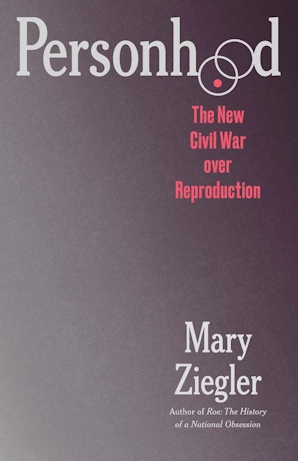
Mary Ziegler's new book concerns the "next step" in the fight against abortion that, for many on the anti-abortion side, was always a fight. The book was somewhat disappointing since it was often more of an overall summary of the anti-abortion movement. This was helpful, but somewhat redundant.
Ziegler is an objective historian, leading an advocate on the other side to respectfully review her book. This is not wrong. The book is a work of history. It is not meant to be a critique. She also sometimes flags possible problems.
For instance, there are many people in the book who appeal to feminism and the interests of women. Nonetheless, anti-abortion states and national legislators regularly do not support the pro-women and pro-child policies they support. Why isn't there more anger at hypocrisy referenced here?
The link also notes the problem with the conceit that you can think abortion is murder, and the unborn (down to fertilized eggs; surely embryos) are, in all relevant purposes, equal to newborns and not prosecute women. The idea is that they are all deluded and victimized. Doesn't hold up.
The book does intermix personhood discussions with a general history of the anti-abortion movement. For instance, it discusses the beginning of the anti-abortion movement in the mid-19th Century and notes personhood wasn't a primary concern. The originalist arguments don't hold up.
(It is noted that originalist arguments are made without much clarity on how they thread the needle. A section on a typical originalist argument would have been useful. She referenced law articles making such claims.)
Some key personhood issues are not covered in enough detail (IMHO). For instance, Johnson Controls is one case flagged as showing the possible dangers of fetal protection policies. There is also another case involving prosecuting those who took drugs during pregnancy. This issue was touched upon without referencing the Supreme Court case.
(Rachel Roth in Making Women Pay: The Hidden Costs of Fetal Rights covered this ground in detail.)
I talked about personhood amendments on this blog years back. The book covers them, but not in much detail. The Webster abortion opinion in 1989 respects a law that includes a statement that life begins at conception. Again, this seems like a book that would discuss that sort of thing.
The book is helpful and has some interesting aspects. Nonetheless, I hold to my argument that I'm not sure how much it adds. Ziegler's past works cover much of this ground. I thought there would be more focus on personhood specifically. It would be the main focus.
Anyway, it's quick reading (225 pages plus notes), and should be approachable to the general reader. Some abortion rights supporters will probably think some of the other side (including many women) are too positively portrayed.
One time, someone was cited as having a balanced view on Kavanaugh, and we don't get any sense of what that meant. I repeatedly felt an urge to be able to push back on the claims. "You say this, but it simply doesn't hold up!"
Okay. I tend to be disappointed with her long-form works. Her articles (normal size and law review) are more helpful. Again, there is some helpful stuff here. It just doesn't seem to work given the title.
Monday, February 24, 2025
Supreme Court Watch: Order List
The Supreme Court is back. It handed down an Order List that has multiple dissents from denial of cert along with a couple of statements about them. They also added another opinion day for Wednesday.
They hear oral arguments today through Wednesday and have another conference to discuss cases on Friday. The statements/dissents today were from cases "relisted" multiple times.
The cases (not counting the last) are discussed here. The order list was otherwise as normal mostly "ho hum." Alito didn't take part in one case without saying while Kagan noted previous government service.
Sotomayor and Jackson without comment publicly announced they would have granted cert in a case to examine whether a precedent clearly established that officers violate the Fourth Amendment when they search the wrong house without checking the address or conspicuous features of the house to be searched.
Thomas continued his campaign against a precedent that limited tort claims brought by service members alleging medical malpractice. Thomas and Alito wanted to reexamine a precedent allowing regulations limiting abortion protests.
Thomas, Alito, and Gorsuch dissented from denials involving various criminal justice issues. Sotomayor (joined by Gorsuch in one case) did not dissent but provided concerned statements regarding two other criminal cases. The order list was 58 pages long.
One case involved arresting someone for a misdemeanor without a warrant. She noted various procedural problems with taking the case and the value of allowing the lower courts to continue to examine the issue. An informative discussion.
Other News
While speaking Saturday at an event for Princeton University alumni, Kagan said the public’s entitled to express views about whether the court “is doing its job properly, no matter how hard we’re working and seriously we’re taking things.”
Meanwhile, Kagan reaffirmed the right of the public to criticize Supreme Court actions. This might seem obvious but the tenor of Roberts' end-of-the-year report might lead some to doubt it.
Amy Howe's blog is back up. SCOTUSblog also has returned to Twitter since mid-2023 (except for a December 2024 notice that they were on Bluesky). They don't say WHY they returned.
One thing reported: SCOTUS has posted its April argument schedule. The final orals for the term.
Monday, February 03, 2025
Some Resistance Strategy
Sen. Kirsten Gillibrand emphasized her opposition to Trump the first time around. She voted against nearly all of his major nominees. More so than most. Now, she seems not to be as firmly against.
The Secretary of Interior nominee received eighteen "no" votes. She was not one of them. I also caught a piece of her calmly asking Tulsi Gabbard questions. Gillibrand ran for re-election this time as someone who in a non-partisan way supported the public welfare. She seems a bit less resistance-y now.
The head of Talking Points Memo noted:
One of the big things I’ve seen over recent days is people being really upset that this or that Democrat voted for this or that relatively (everything is relative) innocuous nominee. For me, I just can’t get that worked up about what amounts to purely symbolic “yes” or “no” votes for a Sean Duffy or a Kristi Noem. But I also see that to a lot of people, those votes send a signal of business as usual. And that’s totally in conflict with any sense of a crisis that you’re focused on battling back against and winning.
I understand why people are not that worked up about the Secretary of the Interior. The nominee is a run-of-the-mill type who some other Republican president could easily have nominated. Still, it is not "purely symbolic," especially (as with Marco Rubio) if senators toss in words of support.
Rubio has already followed Trump's lead by cutting off "X" passports as part of Trump's anti-trans policies and going after the United States Agency For Aid and Development. The subtitle of that article: "The secretary of state accused USAID, which oversees food aid, emergency relief, and health programs in more than 100 countries, of being out of step with U.S. interests." Also, just to toss it in, he doesn't have the authority to abolish an agency established by law.
The TPM piece had this key bit of strategy:
The overarching thing that is missing from what Democratic leaders in Washington are saying right now is a clear statement that this is bad, and that it’s likely to get worse for a while.
But we don’t accept this; we have power too. We’re going to fight this in the courts; we’re going to gum up the works in Congress; and more than anything we’re going to fight this in the court of public opinion. And we’re going to win.
And to do that we need all of you to be on our side. And as we claw back power we’re going to repair the damage and hold the people who broke everything accountable and build something better.
I don't know the exact ways to do these things though find it tiresome that the usual people are in default "Democrats members of Congress are losers" mode. It does sound like an appropriate outline.
Trump and the Republicans are both dangerous and violating our basic values. This is not business as usual. Here are some soundbite reasons why as well as some more in-depth details. For instance. More.
We are fighting back. It's a long haul. We can see some small victories (which for p.r. reasons will be exaggerated at times) in the short term.
We are fighting this for the long haul. Join us. We will win in the end. The reference to Churchill and WWII is suitable. I hope not for the likely death toll.
There have to be events that invite a media presence including showing up at USAID offices. Satire can be a useful tool. Well-organized protests.
A supermajority was allegedly not enough to pass health care reform in the Obama years. Illegal, disgusting, stupid, and simply bad (we dream for simply bad) is not justified by "democracy" now with a small majority in Congress and a plurality in the presidential vote. A fraction supported Trump.
(The data there is interesting. We have a reason to be upset more didn't vote in 2024 but it was actually a reasonable turnout given historical trends.)
Welcome to two weeks in. I saw someone note that the Democrats will have some more influence when they will help fund the government. Republicans will not completely unite there, most likely.
We cannot wait that long though it is not surprising that people who have been in government for a long time (or newbies) are playing the long game.
There are also ways to toss him little and he can claim victory. Meanwhile, we say he got nothing. I understand the game. I am worried that if you give an illegal bully anything, even the image of a win, it will only encourage him to do more. And, no matter what, that will cause pain. It's a risky game of triage.
The link discusses Canada and tariffs. Others discussed his threats to Colombia over military flights for deportees. Colombia "gave in" in return for a promise of respectful treatment. Both sides can be happy there since it doesn't seem to mean much.
I have no magic answers and am not out there in the streets. I find calling people hard. Still, I'm made to think things through. Just offering my .02.