About Me

My photo
This blog is the work of an educated civilian, not of an expert in the fields discussed.
Showing posts with label history. Show all posts

Wednesday, September 02, 2026

Five Years Later ...

Five years ago, Dobbs was foreshadowed when the Supreme Court (short unsigned opinion) left in place a six-week abortion ban. Roberts and the liberals, in varying degrees, dissented. 

The same split occurred this week regarding Trump's ballroom. Procedure is used to allow lawlessness. 

Roberts wrote Trump v. U.S. etc. So, the usual "he's no hero."

Wednesday, August 26, 2026

RIP Dolly Parton

Dolly Parton has had serious health problems recently, so the news is not totally surprising. We just don't like to hear it. She was eighty years old.  

My mom listened to a country music radio station while we grew up. So I had exposure to country music while growing up in New York City. I like various country music singers. 

I like Dolly Parton. Erik Loomis provides a largely positive obituary here, including honoring her talent and business savvy. He references a 1960s song about a pregnant woman committing suicide after being abandoned. 

She was a feminist. One thing he notes is that she did not speak out against her state's anti-trans legislation.

Parton is regularly cited as an LGBTQ ally. She was careful not to bluntly oppose certain laws. But people knew where she stood. In the 1980s, she said this:

“I got a huge gay following and some really macho-looking women,” Parton told Andy Warhol in a conversation for a 1984 Interview cover story. “To me, people are people. … Many of my friends are gay, male and female. I don’t judge people. I don’t care what people do in their bedrooms and people shouldn’t care what I do in mine.”

The anti-LGBTQ movement is based on hate, lack of empathy, and scare tactics. People, however, overall found same sex marriage not a big deal. Parton was accepting, loving, and knew it was not a big scary thing. 

When asked, early on, she made jokes about gays now having the same problems as straights. [I heard a form of this on today's Gay USA episode.] 

Of course, she didn't really think marriage was bad. She was married for almost sixty years. 

[ETA: A Wikipedia page is available.]

Dolly was pro-labor, including all those people required to produce her music. Not just for one film.

She was loving, funny, and honored by people she worked with. As the actress Daryl Hannah noted on Bluesky:

I could tell you stories & you would love ‘em, but they wouldn’t make you love her more than you already do. We will always love her.

Her reading charity is well-cited. Her family recommended people donate to it instead of flowers. 

She also was pro-vaccine:

When the COVID-19 pandemic upended lives around the world, country music legend Dolly Parton found her own way to lead in a crisis.

Her $1 million donation to Vanderbilt University Medical Center to help expedite development of the Moderna vaccine gained international recognition. A Guardian correspondent even suggested naming the shot, "The Dolly."

Parton didn't stop there. Photographers captured her on March 2, 2021, donning a face mask and getting the vaccine in a public show of trust. During a scary and confusing crisis, she was a voice of calm, singing improvised lyrics of "Vaccine" to the tune of her megahit "Jolene."

Trump offerred her a Medal of Freedom. She begged off, concerned about traveling during COVID and other reasons. Later, Dolly was wary about Biden giving her one. It might be seen as "political" if she accepted. She had red and blue fans. 

He announced flags will be flown at half-mast in her honor. 


The actor Tim Curry also died. Many honor his many roles, especially his gender bending role in the Rocky Horror Picture Show. He was gloriously "weird." 

Dolly Parton was pretty outrageous too. Let us allow their spirit to live on, even as we wish "another 80-year-old died." Anyway, I don't think Dolly would have liked people saying that. 

Friday, August 21, 2026

Quickies

I re-read The Sunflower Forest. I wrote a review. Overall, I enjoyed it. Not sure about the triple murder.

Roberts handed down an administrative stay in the Trump Ballroom Case. Such stays often are only temporary. The litigation has been going on for a while as illegal construction occurs. Congress has the best ability to address this. But Trump Republicans control. 

The Mets are playing well. Oh well. Credible shot at .500 or close. 

Friday, August 07, 2026

SCOTUS Watch

On Tuesday, the Supreme Court released its calendar for the October argument session, which lasts from Monday, Oct. 5, to Wednesday, Oct. 14. 

The beat goes on. A notable environmental case is one of the first big cases. 

The link goes to a conservative who signed a letter in 2016 explaining why it was essential for conservatives to be against the election of Trump. 

He has been praised as a fair conservative mind. 

I have found him generally so (he had his bad moments), though I am annoyed at how little he responds to Trump shenanigans. 

This is a theme on that website, which has a few Trump loyalists (Josh Blackman), but many who don't care for him much. Other than one person (and one person who sometimes pops up), they rarely say anything.

This is not an appropriate response to the times. 

==

BJC has a podcast discussing religion and the Supreme Court. It was on hiatus until the new term. They had a special SCOTUS preview and announced a co-host is leaving.

==

Precedent and Personnel: When the Justices Change so Does the Constitution

Prof. Eric Segall is a liberal law professor. 

I disagree with him from time to time, including on some of his hobbyhorses. This one, which he has been on for decades, is rather tedious.

He LOVES the Legal Tender Cases example. It's not a normal one. The Chief Justice ill-advisedly decided a significant case on a short bench. 

He was on notice and did so anyway. When two new justices joined, the cases went the other way.  

Compare this to what John Marshall and Warren Burger did. Marshall held cases over in the 1830s when the justices divided, and a new membership might change the result. 

The Burger Court had a special committee when they had seven justices to decide what to hold over if the two might change the result. 

What does ES want? Abraham Lincoln in his first presidential inaugural address argued:

At the same time, the candid citizen must confess that if the policy of the Government upon vital questions affecting the whole people is to be irrevocably fixed by decisions of the Supreme Court, the instant they are made in ordinary litigation between parties in personal actions the people will have ceased to be their own rulers, having to that extent practically resigned their Government into the hands of that eminent tribunal. Nor is there in this view any assault upon the court or the judges. It is a duty from which they may not shrink to decide cases properly brought before them, and it is no fault of theirs if others seek to turn their decisions to political purposes.

The justices on a short bench by a closely divided vote held one way. The majority arguably was quite off base on an important constitutional issue. 

A single case should not be the immediate end of the line. Stare decisis is important. But the issue wasn't firmly established. New justices, selected by people we elect (if indirectly, especially pre-17th Amendment), will factor into this equation.

This case is a rather incomplete example to examine the wider question. It might have been wrong. It might have been right. It still is a special case.

New justices over time do change the law. It is a significant way the law changes over time. Likewise, legislatures and executives change over time. Their view of what the Constitution means also changes. 

Justices, even the current bunch, also don't simply ignore precedent. It would be tedious to list the number of things, including some things of importance, that are basically the same now.

We can also list a bunch of things the current majority has done that significantly disrespect precedent. I find many of these cases dead wrong. 

Nonetheless, the fact they are making new law alone isn't the problem. The way they are doing it, both procedurally and substantively, is the problem. The problem here is the merits. 

What happens, imagine with me, if the Supreme Court eventually is ideologically reasonable? Liberals and moderates have a supermajority. This happens because of new membership. Look at the early 1960s.

A nuanced approach can result in liberals cautioning courts to be conservative. At some point, a conservative approach is ill-advised. But that would at least make more sense than this simplistic take. 

The law is not obtained by looking at the sky, entrails, or original understanding. I repeat myself. It is a value judgment that significantly depends on the judges.

We should be open about this. We should carefully handle the situation. Judges should still act like judges. And, yes, ES, life tenure and so forth give the justices much more power to act arbitrarily.

This warrants special attention. I still don't accept simplistic cant. With respect, #JustSaying. 

===

On my Substack ... comments on a pending Massachusetts abortion bill. 

Friday, July 10, 2026

SCOTUS Watch

Justices Amy Coney Barrett and Elena Kagan will appear July 14 before the House Appropriations Subcommittee on Financial Services and General Government, which has jurisdiction over the annual spending measure that funds the Supreme Court, according to a scheduling announcement from House Appropriations Chair Tom Cole (R-Okla.).

The Supreme Court might be in recess, but it is still in session. Odds and ends still occur.* 

The most notable news, however, is that two justices will (for the first time since COVID) appear before Congress. Thomas, for some reason, stopped by recently. Not in an official capacity. 

The usual procedure was to have a liberal and a conservative justice, as we have here. The appearance provides members to ask justices non-budget related questions. 

“the right to have rights—to freely participate in our political community”

We will also have many term round-ups. 

Prof. Dorf discusses a controversial reference in the birthright citizenship opinion. I don't think he quite salvages the reference. Yes, noncitizenship is "less secure." Noncitizens still have rights.

Prof. Segall talks about Kavanaugh's de facto acceptance of living constitutionalism. Brett has to bow down to the originalist god, including talking about how constitutional "meanings" hold firm. 

As with the English language generally, however, meanings change over time, too. Sorry dude. 

==

Note: The summer is sometimes so lacking in SCOTUS news that I am left to cite the website providing a typo correction to one of its opinions. 

The Court used to fix typos silently as if there were editing elves doing so out of public view. Now, they openly cite even the smallest edits. 

They also provide the final "bound" version of the opinion, which in the past took years but now starts during the term itself, including any changes at the bottom of the page.  

Check out here. There are "revisions" with the date provided. You can also look down the page and see the first twenty or so opinions now have exact page locations. 

The changes, like the different versions of biblical verses (h/t Bart Ehrman), are often trivial. Nonetheless, it is a good bit of open government. 

ETA: Graham Platner finally formally removed himself from the Senate race. The new replacement of Senator "Kavanaugh Won't Overturn Roe!" will hopefully be picked later this month. 

Saturday, July 04, 2026

Happy 4th


It's the 250th Anniversary of the Declaration of Independence. I would link to my book review, but the page is dead, along with the Symbol website. You can search archived pages. 

Thursday, July 02, 2026

Happy Independence Day


The day they actually voted for independence. 7/2/1776.

Wednesday, June 17, 2026

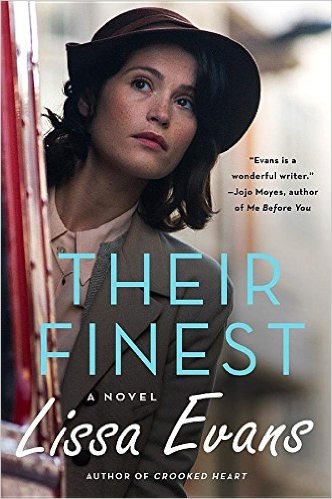
Their Finest


I read the book and watched the film (fairly loyal to the book) before. I did so again, finishing the book today. The author did a lot of (WWII-related) research. 

Both are recommended. The DVD has a director's commentary. The book cover is from the film.

The book has more subplots and is a quick read (over 400 pages). The film in the book and film have different titles.

Thursday, June 11, 2026

SCOTUS Watch: Opinions

The Supreme Court is running out of no-drama opinions. We had three today. One split 6-3, but it was not a major dispute.

Jackson had a unanimous bankruptcy ruling. Thomas (with Gorsuch) said, "Let's go big." Sotomayor said, "Let's not."

Kagan had a unanimous statutory ruling. Bluesky legal minds flagged a notable comment that might limit the Trump Administration's current activities somewhat:

We hold that a defendant charged with violating §1519 must be tried in the district where the falsification occurred; he cannot be tried in a different district where the investigation was located.

The third case was a 6-3 opinion (Barrett v. Jackson) with Jackson having an extended discussion about legislative history. She's big about that sort of thing.

Kagan got off the bus there:

Reliance on legislative history may be appropriate when statutory text in context remains, after careful review, stubbornly ambiguous.

Kagan thought "text, structure, and statutory history" did the trick here. She did not (unlike Sotomayor) join Jackson on the rest. A reasonable position, succinctly expressed. 

I don't know who's correct as to the merits. I do generally trust Kagan's judgment when there is a disagreement. But her overall reasonableness is a guide for us all.  

Constitutionalism 

David Strauss, about fifteen years ago, wrote a helpful little book discussing "living constitutionalism." 

He argues that a form of common law, restrained somewhat by text (especially about clear matters such as the number of senators), is the appropriate path. 

Strauss goes a bit too far on how the amendments overall have been of little consequence. They do repeatedly do less than one might think. 

For instance, the Sixteenth Amendment overruled a dubious 5-4 income tax opinion decided in the 1890s. The original Constitution, on its own, authorizes income taxes.

On the other hand, acknowledging Jim Crow, the Fifteenth Amendment did signficantly advance racial equality, especially in the North. It helped in the South, even then, at least for a few decades. 

Originalism is a dubious path. It is not some big restraint. The alternatives are not just "make stuff up." And, originalists do that too, in a fashion. 

One online comment accepted the approach for rights but not powers. Doesn't work. The two are connected. And, appeals to original understanding to apply the Commerce Clause or whatever is silly business. 

Monday, June 08, 2026

SCOTUS Watch: Order List

The Order List was fifteen pages, which suggested there was some sort of opinion. And, there was another (it is her thing) Sotomayor statement flagging a criminal justice issue:

Although I agree with the Court’s decision to deny certiorari for the reason explained below, I write separately to address the problematic standard the Mississippi Supreme Court applied to the claim petitioner Tony Terrell Clark raised under Batson v. Kentucky [racial discrimination in peremptory challenges], 476 U. S. 79 (1986), in the context of his ineffective-assistance-of-counsel claim.

Mark Joseph Stern also flags on Bluesky:

SCOTUS tosses out a 4th Circuit decision allowing compassionate release under the First Step Act when there are arbitrary sentencing disparities between a defendant and his co-conspirators. Orders reconsideration in light of Rutherford. KBJ and Sotomayor dissent.

This is a typical "GVR," where they "grant, vacate, remand" a case so that the lower court can apply a related opinion. Kagan dissented in Rutherford and joined the limited concurrence written by Sotomayor in the other case referenced in the GVR.

As Stern notes, it isn't fully clear what this means, but it is concerning since it appears to suggest the lower court should apply the (dubious) rulings even broader than necessary.  

Alito and Barrett didn't take part in cases without saying why. Only Kagan and Jackson consistently do so. I prefer that approach. 

One tidbit is that "The United States’ claims in this case are hereby dismissed with prejudice" in an interstate dispute. No reason provided. 

There will be opinions on Thursday. There is also an upcoming execution, which I will discuss separately. 

ETA: Amy Howe posted her summary.

One tidbit is the rare request for a reply to a request for a rehearing. The request is by Lisa Blatt,  superlawyer, and cites changing lower court precedent. Also, looking at the docket page, the Supreme Court posted a request earlier, but it was removed as a mistake. So, one big trivia question.

==

The error flagged here is not uncommon. 

I have repeatedly seen it assumed that the original First Amendment would require thousands of members. A case of not reading closely.

Checking, the House reached 200 members in the 1820s. The measure was bound to be out of date eventually. It was suitably not ratified as written. 

Friday, May 29, 2026

John Quincy Adams

Crawford is a musician and podcaster. 

I'm not familiar with him in either case. I am enjoying this book, which focuses on his antislavery efforts, especially as a House member. It's a book geared to the general reader with some neat drawings.

Adams hated slavery, but like many people of the day, didn't care for abolitionists. Slavery was bad, but we were stuck with it.

Early on, when he was a senator, he voted against a limit on slavery. As a diplomat and executive official, national sovereignty was more important than opposing slavery. For instance, limiting the British power to search American ships on the high seas.

Plus, abolitionists, in his view, exaggerated how bad slaves had it. They seemed unreasonable extremists.

Adams became a hero of the antislavery movement after extremists on the slavery side went after the freedom of speech. The "gag rule" arose after abolitionists supposedly started to get a bit too pushy for their own good, flooding the mails and Congress with antislavery materials and petitions. 

Give an inch and all that.

Adams noted that not formally accepting petitions broadly endangered First Amendment rights, showing how suppression of liberty tends to spread. For instance, abolitionists were motivated largely by their religious beliefs. Religious liberty was at stake.

It also shows how change happens over time. Abolition seemed hopeless in the 1820s and 1830s.

Adams, with some foresight, noted in his diary that the only way it seemed possible was if the country broke apart and/or went to war. Congress then might have the power to abolish slavery as a war measure.

He died in 1848, though he lived long enough to see the Mexican War, which helped introduce the final chapter (chapters?) that led to that war. 

Good book overall. 

Friday, May 22, 2026

Goodbye, Stephen Colbert

It's over. Yesterday was Stephen Colbert's last night. 

It was also the last show of the CBS late-night show overall. There won't be repeats. They will immediately shift to a non-political comic show. 

Multiple celebrities had cameos. There was some gimmick that supposedly six bananas were a retirement gift. 

The final guest (who also sang "Hello Goodbye) was Paul McCarthy, who had that famous appearance over sixty years ago in the theater where Colbert had his show. Quite fitting, though he seemed a bit uncomfortable as the solo guest in a long-form way.

I DVR-ed it, and for whatever reason, it did not record the whole thing. It was about twenty minutes longer, and the DVR cut off at the normal end of the show. I saw what I missed online on YouTube. 

The show was a tad indulgent, overdoing a metaphor of some wormhole who sucked that everything into it. They probably could have handled it with a normal length, especially since they included a "meanwhile" segment with at least one story that wasn't too topical. 

Still, if it amused him, more power to him. I wish him well. I probably will check out Jimmy Kimmel a bit.

They had that short-lived comedy game show-like program after Stephen Colbert with a young woman comedian, who wanted to continue her stand-up full-time instead of continuing. It must have taken a lot of effort. They will now just have comedian stuff.

There are still two talk shows at 11:30 and one at 12:30, both with middle-aged white guys. Why can't they have some variety? John Oliver has a good show, but again, enough guys! 

I'm sure you can find a lot of women in various contexts. But, unfortunately, none of these talk shows entrusted a woman for any length of time (Joan Rivers once had a short-lived show). The late-night talk show might be on the way out, but this is still a problem. 

(We did have a black host once upon a time.) 

I enjoyed Stephen Colbert, though I think he didn't take enough risks. The show was a bit bland. Also, watching was often a matter of liking the guests. 

Basically, he seems like a nice guy with good values, with a wickedly funny side. We saw that more on his old show, but it showed up here, too.  

He will have a small voice role on a Star Trek television show. He's co-writing a Lord of the Rings screenplay with his son. He will find something else to do, maybe after taking time off.  

One possibility is a longer form conversation format like Conan O'Brien and others do. He can show his musical theater side. He might do some drama. 

I think he will be fine. The overall annoying thing is that the network didn't find a way to end things on a nicer note. Colbert might still be angry because he didn't trust their reasons. But it seems gratuitous. 

==

Their Finest tells the story of a British Ministry of Information film team making a morale-boosting film about the Dunkirk evacuation during the Battle of Britain and the London Blitz. It's based on a book.

Gemma Arterton is the lead, and she's great. I rewatched the DVD and enjoyed it. I will eventually see if I like re-reading the book.  

I also rewatched Walking on Sunshine, which uses 1980s songs to tell a story. Arterton's sister plays one of the leads. Fun film. 

Great songs, well choreographed. 

Sunday, May 17, 2026

“Rededicate 250"

The “Rededicate 250: A National Jubilee of Prayer, Praise & Thanksgiving” event in D.C. today had a Christian Nationalism feel. 

The Washington Post article's title:


It was not merely a private event:

A crowd of thousands transformed a block of the National Mall into an evangelical-style worship service Sunday at an event backed by President Donald Trump and funded with millions of taxpayer dollars.

Trump didn't show up. They played a video of his reading a Christian Nationalism-friendly biblical quote from a different event. A few signs of religious diversity (including the usual Judeo-Christian touches with Judaism as a the clearly junior party) aside, the dominating force was apparent:

People described a variety of reasons for coming — to bring awareness to what they see as harassment of or disfavor toward conservative Christians, to pray for the country to repent for its sins, or to fortify what they call the Christian roots of the country — in particular against Islam or other faiths outside Christianity or Judaism. 

Pete Hegseth referencing the mythical story of General Washington kneeling to pray story is the flavor of "history" we will see here. An honest accounting of our nation's religious story would be helpful. 

This bunch, with Trump as their false god, won't give it to you.  It is more likely to be blasphemous, including to many Christian believers. And, to our overall values.  

Wednesday, May 06, 2026

What We Stand For

Joanne Freeman, the historian, argued on BlueSky: 

  • Empathy 
  • Diversity 
  • Equity 
  • Humanity (& the humanities) 
  • A broad idea of “WE THE PEOPLE” 
  • Concern for ANY kind of “we” Truth 
  • (Real) history 

The current regime opposes these things. 

Needs to be stated plainly.

Monday, April 20, 2026

SCOTUS Watch: Order List and Other News

Order List

Today's Order List was long enough that it suggested additional writings. It also had some notable developments, including a case that might further weaken Oregon v. Smith (general applicable laws are generally acceptable for religious liberty purposes).

One case on the "shadow docket":

By a 6–3 vote, and with no opinion, the Supreme Court throws out a lower court decision denying qualified immunity who killed an unarmed, mentally ill man by using "bodyweight force" to restrain him. All three liberals dissented.

A per curiam error corrects a lower court Fourth Amendment decision. Sotomayor, without comment, wouldn't provide relief. Jackson dissents with an opinion. 

Sotomayor, in a statement, discusses a dispute involving a child abduction measure. She agrees it is something they should eventually address. 

This specific lawsuit, however, is procedurally inappropriate to take. Nonetheless, she argues it was at least partially a self-inflicted wound by the Court.

Sotomayor, without comment, also noted she would have granted a case alleging evidence was not properly supplied in a criminal case. 

Justices Alito, Kavanaugh, and Barrett didn't take part in some decisions without saying why. Only Kagan and Jackson consistently provide their reasons. 

Shadow Docket Story

Steve Vladeck addresses a NYT article, with internal documents, discussing a major change in the shadow/emergency/interim docket in 2016. I agree with his overall analysis. The articles provide sunlight on issues of special concern. The actions are troubling.

Fix the Court suggests a proper response would be congressional legislation requiring transparency. If they abuse the process, jurisdiction stripping and budget cuts would be some possible consequences. 

(This was suggested in an email I received via a subscription.)

Or we can go the route of certain conservatives who think the leak is the biggest problem. The overall comments there, as I noted in a comment, ignore that internal deliberations are regularly leaked. Full documents are a step beyond that, but that might be appropriate (e.g., Pentagon Papers).

Thomas vs. Progressives

Prof. Segall focuses on his corruption -- Harlan Crow -- but also links to a wider discussion, how his usual "just so" historical account is garbled. This is who conservatives deem their model judge. 

Happy Birthday, Justice John Paul Stevens. And Adolf Hitler, apparently, going by Justice Thomas. 

Meanwhile ...

Some good news in a lower state court in Pennsylvania, which, on state constitutional grounds, struck down a Hyde Amendment. A concurring opinion also cited religious liberty. 

Some state courts went this route in the past. The principle should be applied nationwide. 

ETA: Two non-ideological opinions were handed down on Wednesday. Sotomayor had the unanimous opinion for one. Thomas had the other opinion, with a dissent by Alito, Roberts (relatively rare dissenter), and Kavanaugh. Sometimes, disagreements aren't always along the expected lines. But 6-3 is still a thing. 

Wednesday, April 15, 2026

Religious Liberty Commission Follies

At a Monday (April 13) hearing at the Museum of the Bible in Washington, D.C., Texas Lt. Gov. Dan Patrick, a Republican and the chair of the commission, asked, “Would it not be a good recommendation that every school, every university, every business, has to have that one sheet on the bulletin board about protecting people’s religious liberty, and that the separation of church and state is the biggest lie that’s been told in America since our founding?”

The Trump Religious Liberty Commission meeting at the Museum of the Bible (book) is fitting. The museum is an evangelical enterprise significantly funded by Hobby Lobby. 

The chair argued that "the anti-God left has used ["separation of church and state"] to suppress people of religion in our country." This is the "biggest lie" told in America since our founding. "Slavery is a positive good" is third or fourth, perhaps. 

Religious liberty is extremely important. It is also highly debated. But the commission is not set up for an honest discussion. The discussion might offer references to Baptists, Madison, and Jefferson strongly supporting state/church separation. 

This caricature of right-wing beliefs leads some to disdain any talk about religion. We will get references to fantasy people in the sky or some such thing. 

A pending case reflects one single-minded view. A Catholic organization wants an exception to an LGBTQ equality provision. Another lawsuit involves a hospice that claims a religious exemption from a trans equality provision. 

I find such litigation selfish. Not all Catholics believe in this anti-LGBTQ doctrine. Regardless, if you want to take part in public affairs, including public welfare services, it is not outrageous that basic equality has to be followed. 

Is this what you want to worry about when providing hospice care to people? Not allowing them rooms in their self-designated genders? Will you only provide them care if they pray to Jesus Christ, too? How shallow a Christian you are. 

(Catholic nuns don't use birth control.* That is b.s., too. The concern has to be the employees. 

Some janitors at a school can't have birth control, even if it is their own employment-based health care. Some sisters realize that it is moronic.)

Last month, Meenu Batra, 53, who has lived in the South Texas border colonia of Laguna Heights since 2002, was on her way to Milwaukee, Wisconsin, to work another case. She’s been a court interpreter for over 20 years, the only one licensed in Texas for Hindi, Punjabi, or Urdu. Her language skills are requested nationwide, where she’s contracted to help people making their way through the immigration court system, just as she did for herself 35 years ago when she immigrated from India to New Jersey before settling in Texas.

I think this is probably a more troublesome threat to religious liberty. Such a translator is likely used by Hindus and other minority faiths partially to obtain religious services. 

Respect for immigrants is generally a religious obligation in many faiths. Some people do oppose anti-immigration policies, especially those of a Trumpian nature, on religious grounds.

Is the presence of "woke" religions a "big lie," too? 

==

Note: Maybe some Catholic nuns do use birth control. Some gay priests are sexually active. 

The "birth control" also sometimes has other health uses. I'm not sure how much that comes up with Catholic nuns. I assume they are not deemed "sluts" if they use it for non-contraceptive reasons

Sunday, April 05, 2026

The Autobiography of Malcolm X

I read a book about Roots, which was written by Alex Haley, who wrote an extended epilogue to this volume. My copy also had a foreword by Malcolm's oldest daughter. The book as a whole was quite readable, if somewhat repetitive. Don't trust all of his citations of ancient history. Tragically, he was assassinated right when he was taking a more open-minded approach. But it was like it was fated.

Extended Discussion.

Wednesday, March 25, 2026

Two Books, Same Author, One Better

I mostly enjoyed this book that combines the anti-war activism of Coretta Scott King with the ultimately tragic story of a Medal of Honor winner (PTSD and a tragic death). Quick reading, smooth narratives.

The King story did sort of peter out. Her anti-war work was important. The author's discussion about it did become repetitive at some point. And then, the war is over, and we basically skip to her dying. 


I found the subject matter of this book interesting.

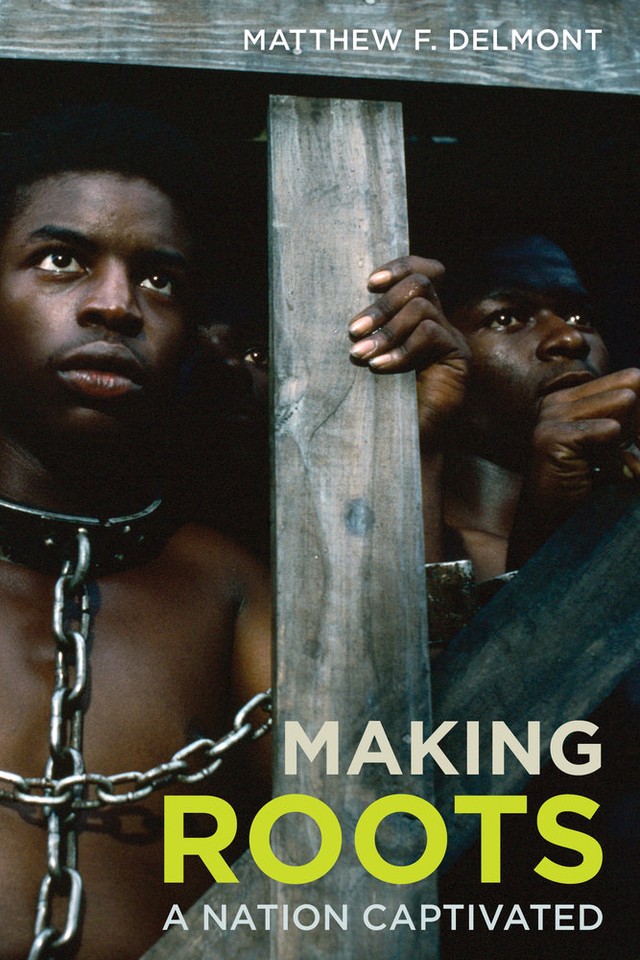
The publication of Roots and the airing of the miniseries in the mid-1970s were major cultural moments. Alex Haley was also important for his work on the "Autobiography" of Malcolm X. 

Good subject matter.

The book, which is shorter by over one hundred pages than the most recent one (putting aside many photographs), however, is harder to read. I also was left wanting, including regarding a short chapter summarizing the book as compared to a more detailed (up to a point) chapter of the miniseries.

The book got too into the weeds of Alex Haley blathering about how great the book would be. The book was okay, but the subject matter warrants a better presentation. 

I never read either book or watched the miniseries. 

ETA: I found Strikingly Familiar (plagiarism) interesting and written in a down-to-earth fashion.

The book there is an uplifting book about a gay couple who adopted a child. The book does not explain why it was published nearly 15 years after the end of the events covered. The baby was found in 2000, so he must be in his mid-20s by now. 

Another version of the story was released in 2020. I suppose that makes some sense since it would be shortly after Kevin is an adult. That book is not referenced in this volume. I find it all a bit weird. 

Saturday, March 21, 2026

RIP Robert Mueller

Robert Mueller, an honorable public servant, has died. The usual comments and responses will now come.

Trump metaphorically pissing on his grave is understandable. Some of the comments? Understandable but depressing.

People had some fantasy vision of "Mueller Time," regarding a Sessions Justice Department (Trump 1.0) appointment, who was acting within the limits of that role. This includes not indicting sitting presidents.

[Trump was very concerned behind the scenes that the investigation would screw him over. It would end his presidency! The crybaby eventually realized how much the system was stacked in his favor.] 

OTOH, can you imagine someone like him being appointed now and Pam Bondi recusing herself?

He still offered a "roadmap" of sorts. He didn't have to do so. It was the responsibility of others, not taken, to carry things through. This includes a report that provided repeated evidence of wrongdoing, including the Trump campaign (family members like Kushner, too) engaging with Russian agents. 

These actions were consistent with President Trump’s previous invitations of foreign interference in United States elections.

[First impeachment.]

Impeachment managers repeatedly warned us about what Trump would do if you didn't stop him. People have this fantasy image of "daddy" saving us, when they are not sneering at the idea of relying on them.

Mueller honorably served, including leading an investigation akin to that of Jack Smith. Smith, to be clear, investigated a former president. He had more discretion to prosecute, as well as having more serious crimes to use to do so. 

OTOH, when Trump was re-elected, to the shame of "We the People," Jack Smith knew the game was up. 

The video is when celebrities reenacted the Mueller Report. Powerful stuff. RIP and don't join with Trump pissing on his grave. Thanks. 

Does Bruen Violate the Tenth Amendment?

Eric Segall reviews a new article co-written by Jake Charles (a law professor with an expertise in Second Amendment issues who teaches at Pepperdine, that is, not a liberal school) that comes at criticism of Bruen from a state rights lens

The opinion, limited by a later case, uses a historical analogue approach. Modern day regulations need to overlap with regulations, and there have to be enough examples (how many?) to satisfy the justices, from the founding era. Not totally clear if that would be 1791 (2A) or 1868 (14A).  

This approach can be challenged on multiple grounds. A major criticism is that it is simply not practical. It has led to confusion in the lower courts. There is also the general problem with originalist-like approaches. Things change. We cannot sensibly be tied to what was done in the distant past.

The powers not delegated to the United States by the Constitution, nor prohibited by it to the States, are reserved to the States respectively, or to the people.

The article frames things in a Tenth Amendment fashion. The Tenth Amendment is a statement of principle. Applying that principle can take us in various directions. It overall promotes federalism, including protecting state power in different ways.

The authors argue that federalism includes the principle that states have the discretion to make policy. This discretion is limited by individual rights and congressional powers. This is not about a criticism of the RKBA overall. It is about the discretion states have to regulate, with the right taken for granted.

States did not regulate in the past for a variety of reasons. They were limited by constitutional requirements. A state cannot censor based on viewpoint. It cannot favor certain religious sects.

OTOH, just because they did not regulate did not mean they could not regulate. Bruen, along with other misplaced "history and tradition" tests, wrongly limit state discretion based on what they did not do. 

Why didn't they do it? A range of reasons, including different times requiring different rules. This is where a "living" (the horror!) approach reaffirms basic constitutional principles.  States, over time, develop new ways of doing things, learning as they go along. That is fine. The Constitution allows it. 

Eric Segall offers that the argument is open-ended. It does provide a basic rule that guards against misguided interference with state power. Depending on the specifics, it can apply to cases (think abortion rights) that liberals like. But that also goes to underlining rights. 

Things often can be framed in different ways. Lawyers know this. They can acknowledge or use certain frames to advance their goals. Some frames are appreciated by certain people. 

Conservatives regularly support state rights. Liberals call out their hypocrisy for selectively supporting them. Conservatives will tend to explain, "This is different." It can be helpful to use the same language and debate details.

The article frames things as a matter of Tenth Amendment rights and powers. The people have the right to pass certain types of laws and have the discretion to do so. 

This is not about a dislike of guns. It is about how artificial restraints interfere with legitimate state power. The argument fits in with "originalist" arguments. The article has plenty of 19th-century quotes to back up its arguments. History, like religion, is not just something for conservatives. 

The sloppiness of Bruen (as Segall notes) is not something to ignore. It's part of the overall discussion. If you like the RKBA, effectively upholding it should be a concern of yours. A sloppy approach, one that has to be treated like a round peg in a square hole to sensibly apply, is rather counterproductive. 

The article, however, is not just a disagreement with the opinion or statement on why it is impractical. It provides a federalism-friendly approach that brings together both sides.  

One criticism that I saw suggests it wrongly tries to argue that it provides a novel new theory. If you want to say it doesn't say anything special, that's fine. Articles can reinforce old principles, sometimes in slightly different ways.

It does not, as the person claimed, merely disagree with Bruen. It notes upfront that there are different ways to disagree with the opinion. It frames things a certain way. It grants RKBA. It honors federalism. 

The article is a helpful approach to provide a reasonable criticism of the current law that offers a sane path. It has implications that will not please all critics. For instance, if you are not a fan of gun rights or are rather absolutist about upholding them.

Overall, I think it is a helpful approach. Not magic. 

==

Note:  A true "history and tradition" approach to rights would leave open a lot of regulations, more than most people support under current law. 

Many people selectively realize this. They will accept more rights when applying the Constitution today, even if originally people would not think them necessary in one area of the law, but not others. 

Then, it will be "no one would have thought about that!" Cf. corporate speech with LGBTQ rights.