About Me

My photo
This blog is the work of an educated civilian, not of an expert in the fields discussed.
Showing posts with label book review. Show all posts

Friday, July 24, 2026

SCOTUS Watch: Summer Order List

The Mets came back and played competitively against two good teams. A misplayed ball by Baty, who shouldn't have been playing the outfield, was a major reason why they didn't win both series. 

Order List

Oh. This is supposed to be about the Supreme Court. Well, the week was somewhat bland. 

The big news was that they granted cert in a case involving the Excessive Fines Clause. It is somewhat unclear why it did so now, but it isn't shocking or anything. They, for whatever reason, got it over with. 

The first scheduled summer order list was otherwise, as usual, basically a housekeeping matter. As noted here, did provide a way to finalize some things sooner rather than later. Nothing special, though.

The cert grant had a catchy hook about someone's plane being seized for illegally transporting a "six pack of beer" to a dry town in Alaska. That is more sloganeering than the full story. There was much more beer involved. 

OTOH, along with them taking the case when the lower court ruled against the defendant, it might have been a sign of what is to come. 

Kagan Spins 

Justice Kagan, during her joint testimony with Barrett, pushed against the "shadow docket" label since they have been doing a better job at transparency. 

It is a work in progress. It was as much spin as truth.

I re-read Steve Vladeck's book on the subject. He's writing a new one on judicial reform. A new edition of The Shadow Docket would have a new introduction, which would show that there are a lot of shadows remaining. Sorry, William Baude.

She also told the Ninth Circuit, where she's the circuit justice, that the Supreme Court is not a "rubber stamp" for Trump. Hey, look at the tariffs and birthright citizenship decisions!

Kagan has to work with these people. She is trying to win as much as she can. She can't say they are just a rubber stamp. They acted like one regularly, though. 

And Also ...

Thomas Goldstein, previously of SCOTUSBlog, has been sentenced. Sounds like a prime candidate for a Trump pardon. 

Upcoming

There are two more scheduled summer order lists. Two executions are likely next week. 

The Nixon Tapes case was handed down fifty-two years ago. Nixon resigned soon afterwards.


Wasn't that fun? 

---

Shadow Docket: Let's do a bit of a deep dive here on this issue. The "shadow docket" is, as Steve Vladeck notes in his book, a collection of things. 

It would include the choices made in the Order List, such as choosing this specific Eighth Amendment case over numerous others involving a person serving a long prison sentence. 

The shadow docket is not just the "emergency docket," though final death penalty appeals both fit that bill and underline that the term still fits. If anything, we have less transparency; Sotomayor, for instance, provides fewer statements in such cases.

Baude (and the new SCOTUSBlog) wants to use "the Interim Docket," which is bullshit. 

As Vladeck and others note regularly, the things decided there are effectively final. We saw that with a lot of the Trump administrative state destruction. 

Baude (see the link in the main discussion) is upset—is he afraid of Alito? -- that the term sounds "nefarious."  Also, we see what they do (often digging deep on the docket pages, not linked to the main orders, where their bare decisions are noted), so it is not really "hard to see."

Again, that is bullshit. We do not know a lot about their decision-making. They still largely work in the shadows, including decision-making (this is cited in the book) by not posting transcripts on the website.

Ginsburg did so. Kagan, after defending her colleagues for being more transparent, did not. 

ETA: I also was excited about Melissa Murray's new constitutional commentary. Eh.
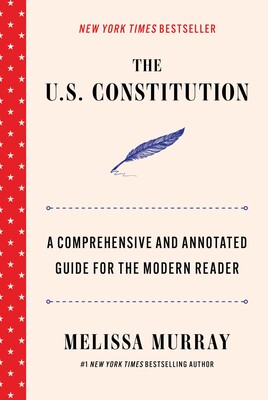
The preface was a quick summary of its creation that seemed like forcing a bunch of stuff into a few pages. And doing so in a somewhat simplistic way.

The summary of each section is helpful, if often a tad too basic for someone who already has more than a passing understanding. It isn't meant to be comprehensive, but sometimes it seems a tad thin. 

It serves its function as a one-volume reference book for the average reader (though now and then tossing in words like "chattel" without comment). Sometimes, there are particularly interesting discussions, at times, with very up-to-date material. 

Murray provides a balanced view, including points of view that she personally doesn't support. At times, you do get the idea she isn't some originalist. 

The subtitle is "A Comprehensive and Annotated Guide for the Modern Reader." It does cover the whole document in annotated form and is written for the modern reader. It has Civics 101 potential.  

The book is formatted comfortably. OTOH, there are no charts, pictures, or anything of that sort. 

I enjoyed Linda Monk's books better. 
Wednesday, July 08, 2026

Doonesbury + Socialists


I have not kept up with the now Sunday-only strips, but read it over the years. Good bio overall with many comics. Meanwhile, recent wins by "Democratic Socialists" led me to write this.

Saturday, July 04, 2026

Happy 4th


It's the 250th Anniversary of the Declaration of Independence. I would link to my book review, but the page is dead, along with the Symbol website. You can search archived pages. 

Wednesday, June 17, 2026

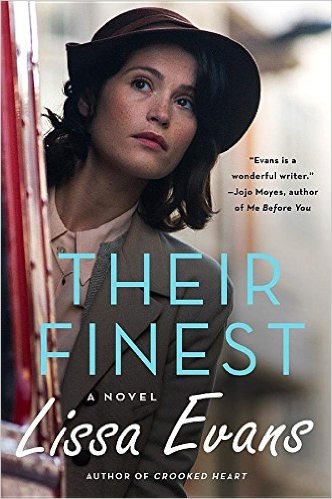
Their Finest


I read the book and watched the film (fairly loyal to the book) before. I did so again, finishing the book today. The author did a lot of (WWII-related) research. 

Both are recommended. The DVD has a director's commentary. The book cover is from the film.

The book has more subplots and is a quick read (over 400 pages). The film in the book and film have different titles.

Thursday, June 11, 2026

SCOTUS Watch: Opinions

The Supreme Court is running out of no-drama opinions. We had three today. One split 6-3, but it was not a major dispute.

Jackson had a unanimous bankruptcy ruling. Thomas (with Gorsuch) said, "Let's go big." Sotomayor said, "Let's not."

Kagan had a unanimous statutory ruling. Bluesky legal minds flagged a notable comment that might limit the Trump Administration's current activities somewhat:

We hold that a defendant charged with violating §1519 must be tried in the district where the falsification occurred; he cannot be tried in a different district where the investigation was located.

The third case was a 6-3 opinion (Barrett v. Jackson) with Jackson having an extended discussion about legislative history. She's big about that sort of thing.

Kagan got off the bus there:

Reliance on legislative history may be appropriate when statutory text in context remains, after careful review, stubbornly ambiguous.

Kagan thought "text, structure, and statutory history" did the trick here. She did not (unlike Sotomayor) join Jackson on the rest. A reasonable position, succinctly expressed. 

I don't know who's correct as to the merits. I do generally trust Kagan's judgment when there is a disagreement. But her overall reasonableness is a guide for us all.  

Constitutionalism 

David Strauss, about fifteen years ago, wrote a helpful little book discussing "living constitutionalism." 

He argues that a form of common law, restrained somewhat by text (especially about clear matters such as the number of senators), is the appropriate path. 

Strauss goes a bit too far on how the amendments overall have been of little consequence. They do repeatedly do less than one might think. 

For instance, the Sixteenth Amendment overruled a dubious 5-4 income tax opinion decided in the 1890s. The original Constitution, on its own, authorizes income taxes.

On the other hand, acknowledging Jim Crow, the Fifteenth Amendment did signficantly advance racial equality, especially in the North. It helped in the South, even then, at least for a few decades. 

Originalism is a dubious path. It is not some big restraint. The alternatives are not just "make stuff up." And, originalists do that too, in a fashion. 

One online comment accepted the approach for rights but not powers. Doesn't work. The two are connected. And, appeals to original understanding to apply the Commerce Clause or whatever is silly business. 

Friday, May 29, 2026

John Quincy Adams

Crawford is a musician and podcaster. 

I'm not familiar with him in either case. I am enjoying this book, which focuses on his antislavery efforts, especially as a House member. It's a book geared to the general reader with some neat drawings.

Adams hated slavery, but like many people of the day, didn't care for abolitionists. Slavery was bad, but we were stuck with it.

Early on, when he was a senator, he voted against a limit on slavery. As a diplomat and executive official, national sovereignty was more important than opposing slavery. For instance, limiting the British power to search American ships on the high seas.

Plus, abolitionists, in his view, exaggerated how bad slaves had it. They seemed unreasonable extremists.

Adams became a hero of the antislavery movement after extremists on the slavery side went after the freedom of speech. The "gag rule" arose after abolitionists supposedly started to get a bit too pushy for their own good, flooding the mails and Congress with antislavery materials and petitions. 

Give an inch and all that.

Adams noted that not formally accepting petitions broadly endangered First Amendment rights, showing how suppression of liberty tends to spread. For instance, abolitionists were motivated largely by their religious beliefs. Religious liberty was at stake.

It also shows how change happens over time. Abolition seemed hopeless in the 1820s and 1830s.

Adams, with some foresight, noted in his diary that the only way it seemed possible was if the country broke apart and/or went to war. Congress then might have the power to abolish slavery as a war measure.

He died in 1848, though he lived long enough to see the Mexican War, which helped introduce the final chapter (chapters?) that led to that war. 

Good book overall. 

Saturday, April 18, 2026

Bible Reading Marathon

Trump Will Participate in a Marathon Bible Reading

He will read a passage from the Old Testament that his Christian supporters cite as a call to national repentance and divine blessing.

I have long had an interest in the Bible. I listen to Bart Ehrman's weekly podcast. I took a New Testament course a long time ago. I have read a lot about the subject. I once read the whole Bible. 

I am reading this book by Rachel Held Evans' sister. It works both as a general discussion of grief and grief rituals as well as a Christian discussion. She comes from that tradition. She's a good writer. 

People will have a cynical reaction to this effort. Trump surely doesn't seem like an honest broker here. The verse he read is somewhat ironic if read honestly:

If my people, which are called by my name, shall humble themselves, and pray, and seek my face, and turn from their wicked ways; then will I hear from heaven, and will forgive their sin, and will heal their land.

Certain evangelicals read some biblical quotes in a Christian Nationalist way. The original context was the Jewish people in ancient times. The current meaning should not be inferred to be a statement of Trump triumphalism. 

I think, quite honestly, our nation should humble itself and seek forgiveness for its wicked ways. It has supported Trump and committed much damage beyond that. It needs to accept what it did. It has to work toward healing.

Susie Wiles, the White House chief of staff, will read Proverbs 31, which includes a wide-ranging list of qualities of “a wife of noble character” that has become a touchstone for many Christian women.

This is another somewhat ironic choice. How would the original author feel about her position? How noble is it to be Trump's chief of staff?

Rachel Held Evans spoke repeatedly about that chapter, about "women of valor." Rachel did not just read the Bible. She studied it in depth. That is the best way. Also, it's a good thing to discuss. 

I suppose when the whole "Bible" is read, it will be the Protestant Bible. I was taught using the Catholic Bible, which has additional material. 

Congress, some time back, read the whole Constitution. Well, not really. They edited it somewhat, skipping over amended parts. That allowed them to skip over the slavery stuff. Did they read the whole thing when they did it again more recently? They should read the whole thing.

The Bible can get tedious, especially all those genealogies and rules and regulations. A few of the prophets go on for quite a long time. But it's okay if they want to read the whole thing. Should be done humbly and not as a partisan thing.

We see the world through a glass, darkly

ETA: I liked the book on grief. The chapters sometimes went too long. 

It is significantly a personal narrative, since she had multiple miscarriages and her sister died. (Her grandmother also died, but that is fairly typical for someone her age.) She is a bit privileged.

She has a husband, family, friends, and a rewarding career. Lots of people don't have all of that to fall back on. Toss in faith, no matter how she noted she sometimes struggled with it.

I respect her overall, helped by an overall liberal outlook. Still, that got to be a bit much after a while, especially with all the talk of rituals involving the community. Not everyone has "a community."

I also am not a Christian. Christianity can be fine. Stephen Colbert is a Christian and all that. 

This addendum is not about my disagreement with the basics of Christian doctrine. Still, the whole died for sins business. Such a great sacrifice!!!!!

That has long annoyed me. Many people suffer and die for a whole lot less. They often don't even know if their death will mean much. They might sacrifice for one person. Imagine dying to save humanity?

(I'll grant the premise! Still dubious!) 

And, sorry to bring this up, why did they need to be saved in the first place? Oh well.

Tuesday, April 14, 2026

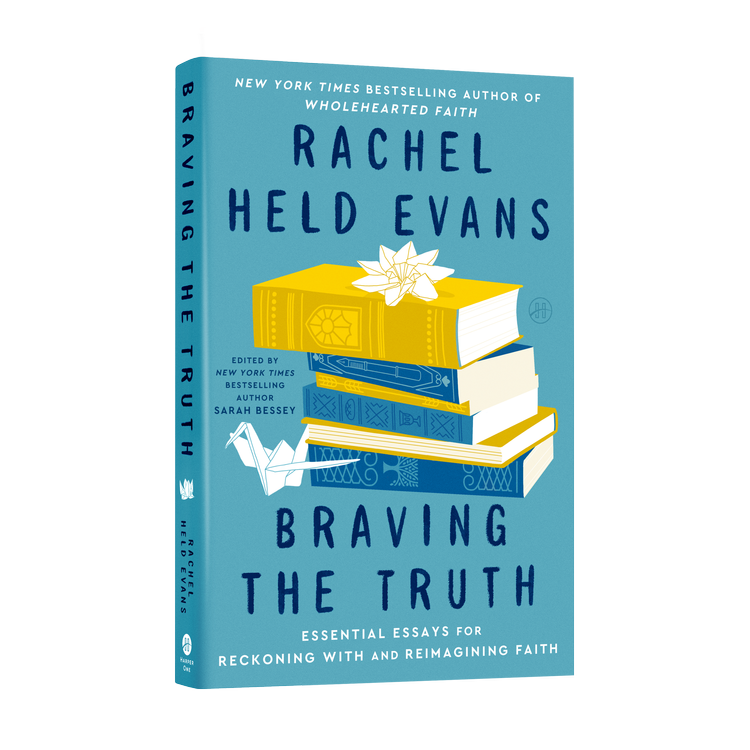
Braving the Truth


Rachel Held Evans died in 2019. Multiple additional books, including this collection of essays (with additional commentary by others), followed. I talk about it here and here. With additional Trump b.s. 

Wednesday, March 25, 2026

Two Books, Same Author, One Better

I mostly enjoyed this book that combines the anti-war activism of Coretta Scott King with the ultimately tragic story of a Medal of Honor winner (PTSD and a tragic death). Quick reading, smooth narratives.

The King story did sort of peter out. Her anti-war work was important. The author's discussion about it did become repetitive at some point. And then, the war is over, and we basically skip to her dying. 


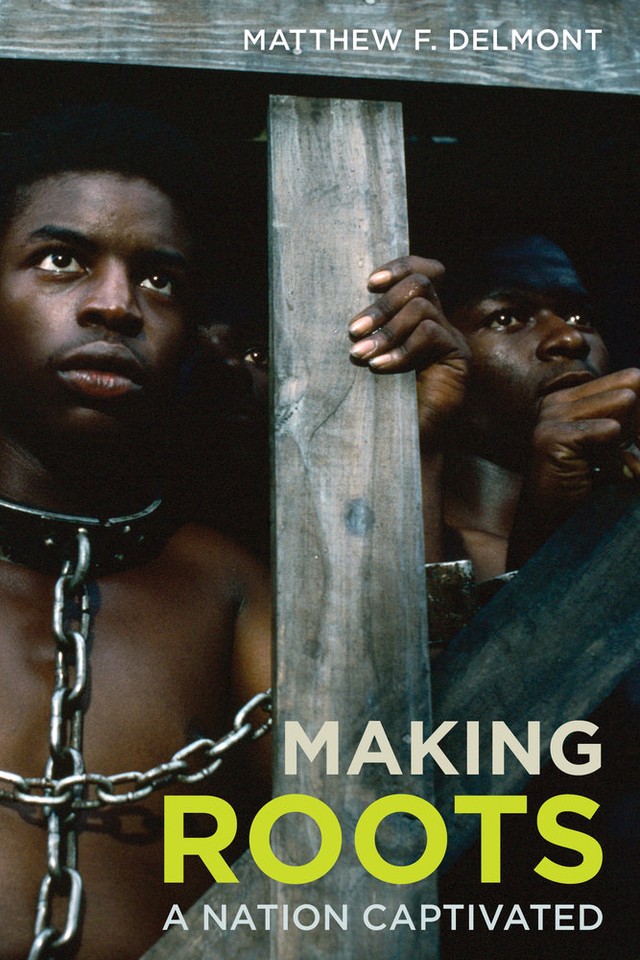
I found the subject matter of this book interesting.

The publication of Roots and the airing of the miniseries in the mid-1970s were major cultural moments. Alex Haley was also important for his work on the "Autobiography" of Malcolm X. 

Good subject matter.

The book, which is shorter by over one hundred pages than the most recent one (putting aside many photographs), however, is harder to read. I also was left wanting, including regarding a short chapter summarizing the book as compared to a more detailed (up to a point) chapter of the miniseries.

The book got too into the weeds of Alex Haley blathering about how great the book would be. The book was okay, but the subject matter warrants a better presentation. 

I never read either book or watched the miniseries. 

ETA: I found Strikingly Familiar (plagiarism) interesting and written in a down-to-earth fashion.

The book there is an uplifting book about a gay couple who adopted a child. The book does not explain why it was published nearly 15 years after the end of the events covered. The baby was found in 2000, so he must be in his mid-20s by now. 

Another version of the story was released in 2020. I suppose that makes some sense since it would be shortly after Kevin is an adult. That book is not referenced in this volume. I find it all a bit weird. 

Thursday, March 19, 2026

Daughter of Daring

I used to keep track of and watch the Oscars. Now, I am barely familiar with some of the films. Instead, I read Daughter of Daring, which is not only a biography of a stuntwoman/actor, but a history of film and Hollywood (with a woman's focus) overall. 

I have also read her Creature from the Black Lagoon book. Both are good. Down-to-earth style, while quite detailed. Fun footnotes. 

ETA: One interesting tidbit is how cliffhanger serials and other films attracted women viewers as escapes and an example of women having agency, including for lower class women.

Monday, February 23, 2026

SCOTUS: Orders

Steven Vladeck references one other SCOTUS rule change (other than the monetary recusal matter that received signficiant attention): 

The second, which got no media coverage, clarifies that, even when a party electronically files a cert. petition through the Court’s e-filing system on or before the day that it is due, it must still complete physical service of the petition within three days. (The sequencing of electronic filing and physical service had been unclear under the previous iteration of the rule; my own risk-averse approach had been to ensure that they happened on the same day.)

Today's Order List mostly deposed many petitions while only granting one for review. They accepted the second question.

Issue: (1) Whether federal law precludes state-law claims seeking relief for injuries allegedly caused by the effects of interstate and international greenhouse-gas emissions on the global climate; and (2) Whether this court has statutory and Article III jurisdiction to hear this case.

Mark Joseph Stern on Bluesky:

The Supreme Court takes up a MAJOR climate case that asks whether federal law preempts (that is, forbids) state-level claims against fossil fuel companies for damages related to climate change.

(See also this discussion from a conservative p.o.v.) 

Kagan, noting why, recused from the determination of two cases. Jackson followed her new rule of not going along with blocking free petitions deemed from those abusing the privilege if the person is currently incarcerated.

There are two opinion days scheduled, so we might get a bit more news than that. There are also oral arguments, including one about the Takings Clause, but they aren't too notable. 

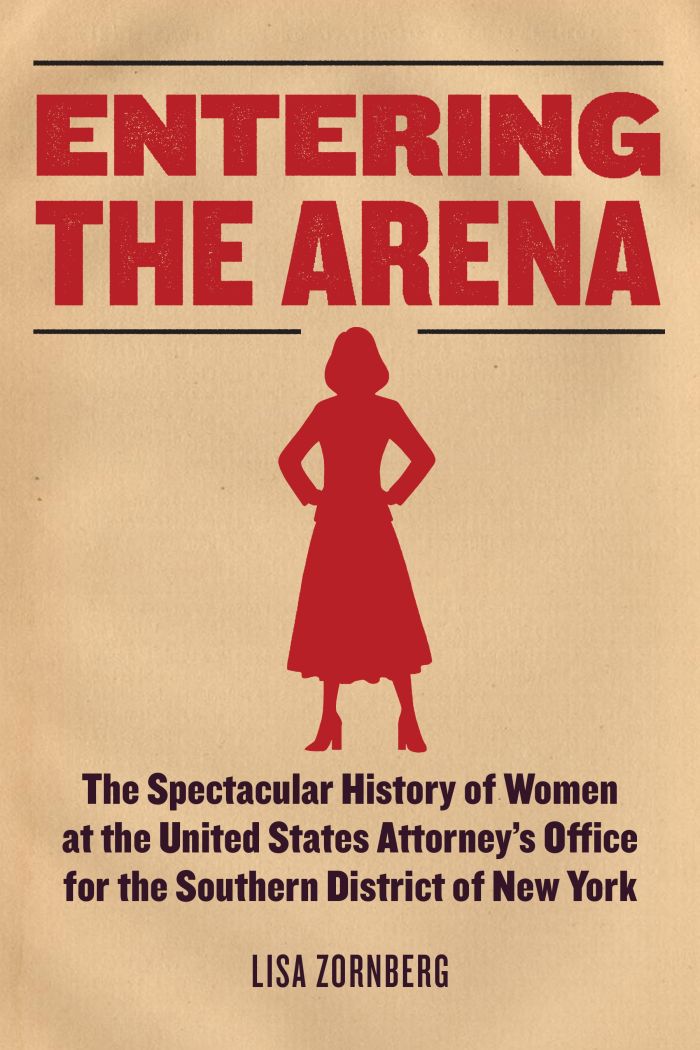
The author was a prosecutor there. Interesting book

Friday, February 20, 2026

SCOTUS v. Trump: Tariffs

Congress should have handled this. 

But, since they are led by chickenshits, a 6-3 Supreme Court opinion blocked Trump's patently illegal (and financially stupid) usage of tariffs.

People wondered why they were taking so long. The 170 pages of opinions help explain why. 

Roberts handled the majority and did so in twenty pages. Kavanaugh (for Thomas and Alito) wrote a dissent three times as long. 

Gorsuch wrote a "combative" (to cite one comment), quotable concurrence twice as long.

Gorsuch, essentially thinks virtually everyone else is wrong, hypocritical, or both. He, virtually alone, is pure.

Right you are, Law Dork. Gorsuch is a prick and remains one even if he sometimes is on the right side.  He took over for Scalia and has improved his writing. 

Still a prick. People are loving some of his concurrence. Kagan and Barrett show that some of it is hot air. Dude goes too far. Keep that in mind. 

Both Barrett and Kagan, in different ways, basically told him to stop mansplaining. Kagan, for the liberals, didn't use the "so-called major questions doctrine." 

Kavanaugh and Thomas (adding some other originalist invention that many originalists aren't aware of) found a way to avoid it. Some are surprised at Kavanaugh's vote, but other than Alito and Thomas, he has been the most Trump-friendly. He did go the extra mile here. Give that man a beer. 

Jackson, arguing that it is what many legislators use more than bare citation of text, appealed to legislative history. She will be fighting the young Trump appointees for years to come. You go, girl! 

When Congress tells us why it has included certain language in a statute, the limited role of the courts in our democratic system of government—as interpreters, not lawmakers—demands that we give effect to the will of the people.

Barrett's opinion (a few pages, since she's not a blowhard) specifically answered Gorsuch, tossing (as required) a couple of citations of her former boss (Scalia). She noted:

Textualists—like all those who use language to communicate—do not interpret words in a vacuum. Instead, we use context, including background legal conventions, common sense, and constitutional structure, to ascertain a text's most natural meaning. (cleaned up)

Which is fine. Just to be clear, those terms are rather flexible. Again, that is fine, since any interpretative method will be, especially in hard cases. 

It is just that when Scalia or Gorsuch claims their method is special while the other side is lawless or something, they are full of themselves. 

I wrote something about originalism and Richard Hasen's book (not new) about Scalia here. More here ("Joe from the Bronx"). 

He has a chapter about "word games," arguing that textualism sometimes is just that. Like Jackson, Hasen also cites others who have found that Congress expects its laws to be handled differently. 

The majority opinion argues that there is no "foreign policy exception" to the major questions doctrine, especially when it involves taxation, a basic congressional power. Reminds me of the Steel Seizure Cases and the Supreme Court's citation of domestic powers. 

Roberts left open the possibility that Trump has the power to apply tariffs using some other legislative authority. Such authority has various limitations. It won't let him do his unhinged, power-hungry routine against various nations. Well, as badly. 

The law is crystal clear; conservatives are wary about tariffs, and it is a way for the Supreme Court to show they are not a potted plant. 

TPM is correct that the Supreme Court took too long. This has been going on for around a year. The tariffs are lawless. They caused lots of problems. 

Let's not exaggerate. The Supreme Court should have restrained Trump much more. And, the result is messy, since it does not handle the relief for taking money illegally. More litigation will follow. 

But you take the wins when they come. Trump reportedly was cursing when he found out about the opinion. He later said at a press conference:

Trump praises Alito, Kavanaugh and Thomas for dissenting on the tariffs ruling before, calling the other justices "a frankly disgrace to our nation" who are "very unpatriotic and disloyal to our constitution" and are "just being fools and lapdogs for the RINOs and the radical left Democrats."

Justin Baragona on BlueSky also flagged that he still welcomes three of the justices to his speech to Congress, while others are "barely" invited. Barrett and Gorsuch are embarrassments to their families. 

Yeah. I'm still with the House Minority Leader.

"Fuck Donald Trump and his vile, racist, and malignant behavior

“This guy is an unhinged bottom feeder,” Jeffries added. “Every Republican sycophant who continues to stand by their cult leader should be run out of office.”

Let's end where we began. Congress could and should have handled this. They still can. 

A Democratic Congress would have had a better shot.

ETA: The law here should not cloud the policy. 

The very reason this lawsuit could be brought is that it brings financial harm to the challengers.

My reference to Congress touches upon this. Democrats are already highlighting the economic harm and demanding refunds for ill-gotten funds. 

Trump promoted tariffs as a fundamental aspect of his economic policy in the 2024 elections, to much scorn from reasonable people. Reason, however, did not win out. Many still realize the policy was stupid and (contra to his lies) mostly paid by Americans. 

Other Stuff

They also changed the rules to help flag financial conflicts. The public information office posted an explanation (sometimes just notify the press). 

It would be even better if Roberts and Alito (well, he might be gone soon) sold their stocks. Also, be nice if all of them, not just Kagan and Jackson, explained why they recuse from cases. 

There was also a housekeeping order. More orders on Monday. Two opinion days next week. They are back hearing oral arguments. So busy, busy. 

They will also have (in March) an event in honor of Sandra Day O’Connor. 

Sunday, February 08, 2026

Storm at the White House

A narrative history of the events of January 6th is still hard to read. The book provides diverse voices, including police, members of Congress, and even some insurrectionists ("protestors or riots" in the author's words, but multiple members of Congress, including Mitch McConnell, called it a failed "insurrection"). The violence was horrible:

Weapons [used against the police] included hammers, rebars [metal bars], knives, batons, and police shields taken by force, as well as bear spray [meant to stop a 500-1000lb animal] and pepper spray. Some rioters wore tactical gear, including bulletproof vests and masks.

An officer later described a fellow officer being tasered. The officers were also hit, gassed, choked, and more. Four officers were so stressed out that they committed suicide. One died of "natural" causes. 

Rep. Mullin (R-OK), after Babbitt was shot:

He [U.S. Capitol Police officer] was the last person in the world that ever wanted to use force like that. He wasn't wanting to do that. I know for a fact, because after it happened, he came over. And he was physically and emotionally distraught. And I actually gave him a hug. And I said, "Sir, you did what you had to do."

(He later voted to object to the electoral votes, the debate over which was ongoing when they had to take a break because of the storm at the Capitol.)

People were prepared for battle:

US Park Police officers reported seeing "numerous individuals" with firearms, pepper spray, pipes, and other possible weapons. Others were wearing body armor and riot gear, carrying radio equipment, and wearing "military-grade" backpacks. Among those who were screened, the Secret Service had confiscated hundreds of prohibited items -- knives, pepper spray, brass knuckles, gas masks, Tasers, body armor, and batons.  

[The claim that the protests were peaceful is absurd. There is also clear evidence that guns were involved. Strict D.C. gun laws did help keep more people from bringing them. Even stun guns are quite dangerous.] 

VP Mike Pence comes off well. A staffer quoted 2 Timothy to express his actions on that day: " I have fought the good fight, I have finished the race, I have kept the faith."

A symbolic moment was now Sen. Kim (NJ) going outside of the House chamber and starting to, by himself, join in the clean-up. The official vote count was complete late in the night, hours later than necessary because of those objections. 

Trump told the protestors to "be wild" and let them be wild for hours, until telling them to leave. He was correctly impeached (10 Republicans), but only a few (seven) Republicans voted to convict. Thus, we are where we are.

The vile video, which repeated false claims about a stolen 2020 election, showed the Obamas’ heads edited onto the bodies of apes as part of a “Lion King”-themed meme that cast Trump as “King of the Jungle.”

Republicans aid and abet Trump. They now and then find something to be upset about. People like Senator Tim Scott, who is suddenly appalled at Trump's racism. I'm with him:

“This disgusting video posted by the so-called president was done intentionally,” Jeffries said. "Fuck Donald Trump and his vile, racist, and malignant behavior

“This guy is an unhinged bottom feeder,” Jeffries added. “Every Republican sycophant who continues to stand by their cult leader should be run out of office.”

[The NY Daily News didn't spell out a certain word, but Jeffries said it.]

Every time Trump does something, remember it isn't just him. He is there because of his aiders and abettors. We talk too much about him. This is a wider problem. It is both natural and misguided to focus on one person, both for doing good and ill. 

Some -- like Mike Pence -- will have a limit and stand up at times. I doubt James David Vance would have acted like he did on January 6th. 

We must continue, to quote members of both sides of the aisle on that day, not let the "thugs" or thug, as the case might be, win. 

Saturday, February 07, 2026

Developing A Scientific Temper

Gauhar Raza discussed his book, From Myths to Science: The Evolving Story of the Universe, on a recent Freedom From Religion Foundation podcast. It's a weekly broadcast on Thursday with one-half news, one-half usually some guest. 

He cited a quote from the Indian founding father, Nehru, in his book, Discovery of India.

The scientific approach, the adventurous and yet critical temper of science, the search for truth and new knowledge, the refusal to accept anything without testing and trial, the capacity to change previous conclusions in the face of new evidence, the reliance on observed fact and not on pre-conceived theory, the hard discipline of the mind, all this is necessary, not merely for the application of science but for life itself and the solution of its many problems.

The Indian Constitution has a section of "fundamental duties," which includes “to develop the scientific temper, humanism and the spirit of inquiry and reform.” Among the other duties are "to protect and improve the natural environment including forests, lakes, rivers and wild life, and to have compassion for living creatures."

The fundamental duties are civic guidelines that apparently are "not justiciable." That is, they are not rights and obligations that are legally binding. Still, they provide a vision to follow. If some legal dispute arises, it also would seem reasonable to apply the law, if reasonably possible, without violating such duties.

As always, it is interesting to consider other national constitutions and laws. How do they govern and apply principles with some universal appeal?  

We should take more careful attention to such things, especially for a country that now challenges China as the most populous in the world.  

National Prayer Breakfast 

It's that time again. 

The National Prayer Breakfast, which as Stephen Colbert notes, threatens the separation of church and breakfast. It also has other issues.

Various groups encouraged politicians to boycott the event. Trump took the occasion to be horrible himself, including bashing Democrats, and selling how he is helping bring God back to this country. 

A time for politicians to join together and pray can be a useful event. It can be a benign one where they humbly respect their religious beliefs. It's possible. 

Trump goes another way and underlines why it was a tragic day in our nation when the people elected him in 2024. His profaning of religion included. 

Monday, February 02, 2026

Odds and Ends

SCOTUS is on its mid-winter break. 

It released its March argument schedule, which includes April 1 (birthright citizenship). See also, some of the anti-BC briefs.

==

Today's Groundhog's Day and this is Black History Month. I briefly talk about that here with further links with more info.

==

I watched Ted Lasso (first five episodes) on DVD around five years after most people. It does have charms, especially such a positive lead, which we need in these times. 

The two primary women (owner and girlfriend of a player) characters are well played. There are so many shows these days on so many platforms of which I see nearly none.  

Interesting book with four flawed individuals.

Someone responded to a post about an anniversary of the 18th Amendment with a "what a bunch of morons" sentiment. That's a somewhat cheap shot. 

Thursday, January 29, 2026

The Struggle for Judicial Supremacy (Robert Jackson)


Imagine if someone wrote a book like The Struggle for Judicial Supremacy: A Study in American Power Politics today. Would they be confirmed to the Supreme Court, to replace the Chief Justice (someone else was elevated in-house), the next year? It might be exciting.

Robert Jackson was FDR's solicitor general and attorney general (his position when the book was released in 1940). He was a strong partisan supporter and testified in favor of the court expansion bill. Jackson includes FDR's message to Congress and radio address on that bill in the appendix. 

(Jackson skims over the controversy. He argues that a major problem was that the bill was not bluntly promoted to address misguided judicial supremacy. There was a hard-to-take argument; supposedly, it was really just a reform bill to improve the courts.)  

What is "judicial supremacy"? Each branch of government is "supreme" in its own sphere. Congress can impeach whom it wants (realistically speaking), as long as they are a federal officer. Presidents can veto what they want. In his famous Steel Seizure Cases concurrence, Jackson later discussed the broad power of the modern-day president.  

Jackson acknowledges an appropriate court concern (while noting they alone aren't involved) in protecting civil liberties. He does not reference it, as it was not yet famous, but Jackson endorses the famous "footnote four." 

(I don't think "judicial supremacy" merely means judicial review. Judicial review has its limits. Either way, being "supreme" in a certain area is not "supremacy." There is a greater meaning there.) 

His concern about "government by lawsuit" was the usage of substantive due process to, in his view, incorrectly override legislative discretion in policy matters. 

Likewise, an artificial application of constitutional provisions to rob the people's representatives of the discretion to make policy. This often had an economic flavor, so we have many cases involving employment, rate regulation, taxation, and so on. 

The Lochner Era and the battle of the New Deal were his particular topical focus. A specific concern, like now, was the lower courts, where injunctions could block government programs, even when federal law appears to deny the power to do so (tax injunctions). 

He provides an in-depth analysis of many legal disputes (after about 100 pages, I started to skim). Jackson argues that, generally speaking (again, civil liberties would be an exception), a strong presumption of constitutionality should be the rule. Eric Segall would be pleased. 

Justice Jackson had his limits in the area of civil liberties, especially after World War II. He thought there were limits to free speech, especially in the battle against fascism and communism. That is, "the constitution isn't a suicide pact." Jackson also thought there was a limit regarding the federal courts' interference with state criminal trials.  

Jackson warns that the courts have limited abilities. They work by lawsuit, argued by lawyers. Policy is not just a matter of applying legal principles, especially via specific disputes. A single dispute will not provide enough information. Litigation can also take a long time. Meanwhile, public policy is in limbo. 

He notes early on that what works for his time might not work in future days. Jackson was no originalist, though he respected history. Like FDR, he supported a "living law."

Justice Rehnquist (as he then was) in the link at the top of this entry noted that this is a "dated book." It is a project of its time. People might even have been surprised at it in late 1940. Wasn't the struggle for judicial supremacy won by FDR? Jackson knew, however, that it was a long haul. 

Imagine, for instance, what Jackson would have thought when the Supreme Court struck down the legislative veto a few years after Rehnquist wrote those words. Would he support a court expansion bill today? Either way, judicial supremacy remains bad.

Saturday, January 17, 2026

SCOTUS Watch

I discussed this week's SCOTUS news here.

Two cases involving transgender athletes resulted in three hours of oral arguments. This led the usual suspects to complain that some were not being "originalist."

But as someone who respects the Constitution, I find it extremely difficult to pretend that the founding fathers envisioned a country, even with the gloss of the 14A, that required a later 20th-century view of the roles of women. They simply didn't, and trying to make that fit is a fool's errand.

The entry led to the usual comments. This person is a lawyer. They are openly a Trump supporter. OTOH, they are annoyed at Attorney General Bondi's antics and ICE thuggery. Must take the bitter with the sweet. That's pure Trumpism.

Anyway, the comment is typical. It is also equal parts tiresome and wrong. It led me to respond as I have for years. I will include my reply, slightly edited, below. 

I respect the Constitution. I read it and see an equal protection clause. It doesn't say "as persons were understood in 1868."

I read my history too. Many framers specifically rejected the conceit that the text should be limited to 1868 understandings of social realities and so on. 

The open-ended language made that particularly difficult. Due process of law? That has been developing since the Magna Carta.

And my McCulloch v. Maryland, an opinion that the Reconstruction Amendment's founding fathers cited regularly. An opinion written by John Marshall, a ratifier.

(See, e.g., the books of Gerard Magliocca.) 

We have a constitution that is not only for the limited understanding of the immediate society that ratified its text. It is for all time. For a future that ratifiers were only dimly aware of. I'm summarizing John Marshall here.

But people don't really consistently care about the framers. The First Amendment (such as free speech rules) and Taking Clause, for instance, are not applied as they were understood back then. 

The First Amendment, for instance, was understood to allow much more restrictive legislation than is allowed today. We do not slavishly follow the original understanding. That's fine. 

Did Benjamin Franklin, to take an example, expect the Constitution to be applied via 18th-century understandings of social groups when it was used in the 20th Century? His scientific mind would realize we would not be set in stone in that regard.

The 14th Amendment, not being kept up with the times, is especially absurd. Congress is given specific power to enforce it.

What Congress? The Congress in power at the time. So, Congress today would enforce the Fourteenth Amendment. What would they do? Try to figure out societal understandings in 1868? Who thinks that? 

They would look at current needs and understandings to determine what equal protection means. Do people consistently find this troubling? They do not. I include conservatives who talk about original understanding. 

The Constitution itself is set up not to be fixed to the past, which is simply impractical. It is not being applied as some kind of role-playing game. It is applied by 21st Century society. Using current understandings. 

The 19th Amendment alone changed the equation for women. Women now vote. They were in legislatures. Voters are on juries. They have a more equal role in society overall.

Over time, facts and situations change in other ways, including understandings of LGBTQ individuals overall. Not just that. For instance, a conservative justice back in 1926 spoke about changing facts resulting in different results in property cases. 

This overall principle was factored in over our history when interpreting the Constitution, including by conservative justices. It doesn't take much imagination to see it. 

But, selectively, we get such comments. 

Monday, January 12, 2026

SCOTUS Order List (and other stuff)

First off, I enjoyed Emily on Fire, a book co-written by James Patterson, which is a young adult novel whose title is a tad literal. I'm not usually a reader of Patterson (or Danielle Steel), but the cover drew me in at the library. 

Her mother died of cancer, and her sister committed suicide. Now, Emily plans to kill herself (you know how) to get the world to realize that we are fucked up and have to do something! The book mostly uses her point of view.

The book is raw (and honest, which is important) while retaining an empathy that provides some optimism that is much needed these days.

The only other news on the merits docket came Thursday—when the Clerk of the Court, in a letter to the parties, announced that Justice Alito is recusing from a case in which the Court is set to hear argument later today. 

Steve Vladeck explains an exception to the usual recusal without comment approach done by most of the justices, minus Kagan and Jackson. Sotomayor sometimes comments.

The norm (including applied to Alito vs. Kagan) was found on today's Order List. The Court granted some cases for review on Friday. Today, more so than normal perhaps, it was mainly about clearing brush -- a list of non-grants.

‪Sean Marotta‬, a lawyer, noted on Bluesky:

The #SCOTUS orders list today is a reminder of the shrinking commercial docket. Cases that would have been shoe-ins in the 90-case docket are getting denied regularly.

Kavanaugh, without saying why, noted he would have granted review in a bankruptcy dispute. As usual, I had to separately look up the docket number on the docket page, since the Supreme Court does not provide a link. Can you change that, guys?

The transgender athletes' oral argument is tomorrow. 

ETA: A comment in response to my reference to the Order List somewhere else flagged that there are two atypical requests for briefing respecting petitions for rehearing. I appreciate such information even though it encourages my excessive online habit. 

PFRhs are very rarely granted. The federal government waived a response in one case. In the other, it appears like they want to speed things along.

A bit of inside baseball during football playoff season.

==

I'm not too happy about most of the final scores in the first set of NFL playoff games. The Panthers (after two losses) gave the Rams a fight, but the end result was a third loss. I'm fine with the Bills winning.

A Jaguars' win would have been okay, too.

ETA: A close game, helped by the Texas QB screwing up, became a laugher in the 4th with Houston winning. It might be Rodgers's last game. 

I'm fine with that, particularly (1) not a fan of Aaron Rodgers, (2) Annoyed at the Week 18 win (they would have been better off losing that close game than yet another Steelers loss in the playoffs), (3) I'm fine with Houston, and (4) it's a better match-up with the Pats.

Saturday, January 10, 2026

The Actual Art of Governing

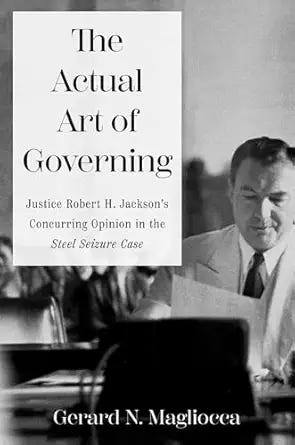
I discussed this book in the weekly SCOTUS news discussion linked in yesterday's entry. It is overall interesting and well-written, stuffing a lot of analysis into around 150 pages. 

The concurrence provides the famous three-part summary of executive action (done with congressional approval, congressional silence/zone of twilight, with congressional opposition/based only on Art. II power). 

It also has the famous putdown of the use of history ("originalism" wasn't firmly a thing yet) to determine constitutional matters as akin to Joseph parsing Pharaoh's dreams. Or interpreting animal entrails, you can say.

The title refers to this passage:

"While the Constitution diffuses power the better to secure liberty, it also contemplates that practice will integrate the dispersed powers into a workable government. It enjoins upon its branches separateness but interdependence, autonomy but reciprocity."

Justice Jackson was concerned about executive power, including their claims of emergency power. He was in the FDR Administration and was the lead Nuremberg prosecutor. 

The Steel Seizure Case is a telling example. Truman lost, followed the opinion's dictates (he soon went to a barbecue or some such with Justice Black, famously disagreeing with his opinion but enjoying his bourbon), and nothing really bad happened. The feared emergency was overblown.

Jackson also wisely cautions the reader to "note the gap that exists between the President's paper powers and his real powers," especially as compared to the "eighteenth-century sketch of a government hoped for" in 1787. 

A conservative scholar, a Trump supporter, is now writing entries about how "almost" all former presidents pushed back on limits on their removal power. Okay? Congress and the Supreme Court also have a high opinion of their power. Consistency in that regard is of limited note. 

On the merits, I think Justice Kagan's partial dissent in Seila Law is correct. The Constitution leaves this matter generally to the political branches. Presidents don't have to go "meekly" along as Congress regulates. Each has significant power.

These days, as Justice Jackson noted in his famous concurrence, presidents have a special degree of power. The Supreme Court, now with a supermajority of former members of the executive department (five members of the conservative majority, including the Chief Justice, plus Kagan), adding more is not advisable.

Trump recently asserted to the NYT that the only limit to his power is his own morality. Jackson replies, quoting Kipling:

The essence of our free Government is "leave to live by no man's leave, underneath the law" -- to be governed by those impersonal forces which we call law.

Jackson refers to someone many of the founding generation (history has value, it just doesn't provide all the answers) followed including regarding judicial independence:

We follow the judicial tradition instituted on a memorable Sunday in 1612 when King James took offense at the independence of his judges and, in rage, declared: "Then I am to be under the law -- which it is treason to affirm." Chief Justice Coke replied to his King: "Thus, wrote Bracton, The King ought not to be under any man, but he is under God and the Law.'" 

Jackson, whose clerk's clerk wrote the opinion (this is covered near the end of the book), would have probably agreed with his namesake in Trump v. United States. In dissent. 

===

Note: The other opinions each have notable passages. Frankfurter, rambling as usual, included some words supporting a living constitution view of things.

That requires both a spacious view in applying an instrument of government "made for an undefined and expanding future."

He applied this rule in applying due process of law. The approach will lead some to worry about arbitrary, idiosyncratic judicial power. 

An honest accounting, however, will show that is how judges operate. They apply the law case by case, over time, taking into consideration various things, including developing conditions. 

There will also be a personal aspect in judging. Jackson's concurrence was a result of the biography of the writer. We need not ignore this reality, that AI does not write these things; AI has its own biases. 

As Westley notes in The Princess Bride, we are people of action; lies don't become of us. 

Black wrote the often forgotten opinion of the Court. Two justices "concurred," two explicitly said they also concurred with Black's opinion, while only one of the majority explicitly said they were only concurring in judgment. It's a somewhat curious way of doing it. 

The Chief Justice (with two others) dissented. Truman's appointments split (2-2) while Jackson (who Truman appointed as Nuremberg prosecutor) also voted with the majority. All nine were either FDR or Trump nominees. All Democrats.  

Black was second in seniority (after the Chief Justice) for around twenty-five years. Is that a record? 

Wednesday, January 07, 2026

Some Books

The First Eight: A Personal History of the Pioneering Black Congressmen Who Shaped A Nation by Jim Clyburn is pretty good. It concerns the first eight black South Carolina congressmen, written by the ninth. 

The author was once a history teacher, so he has some skills in particular to write about the subject. The style is straightforward and generally easy to read. At times, it got a bit dull. 

Among the first eight is Civil War hero Robert Smalls and Thomas Miller, who looked white, and appears to have been the grandson of a signer of the Declaration of Independence. The book helpfully places the eight into the context of the times.

===

I recall reading The Princess Bride a long time ago. 

At least, I recall reading William Goldman talk about how (he takes this conceit quite far, including in later editions) the book is actually merely an abridgement of a much longer (nonfiction) work. 

The death of Rob Reiner led me to re-watch the film and read the most recent edition (it has "the first chapter" of a sequel) of the book. The book is quick reading with multiple asides. I read the over four-hundred-page book in basically two days. 

My edition had two anniversary introductions plus the intro to the main book. So, you read over fifty pages before getting to the main attraction. 

The book is mostly like the movie. The book adds a few things about Buttercup's parents and a "zoo of death," but the film and movie mostly overlap. 

It's enjoyable. I won't say it is GOAT material or anything. It is enjoyable.

I wish Buttercup had a more active role. She comes off as rather naive. As a satire of typical fairy tales, that somewhat makes sense, but still. 

The book also reminds us that these aren't great people. The heroes, after all, are criminals. Westley becomes a pirate. Pirates do some bad things. 

==

I listened to As You Wish, written by the actor who plays Westley. It is basically a 25th Anniversary era celebration of the film. The audio included many people involved in the film. That was charming.

I am not a big books on tape fan, especially for longer works. This book isn't that long. I didn't seek it out. I wanted the book, and the audiobook is what came up.

(I'm listening to Selma Blair read The Diary of Anne Frank. She does a good job. The diary is longer, and I don't know if I want to listen to the whole thing.)

The last disc was corrupted, so I could not finish listening to it. That was annoying. 

===

I also read The L-Shaped Room, an old British book about a woman who moves into a seedy apartment after she gets pregnant. The first time she has sex. 

It was okay. There was a certain artificial flavor to it, including how the main character never truly was at risk. For instance, her aunt eventually pays her to type a book, and then she makes money typing, allowing a means for her to make money after she is fired.

(The book was also at times somewhat tediously wordy. There were some interesting supporting characters, including a gay black musician and two prostitutes, each somewhat simplistically drawn.) 

The link is to a film starring Leslie Caron (more familiar for such works as Gigi), which I saw a long time ago and wish to see again. Nonetheless, the only DVD I was able to find was the wrong format. 

And, though TCM sometimes plays her films, they never air that one. Annoying. Checking the summary, the film changes the book somewhat, including explaining why a French actress is being used.