About Me

My photo
This blog is the work of an educated civilian, not of an expert in the fields discussed.
Showing posts with label voting. Show all posts

Tuesday, August 25, 2026

SCOTUS Mail-in Voting Ruling


Various preliminary takes on yesterday's order (though it is on the opinion page) have already been provided by my usual sources

The general conclusion: it might have limited effect, it might be a red flag, and overall, the dissents are correct. 

Trump is clearly wrong and the Supreme Court should not do anything to give him aid or comfort, however limited. And this isn't the first time. To be continued. 

Monday, June 29, 2026

SCOTUS Watch: Opinions/Orders

Orders

The Order List had some notable content, including multiple grants and no grant in the E.J. Carroll case. Maybe, just maybe, Trump will have to pay up for his sexual assault.

Gorsuch (with Alito and Thomas) returns to his concern about health workers not being able to obtain an exemption from vaccine mandates. NY, among other things, argues it is a bad "vehicle" for review. 

Thomas (with Gorsuch) wants to re-examine NYT v. Sullivan, citing original understanding (the case involves Alan Dershowitz suing CNN). If they want to quote original understanding, quite a few modern-day First Amendment cases should be decided the other way. A lot more limits were allowed back then. 

Sotomayor, for the liberals, dissented in a qualified immunity case involving a prisoner alleging mistreatment. There is a good originalist argument, ignored by conservative justices, that juries should have wide discretion to find government officials liable for wrongdoing. The Founding generation thought juries were the "palladium of liberty," even more than judges, who were creatures of the state.  

Each Trump nominee did not take part in a case without saying why. 

There should be another "clean-up" order, with perhaps more recusals, later in the week.

Opinions 

Barrett (with Roberts + the liberals) upholds a rule regarding mail-in ballots. Rick Hasen argues that "text,  history, and longstanding practice going back to the Civil War" back her up. A somewhat unhinged Alito opinion, however, still received four votes. 

Kagan continues the expansion of the reach of the Fourth Amendment to "geofence warrants," regarding the location of cellphone users. Alito, Thomas, and Barrett dissented. Gorsuch concurs but tosses in some cosplay about original understanding.

[Orin Kerr of Volokh Conspiracy is one resource for this topic.]

Roberts had the big two for the day involving agencies. The Federal Reserve, 5-4, can retain its "for cause" removal rules. The dissenters partially complain about the reach of the opinion, which broadly rules to bring clarity to the question.

(People are arguing that Roberts/Kavanaugh selectively exempt the Federal Reserve "to protect their stock portfolios." The special exemption is dubious. OTOH, various agencies regulate financial matters. They also affect stock portfolios.)

Not so for other agencies, overturning long practice (at least from the late 19th Century) and precedent (from the 1930s). The whole thing is bullshit, 6-3, Sotomayor (Kagan usually handles this issue) with the dissenting opinion for the liberals. 

(Her dissent, which she read from the bench, is very good. We should have audio/video.) 

The First Congress split various ways regarding the proper constitutional and policy rules for removal. It is a political question that should be left to congressional discretion. The dissent is correct that the majority forgets its "place." The voters need to secure a new Congress that reminds them. 

The 6-3 majority puts its thumb on one side. Perhaps, it is an ironic move to honor the 250th Anniversary of the Declaration of Independence (tyrannical king). 

Some more opinions tomorrow.

ETA: A discussion about them. 

Tuesday, May 26, 2026

SCOTUS Order List

The weekly Order List had some interesting bits.

The justices decided the appeals court wrongly decided on procedural grounds a lawsuit involving the free speech rights of immigration judges (not Art. III judges). Thomas (with Barrett) also disagreed on the merits. Free speech fails, for now. 

[The backstory is that the administrative process was broken because of Trump's obstructionism. Helped b by the court conservatives. The lower court tried a workaround and was called out.] 

The justices, following standard practices since at least the 1970s, rejected even accepting a "bill of complaint" involving a dispute among states. 

Thomas (with Alito) took their usual stance (reasonable) that they should at least examine the merits. They also added some right-wing comments on the merits of a dispute involving undocumented people having driver's licenses. 

Kavanaugh would have taken a dispute involving arbitration (New York Football Giants v. Brian Flores). He didn't comment on why. 

Alito and Thomas would have summarily reversed a lower court opinion involving excessive force and the Fourth Amendment. They cited a lower court opinion they "essentially" agreed with. 

Alito (no comment), Kagan, and Jackson (referencing ethical guidelines) did not take part in deciding three cases.  I continue to prefer the latter approach. 

Finally, in a "to be continued" sort of way, a lower court continued to reject a redistricting map, holding it is racially discriminatory. The Supreme Court, with the liberals dissenting, sent it back. 

It is likely to come back.  

==

Meanwhile, this is an interesting discussion of the Supreme Court's relation with social media, including suggestions on how it can dip its toes in.

ETA/Opinions: 

Barrett, for the conservatives, ruled against two "compassionate release" claims. Sotomayor (with Kagan) concurred on limited grounds in one case, dissented in the other. Jackson dissented in both.

Kavanaugh, it being one of his concerns, wrote a 5-4 opinion supporting a claim alleging racial discrimination in jury selection. Roberts joined, as did the liberals. Gorsuch dissented for the rest.

Gorsuch wrote a brief (less than eight pages) and unanimous arbitration opinion.  

Monday, May 18, 2026

SCOTUS Watch: Order List

A ten-page Order List with various odds and ends.

Chris Geidner notes on Bluesky:

Also in today’s orders, SCOTUS sidesteps ruling on private enforcement of Section 2 of the Voting Rights Act, sending two cases back for post-Callais reconsideration. Jackson dissents, pointing out that Callais had nothing to do with private enforcement and saying she would have summarily reversed.

Rick Hasen summarized:

Justice Jackson dissented from the order, on the sensible grounds that Callais did not consider the right to sue question. Of course, the stakes are much lower now that Section 2 is essentially dead no matter who sues.

(His colleague was more sympathetic.) 

Also, a cert grant (per Geidner):

The Supreme Court takes up a case over whether employees of federally funded schools can sue to enforce Title IX’s sex discrimination bar. 

Kavanaugh, without comment, noted he would have granted cert. in another case. If you do a docket search (on another page since the Order page does not provide links):

Whether a multiemployer pension plan that terminated through mass withdrawal before the 2020 plan year is eligible for Special Financial Assistance under 29 U.S.C. 1432(b)(1)(A).

Alito and Barrett didn't take part in the examination of a couple of cases. Again, only Kagan and Jackson regularly explain why they do that. 

Sotomayor added a brief statement noting that she agreed with the court not taking a criminal case because the government admitted error and the defendant received all that was requested for. 

The next thing on the schedule is an opinion day on Thursday. Next week's orders will be on Tuesday because of the holiday. 

===

I agree with Steve Vladeck that justices should show up more in front of Congress. Court reform includes multiple things, including some that should have bipartisan support. This is one such proposal. 

Friday, May 15, 2026

SCOTUS Watch

The Supreme Court is beginning its final end-of-term push. They will meet on Thursdays until the end of June. Opinions dropping will be likely.

More VRA News 

They had no Order List on Monday. No problem. They often make news outside of those often no-drama orders.

For instance, the aftermath of a major Voting Rights Act decision continued. It involved Alabama. Sotomayor dissented for the liberals. 

The conservatives didn't explain themselves. Bad decision, but not the end of the line. Meanwhile, there continues to be a lot of jockeying in multiple states.

The Virginia state supreme court ruling was not a good decision. The Hail Mary federal challenge was also not good. It was rejected without comment. 

Arguments 

We don't get video or even audio (for opinion announcements) of the proceedings. 

Amy Howe showed up since we cannot. She promoted, as a witness, greater transparency during the proceedings of the Biden Supreme Court Commission. Her summary of this term's arguments is interesting. 

Opinions 

The usual practice is for the justices to drop a limited number of opinions in late May and early June. Then, we will have an influx, with multiple decision days in one week to complete the job. Late term rush.

There are worse things to worry about. All the same, this is a bad job of pacing yourselves. 

Anyway, as expected, the two opinions (both unanimous with one concurrence) are non-controversial. The usual sentiments about how such opinions are still of some significance aside, neither is not a "high profile" case worthy of much attention. 

Abortion Pill News

The Fifth Circuit dropped a ridiculous opinion preventing Mifepristone from being prescribed by telemedicine and delivered by mail. The decision is bad both procedurally (standing) and on the merits.

Justice Alito, in charge of the Fifth Circuit, granted a temporary halt (administrative stay). He (selectively) had it expire on Monday afternoon and then extended it to Thursday afternoon. So, after two opinions few cared about dropped, bigger news was forthcoming.

(The link underlines how the change in Administration matters.) 

The Court, about a half hour late, granted a regular stay. Thomas and Alito dissented for different reasons. Alito noted the Court did not explain itself (which is unfortunate), which he did not find problematic about an hour later, when an execution was involved.

One notable thing about Alito's dissent is that he references how a change of policy in the Biden Administration helped protect the supply of abortion pills after Dobbs. State shield laws, including in New York, were also quite important.

Michael Dorf has more, including a reference to a good article on the Comstock Act. A previous discussion, which includes a reference to a Biden DOJ policy statement, is also worthwhile. 

Busby Execution 

A murder apparently motivated by robbery led one person to be sentenced to death, the other to prison. 

After over twenty years, too long (Breyer), Texas was ready to execute him. There was a claim of intellectual disability, which even the state witness granted.

The Supreme Court has held that intellectual disability at a certain point will make execution unconstitutional. It is also a mitigating factor. 

The seriousness of the claim is suggested by the fact that even the conservative-leaning Fifth Circuit at least temporarily held up the execution. The justices overturned the stay without comment.

Kagan dissented without comment. Jackson (with Sotomayor) briefly noted how gratuitous it all is. 

He was the 600th execution in Texas since 1982.

Upcoming

Order List on Monday, and another opinion day on Thursday. Who will buy Souter's home

Friday, May 08, 2026

Umpire John

Judge Sotomayor, before becoming a justice, noted that appellate judges make policy. They set forth rules while district judges largely determine facts.

As Lawrence Hurley reported for NBC News, Roberts continued: “I think they view us as truly political actors, which I don’t think is an accurate understanding of what we do. I would say that’s the main difficulty. “

What is a "political actor?" Let's go the dictionary:

political

adjective

po·​lit·​i·​cal pə-ˈli-ti-kəl 

1a: of or relating to government, a government, or the conduct of government

b: of, relating to, or concerned with the making as distinguished from the administration of governmental policy

2: of, relating to, involving, or involved in politics and especially party politics

3: organized in governmental terms

political units

4: involving or charged or concerned with acts against a government or a political system

political prisoners

The Supreme Court plays a significant role in setting forth policy. It does so in ways with many political implications. Fitting those definitions. 

The term "political" is disfavored by many judges. It sounds like they are "politicians" who are shady sorts. Judges are supposed to be above the fray. They are special.

We accept too much the idea that politicians, who represent us, are allowed to be "dirty." It helps Trump some since "they are all bad, right?" 

But John Roberts is setting forth an artificial dynamic here. The Supreme Court has a political role. His saying after the recent Voting Rights Act opinions is even harder to take. 

Each branch of government has different roles in our system. Courts have a role that is more independent in certain respects. They, however, are not just off on the side, outside of the political system.

Honesty can help us determine how to react, including what sort of reforms of the courts should be sought. 

===

Talking political, I talk about the Virginia Supreme Court (4-3) overturning the redistricting measure here. tl;dr: It was not a scam that they waited to decide, but how they ruled looks pretty sketchy. 

Monday, May 04, 2026

SCOTUS Monday (Not a Fun Day)

It started blandly with a four page Order List. Then, Alito provided an expected administrative (temporary) stay to the wrongminded abortion pill ruling. Then, it granted a request to immediately put the Voting Rights Act ruling into effect. Jackson dissented. Alito (with Thomas/Gorsuch) whined about it. Hit too close to home, Sam?

ETA: A request to recall the judgment was denied.

Friday, May 01, 2026

SCOTUS Watch: Oral Arguments Wind Down

Order List

Two things stood out for me in a four-page order list. As Rick Hasen summarized on Bluesky:

The Supreme Court won't hear the case where a lower court temporarily stopped Texas from using its re-redistricted congressional maps. The Supreme Court just reversed that order without hearing argument or getting more briefs.

The liberals dissented (without opinion). There is a story here. We have another reversal, based on a short per curiam, of a 160-page or whatever district court opinion on the shadow docket. 

Steve Vladeck is on the case, not having patronizing conservatives referencing the "hysteria" over the question. Wow. Breyer says all is well. An accommodationist who is loath to criticize. I think his replacement is more on the money. 

(Vladeck, after the voting rights decision, wrote a partially paywalled piece on reforming the Supreme Court. He opposes court expansion.) 

Meanwhile, quoting Chris Geidner, they also granted another case:

SCOTUS grants another post-Jarkesy case about administrative agencies’ adjudicative powers, involving the Labor Department.

The liberals didn't like Jarkesy, but some left-leaning sorts thought it was correct to require additional usage of the federal courts. So, it's not a crystal-clear issue.

Arguments

The Supreme Court then spent two hours (too long) talking about "geofence" warrants. Sounds like a tricky case that they will try to rule on narrowly. OTOH, maybe it's too soon to judge.

The other notable oral argument (for me) is a late addition involving Trump's immigration policy. And with that, the oral arguments are likely done. 

Now, they will get to opinion writing, probably finishing by the end of June for their summer baseball camp plans or whatever they want to do. We will also likely see if Alito really is going to stay on. 

Opinions

Rick Hasen (Election Law guy) is EXTREMELY concerned about a big 6-3 (Alito v. Kagan) voting rights case handed down. It is "one of the most pernicious and damaging Supreme Court decisions of the last century." He's not one to exaggerate.

Kagan's concern is suggested by her dissent from the bench. Since we don't have audio (Oyez.com will provide it eventually after the term is over) or video, we can just read about both Alito (longer than usual) and Kagan's bench statements. 

Congress could, and eventually should, pass a new voting rights law. They have done so in the past in response to statutory construction. The current executive and legislature are not likely to do so.

I think Congress should have a fast-track process to address Court rulings regarding federal statutes. The 6-3 Supreme Court might then flag an alleged constitutional barrier to the legislation.

This is where court reform comes in. You have ethics reform, tweaking qualified immunity, term limits, and so forth. Various good policies on their own. 

A constitutional decision like Shelby v. Holder sometimes can be addressed (e.g., update the process there deemed out of date). Other times, you will run into a roadblock, like the Trump v. U.S. ruling. 

Some want to expand the Supreme Court. Others worry this will result in tit-for-tat responses and overall diminish the Court. 

Hardball will make for tough decisions at some point, including jurisdiction stripping and targeting their budget (minus reduction in salaries, which the Constitution prohibits). After all, if you use the budget to "blackmail" (pressure) the Court, does that not have some potential at threatening its integrity? 

I think we should put everything on the table. Reform will be tough. Serious reform, whatever it entails, might require ending the filibuster. Whenever bad opinions, especially ones with political/partisan valence like this one, arise, this talk does as well.

A trifecta is necessary. Let's start thinking. Meanwhile, jockeying by both sides in a districting race to the bottom continues. 

==

The first opinion was unanimous. The result in a future case could help liberals or conservatives. It involved the investigation of crisis pregnancy centers. 

Maybe it was the right decision, and it wasn't on the merits, though judges below disagreed. Was it that obvious? Shrugs. More on the background here

Executions

James Garfield Broadnax was nineteen when he was part of the robbery/murder of two people in 2008. Texas executed him. 

There is debate over how serious his role is, the use of race in jury selection, and other issues. Two confessed, one was given the death penalty. 

No comment by SCOTUS when rejecting the final appeals. The whole thing seems arbitrary. 

(A few judges have shown some concern about executing people under 21. The line now is eighteen.)

Florida executed someone sentenced to die for the rape/murder of his teenage step-niece, committed in 1976. James Hitchcock is not someone many will have sympathy for. It still is patently ridiculous to execute someone after 50 years. 

Florida is making a habit of this, though, even for them, 50 years is longer than most. As usual, I cite Breyer's dissent in Glossip v. Gross on this issue.

Since only a few justices over the years, none on the Court now, flagged that problem, his final appeals rested on other claims. His lawyers, yet again, raised a claim that the Florida lethal injection process is flawed.

Also, they again raise an innocence claim. It isn't new, so hard to see it working at this late date. He claims his brother did it. I doubt it. The time lag is my issue.

He committed horrible crimes. He was in prison for fifty years. Some members of the victim's family will obtain closure. That is a variable thing, and anyway, not enough to justify a few arbitrary executions.

A long prison term might also have led some to have closure. A lingering execution might have hindered the process as they waited a bit more time for it to happen.

Upcoming

No more oral arguments. 

There will be releases of orders (Monday) and non-argument sessions (often admission of bar members, but some opinion days might be mixed in) and conferences (Thursdays) until the end of June. At least, after a ten-day break after Monday (orders). 

(Memorial Day pushes one order day to Tuesday.)

There will also be various other days with orders and opinions, especially as things speed up in June. And probably a surprise or two mixed in. So, it goes.

Monday, April 06, 2026

SCOTUS Watch: Order List [And Other Stuff]

The Supreme Court handed down a short Order List before going on a little mid-April break. One grant:

Issue: Whether the Veterans’ Judicial Review Act stripped district courts of the jurisdiction, recognized by this court in Johnson v. Robison, to hear challenges to the constitutionality of acts of Congress affecting veterans’ benefits.

A bit of lay-up since both sides agreed they should take the case. The solicitor general also argued that the court below was correct. He also suggested the plaintiff sued the wrong person, helping to explain the curious "U.S. Congress" part of this case. 

Meanwhile, among the orders is one in which Gorsuch did not take part. Only Kagan and Jackson explain themselves when such a recusal happens. They are right to do so. 

Again, nothing is scheduled until next week, on Friday (conference/non-argument session, likely to swear in people), but something might come up. 

Steve Bannon

SCOTUSBlog provides more details that show that even a brief, bland-looking Order List can have some interesting details. More Trump news, too:

The justices also sent the case of Stephen Bannon, a former adviser to President Donald Trump who was convicted of contempt of Congress, back to the lower court, where the Department of Justice has filed a motion to dismiss his indictment.

Bannon served his brief sentence. This has a symbolic quality. After an extended -- ridiculously so -- process, which must be reformed, Bannon actually was punished for obstruction of Congress.

This, of course, has to be discouraged. I am being sarcastic. Anyway, this seems to have a gratuitous feel to it. The United States provided a brief reply that it was dismissing the indictment "in the interests of justice." Yes. Justice for Trump stooges.

They had the prosecutorial discretion to do this, though in this case, it is horribly applied. Once they do so, the argument is made that the procedure applied here in this order is appropriate. 

Iowa decided to supply an amicus as part of its Republican/Trump support role. It is laughable that Iowa felt it necessary to get involved here. 

The procedural move here does not appear improper. The ultimate problem is that Trump yet again finds a way to remove even the bare minimum justice for the past wrongs he and his minions inflicted. 

I'm open to being proven wrong. It does seem wrong that the Justice Department can step in at this point. But if the prosecution was actually improper, a later action of this sort might be sensible. 

So, again, it does seem like it turns on discretion. 

ETA: On the odds and ends front, some more rules (Appellate/Bankruptcy/Evidence) were released. 

SCOTUS doesn't intervene in an election dispute. Sounds like a blatant case, even if you don't like the law. Might have line drawing issues. Easy case here.

I say more here including about Sotomayor stuff. 

Monday, March 23, 2026

SCOTUS Watch: Sotomayor Dissents a Lot Edition

Order List

There was a long order list today. This implied an unsigned opinion and/or dissent. We had both. 

A brief, unsigned opinion (per curiam) held that a lower court incorrectly didn't provide qualified immunity in an excessive force case. The justices argued that precedent did not settle the question. The liberals disagreed.

Qualified immunity is a major concern. Congress can and should address the situation. Too often, even that ability to try is removed. 

This also should be disfavored from a historical point of view. Things have changed over time, so I don't just rely on that. But some judges allegedly rely on that a lot. Allowing juries to decide would also be democratic. Now, judges too often close things off.

Sotomayor had all three dissents. She also argued for the liberals that the justices should have taken a case involving DNA evidence in a capital case. 

DNA evidence isn't magic. The government fears people will demand DNA evidence, here perhaps tainted in some fashion, and too much will be made out of it. But DNA evidence can also be powerful. A possibly tainted execution is also a tiebreaker. 

A third case involving denial of cert of a case involving alleged retaliation against an online journalist was a solo effort. That case had some support from conservatives below (Judge Willett was cited). Sotomayor provides a sympathetic reading. She also flags an apparent circuit split, making it a helpful "vehicle" for SCOTUS review.  

I'm not an expert. I don't do "deep dives" in these cases. For instance, in the capital cases, arguments are flagged that might not hold up. 

I cannot tell you if she is right that the circuit split is "cert worthy." It is important to note that the Supreme Court is more than a "court of error correction." A circuit split is a major reason for taking a case. 

Sometimes, there is a case that troubles one or more justices on the facts. They might flag that the case is not "cert worthy" while still noting their concern. They might also note the case raises issues that the Supreme Court should take up in a different case.

Meanwhile, Alito and Gorsuch did not take part in cases addressed in the Order List. As usual, we don't have any official explanation for why. Only Kagan and Jackson do that. The others should join them.

Oral Argument

Some of the conservatives were on vibes during the oral argument regarding the regulation of mail-in voting. This time, some Republican Southern state defending their discretion to regulate had a more sympathetic hearing from the liberal side. 

Rick Hasen has more.

Upcoming

We should have one or more opinions on Wednesday.

ETA: Sotomayor also appeared to be on the dissenting side during the oral argument in an asylum case. 

Gorsuch had his first opinion (only Alito dissented). Thomas wrote a copyright opinion (Sotomayor concurred in the result with Jackson). 

... and we will have another opinion day next week.

Wednesday, February 04, 2026

SCOTUS Watch (Reform Edition)

(I forgot about the NYT article that dropped about Roberts having people sign non-disclosure agreements. But that was a voluntary policy already and there still will be leaks. 

How much really does that change things? We are concerned about other stuff, aren't we? On that, Vladeck is correct in his Thursday Substack.) 

Term Limits

Rep. Tom Barrett (R-MI), a first term Republican, proposed a Supreme Court term limit amendment as part of a wider reform package. The overall package sounds dubious but I'm okay with people seriously trying to reform the government.

The term limit amendment would set a twenty-year limit. A term limited judge could still be confirmed for another level of the judiciary. Sotomayor was both a district and court of appeals judge. A person could theoretically serve sixty years.

The amendment, as all realistic reforms are likely to be, only applies in the future. No current judge or justice would be term limited. This underlines how a term limit, however fine it is, and I support them, will not by itself be enough

Barrett wants to tie this with a set nine on the Supreme Court. Why should the Supreme Court, which has gone up and down from a 5-10 justice range (five never came to pass and ten was short lived) be set at some specific number? 

Republicans repeatedly are expanding state courts. This doesn't make it ideal. They do multiple bad things. But stopping any chance of expansion has to bring with it something worth the candle. 

Term limits aren't enough.

I am open to a compromise but one where the Democratic supported reform kicks in over twenty years from now (twenty years after the amendment is ratified) is not enough. For instance, we need an ethics bill. Any reform package is likely to have something I dislike. But need more. 

He also wants a supermajority amendment (2/3) to add new states. A bill banning mid-term restricting is fine. See below. This part is unconstitutional:

The bill would also require that only U.S. citizens are counted toward district apportionment and electoral votes. The census would still count all persons for other purposes.

(14A, sec. 2 says "persons" should be counted for apportionment purposes. That includes "district" apportionment. This rule would result in different districts being treated differently depending on the types of persons they have. No good.) 

Overall, it should be part of a wider voting rights bill. The three-year sunset funding idea seems too overinclusive. I am, however, game in having a debate to have Congress truly control the power of the purse. Trump has stolen it. 

Partisan Gerrymandering 

The Supreme Court (5-4) in Rucho v. Common Cause (2019) finally bit the bullet. 

After years of Justice Kennedy hemming and hawing, his successor provided the fifth vote. Federal courts will not try to determine unconstitutional partisan gerrymandering. State courts can use state constitutional provisions. And some have. 

Justice Kagan for the liberals had a strong dissent. And I understand. What truly annoyed me was that the conservatives were not consistent. 

They took away congressional power in Shelby County v. Holder to enforce the Fifteenth Amendment using vibes. If you want judicial restraint, do so consistently, please.

Federal courts can still determine that districting involves illegitimate racial gerrymandering. A lower court determined that was involved in Texas. The justices by a partisan vote overturned

Texas clearly had a partisan gerrymander. But that is functionally acceptable now when federal judges address the matter. Justice Alito has moved the goalposts and suggested they are generally acceptable. That, however, is not what Rucho said. 

The state, pushed by the Trump Administration which the lower court (written by a Trump nominee) found motivated by race, also redistricted mid-decade. The Constitution sets districting every ten years. 

It is not explicitly barred to do so mid-decade, but a case can be made. The whole thing has a race to the bottom feel. And Democrats, using the realistic motto that unilateral disarmament is for wussies, respond tit-for-tat. California for Texas. And so on.

If you allow Texas to redistrict to help Republicans win the midterms, there is no good reason to stop California from doing so to help the Democrats. People cynically figured SCOTUS would find a way.

They, without comment, did not grant a request to do so. Rick Hasen is happy and not too surprised. (Maybe, he is that no justice said anything.) SCOTUSblog has more on the details. 

Ultimately, this is depressing. We need nationwide election reform, including something that addresses partisan gerrymandering and mid-term redistricting. A national rule is necessary to avoid a race to the bottom. That is typical national rule dynamics.

We can debate the details, including what the current Supreme Court will deem appropriate under Shelby v. Holder. But this is not a good way to run a railroad.

Everything can be on the table. For instance, perhaps it is a good idea to expand the size of the House, which was set in place over a hundred years ago. Or some form of multimember districting is a good idea. 

Voting rights and overall republican principles should be something we can establish in a bipartisan fashion. Yes, I know, insert sarcastic metaphor here.

The point still holds. Rep. Barrett's package might not be my cup of tea. But young Republicans who will be around a long time, perhaps, willing to think creatively with some room for compromise are welcomed.

If sane people (Democrats at the moment) gain control, they very well might have a chance to be part of the solution. I'm serious. 

Any major change realistically needs some sort of bipartisan support to have staying power. A supermajority (see PPACA) might provide some chance, but when we are talking things like SCOTUS reform, we probably need more. 

Saturday, January 17, 2026

SCOTUS Watch

I discussed this week's SCOTUS news here.

Two cases involving transgender athletes resulted in three hours of oral arguments. This led the usual suspects to complain that some were not being "originalist."

But as someone who respects the Constitution, I find it extremely difficult to pretend that the founding fathers envisioned a country, even with the gloss of the 14A, that required a later 20th-century view of the roles of women. They simply didn't, and trying to make that fit is a fool's errand.

The entry led to the usual comments. This person is a lawyer. They are openly a Trump supporter. OTOH, they are annoyed at Attorney General Bondi's antics and ICE thuggery. Must take the bitter with the sweet. That's pure Trumpism.

Anyway, the comment is typical. It is also equal parts tiresome and wrong. It led me to respond as I have for years. I will include my reply, slightly edited, below. 

I respect the Constitution. I read it and see an equal protection clause. It doesn't say "as persons were understood in 1868."

I read my history too. Many framers specifically rejected the conceit that the text should be limited to 1868 understandings of social realities and so on. 

The open-ended language made that particularly difficult. Due process of law? That has been developing since the Magna Carta.

And my McCulloch v. Maryland, an opinion that the Reconstruction Amendment's founding fathers cited regularly. An opinion written by John Marshall, a ratifier.

(See, e.g., the books of Gerard Magliocca.) 

We have a constitution that is not only for the limited understanding of the immediate society that ratified its text. It is for all time. For a future that ratifiers were only dimly aware of. I'm summarizing John Marshall here.

But people don't really consistently care about the framers. The First Amendment (such as free speech rules) and Taking Clause, for instance, are not applied as they were understood back then. 

The First Amendment, for instance, was understood to allow much more restrictive legislation than is allowed today. We do not slavishly follow the original understanding. That's fine. 

Did Benjamin Franklin, to take an example, expect the Constitution to be applied via 18th-century understandings of social groups when it was used in the 20th Century? His scientific mind would realize we would not be set in stone in that regard.

The 14th Amendment, not being kept up with the times, is especially absurd. Congress is given specific power to enforce it.

What Congress? The Congress in power at the time. So, Congress today would enforce the Fourteenth Amendment. What would they do? Try to figure out societal understandings in 1868? Who thinks that? 

They would look at current needs and understandings to determine what equal protection means. Do people consistently find this troubling? They do not. I include conservatives who talk about original understanding. 

The Constitution itself is set up not to be fixed to the past, which is simply impractical. It is not being applied as some kind of role-playing game. It is applied by 21st Century society. Using current understandings. 

The 19th Amendment alone changed the equation for women. Women now vote. They were in legislatures. Voters are on juries. They have a more equal role in society overall.

Over time, facts and situations change in other ways, including understandings of LGBTQ individuals overall. Not just that. For instance, a conservative justice back in 1926 spoke about changing facts resulting in different results in property cases. 

This overall principle was factored in over our history when interpreting the Constitution, including by conservative justices. It doesn't take much imagination to see it. 

But, selectively, we get such comments. 

Tuesday, December 30, 2025

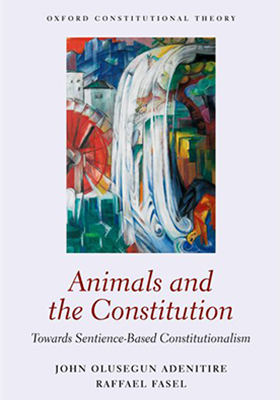
Animals and the Constitution

The U.S. Constitution provides many opportunities to discuss animals. One case struck down a local ordinance regulating animal sacrifices. The Supreme Court held it was a discriminatory burden on the free exercise of religion.  

Justice Blackmun (dropping a footnote citing multiple groups addressing the specific point) concurred, arguing for a broader view of free exercise that covered generally applicable laws. He added:

A harder case would be presented if petitioners were requesting an exemption from a generally applicable anticruelty law. The result in the case before the Court today, and the fact that every Member of the Court concurs in that result, does not necessarily reflect this Court's views of the strength of a State's interest in prohibiting cruelty to animals. 

Sherry Colb, who later regularly wrote about animal rights, was one of his law clerks. Her future husband, Michael Dorf (who told me about the book addressed below), once noted that she encouraged him to include that reference.  

Another issue would be the Fourth Amendment. Drug-sniffing dogs have popped up in multiple disputes. Another issue would be if dogs were included among the "effects" or in general among those matters protected by the amendment. 

Is a companion animal simply property for constitutional purposes? See also the Due Process Clause. If the Fourth Amendment (see, e.g., Justice Harlan's opinion in Poe v. Ullman) partially protects "family life," why not also bring in family pets? Simon is not a chair.

Can animals themselves have constitutional rights? Justice Douglas once famously (infamously?) argued that nature can have standing. But, he spoke for humans all the same:

Those people who have a meaningful relation to that body of water -- whether it be a fisherman, a canoeist, a zoologist, or a logger -- must be able to speak for the values which the river represents, and which are threatened with destruction.

Should animals as animals have standing to sue? A few cases tried to obtain habeas corpus protection, including using state constitutions. Michael Dorf supports that move to some degree. I'm sympathetic, if not given the current law.

I'm not an originalist. The fact that "original understanding" opposes something is not a complete barrier. The term "person" need not only include humans. We can imagine extraterrestrial life, such as Vulcans, which are humanoid in some fashion. Or tie personhood to sentience.

We come along with a long prologue to our book. The book is written in a scholarly fashion. I skimmed it myself. But it is not so unapproachable that I did not gain a general understanding of their arguments. 

The book is not about the American Constitution. It concerns constitutionalism in general. Can animals be included? The authors argue in the affirmative. 

It helpfully cites many constitutions worldwide, a few that, in some fashion, explicitly protect animal life and/or nature. Nonetheless, none of them goes as far as the thesis here. 

(Another book that provides a means to protect nature overall also provides a few citations to foreign constitutions. A wildlife-centered approach might be Native American-centric.) 

The book argues that sentience is a floor for constitutional rights. Merriam-Webster defines sentience as "capable of sensing or feeling: conscious of or responsive to the sensations of seeing, hearing, feeling, tasting, or smelling." An example given is "sentient beings."

The book offers various aspects of sentience to help explain why it should be the floor for rights. Sentient beings do not only feel pain, which is often cited as a line-drawing device. Thus, vegans often cite pain as a reason for not eating certain animals. 

But is that the only reason? People generally don't want to consume their pets. There is something else involved. Why are we not cannibals, avoiding brains and other parts that might cause disease? 

Sentient animals have experiences, thoughts, perceptions, and some sort of independent existence. They have a "self." They are in effect "persons." This provides a realistic floor for rights. 

Constitutionalism involves:

  • Fundamental rights
  • Proportionality
  • Rule of Law
  • Democracy
Sentient animals warrant the protections that constitutions provide. There is a general agreement that animals deserve some basic security. We don't like cruelty to animals. The book offers more.

Fundamental rights that can be applied to non-human animals include life, freedom, and protection from torture or degrading treatment. The habeas appeals, for instance, include attempts to free an elephant from an allegedly harmful zoo. People have tried to protect primates from medical experiments. 

And so on.

Rights are not absolute. Government is about balancing. A concept that is more often found in other constitutional systems (though Justice Breyer is a fan) is proportionality. Basic principles include legitimate regulations, suitability, necessity, and fair balancing.

Animals as constitutional persons (or even moral agents) change the balance. Food might be tasty. But if it causes harm to animals, mere pleasant taste is not (imho) enough to justify factory farming. 

(The book is only about 200 pages long. 

It is not about a bunch of case studies. So, we can debate line drawing. For instance, are seeing-eye dogs appropriate, or do some see them as a sort of involuntary servitude? 

Plus, there are obvious degrees. Abusive horse racing and singular usage for riding for pleasure are different things. Proportionality is a sensible general principle.) 

The rule of law is a basic constitutionality principle. It involves government by rules, not whim. 

The authors provide multiple criteria to help flesh out the rule of law. Law should be public, clear, stable, prospective (no ex post facto law), realistic, and subject to judicial review. There should be the basic rules of procedural due process, including the right to be heard and an appeal. Non-humans included. 

What about democracy? The United States Constitution begins with a reference to "We the People." Animals are governed. They are generally not seen as "the governed," as in "respect for the governed." 

Nonetheless, we respect the interests of young children and others, including the severely mentally disabled, who do not actively govern or choose those who govern. Why are non-human animals so completely lacking as constitutional agents?

The book argues that non-human animals should have their interests represented. The authors offer the concept of a segment (30% is offered as realistic) of the legislature to be representatives for non-humans.

We can carp on details. I don't mean to handwave that. It is a seriously complicated issue. There are loads of non-human animals with competing interests. How do we select non-human representatives? Simply having them represent "animals" seems unrealistic.

At the very least, granting the premise that non-human animals (NHA) should have a role in democracy, it seems wrong to suggest they are interchangeable. That seems to violate the basic rule of moral respect. 

Nonetheless, the general idea makes some degree of sense. People are chosen to defend the interests of children and others unable to adequately defend their legal interests. NHAs can have guardians, too.

Why not in other contexts? Justice Douglas (partially inspired by Christopher Stone) thought of nature in an instrumental fashion. His approach could be applied to protect nature (and/or animals) individually. 

Agencies can assign people or groups to protect the interests of NHAs. So can legislatures. We can debate about how to select such people. Or how they would respect the interests of NHAs. For instance, the book offers a referendum-type process. We can debate it. 

But it is our duty to address the matter overall if we are going to respect the sentient beings as constitutional persons. We should "listen" to our companion animals if we truly respect them.

The principle applies writ large. Our own constitution, to be local, can use some improvement. The baseline was set up in the 18th Century. 

We might be proud that it is still going (strong?), if with some amendments. Still, the 21st Century is on the phone (or whatever), and it is not totally impressed. NHAs are one thing to factor in. 

Monday, November 24, 2025

SCOTUS Watch: Orders

Texas Restricting

I started this blog in the middle of the first Bush43 Administration. Various shenanigans going on now, including mid-decade redistricting to obtain partisan ends, went on back then, too. A feeling of deja vu.

A 2-1 Fifth Circuit opinion provided a surprising win for the Democrats when the mid-decade Texas redistricting (which led to a retaliatory California effort) was struck down as an illegitimate racial gerrymander. Trump Administration shenanigans were involved. Their incompetence strikes again. 

The Supreme Court earlier held that political gerrymanders are non-justiciable in federal court. The Rucho opinion ended a 4-4-1 stalemate where conservatives wanted to prohibit such appeals and liberals tried to get Kennedy to agree to join them the other way. Kennedy, while not giving a firm "no," never gave them that fifth vote. 

The Supreme Court left such appeals open in the 1980s. I don't know how much the federal courts actually restrained the process. 

I am not aware of any SCOTUS case that struck down a partisan gerrymander (racial gerrymanders were found). The blog discussions against Rucho tend to skip over that part. Not saying Rucho was meaningless. Curious how much it changed things.

There was a very unhinged (and somewhat counterproductive) dissent to the court of appeals opinion. Justice Alito on Friday granted Texas an "administrative stay" on Friday and sped up the briefing. A response is required by 5p.m. today. 

Never-ending drama.

Order List 

Today's Order List is the last thing scheduled until the beginning of December. It had some interesting bits.

As Chris Geidner noted on Bluesky:

The Supreme Court grants no new cases for merits review in today’s orders list, but it does summarily reverse two lower court rulings in criminal cases—one holding a constitutional error in a Mississippi trial, the other holding the Fourth Circuit improperly ordered a new trial in a Maryland case.

The Mississippi case struck down as unconstitutional a law providing a blanket ability to screen child witnesses. A split SCOTUS opinion earlier upheld the practice, but held it must be "case specific." The Court, in a five-page opinion, left open the possibility that the screen would be harmless error in this case.

The case first came last spring and was distributed to multiple conferences. This suggests some concern. I think the case should have been accepted for full review and oral argument.

The Court also (again) refused to take a case to reconsider the Feres doctrine regarding immunity regarding certain military claims. 

Gorsuch would have taken it. Thomas again wrote to explain why he thinks so, too. Sotomayor is sympathetic but argues that stare decisis warrants leaving it to Congress to fix. She makes a good case. 

The petition for a writ of certiorari is denied. The Chief Justice and Justice Alito took no part in the consideration or decision of this petition.

Only Kagan and Jackson (and somewhat inconsistently Sotomayor) deign to explain why they recuse.

===

The justices will hold oral arguments in the first two weeks of December. 

Then, there is an Order List scheduled for 12/15. That is the last thing scheduled for 2025. 

Other stuff is likely to drop.

ETA: A reference in my daily SCOTUSblog email warrants an addendum.

plainly, courts “call balls and strikes”; they don’t get a turn at bat

The second criminal per curium given short shrift in my comments drops a "balls and strike" reference. 

The lower court explained how the Supreme Court allowed them to raise a problem with a trial that was not cited by the petitioners. So, it is unclear whether the justices were right to call them out here. 

But, overall, the justices don't just call balls and strikes. The Supreme Court repeatedly gets a turn at bat, including changing the questions raised by the lawyers for appeal. 

They also have a lot of power over the batters, including who will get a time at bat, when they will get a time at bat, and what they should do there.

The per curiam quotes an earlier opinion (by Kagan):

In line with our duty to call balls and strikes, we granted certiorari to resolve the split, 589 U. S. ___ (2019), and we now affirm.

Do umpires generally "call balls and strikes" by settling nationwide disagreements on strike calls via official statements of what the rules are?

Meanwhile, here's some more (from me) on judicial review, one of some new essays on that website. 

Monday, November 10, 2025

SCOTUS Order List

There are three basic things about today's Order List.

Kim Davis: Denied

Kim Davis's case was rejected without comment, even though some attention was given to it as if there was a real chance it would be used to overturn same sex marriage. Lots of people, including Mark Joseph Stern (gay, married, strongly anti-SCOTUS), were like "duh." See also, Chris Geidner (gay). 

As Steven Vladeck previously noted (linked here):

Third, there was a surge in media discussion about the pending cert. petition by Kim Davis, and what it means for the future of the Supreme Court’s 2015 ruling recognizing constitutional protection for same-sex marriage in Obergefell v. Hodges. (The surge seems to have been caused by the fact that the Court ordered the respondents to file a response to Davis’s cert. petition after they had waived their right to file such a brief. But such a move requires a request from only a single justice, and is in no way predictive of a grant of certiorari.)

This was one of those cases where a juicy-sounding case was on the docket, and too much attention was given. For instance, the Supreme Court doesn't grant a case, and a report suggests they decided the merits of the issue.

I am not going to disdain the average person being concerned here. The stakes are high, and people have a thin understanding of things. People aren't experts here. It's a learning opportunity. Anyway, hopefully, we are done with Kim Davis, who has been around for years. I have my doubts. 

Election Case Taken 

The Supreme Court granted review in a case for which the Fifth Circuit opinion was deemed "bonkers." 

The general idea appears to be that this was a "too much for the conservatives, at least two to three of them" Fifth Circuit ruling.  

Alito, Gorsuch, and Jackson did not take part in a case each. Jackson alone explained why. She and Kagan have consistently done that. Sotomayor, less so. Conservatives, never. Yes, this still bothers me. 

Gorsuch/Native Americans

Kagama helped usher into our case law the theory that the federal government enjoys “plenary power” over the internal affairs of Native American Tribes. It is a theory that should make this Court blush. Not only does that notion lack any foundation in the Constitution; its roots lie instead only in archaic prejudices. This Court is responsible for Kagama, and this Court holds the power to correct it. We should not shirk from the task. 

Gorsuch used a non-grant to dissent and provide some broad woke comments about our historical mistreatment of Native Americans and the Supreme Court allowing Congress to have plenary power over their affairs. Thomas joined him.

Thomas has gone his own way regarding Native American issues, including the proper rules for criminal justice. He has not been as woke on the merits as Gorsuch, which threw a few people.

Gorsuch has a point, though it's unlikely the Supreme Court is going to shift gears after over a hundred years. They won't frame things quite as crudely as some opinions back then. But changing over a hundred years of congressional discretion here?

I think not. Gorsuch's Native American stuff sometimes appears a tad too precious to me. Still, it is worthwhile to press the envelope given how much baggage there has been here. 

==

Justice Jackson also dropped another order regarding the very accelerated SNAP litigation. To hint at the speed here, an appellate opinion was dropped late yesterday (Sunday). Legislatively, also in flux.

Saturday, November 08, 2025

A Few More NYC Election Tidbits (SCOTUS Watch)

This week's SCOTUS summary is found here.

We had a significant increase in turnout, with as many voters as there were since 1969. The increase is relative, with only around 40% taking part. The Bronx had a paltry 28%. My city council district changed hands. What small fraction decided the result? 

Voting is a civic obligation. Many people think it is pointless to vote, including if they don't like the candidates. Republicans often felt they were wasting their vote, helping someone they strongly opposed in the process.  Others also did not like Mamdani. 

It is still important for people to vote. There were also other races and six ballot measures. The two links provide some voting analysis. For instance, the black vote significantly shifted from Cuomo in the primary to Mamdani in the general. Recall Mayor Eric Adams (black) was not in the primary. 

One analysis argues that Mamdani's leading reform proposals are cheap as a segment of the overall budget. The analysis provides some interesting information, including that free buses seem less extreme when 48% already do not pay for bus fares.

(That seems high, but there was a study comparing riders to fares obtained. I don't take buses too much, but have seen evidence of the overall practice.) 

Meanwhile, NY SNAP funding will continue even in the face of the government shutdown and Trump shenanigans. I expected state funding would help.

[ETA: After last night's SCOTUS order, the SNAP benefits are more up in the air. The linked article was updated since I first posted this.]

==

This entry has links to three online newspapers covering NYC and NY state news, as well as one to an NYT article. The (free) NY-specific online papers have provided helpful local coverage.  

Paywalls are annoying but fair since media providers need to be paid. Archived content can help avoid it. Also, you can fiddle around with the browser, including cookie settings, to avoid some others. 

Saturday, October 25, 2025

Early Voting Begins

It is that time of the year again. Early voting has begun. Around five years ago, New York began to provide ten days of early voting. 

We also have "no excuse" vote by mail. I even convinced a voting-hesitant person to use it after years of not voting. She used an option where it is automatically sent to the voter, which is an incentive to vote as compared to those who would have to personally choose to vote each time. 

New York also provides a voting guide, though it does not cover judicial races. I find that dubious. 

I understand the value of convenience. I had to walk a significant way (not too long) the first time. Now, an early voting location is five minutes away. I will man the polls on Election Day.

(There is a race for governor going on in New Jersey. One person I follow on Bluesky is scaring me by warning us that the Democrat is not putting up enough of a fight. This is where we are at. Even NJ is not totally safe regarding not voting for the Trump Party.) 

Civic Duty 

I think in-person voting is an important symbolic act.

So, a little part of me doesn't like mail-in voting. But I understand there is a value there, especially for certain voters. It is best to have various options. 

Some argue Election Day should be a holiday to help some of these voters. It makes some sense, especially given the importance of voting overall to democracy.

But early voting helps to fill in that gap. After all, many people are already off today, Saturday, the first day of early voting. I don't think a whole day off is necessary. Early voting and many voting locations will also cut down wait times and other problems. 

Overall, we have a moral duty to vote. It is our civic duty. Some people are annoyed with that claim. 

How dare you tell me I have a duty to vote! I'm not (though it might work) talking about a penalty for refusing to vote. The state doesn't penalize being mean to mom. Is a minimal thing like voting too much for citizens to manage? Perhaps this helps explain things.

A fraction of the public voting has various problems. One problem is that it encourages very partisan representatives. Low turnout in primary elections is especially problematic when they are likely the "real" election in safe districts. AOC first won her primary with a tiny fraction of the vote. 

New York City Elections 

The two big things in NYC this year are the mayoral race and some ballot measures

Mayoral Race 

Zohran Mamdani is favored to win the mayoral race. He is a fitting answer to the times. Put aside the exaggerated, often bullshit criticisms. The main concern is that he is too young and inexperienced. He's more experienced than the Republican choice. 

And, as Mamdani said, Cuomo's "experience" is a big part of the problem. Plus, just what experience does he have to govern New York City well? Mamdani's campaign, including being open to respectfully listening, has shown a basic quality Cuomo lacks. 

It is a good thing that Mamdani and Cuomo (who should have simply dropped out) are not the only options. Mamdani's opposition hates that the anti-Mamdani vote is split. But do we really want Republicans and independents to only have to vote for Cuomo? It's as if Bill Clinton were the alternative to a very liberal presidential option in 1996.  

I'm obviously biased, but I am honest in saying that. My Republican city councilwoman (I have not seen a single campaign sign in the neighborhood of her competition; the Democrat deserves to lose), along with the rest of the small Republican caucus, endorsed Curtis Sliwa. If nothing else, Sliwa is not an asshole, Democratic, and likes cats. 

Sliwa is still not a serious option if you truly thought Republicans had a chance. He ran unopposed in the primary, probably because they felt Cuomo would win. He didn't. Too bad, Republicans. 

Additional candidates have filed to run on other ballot lines in the general election but have not raised significant funds or polled among leading candidates. They include Irene Estrada (Conservative Party) and Joseph Hernandez (Quality of Life Party). Walden and Adams will both still appear on the ballot, despite suspending their campaigns.

Some long-shot candidate (Walden) floated himself as an alternative for a little while. He waited too long to concede he had no shot and remained on the ballot. 

Eric Adams, who wound up endorsing Cuomo, is still on the ballot. Filling out the ballot is the first time I heard of the "quality of life" party. 

The biggest question is probably whether Mamdani receives over 50% of the vote. Cuomo concedes it is a longshot for him to win with Sliwa in the race. 

I am also interested in whether Adams or anyone else will receive a significant amount of the vote. I reckon Adams' loyalists might give him a percentage or two at least. I don't expect miracles with Mamdani.

But I think he gives us a chance to obtain some good things, including a suitably strong counter to Donald Trump. Plus, Adams is so darn crooked. 

Ballot Measures 

Mamdani has played it safe lately, including not stating his opinion on the ballot measures. 

I don't think the reason was the state measure concerning the use of wilderness land for development (more land will be put aside to compensate) or one about new maps. That is, the two I supported. A sixth measure about ending off-year elections (it is not the final step, even if it passed) is challenged here

The three housing measures, a "gift" of sorts from Zombie Candidate (he is still on the ballot), Mayor Eric Adams, are particularly touchy since the City Council hates them. It's logical since a major point is to reduce their role, to help speed up the process. 

Affordable housing advocates support the measures, though the League of Women Voters was agnostic about one of them. A "yes" vote seems reasonable, even a good idea. Still, I was hesitant. I decided to vote "no" out of caution. 

I am wary of direct democracy, especially regarding specialty issues and/or things that warrant the balancing of interests. This issue is a reasonable exception since it specifically challenges the City Council's role, and they are self-interested. 

Other Races 

One more thing. New York has a form of instant run-off voting for city races (district attorney is a state race). It is only available during the primary. 

There are other local races. Sometimes, you could vote third party (e.g., Working Families Party) instead of voting Democratic or Republican. For whatever reason, not every candidate runs on two lines.

It helps send a message that you support that cause. Third parties in even years also need significant vote totals to remain on the ballot. That doesn't seem like an issue in 2025. A few voters are confused and want to fill in the ovals for a candidate in both places! 

Sometimes, there is a third option, such as the "Unity" Party, which is meant to be a third "unity" type alternative. Only a few people vote for these candidates. Still, as with the chance to fill in your own candidate, it is helpful to provide other options. 

The comptroller and public advocate (who is the next in line if the mayorality is vacant) are decent Democratic sorts who will win. 

The city council races are generally not in doubt. Maybe there is some upset or two possible somewhere city-wide. I would hope that maybe my city council district (after an upset last time) would go back to being Democratic. But that candidate has basically not shown up. It is annoying.  

Judges 

Two local judicial candidates are also running unopposed in my district. This is common. 

It also underlines the stupidity of judicial races being on the ballot. Some states have more active judicial elections, and there are some ethically dubious things going on. Here, it is largely just something you fill in. 

The average voter knows little or nothing about them. Not that it often matters since (you can write in a name; I usually do), there often is no actual race. 

Final Thoughts 

I continue to find it reassuring that voters have a chance to decide on Election Day. Often, yes, things seem pro forma. The winners and losers are obvious.

Enough times to matter, however, there are actual races. That happened this year, too, especially the mayoral primary race. Either way, the act of voting, our civic duty, is a wondrous thing.

Some people argue that democracy is dead now that Trump is in power. Or, at the very least, it is in suspended animation, somewhat akin to Han Solo in that Star Wars movie. Fuck that. 

I got my sticker. And, voting still matters. It is still going on. Some might want to interfere, but we don't have to let them. Happy voting.