
I have had mixed experiences with books recently. I have had better luck lately. A variety of books with different subject matters are worth noting.
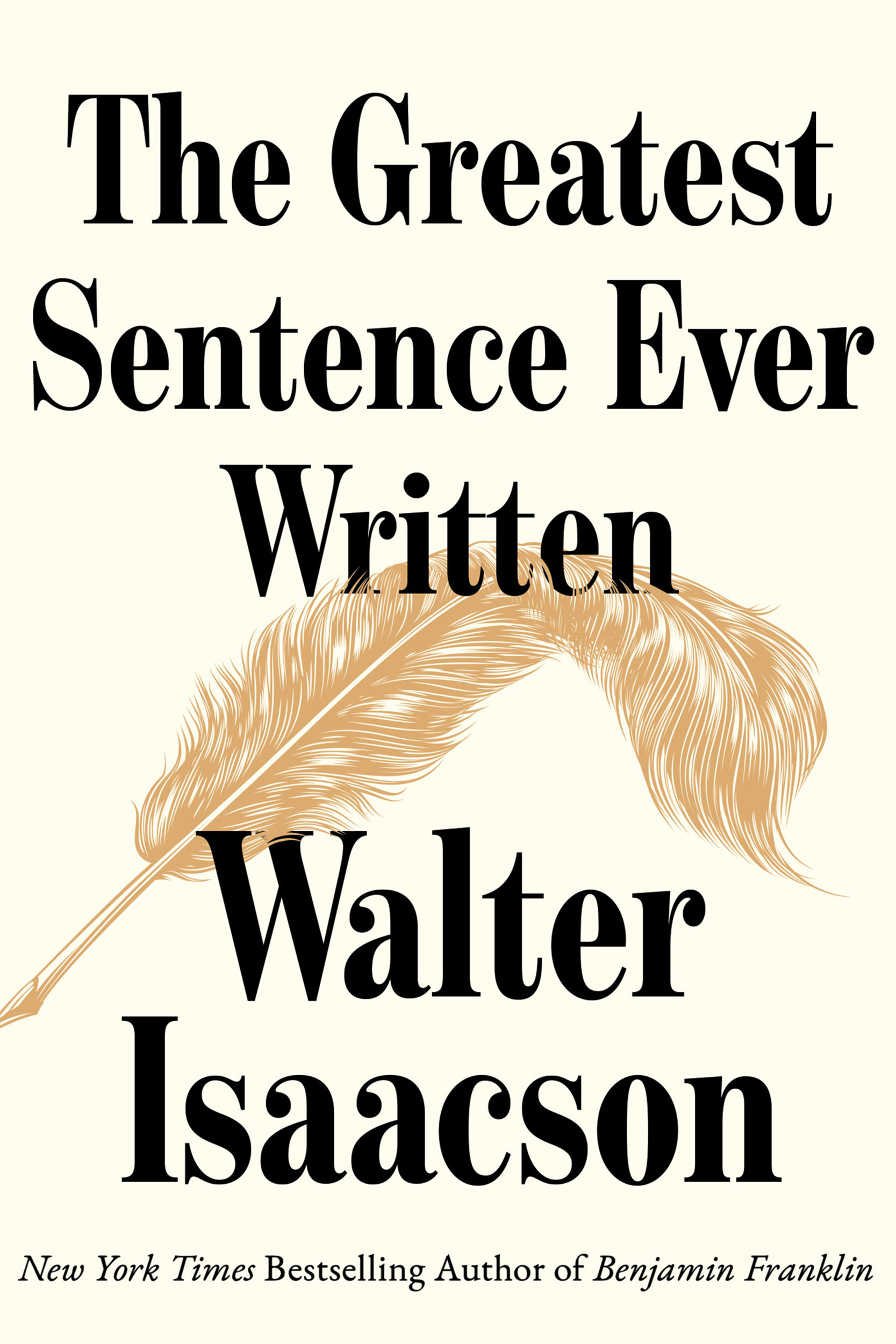
Walter Isaacson’s new book, “The Greatest Sentence Ever Written,” takes as its focal point the document’s second line: “We hold these truths to be self-evident, that all men are created equal, that they are endowed by their Creator with certain unalienable Rights, that among these are Life, Liberty and the Pursuit of Happiness.”
An apt entry for the 250th anniversary of our independence. The book is tiny -- it is around sixty-four pages -- and half of it isn't even directly about the sentence. He includes an essay about the importance of supporting the common good. He also includes multiple documents, including a first draft.
I also liked Edward Larson's, best known for his book on the Scopes Trial, book on 1776 overall.

I found this author because she has a new book. This is an older one that was at the library. The "Jenna" book club references Bush43's daughter.
It covers the life of its character from 7-18 (for whatever reason, the plot ends about a decade before the book was published) or thereabouts. It is not a young adult book, but it reads like one. It is in her voice.
Her father is unreliable, her mother is trying to survive with two children from different fathers, and Sam likes to climb. We get some plot from when she is younger, but a chunk takes place when she is around 15-18.
I liked it overall, though it probably went too long.

I found a picture of this book and the next one, which were read over fifteen years ago. I listened to this one (don't recall doing so) while reading it this time.
I did listen to The Devil in the Junior League, which is a summer read that I put on the side panel (btw, one image appears to not show up on some browsers). A good performance -- appropriate Southern accent (though one person said it wasn't Texan ... I didn't notice the difference -- IITW took place in Texas btw) with a nice sound effect simulating phone calls and use of a microphone. Got a kick out of it -- sometimes, it doesn't take much to amuse me.
The author had a bunch of romance novels. This one was inspired by her own life (she moved to NYC from Texas). It was a fun story of a twenty-something whose comfortable life falls to the wayside, but she manages to find a way.
One thing that originally attracted me to the book was that I watched a LGBTQ film (It's In the Water) that took place in a similar milieu. That is, a junior leaguer stepped outside of her comfort zone, this time accepting her lesbianism.

Blechman’s forte clearly is in his character studies of these and other pigeon enthusiasts. His account of the historical pigeon, on the other hand, is a bit mottled by his lack of footnotes or bibliography. One can neither check up on details nor expand one’s knowledge. The engaged reader, of course, wants to do both.
The book covers various subjects (including Darwin, beauty contests, food, and target practice) but emphasizes pigeon racing. It is well written. Pigeon enthusiasts might want a bit more about the birds themselves.
The bird racing was familiar. My dad raced birds. He fit the m.o., coming from a working-class ethnic background. We had a coop on the roof.
He had one of those clocks that were used to track when birds arrived. I'm not sure how he started. For whatever reason, he eventually stopped.

Midaq Alley (Arabic: زقاق المدق, romanized: Zuqāq al-Midaqq) is a 1947 novel by Egyptian author Naguib Mahfouz, first published in English in 1966. The story is about Midaq Alley in Khan el-Khalili, a teeming back street in Cairo which is presented as a microcosm of the world.
I found out about this book because it was adapted into a film (taking place in Mexico). The book is a tad risqué (involving homosexuality, prostitution, and other mature topics) with various human dramas taking place. Good translation.
Mahfouz was a leading Egyptian novelist who repeatedly used "alleys" in his works. I don't read much fiction, especially "classic" novels. Overall, I enjoyed it, though now and then the exposition went on a bit too long.
I never saw the film.
Ted Danson, during his appearance on Stephen Colbert, recently referenced that he has a podcast. There are lots of podcasts out there.
I checked it out. He has some interesting interviews.
I listen to a few podcasts. I often get bored with podcasts. Strict Scrutiny Podcast, concerning the Supreme Court, which is a prime interest of mine, often goes too long.
But I listened to both parts (about two hours total) of the interview he had with his wife. They met while doing a film together. They acknowledged the film didn't do well.
The marriage did. It has been around thirty years.
No comments:
Post a Comment
Thanks for your .02!