September 17 was Constitution Day and David Souter's Birthday. Meanwhile, Trump continues to be anti-constitutional, including regarding the Media. Happy Suffrage Day (comments).
About Me

- Joe
- This blog is the work of an educated civilian, not of an expert in the fields discussed.
Showing posts with label republican values. Show all posts
Showing posts with label republican values. Show all posts
Saturday, September 19, 2026
Wednesday, September 02, 2026
Five Years Later ...
Five years ago, Dobbs was foreshadowed when the Supreme Court (short unsigned opinion) left in place a six-week abortion ban. Roberts and the liberals, in varying degrees, dissented.
Saturday, August 08, 2026
Todd Blanche: Confirmed at 4 A.M. Saturday Morning
Jimmy Kimmel knew Sen. Cassidy, now a lame duck after losing the primary for not being 100% Trumpian, was a weasel years ago.
But Collins and Murkowski (50-49) are not much better. They support Republicans. Their usually gratutious "nay" votes (though they couldn't even support an abortion rights bill) just give them the credibility necessary to win in Maine and Alaska.
Anyway, this is a new low. Blanche ... when Pam Bondi is too independent. Republicans need to go the way of the Whigs.
Friday, July 24, 2026
SCOTUS Watch: Summer Order List
The Mets came back and played competitively against two good teams. A misplayed ball by Baty, who shouldn't have been playing the outfield, was a major reason why they didn't win both series.
Order List
Oh. This is supposed to be about the Supreme Court. Well, the week was somewhat bland.
The big news was that they granted cert in a case involving the Excessive Fines Clause. It is somewhat unclear why it did so now, but it isn't shocking or anything. They, for whatever reason, got it over with.
The first scheduled summer order list was otherwise, as usual, basically a housekeeping matter. As noted here, did provide a way to finalize some things sooner rather than later. Nothing special, though.
The cert grant had a catchy hook about someone's plane being seized for illegally transporting a "six pack of beer" to a dry town in Alaska. That is more sloganeering than the full story. There was much more beer involved.
OTOH, along with them taking the case when the lower court ruled against the defendant, it might have been a sign of what is to come.
Kagan Spins
Justice Kagan, during her joint testimony with Barrett, pushed against the "shadow docket" label since they have been doing a better job at transparency.
It is a work in progress. It was as much spin as truth.
I re-read Steve Vladeck's book on the subject. He's writing a new one on judicial reform. A new edition of The Shadow Docket would have a new introduction, which would show that there are a lot of shadows remaining. Sorry, William Baude.*
She also told the Ninth Circuit, where she's the circuit justice, that the Supreme Court is not a "rubber stamp" for Trump. Hey, look at the tariffs and birthright citizenship decisions!
Kagan has to work with these people. She is trying to win as much as she can. She can't say they are just a rubber stamp. They acted like one regularly, though.
And Also ...
Thomas Goldstein, previously of SCOTUSBlog, has been sentenced. Sounds like a prime candidate for a Trump pardon.
Upcoming
There are two more scheduled summer order lists. Two executions are likely next week.
The Nixon Tapes case was handed down fifty-two years ago. Nixon resigned soon afterwards.
Wasn't that fun?
---
Shadow Docket: Let's do a bit of a deep dive here on this issue. The "shadow docket" is, as Steve Vladeck notes in his book, a collection of things.
It would include the choices made in the Order List, such as choosing this specific Eighth Amendment case over numerous others involving a person serving a long prison sentence.
The shadow docket is not just the "emergency docket," though final death penalty appeals both fit that bill and underline that the term still fits. If anything, we have less transparency; Sotomayor, for instance, provides fewer statements in such cases.
Baude (and the new SCOTUSBlog) wants to use "the Interim Docket," which is bullshit.
As Vladeck and others note regularly, the things decided there are effectively final. We saw that with a lot of the Trump administrative state destruction.
Baude (see the link in the main discussion) is upset—is he afraid of Alito? -- that the term sounds "nefarious." Also, we see what they do (often digging deep on the docket pages, not linked to the main orders, where their bare decisions are noted), so it is not really "hard to see."
Again, that is bullshit. We do not know a lot about their decision-making. They still largely work in the shadows, including decision-making (this is cited in the book) by not posting transcripts on the website.
Ginsburg did so. Kagan, after defending her colleagues for being more transparent, did not.
ETA: I also was excited about Melissa Murray's new constitutional commentary. Eh.
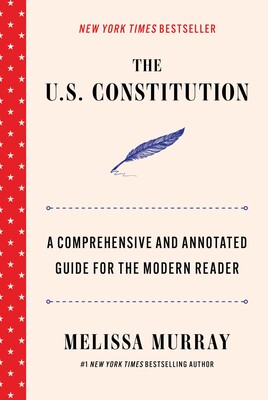
The preface was a quick summary of its creation that seemed like forcing a bunch of stuff into a few pages. And doing so in a somewhat simplistic way.
The summary of each section is helpful, if often a tad too basic for someone who already has more than a passing understanding. It isn't meant to be comprehensive, but sometimes it seems a tad thin.
It serves its function as a one-volume reference book for the average reader (though now and then tossing in words like "chattel" without comment). Sometimes, there are particularly interesting discussions, at times, with very up-to-date material.
Murray provides a balanced view, including points of view that she personally doesn't support. At times, you do get the idea she isn't some originalist.
The subtitle is "A Comprehensive and Annotated Guide for the Modern Reader." It does cover the whole document in annotated form and is written for the modern reader. It has Civics 101 potential.
The book is formatted comfortably. OTOH, there are no charts, pictures, or anything of that sort.
I enjoyed Linda Monk's books better.
Friday, July 10, 2026
SCOTUS Watch
Justices Amy Coney Barrett and Elena Kagan will appear July 14 before the House Appropriations Subcommittee on Financial Services and General Government, which has jurisdiction over the annual spending measure that funds the Supreme Court, according to a scheduling announcement from House Appropriations Chair Tom Cole (R-Okla.).
The Supreme Court might be in recess, but it is still in session. Odds and ends still occur.*
The most notable news, however, is that two justices will (for the first time since COVID) appear before Congress. Thomas, for some reason, stopped by recently. Not in an official capacity.
The usual procedure was to have a liberal and a conservative justice, as we have here. The appearance provides members to ask justices non-budget related questions.
“the right to have rights—to freely participate in our political community”
We will also have many term round-ups.
Prof. Dorf discusses a controversial reference in the birthright citizenship opinion. I don't think he quite salvages the reference. Yes, noncitizenship is "less secure." Noncitizens still have rights.
Prof. Segall talks about Kavanaugh's de facto acceptance of living constitutionalism. Brett has to bow down to the originalist god, including talking about how constitutional "meanings" hold firm.
As with the English language generally, however, meanings change over time, too. Sorry dude.
==
Note: The summer is sometimes so lacking in SCOTUS news that I am left to cite the website providing a typo correction to one of its opinions.
The Court used to fix typos silently as if there were editing elves doing so out of public view. Now, they openly cite even the smallest edits.
They also provide the final "bound" version of the opinion, which in the past took years but now starts during the term itself, including any changes at the bottom of the page.
Check out here. There are "revisions" with the date provided. You can also look down the page and see the first twenty or so opinions now have exact page locations.
The changes, like the different versions of biblical verses (h/t Bart Ehrman), are often trivial. Nonetheless, it is a good bit of open government.
ETA: Graham Platner finally formally removed himself from the Senate race. The new replacement of Senator "Kavanaugh Won't Overturn Roe!" will hopefully be picked later this month.
Saturday, July 04, 2026
Happy 4th

It's the 250th Anniversary of the Declaration of Independence. I would link to my book review, but the page is dead, along with the Symbol website. You can search archived pages.
Friday, May 08, 2026
Umpire John
Judge Sotomayor, before becoming a justice, noted that appellate judges make policy. They set forth rules while district judges largely determine facts.
As Lawrence Hurley reported for NBC News, Roberts continued: “I think they view us as truly political actors, which I don’t think is an accurate understanding of what we do. I would say that’s the main difficulty. “
What is a "political actor?" Let's go the dictionary:
political
adjective
po·lit·i·cal pə-ˈli-ti-kəl
1a: of or relating to government, a government, or the conduct of government
b: of, relating to, or concerned with the making as distinguished from the administration of governmental policy
2: of, relating to, involving, or involved in politics and especially party politics
3: organized in governmental terms
political units
4: involving or charged or concerned with acts against a government or a political system
political prisoners
The Supreme Court plays a significant role in setting forth policy. It does so in ways with many political implications. Fitting those definitions.
The term "political" is disfavored by many judges. It sounds like they are "politicians" who are shady sorts. Judges are supposed to be above the fray. They are special.
We accept too much the idea that politicians, who represent us, are allowed to be "dirty." It helps Trump some since "they are all bad, right?"
But John Roberts is setting forth an artificial dynamic here. The Supreme Court has a political role. His saying after the recent Voting Rights Act opinions is even harder to take.
Each branch of government has different roles in our system. Courts have a role that is more independent in certain respects. They, however, are not just off on the side, outside of the political system.
Honesty can help us determine how to react, including what sort of reforms of the courts should be sought.
===
Talking political, I talk about the Virginia Supreme Court (4-3) overturning the redistricting measure here. tl;dr: It was not a scam that they waited to decide, but how they ruled looks pretty sketchy.
Wednesday, May 06, 2026
What We Stand For
Joanne Freeman, the historian, argued on BlueSky:
- Empathy
- Diversity
- Equity
- Humanity (& the humanities)
- A broad idea of “WE THE PEOPLE”
- Concern for ANY kind of “we” Truth
- (Real) history
The current regime opposes these things.
Needs to be stated plainly.
Monday, April 20, 2026
SCOTUS Watch: Order List and Other News
Order List
Today's Order List was long enough that it suggested additional writings. It also had some notable developments, including a case that might further weaken Oregon v. Smith (general applicable laws are generally acceptable for religious liberty purposes).
One case on the "shadow docket":
By a 6–3 vote, and with no opinion, the Supreme Court throws out a lower court decision denying qualified immunity who killed an unarmed, mentally ill man by using "bodyweight force" to restrain him. All three liberals dissented.
A per curiam error corrects a lower court Fourth Amendment decision. Sotomayor, without comment, wouldn't provide relief. Jackson dissents with an opinion.
Sotomayor, in a statement, discusses a dispute involving a child abduction measure. She agrees it is something they should eventually address.
This specific lawsuit, however, is procedurally inappropriate to take. Nonetheless, she argues it was at least partially a self-inflicted wound by the Court.
Sotomayor, without comment, also noted she would have granted a case alleging evidence was not properly supplied in a criminal case.
Justices Alito, Kavanaugh, and Barrett didn't take part in some decisions without saying why. Only Kagan and Jackson consistently provide their reasons.
Shadow Docket Story
Steve Vladeck addresses a NYT article, with internal documents, discussing a major change in the shadow/emergency/interim docket in 2016. I agree with his overall analysis. The articles provide sunlight on issues of special concern. The actions are troubling.
Fix the Court suggests a proper response would be congressional legislation requiring transparency. If they abuse the process, jurisdiction stripping and budget cuts would be some possible consequences.
(This was suggested in an email I received via a subscription.)
Or we can go the route of certain conservatives who think the leak is the biggest problem. The overall comments there, as I noted in a comment, ignore that internal deliberations are regularly leaked. Full documents are a step beyond that, but that might be appropriate (e.g., Pentagon Papers).
Thomas vs. Progressives
Prof. Segall focuses on his corruption -- Harlan Crow -- but also links to a wider discussion, how his usual "just so" historical account is garbled. This is who conservatives deem their model judge.
Happy Birthday, Justice John Paul Stevens. And Adolf Hitler, apparently, going by Justice Thomas.
Meanwhile ...
Some good news in a lower state court in Pennsylvania, which, on state constitutional grounds, struck down a Hyde Amendment. A concurring opinion also cited religious liberty.
Some state courts went this route in the past. The principle should be applied nationwide.
ETA: Two non-ideological opinions were handed down on Wednesday. Sotomayor had the unanimous opinion for one. Thomas had the other opinion, with a dissent by Alito, Roberts (relatively rare dissenter), and Kavanaugh. Sometimes, disagreements aren't always along the expected lines. But 6-3 is still a thing.
Sunday, March 08, 2026
Some Books
I have had mixed experiences with books recently. I have had better luck lately. A variety of books with different subject matters are worth noting.
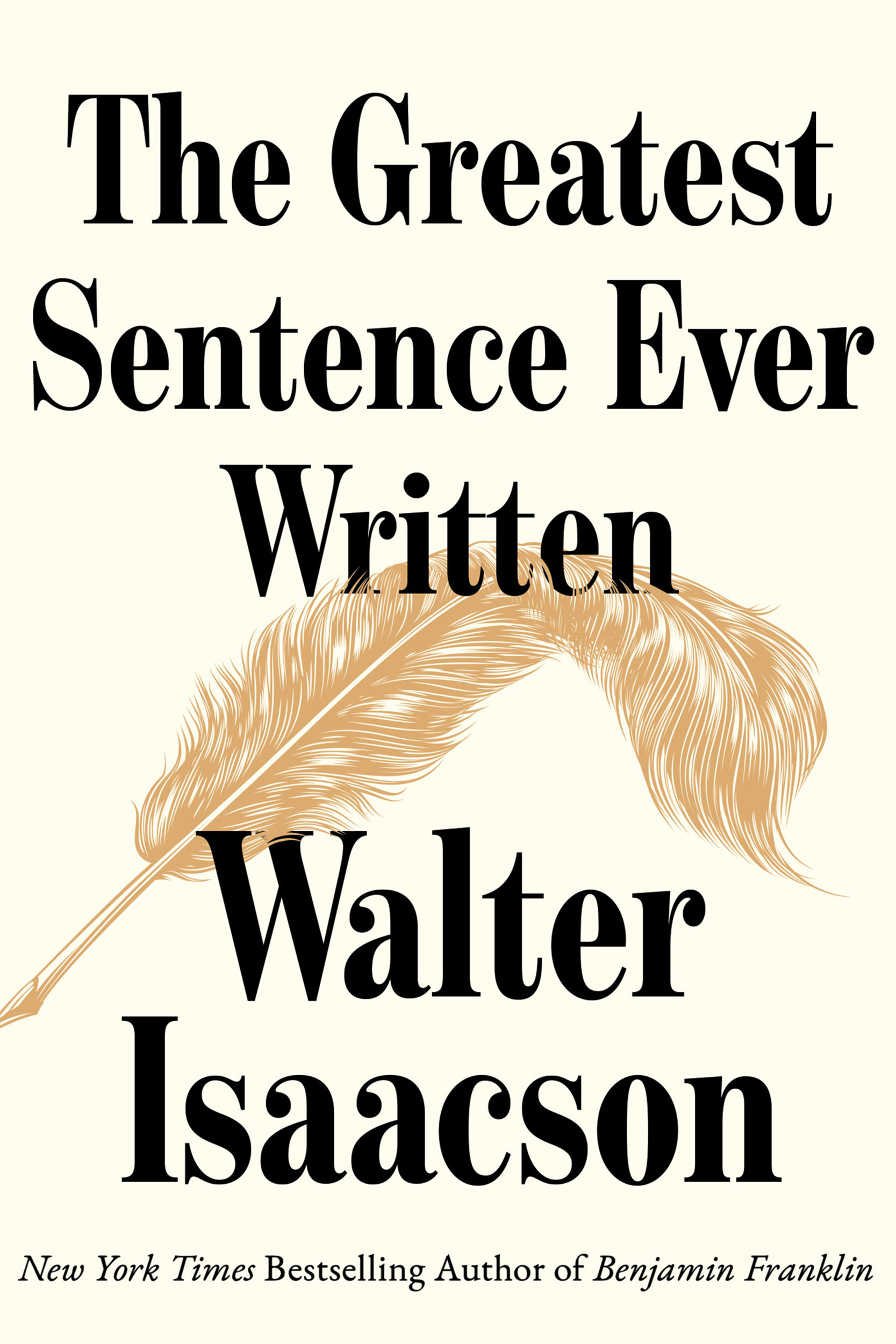
Walter Isaacson’s new book, “The Greatest Sentence Ever Written,” takes as its focal point the document’s second line: “We hold these truths to be self-evident, that all men are created equal, that they are endowed by their Creator with certain unalienable Rights, that among these are Life, Liberty and the Pursuit of Happiness.”
An apt entry for the 250th anniversary of our independence. The book is tiny -- it is around sixty-four pages -- and half of it isn't even directly about the sentence. He includes an essay about the importance of supporting the common good. He also includes multiple documents, including a first draft.
I also liked Edward Larson's, best known for his book on the Scopes Trial, book on 1776 overall.

I found this author because she has a new book. This is an older one that was at the library. The "Jenna" book club references Bush43's daughter.
It covers the life of its character from 7-18 (for whatever reason, the plot ends about a decade before the book was published) or thereabouts. It is not a young adult book, but it reads like one. It is in her voice.
Her father is unreliable, her mother is trying to survive with two children from different fathers, and Sam likes to climb. We get some plot from when she is younger, but a chunk takes place when she is around 15-18.
I liked it overall, though it probably went too long.

I found a picture of this book and the next one, which were read over fifteen years ago. I listened to this one (don't recall doing so) while reading it this time.
I did listen to The Devil in the Junior League, which is a summer read that I put on the side panel (btw, one image appears to not show up on some browsers). A good performance -- appropriate Southern accent (though one person said it wasn't Texan ... I didn't notice the difference -- IITW took place in Texas btw) with a nice sound effect simulating phone calls and use of a microphone. Got a kick out of it -- sometimes, it doesn't take much to amuse me.
The author had a bunch of romance novels. This one was inspired by her own life (she moved to NYC from Texas). It was a fun story of a twenty-something whose comfortable life falls to the wayside, but she manages to find a way.
One thing that originally attracted me to the book was that I watched a LGBTQ film (It's In the Water) that took place in a similar milieu. That is, a junior leaguer stepped outside of her comfort zone, this time accepting her lesbianism.

Blechman’s forte clearly is in his character studies of these and other pigeon enthusiasts. His account of the historical pigeon, on the other hand, is a bit mottled by his lack of footnotes or bibliography. One can neither check up on details nor expand one’s knowledge. The engaged reader, of course, wants to do both.
The book covers various subjects (including Darwin, beauty contests, food, and target practice) but emphasizes pigeon racing. It is well written. Pigeon enthusiasts might want a bit more about the birds themselves.
The bird racing was familiar. My dad raced birds. He fit the m.o., coming from a working-class ethnic background. We had a coop on the roof.
He had one of those clocks that were used to track when birds arrived. I'm not sure how he started. For whatever reason, he eventually stopped.

Midaq Alley (Arabic: زقاق المدق, romanized: Zuqāq al-Midaqq) is a 1947 novel by Egyptian author Naguib Mahfouz, first published in English in 1966. The story is about Midaq Alley in Khan el-Khalili, a teeming back street in Cairo which is presented as a microcosm of the world.
I found out about this book because it was adapted into a film (taking place in Mexico). The book is a tad risqué (involving homosexuality, prostitution, and other mature topics) with various human dramas taking place. Good translation.
Mahfouz was a leading Egyptian novelist who repeatedly used "alleys" in his works. I don't read much fiction, especially "classic" novels. Overall, I enjoyed it, though now and then the exposition went on a bit too long.
I never saw the film.
Ted Danson, during his appearance on Stephen Colbert, recently referenced that he has a podcast. There are lots of podcasts out there.
I checked it out. He has some interesting interviews.
I listen to a few podcasts. I often get bored with podcasts. Strict Scrutiny Podcast, concerning the Supreme Court, which is a prime interest of mine, often goes too long.
But I listened to both parts (about two hours total) of the interview he had with his wife. They met while doing a film together. They acknowledged the film didn't do well.
The marriage did. It has been around thirty years.
Saturday, February 21, 2026
Rubio's European Address

Secretary of State Marco Rubio and German Chancellor Friedrich Merz shake hands at the Munich Security Conference earlier this month.
Rubio's speech received some attention. The link (The Guardian) acknowledges he was reasonable as compared to Vice President James David Vance's speech last year. OTOH, they have different purposes.
Rubio provides the patina of reasonableness. Vance is full-fledged MAGA. This is a matter of degree.
Rubio’s speech was more subtle and coherent, but he in essence sang from the same hymn sheet: the message from Washington remains that Europe and the US should be defined by ethno-political values of culture, tradition and religion.
The fact that such history has also bred nationalism, racism, fascism and colonialism is apparently nothing to be ashamed of.
The Freedom From Religion Foundation focuses on the so-called common religion tradition angle.
“We are part of one civilization — Western civilization,” he claimed. “We are bound to one another by the deepest bonds that nations could share, forged by centuries of shared history, Christian faith, culture, heritage, language, ancestry and the sacrifices our forefathers made together for the common civilization to which we have fallen heir.”
Christian Nationalism was more blatantly expressed during the National Prayer Breakfast.
Trump’s religious adviser Paula White-Cain introduced the U.S. president as “the greatest champion of faith that we have ever had in the executive branch,” claiming he has “brought religion back to this nation and beyond.”
Trump then mixed politics and religion, including denouncing Democrats as un-Christian.
The baggage involved in these events has led many Democrats who otherwise support the concept to be wary about the whole thing. FFRF and others have covered this over the years.
Lawfare, which leans center-right, also has a summary. For instance, there are such passages as "rules-based global order—an overused term."
See also:
Under President Trump, the United States of America will once again take on the task of renewal and restoration, driven by a vision of a future as proud, as sovereign, and as vital as our civilization’s past. And while we are prepared, if necessary, to do this alone, it is our preference and it is our hope to do this together with you, our friends here in Europe.
The "renewal and restoration" talk is basic "Make America Great Again" rhetoric.
Rubio is sending the message that America is supporting authoritarians (darn rules!) like in Hungary that promote that message. And the U.S. (and other nations willing to go along shouldn't feel bound to those rules in doing so either.
Also, Trump's overall immigration policy is furthered by this passage:
“in a pursuit of a world without borders, we opened our doors to an unprecedented wave of mass migration that threatens the cohesion of our societies, the continuity of our culture, and the future of our people.”
The Lawfare summary ends with a brief translation of the speech, including the non-Vance tone:
But all of that is rude to say. And it makes us look bad. And it makes you all worry. So let’s collectively indulge the polite fiction that we have more in common than we do. Let’s overstate a shared history. Let’s pretend we agree on shared challenges. And let’s pretend I’m not saying that the basis for our future cooperation is that you submit to our will. The first step in this regard is that I flatter you. The second step is that you applaud for me. And then I will fly home.
Many Democratic senators have had buyer's remorse for going along with the unanimous confirmation of this guy. Rubio was supposedly a reasonable guy, unlike the Secretary of Defense or Health and Human Services.
Maybe on some sort of curve. Still, how surprising is it that Rubio is going along with Trump's policies without much serious pushback? Nothing in his past suggests the guy has some sort of spine. He would be a loyal soldier. Plus, even in a vacuum, Rubio had issues.
Now, he is the Secretary of State in the Trump Administration. Yes, we can have worse.
OTOH, with people like Trump's former real estate lawyer and the Boy Wonder (Kushner, who always looks damn creepy in photographs) travelling the world and doing foreign policy, it is unclear how much better things are now.
And his Munich speech suggests what is what as well.
===
Meanwhile: Mets lost their ST opener 2-1. Some nobody gave up an unearned run for the loss.
Sunday, February 15, 2026
SCOTUS Watch: Past and Future
Scalia/Court Expansion
The tenth anniversary of Justice Scalia's death recently passed. Volokh Conspiracy had multiple positive accounts. A Fix the Court email update I received was more negative.
My position is also largely negative. See here. I linked a VC post, and "Joe" says more over there.
Scalia's death led to a de facto "packing" of the Court when Republicans refused to even have a hearing for Merrick Garland. They then rushed (one month) the confirmation of Barrett.
Raw political hardball mixed with hypocrisy.
A minority argues that the overall history here warrants court expansion. Only a small number of Democrats in Congress openly support this. Some observers are loudly supportive.
The FDR court "packing" scheme is cited by both sides. Did it help change the law, or is it generally a sign the whole thing is a bad idea?
FDR'S Gambit by Laura Kalman provides a detailed account while near the end drops an opinion that it was helpful for FDR's ends.
I found the book a tedious slog, without ignoring it is also an impressive work of scholarship. There is a lot of unnecessary detail without overall seeming to add much. I finally gave up reading the book straight through around 100 pages in.
There are, as is usually the case, some interesting and informative details. Overall, however, I don't think I learned much new about the bottom line.
The book ends up somewhat agnostic if dubious about a court expansion proposal today. The book was published in the middle of the Biden Administration.
Ultimately, an expansion proposal should at least be pushed as a negotiation tactic. I have discussed this in the past and won't repeat myself here.
We now have evidence that Alito will retire soon, maybe in a few months. A 6-3 Court with four (and I think Thomas will resign before the end of Trump's term) younger conservatives nominated by Trump is just appalling.
Something major has to be done if the Democrats get a trifecta. A strong expansion faction might make it more likely that we will have serious reforms passed.
SCOTUS News
SCOTUS dropped a schedule for the final oral arguments.
It also "may" (nearly always means they will) announce opinions on the 20th (when they officially come back from their break), 24th (they start hearing orals again the day before), and 25th (my sister's birthday). SCOTUSblog will have live blogging.
For whatever reason, Oyez.com still doesn't have the opinion announcements from last term. There is a new AI-aided approach to provide video. Fix the Court has more, and its comments are basically on point.
John Oliver's dog justice videos were good, too.
Holiday
Okay. So, next Friday is when the justices officially come back with a conference (surely) and opinion announcements (probably).
Tomorrow is a holiday. A historian is wary about the "monarchial" practice of celebrating presidential birthdays. Her piece is generally on point.
The name of the holiday varies, including the use of punctuation. On the federal level, it is George Washington's Birthday, which was originally February 22 (using today's dating), so it is somewhat early to celebrate it on the 16th.
Sunday, February 08, 2026
Storm at the White House

A narrative history of the events of January 6th is still hard to read. The book provides diverse voices, including police, members of Congress, and even some insurrectionists ("protestors or riots" in the author's words, but multiple members of Congress, including Mitch McConnell, called it a failed "insurrection"). The violence was horrible:
Weapons [used against the police] included hammers, rebars [metal bars], knives, batons, and police shields taken by force, as well as bear spray [meant to stop a 500-1000lb animal] and pepper spray. Some rioters wore tactical gear, including bulletproof vests and masks.
An officer later described a fellow officer being tasered. The officers were also hit, gassed, choked, and more. Four officers were so stressed out that they committed suicide. One died of "natural" causes.
Rep. Mullin (R-OK), after Babbitt was shot:
He [U.S. Capitol Police officer] was the last person in the world that ever wanted to use force like that. He wasn't wanting to do that. I know for a fact, because after it happened, he came over. And he was physically and emotionally distraught. And I actually gave him a hug. And I said, "Sir, you did what you had to do."
(He later voted to object to the electoral votes, the debate over which was ongoing when they had to take a break because of the storm at the Capitol.)
People were prepared for battle:
US Park Police officers reported seeing "numerous individuals" with firearms, pepper spray, pipes, and other possible weapons. Others were wearing body armor and riot gear, carrying radio equipment, and wearing "military-grade" backpacks. Among those who were screened, the Secret Service had confiscated hundreds of prohibited items -- knives, pepper spray, brass knuckles, gas masks, Tasers, body armor, and batons.
[The claim that the protests were peaceful is absurd. There is also clear evidence that guns were involved. Strict D.C. gun laws did help keep more people from bringing them. Even stun guns are quite dangerous.]
VP Mike Pence comes off well. A staffer quoted 2 Timothy to express his actions on that day: " I have fought the good fight, I have finished the race, I have kept the faith."
A symbolic moment was now Sen. Kim (NJ) going outside of the House chamber and starting to, by himself, join in the clean-up. The official vote count was complete late in the night, hours later than necessary because of those objections.
Trump told the protestors to "be wild" and let them be wild for hours, until telling them to leave. He was correctly impeached (10 Republicans), but only a few (seven) Republicans voted to convict. Thus, we are where we are.
The vile video, which repeated false claims about a stolen 2020 election, showed the Obamas’ heads edited onto the bodies of apes as part of a “Lion King”-themed meme that cast Trump as “King of the Jungle.”
Republicans aid and abet Trump. They now and then find something to be upset about. People like Senator Tim Scott, who is suddenly appalled at Trump's racism. I'm with him:
“This disgusting video posted by the so-called president was done intentionally,” Jeffries said. "Fuck Donald Trump and his vile, racist, and malignant behavior
“This guy is an unhinged bottom feeder,” Jeffries added. “Every Republican sycophant who continues to stand by their cult leader should be run out of office.”
[The NY Daily News didn't spell out a certain word, but Jeffries said it.]
Every time Trump does something, remember it isn't just him. He is there because of his aiders and abettors. We talk too much about him. This is a wider problem. It is both natural and misguided to focus on one person, both for doing good and ill.
Some -- like Mike Pence -- will have a limit and stand up at times. I doubt James David Vance would have acted like he did on January 6th.
We must continue, to quote members of both sides of the aisle on that day, not let the "thugs" or thug, as the case might be, win.
Wednesday, February 04, 2026
SCOTUS Watch (Reform Edition)
(I forgot about the NYT article that dropped about Roberts having people sign non-disclosure agreements. But that was a voluntary policy already and there still will be leaks.
How much really does that change things? We are concerned about other stuff, aren't we? On that, Vladeck is correct in his Thursday Substack.)
Term Limits
Rep. Tom Barrett (R-MI), a first term Republican, proposed a Supreme Court term limit amendment as part of a wider reform package. The overall package sounds dubious but I'm okay with people seriously trying to reform the government.
The term limit amendment would set a twenty-year limit. A term limited judge could still be confirmed for another level of the judiciary. Sotomayor was both a district and court of appeals judge. A person could theoretically serve sixty years.
The amendment, as all realistic reforms are likely to be, only applies in the future. No current judge or justice would be term limited. This underlines how a term limit, however fine it is, and I support them, will not by itself be enough.
Barrett wants to tie this with a set nine on the Supreme Court. Why should the Supreme Court, which has gone up and down from a 5-10 justice range (five never came to pass and ten was short lived) be set at some specific number?
Republicans repeatedly are expanding state courts. This doesn't make it ideal. They do multiple bad things. But stopping any chance of expansion has to bring with it something worth the candle.
Term limits aren't enough.
I am open to a compromise but one where the Democratic supported reform kicks in over twenty years from now (twenty years after the amendment is ratified) is not enough. For instance, we need an ethics bill. Any reform package is likely to have something I dislike. But need more.
He also wants a supermajority amendment (2/3) to add new states. A bill banning mid-term restricting is fine. See below. This part is unconstitutional:
The bill would also require that only U.S. citizens are counted toward district apportionment and electoral votes. The census would still count all persons for other purposes.
(14A, sec. 2 says "persons" should be counted for apportionment purposes. That includes "district" apportionment. This rule would result in different districts being treated differently depending on the types of persons they have. No good.)
Overall, it should be part of a wider voting rights bill. The three-year sunset funding idea seems too overinclusive. I am, however, game in having a debate to have Congress truly control the power of the purse. Trump has stolen it.
Partisan Gerrymandering
The Supreme Court (5-4) in Rucho v. Common Cause (2019) finally bit the bullet.
After years of Justice Kennedy hemming and hawing, his successor provided the fifth vote. Federal courts will not try to determine unconstitutional partisan gerrymandering. State courts can use state constitutional provisions. And some have.
Justice Kagan for the liberals had a strong dissent. And I understand. What truly annoyed me was that the conservatives were not consistent.
They took away congressional power in Shelby County v. Holder to enforce the Fifteenth Amendment using vibes. If you want judicial restraint, do so consistently, please.
Federal courts can still determine that districting involves illegitimate racial gerrymandering. A lower court determined that was involved in Texas. The justices by a partisan vote overturned.
Texas clearly had a partisan gerrymander. But that is functionally acceptable now when federal judges address the matter. Justice Alito has moved the goalposts and suggested they are generally acceptable. That, however, is not what Rucho said.
The state, pushed by the Trump Administration which the lower court (written by a Trump nominee) found motivated by race, also redistricted mid-decade. The Constitution sets districting every ten years.
It is not explicitly barred to do so mid-decade, but a case can be made. The whole thing has a race to the bottom feel. And Democrats, using the realistic motto that unilateral disarmament is for wussies, respond tit-for-tat. California for Texas. And so on.
If you allow Texas to redistrict to help Republicans win the midterms, there is no good reason to stop California from doing so to help the Democrats. People cynically figured SCOTUS would find a way.
They, without comment, did not grant a request to do so. Rick Hasen is happy and not too surprised. (Maybe, he is that no justice said anything.) SCOTUSblog has more on the details.
Ultimately, this is depressing. We need nationwide election reform, including something that addresses partisan gerrymandering and mid-term redistricting. A national rule is necessary to avoid a race to the bottom. That is typical national rule dynamics.
We can debate the details, including what the current Supreme Court will deem appropriate under Shelby v. Holder. But this is not a good way to run a railroad.
Everything can be on the table. For instance, perhaps it is a good idea to expand the size of the House, which was set in place over a hundred years ago. Or some form of multimember districting is a good idea.
Voting rights and overall republican principles should be something we can establish in a bipartisan fashion. Yes, I know, insert sarcastic metaphor here.
The point still holds. Rep. Barrett's package might not be my cup of tea. But young Republicans who will be around a long time, perhaps, willing to think creatively with some room for compromise are welcomed.
If sane people (Democrats at the moment) gain control, they very well might have a chance to be part of the solution. I'm serious.
Any major change realistically needs some sort of bipartisan support to have staying power. A supermajority (see PPACA) might provide some chance, but when we are talking things like SCOTUS reform, we probably need more.
Thursday, January 29, 2026
The Struggle for Judicial Supremacy (Robert Jackson)

Imagine if someone wrote a book like The Struggle for Judicial Supremacy: A Study in American Power Politics today. Would they be confirmed to the Supreme Court, to replace the Chief Justice (someone else was elevated in-house), the next year? It might be exciting.
Robert Jackson was FDR's solicitor general and attorney general (his position when the book was released in 1940). He was a strong partisan supporter and testified in favor of the court expansion bill. Jackson includes FDR's message to Congress and radio address on that bill in the appendix.
(Jackson skims over the controversy. He argues that a major problem was that the bill was not bluntly promoted to address misguided judicial supremacy. There was a hard-to-take argument; supposedly, it was really just a reform bill to improve the courts.)
What is "judicial supremacy"? Each branch of government is "supreme" in its own sphere. Congress can impeach whom it wants (realistically speaking), as long as they are a federal officer. Presidents can veto what they want. In his famous Steel Seizure Cases concurrence, Jackson later discussed the broad power of the modern-day president.
Jackson acknowledges an appropriate court concern (while noting they alone aren't involved) in protecting civil liberties. He does not reference it, as it was not yet famous, but Jackson endorses the famous "footnote four."
(I don't think "judicial supremacy" merely means judicial review. Judicial review has its limits. Either way, being "supreme" in a certain area is not "supremacy." There is a greater meaning there.)
His concern about "government by lawsuit" was the usage of substantive due process to, in his view, incorrectly override legislative discretion in policy matters.
Likewise, an artificial application of constitutional provisions to rob the people's representatives of the discretion to make policy. This often had an economic flavor, so we have many cases involving employment, rate regulation, taxation, and so on.
The Lochner Era and the battle of the New Deal were his particular topical focus. A specific concern, like now, was the lower courts, where injunctions could block government programs, even when federal law appears to deny the power to do so (tax injunctions).
He provides an in-depth analysis of many legal disputes (after about 100 pages, I started to skim). Jackson argues that, generally speaking (again, civil liberties would be an exception), a strong presumption of constitutionality should be the rule. Eric Segall would be pleased.
Justice Jackson had his limits in the area of civil liberties, especially after World War II. He thought there were limits to free speech, especially in the battle against fascism and communism. That is, "the constitution isn't a suicide pact." Jackson also thought there was a limit regarding the federal courts' interference with state criminal trials.
Jackson warns that the courts have limited abilities. They work by lawsuit, argued by lawyers. Policy is not just a matter of applying legal principles, especially via specific disputes. A single dispute will not provide enough information. Litigation can also take a long time. Meanwhile, public policy is in limbo.
He notes early on that what works for his time might not work in future days. Jackson was no originalist, though he respected history. Like FDR, he supported a "living law."
Justice Rehnquist (as he then was) in the link at the top of this entry noted that this is a "dated book." It is a project of its time. People might even have been surprised at it in late 1940. Wasn't the struggle for judicial supremacy won by FDR? Jackson knew, however, that it was a long haul.
Imagine, for instance, what Jackson would have thought when the Supreme Court struck down the legislative veto a few years after Rehnquist wrote those words. Would he support a court expansion bill today? Either way, judicial supremacy remains bad.
Saturday, January 10, 2026
The Actual Art of Governing
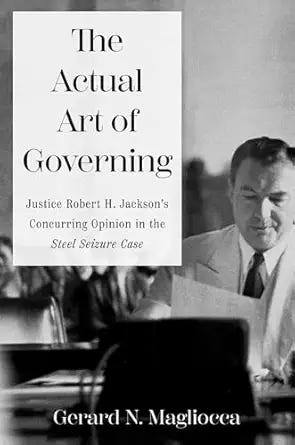
I discussed this book in the weekly SCOTUS news discussion linked in yesterday's entry. It is overall interesting and well-written, stuffing a lot of analysis into around 150 pages.
The concurrence provides the famous three-part summary of executive action (done with congressional approval, congressional silence/zone of twilight, with congressional opposition/based only on Art. II power).
It also has the famous putdown of the use of history ("originalism" wasn't firmly a thing yet) to determine constitutional matters as akin to Joseph parsing Pharaoh's dreams. Or interpreting animal entrails, you can say.
The title refers to this passage:
"While the Constitution diffuses power the better to secure liberty, it also contemplates that practice will integrate the dispersed powers into a workable government. It enjoins upon its branches separateness but interdependence, autonomy but reciprocity."
Justice Jackson was concerned about executive power, including their claims of emergency power. He was in the FDR Administration and was the lead Nuremberg prosecutor.
The Steel Seizure Case is a telling example. Truman lost, followed the opinion's dictates (he soon went to a barbecue or some such with Justice Black, famously disagreeing with his opinion but enjoying his bourbon), and nothing really bad happened. The feared emergency was overblown.
Jackson also wisely cautions the reader to "note the gap that exists between the President's paper powers and his real powers," especially as compared to the "eighteenth-century sketch of a government hoped for" in 1787.
A conservative scholar, a Trump supporter, is now writing entries about how "almost" all former presidents pushed back on limits on their removal power. Okay? Congress and the Supreme Court also have a high opinion of their power. Consistency in that regard is of limited note.
On the merits, I think Justice Kagan's partial dissent in Seila Law is correct. The Constitution leaves this matter generally to the political branches. Presidents don't have to go "meekly" along as Congress regulates. Each has significant power.
These days, as Justice Jackson noted in his famous concurrence, presidents have a special degree of power. The Supreme Court, now with a supermajority of former members of the executive department (five members of the conservative majority, including the Chief Justice, plus Kagan), adding more is not advisable.
Trump recently asserted to the NYT that the only limit to his power is his own morality. Jackson replies, quoting Kipling:
The essence of our free Government is "leave to live by no man's leave, underneath the law" -- to be governed by those impersonal forces which we call law.
Jackson refers to someone many of the founding generation (history has value, it just doesn't provide all the answers) followed including regarding judicial independence:
We follow the judicial tradition instituted on a memorable Sunday in 1612 when King James took offense at the independence of his judges and, in rage, declared: "Then I am to be under the law -- which it is treason to affirm." Chief Justice Coke replied to his King: "Thus, wrote Bracton, The King ought not to be under any man, but he is under God and the Law.'"
Jackson, whose clerk's clerk wrote the opinion (this is covered near the end of the book), would have probably agreed with his namesake in Trump v. United States. In dissent.
===
Note: The other opinions each have notable passages. Frankfurter, rambling as usual, included some words supporting a living constitution view of things.
That requires both a spacious view in applying an instrument of government "made for an undefined and expanding future."
He applied this rule in applying due process of law. The approach will lead some to worry about arbitrary, idiosyncratic judicial power.
An honest accounting, however, will show that is how judges operate. They apply the law case by case, over time, taking into consideration various things, including developing conditions.
There will also be a personal aspect in judging. Jackson's concurrence was a result of the biography of the writer. We need not ignore this reality, that AI does not write these things; AI has its own biases.
As Westley notes in The Princess Bride, we are people of action; lies don't become of us.
Black wrote the often forgotten opinion of the Court. Two justices "concurred," two explicitly said they also concurred with Black's opinion, while only one of the majority explicitly said they were only concurring in judgment. It's a somewhat curious way of doing it.
The Chief Justice (with two others) dissented. Truman's appointments split (2-2) while Jackson (who Truman appointed as Nuremberg prosecutor) also voted with the majority. All nine were either FDR or Trump nominees. All Democrats.
Black was second in seniority (after the Chief Justice) for around twenty-five years. Is that a record?
Tuesday, January 06, 2026
Monday, January 05, 2026
More on the Chief Justice's End of the Year Report
I provided a relatively brief reaction to the Chief Justice's End of the Year Report.
My first impression was that the author of Trump v. U.S. (presidential immunity) starting with Tom Paine (anti-monarchial) is a bit rich. Since he's talking to the nation, I'm fine with the first over the second.
Various law professors have impressions. I added a link to one that felt it was inane and hypocritical. Basically, the professor argues the report is junior high school civics (at best) by someone who violated its terms repeatedly.
Reading between the lines, one can find the Chief Justice of the United States standing up for immigrants; extolling the continuing aspirations of the Declaration of Independence; and reiterating the importance of judicial independence—three messages that are certainly welcome as we look ahead to the second year of the second Trump administration.
Steve Vladeck wonders who Roberts feels is his audience. Vladeck basically sends my sentiment that it promoted general republican values (small "r") and can be seen as anti-MAGA. He figures it is court-friendly mild Never Trump types who are still worried about speaking out.
The problem, though, is that one has to read between the lines to find those takeaways. Given the year that just transpired—not just the substantive behavior of the executive branch but its unprecedented hostility toward, threats against, and defiance of federal judges—this would’ve been a golden opportunity for Chief Justice Roberts to make the kind of statement that might’ve resonated across the political/ideological spectrum. By opting for subtlety, it seems worth asking exactly who the Chief Justice views as his audience these days.
Michael Dorf also notes the references to judicial independence (a self-interested one). Dorf also sees some anti-originalist implications. Maybe? Roberts is not a strict originalist anyhow. He's open to some development.
(Roberts cites the Declaration of Independence as stating overall principles that the Constitution honors over time, more so in its later years.)
A libertarian sort also references the usage of the Declaration of Independence. Supreme Court opinions from time to time over the years have cited the DOI, including its principles. He disagrees, not too surprisingly, somewhat with Dorf's opinion about the report's anti-originalist sentiments.
Vladeck liked it better when Rehnquist (who had Roberts as a law clerk) used the report to explicitly provide policy concerns and recommendations. Roberts arguably does this in a lower key fashion. There's something to be said about that.
None of the analysts care much about the second half of his report that provides statistics. Are they accurate? Are they provided in a simply straightforward fashion?
Anyway, I think it is fine on some basic level to use the 250th anniversary of the Declaration of Independence to remind the country about some basic republican principles. Some words about the continuing threats on federal judges would have been good too. He did honor them.
And, yes, I remain cynical about his above the fray celebratory, honorary tone given how much the Supreme Court has failed us (as various people summarize) of late.
We need change to fulfill the ideals he discusses. And, as Roberts shows, this is a long-term process, with earlier generations not meeting the ideals of the Declaration of Independence.
Ideals are like that. They are things we aim for and imperfectly uphold. The DOI also suggests what should occur when things get too bad.
Change, even if it requires ending long and familiar practices. Change that might be messy and uncomfortable, including for the powers that be.
Thursday, January 01, 2026
SCOTUS Watch: 2025 Ends
Roberts closed his report with a quote from President Calvin Coolidge for the country’s 150th anniversary in 1926. “Amid all the clash of conflicting interests, amid all the welter of partisan politics,” Coolidge said, “every American can turn for solace and consolation to the Declaration of Independence and the Constitution of the United States with the assurance and confidence that those two great charters of freedom and justice remain firm and unshaken.” Coolidge’s statement, Roberts emphasized, was “[t]rue then” and remains “true now.”
The Chief Justice's Year-End Report on the Federal Judiciary dropped on New Year's Eve at six o'clock per usual. The only other thing dropping this week was a single typo fixed in Alito's dissent in the Illinois case.
2025 was the 250th anniversary of the beginning of the fight for independence. July will be the anniversary of the Declaration of Independence. Chief Justice Roberts used this for the history portion of the report, starting with a discussion of Thomas Paine and Common Sense.
The Constitution was signed on September 17, 1787, a date later celebrated as Constitution Day and Citizenship Day.
Suitably, David Souter was born on September 17. He was later especially concerned about the teaching of civics. Souter died last year at the age of 85.
The report's theme can be cited as an honorable statement of republican values. My first reaction was that Thomas Paine might have had issues with Trump v. U.S., given his views on the dangers and stupidity of monarchy. (ETA: This takedown is appropriate.)
(A transcript.)
The fifth anniversary of the event that should have disqualified Trump from future federal office (see 14A, sec. 3) is approaching. Our "solace" in the Constitution being in place might remain, but its firmness in action is not complete.
Chris Geidner is correct that we should continue to fight to make it "a more perfect union." This includes addressing the issues of the Roberts Court.
Is it 2027 yet?
ETA: No. Meanwhile, some more oral arguments, with the February calendar dropping.