
About Me

My photo
This blog is the work of an educated civilian, not of an expert in the fields discussed.
Showing posts with label childhood. Show all posts

Thursday, October 01, 2026

Two More Executions (Well, One)

I continue to agree with Justice Breyer (and Ginsburg and Stevens) that there are constitutional problems with executing people decades after the trial. 

No justice has agreed with them since. Thus, two more people were executed after thirty years, without any red flags being raised. 

Curtis Wilkie Beasley, 77, is scheduled for execution on Sept. 29 for the 1995 murder of a Polk County woman who was bludgeoned with a hammer in her home.

In 1998, a jury voted 10-2 to recommend Beasley die for the death of 62-year-old Carolyn Monfort of Dundee after he had been found guilty on charges of first-degree murder, robbery, and grand theft in February of that year.

It is becoming a standard practice. Florida executes old men for horrible crimes occurring decades ago. 

Other problems may exist (e.g., non-unanimous jury recommendation). The final appeals raise multiple claims. The time lag, however, stands out most. 

A major argument is that he is a decrepit old man who is not fit to be executed. I consider these types of executions a form of de facto euthanasia. 

Christa Pike, aged 50, is scheduled to be executed in Tennessee, USA, on September 30, 2026. She was convicted in 1996 of a 1995 murder committed when she was 18, barely out of a childhood in which she endured rape, sexual and physical violence, abuse, and neglect. The state failed to protect her as a child despite having knowledge of what she was facing. Her court-appointed lawyers then failed her at her trial, presenting little of the mitigating evidence of this abuse or its psychological consequences.

Tennessee last executed a woman in 1819. An execution of a woman is always atypical. The crime here was horrible.

Pike had accused Colleen of insulting her and trying to steal her boyfriend. Two other residents at the camp later testified that Pike had bragged about the murder before and after, and showed them a piece of Colleen's skull.

She did not act alone in the "torturing and murdering" of the teen. A co-defendant reportedly was the one truly into the Satanic rituals practiced during the crime. Her defense was also suspect, including failure to provide adequate testimony about her problems. 

A very troubled eighteen-year-old committed a heinous crime. She has been in prison for thirty years. Is that not enough punishment? Not according to Tennessee. She failed the death penalty lottery.

A coalition against sexual abuse submitted a striking amicus brief arguing that her past sexual trauma would lead to PTSD while she was being executed. She would effectively feel like she was being raped. 

The justices rejected all the final appeals without comment. I don't like that as a general rule. 

It is a tad worse here. Something worse happened the next day. The court of appeals (2-1) temporarily stayed the execution. The Supreme Court overturned the stay, with Sotomayor dissenting for the liberals.

Two appellate courts splitting on the issue shows room for debate. The Supreme Court's intervention allowed someone to die. The orders yesterday kept the status quo, though one allegation was glaring enough to warrant a response. 

I understand the concern that the court of appeals wrongly stopped things at the last minute. It has been thirty years, and now there is more delay.

I wasn't sure if it made the right call. New evidence might be present, but was it really enough? There was also a procedural debate over the claim. 

Once the court of appeals stayed the execution, the presumption favors the status quo. Lifting the stay would result in someone's death. (Or so it seemed.) The majority should have explained why reversal was warranted. 

The execution was also botched. Media witnesses explained, in brutal detail, how things went down. She was alive over an hour after the execution drugs were administered. I wonder about executions in other states. Were there more problems than apparent? 

They were left in the dark about what exactly happened, including whether she was still alive. 

"No prison officials were outside to tell the media what was happening as the first responders arrived. No time of death has been publicly provided."

A curtain was repeatedly drawn to hide what was going on in the execution chamber. Later, a court reported that the government provided medical attention. Anyway, I guess her concerns about the use of lethal injection weren't totally off base. 

It was not the first botched execution this year. The governor announced that officials will suspend the other execution planned this year while they investigate. 

Some people have denounced capital punishment as "barbarism" tonight. Often, it goes down without looking as horrible. But maybe that is how barbarism works. It seems okay, then they rub in how bad it is. 

==

Meanwhile, the Supreme Court prepared for the new term. A "long conference" examined a bunch of pending appeals, mostly to dispose of them.

Alito recused himself in a major climate dispute. There was some back-and-forth involved. 

Alito (more) and Roberts are the only active justices with individual stocks, which means Alito has to recuse more often. Maybe there is a better way?

Sunday, August 30, 2026

Lost Child


After rereading The Sunflower Forest, I checked out this much more recent true account. The author has many books about the very troubled children she counseled over the years. 

It is well written. I did find it basically falling into a holding pattern. Suddenly, in the last quarter or so of the book, a "really? didn't expect that" key turning point (her sister abused her). 

The girl, around 10, caused a lot of trouble. But she was still only a girl. And in a lot of pain. The events took place some time ago (you can tell because the author is old and here she has a young child), so we know things (appeared to) worked out okay for her. 

Friday, July 10, 2026

SCOTUS Watch

Justices Amy Coney Barrett and Elena Kagan will appear July 14 before the House Appropriations Subcommittee on Financial Services and General Government, which has jurisdiction over the annual spending measure that funds the Supreme Court, according to a scheduling announcement from House Appropriations Chair Tom Cole (R-Okla.).

The Supreme Court might be in recess, but it is still in session. Odds and ends still occur.* 

The most notable news, however, is that two justices will (for the first time since COVID) appear before Congress. Thomas, for some reason, stopped by recently. Not in an official capacity. 

The usual procedure was to have a liberal and a conservative justice, as we have here. The appearance provides members to ask justices non-budget related questions. 

“the right to have rights—to freely participate in our political community”

We will also have many term round-ups. 

Prof. Dorf discusses a controversial reference in the birthright citizenship opinion. I don't think he quite salvages the reference. Yes, noncitizenship is "less secure." Noncitizens still have rights.

Prof. Segall talks about Kavanaugh's de facto acceptance of living constitutionalism. Brett has to bow down to the originalist god, including talking about how constitutional "meanings" hold firm. 

As with the English language generally, however, meanings change over time, too. Sorry dude. 

==

Note: The summer is sometimes so lacking in SCOTUS news that I am left to cite the website providing a typo correction to one of its opinions. 

The Court used to fix typos silently as if there were editing elves doing so out of public view. Now, they openly cite even the smallest edits. 

They also provide the final "bound" version of the opinion, which in the past took years but now starts during the term itself, including any changes at the bottom of the page.  

Check out here. There are "revisions" with the date provided. You can also look down the page and see the first twenty or so opinions now have exact page locations. 

The changes, like the different versions of biblical verses (h/t Bart Ehrman), are often trivial. Nonetheless, it is a good bit of open government. 

ETA: Graham Platner finally formally removed himself from the Senate race. The new replacement of Senator "Kavanaugh Won't Overturn Roe!" will hopefully be picked later this month. 

Wednesday, June 03, 2026

Indiana and Tennessee Declare June as Nuclear Family Month

I discuss the various problems with this here. I toss in a link to an amusing "drag comedy" that is also a satire of teenage films. 

Saturday, April 04, 2026

DALLAS v. STANGLIN

Stanglin was released on April 3, so was part of a list of cases on a website that provides day-by-day summaries. The case involves a law that "authorizes the licensing of 'Class E' dancehalls, restricting admission thereto to persons between the ages of 14 and 18 and limiting their hours of operation."*

I have written various posts on this blog dealing with privacy-related cases, particularly involving birth control and abortion. This case came up a couple of times, including a review of a book on dance. 

The challenger ended his oral argument in this case on a privacy note, though freedom of association was a key issue. The lower court cited precedent to show that "social" association is included there.** 

The right to freely associate is not limited to "political" assemblies, but includes those that "pertain to the social, legal, and economic benefit of our citizens."

The Supreme Court overturned. It cited a recent case limiting "intimate" association to small groups (the dance halls had hundreds of people). The case, the majority by Chief Justice Rehnquist argued, also did not expand "expressive" association to social dancing. 

Rehnquist applied "social" narrowly to mean "nothing more than that the right of expressive association extends to groups organized to engage in speech that does not pertain directly to politics." That's dubious. 

Justice Stevens (with Blackmun) agreed that the law was legitimate while noting in an opinion concurring in judgment that:

the opportunity to make friends and enjoy the company of other people — in a dance hall or elsewhere — is an aspect of liberty protected by the Fourteenth Amendment.

He did not provide an analysis for this conclusion, but it is correct. We have a right to marry, for instance, and that entails meeting people in various contexts on the road to marriage. 

(I'll toss in that even non-expressive athletic dancing is important to personal wellness to a degree that it is not a trivial aspect of personal freedom.)

The opinion is partially concerned with limits. Anything -- we saw this with the conversion therapy case -- might involve expression. 

We express ourselves in some fashion by basically anything we do. Dance halls are also not the first thing you think about regarding the "right to association." 

Nonetheless, people go to dance halls quite literally to associate. They meet people and interact. They express themselves. Dancing, including "social" dancing, is a means of expression. The importance of dances in Jane Austin novels comes to mind. 

A social gathering at a restaurant is also not what many people would associate (ha) with the First Amendment. But it has some of that character. We meet and talk. We associate. We share ideas.  

I found it troubling years ago, and still do, that Brennan and Marshall just went along with the open-ended language of the majority opinion. The concurrence provided a way to underline that there were constitutional interests involved. 

They probably thought the case was not worth worrying about. Easy cases, if this is one, however, leave open the possibility of troublingly open-ended legal conclusions. The ability, if sometimes taken too far, to regulate minors was a way to uphold the law.

Likewise, the regulation of business establishments, including those with a large number of people, might warrant freer rein. The law did not deny teenagers the ability to dance with adults. It regulated a certain type of for-profit establishment of a certain size. 

Stevens argues that this law, if anything, furthered the constitutional rights that the class of teenagers had. No need to say they have none (other than some general right against arbitrary treatment) in this context. 

A question by Rehnquist suggests a red flag. Could the government (when this could be criminalized) ban two men dancing to advance anti-same sex sodomy laws? Limits of gay bars, including bars with large clientele, had First Amendment and right to privacy implications. Social activity = rights.

Social dancing should not be treated on the same level of constitutional scrutiny as the regulation of eyewear and other "rational basis" cases. The case is a troubling overreach and unnecessarily so. 

Justice Brennan was careful not to even let cases involving alleged child pornography (e.g., Osbourne v. Ohio) be used to limit the right of privacy and other constitutional rights. His silence here was dubious. 

 ==

* The enterprise appears to have arisen from another daily SCOTUS history project, which provides single moments involving various subjects. It always not case specific. Some key cases are not chosen.

I comment there now. A recent comment on a school prayer case received more than usual attention. I stopped replying since I think I said enough. 

** Griswold v. Connecticut cited free speech and freedom of association cases to help show how privacy is necessary to protect constitutional rights. Multiple cases also protect, if to a somewhat more limited degree, the constitutional rights of minors. 

Sunday, March 08, 2026

Some Books

I have had mixed experiences with books recently. I have had better luck lately. A variety of books with different subject matters are worth noting. 

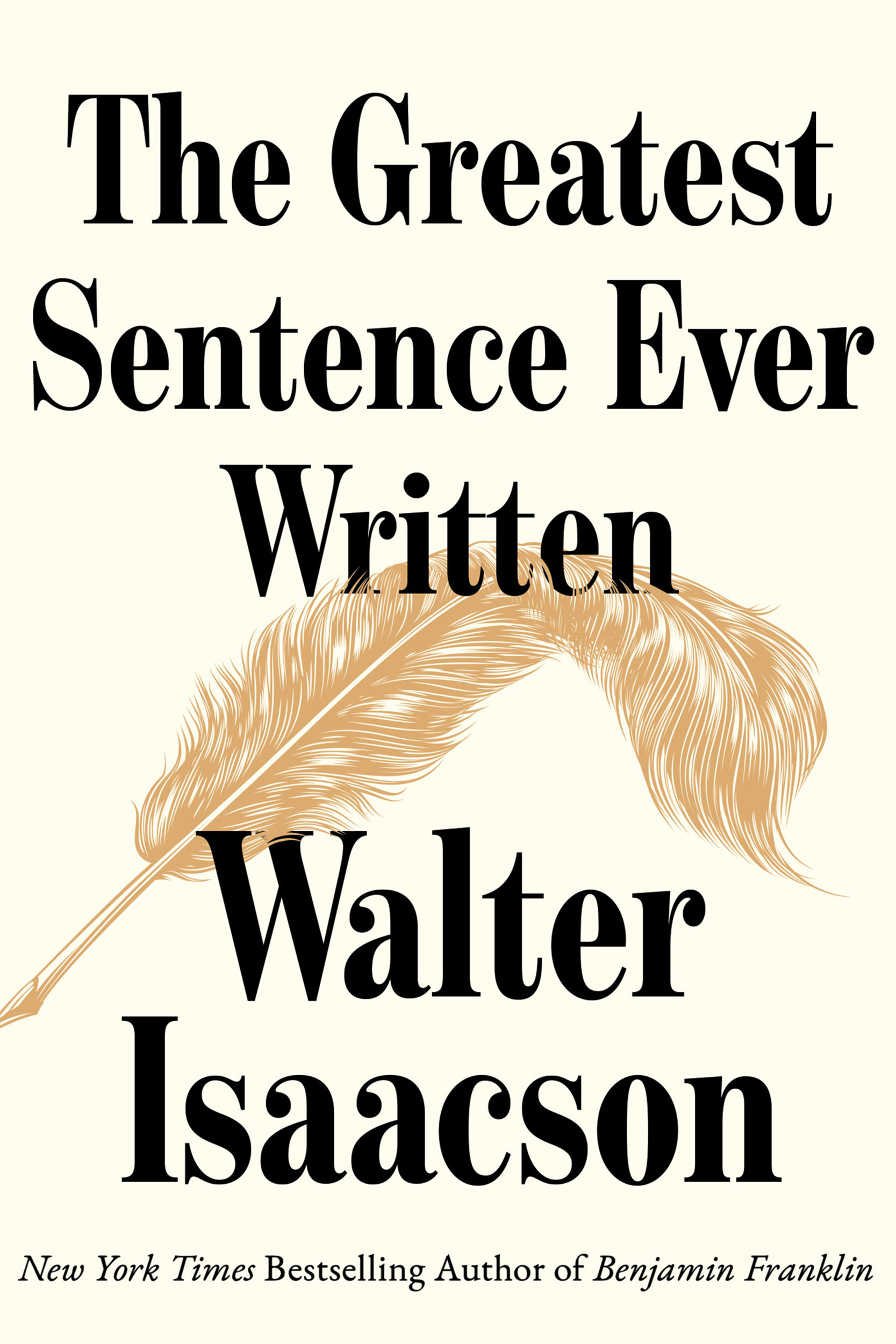
Walter Isaacson’s new book, “The Greatest Sentence Ever Written,” takes as its focal point the document’s second line: “We hold these truths to be self-evident, that all men are created equal, that they are endowed by their Creator with certain unalienable Rights, that among these are Life, Liberty and the Pursuit of Happiness.”

An apt entry for the 250th anniversary of our independence. The book is tiny -- it is around sixty-four pages -- and half of it isn't even directly about the sentence. He includes an essay about the importance of supporting the common good. He also includes multiple documents, including a first draft.

I also liked Edward Larson's, best known for his book on the Scopes Trial, book on 1776 overall. 


I found this author because she has a new book. This is an older one that was at the library. The "Jenna" book club references Bush43's daughter. 

It covers the life of its character from 7-18 (for whatever reason, the plot ends about a decade before the book was published) or thereabouts. It is not a young adult book, but it reads like one. It is in her voice. 

Her father is unreliable, her mother is trying to survive with two children from different fathers, and Sam likes to climb. We get some plot from when she is younger, but a chunk takes place when she is around 15-18. 

I liked it overall, though it probably went too long. 


I found a picture of this book and the next one, which were read over fifteen years ago. I listened to this one (don't recall doing so) while reading it this time. 

I did listen to The Devil in the Junior League, which is a summer read that I put on the side panel (btw, one image appears to not show up on some browsers). A good performance -- appropriate Southern accent (though one person said it wasn't Texan ... I didn't notice the difference -- IITW took place in Texas btw) with a nice sound effect simulating phone calls and use of a microphone. Got a kick out of it -- sometimes, it doesn't take much to amuse me.

The author had a bunch of romance novels. This one was inspired by her own life (she moved to NYC from Texas). It was a fun story of a twenty-something whose comfortable life falls to the wayside, but she manages to find a way. 

One thing that originally attracted me to the book was that I watched a LGBTQ film (It's In the Water) that took place in a similar milieu. That is, a junior leaguer stepped outside of her comfort zone, this time accepting her lesbianism. 


Blechman’s forte clearly is in his character studies of these and other pigeon enthusiasts. His account of the historical pigeon, on the other hand, is a bit mottled by his lack of footnotes or bibliography. One can neither check up on details nor expand one’s knowledge. The engaged reader, of course, wants to do both.

The book covers various subjects (including Darwin, beauty contests, food, and target practice) but emphasizes pigeon racing. It is well written. Pigeon enthusiasts might want a bit more about the birds themselves. 

The bird racing was familiar. My dad raced birds. He fit the m.o., coming from a working-class ethnic background. We had a coop on the roof. 

He had one of those clocks that were used to track when birds arrived. I'm not sure how he started. For whatever reason, he eventually stopped. 


Midaq Alley (Arabic: زقاق المدق, romanized: Zuqāq al-Midaqq) is a 1947 novel by Egyptian author Naguib Mahfouz, first published in English in 1966. The story is about Midaq Alley in Khan el-Khalili, a teeming back street in Cairo which is presented as a microcosm of the world.

I found out about this book because it was adapted into a film (taking place in Mexico). The book is a tad risqué (involving homosexuality, prostitution, and other mature topics) with various human dramas taking place. Good translation. 

Mahfouz was a leading Egyptian novelist who repeatedly used "alleys" in his works. I don't read much fiction, especially "classic" novels. Overall, I enjoyed it, though now and then the exposition went on a bit too long. 

I never saw the film. 


Ted Danson, during his appearance on Stephen Colbert, recently referenced that he has a podcast. There are lots of podcasts out there. 

I checked it out. He has some interesting interviews. 

I listen to a few podcasts. I often get bored with podcasts. Strict Scrutiny Podcast, concerning the Supreme Court, which is a prime interest of mine, often goes too long. 

But I listened to both parts (about two hours total) of the interview he had with his wife. They met while doing a film together. They acknowledged the film didn't do well. 

The marriage did. It has been around thirty years. 

Friday, March 06, 2026

SCOTUS Watch


Order List

Sotomayor (with Jackson) dissented from a denial regarding a case about prisoners having the right to split a filing fee. Kagan would have taken the case but did not join. Takes four to grant cert. 

We then went into an oral argument involving guns and drugs. Eric Segall has a good commentary. And then the long oral argument was done. 

But not the news for the day. 

"Emergency" Docket

Steve Vladeck and Chris Geidner discussed two irregular decisions involving a New York City redistricting matter and requiring a school to tell parents their children were using alternative pronouns and so forth. They are the usual 6-3 jobs with Sotomayor and Kagan handling dissents. 

Rick Hasen briefly raises red flags about the New York case. The problem there is procedural. Only Alito writes for the conservatives. But he might have an opinion for the Court in an election case soon. That one will matter. 

The case page provides the state brief in the trans case, which details various complexities that some skip over since they think the policy is wrong. Erin Reed puts things into a wider context. She covers trans issues. And the SCOTUS conservatives have, over and over again, shown disdain for trans rights. 

(The exception being the Bostock case, a statutory interpretation case that is an asterisk without more.) 

Overall, Kagan is correct. First, they should have taken it for full review. Second, they are hypocrites regarding substantive due process, including not taking a case where trans parents raised such claims in support of their children's transitioning. 

Vladeck flags that the majority -- unsigned though Barrett with Roberts and Kavanaugh concur separately, with a few comments about Dobbs, the abortion case -- rushes through the balancing required in granting the request. 

Okay, they did it, as he says, but they did it slipshod, including not being concerned about the interests of the students. For instance, even if you think the parents have a good case, the district court's order appears to be too broad. 

Ideally, parents, children, and schools should be on the same page. But things are not always ideal. Forced outing, against the will of the children, is bad too. 

A 6-3 "emergency" docket opinion is not the way to handle this situation. But, as Vladeck says, the conservatives are (selectively) impatient. 

Billy Leon Kearse Execution

Florida, after SCOTUS dropped a no comment order, executed another person on Tuesday.

Kearse murdered a police officer about thirty-five years ago. Murdering a police officer is one of those narrow classes of cases of particular heinousness. But it was 35 years ago. Too long.

And, even there, only a narrow majority below rejected claims that a death sentence was improper. He was 18 and had serious intellectual disability claims. 

The final appeal raised procedural arguments, including those involving the disability, which were probably rightly rejected in this posture. Still, even here, I wish they would briefly explain the ruling.

I continue to find these executions gratuitous and otherwise problematic without being APPALLED each and every time. 

Opinions

Wednesday was a scheduled opinion day, though the two unscheduled rulings took some attention off that. Regularly, SCOTUS does things off schedule.

Jackson (standard used in an immigration case) and Sotomayor (NJ Transit Corporation is not an arm of New Jersey, so no sovereign immunity) with unanimous opinions. SCOTUSblog had a live blog.

Upcoming

Another Order List is scheduled for Monday. There will be a two-week break before more oral arguments. 

No opinion days are scheduled, but as we have seen, unexpected news might arise at any time. For instance, two years ago, the Supreme Court announced over the weekend that there would be an opinion dropped, without them showing up (cowards). 

The Supreme Court does not usually announce news on the weekend. But this was a special case. It was the Trump v. Anderson opinion keeping him on the ballot. 

Monday, January 12, 2026

SCOTUS Order List (and other stuff)

First off, I enjoyed Emily on Fire, a book co-written by James Patterson, which is a young adult novel whose title is a tad literal. I'm not usually a reader of Patterson (or Danielle Steel), but the cover drew me in at the library. 

Her mother died of cancer, and her sister committed suicide. Now, Emily plans to kill herself (you know how) to get the world to realize that we are fucked up and have to do something! The book mostly uses her point of view.

The book is raw (and honest, which is important) while retaining an empathy that provides some optimism that is much needed these days.

The only other news on the merits docket came Thursday—when the Clerk of the Court, in a letter to the parties, announced that Justice Alito is recusing from a case in which the Court is set to hear argument later today. 

Steve Vladeck explains an exception to the usual recusal without comment approach done by most of the justices, minus Kagan and Jackson. Sotomayor sometimes comments.

The norm (including applied to Alito vs. Kagan) was found on today's Order List. The Court granted some cases for review on Friday. Today, more so than normal perhaps, it was mainly about clearing brush -- a list of non-grants.

‪Sean Marotta‬, a lawyer, noted on Bluesky:

The #SCOTUS orders list today is a reminder of the shrinking commercial docket. Cases that would have been shoe-ins in the 90-case docket are getting denied regularly.

Kavanaugh, without saying why, noted he would have granted review in a bankruptcy dispute. As usual, I had to separately look up the docket number on the docket page, since the Supreme Court does not provide a link. Can you change that, guys?

The transgender athletes' oral argument is tomorrow. 

ETA: A comment in response to my reference to the Order List somewhere else flagged that there are two atypical requests for briefing respecting petitions for rehearing. I appreciate such information even though it encourages my excessive online habit. 

PFRhs are very rarely granted. The federal government waived a response in one case. In the other, it appears like they want to speed things along.

A bit of inside baseball during football playoff season.

==

I'm not too happy about most of the final scores in the first set of NFL playoff games. The Panthers (after two losses) gave the Rams a fight, but the end result was a third loss. I'm fine with the Bills winning.

A Jaguars' win would have been okay, too.

ETA: A close game, helped by the Texas QB screwing up, became a laugher in the 4th with Houston winning. It might be Rodgers's last game. 

I'm fine with that, particularly (1) not a fan of Aaron Rodgers, (2) Annoyed at the Week 18 win (they would have been better off losing that close game than yet another Steelers loss in the playoffs), (3) I'm fine with Houston, and (4) it's a better match-up with the Pats.

Saturday, December 06, 2025

And The Dragons Do Come

Sim Butler is an Alabama communications professor with two daughters. One is trans. "Kate" is around 15.

He uses a pseudonym, though early on noted she originally chose "Marina" as a feminine name. It's unclear if that means they did not use that name.  

Sim Butler discusses raising a trans child, including general information (about sports, health issues, and so on) and personal narrative. His state's passage of anti-trans legislation, including making him a felon if he provided health care to his child, led the family to leave the state.

(The state government's current mentality is suggested by this review of the book, which appears to be written by a conservative-leaning website that focuses on state news. The discussion keeps on, for instance, talking about "his son.") 

There is a depressing quality to that which is familiar. Becoming Nicole was written ten years ago. (The subject wrote her own book recently. She is now in her 20s.)  To be able to provide the best care for their daughter, the parents basically lived apart, so she could go to a supportive school.

Kate and her family received support from family, friends, and their liberal minded church when she first came out. Things went less well in first grade, though the school assured them things would go okay. 

A new teacher led things to go sideways. They went to another school, which required the author to get another job to afford to pay for it. What about people without similar resources? I ask rhetorically.

The author loves his home state, but is a tad bit naive, though he grants he is protected as a white, economically privileged individual. Alabama, in recent years, has had other conservative complications. The book, for instance, doesn't talk about reproductive rights. The author is liberal.

Butler references his grandfather, who was a sheriff for decades, ending around 1990. He vaguely references that, at first, a quick search suggested that the grandfather was not a "heavy" as compared to other officials during the Civil Rights Era. 

He then suggests maybe he was being a bit naive without going further. Yes, that seems to be true. Butler doesn't press the point, but perhaps figured he had to talk about his grandfather since he was a public figure. A jail was named after him, after all. 

The parents' fighting the dragons helped Kate have a safe space to develop. Her gender dysphoria, before having a chance to live her life in a way matching the gender she knew in her mind, led to various negative consequences. 

She was much happier when she was able to be her true self, including in a safe and supportive school environment. Which, perhaps a bit amazingly, did exist in Alabama in her early years. 

(Conservative politics in the state eventually targeted her supportive middle school.) 

She still worried about publicly being a girl (it led her to dislike organized sports) in such contexts. She worried about how others might see her. Non-trans boys and girls also sometimes have comparable gender issues. What is a "normal" gender identity? 

The book ends with the story incomplete. We live in anti-trans times. There is a reference to anti-trans legislation being proposed in their new, more purple-leaning (unnamed) Southern state. Kentucky? Georgia? Kate, however, seems to be doing well. 

The epilogue references Martin Niemoller and his famous "First they came for" quote. A useful comment, especially given all the targets these days. 

Trans people are a leading target these days. A majority of states have anti-trans legislation. 

The Supreme Court upheld anti-trans legislation, refusing to even acknowledge it as anti-trans. Shades of Plessy v. Ferguson, saying any feelings of discrimination are only "in their head"? 

Nonetheless, trans people continue to exist, and they and their families and communities keep on insisting they should be and can be happy, have support, and be treated as individuals. Parents play a leading role. 

I am somewhat amazed at how parents do it. Me and my siblings surely were no prizes. Oh well. 

Check out the book. Recommended. 

Monday, November 24, 2025

SCOTUS Watch: Orders

Texas Restricting

I started this blog in the middle of the first Bush43 Administration. Various shenanigans going on now, including mid-decade redistricting to obtain partisan ends, went on back then, too. A feeling of deja vu.

A 2-1 Fifth Circuit opinion provided a surprising win for the Democrats when the mid-decade Texas redistricting (which led to a retaliatory California effort) was struck down as an illegitimate racial gerrymander. Trump Administration shenanigans were involved. Their incompetence strikes again. 

The Supreme Court earlier held that political gerrymanders are non-justiciable in federal court. The Rucho opinion ended a 4-4-1 stalemate where conservatives wanted to prohibit such appeals and liberals tried to get Kennedy to agree to join them the other way. Kennedy, while not giving a firm "no," never gave them that fifth vote. 

The Supreme Court left such appeals open in the 1980s. I don't know how much the federal courts actually restrained the process. 

I am not aware of any SCOTUS case that struck down a partisan gerrymander (racial gerrymanders were found). The blog discussions against Rucho tend to skip over that part. Not saying Rucho was meaningless. Curious how much it changed things.

There was a very unhinged (and somewhat counterproductive) dissent to the court of appeals opinion. Justice Alito on Friday granted Texas an "administrative stay" on Friday and sped up the briefing. A response is required by 5p.m. today. 

Never-ending drama.

Order List 

Today's Order List is the last thing scheduled until the beginning of December. It had some interesting bits.

As Chris Geidner noted on Bluesky:

The Supreme Court grants no new cases for merits review in today’s orders list, but it does summarily reverse two lower court rulings in criminal cases—one holding a constitutional error in a Mississippi trial, the other holding the Fourth Circuit improperly ordered a new trial in a Maryland case.

The Mississippi case struck down as unconstitutional a law providing a blanket ability to screen child witnesses. A split SCOTUS opinion earlier upheld the practice, but held it must be "case specific." The Court, in a five-page opinion, left open the possibility that the screen would be harmless error in this case.

The case first came last spring and was distributed to multiple conferences. This suggests some concern. I think the case should have been accepted for full review and oral argument.

The Court also (again) refused to take a case to reconsider the Feres doctrine regarding immunity regarding certain military claims. 

Gorsuch would have taken it. Thomas again wrote to explain why he thinks so, too. Sotomayor is sympathetic but argues that stare decisis warrants leaving it to Congress to fix. She makes a good case. 

The petition for a writ of certiorari is denied. The Chief Justice and Justice Alito took no part in the consideration or decision of this petition.

Only Kagan and Jackson (and somewhat inconsistently Sotomayor) deign to explain why they recuse.

===

The justices will hold oral arguments in the first two weeks of December. 

Then, there is an Order List scheduled for 12/15. That is the last thing scheduled for 2025. 

Other stuff is likely to drop.

ETA: A reference in my daily SCOTUSblog email warrants an addendum.

plainly, courts “call balls and strikes”; they don’t get a turn at bat

The second criminal per curium given short shrift in my comments drops a "balls and strike" reference. 

The lower court explained how the Supreme Court allowed them to raise a problem with a trial that was not cited by the petitioners. So, it is unclear whether the justices were right to call them out here. 

But, overall, the justices don't just call balls and strikes. The Supreme Court repeatedly gets a turn at bat, including changing the questions raised by the lawyers for appeal. 

They also have a lot of power over the batters, including who will get a time at bat, when they will get a time at bat, and what they should do there.

The per curiam quotes an earlier opinion (by Kagan):

In line with our duty to call balls and strikes, we granted certiorari to resolve the split, 589 U. S. ___ (2019), and we now affirm.

Do umpires generally "call balls and strikes" by settling nationwide disagreements on strike calls via official statements of what the rules are?

Meanwhile, here's some more (from me) on judicial review, one of some new essays on that website. 

Saturday, November 22, 2025

Unbearable

Unbearable: Five Women and the Perils of Pregnancy in America by Irin Carmon is a well-written book that underlines the importance of reproductive justice. It is passionate, informative, angry, hopeful, and empathetic. It is also about some men. 

Carmon earlier co-wrote a book about Justice Ruth Bader Ginsburg. As a mother of young children, she lived it as well. 

Reproductive justice is a united whole, involving good, respectful medical care and resources before and after having a child, miscarriage, or abortion. Abortion rights were fit into a privacy frame in Roe v. Wade because that was the logical approach at the time. It was framed as a private act between a doctor and patient, which was open to reasonable regulation. 

Later, equality was mixed in more, as gender equality precedents developed. Reproductive justice was always mixed in. It became more prominent later on. 

Case law underlines the complexities. We have birth control cases. Cases involving pregnant teachers forced to leave work mid-pregnancy. Cases about breastfeeding. And much more. 

(The link at the top is Melissa Murray's interview with the author. She wrote a personal review of the breastfeeding-related book linked above, too.) 

One tragedy, in my eyes, is that not enough Supreme Court cases connected all of this into a united whole. Abortion cases were about applying a ready-made doctrine. They often involved lots of regulations at once. Individual stories and how they fit into a united whole of constitutional liberty lost out. 

The book concerns five women, including someone trying to get pregnant (also a lawyer), a doctor, and three women's experiences before and after being pregnant. They live in New York and Alabama.

The author was about to give birth herself when Dobbs was handed down. The book also has a spoiler in the table of contents. I awaited the shoe to drop.

Sunday, November 16, 2025

I Wish You All the Best

I Wish You All The Best, directed by a trans person, has received good reviews. A Bronx connection: she went to Fordham University. This is her directorial debut. She was an actor in 13 Reasons Why, another case where I only read the book. 

I noticed Cole Sprouse had a supporting role as the protagonist's brother-in-law. I remember him as Ben, the son of Ross and Carol (a lesbian), on Friends. Now, he is in his 30s. Time flies. 

“Non-binary” is an umbrella term that includes those whose identity falls outside of or between male and female identities; as a person who can experience both male and female, at different times, or someone who does not experience or want to have a gender identity at all.

The film concerns another Ben, who is kicked out after they come out as nonbinary to their parents. They moved in with their sister, who had left the family years earlier. Ben has a path of self-discovery, including a cute romance. The book is overall well-written. 

Lena Dunham has a role in the film as an understanding art teacher. The character is Asian-American in the book. The film also, for some reason, also has the sister having a newborn. I don't see a Muslim nonbinary character listed, who plays an important role in the book as Ben's mentor.

Mild spoilers. In the book, things overall work out well for Ben. Their sister provides a safe haven. She and her husband have the resources to help them. It's convenient, for instance, that the brother-in-law is a teacher and helps Ben transfer to a new school. 

They and their parents do not reconcile. They overall do not come out well at all, hints of backward religious beliefs. The mother comes off better. She feels sorry about the pain she is causing her children. But, ultimately, she is loyal to the father. 

(I began using male pronouns for Ben when writing this piece. Even the hosts of Gay USA sometimes trip up with using preferred pronouns. It can be tricky.)

The book shows the value of therapy, the usage of anti-anxiety medication, and dealing with social anxiety. It also shows the essential nature of finding good support. Ben finds a support network that they did not have before, including in school. 

Before, they didn't hang out with people. Finding someone who here helped Ben find two more close friends was oh so important. This is a general principle and not limited to people on the LGBTQ+ spectrum. 

Attacking trans people is deemed acceptable by many governments, up to and including the Trump Administration. Transphobia is both understandable (as far as bigotry can be) and ridiculous.

Transphobia arises from different things. The Trump Administration being so anti-trans might confuse someone. It seems logical (if wrong) for them to target Democrats in illegitimate ways or monetize the government or demand utter loyalty to Dear Leader.  

Why the anti-trans stuff? It does have a right-wing religious angle. It is fitting that the Religion Clause Blog often has news on trans-related lawsuits. Sex and gender flexibility clash with right-wing religious beliefs. Not "Christian" beliefs. To be clear. 

Such beliefs do not only have a religious angle. People can be religious and support nonbinary and trans people. Religious positions often have more to them.

Gender fluidity endangers traditional masculine-dominant beliefs and practices. Fascism and authoritarian governments regularly promote such beliefs. It is fitting that one book about them is entitled Strongmen. Anti-trans policies fit in here.

A book (written by a non-binary person) and a film (directed by a trans person) respecting the self-actualization of a binary person are quite important. We need to be good people and provide support for those in need. We need to not focus on false issues.

A final word about young adult non-fiction. It is often not only for young adults. After all, people enjoy television shows and films about teenagers without being teenagers themselves. YA fiction can be similar.

Thursday, October 30, 2025

Trump Odds and Ends

The Trump Justice Department regularly lied to and didn't follow the orders of courts. 

(This should matter, right?) 

Prince (for now) Andrew is having his royal title (basically symbolic) stripped because of his involvement with Jeffrey Epstein. 

OTOH, Mike Johnson is keeping the House of Representatives in session and not swearing in a new Democratic representative, partially to prevent a measure from releasing the Epstein papers. 

Even in the friendliest polls, Cuomo has the smallest enthusiastic base of any candidate. Curtis Sliwa has more people excited to vote for him. Cuomo’s only shot is patching together enough voters who fear or despise his opponent enough to accept him by default. He has nothing to offer for the future, just a cynical warning that we cannot trust it to someone else.

But that same need to control has brought him here: stuck in a race he’s unlikely to win, for a job he never really wanted. And that’s because Cuomo can see everyone’s faults but his own. He doesn’t show humility. He rarely apologizes. And if you never admit mistakes, you never learn from them. You never evolve.

Okay. Let's move on from this ugliness.

The Supreme Court has found another possible "this goes too far" bit regarding Trump sending troops into our cities. At least, eventually. 

Don't worry. As a whole, the Supreme Court (6-3 much of the time) has supported Trump while expanding its power, including against the lower courts. 

Time for court reform.

ETA: Some SCOTUS addendum stuff.

A media advisory dropped regarding seating for a Trump firing case, underscoring the expectation it will be a well-watched oral argument. Press seating will be by assignment only. All cases aren't equal.

It could take years to have a bound copy of a term's opinions. Now, they start providing bound pages during the term. The final opinions for the 2024 Term are now available with the page numbers. 

Oral arguments begin again on Monday. 

Tuesday, October 14, 2025

Order List + Execution Week Begins

SCOTUS

The Supreme Court added a case involving plea bargains to the docket on Friday. 

Saturday brought an article about lower court judges being upset about the shadow docket. 

Today was Order Day (given yesterday was a holiday). Kavanaugh, Alito, and Gorsuch recused themselves without stating why.  Sotomayor, for the liberals, flagged a troubling jury/capital case. 

Gorsuch said he is open to incorporating the Seventh Amendment. If so, go all the way, since the grand jury is also quite important, and the Third Amendment also has its importance. 

Alito (for Thomas and Gorsuch) also added a short statement noting his concern that schools do not notify parents about children transitioning. Such things, unlike abortion or birth control (Thomas), are a fundamental right. 

ETA: Both Sotomayor and Alito used the word "tragic."  We were able to hear the full opening material (e.g., bar admissions) on the first day of the term. Not so this time, apparently, since the C-SPAN audio starts with the first oral argument, with a tiny bit of Roberts swearing in lawyers. 

I also skimmed (it's too long for me to read; it might have been back in the day) the famous Learned Hand biography. There's a lot of interesting content, although some chapters are tedious. A nice anti-originalist quote:

[I]f our Constitution embalms inflexibly the habits of 1789 there may be something in the point. But it does not; its grants of power to Congress comprise, not only what was then known, but what the ingenuity of men should devise thereafter. Of course, the new subject-matter must have some relation to the grant;  but we interpret it by the general practices of civilized peoples in similar fields, for it is not a strait-jacket, but a charter for a living people.

Reiss v. National Quotation Bureau, 276 F. 717, 719 (S.D.N.Y. 1921).

His Bill of Rights lectures, however, simply go too far. Judicial review is part of our constitutional system. Yes, you can be quite wary about applying it. But it is a thing. His career as a whole wasn't such "judicial restraint on steroids" as all that.  

Two Executions 

It also marked the beginning of a busy week of executions. 

Texas, which has its moments, stopped (for now) an execution. It involved discredited shaken baby evidence. But we still will have a busy week.

Lance C. Shockley was sentenced to death for the murder of a Missouri police officer. That was twenty years ago, which (yet again) gives me a chance to cite Stephen Breyer's concerns that delays at some point are unconstitutional. 

Murder of police officers is one of those crimes even those wary of the death penalty might make an exception for. However, as usual, some red flags arose. For instance, the jury split on whether to give him the death penalty, with the judge deciding. 

(He also had a failed religious liberty claim regarding what he wanted at his execution.  The Supreme Court rejected it without comment, though it waited until sometime late afternoon execution day or so to do so.)

If there was going to be a busy week of executions in 2025, obviously, Florida would have to get involved. Samuel Lee Smithers murdered two women around thirty years ago (1996). He was the subject of "Deacon of Death," a true crime novel.

(He was a church deacon. He was also connected to church arsons. The murder victims here were prostitutes. Is there some twisted religion angle?)

Smithers was executed when he was in his early 70s. The question remains if it is legitimate to execute him after all this time. Mental issues were flagged, and a victim's father said she would not want him to be executed. What of the other victim?

An execution at this point does have shades of involuntary euthanasia. In fact, the final appeal (as usual disposed of by SCOTUS without comment) argues it is unconstitutional to execute the elderly. The long time that has passed is mixed in. 

Tuesday, September 30, 2025

Florida Executes Victor Tony Jones

Jones was sentenced to death for murdering his employers, 66-year-old Matilda Nestor and 67-year-old Jacob Nestor, later admitting he did it because they owed him money. Jacob shot Jones before he died. The police found Jones wounded at the scene. 

This took place thirty-five years ago. Justice Breyer (joined by Ginsburg, also citing earlier dissents by Stevens), whom I repeatedly cite, argued:

These lengthy delays create two special constitutional difficulties. First, a lengthy delay in and of itself is especially cruel because it subjects death row inmates to decades of especially severe, dehumanizing conditions of confinement. Second, lengthy delay undermines the death penalty’s penological rationale. [cleaned up]

His lawyers unsuccessfully raised various claims, including alleged intellectual disability. Mitigation evidence was cited in the final appeal (see below). 

They also attempted to use the abuse Jones suffered as a child at a notorious state reform school. At least 34 people who went to the school later were sentenced to death. Jones received a fiscal settlement earlier this year. The recent settlement arguably was new evidence (often these claims are procedurally barred as coming too late), but only one judge accepted that. 

My bottom line is that a long prison sentence was more appropriate. And, even if not, they waited too long. Yes, I am an "abolitionist," but even before that, only a tiny subset of "worst of the worst" situations should warrant an execution. The numbers from that study, however, are also rather glaring. 

The Supreme Court, mid-afternoon (a bit late), rejected a final appeal without comment. One claim was a technical procedural matter. The other somewhat emotionally asked:

Has the Florida Supreme Court repeatedly failed to take into account the diverse frailties of human kind in capital sentencing by consistently denigrating the force of proffered mitigating evidence. 

Maybe so, but it's academic now. 

There are eight executions, in seven states, scheduled in October. Five in four days. The last person has a suitable name for this whole process: "Grim."

Saturday, September 20, 2025

SCOTUS Watch

Orders

We already discussed the order paving the way to another execution. It was handed down without comment. The other order did have an explanation, after Justice Sotomayor provided a (temporary) administrative stay:

The Court has already granted certiorari in this case on the sovereign immunity issue decided below, and the pending damages trial before the Supreme Court of the State of New York would be barred if New Jersey Transit Corporation were entitled to sovereign immunity from suit. Respondents, on the other hand, identify no tangible irreparable harm they would face if the trial were delayed until after this Court decides the pending case.

Steve Vladeck noted earlier that there was a good argument to reject the request. So, arguably, this say-so analysis is somewhat lacking. 

OTOH, for them, it is a descriptive discussion for the shadow docket. Baby steps. On Bluesky today, he added this Calvinball-esque comment:

It continues to be ... revealing ... how much the Court's orders on emergency applications in *non*-Trump-related cases are playing up the balance of the equities (and the presence/absence of irreparable harm) versus the Court's orders in Trump cases, which ... aren't.

Odds and Ends

I have repeatedly noted that the "Online Sources Cited in Opinions" (saves pages to avoid dead links) for 2024 was empty. It continued to be empty into the summer. It is now filled. 

There are two media advisories dated September 8th regarding seating in cases of particular interest.  These are specially provided when there is a concern about seating. One case is a major Voting Rights Case, and the other involves a ban on licensed conversion therapy for minors. 

There is also an updated November argument schedule, which will include the Trump tariff cases. The advocates expecting to argue a death penalty case in November are now in a wait-and-see mode. (They were displaced to fit in the tariff case.)  

Judicial Security Becomes Politicized

Lower court judges have had to deal with a lot more than strong dissent from Trump on down. They have received harassing phone calls, swatting attacks, and, in some cases, had serious threats of violence. A judge’s child was murdered. 

So, more security funds are a good thing. But so far, only justices have been given some in the new budget bill. If you read between the lines, the House is getting its marching orders from the Trump Administration, whose attacks on lower court judges who have repeatedly voted against its lawlessness are well known.

Hopefully, this will be addressed by the time the final bill is voted upon.  

Sunday, September 14, 2025

We of Little Faith: Why I Stopped Pretending to Believe (and Maybe You Should Too)

Kate Cohen wrote the book after she came out as an atheist largely because she did not want to lie to her children. I found the book in the library after seeing her FFRF interview.

The book was somewhat annoying. First, she had this overheated philosophy about telling the truth. It includes basically telling the whole truth (except various times when, for various reasons, she did not).* She's the sort who won't tell her children there is a Santa Claus. When she is three. 

People generally don't do that. They can be private about their beliefs. They don't have to provide a full-fledged version of them without being a liar. 

And, as I said, she doesn't completely do it herself. She doesn't take the Sam Harris approach of thinking "you are fat" is healthy truth-telling.  

I respect her philosophy of not lying to her children. So, when a pet died, she told them it was dead. There is a way to do this in child-sensitive ways. She bluntly told them that when we die, we die. And that there is no god. Still, at times, she laid it on a bit too thick. 

One thing that annoyed me was when she didn't want her oldest son to have a bar mitzvah because the only reason he wanted to do it was to please his grandfather. The son said, "fine," but she had to tell the grandfather. He was annoyed, but it went okay. 

What is wrong with him having the ceremony to please his grandfather? She argued it was a lie for him to do what many did -- say the usual religious stuff without really believing it. It can't just be for symbolic reasons. You say the words, but don't mean it; it's a lie.

She argued he was not an adult yet, so she had the responsibility to make his decisions. I think that took agency away from him. He was mature enough to decide for himself. And, if he didn't want to do it, he could have told his grandfather. She basically allowed him to not take responsibility for his choices.

"Religion" is not specifically defined, but is generally assumed to mean belief in God and the afterlife. On that level, Buddhism might be considered a religion even if a Buddhist doesn't believe in a god. After all, a Buddhist generally believes in reincarnation.  

What about a Unitarian who does not believe in a god? Do they belong to a religion? She also argues that the Bible is not worthwhile since it is not true. Why can't it be useful like many types of fiction? Perhaps this specific work of historical fiction is bad?

She also spends time discussing alternatives to religion. These chapters get to be a bit tedious. A church or similar holy place is not a unique piece of architecture or meeting place. She even cites an NYC ethical society site, but notes it is rare. 

It is not very hard to establish an atheist meeting place. It doesn't require the deep pockets of the Catholic Church to build a really nice location. Many nice secular places exist. Atheists don't just have to meet at the local coffeehouse or something.  

Many non-religious holidays have special significance. You don't have to make up some pizza holiday or something to do so. Holidays like Christmas can also have special meaning for those who practice it without believing in Christ. There was a nice documentary about how Hanukkah became a special Jewish cultural holiday in the United States.

She makes it out like this is hard to do. She went to the lengths of creating a pizza-related holiday. She wanted to mark the maturity of her son by having him in charge of a dinner party. He wasn't interested, but it was a decent idea. 

OTOH, so is a Jewish ritual with religious trappings that many (including the author at that age) don't think much about. She could not allow it since she is an atheist. The ceremony requires at least some token profession of faith. Which would be a lie.

I agree with her that those who can announce being an atheist with only a minimal burden should do so. Others will give up a lot, sometimes be in danger of physical harm, if they do so. The people with an easier time of it are the voice of all the rest.

I also agree that "agnostic" is sometimes a cop-out. On a technical level, there is a difference between not knowing something and not believing. 

Often, however, "agnostic" is used as a hedge. Well, I just don't know. Maybe? It gives you an out. "Atheist" also appears to be strident and stereotypically so. 

I don't like the word because of all that baggage. However, yes, there is no good evidence out there for a God, especially the sort of God most people want to believe in. They don't believe in Jefferson's deistic god. They don't believe in Zeus, which at least would be more realistic given the bad things out there. 

I also don't like "freedom from religion" as if religion itself is the problem. Religion comes in many shades.

Religion can be a problem when subjective beliefs are established by law. Or faith over reason rules the day "because God said so." But that is not the only type of religion possible. It can even be seen as immoral.  

Some people who belong to a religion are atheists. I think that is possible. The dictionary and technical definition of "religion" includes those people.

The book has some good parts. It is around two hundred pages, which is a good length for a book. It is overall quite readable. Still, it could have been shorter, and as I said, I found various parts overheated. 

I think "God" might best be seen as a symbol. For instance, people sometimes lose faith in God when a loved one dies. This seems selfish or at least curious on some level. Many people suffer and die. 

Why should your father's or child's death be any different? Obviously, it is special for you. But your belief in God has to take into consideration the problem of evil and the issue of suffering overall. 

People often don't think things through that deeply. A child dies. A basic goodness is lost. That goodness was a basic aspect of god for you. So, you no longer believe in god. Or your belief suffers a major blow. 

"God" as a singular person, as found in the Bible, doesn't make much sense to me. God as a concept, a metaphor, as poetry for what is good makes more sense. You can have ceremonies, prayers, and other religion-like things to honor that sort of "God." 

Many people do honor such a thing, which they often treat as a separate force. That is an understandable human thing to do. Atheists sometimes ridicule "watering" down God in that fashion. 

Still, it is how humans handle things. I think it is fine as long as we are honest about things. She is all about honesty. We are a nation geared to a biblical type of god, and that is often the sort refuted by atheists.

Check out the video. FFRF has some good programs. The television show is on hiatus, but they still have weekly radio shows, often with good guests. 

The co-presidents met on Oprah back in the 1980s. The wife was always an atheist, starting FFRF with her mother. The husband is an ex-evangelist. 

===

* The "do you promise to tell the truth, the whole truth, and nothing but the truth" court declaration is a bit of a lie. People are instructed to not tell the whole truth. They are supposed to say the minimum necessary to answer the question. Not the "whole" truth. You can say certain things that imply something else. It is up to the lawyer to carefully draw you out.