About Me

My photo
This blog is the work of an educated civilian, not of an expert in the fields discussed.
Showing posts with label fiction. Show all posts

Sunday, March 08, 2026

Some Books

I have had mixed experiences with books recently. I have had better luck lately. A variety of books with different subject matters are worth noting. 
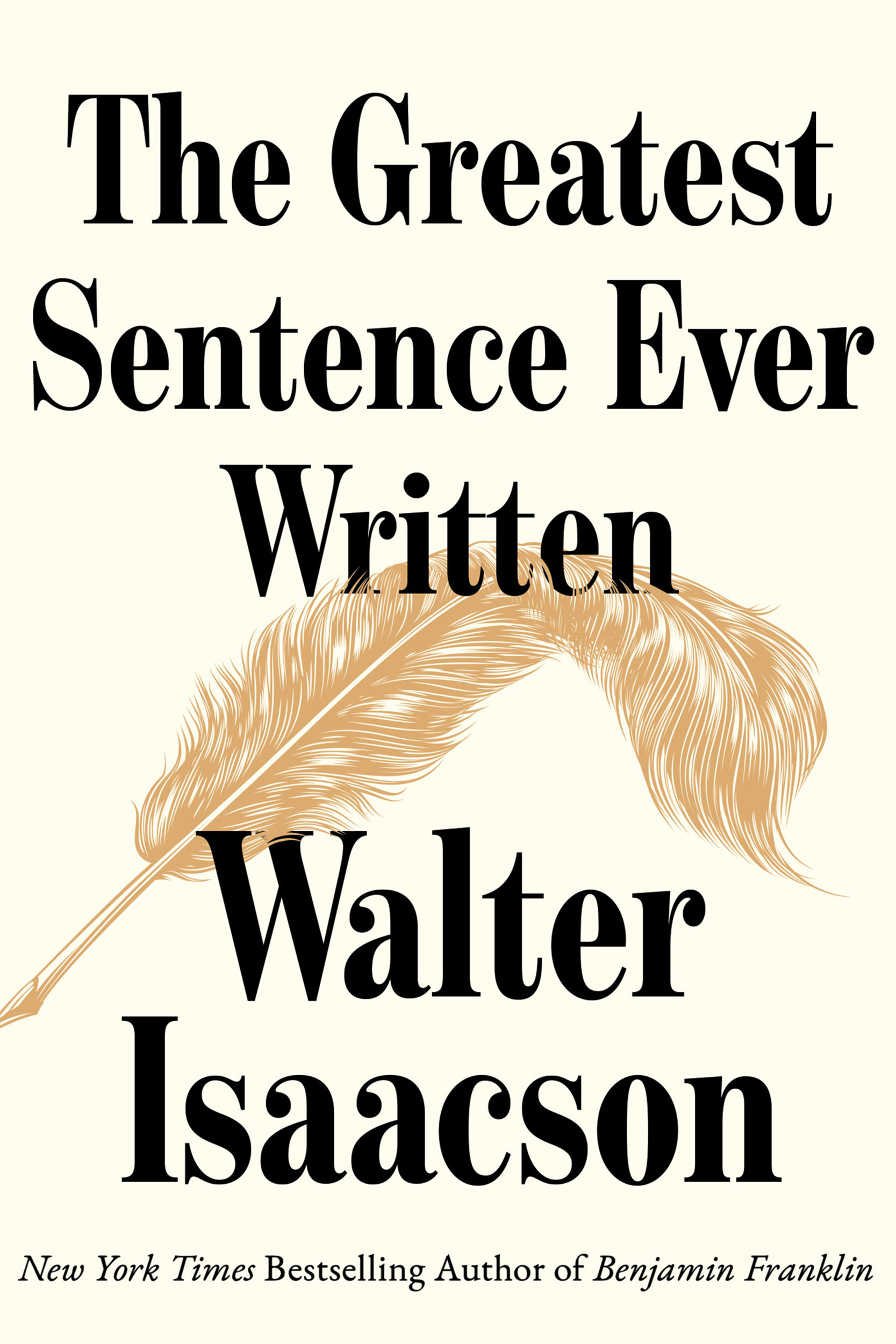
Walter Isaacson’s new book, “The Greatest Sentence Ever Written,” takes as its focal point the document’s second line: “We hold these truths to be self-evident, that all men are created equal, that they are endowed by their Creator with certain unalienable Rights, that among these are Life, Liberty and the Pursuit of Happiness.”

An apt entry for the 250th anniversary of our independence. The book is tiny -- it is around sixty-four pages -- and half of it isn't even directly about the sentence. He includes an essay about the importance of supporting the common good. He also includes multiple documents, including a first draft.

I also liked Edward Larson's, best known for his book on the Scopes Trial, book on 1776 overall. 


I found this author because she has a new book. This is an older one that was at the library. The "Jenna" book club references Bush43's daughter. 

It covers the life of its character from 7-18 (for whatever reason, the plot ends about a decade before the book was published) or thereabouts. It is not a young adult book, but it reads like one. It is in her voice. 

Her father is unreliable, her mother is trying to survive with two children from different fathers, and Sam likes to climb. We get some plot from when she is younger, but a chunk takes place when she is around 15-18. 

I liked it overall, though it probably went too long. 


I found a picture of this book and the next one, which were read over fifteen years ago. I listened to this one (don't recall doing so) while reading it this time. 

I did listen to The Devil in the Junior League, which is a summer read that I put on the side panel (btw, one image appears to not show up on some browsers). A good performance -- appropriate Southern accent (though one person said it wasn't Texan ... I didn't notice the difference -- IITW took place in Texas btw) with a nice sound effect simulating phone calls and use of a microphone. Got a kick out of it -- sometimes, it doesn't take much to amuse me.

The author had a bunch of romance novels. This one was inspired by her own life (she moved to NYC from Texas). It was a fun story of a twenty-something whose comfortable life falls to the wayside, but she manages to find a way. 

One thing that originally attracted me to the book was that I watched a LGBTQ film (It's In the Water) that took place in a similar milieu. That is, a junior leaguer stepped outside of her comfort zone, this time accepting her lesbianism. 


Blechman’s forte clearly is in his character studies of these and other pigeon enthusiasts. His account of the historical pigeon, on the other hand, is a bit mottled by his lack of footnotes or bibliography. One can neither check up on details nor expand one’s knowledge. The engaged reader, of course, wants to do both.

The book covers various subjects (including Darwin, beauty contests, food, and target practice) but emphasizes pigeon racing. It is well written. Pigeon enthusiasts might want a bit more about the birds themselves. 

The bird racing was familiar. My dad raced birds. He fit the m.o., coming from a working-class ethnic background. We had a coop on the roof. 

He had one of those clocks that were used to track when birds arrived. I'm not sure how he started. For whatever reason, he eventually stopped. 


Midaq Alley (Arabic: زقاق المدق, romanized: Zuqāq al-Midaqq) is a 1947 novel by Egyptian author Naguib Mahfouz, first published in English in 1966. The story is about Midaq Alley in Khan el-Khalili, a teeming back street in Cairo which is presented as a microcosm of the world.

I found out about this book because it was adapted into a film (taking place in Mexico). The book is a tad risqué (involving homosexuality, prostitution, and other mature topics) with various human dramas taking place. Good translation. 

Mahfouz was a leading Egyptian novelist who repeatedly used "alleys" in his works. I don't read much fiction, especially "classic" novels. Overall, I enjoyed it, though now and then the exposition went on a bit too long. 

I never saw the film. 


Ted Danson, during his appearance on Stephen Colbert, recently referenced that he has a podcast. There are lots of podcasts out there. 

I checked it out. He has some interesting interviews. 

I listen to a few podcasts. I often get bored with podcasts. Strict Scrutiny Podcast, concerning the Supreme Court, which is a prime interest of mine, often goes too long. 

But I listened to both parts (about two hours total) of the interview he had with his wife. They met while doing a film together. They acknowledged the film didn't do well. 

The marriage did. It has been around thirty years. 

Wednesday, January 07, 2026

Some Books

The First Eight: A Personal History of the Pioneering Black Congressmen Who Shaped A Nation by Jim Clyburn is pretty good. It concerns the first eight black South Carolina congressmen, written by the ninth. 

The author was once a history teacher, so he has some skills in particular to write about the subject. The style is straightforward and generally easy to read. At times, it got a bit dull. 

Among the first eight is Civil War hero Robert Smalls and Thomas Miller, who looked white, and appears to have been the grandson of a signer of the Declaration of Independence. The book helpfully places the eight into the context of the times.

===

I recall reading The Princess Bride a long time ago. 

At least, I recall reading William Goldman talk about how (he takes this conceit quite far, including in later editions) the book is actually merely an abridgement of a much longer (nonfiction) work. 

The death of Rob Reiner led me to re-watch the film and read the most recent edition (it has "the first chapter" of a sequel) of the book. The book is quick reading with multiple asides. I read the over four-hundred-page book in basically two days. 

My edition had two anniversary introductions plus the intro to the main book. So, you read over fifty pages before getting to the main attraction. 

The book is mostly like the movie. The book adds a few things about Buttercup's parents and a "zoo of death," but the film and movie mostly overlap. 

It's enjoyable. I won't say it is GOAT material or anything. It is enjoyable.

I wish Buttercup had a more active role. She comes off as rather naive. As a satire of typical fairy tales, that somewhat makes sense, but still. 

The book also reminds us that these aren't great people. The heroes, after all, are criminals. Westley becomes a pirate. Pirates do some bad things. 

==

I listened to As You Wish, written by the actor who plays Westley. It is basically a 25th Anniversary era celebration of the film. The audio included many people involved in the film. That was charming.

I am not a big books on tape fan, especially for longer works. This book isn't that long. I didn't seek it out. I wanted the book, and the audiobook is what came up.

(I'm listening to Selma Blair read The Diary of Anne Frank. She does a good job. The diary is longer, and I don't know if I want to listen to the whole thing.)

The last disc was corrupted, so I could not finish listening to it. That was annoying. 

===

I also read The L-Shaped Room, an old British book about a woman who moves into a seedy apartment after she gets pregnant. The first time she has sex. 

It was okay. There was a certain artificial flavor to it, including how the main character never truly was at risk. For instance, her aunt eventually pays her to type a book, and then she makes money typing, allowing a means for her to make money after she is fired.

(The book was also at times somewhat tediously wordy. There were some interesting supporting characters, including a gay black musician and two prostitutes, each somewhat simplistically drawn.) 

The link is to a film starring Leslie Caron (more familiar for such works as Gigi), which I saw a long time ago and wish to see again. Nonetheless, the only DVD I was able to find was the wrong format. 

And, though TCM sometimes plays her films, they never air that one. Annoying. Checking the summary, the film changes the book somewhat, including explaining why a French actress is being used. 

Monday, April 14, 2025

Mario Vargas Llosa

The Nobel-winning novelist Mario Vargas Llosa has died. He had an interesting life. 

I vaguely know the name but do not know much at all about this Peruvian celebrity. For instance, he was big on free markets, sending flowers when Margaret Thatcher retired. He also ran for president:

He led polls for much of the race, but was roundly defeated by Alberto Fujimori, then a little-known agronomist of Japanese descent who later adopted many of Mr. Vargas Llosa’s policies.

Llosa sounds like he had an interesting life. My small knowledge of him is from watching Tune in Tomorrow, an American version of Aunt Julia and the Scriptwriter. The novel was inspired by his own marriage mixed with some fantasy. His "Julia" (they were married nine years) was not overly pleased with his take. 

Tune in Tomorrow (1990) starred Keanu Reeves, Barbara Hershey, and Peter Falk (as the screenwriter). It had various other notables in the supporting cast. I saw it a long time ago but recall finding it amusing. 

Saturday, February 08, 2025

Some Books

I enjoyed Cecile Richards's autobiography, reading the young adult's version. Making Trouble was recently reviewed. A useful device would be to compare the original and young adult versions and determine how much is lost in the translation. I see it as a sort of abridged version.

The Night of Baba Yaga (a European fable character) by Akiri Otani is an LGBTQ novel of sorts. A young woman becomes a driver/bodyguard to the daughter of a mobster. Meanwhile, we are given what seems like some details of the daughter's fugitive mother and her lover. Nonetheless, I think if you read closely, you might suspect something is fishy.

The driver/bodyguard is chosen for her fighting skills (and gender). The book has some violent scenes. The book then takes a gender-bending turn, especially as the last part of this small novel skips along from c. 1980 to the current day (around 2020). I found the ending dubious. Overall, however, it was a worthwhile read with some alt-gender content.

The Death of Socrates by Ellen R. Wilson discusses the title subject as well as how it was understood from the time of Ancient Greece until the present (around 2010). It's part of a collection of shortish (not too much over 200 pages with pictures) historical books covering various topics.

I found it an approachable read for someone not too philosophically or historically inclined. She does not address only graduate school people here. The book started to get tedious around the Middle Ages though some of the more modern stuff was okay. The strongest part was the time of the ancients, including the Greeks and Romans. 

The chapter concerning Jesus and Christianity (Socrates and Jesus overlap in various ways though many thought Socrates didn't suffer enough) started to fall into a more academic groove and the book was more of a trudge. The earlier chapters was much easier to read. Still, overall, worthwhile.

I watched some of the film Cluny Brown, one of three adult films (two children's Rescuers films were also made) from books by Margery Sharp. The book version has the same basic characters and storyline but it changes some things around. For instance, Cluny is not so into plumbing and does not meet the professor in the opening scene. 

The professor is also not quite as approachably quirky early on. The two wind up together in the book too (if not quite in the same way) but it seems much more out of the blue this way. In the film, the two had more of a connection early on. The film in some ways is an improvement. The other characters are basically the same in the book and film versions. 

I found the book somewhat hardgoing at times. I read the whole thing and it had its charms. Still, at some point, it felt that nothing much was going on, and the book would have been better if it was around 30-50 pages shorter. The film seems crisper in that sense. 

I will check out her book The Nutmeg Tree next. 

Tuesday, December 31, 2024

Two Books

This book has potential, and its success as a first effort is not surprising. Overall, though the writing was readable and had some nice touches, I was not satisfied. The final conflict was annoying.  

There is a lot of interlocking stuff here. The author "writes what she knows" because she is a Peruvian-American who moved from the South to New York City. And, that is what her main character does. 

The two love interests also write a book together, which is clearly a sort of roman-a-clef of their relationship. In fact, it is darn obvious, and you would think the other characters would say more about that. She's a doe-eyed romantic while he doesn't like romance and favors darker literary fiction.  

They fall in love.  

Katie Holt nicely includes bits and pieces of their work in progress, which helpfully provides insights into what the male side of the love match is thinking. The excerpts are well done and make you want to read the book being written.  

The book is fully otherwise from the woman's point of view, someone who relies too much on true-life romance to succeed in writing. The sex scenes are a bit much at times but expertly done. The romance overall was not satisfying and well-rounded though perhaps some will like it as a fantasy. 

Ultimately, a major problem is that the main character seems immature, and the male character is more fantasy than a complete well-rounded character. The writing of the book sputters (she just stops working with him, not even reading the finale before they submit it) after a stupid complication arises that makes her love interest and advisor/mentor both look bad.

I read the whole thing and it kept my interest. Nonetheless, the main characters eventually got to be somewhat annoying, and the ending complication annoyed me. And, the idea was that they would not just write a "happily ever after," and it sounds like they did. A cheat! 

Why didn't the instructor, who set the guidelines, find this a problem? The whole thing comes off somewhat incomplete. Again, an imperfect first effort.  


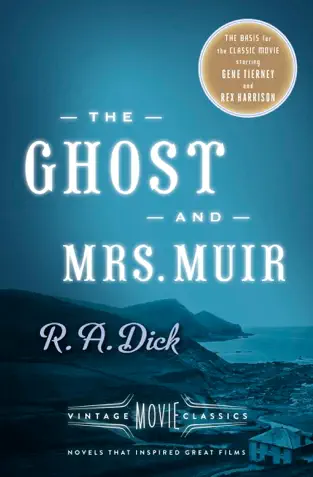
The Ghost and Mrs. Muir was a book, film, and television series. Each version was somewhat different from the last one taking place in America in the modern day and tossed in an "&." It is a sitcom.

Josephine Leslie wrote the book in her forties and it appears to be her first. The Wikipedia entry on her is a short "stub" though online you can find a picture. An essay on the different houses used provides a bit more information. "R.A. Dick" is a pseudonym. 

The book edition I have is a special version connected to the film with a short introduction largely focused on the movie version. The book title pages references three other books by "R.A. Dick," including one that Amazon tells me is about the devil.

I read the book before and saw the film and television series (a bit silly). The book and the film are alike in various ways though the ending changes as I recall (I won't confirm -- I plan to watch the film again) and the annoying son is dropped out. Various other bits are changed. Overall, the film works quite well. 

The book is pretty good too. It has some interesting ideas of the afterlife and the captain also has some interesting things to say. Mrs. Muir is a bit too weak-willed at times, with the captain firmly in control (he is older and dead, which provides him the ability to know things she cannot). Still, she comes off as a pleasant character with independent views.

The setting of the book (written in the 1940s) is a bit vague though there are references to trains, phones, and radio (suggested perhaps not present early on). It can be many times in the past, Lucy Muir (a word meaning "sea") finding happiness in an isolated home near the sea. The taste of the modern era is there.  

There should be at least one world war mixed in there, which the captain at least would seem to find notable. None is referenced though perhaps it's possible to fit the main portion of the book before WWI.  A war would challenge the book's mood. 

The book has a somewhat old-fashioned feel with a pleasant overall pace from when she is first a widow and before you know it her children are adults, and then she is an old lady. All in less than two hundred pages. Those who like the film should enjoy it.

The passing of time is a suitable theme as we finish another year. I personally did not find this year too pleasing, symbolized by my sleeping through its beginning. We shall see how 2025 goes. The year does have a mathematical simplicity to it.  

Sunday, October 27, 2024

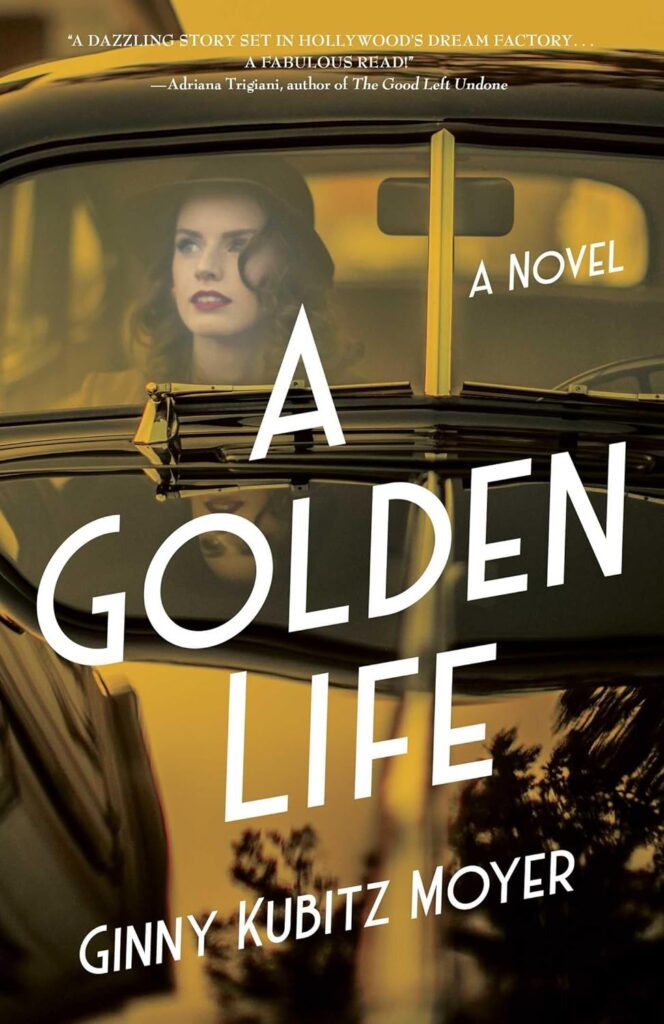
A Golden Life and The Christmas Charade

As a child, I did not read much fiction. I did not read the usual books children read. We were not given lots of books to read like some. For instance, my niece's child has a mini-library. I persisted anyhow.  

I still do not read much fiction. I do from time to time find some books to enjoy. Once, there was a Jane Austen period. I read each of her books, including Lady Susan and the two unfinished novels. Checked out multiple biographies and a collection of her letters. Did not read all of her Juvenalia, which is a collection of her works as a child and teen.  

Modern fiction also from time to time appeals. I enjoyed a few mystery writers, including the early works of Sue Grafton. The latest was a book I found by chance while looking for something to read at the library, after it looked like nothing caught my eye.

Frances is in her mid-20s and is starting as a secretary in 1930s Hollywood. She has a secret. Meanwhile, her boss, a big producer, is working on adapting the story of a famous 19th-century actress to the screen. 

The real deal opposes the idea, leading to a trip, and further complications, including the actress who is determined to play her to show she can do more than play innocents. Toss in such drama as his teenage daughter. It all blends together nicely.

The book might make a good film. One good aspect is some well-drawn supporting characters, which are essential in a good film. 

It isn't Halloween yet, but yes, the Christmas season is upon us. I saw Christmas decorations at the discount store. And, there are a bunch of Christmas films on multiple Hallmark Channels and Up TV. 

There are so many of these films. Sometimes, I like the feel of them with some of the stars a better bet. Corey Sevier is a familiar face, including on both channels. He was in an enjoyable film last night. He also directed it. Checking, he directed a few films.  

He plays a gruff FBI agent who accidentally has to work with a librarian. She too was in a few Hallmark films. She has less of a somewhat fake feeling flavor than some of these regulars.  

The film is well-paced and is focused more on mystery than romance. The necessary complication comes late and is disposed of painlessly. 

There have been one or more Halloween films on Hallmark, including one with a ghost. Do not know if they have any new films for Election Day though a few films have election-related plots.

A few familiar faces are in the cute Mayor Cupcake, which was made in 2011, but check it out if you can. 

Monday, August 26, 2024

Two Books and A Film

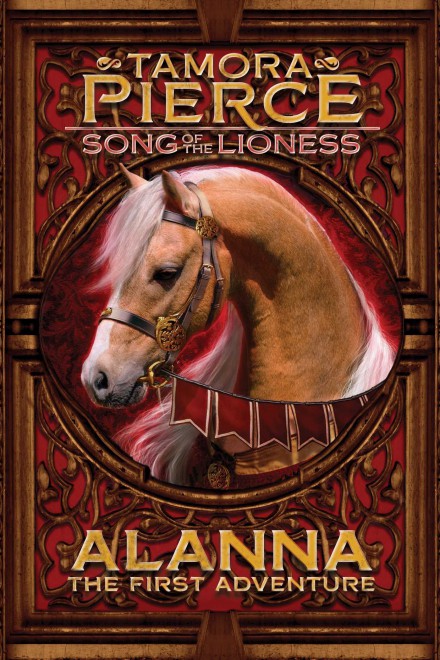
Tamora Pierce explains in an epilogue written over thirty years later how the young adult medieval fantasy, Alanna: The First Adventure came about. Like many young adult books, adults can also enjoy it. 

She originally wrote it for adults as an over seven-hundred page book. It eventually was broken up into a four-book series. The story concerns a girl twin who takes the place of her brother to train as a knight. 

She eventually reveals herself to a few people (only one fellow trainee and that involuntarily), the first two a friend and his mother when she gets her period. She avoids swimming. but it's hard to imagine someone could avoid revealing themselves in such an environment. Oh well. Suspension of belief.


I re-watched Operation Petticoat, the Cary Grant / Tony Curtis WWII comedy with some other familiar faces in early roles. One person hard to recognize is "Mrs. Cunningham" from Happy Days, there one of the nurses (not one of the main three). Enjoyable.

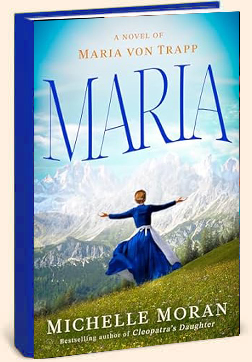
Michele Moran writes historical fiction. She handles Maria Von Trapp this time, who here is upset about the changes found in the upcoming musical, The Sound of Music

Her discussion with a female assistant provides a framing device for the real story of her life, which is significantly the same as the musical. The main differences are that she marries the Captain in the 1920s and they leave Austria simply by pretending to go on vacation to Italy. They do -- as they later find out -- take the last train out.  

The book in an easy reading way provides an engaging account of Maria's life. The "modern girl" (1950s style) assistant has somewhat more minor relationship problems as she starts her career as a writer. I liked the book.

Maria also is annoyed that the musical -- based on a German film -- portrays her husband as a disciplinarian type. They wanted a transformation. The book also shows the dark side of her life and drive for success, which later turns her children against her. This part is not emphasized though. 

A case where truth is more interesting than fiction. Oh, the film also creates the oldest daughter, and by the time they leave Austria, she has two children of her own. One would come after they came to America. He is the one still alive.

Thursday, July 25, 2024

Airplane!

I enjoyed Zero Hour! both on its own as a 1950s airplane disaster film and because it is so much like Airplane!. I decided to watch the "real thing" so to speak and see the two parody films.

The Airplane! DVD menu is set up creatively with airplane jargon. It also has a commentary track, an extended version track, and a track with trivia. I checked out the other tracks (not the extended version -- should have just watched it -- most DVDs have a collection of extra scenes). The commentary was reasonable but didn't watch the whole thing.

Airplane II: The Sequel's DVD just had the movie. The film is predictably not as funny as the first but as sequels go is fine. William Shatner (this was just when he began again in the Star Trek films) was especially fun. It also has the early 1980s "we will give you one" bit of gratuitous topless nudity in a PG film.  

I haven't watched either film for a long time. I was still amused and impressed at how much work went into both of them. The films have three basic classes of actors. You have older actors like Robert Stack who were known for their serious roles. Toss in a gimmick role of a basketball player (Zero Hour! had a non-professional play a pilot).  

You had the two leads who at that time hadn't done too much (one did have a sitcom role in Angie). So, it was a good find (one trivia bit said David Letterman read for the Striker role!) to get such perfect choices. 

And, then you had a bunch of supporting roles, including many very amusing bits. A few faces are familiar (Jonathan Banks, who later was familiar playing heavies, had a small role). It takes a lot of talent to have such a large cast do so much good.

Books 

Herod the Great: Jewish King in a Roman World by Martin Goodman is a straightforward history of the Jewish king best known as a heavy in the New Testament. The book is part of a series of short Jewish biographies. We mainly know about him because Josephus wrote about him in his histories.  

The "killing of the innocents" story is fictional. OTOH, he did have a history of having multiple family members (including a wife, multiple sons, and an elderly grandfather-in-law) killed for fear that they threatened his authority. Early on, it was impressive he rose so far without being in a royal family. 

Not that engrossing but was an okay way to learn about the biblical character. 

==

Piglet is a recent fictional novel. The title comes from an unfortunate childhood nickname that stuck. Her bestie doesn't use it but we never hear her use the actual name either. So, she's always referenced as "Piglet." We get the real name near the end.

We never (quite annoying) are told what horrible secret her fiancé told her two weeks before the wedding. Whatever it is, her attempt to continue with the wedding plans led her to have a sort of mental breakdown. Meanwhile, she had more and more embarrassing things happen to her. Rather depressing.

The book starts fine enough and it was easy reading as I hoped (1) to find out the secret and (2) get her to move on from being such a pathetic loser but it basically didn't go anywhere. She finally realizes that the marriage is a big mistake late in the book. 

Oh, joy.  The book promises to be a story about a woman who realizes her life is unsatisfying. But, it really doesn't seem to be that bad, except for her loser of a husband-to-be. Not marrying a jerk is significant but the book jacket suggests a bit more. 

She has an embarrassing family (her parents after all still call her "Piglet") but that is fairly typical. It is suggested at one point her sister has her own body issues but that is dropped. 

She's also a food editor and the book has a lot of food stuff. So, we have pages of her prepping and cooking meals and such. It reads natural enough, to the degree I can tell (not much of a cook), but again, it doesn't really go anywhere. It feels like filler. 

I don't read much fiction. This was not a good example of the few I do read. 

ETA: After writing this, I found a famous modern version of Gilgamesh -- the ancient myth -- with various appendixes. I read it a long time ago in school. It has a lot of stuff, including an early flood narrative.

Thursday, June 20, 2024

Some Books

And Also: I should add here that the Mets have been doing well. They won seven in a row before finally losing a close game. The Mets are still under .500 but with the weakness of the NL, they are in the Wild Card Hunt. 

Jeffrey Moussaieff Masson is an expert on Freud, psychotherapy, and related subjects. He also wrote many books about animals. 

The Cat Who Came In From The Cold is "a fable" about the first cat who decided to stay with humans. The cat travels around India, talking with different animals about their relationship with humans. An imperfect one at best, the cows perhaps particularly not that impressed ("sacred cows").

It is a charming little book with some lessons along the way.

===

“When you’re actively listening, you’re not just receiving information, you’re saying something even when you’re not even speaking.”

“Listening skills will help you in pretty much every relationship – professional, personal, or some combination of the two.”

Being a good listener is “about noticing cues that signal something might be up, responding to shifts in tone or topic appropriately, and knowing how to ask questions that open a space for discussion.”

Say More: Lessons From Work, the White House, and the World by Jen Psaki is not a regular memoir. The subtitle tells it all: it is more of an instruction manual about communication with wide applications. She has a lot of good advice. Sometimes, I wished she had a final checklist or something to sum things up better! 

I miss her being President Biden's press secretary. Her replacement is likely quite qualified in various ways. Nonetheless, Psaki has a certain ease up there that made it enjoyable to watch. Karine Jean-Pierre has a less smooth approach. It comes off as more scripted and forced. Not "must see."

==

I enjoyed a young adult book on the creation of the Universal Declaration of Human Rights. The author is best known for her fiction. Nonetheless, the book crisply summarised the basics. 

The longer (still reasonable length) book by Mary Ann Glendon (perhaps best known for her conservative-leaning legal philosophical views on subjects such as abortion) did not really add much more. 

A World Made New (written around twenty years ago, but nothing much changed) adds a few details. The best chapter might have been a short one discussing how a special panel independently agreed that there were certain universal dos and don'ts that the world's society could agree upon. This belies the concern that there are really no universal truths. 

It was a good read overall. Still, the other book was fine.

==

I should add -- since I used my entry on Christine Blasey Ford to mostly talk about the issues -- her book is well written. She has an honest and open tone that is very appealing. Not bad for a first book by a person who specializes in data and research. Yes, she is a professor too so has some skills in translating stuff for an audience.

===

The new book (Undue Burden) on multiple human stories regarding life after Roe is a major accomplishment. I just did not have it in me to read around three hundred depressing pages of stories.

I also thought the introduction was too strong. Roe v. Wade was not "clearly" on the way out for years. It was a close thing that it eventually overturned. If Ruth Bader Ginsburg lived a few more months, things could have been significantly different. 

I re-read the shorter Generation Roe by Sarah Erdreich. I briefly talked about the book here back in 2014 (sigh):

It is quick reading and covers standard ground from an activist's perspective c. 2013. Some good stuff included: perspective of medical students, abortion portrayal on t.v. and the conservative nature of big abortion rights groups. References but does not discuss, to its detriment, the abortion battle during the ACA legislation process.

I suppose the matter has gotten better, but one thing that stands out there is the portrayal of abortion on television and films. I don't begrudge a film like Waitress (for purposes of plot; she also lives in the South, where certain values could have been drilled into her) but too often the idea on television is that people who would otherwise have an abortion for a variety of reasons have the baby. Abortion is a common procedure. You might never know it from its portrayal on television, especially back in the day. 

Monday, August 14, 2023

Couple Morning Thoughts (Spoiler Alert)

I found a free paperback copy of LM Montgomery's Anne of Green Gables. Some years back, as an adult, I read that amusing book about a red-haired girl.  I also read the sequel and recall reading at least one other in the series.  She had additional ones, including a collection that was published long after her death.  

She also wrote lots of short stories, a trio of "Emily" novels, and various other stand-alone novels.  A few of the books are adult novels, including The Blue Castle, about a twenty-nine-year-old woman.  This is a fun novel about a quiet, unhappy woman who thinks she is going to die, so decides to stop worrying about what others think.  

It has an extended passage that basically talks about a year she had in her "blue castle" and then has a happy ending.  

===

I don't want to say much more now about the 14A, sec. 3 article I referenced in my recent SCOTUS post.  Eric Segall's blog post, which I referenced, dropped.  A few words.  

I am not an originalist and do think we have to apply the Constitution as we understand things today, with prudence and current democratic needs factoring in.  I respect that general argument.  I think others also do more than some "pure originalism" (see, e.g., two people at another blog), noting that originalists tend to do in the end anyhow.   

Prof. Segall flags Chief Justice Chase's application of the provision as a rejoinder to the article.  But, Chase -- Segall knows this from his citation of the Legal Tender Cases in his book -- is not free from "values judging." And, people have spelled out (including Mark Graber, who I cited, who argues that Chase simply didn't like the provision, and was not a fair player here) why we should take his interpretation with a hefty grain of salt. 

What does Segall do?  As usual, we get a bit of "originalism is okay if done right" with this comment:

And he did so because he found the consequences intolerable (every official act by the thousands of Southern government officials who participated in the rebellion would be called into question). 

I don't know what this means, actually, but Chase "did so" for some dubious reasons.  See also his overall continual delays in prosecuting Jefferson Davis, which has a lot of politics and policy judgment mixed in.  I am somewhat aggravated about this attack of originalism that involves a confused analysis of what the actual history is.  It just confuses things. 

As Graber et. al. argues, the "authors" Chase went against were not the two who wrote the law article.  It was the actual framers of the amendment.  This is not a big "gotcha" about originalists refuting "someone there."  The ability of people "there" people wrong is suggested by the 5-4 Slaughterhouses Cases.  

Anyway, I'm fine with worrying about "consequences" and think various people who talk about the provision do factor that in.  Plus, some examination of the text and history will help us decide the question, especially since such arguments are repeatedly used by all sides.  

Friday, June 23, 2023

The Cater Street Hangman

"Anne Perry," who as a teenager committed murder with her friend, recently died.  I got a copy of her first book, which came out in 1979 and is the first in a long series (the last few books were part of a follow-up involving the son) of mystery novels.  

The first is The Cater Street Hangman though (1) the deaths are by a garrotte and (2) it isn't actually a man.  The Wikipedia entry notes that the author did not expect it to be the first of a series. The series in some fashion changed certain details.  Okay.  Well, I'm going to read the second novel and will see how this plays out. 

The book was overall very good.  It uses various narrators so that we get the viewpoints of various characters, including one man. The main character is one of the daughters of an upper-middle-class Englishman in the year 1881.  We also see things through the eyes of her two sisters (the book jacket suggests two sisters will be the key characters), her mother, and (to a limited degree) her brother-in-law, who she is sorta in love with.  And, in one scene we also get the thoughts of the paternal grandmother. 

The book is a combination mystery novel and character study as suggested by the opening scene when the young twenty-something daughter is shown rebelling by wishing to read the newspaper.  She eventually falls for a policeman.  Her younger sister in effect also marries above her station.  The third sister becomes (fairly late) one of the victims. 

The character drama dominates more than the mystery, especially since we never see things directly through the eyes of the police detective. We only see him working when his future wife is around.  The killer turns out to be the unhinged vicar's wife (I guessed the vicar midway and then figured it was one or the other).  Even the policeman never assumes until late it might be a woman. All the victims are women. 

I have trouble enjoying fiction, often even nonfiction is a struggle these days, so appreciate a good book.  The book at times seemed a bit heavy going but that mostly seems to be me.  Once I got into the groove, it read pretty fast.  I guess it not being totally quick to read is to its credit. 

They insist they will get better.

But the Mets have yet to get better.

Two missed popups, an error and a wild pitch cost the Mets a total of five runs Friday night against the Philadelphia Phillies.

The game was on Apple T.V. -- many more games in baseball are on these platforms -- but Wayne Randazzo, the former Mets radio guy, did call it.  I don't use those things so did not see their latest mess. They always seem to find a way to lose, including finding new ways (Alonso the other day blew a chance by running outside the baseline) to screw up. 

My sentiment for a while was that with three wild card spots, the Mets just had to go on a winning streak, get into a groove, to be back on track. Stop with the "first place."  Yes, the current format gives the top two seeds a bye. But, okay, third place or a wild card still gets you to the playoffs.

It's getting harder. This is the Phillies. The Mets are supposed to "own" them.  Still can win two out of three, but the Phils are now playing better.  They aren't a wild card yet but are not that far away.  The Reds and San Franciso raced ahead with long winning streaks, the Reds now in first place.  Miami (if they slip out, Phils can slip in) and Dodgers (third place now with the Diamondbacks in first!) are the other two wild cards.

Taijuan Walker (8-3), the former Met, won tonight.  The Mets eked out three hits. They are seven games under .500 (the first step) and 7.5 games out of the wild card race. That's tough with a bunch of NL teams competing for around five (Atlanta got the division and let's see if the Dodgers keep on scuffling) slots.  The Mets are not so good that they will dominate. 

Meanwhile, in basically a tweak move, Escobar was changing to the actual in competition Angels for some minor league arms. He's not doing great but the Angels need a third baseman.  The rookie Baty is up so he's basically superfluous.  The talk is about how great of a teammate he is.  

Vogelbach, who was out for a bit with a mental health break (which at first was not reported), is showing some life of late as a DH.  Good for him. He seems like a good guy, and he was just so bad until recently.  

ETA: The trade of an IF provided space for a back-up who was out for a while with a serious injury to get a chance.  

Scherzer did his job.  He's 7-2 though struggled enough times that the record is a bit misleading.  Of course, he was also out for rosin violation, another way he hurt the rotation.  The arbitrary nature of that makes his own blame questionable but it added to his own struggles.  

So, that left the Sunday game to be a must win -- got to win against your usual whipping boys when you struggle like this.  Things looked well into the eight with Cookie bending but not breaking and the Mets scoring off Wheeler.  It was a long tedious game, over three hours long.  

(I'm not really into bad baseball of late, including Phillies hitters looking lost at the plate and blowing prime scoring opportunities. And, the Mets had its share of bad play as well as too much mid-relief pitching.) 

But, Cookie only went four (two runs) so they had to stretch the middle relief, especially with Drew Smith (who has been questionable) out on that rosin violation. They gave up a four run eighth, so Phils were ahead 7-6 (traditional l Mets/Phils game, run-wise, though usually the Mets came out on top).  

Final result: same.

Final four runs: fielder's choice on a misplay, walk and two hits by pitch.  Okay.  Also, the closer has barely been used of late, helped by the Mets losing a lot.  Finds a way to lose.

Tuesday, January 31, 2023

Books and Stuff

Mystery novels are as numerous as romance options, so finding a good one for me is somewhat an effort of serendipity. I saw a review of the 1950s New York City-based Viviana Valentine Gets Her Man online. It is overall a fun, quick reading first effort with a new one coming soon. Possible tv/film adaption material.

I purchased the first season of West Wing (not in the library for some reason) after a marathon was on over the Christmas holidays. I have yet to watch it, but it was cheap, and no rush. Friends continues to be comfort food. For January, Nick-at-Nite had a creative "A-Z" episode marathon. I have also seen ads for a Valentine's Day theme marathon too.

January is complete. That didn't take too long. 2024 should be here before you know it. This "conflict resolutions" list should be helpful. Either way, can't say resolutions-wise, the month went too well. Can I consider Lunar New Year a new start? Year of the Cat and Rabbit!

Saturday, December 03, 2022

Two Books

Concerning My Daughter is a book I found out via a recent NYT review

The author, Kim Hye-jin, is a Korean author already celebrated for a previous work.  This one is short (160 or so pages, small sized book) though at times I thought it really could have been somewhat shorter.  The core message probably could have been made in a hundred or so pages. 

Overall, I am glad I read it, though it deals with unpleasant topics, including a detailed look at taking care of a someone with dementia, and prejudice. The book is told through the voice of someone in her sixties (she had her daughter at 31 and the daughter is "thirty something" now) in a precarious position, trying to survive in the home her husband (died a few years earlier) left her.  For whatever reason, she only has one child.

Her precarious position makes it understandable why she is so upset that her daughter has not chosen a more traditional life.  This includes being a lesbian, which is offensive to the narrator, but also just plain scares her.  Fear is suggested as a major cause of her prejudice.  After all, the woman her daughter fell in love with (Lane) is otherwise a very sympathetic character, the sort of caring person that the mother would naturally support.

The mother deep down has some of her daughter's sense of justice.  She is upset that her bosses wants her to lessen the standard of care for Jen, her elderly (must be around 80-85) patient, who once was a celebrated world traveling diplomat type.  She does not want to be told to just go along, which she tries to tell her own daughter, who is protesting mistreatment of lecturers at her university.  She risks her own job to help Jen.

The complex nature of the character helps make us sympathetic, even though she has prejudices.  This includes her own realization deep down that her prejudices are problematic.  It is like she tries to convince herself that she is just thinking of her daughter's own interests.  

Again, Lane, who is a caring type that repeatedly helps her, makes this even more complicated.  They are thrown together since the daughter (we see the other characters and their actions through the mother's eyes) needs to move back in with her mother for financial reasons. Lane moves in as well.  Lane's nickname for the daughter "Green" is the only name we are given for her.  Interestingly, the mother also generally is nameless.

===

I read (I'm pretty sure) The Eichmann Trial by Deborah E. Lipstadt, who also was the subject of the fact based film involving her British libel suit (a Holocaust denier used the less free speech protecting laws there to sue, but she did win in the end).  She was recently appointed by President Biden in a role of overseeing antisemitism, her confirmation delayed in large part because Sen. Ron Johnson was upset she called him a fascist. 

Lipstadt dealt with Hannah Arendt's own somewhat infamous book on the trial.   Anne C. Heller (who recently died; she also wrote a much longer bio of Ayn Rand) wrote a short bio (Hannah Arendt; A Life in Dark Times) that I found by chance in the library.  I wanted to find something to hold me over until new books came in.  

I found the book a crisp (144 pg) account that covered the basics and gave a taste of her thought. I plan to include it as an entry on the Book Review website, but as always, it depends of the person who runs it posts it. 

Wednesday, August 17, 2022

Jane Austen Book Club

I have been again stuck a few times lately finding a book that appeals.  The movie Bullet Train, for instance, is based on a book. Did not appeal, when I took a look at it.  As noted in the past, a lot of online reading facts into my current tendencies. Still, it isn't just that, since I have been online reading for a while.  

Anyway, I finally got around to read this book, after repeatedly watching the film.  There are various versions; mine was an attractive red paperback with questions, summaries of her six novels (no reference of Lady Susan though there is a passing reference to "The Watsons" as a character in the book; not sure if that is a reference to the book fragment), and a bunch of quotes through the years about Jane Austen. 

I have read all of Jane Austen's novels, including the fragments, if not all of her Juvenilia.  Some time back, there was a period when I was in the mood for her style.  I also saw (for instance, Sense and Sensibility, Pride and Prejudice, and Persuasion along with Clueless) and read various things related to Jane Austen though there are a whole lot more.  

The film is largely likely the book though it changes a few things. As a whole, I think the movie actually generally improves things by the tweaks. The best parts of the book not in the film are basically flashbacks of the characters' lives when they were younger.  And, Sylvia is clearly Hispanic in the book.  This is not really apparent in the film.  The people they picked for the characters on the whole work though "Bernadette" is in her late sixties and more an elderly character than the film version.

Prudie's husband in the film is more of a jock and the marriage seems more in trouble. This works off the book somewhat, but the husband there comes off a little better.  In general, more of a limited character. There is no bit in the book where she has him read from a book.

Also, the Jocelyn/Grigg relationship is fleshed out a bit more in the film.  One of my favorite line where Jocelyn is annoyed at Grigg ("you are going to stop at every light ... what are you Mark Twain") works off something he did (taking a scenic route), but the line itself is not in the book.

And, the characters are all (except the two youngest) somewhat older in the book.  Oh, and for some reason, the book tosses in that the lesbian daughter goes back to her old girlfriend, who was not a good match.  

Overall, I liked the book.  Good writing and I'm someone who finds it hard to get into fiction.  I never belonged to a book club. 

Sunday, August 07, 2022

Morning Glory

I first saw Morning Glory in the movies during the week and there was like one other person at the theater. So I recall. The Whitesone (Bronx) since then closed. One of various movie theaters that I went to over the years that eventually did so.

The film is on some level as cotton candy as the morning show it is about. Still, it's fun in various ways, including a cast led by producer Rachel McAdams in roles where someone says "get me a --- type for this role." It also has various amusing scenes, including when she is upset a character carping at promos. She said something (showing her snarky side) like "the person who gave you promo approval must have been on crack." And, usually a film with Jeff Goldblum playing some character (in both uses of the word) has some good stuff.

It was on again this morning and is available free on demand. It's pretty fun, with a bit of actual real message behind it, especially since on demand you can fast forward. Harrison Ford making eggs to make sure she stays as producer is a great climax, including when she is just at the moment [seems like a kinda weird time for it] at an interview with the show on the background. She is like "what the heck is going on" as it goes down.

Wednesday, June 29, 2022

Books: Shara Wheeler and Selma Blair

I have more "fails" with books these days with so much reading online and other issues. Still, some books have some good things going for them, even if I cannot get into them or read the whole thing. Skimming or read part of them can be worthwhile.

I first saw I Kissed Shara Wheeler (at first, Shara Wheeler kissed her!) as a NYT book review. (BTW, the Republican lieutenant governor candidate is openly a lesbian.) I did not want to read over 300 pages of this "your classmates are a bit more complex than you think" gay friendly novel. But, it has various charms. Many should like it.

Mean Baby is a Selma Blair [her actual first two names] autobiography. Selma Blair's over 300 page book is also one I did not want to read straight thru. But, again, there is some good stuff in there about a complicated, and sometimes hard life (up to and including her current MS). Again, many very well should check this book out.

Saturday, March 12, 2022

The Devotion of Suspect X

The review for The Cult of the Constitution was posted on the Books in a Flash website. I assume that website gets at least marginally more hits than this one. I say this since someone else is involved and wishes it and others gets some attention.

I found The Devotion of Suspect X on the free rack at the library. Turns out it is an English translation to a book by a very popular Japanese mystery writer, whose work often is translated into television and film. This very novel has multiple adaptations.

I picked it up since it had a down to earth style (surely partially a sign of a good translator) that drew me into the story. The book also draws you into a creative somewhat Columbo-like mystery (we see what happens near the beginning) by providing different points of view. I got a bit impatient at some point, but the different points of view helped keep my interest.

Monday, January 24, 2022

Supreme Court: Order/Opinion Day

The Good Fight: I re-read Danielle Steel's book, which involves a woman who lives thru about thirty years of history from World War II to the early years of the Nixon Administration.  The book was pretty good, if not too dramatically deep (sort of her style), though after a while it was like "okay ... what ELSE historically is these people going to encounter?!" 

It might be included in the future among the history books on the Books in a Flash websiteThe website covers non-fiction, but the history aspects of this book is a sensible fit, including a twist of the normal format where I featured a sort of "for further reading" list covering the many events covered in the book.  

The connection here is that not only did she become a civil rights lawyer, but her grandfather became a (fictional) Supreme Court justice while her dad became a district court judge (appointed by Ike). Her grandfather is fictional but is a sorta more liberal fill-in of one of two actual replacements of liberal justices' Rutledge and Murphy. No opinions of Justice McKenzie though.

Orders:  At times, the Monday Order List is not too exciting, grants dropped on Friday.  But, this time, before their mid-winter recess, the orders did not include various bookkeeping matters.  

The cases involved important matters involving the administrative state, but the big ideological news is taking two cases challenging affirmative action in education. And, one was particularly "I want it now!" because the appellate level was skipped.  I understand the YOLO energy, but figure it might be more of the Roberts long game, if at a somewhat quicker speed.  

This won't be something to be "reassured" about, sure thing, though life is often a matter of finding some limited chances where you can.  Some simply will find that naive, but pure evil is hard to find.  This might sound precious to some people though many in need (and I'll tell you, I'm sometimes in need too, even if I'm a white male) will agree.

Opinions: We have (after a typo in her last no one cares opinion was fixed) another no one cares Sotomayor opinion about ERISA.  Barrett didn't take part; no separate opinions and this one is under ten pages long.  Let's see if she has a statement regarding a capital case later in the week. And, what else happens.

Thursday, March 25, 2021

Some Books

I added Nature's Civil War, an interesting case study on Civil War health in 1862 Virginia (military), to the side panel. The author talked about a different subject (also a pending book) in a Civil War segment on C-SPAN. It involved post-war Southern spin making by a Confederate general, part of a "generals we hate" series.

---

Also as a result of a video on that channel, I started The Girls Next Door by Kara Dixon Vuic, about 20th Century usage of women by the military to take care of the needs of service personnel. It seems interesting and written well.  For those interested, the author has a few C-SPAN videos.

Update: Reading most of it, I mostly hold to my last comment though the book gets a bit repetitive, leaving a few details -- like what happened to some of these women -- out.  She does this a bit, especially for later chapters, but like did WWI women work any in WWII?  Did any of their daughters? A quick summary of early women in war stories might have been useful too. The changing nature of the use of women and the understanding of their role is an interesting aspect of the book.  

(One other thing that I would think should pop up at least once (since concerns of male homosexuality does) is some instances of lesbianism. Also, though we do get some sense of what these women did, sort of wanted to hear a bit of their day to day tasks.)

====

The Inevitable is another book that I recently finished, talking about euthanasia. It focuses on a few cases (one whose current status is unclear) and doctors involved. Overall, I liked it, including its writing style. Nothing profound, but good use of narrative mixed with informative detail on the general subject. I might have shortened it a tad.  New York is not one of the few states with an euthanasia law; one is being debated

===

Finally, I bought the other two books by the author of Peyton Place (and its sequel), both of which were good (the second more rough; felt unedited). As to these two, The Tight White Collar (cited by more than one person as the author's favorite book) was basically a good, somewhat condensed look at a similar milieu (mostly) without the teen segment. The author again used fact, particularly the gay teacher, who basically is the one character with a tragic ending. (One is left unhappy, but he deserves it.) 

Did not read the second yet.  [This entry has been edited.]

Wednesday, January 27, 2021

The Kommandant's Girl

Today's International Holocaust Rembrance Day (Auschwitz was liberated in 1945 OTD) and this book has some relevance since it is about a young Jew who hides out during WWII, ultimately working for/having an affair with a Nazi commander. The author herself worked in a Holocaust related role and later became a law professor.

The book was decent as a whole, basically somewhat light reading though obviously with dark subject matter. The character at times comes off as unrealistic, including a final trip on her own at night to visit her conveniently available father at the ghetto she escaped from earlier. The book also has a confusing sense of time, I not really getting a good sense of exactly when things were occurring. But, overall, again, it is easy reading and kept my interest. It ends with a bit of a cliffhanger -- she escapes but surely isn't totally out of danger. A key character also died though her husband/resistance member apparently didn't.

Overall, I'm not inclined to read more of the author, but the book was okay.