
About Me

My photo
This blog is the work of an educated civilian, not of an expert in the fields discussed.

Saturday, October 19, 2024

Mets Update: They Are Still Alive

Alonso with this playoff pumpkin. After the Mets went down 3-1 in a best-of-7, it looked like they might have been ready to turn into one.

Nope. Peterson gave a gutsy 3.2 (he has been used repeatedly in relief), the Mets scored in bunches after getting a second shot at the Game One Dodgers started, and tacked on enough to win comfortably enough 12-6. This included a key out with the bases loaded, a reliever going further than he ever did, and the Mets closer yet again (when he rarely did in the past) pitching more than one inning (two yesterday).

This season started off looking like a middling one with short-term pieces and the major goal being giving minor leaguers and other youngsters time to grow. They fell into a hole and then mid-summer looked like they fell into a (smaller) hole. They beat the odds.

They have a tough test now (#6 seed vs. #1), the Dodgers having fewer flaws than the other playoff competition. The Mets bats coming alive in two games and the need for bullpen games shows that even the Dodgers have limitations.  

The Mets' pitching is being taxed, the Dodgers' bats are tough (the Yanks also have shown this recently and are one game from the World Series). The Mets' bats (and sometimes fielding) have been absent at key times in this series. This has led to online carping. 

Mets Twitter can be funny. The Mets have managed to beat expectations and are two games away from the World Series. OTOH, you would think from various comments that they stink. It's best to look at the whole picture. For instance, Phil Maton's playoff stats are not as bad as single outings make them appear. 

This team feels like it is playing beyond expectations especially some of the pitching. Nimmo's foot is hurt. Otherwise, the team does have a good line-up, especially with a new young star (Vientos) shining. 

I find watching the games stressful. Besides, watching Mets baseball when the usual announcers are not available loses a lot in my book. The announcers are for me an essential part of the whole process. It is nice the team is getting past stars, like Matt Harvey and Cespedes involved, throwing first pitches, etc.  

The Mets started the Dodgers series (after winning three of four vs. the Phils) well, splitting the two in L.A. The goal then was winning the Citifield series. Then, it was not to be eliminated.  They managed the last part, winning the final game. 

It's hard to be too disappointed when the Mets got this far. Multiple times, I hoped the Mets would get to a Game 6 (including in the 2015 World Series). They are now. The Mets beat the Dodgers bullpen game last time and that is what is due to happen Sunday.

OTOH, the Mets will likely have to get something from one or more questionable relievers. Maton will surely have some key outs. Fingernails, watch out. 

One more thing: I figure that with the bullpen taxed and the starters regularly thinking five is a lot Senga will have one more shot. He did okay as the opener in a Phils game. He walked the ballpark versus the Dodgers. Might be the best shot for an inning or two sometime in Game 6 or 7. We shall see.  

We shall see. It is not like the NY/NJ Jets and Giants provide much excitement these days. I commend those who are fans of other local sports. I am not.  
Film and Book

After re-watching The Lovers, the Louis Malle film that led to a Supreme Court decision on obscenity, I checked two other Malle films.

Both films had some charms but I did not find them interesting enough to watch the whole thing. They had a "feel" as much or more than plot. Miles Davis provided the soundtrack for this film. Talked about Viva Maria! (also SCOTUS material) here

Elevator to the Gallows is the first Malle/Jeanne Moreau film (released in the same year as The Lovers). A guy gets trapped in an elevator after murdering his lover's husband. While he is trapped, his lover wanders around the city, trying to find him. 

He stupidly leaves the keys in his car when going to deal with the evidence he left behind. This allows a young couple to steal the car.

The first hour or so involves the guy in the elevator, the woman wandering, and the couple at a motel. All have some European charm, the young guy a punk who later murders an older couple. The young couple registered under Moreau's lover's name, leading to additional problems. 

The second murder(s) and problems occur in the second half of the film but by then I was tired of the slow pace of the whole thing. It was well put together but the whole thing could have been done in an hour.  

The film reeks of French new wave or whatever atmosphere for those who like that sort of thing. 

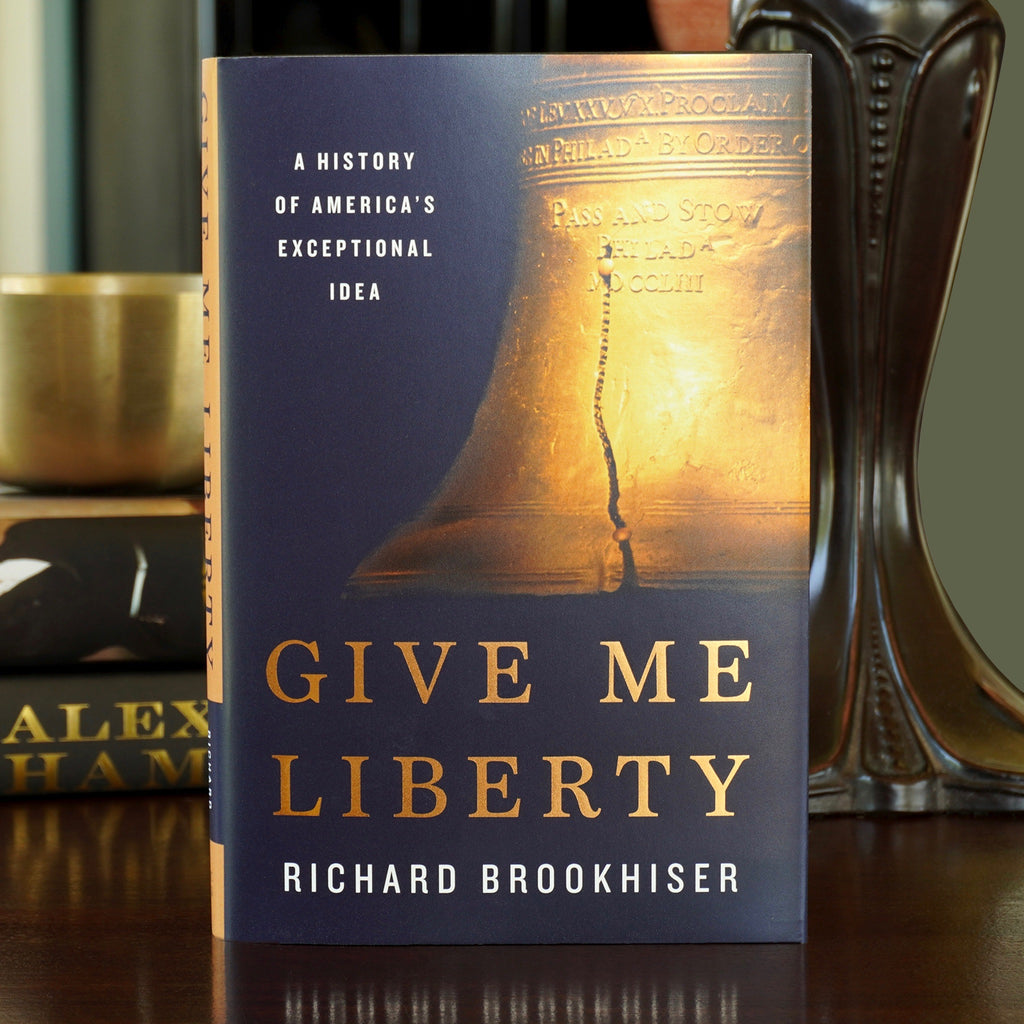
Richard Brookhiser is a National Review editor so I probably would not like some of his politics (looks like his wife does not share them). But, he does tell a good tale, especially when he gives talks about his books.  

Actually, his talks repeatedly are a good way to go, since I have repeatedly had mixed feelings about the books. For instance, over twenty years ago (I know), his book talks about Gouverneur Morris - The Rake Who Wrote the Constitution made the book sound quite interesting.  I didn't like the book.  

This book was overall a good read. He dealt with thirteen subjects in quick chapters, making them easy to read. I am familiar with most of them but the protest involving Quakers from Flushing New York was new to me. The rest had good insights too.

Friday, October 18, 2024

SCOTUS Watch

After the holiday, the Supreme Court dropped a nothingburger Order List. As usual, only liberals explained why they did not participate in certain cases.

EPA Cases 

The two argument days were nothing too hot-button, though one was yet another EPA case that might cause some problems. EPA cases seem to get five or six justices going, all concerned about overreach. 

They also finally got around to a stay request (after 2.5 months according to Steve Vladeck) in a set of EPA cases. Thomas (without comment) would grant. Kavanaugh (with Gorsuch) felt they had a good case to some degree but there was no immediate burden. 

So, they joined the rest to deny the stay. Alito did not take part for whatever reason.  Five votes would have to agree to the stay. Hard to see them counting to five there. Not sure what the delay was regarding announcing the result. 

More Oral Arguments 

There was also an oral argument involving an immigrant -- SCOTUS over the years taken many cases involving various questions involving them -- which has a human interest story

Gorsuch is regularly a possible "get" when the federal government is involved. I don't know how the technicals will fall out though the under fifty-minute argument time is notable. 

We had a procedural case involving pet food last week. This week it was medicinal marijuana. Neither involves the merits of the issues though the subject matter is likely to catch some eyeballs. 

It is also notable that the oral argument involved two women advocates because there is still an imbalance between men and women advocates. Lisa Blatt, a veteran SCOTUS advocate, went against Easha Anand, an up-and-comer with progressive bona fides.

Justice Follies 

More on that report on how the FBI screwed up the Kavanaugh investigation with links to a lot more about what is wrong and otherwise doubtful about his nomination. I might not think all of them are compelling but there is way too much smoke for there not to be some fire. 

Trump = a conservative justice. It in no way had to be him. And, the overall thing was a slipshod usage of the Senate confirmation process. The Republicans should have some agency and have to answer for it. Again, the Supreme Court is on the ballot. 

Kavanaugh reminds us of how the Thomas hearings were a mess. Thomas then became -- I don't know of any hint of what was to come -- ethically compromised with all his financial dealings, including some that might violate multiple criminal laws. A special prosecutor would be warranted. If Kamala Harris won in November, would that be a possibility?

[A good ethics process would have a procedure that requires such an appointment when a certain quantum of evidence -- which appears to have been reached in spades -- has been met.]  

We referenced Gorsuch's FOX News-type anti-regulation book here in the past. Another article shows how it is a slanted (where are all the cases where liberals are hurt?) hack job.  

Upcoming 

There is an order list scheduled for Monday after a conference this Friday. 

SCOTUS then goes on a mini-break from scheduled conferences, order lists, and oral arguments until November. Miscellaneous orders and other behind-the-scenes stuff is possible.   

Meanwhile, we now know the cases scheduled for December, including a major trans rights case

Thursday, October 17, 2024

Two Scheduled Executions / One Held Up So Far

Robert Leslie Roberson III

Texas Set Robert Roberson’s execution for Oct. 17, despite new evidence that he is an innocent man wrongly convicted under the now-debunked shaken baby syndrome hypothesis.

Roberson's death sentence is allegedly a case of "junk science" with his autism also making him seem more heartless. After all, the death of a young child allegedly because of child abuse is horrible. 

But, the death penalty? Texas's sentencing of Robertson led to many people from both parties (along with some big names like John Grisham) flagging his case. The bipartisan lawmakers were able to convince a judge on the day of the execution to grant a stay. 

Meanwhile, a separate attempt to get a stay from the Supreme Court failed via the usual no-comment order. Sotomayor released a statement granting there was no adequate federal jurisdictional hook. No one else joined her statement. 

In her view, the actual innocence claim was compelling enough that an executive reprieve to allow the Texas Board of Pardons and Paroles to reconsider the evidence is necessary to avoid a miscarriage of justice. She answered claims that the evidence of innocence was refuted by the state and a state judge.

The basics:

On 01/31/2002, Roberson took his two-year-old daughter to Palestine Regional Medical Center with severe trauma to her head. The victim died from her injuries the next day and Roberson was subsequently charged in her death.

An execution over twenty years later is constitutionally problematic because of delays (Breyer's dissent). 

The doubt that it was a murder at all (including pre-existing health problems) is the biggest issue here. Multiple appeals to stop the execution have been rejected. It is hard to show "actual innocence" once you are convicted. And, there was some evidence of guilt here, even if it is greatly disputed. 

Nonetheless, even if there is not a compelling legal reason to stop it after he was sentenced to death, there appears to be enough doubt not to meet the level of assurance warrant to execute someone. 

Plus, he has been in prison for over twenty years. He has not "gotten off" by any means.  How long the most recent (somewhat absurd time-wise) reprieve will last remains to be seen. 

For now, with the final decision dropping after 8PM local time, the Texas Supreme Court upheld the trial court (after another appellate court overturned). The whole process is a tad absurd at this point. 

Derrick Ryan Dearman

Dearman's lawyers have raised various appeals alleging he was mentally ill and concerning competency of counsel. But, this is another matter. 

Dearman murdered five people, one pregnant. He had a problem with his girlfriend, who rejected him after a violent relationship. Good choice on her part.

Dearman in 2016 went into the house where Laneta  Lester was living and murdered multiple residents by an axe and gun. By some sick bit of irony, Lester herself was not killed. She was kidnapped along with a nephew and later escaped (or maybe he let her go?). 

(Alabama counted the unborn so "six" persons were murdered by their lights.)

An article earlier this year lists him as thirty-six years old. Alabama executing him now is relatively quick as these things go but he decided to end his appeals, rejecting advice from his father and lawyers.  

“I’ve decided to drop my appeals and have my sentence carried out… I was fairly tried and convicted. I agreed with the court’s decision.”

He had hoped that the execution would occur next year. Dearman did not want people to think it was "suicide by execution." His reasoning sounds sane to me and I guess you can give him a smidgen of respect for saying it. 

“No, in one sense. But in my heart, that is the right thing and the only punishment… I know that me being executed, it’s not going to fix things for the victims’ family. It’s not going to bring their loved ones back. It’s the only thing that I could ever do or give to show that... I don’t want to use the words I’m sorry… It’s the only way for not only them, but my family and anybody else witnessing that, that this person is truly remorseful and regrets actions, crimes he’s committed.”

People kill in moments of insanity (colloquially speaking) and his acts were especially unhinged.  

After all, the one person you would think he would kill, he did not. Who knows what he planned to do with her. Either way, it was a horrible waste of life to kill all those people who he had little or no reason to murder. I do not ignore the crimes in these accounts:

The victims were [Joseph] Turner, 26; Robert Lee Brown, 26; Chelsea Marie Reed, 22; Justin Kaleb Reed, 23; and Shannon Melissa Randall, 35. Chelsea Reed was pregnant with her and Justin Reed’s first child. Turner and Randall had a 3-month-old son in the bed with them when they were attacked, but he was unharmed.

I will not label the execution "barbaric" except to the extent the death penalty overall is an act of barbarism. 

This sort of crime will not be deterred because of the death penalty. As to just desserts, I do not think the state killing people via a system filled with problems is an appropriate use of public policy.   

And, yes, even here, we can focus on problems. He had significant mental problems:

Court filings show that, at just four years old, Derrick Dearman displayed symptoms of severe depression and spoke to his mother “about wanting to die.” He was prescribed antidepressants at age 12 and began self-medicating with crack cocaine at 14. That year, Derrick barely survived a car accident that left him feeling that he “should have died.” At 16, he started using methamphetamines, and at 19, he drove his car off the road in an attempt to kill himself. In his early 20s, he was hospitalized in a psychiatric unit. 

His horrible crimes show Dearman as a grave danger to society. Confining him in prison for a long time was quite justified. Execution is another matter.  

Wednesday, October 16, 2024

Two Films From the 1980s

Married to the Mob is a fun Jonathan Demme film with many familiar faces including the person who played the doctor's mom in Loving Leah. Al Lewis (Grandpa Munster) has a small role late. A surprise is a young Nancy Travis (a familiar face, including on such shows as Becker) in a nude scene!

Michelle Pfeiffer plays a young mob wife and mother (her husband is played by a young Alec Baldwin) with a son. She's unhappy with her life and her marriage. His murder by a mob boss (Dean Stockwell is made his mistress—Nancy Travis—is double dipping) is somewhat serendipitous. 

She decides to leave town and start fresh in Manhattan. Unfortunately, Dean Stockwell has the hots for her, which interests the FBI. 

And, Stockwell's wife is pissed off at her since she thinks Pfeiffer is cheating on her husband. To top it all off, the FBI agent watching her (Matthew Modine, a familiar face around then) falls for her.  

The whole thing is comfortably paced and overall fun though some mob violence and the aforementioned nudity make it somewhat risque for the kiddies. There are also a few "f" bombs. 

BTW, TV Tropes says that the NY apartment complex was also used in Child's Play (the original). I will also recommend that film and most of its sequels. The television show also has received kudos. Did not see the film remake which received mixed reviews.  

Good music soundtrack. The interestingly put-together end credits appear to be a collection of scenes cut from the film. Either way, it's a nice touch.


Hello Mary Lou: Prom Night II is the sequel to one of Jamie Lee Curtis' less well-known horror films. It is not a direct sequel. She is not in this movie. 

The movie starts in the 1950s but the song "Hello Mary Lou" came out a few years later. A bitchy prom queen gets her comeuppance though her boyfriend didn't mean to kill her. She comes back in the 1980s.

The Canadian cast is not too familiar though some faces might be, including Michael Ironside, who was in a bunch of "B" films. The possessed innocent was in an Anne of Green Gables adaptation. Here? Well, she eventually walks around nude in a locker room. 

(The two actresses who play the prom queens have an interesting look. The innocent one -- well before she's possessed -- particularly does not look like a run-of-the-mill horror queen. Watch it and see what I mean.)

The whole film is rather intentionally weird. The 1980s also seem a bit off. They hang out in a 1950s-style diner and the boyfriend drives a motorcycle that might come out of the 1950s. They dress more up-to-date (being the 1980s, they don't look it to us) but other than an old-fashioned computer used to select the prom queen, doesn't look too much different. 

After the opening scenes, the movie takes a bit of time to get going, but the whole thing is well-acted and put together. You cannot really ask for more since it is after all a sequel to a not that good film. 

I found it mentioned in my Leonard Maltin movie guide and there was one copy in the Westchester Library system. I even would be able to download it on my computer but wanted to see it on my TV.

I saw both films back-to-back. Enjoyable. 

Tuesday, October 15, 2024

Ruth: A Migrant's Tale

The Book of Ruth is a four-chapter account in the Hebrew Scriptures (Old Testament) of the great-grandmother of David. This book summarizes the story and provides insights into its application over the years regarding converts, Jewish spiritual beliefs, art, and other contexts. 

The book starts with a summary of Ruth's story. The biblical account briefly explains why a Jewish family was in pagan territory:

In the days when the judges ruled, there was famine in the land, and a certain man of Bethlehem in Judah went to live in the country of Moab, with his wife and two sons. The name of the man was Elimelech and the name of his wife Naomi, and the names of his two sons were Mahlon and Chilion; they were Ephrathites from Bethlehem in Judah. They went into the country of Moab and remained there. 

The family spends about ten years in Moab. The sons married Moabite wives. Ruth tells this without comment even though Jewish scriptures have a strong opposition to intermarriage, especially with Moabities. There is some suggestion from biblical texts that Israel and Moab had a peaceful relationship from time to time. But, there were also red flags. 

Genesis tells us Lot's daughters (after the family escaped Sodom and Gomorrah, the mother looking back and turning into a pillar of salt) got their father drunk to continue their line. From this arose the people of Moab. A people who did not follow the Jewish god with that sort of origin would not be ideal marriage material.  

Many would be interested in the details left out of the brief introduction before we were told the women were on the way back to Judah after the men had died. But, the Bible has many of these "lacunae." 

Fried Green Tomatoes shows the closeness of two women by having one named Ruth. She sends a letter to her future companion's family:

It's an obituary... oh no, honey, Ruth's mother died. And this is from the Bible, it's from the Book of Ruth. And Ruth said: "Whither thou goest, I will go. Where thou lodgest, I will lodge. Thy people shall be my people."

Ruth says this to Naomi, her Jewish mother-in-law after Naomi suggests her daughter-in-laws return to their people. Ruth adopted Naomi's people.  One does. Ruth sticks with Naomi. Her kindness and loyalty make her a "woman of valor" (Proverbs 31). 

Ruth's adoption of Naomi's ways later made her a symbol of converts to Judaism.  Her travels helped make her a symbol of the spirit of God found among the Jews in exile. She left her homeland to a foreign country like the Jews of the diaspora. 

A film version and some Jewish commentaries add more backstory. But, we do not know about Ruth's earlier life. Did she worship Moabite gods before this moment? Was Naomi and her husband upset that their children married foreign wives?  Was there something notable about Ruth's family?

The book explains how Ruth "gleaned" the remnants of the harvest. The poor and migrants had a right to the remainder of the harvest. This provides further symbolism, in poetry and art, with a pastoral theme. 

The symbolism found in names is shown by them being in Bethlehem ("house of bread"). It was Boaz's field, a well-off kinsman of Naomi.

Boaz is impressed with Ruth and treats her kindly. Naomi arranges for Ruth to meet up with Boaz on the threshing room floor, which has some erotic implications. Boaz was able to "redeem" the family line, first arranging with a closer relative to agree to give up their rights. Thus, things end happily, and we learn she is ultimately the ancestor of King David. 

The story of Ruth might explain why David has Moabite relations. If David did have some Moabite heritage, it would be suspicious given the problems between the two peoples. If his great-grandmother was a woman of valor and all, it might be okay!  

We are later told (working off the final version of the Bible) that he sent his parents to Moab for protection. The link provides more information about how Moab and Israel had a complicated relationship.  

Matthew later includes Ruth as one of the women referenced in his genealogy of Jesus.  Luke's genealogy leaves out the women. 

A Migrant's Tale could have provided more backstory regarding Ruth's Moabite origins. Otherwise, the summary of the biblical book was interesting. I was not as interested in reading the other discussions though did read the chapter on how Ruth later symbolized converts to Judaism.  

Ruth is a touching story with many intriguing parts. It is particularly a story about women, including women who show agency in their lives. When Matthew does not even mention Solomon's mother by name, the very fact he uses her name is notable. 

It also shows how Jewish beliefs honor the needs of migrants (for they were once strangers in Israel!)  and how outsiders can become insiders.  

Ruth also provides further insights into a different time, including a form of a ritual involving a sandal referenced in Loving Leah. I agree that the film is excellent (I watched it over three times) and I'm not even Jewish (though my name is Jewish-friendly!). 

Monday, October 14, 2024

Poltergeist

Halloween has already brought a range of scary films on cable (or whatever you should call it). 

I remember seeing the very end of this classic movie, where the father puts the television outside the door.  Does that mean I saw the film itself? I don't remember anything else from the film. Who knows?

I watched parts of it recently and was impressed. JoBeth Williams as the mom had one of her best roles, providing a mix of emotions. Early on, she was amused by the poltergeist activity. 

Later, when her youngest daughter was taken, she was distraught. Near the end, she was full momma bear in protecting her kids. She was a bit of a naughty girl -- had a marijuana stash. Near the end we see her underwear when she finds out the house is still haunted. 

Stephanie Miller's "what's happening!!!" clip comes from this film. 


JoBeth Williams was in multiple well-known films around that time, including The Big Chill and Teachers. She continued to get work (her Wikipedia page has credits up to 2023) but less notable roles.

Zelda Rubenstein (the only person in all three films other than the youngest daughter) also had a supporting role in the television series Picket Fences

The older daughter (Dominque Dunne) was murdered soon after the release of the first film. Her father became a victim rights advocate. The youngest daughter died of natural causes before the third film came out.  The son played "Jimmy" in Airplane II.

And, no, the house was not clean!  

Saturday, October 12, 2024

New York City Ballot Measures

Federal Races 

The most important thing on the ballot in November, as people have already begun to vote, is the defeat of Donald Trump. 

It would be appalling if Trump, a convicted felon who is unfit across the board, wins. Do we want to be a nation where his message and cause is endorsed by the people at large?

We also need to focus on Congress. Both to act legislatively in a positive way, and to not endorse Trump enablers and supporters, congressional races matter. The path to a House majority includes a few swing districts in New York. 

The Senate remains an uphill battle. It would be appalling (less so than Trump winning) if President Harris is handcuffed by Senate Republicans. It is time for change in places like Texas and Florida. 

State/Local Races 

State and local races also matter. 

Attorney generals and local prosecutors have much power. The counting of votes in the presidential election in 2020 significantly turned on state and local officials. States have much discretion. 

Ballot measures also are an important means for the public to make policy. Abortion is on the ballot in over ten states. Any number of other issues, including marijuana policy, are covered by such proposals. 

New York State Proposal

New York City residents also will vote on six proposals (back of the ballot). 

The first is a statewide measure which is repeatedly promoted and/or thought of as a "state ERA" or an an abortion rights measure. It covers more ground:

This proposal would protect against unequal treatment based on ethnicity, national origin, age, disability, and sex, including sexual orientation, gender identity and pregnancy. It also protects against unequal treatment based on reproductive healthcare and autonomy.

Some criticism its wording. Why not directly talk about abortion rights? The proposal (rightly) covers more ground. Abortion rights are part of a wider whole, involving "pregnancy, pregnancy outcomes, and reproductive healthcare and autonomy." 

The amendment also covers more ground that that. The measure covers "ethnicity, national origin, age, disability." The first categories expand and clarify existing protections regarding race and color. 

The next two expand existing protections in other areas. Without knowing for sure, it appears to me a more significant addition to the state constitution. 

I guess it might be argued that too much is being added at once. It also allows specific classifications being "piggy backed."  I figure less people are worried about "age' while "disability" will interest a specific sector of the population more than others.  

New York City Proposals

New York City residents have five proposals, which are basically the result of mayoral action. There is some mayor v. City Council drama involved. Some argue that mayoral overreaching alone makes all of these provisions dubious. 

Mayor Adams is now under federal indictment for campaign related crimes involving foreign deals. Many city residents (I will count myself among them) are not that so happy with his overall reign. 

The provisions also involve various inside baseball proposals that seem dubious fodder for the ordinary public. The support of a general equal protection measure is something the average vote can have a basic sense about. These measures? Not so much

Some form of both of these concerns leads me to be wary about most of the city measures. How important one of more of them will be in practice is far from clear. Nonetheless, as a matter of principle, I am included to vote "no" down the line.

The one exception might be the second ballot measure overall (and first city ballot measure), which involves sanitation. It seems benign:

This proposal would amend the City Charter to expand and clarify the Department of Sanitation’s power to clean streets and other City property and require disposal of waste in containers.

Granting that is unclear if it is necessary to use a ballot measure to do this, the overall sentiment makes sense. Some areas now fall outside of the Department of Sanitation's jurisdiction. It seems sensible to be more comprehensive. 

And, if you like the mayor's policies involving new garbage cans and the like (from what I can see, a modest but important good sense policy proposal from Adams), that's another reason to support it. 

I have concerns that make me lean toward "no." First, again, the overall process involved here is questionable. I am not inclined to give this mayor the benefit of the doubt. Overall, I would let the City Council handle making sanitation policy, not the public at large via ballot proposals.  

Second, the measure involves additional power to regulate vendors. There is a connection there and sanitation. Nonetheless, as the linked article notes, it appears that the measure misleads the public -- if more power to regular venders is at issue, why not openly mention it? 

This is the sort of inside policy details that makes me wary about policy by ballot. Sometimes, there is some obscure proposal on the ballot involving state law. For instance, something about regulating parkland. Why is this on the ballot? The state constitution apparently requires it in various instances. Fine if annoying.

There is no such compelling need for these measures to be on the ballot. Again, one or more might not be problematic, or even might be useful. 

But there is some debate on the matter.  Like voting for some local judges with little clarity on whom you are voting for and often little discretion ("pick three" and there are only three options), sometimes there is too much democracy. That might sound bad but republican democracy involves a balance there.   

It is counterproductive in an overall civics sense to have people vote for things for which they have little grounds to make a sound choice. People have a rough idea who to pick when voting for major candidates, especially when they have party-based choices. 

Some ballot measures will confuse people. We can reasonably hope that a half-way sound approach will be possible when the people vote. At some point, however, a line is crossed. When we get to:

“This proposal would amend the City Charter to require fiscal analysis from the Council before hearings and votes on laws, authorize fiscal analysis from the Mayor, and update budget deadlines.”

I think we crossed it. Anyway, early voting in New York will begin on October 26th and run to November 3 (also "fall back" time day). Then, you will have a day off to worry about Election Day itself. 

Not that it will be the end of things either though except for the stray race it might be in New York.  

Friday, October 11, 2024

SCOTUS News: Kavanaugh Hearings and Advise and Consent

More on Roberts

Joan Biskupic has another behind-the-scenes article that focuses on Chief Justice Roberts, including how people noted he was quite tired after carrying so much water for Trump last term.

Oral Arguments 

The justices had the first oral arguments of the new term. Solicitor General Elizabeth Prelogar shined yet again in a case involving regulation of "ghost guns" (a possible 6-3 win for the Administration, granted the Democrats hold serve; the alternative might make the matter moot).  

The everlasting Richard Glossip saga's latest chapter (remember when he lost a lethal injection case almost 10 years ago?) turns on a pair of technical questions. There are various predictions but the bottom line is that his death penalty case is a mess for a lot more than what is at issue. For instance, an over 200-page report written on the flaws was not just about this.  

Kavanaugh Sham 

The Senate has a constitutional obligation to provide advice and consent on judicial nominees and an institutional interest in ensuring that it receives complete, accurate, and timely information to facilitate carrying out that responsibility. 

Senator Whitehouse has been trying to obtain a full accounting of the investigation of Brett Kavanaugh during his Supreme Court confirmation hearings for around six years. A report released underlined the sham nature of the FBI investigation, which gave the Republicans cover. 

The nomination process from Garland to Barrett underlined how constitutional norms can be broken without there being some "unconstitutional" process that can be upheld in the courts.  

Current Supreme Court ethical problems underline the responsibilities of all three branches. Mere raw majoritarian will is not the only factor.

A president nominates and the person is confirmed (literally "appointed") with the advice and consent of the Senate. Inferior officers can be handled without Senate involvement if Congress so decides. 

The specifics of this process are basically a political question. Again, this does not mean "anything goes" meets one's constitutional oath. 

The process in place provides a means for nominees to be investigated. A reasonable investigation is necessary to uphold the sanctity of the confirmation process, including the power of the Senate to advise and consent. Extra effort is warranted for people with special responsibilities. 

If the process is slipshod, there are various checks. The First Amendment provides multiple means to air out the details and criticize. There is a greater reason to put people to a higher test if officials are not properly vetted. And, those who failed to do their job can be remembered at election time. 

People are understandably angry and cynical. "What does this matter? They will yet again get away with it."  This is surely appropriate when dealing with people with a form of life tenure. (The "good behavior" proviso seems rather meaningless at times.)

But, airing out the details has not been meaningless. The Supreme Court has had multiple hits. People support Supreme Court reforms. The justices have been more careful. And, it factors in at the polls. 

Federal judges were a major reason why voted chose Trump in 2016. It is a major concern for many voters today. The report, for instance, noted that (then) Senator Kamala Harris played a role in seeking information. Harris has joined in the conversation about how the courts again are on the ballot.  

Who do you want to nominate and appoint judges? Who do you want overseeing the courts, both in the House of Representatives (good shot) or the Senate (will take some help)? This report is a reminder. 

It would be a travesty if Republicans regain control of the United States Senate. Their role in corruptly obtaining a SCOTUS supermajority is but one reason.

Upcoming 

There are two argument days in mostly technical cases next week. A Friday conference will lead to the first scheduled Order Day of the new term. 

There are also two executions scheduled next week. I might cut back on my in-depth analysis of executions next year. Maybe, will leave it to those with miscellaneous orders connected to them.  

Thursday, October 10, 2024

Odds and Ends

Johnson Amendment

The Johnson Amendment is named after Lyndon Baines Johnson, who supported it as a senator. Charities and religious institutions can get a tax break. 

Nonetheless, they cannot endorse a specific political candidate. Some people oppose this as a threat to religious liberty. A lawsuit pushes that mantra.

It is really a fair trade, including allowing political speech and engagements in many ways. More here

Supreme Court News 

A SCOTUS history entry led me to find out that Dorothy Beasley, who argued the Georgia side in Doe v. Bolton, died in May

She argued multiple SCOTUS cases and later became the first woman to become a Georgia appellate judge. When notice of the loss in Doe arrived, she allegedly refused to pay the fee to accept the message.

Jets News 

After another disappointing loss, where Aaron Rodgers again failed to do what he is there to do, the head coach was fired. Robert Saleh was good on the defensive side. Not so good on offense, if repeatedly with subpar material. Ownership was not pleased.

I am not shocked or anything. I did think without more there is a shade of scapegoating there.

Maybe, there was some internal understanding of just that. For instance, Nathan Hackett, the offensive coordinator whose product was somewhat offensive (but Rodgers likes him) was demoted.  

The overall substandard play in the division, helped by injury to the QB in Miami, has kept the Jets in the hunt. So, the season is far from done.  

Monday, October 07, 2024

The View From Down Here: Life as a Young Disabled Woman

Lucy Webster is about thirty. She's a British journalist and activist. And, she has cerebral palsy. This book talks about ... well read the subtitle. 

Webster requires personal assistants (carers) to do everyday tasks. Kim Nielsen in A Disability History of the United States reminds us, however, that we are not the proverbial man on an island. 

The independence trope is more myth than reality.  We all depend on people in a variety of ways:

That all people are created equal and interdependent; that all life on this planet exists interdependently; that the future of all people requires that they live with respect for one another and for this earth.

(my original link to this quote is now broken) 

Webster argues that non-disabled people (or those so labeled) are a big part of the problem. She speaks of the "social model," ableist assumptions and practices that burden disabled people. Ableism privileges certain bodies and ways of living that conform to a perceived norm. 

Sexism gives her a two-fer to handle, including certain things that code "feminine" that she is allegedly not able to do. For instance, Lucy has a chapter on dating and motherhood. She argues the disabled would make good mothers, including in the ways that matter such as emotional connections to children.   

Her experiences as a middle-class (seems that way) white woman with a disability shows the importance of "intersectionality." Webster carefully defines "ableism" while not doing the same with this term. You can figure it out in context.* 

I discussed the term when talking about critical race theory, which was one of my first extended essays on a teaching website:

It is a term created by Kimberlé Crenshaw to describe how race, class, gender, and other individual characteristics “intersect” with one another and overlap.  So, for instance, Vice President Kamala Harris is both a woman and of mixed racial heritage.  No one is one thing, and each aspect makes for a complicated whole.

She argues that there is something specific about being a female disabled person, including a special type of infantilization/sexlessness. People feel it is acceptable to touch her when a man touching some other adult woman would clearly be seen as appropriate.  

Disabled women have specific needs and concerns that men do not have. A disabled man might have his own issues, especially with the macho assumptions of manhood. 

OTOH, people caring for men is acceptable. A woman is "supposed to" be a caring individual. Webster notes most personal assistants are women, which furthers the discriminatory practices often found in the caring industry.

Webster struggled in mainstream schooling, finding friendship and a sense of community once she was in college. Her fellow students in regular school did not accept her, causing a lot of loneliness. Students can be assholes. But she ultimately blames the teachers for not providing an adequate rewarding environment.  

Meeting another disabled person her own age in high school was a key moment. OTOH, she notes two children who she mothered as a teenager gave her much pleasure. Wonderful, supporting parents helped. It does not seem that she has any siblings.  

Webster eventually worked for the BBC. She moved on to freelancing, in part to have more time to work on her book and be an activist. 

She was around twenty-eight when she wrote the book (2023). So, it is all "to be continued," including her decision not to date. 

The book is a well-written personal account that is appropriate for teenagers. For instance, she talks about drinking but is less explicit about the details of sex (after all, her parents are reading the book). I think some readers might feel she is somewhat privileged -- not everyone goes to college and has a job at the BBC. 

A few Britishisms are used but Americans won't have an issue overall with the text. 

===

* Webster grants that she is not a stand-in for all types of disabled women, including those with different disabilities, who are LGBTQ, and so forth. She is speaking about herself. 

Nielsen's book notes that "disability" is a subjective term. Pre-colonial Native American communities, for instance, often would treat "disability" as an inability to fit in. A deaf person who is a useful member of a tribe would not be considered dis-abled. 

SCOTUS 2024 Term Begins

The final actions of the 2023 term took place with some Friday orders. 

The Supreme Court granted thirteen more cases (technically 15, but two sets cover the same topic), including one involving Mexico and guns. It did not block two EPA rules.

As Steve Vladeck noted:

The Court also ended the week (and the October 2023 Term) with two unsigned, unexplained rulings on Friday—rejecting, without public dissent, two of the three sets of applications challenging new EPA rules. 

(The denials were of the challenges to the new methane and mercury standards; the eight even more important challenges to the new power-plant emissions rules filed back in July remain pending.)

As Amy Howe noted in the linked discussion:

The court has not yet acted on a third set of requests to stay a different EPA rule, aimed at reducing emissions of carbon dioxide by power plants. Those requests were filed beginning in late July and have been fully briefed for over a month.

The reasons why here are not clarified though Vladeck noted on Twitter that the implication is that the justices are more divided about this final set of regulations. Court watchers thrive on this stuff. 

These actions completed the term's "emergency" docket, part of its "shadow" docket (Vladeck wrote a book on that): 

For those scoring at home, that brings the total number of full Court rulings on emergency applications for OT2023 to 122(!) That’s the most, by quite a fair margin, since I’ve been tracking the total (OT2022’s total, for comparison, was 76, and OT2021’s total was 72.)

The Supreme Court first had terms in August (they met in New York City; August in D.C. in 1789 was rather unpleasant) and February. They also started "the first Monday" of the month. 

The current first Monday in October practice began in 1917. It is set by Congress. As Vladeck notes, the term began the second Monday in 1873, but additional work warranted pushing things forward a week. 

The Supreme Court disposed of its "long conference" work by dropping a housekeeping order this morning. What stands out for me is that the liberals (Kagan and Jackson here) continued to explain why they did not take part in certain cases while all conservatives continued to fail to follow their lead.

It is unclear why this is so. What it implies to me is that the conservatives do not want to do the bare minimum here, namely openly apply their guidelines to help show the public they can be trusted.

A mild lesson to the voting public as they are already starting to vote in the November elections. The Court is on the ballot

ETA: There has been some singling out of the Supreme Court -- among the many cases not taken -- refusing a Biden Administration request involving emergency abortion care in Texas.  

After they punted in a related Idaho case at the end of last term, I do not think it too surprising that the justices do not want to immediately address this issue. 

It should be noted that the Supreme Court more often than not does grant the case when the U.S. government so requests. At least, that was the general norm. Do not know how the statistics these days.  

The Supreme Court does not take cases, including those with appealing facts, for a variety of reasons. Overall, even if the denial was justified (no justice commented), the baseline fact that Dobbs continues to threaten the life and health of women is true.  

Sunday, October 06, 2024

NY Weekend Sports: Up and Down

It was a mixed New York sports weekend.

Helped by some dubious calls, the Yanks won a close one. Detroit had a horrid first inning and lost its opener. Dodgers up 1-0 so far. (Now, it's 1-1.)

The Mets fought through some bad calls to win late with their ace Senga (who pitched one game during the season) serving as an "opener." He went two innings. Blew a lead and a two-run homer that tied it in the 9th in Game Two. Big sigh. Citifield next. 

The optimistic take -- which is sort of fake -- is that you would have taken a 1-1 split when you came to Philly. But, that changes when you are ahead mid-game and your closer lays an egg.  And, then you come back to tie, and you lose it a strike away from the 10th. Just my take. I don't find this "fun."

Jets played mediocre but still had a chance late against one of their old QBs. Aaron Rodgers is here to win games like this. He didn't. I didn't want him here and haven't changed my mind. If the supporting staff around him is raw, well, you should be playing for the future.  He's a win-now sort of player.

Bills lost at the buzzer via a 59-yard field goal. The Giants, after being bitten by a 101/2 fumble return earlier, decided not to be the "same old Giants," down to blocking a FG and taking it in for basically the clincher. It was the second time a blocked FG was returned in the NFL today.  

So on Sunday, to summarize: Bills and Jets lost. Giants won. Mets lost. Giants beat one of their old QBs (who also played for the Jets/Geno Smith). Seattle is a team "good enough" to make the playoffs. 

The Giants played well enough today. 

Saturday, October 05, 2024

Books and Films (History, Supreme Court, Trump)

John Adams Book

I enjoyed Lindsay M. Chervinsky's book on George Washington's Cabinet (not cabinet). Easy reading, informative, nicely formatted (my eyesight might be going in my not-that-old age or too many books have too small print) historical reading. I had hopes for her book on John Adams.

It didn't work for me. The formatting did not help -- smaller print and harder to read. This makes the book seem longer than it already is (it is over three hundred pages without notes). 

The content was okay but it is overly detailed general history. The book is sold as an explanation of how John Adams "made" the presidency. I got through around a third and it was just a trudge and too much of it was simply a history of the time. 

It isn't about "John Adams" as such. We learn about him along with various other things. Some of the details, including Jefferson coming off rather badly, are interesting. Still, it was too much of a trudge.

Not needing to read it for an assignment, I moved on.

Jeanne Moreau & The Supreme Court Again  

We recently talked about The Lovers, a Louis Malle film starring Jeanne Moreau, and how it reached the Supreme Court. They later had a second positive experience, Viva Maria!, this time Brigitte Bardot co-starred with a supporting role for George Hamilton (was he speaking French?). 

Viva Maria! is about two "Marias," one a half-Irish freedom fighter, who helps to accidentally invent the striptease (a PG version). The "PG" was enough for Dallas to label it as not suitable for young people. 

They eventually (after an hour or so of lighthearted content, after a pre-credits sequence) get involved with a Latin American revolution. Things continued to be not too serious though by then I was bored.  

The film was fun but not enough for me to watch it for two hours. Malle knew enough to not give us two hours in the first film. Anyways, the Supreme Court dismissed the challenge on vagueness grounds.

The opinion seems somewhat tediously long but does its job. At one point, a lesson for free speech and trans challenges these days, it flags how the statute is a model of sorts for others. So, stopping it is important.

The opinion does drop this bit at one point:

Moreover, a local exhibitor who cannot afford to risk losing the youthful audience when a film may be of marginal interest to adults - perhaps a "Viva Maria" - may contract to show only the totally inane. The vast wasteland that some have described in reference to another medium might be a verdant paradise in comparison. 

The First Amendment interests here are, therefore, broader than merely those of the film maker, distributor, and exhibitor, and certainly broader than those of youths under 16.

Again, there are later cases, some around today, where an attempt to "protect the children" can lead to burdens on adults. Justice Harlan alone dissented.

The opinion leaves open the possibility a clearer statute could limit material that would be acceptable to adults. Douglas/Black denies that should be possible. 

I'm wary about suggesting nothing can be denied to ten-year-olds, even if it's hard to see even "obscenity-lite" would warrant blocking everyone under sixteen from watching this film. But, yes, IF we allow that, the rules better be very clear. 

Melania Trump: Oh So Liberal

Melania Trump has an autobiography. 

It is unclear where she will go to promote it. Will she be on Stephen Colbert's show and get to meet her impersonator?  I have my doubts.   

There are a few surprises, including a strong pro-abortion rights stance. She also, perhaps suitably given her background, supports immigrants. 

Melania says she generally wishes to only privately disagree with her husband. Why change now? Well, there can be various reasons, including helping her husband or (can be both) grifting. 

I praised Liz Cheney in a separate discussion. I don't think Melania Trump is quite ready to be cheered on. But, hey, if she wants to support Kamala Harris ... 

Friday, October 04, 2024

Update In the Last Colony

Someone on an open thread referenced news summarized in one article as "Britain Agrees Chagos Island Sovereignty Deal with Mauritius."

I wrote a book summary regarding an account of the long struggle to address a human rights wrong growing out of British colonialism. As noted in a recent article:

Britain, which has controlled the region since 1814, detached the Chagos Islands in 1965 from Mauritius - a former colony that became independent three years later - to create the British Indian Ocean Territory.

In the early 1970s, it evicted almost 2,000 residents to Mauritius and the Seychelles to make way for an airbase on the largest island, Diego Garcia, which it had leased to the United States in 1966.

Sands provides some more detail in his nifty book, which covers a lot of ground in a way approachable to the general reader. The book ends with a victory if one unenforced. We now have a next step.

A NYT article provides more detail with a comment from Sands:

“It’s a settlement which Mauritius and the United Kingdom can both be proud to be associated with,” said Philippe Sands, an international lawyer who helped draft the original legal arguments for the handover of the islands. “It allows the United Kingdom to stand tall with its head held high on international law.”

Perhaps, the author will release a new edition with a brief update. The decades-long fight here shows the complications and imperfections of the battle for justice. Wins are received while wrongs continue.

Thursday, October 03, 2024

Mets Coming Back to Queens


Overused reliever blew it in the 8th in Game 2. 

So, though all the other Wild Card winners advanced after two games (best of 3), the Mets (again) were the only ones to go to the third.  

No one not named "Francisco Lindor" got on base until the ninth (he got on then too) except for someone hit by a pitch. Overused reliever #2 made it 2-0, Brewers, in the 7th. So, it was time for ... sure, Diaz.  

Of course, Pete Alonso -- who even misplayed a pop-up in that inning -- came up with two on and one out in the 9th. And ... hit a three-run homer. The guy got hit again, stole second, and was knocked in.

Peterson got his first save of his career.  Mets -- as Carlos Mendoza promised -- will return to Citifield. The next round is best of five, and the Mets will at least play one there. Phils is up next. 

Wednesday, October 02, 2024

Murder By Death + A Quite Different Film

Murder By Death was on television. It is a spoof of various film detectives though not quite accurate. For instance, the Thin Man couple is portrayed as oh-so-proper when Nick Charles is far from that. 

The film is best as a satire of the characters. It is not laugh-out-loud funny generally speaking. Peter Falk as the Sam Spade character and Peter Sellers as the Charlie Chan character (note the originals were also played by whites) were the best. Sellers had some of the funniest lines.

Un chant d'amour is a quite different animal. It is a short film denounced as pornography. Its reputation is more justified than that of The Lovers

Lucas Powe Jr. in The Warren Court and American Politics notes that it is the one film upheld as banned pornography after that court basically washed their hands of trying to parse obscenity in Redrup v. N.Y.

The lower court ruling was summarily affirmed with basically the usual suspects (Black, Douglas, Stewart) along with Fortas dissenting without comment. The film and legal battle are addressed here

Brennan later granted the government generally could not ban obscenity (at least for adults) and would have been among the dissenters (along with Marshall, not yet on the Court) at a later date.  

===

Meanwhile, a new book challenges originalism, with one review noting the original understanding would give more power to the other branches to interpret the Constitution. History being used to challenge the use of history and tradition by originalism is by now basically a cottage industry.  

The book is receiving many positive reviews though do not know how readable it is for the average reader. I found an earlier book by the author, and it was too much of a trudge for me. 

Another book that sounds interesting is The Interbellum Constitution: Union, Commerce, and Slavery in the Age of Federalisms [not a typo!] by Alison L. LaCroix. She talked about it in a segment recently on C-SPAN.

The book argues that the period (1815-1861) was an informative and busy period of constitutional development. Again, constitutional law develops over time, including in ways quite beyond the explicit text.

Sorry if this seems "obscene" to some people. The books help "murder" some misguided viewpoints. 

Nowhere in Africa / Somewhere in Germany

I rewatched Nowhere in Africa last month. Years back, I noted on the blog that the book is different in various respects. Do not recall reading it.

I found both Nowhere in Africa and its sequel Somewhere in Germany in the library.  The first one early on patterns the film fairly consistently though in the book the locust scene comes early. 

This makes sense since it seems that their handling it well (thanks to the African cook's counsel) directly led them to get a raise in pay. The scene seems tacked on (near the end) in the film.  

OTOH, it is a bit of color on the struggles of survival that never seem to come up again. Was there only one locust attack? Was there more but she does not portray it in the book?  Overall, how loyal to her actual life was the at least partially (?) fictionalized account?

Anyway, the book starts to change later on -- in the film, for instance, the wife flirts (or more) with a British officer to get the father a position at a farm after the war begins. In the book, a friend does so.

The second half of the book has various differences, including a miscarriage and an extended stay at a hotel. In the film, they stay on farms the whole time. The ending is basically the same. 

I overall thought the book was pretty good. At times, it seemed too arch, perhaps partially a result of the translation. IDK. But translation from German to English might have affected things.  Anyway, at times, the book was somewhat tedious to read.

The sequel took place after they returned from Germany. We do not get much about the author's stand-in needing to relearn German and dealing with high school [the first book has more about her going to school, including being friendly with the headmaster]. 

She has two love affairs, one with an older man who told her at thirteen or so he would find her when she was an adult & the second with her older married boss. The first was actually just a single act of sex -- her first time as far as we can tell. Not that it seemed that way too much at the moment.  

We sometimes do not receive many introspective accounts of the author's stand-in in the book. The two accounts with guys are an example. I think the book is somewhat lacking there. We also do not get much about her starting out as a journalist. 

I did get a sense of living through the era in some of the scenes. This includes their struggle to make ends meet -- even after he becomes a judge -- when they first go back to Germany. She is even sent to Switzerland for a few months after she gets ill from not eating enough. 

The mother is given less attention in both of the books than the father. The author underlines how much she loves her father and dedicates the first book to him. Not "my parents."  The mother does get some attention and comes off as stronger than she might seem. Still, some readers might feel it is a bit lacking. 

The second is a little shorter (around 260 pages vs. around 300) but mostly the same style. Both books were via third-person narrators who provide various points of view. I like that approach. It must be somewhat weird writing characters that clearly are at least somewhat based on your parents. The book ends with the father's death. 

The first book has a brief introduction by the author. She notes that both parents died young. Her father died in his fifties. It is unclear how old her mother was when she died. The second book had a dedication in memory of her brother, who in the book was thirteen years younger than her. He would have been in his fifties when she wrote it. Did he die young too? 

One interesting tidbit that would seem to be something based on reality is when she met Otto Frank (yes, that one), who was a client of her father. It is also a bit weird since suddenly a familiar historical figure pops up into the narrative. 

The two books overall are decent. Fans of the film should like to read more about the characters. Again, the books are lacking from time to time. Don't expect a full-fledged account of native Africans. 

But, as someone who has trouble finding fiction that I like, it is decent overall. 

Tuesday, October 01, 2024

Garcia Glen White Executed by Texas

A Slate piece spoke about five executions that took place in a week. The sixth one in two weeks is somewhat harder to challenge. You can. It just is harder to do the work.

Garcia Glen White was sentenced to death by Texas for stabbing two sixteen-year-old twin girls. The murders were related to a drug-induced dispute, which also resulted in the death of their mother.  

White was connected to five different murders. The two murders that led to his execution came out connected to a robbery/homicide of a store clerk. He also was connected to a fifth murder of a prostitute. 

White was sentenced to death in 1995. A series of challenges led to an extended period of appeals and waiting. There should be a way to have a final judgment in these cases before nearly thirty years. 

Yes, we have another problem of a death sentence a long, long time after the person was prosecuted. I remain concerned (along with Justice Breyer in Glossip v. Gross) about this.  

After being removed from his drug habit and put in state custody, White has had a clean prison record. His lawyers also cite possible intellectual disability and childhood trauma. Nonetheless:

“The district attorney did give him the courtesy of the meeting, but at the end of the day, it’s difficult to overlook five dead bodies — two were teenage girls,” Reiss said.

For people concerned about the criminal justice system being tainted by racism, this point might also be a concern:

If White is killed he will be the fifth person put to death this year, four of them Black or Hispanic.

The best argument is not that the person does not objectively warrant the death penalty. It is that there is systematic racism in the system that leads non-whites overall to be more likely -- all things being equal -- to be executed. Also, overall, society is more stacked against some people.

Where this comes down for Garcia Glen White is unclear. His death toll over a less-than-decade span was more than most. What do most states and developed nations do with people like this? They don't execute them. 

A person need not cry too much for Garcia Glen White to decide that executing someone for crimes committed in 1989 in 2024 does not advance public safety too much. Also, a tainted system will have a range of problems. If you allow this, other more problematic cases will come out.  

And, yes, there is a case for pure opposition to the government taking a life via the death penalty. 

There were also some last minute appeals:

White has three petitions for review pending at the U.S. Supreme Court, primarily related to a claim of intellectual disability — specifically how Texas considers such claims, the Eighth Amendment implications of an intellectual disability claim filed after the one-year statute of limitations under federal law, and whether lower courts addressed potential lawyer conflict questions in White’s case properly.

They were denied without comment though it took until the early evening to officially dispose of them.