About Me

My photo
This blog is the work of an educated civilian, not of an expert in the fields discussed.
Showing posts with label open government. Show all posts

Friday, September 04, 2026

SCOTUS Watch

Trump Ballroom 

I wrote about Monday's order allowing Trump to continue to break the law. I apologize; that is much too vague. It is about the ballroom. 

Roberts and the liberals dissented. Yes. He has done a lot wrong. A few moments don't take him off the hook. But credit where credit is due, and all that.

Court Expansion

House Republicans, who plan to mostly hide out until November, had a message vote against court expansion. More specifically, on an amendment setting the number of justices at nine. 

Two people voted differently than their party, and one is an asterisk. The Republican recently labeled himself an "independent" while still voting with Republicans. 

This sounds like another token way to pretend he is not a Trump bootlicker or something. I don't know why the Democrat voted that way. I won't check. I assume he represents a reddish district. 

It's stupid either way. If you don't like court expansion, which is far from being a thing (one key Democrat said in an interview he is now open to it; okay), don't vote for it. 

The number of justices has changed over time, between 5 and 10 justices. Federalists added a court of appeals, which would have ended circuit riding. The next vacancy would not be filled, resulting in five justices. The law was changed before that happened. 

It is a bad idea to set minutiae in stone in the Constitution. We should allow flexibility. 

I am wary of the 25th Amendment. The concern there is that it was so sensitive; the process for removing a president should be clearly in place. Again, I question if even that was a good idea. It is just too specific. 

Court expansion talk is itself partially a message. If court expansion is even open to the realm of possibility, a lot of other things should be possible. 

The link flags that a key Democrat has now made supportive noises. That's notable. But this seems more a reaction to DSA support of the idea. 

Republicans want to tar Democrats as akin to the most doctrinaire DSA type while the House Speaker pretends not to know most of what Trump is doing. 

Order List

The last scheduled summer order list had the usual housekeeping measures, involving pending cases, rehearings denied, and attorney discipline. Barrett didn't take part (without saying why) in one case. 

The most notable thing, apparently, is what they did not decide. There is a pending case involving New York health workers who were not satisfied with the vaccine exemption process. 

Justices Gorsuch (who wrote one or more opinions on it), Alito, and Thomas have been concerned about this issue. The other conservatives avoided it. 

Election Case

The Supreme Court, with only Jackson briefly dissenting (with no heat), granted a stay in an election case. Rick Hasen briefly summarizes

Steve Vladeck on Bluesky notes Jackson has the better argument, but that the case isn't too important. That would help explain why Sotomayor and Kagan didn't join. Since Republicans are involved, some knee-jerk replies figured the fix was in.

It is good that the justices deigned to explain themselves. They are doing that more lately.

ETA: Steve Vladeck's Monday Substack informs me that the Supreme Court also released the schedule for December oral arguments. Two cases: assault weapons and another trans case.  

Saturday, August 29, 2026

SCOTUS Reform

Lyle Denniston, the 95-year-old former SCOTUSBlog reporter, conveniently lists possible Supreme Court reforms. They are not comprehensive. 

(He frames it as "changing" the Court.) 

For instance, they can reform qualified immunity or address national injunctions. If you wish to count them as court reforms. But he does generally cover the gambit.

The No King's Act or an amendment doing that also can be tossed in. Ditto something about abortion or some other major "mistake" of the current Supreme Court. These are basically Court reforms. 

We can expand the Court and/or (the first shouldn't foreclose the second) have term limits. Term limits, realistically, require a constitutional amendment. They probably do constitutionally. Also, realistically, it will be hard to pass legislatively since many moderates will think so. 

I have talked about expansion. I respect the demand, though I'm wary about it. I doubt it will happen. If it does happen, we should also have the ability to do many other things. 

Term limits should have broad support. Enough? 

Well, push other reforms; maybe there will be more support for it to be a compromise. It's time for some amendments.

Take away some of the Court’s power to decide specific categories of cases.  The Constitution says that Congress has some power to impose such limits, but how much may depend upon whether the Court would strike down any such measure as an unconstitutional interference with its independence, which the Court vigorously defends.

They can also require the Supreme Court to take more cases. That might not be ideal, though some people do want them to do that. Another approach is to channel certain cases to a particular circuit (D.C. leans liberal) or reduce the power of single judges somehow. 

He also notes Congress can require a supermajority before a law can be declared unconstitutional. I'm not honestly sure about the constitutionality of that approach. Ohio used to have that (see the opinion below in Mapp v. Ohio). 

The Court can be required to explain itself in the shadow docket. That can include providing the votes on certain orders or other actions. I think that might be gamed somehow, such as having one go around and the final on the record vote will largely be unanimous.  

The last three are the most likely. They can "fast track" responses to Court rulings. They can (and very well should) have binding ethics legislation. And they can (the current chair of the Senate Judiciary Committee supports this) require video. 

If the Democrats do win control of one or both houses, they should significantly focus on the Supreme Court, including investigations and fact-finding. That includes hearings about specific cases and issues.


Prof. Melissa Murray, a co-host of the Strict Scrutiny Podcast, took part in a pre-Dobbs hearing about abortion access. This is the sort of thing we need. 

Some people are PASSIONATE that we need court expansion. Well, I doubt it will happen. But okay.

But there is other stuff to do. 

Tuesday, August 18, 2026

Florida Executes William Frances Silvia

He murdered his wife about twenty years ago and seriously hurt his mother-in-law. 

The jury later decided it warranted a death sentence, 11-1. His lawyers tried to challenge the unanimous jury finding, but a court held that he waived the challenge.

It does sound like he had mental health issues:

In 1999, Silvia's mother was killed by a drunken driver, and two years later, his brother John died from a drug overdose. According to defense psychologist Deborah Day, Silvia has a history of mental illness in the family, with his sister suffering from bipolar disorder and having been committed multiple times. Silvia himself attended sessions with a psychiatrist during his first marriage and was put on medications for six months.

The final appeal flagged that Silvia, in the end, had to rely on a lawyer also defending another person recently executed. This allegedly resulted in inadequate representation.

The Supreme Court, as usual, rejected this final appeal (this morning) without comment. These last-minute appeals are often somewhat desperate. This one isn't much different.

I still would have liked at least some justice to discuss the matter since we are talking about a final appeal, the end result being the deprivation of life. Oh well.

This is another case where people won't cry much for the person executed. It also does not appear to be a "worst of the worst" case. 

He viciously murdered his spouse. There is a lot of domestic violence, often by people with a lot of issues. This was murderous. Warrants a long prison sentence. Instead, he lost the execution lottery. 

Florida has been the busiest again, executing 13 of the 23 people executed this year. Texas had four and still has multiple scheduled for later this year. Oklahoma had three. Three states had one each. This is partially a game of catch-up. But still. 

Thursday, August 13, 2026

August Executions

Three executions in three states. None in Florida or Texas.

Anthony Darrell Dugard Hines (TN)

These lengthy delays create two special constitutional difficulties. First, a lengthy delay in and of itself is especially cruel because it “subjects death row inmates to decades of especially severe, dehumanizing conditions of confinement.” Second, a lengthy delay undermines the death penalty’s penological rationale.

Hines was sentenced to die for a rape/murder committed forty years ago. I hold to my repeated concern, with the usual Breyer reference, about these delays. Sotomayor and/or Jackson should support it. 

Various reasons to suggest he is guilty, but he claims innocence. The final Supreme Court appeal cites red flags as to state execution procedures, including not supplying enough details about them. 

The Court, per curiam (Sotomayor dissented), earlier overturned a lower court holding of ineffective counsel. This time, as usual, they rejected the final appeal without comment. 

The execution occurred later that morning. 

Carlos Cuesta-Rodriguez (OK) 

Rodriguez opposed commutation of his death sentence from over twenty years ago for murdering his girlfriend (common law wife). He's 70. The execution is a semi-voluntary euthanasia move. 

The main argument against execution is that there are possible mitigating factors, including acceptance of his guilt. Another "lottery" pick for execution

Jeremy Williams (AL) 

Williams admitted guilt of a truly horrible crime: the rape and murder of a young child. He waived appeals. 

Remarkably, the crime took place less than five years ago. I complained about delays. So, yes, that is good on some level. There was some time to ensure the execution is appropriate, even if he accepts it.

(If you want to click, you can see the details of the crime. I'm not avoiding them. I accept hard cases. The details are horrible, especially who helped him.) 

His remorse is a reason not to execute him. Alabama also has had multiple problems with execution procedures. That is a problem, even if the person is crystal clear guilty and worthy of death.

Williams was the last of the three to be executed. Alabama used lethal injection; nitrogen gas was blocked in an earlier case in court. 

===

Another execution is scheduled next week.

We also have a schedule of the current November oral arguments. For completeness, let's toss in that Kagan provided a one-day administrative stay here

Tuesday, July 28, 2026

Florida's Double Execution

Carrying out multiple executions within a day is rare in the modern era, with only two states doing so in the past 26 years: Arkansas in 2017 and Texas in 2000. Florida hasn’t executed more than one person in a single day since 1964, according to the state’s correctional records.

The Supreme Court rejected final appeals in two death penalty cases from Florida. A core concern: Florida was executing two people on the same day. 

Questions have arisen about the state's lethal injection execution protocols after execution logs were released last year that seem to show cases where insufficient or even different chemicals were used, and autopsy records for 33 executed inmates that showed each one suffered flash pulmonary edema, which causes a feeling like drowning.

That makes it more likely for problems to occur. Problems repeatedly alleged to have been ongoing. Not that anyone, except for Sotomayor (once), said a word about such claims.

Occhicone, convicted of the 1986 murder of his ex-fiancée's parents, is scheduled to be executed by lethal injection six hours after the planned execution of another man, former Lake County police officer James Duckett, convicted of the 1987 rape and murder of 11-year-old Teresa Mae McAbee. If both executions go as planned, it would be the first multiple execution in Florida since 1964.
 
Florida continues to execute people first sentenced years back. They keep on having a new "oldest inmate to be executed," this time someone eighty. That adds another layer to the reasons for complaint: older people having various ailments affecting the execution. 

These lengthy delays create two special constitutional difficulties. First, a lengthy delay in and of itself is especially cruel because it “subjects death row inmates to decades of especially severe, dehumanizing conditions of confinement.” Second, a lengthy delay undermines the death penalty’s penological rationale.

There remains the general concern regarding executing people after such a long time, which no current justice has deemed problematic. The second crime specifically is particularly heinous. But it happened 40 years ago.

Volokh Conspiracy had several Supreme Court posts, including talking about leaks. One comment (not from a troll) noted that the justices explained their "decisions." 

That is bullshit unless you are using it narrowly to apply to a small subset of decision-making. Steve Vladeck's book covers that ground. Today's "no comment" orders underline the point. A "decision" was made. No explanation.

Many will say that the final appeals were weak tea. They don't deserve any comment. 

I disagree, including when the challenge regards something occurring only for the third time in sixty years. The last time didn't go smoothly. 

Either way, a decision was made. No comment. It's the shadow docket. Sorry, Justice Kagan. 

Florida executed both. 

One thing that stands out in that discussion is that a jury split 7-5 on giving one of the two the death penalty. This sort of thing repeatedly occurred. But it doesn't really become less troubling. 

The other (more heinous) defendant partially alleged innocence. DNA evidence that might provide proof, however, was at best inconclusive. 

I have not found a comprehensive take on how recent executions in Florida match the allegations of problems. Each article I see simply states the person was executed. 

Friday, July 24, 2026

SCOTUS Watch: Summer Order List

The Mets came back and played competitively against two good teams. A misplayed ball by Baty, who shouldn't have been playing the outfield, was a major reason why they didn't win both series. 

Order List

Oh. This is supposed to be about the Supreme Court. Well, the week was somewhat bland. 

The big news was that they granted cert in a case involving the Excessive Fines Clause. It is somewhat unclear why it did so now, but it isn't shocking or anything. They, for whatever reason, got it over with. 

The first scheduled summer order list was otherwise, as usual, basically a housekeeping matter. As noted here, did provide a way to finalize some things sooner rather than later. Nothing special, though.

The cert grant had a catchy hook about someone's plane being seized for illegally transporting a "six pack of beer" to a dry town in Alaska. That is more sloganeering than the full story. There was much more beer involved. 

OTOH, along with them taking the case when the lower court ruled against the defendant, it might have been a sign of what is to come. 

Kagan Spins 

Justice Kagan, during her joint testimony with Barrett, pushed against the "shadow docket" label since they have been doing a better job at transparency. 

It is a work in progress. It was as much spin as truth.

I re-read Steve Vladeck's book on the subject. He's writing a new one on judicial reform. A new edition of The Shadow Docket would have a new introduction, which would show that there are a lot of shadows remaining. Sorry, William Baude.

She also told the Ninth Circuit, where she's the circuit justice, that the Supreme Court is not a "rubber stamp" for Trump. Hey, look at the tariffs and birthright citizenship decisions!

Kagan has to work with these people. She is trying to win as much as she can. She can't say they are just a rubber stamp. They acted like one regularly, though. 

And Also ...

Thomas Goldstein, previously of SCOTUSBlog, has been sentenced. Sounds like a prime candidate for a Trump pardon. 

Upcoming

There are two more scheduled summer order lists. Two executions are likely next week. 

The Nixon Tapes case was handed down fifty-two years ago. Nixon resigned soon afterwards.


Wasn't that fun? 

---

Shadow Docket: Let's do a bit of a deep dive here on this issue. The "shadow docket" is, as Steve Vladeck notes in his book, a collection of things. 

It would include the choices made in the Order List, such as choosing this specific Eighth Amendment case over numerous others involving a person serving a long prison sentence. 

The shadow docket is not just the "emergency docket," though final death penalty appeals both fit that bill and underline that the term still fits. If anything, we have less transparency; Sotomayor, for instance, provides fewer statements in such cases.

Baude (and the new SCOTUSBlog) wants to use "the Interim Docket," which is bullshit. 

As Vladeck and others note regularly, the things decided there are effectively final. We saw that with a lot of the Trump administrative state destruction. 

Baude (see the link in the main discussion) is upset—is he afraid of Alito? -- that the term sounds "nefarious."  Also, we see what they do (often digging deep on the docket pages, not linked to the main orders, where their bare decisions are noted), so it is not really "hard to see."

Again, that is bullshit. We do not know a lot about their decision-making. They still largely work in the shadows, including decision-making (this is cited in the book) by not posting transcripts on the website.

Ginsburg did so. Kagan, after defending her colleagues for being more transparent, did not. 

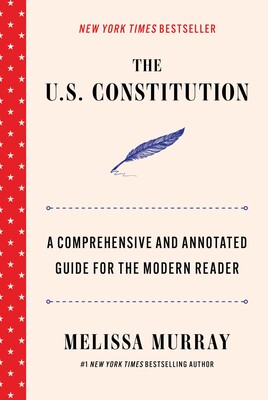
ETA: I also was excited about Melissa Murray's new constitutional commentary. Eh.

The preface was a quick summary of its creation that seemed like forcing a bunch of stuff into a few pages. And doing so in a somewhat simplistic way.

The summary of each section is helpful, if often a tad too basic for someone who already has more than a passing understanding. It isn't meant to be comprehensive, but sometimes it seems a tad thin. 

It serves its function as a one-volume reference book for the average reader (though now and then tossing in words like "chattel" without comment). Sometimes, there are particularly interesting discussions, at times, with very up-to-date material. 

Murray provides a balanced view, including points of view that she personally doesn't support. At times, you do get the idea she isn't some originalist. 

The subtitle is "A Comprehensive and Annotated Guide for the Modern Reader." It does cover the whole document in annotated form and is written for the modern reader. It has Civics 101 potential.  

The book is formatted comfortably. OTOH, there are no charts, pictures, or anything of that sort. 

I enjoyed Linda Monk's books better. 

Friday, July 10, 2026

SCOTUS Watch

Justices Amy Coney Barrett and Elena Kagan will appear July 14 before the House Appropriations Subcommittee on Financial Services and General Government, which has jurisdiction over the annual spending measure that funds the Supreme Court, according to a scheduling announcement from House Appropriations Chair Tom Cole (R-Okla.).

The Supreme Court might be in recess, but it is still in session. Odds and ends still occur.* 

The most notable news, however, is that two justices will (for the first time since COVID) appear before Congress. Thomas, for some reason, stopped by recently. Not in an official capacity. 

The usual procedure was to have a liberal and a conservative justice, as we have here. The appearance provides members to ask justices non-budget related questions. 

“the right to have rights—to freely participate in our political community”

We will also have many term round-ups. 

Prof. Dorf discusses a controversial reference in the birthright citizenship opinion. I don't think he quite salvages the reference. Yes, noncitizenship is "less secure." Noncitizens still have rights.

Prof. Segall talks about Kavanaugh's de facto acceptance of living constitutionalism. Brett has to bow down to the originalist god, including talking about how constitutional "meanings" hold firm. 

As with the English language generally, however, meanings change over time, too. Sorry dude. 

==

Note: The summer is sometimes so lacking in SCOTUS news that I am left to cite the website providing a typo correction to one of its opinions. 

The Court used to fix typos silently as if there were editing elves doing so out of public view. Now, they openly cite even the smallest edits. 

They also provide the final "bound" version of the opinion, which in the past took years but now starts during the term itself, including any changes at the bottom of the page.  

Check out here. There are "revisions" with the date provided. You can also look down the page and see the first twenty or so opinions now have exact page locations. 

The changes, like the different versions of biblical verses (h/t Bart Ehrman), are often trivial. Nonetheless, it is a good bit of open government. 

ETA: Graham Platner finally formally removed himself from the Senate race. The new replacement of Senator "Kavanaugh Won't Overturn Roe!" will hopefully be picked later this month. 

Thursday, June 11, 2026

Alabama Doesn't Executes Jeffrey Lee

Lee, who has been on death row for 25 years, was convicted of the 1998 murders of Jimmy Ellis and Elaine Thompson during a pawn shop robbery in Dallas County. He was also found guilty of the attempted murder of Helen King.

The death sentence and planned execution are problematic on multiple grounds, but only a few justices (at most) have agreed with the reasons.  

Twenty-five years is too long. Justice Breyer explained why. I will continue to cite his dissent. 

Sotomayor, for the liberals, flagged the problems with nitrogen gas. The others think "not enough."

An Alabama jury recommended 7-5 that he receive life without parole. A judge overrode them. 

The policy is no longer in place. The justices have rejected multiple appeals that flagged the problem. 

The jury, even without other potentially mitigating evidence, did not find him guilty enough to die. A double robbery/homicide clearly has aggravating circumstances. A majority of the jurors still thought he did not deserve to die.

The lower courts split one last time. The district court found some problems with nitrogen gas, but not enough. The court of appeals disagreed, sending it back to determine if a backup method (the firing squad) was available.* The state appealed. 

Steve Vladeck argued that the Supreme Court intervening, given the technical status of the case, would be particularly dubious. Hours after the execution was scheduled, the appeal was rejected. 

(I find it asinine that things work this way. That we have a finale on execution night. It is how it is set up. The state is partially to blame. It should change.) 

The machinery of death, with Thomas, Alito, and Gorsuch dissenting, was stopped. For now. 

I have argued that final refusals to intervene, even if hopeless appeals, should be at least minimally explained in death penalty cases. I think so here. 

Anyway, Jeffrey Lee shouldn't be executed. A majority of his jury said so. Too long ago. 

If he's executed, he shouldn't be executed by nitrogen gas. There is too much doubt. I know. Is the firing squad better? I guess? 

Maybe, just let's not execute him at all. Alabama hasn't for over twenty-five years. Why start now?

===

Note: The rules hold that if you challenge an execution method, you need to provide an alternative. 

Maybe, see Glossip v. Gross, things would be different if the state used crucifixion or something, but they haven't found any such method now exists.

So, the firing squad was chosen. Is it better? Some experts suggest that it is. People think it is barbaric. It sounds like it would be. But pain and suffering-wise, it very well might be the best approach.

Not free from botching, of course.  

Monday, June 08, 2026

SCOTUS Watch: Order List

The Order List was fifteen pages, which suggested there was some sort of opinion. And, there was another (it is her thing) Sotomayor statement flagging a criminal justice issue:

Although I agree with the Court’s decision to deny certiorari for the reason explained below, I write separately to address the problematic standard the Mississippi Supreme Court applied to the claim petitioner Tony Terrell Clark raised under Batson v. Kentucky [racial discrimination in peremptory challenges], 476 U. S. 79 (1986), in the context of his ineffective-assistance-of-counsel claim.

Mark Joseph Stern also flags on Bluesky:

SCOTUS tosses out a 4th Circuit decision allowing compassionate release under the First Step Act when there are arbitrary sentencing disparities between a defendant and his co-conspirators. Orders reconsideration in light of Rutherford. KBJ and Sotomayor dissent.

This is a typical "GVR," where they "grant, vacate, remand" a case so that the lower court can apply a related opinion. Kagan dissented in Rutherford and joined the limited concurrence written by Sotomayor in the other case referenced in the GVR.

As Stern notes, it isn't fully clear what this means, but it is concerning since it appears to suggest the lower court should apply the (dubious) rulings even broader than necessary.  

Alito and Barrett didn't take part in cases without saying why. Only Kagan and Jackson consistently do so. I prefer that approach. 

One tidbit is that "The United States’ claims in this case are hereby dismissed with prejudice" in an interstate dispute. No reason provided. 

There will be opinions on Thursday. There is also an upcoming execution, which I will discuss separately. 

ETA: Amy Howe posted her summary.

One tidbit is the rare request for a reply to a request for a rehearing. The request is by Lisa Blatt,  superlawyer, and cites changing lower court precedent. Also, looking at the docket page, the Supreme Court posted a request earlier, but it was removed as a mistake. So, one big trivia question.

==

The error flagged here is not uncommon. 

I have repeatedly seen it assumed that the original First Amendment would require thousands of members. A case of not reading closely.

Checking, the House reached 200 members in the 1820s. The measure was bound to be out of date eventually. It was suitably not ratified as written. 

Monday, May 18, 2026

SCOTUS Watch: Order List

A ten-page Order List with various odds and ends.

Chris Geidner notes on Bluesky:

Also in today’s orders, SCOTUS sidesteps ruling on private enforcement of Section 2 of the Voting Rights Act, sending two cases back for post-Callais reconsideration. Jackson dissents, pointing out that Callais had nothing to do with private enforcement and saying she would have summarily reversed.

Rick Hasen summarized:

Justice Jackson dissented from the order, on the sensible grounds that Callais did not consider the right to sue question. Of course, the stakes are much lower now that Section 2 is essentially dead no matter who sues.

(His colleague was more sympathetic.) 

Also, a cert grant (per Geidner):

The Supreme Court takes up a case over whether employees of federally funded schools can sue to enforce Title IX’s sex discrimination bar. 

Kavanaugh, without comment, noted he would have granted cert. in another case. If you do a docket search (on another page since the Order page does not provide links):

Whether a multiemployer pension plan that terminated through mass withdrawal before the 2020 plan year is eligible for Special Financial Assistance under 29 U.S.C. 1432(b)(1)(A).

Alito and Barrett didn't take part in the examination of a couple of cases. Again, only Kagan and Jackson regularly explain why they do that. 

Sotomayor added a brief statement noting that she agreed with the court not taking a criminal case because the government admitted error and the defendant received all that was requested for. 

The next thing on the schedule is an opinion day on Thursday. Next week's orders will be on Tuesday because of the holiday. 

===

I agree with Steve Vladeck that justices should show up more in front of Congress. Court reform includes multiple things, including some that should have bipartisan support. This is one such proposal. 

Friday, May 15, 2026

SCOTUS Watch

The Supreme Court is beginning its final end-of-term push. They will meet on Thursdays until the end of June. Opinions dropping will be likely.

More VRA News 

They had no Order List on Monday. No problem. They often make news outside of those often no-drama orders.

For instance, the aftermath of a major Voting Rights Act decision continued. It involved Alabama. Sotomayor dissented for the liberals. 

The conservatives didn't explain themselves. Bad decision, but not the end of the line. Meanwhile, there continues to be a lot of jockeying in multiple states.

The Virginia state supreme court ruling was not a good decision. The Hail Mary federal challenge was also not good. It was rejected without comment. 

Arguments 

We don't get video or even audio (for opinion announcements) of the proceedings. 

Amy Howe showed up since we cannot. She promoted, as a witness, greater transparency during the proceedings of the Biden Supreme Court Commission. Her summary of this term's arguments is interesting. 

Opinions 

The usual practice is for the justices to drop a limited number of opinions in late May and early June. Then, we will have an influx, with multiple decision days in one week to complete the job. Late term rush.

There are worse things to worry about. All the same, this is a bad job of pacing yourselves. 

Anyway, as expected, the two opinions (both unanimous with one concurrence) are non-controversial. The usual sentiments about how such opinions are still of some significance aside, neither is not a "high profile" case worthy of much attention. 

Abortion Pill News

The Fifth Circuit dropped a ridiculous opinion preventing Mifepristone from being prescribed by telemedicine and delivered by mail. The decision is bad both procedurally (standing) and on the merits.

Justice Alito, in charge of the Fifth Circuit, granted a temporary halt (administrative stay). He (selectively) had it expire on Monday afternoon and then extended it to Thursday afternoon. So, after two opinions few cared about dropped, bigger news was forthcoming.

(The link underlines how the change in Administration matters.) 

The Court, about a half hour late, granted a regular stay. Thomas and Alito dissented for different reasons. Alito noted the Court did not explain itself (which is unfortunate), which he did not find problematic about an hour later, when an execution was involved.

One notable thing about Alito's dissent is that he references how a change of policy in the Biden Administration helped protect the supply of abortion pills after Dobbs. State shield laws, including in New York, were also quite important.

Michael Dorf has more, including a reference to a good article on the Comstock Act. A previous discussion, which includes a reference to a Biden DOJ policy statement, is also worthwhile. 

Busby Execution 

A murder apparently motivated by robbery led one person to be sentenced to death, the other to prison. 

After over twenty years, too long (Breyer), Texas was ready to execute him. There was a claim of intellectual disability, which even the state witness granted.

The Supreme Court has held that intellectual disability at a certain point will make execution unconstitutional. It is also a mitigating factor. 

The seriousness of the claim is suggested by the fact that even the conservative-leaning Fifth Circuit at least temporarily held up the execution. The justices overturned the stay without comment.

Kagan dissented without comment. Jackson (with Sotomayor) briefly noted how gratuitous it all is. 

He was the 600th execution in Texas since 1982.

Upcoming

Order List on Monday, and another opinion day on Thursday. Who will buy Souter's home

Tuesday, April 21, 2026

Chadwick Willacy Executed

On September 5, 1990, Willacy, then 24, was burglarizing Sather's Palm Bay home when she returned home unexpectedly. Willacy bludgeoned Sather, 56, bound her hands and feet with wire and duct tape, and brutally strangled her with a cord. He later disabled smoke detectors, doused her with gasoline, placed a fan at her feet, and set her on fire.

Florida executed another person who committed heinous crimes decades ago. The Supreme Court never held, even if a few justices flagged the problem, that such lag times were constitutionally problematic. 

(See, e.g., Breyer's dissenting opinion in Glossip v. Gross, including how the state interest decreases over time. The person did serve three decades in prison.) 

The last appeal also had a repetitive feel. His lawyers sought information regarding the lethal injection process. Sotomayor recently noted she was concerned about possible problems, especially since everything was not out in the open. 

A long prison sentence is appropriate in these cases. The capital punishment system is too flawed to be trusted. Executing a few people among a bunch of horrible people, including decades later, is not a good use of the public welfare. 

ETA: Trump Death Penalty Watch

The Garland Justice Department placed a moratorium on executions. A final report flagged problems with lethal injection usage. 

The Trump Justice Department [I use that label advisedly] has addressed a different sort of problem. Recently, there have been issues with obtaining execution drugs. Also, some botching of executions.

The TJD has decided to provide an open season for alternatives. They will leave open the usage of electrocution, nitrogen gas, and firing squads. 

Trump 1.0 waited until mid-2020 to start executing people. There are now only three people (mass murderers all) on federal death row. It would be remarkably quick for some newly applied death sentence to be carried out in less than four years.

The three people on death row were sentenced in 2015, 2017, and 2023. Realistically, it would be difficult to see more than two of them being executed by January 2029. I might be wrong. But five years would be rather fast. 

I'm strongly against the death penalty. I acknowledge my anguish if any of those three are executed would be rather low in comparison to many other things these clowns are doing. 

The Biden commutations have realistically limited the ultimate harm they can do on this front. They can try to get some death sentences. Even there, their efforts might be somewhat limited. 

One person in federal custody for other crimes was released to state custody, where he was executed. States might manage to execute someone else somehow, too, including among those Biden commuted. So, Trump has some room there.

Still, on the "execution" front, he has done a lot more damage, illegally killing people, including in Caribbean boat attacks. 

Monday, April 20, 2026

SCOTUS Watch: Order List and Other News

Order List

Today's Order List was long enough that it suggested additional writings. It also had some notable developments, including a case that might further weaken Oregon v. Smith (general applicable laws are generally acceptable for religious liberty purposes).

One case on the "shadow docket":

By a 6–3 vote, and with no opinion, the Supreme Court throws out a lower court decision denying qualified immunity who killed an unarmed, mentally ill man by using "bodyweight force" to restrain him. All three liberals dissented.

A per curiam error corrects a lower court Fourth Amendment decision. Sotomayor, without comment, wouldn't provide relief. Jackson dissents with an opinion. 

Sotomayor, in a statement, discusses a dispute involving a child abduction measure. She agrees it is something they should eventually address. 

This specific lawsuit, however, is procedurally inappropriate to take. Nonetheless, she argues it was at least partially a self-inflicted wound by the Court.

Sotomayor, without comment, also noted she would have granted a case alleging evidence was not properly supplied in a criminal case. 

Justices Alito, Kavanaugh, and Barrett didn't take part in some decisions without saying why. Only Kagan and Jackson consistently provide their reasons. 

Shadow Docket Story

Steve Vladeck addresses a NYT article, with internal documents, discussing a major change in the shadow/emergency/interim docket in 2016. I agree with his overall analysis. The articles provide sunlight on issues of special concern. The actions are troubling.

Fix the Court suggests a proper response would be congressional legislation requiring transparency. If they abuse the process, jurisdiction stripping and budget cuts would be some possible consequences. 

(This was suggested in an email I received via a subscription.)

Or we can go the route of certain conservatives who think the leak is the biggest problem. The overall comments there, as I noted in a comment, ignore that internal deliberations are regularly leaked. Full documents are a step beyond that, but that might be appropriate (e.g., Pentagon Papers).

Thomas vs. Progressives

Prof. Segall focuses on his corruption -- Harlan Crow -- but also links to a wider discussion, how his usual "just so" historical account is garbled. This is who conservatives deem their model judge. 

Happy Birthday, Justice John Paul Stevens. And Adolf Hitler, apparently, going by Justice Thomas. 

Meanwhile ...

Some good news in a lower state court in Pennsylvania, which, on state constitutional grounds, struck down a Hyde Amendment. A concurring opinion also cited religious liberty. 

Some state courts went this route in the past. The principle should be applied nationwide. 

ETA: Two non-ideological opinions were handed down on Wednesday. Sotomayor had the unanimous opinion for one. Thomas had the other opinion, with a dissent by Alito, Roberts (relatively rare dissenter), and Kavanaugh. Sometimes, disagreements aren't always along the expected lines. But 6-3 is still a thing. 

Monday, April 06, 2026

SCOTUS Watch: Order List [And Other Stuff]

The Supreme Court handed down a short Order List before going on a little mid-April break. One grant:

Issue: Whether the Veterans’ Judicial Review Act stripped district courts of the jurisdiction, recognized by this court in Johnson v. Robison, to hear challenges to the constitutionality of acts of Congress affecting veterans’ benefits.

A bit of lay-up since both sides agreed they should take the case. The solicitor general also argued that the court below was correct. He also suggested the plaintiff sued the wrong person, helping to explain the curious "U.S. Congress" part of this case. 

Meanwhile, among the orders is one in which Gorsuch did not take part. Only Kagan and Jackson explain themselves when such a recusal happens. They are right to do so. 

Again, nothing is scheduled until next week, on Friday (conference/non-argument session, likely to swear in people), but something might come up. 

Steve Bannon

SCOTUSBlog provides more details that show that even a brief, bland-looking Order List can have some interesting details. More Trump news, too:

The justices also sent the case of Stephen Bannon, a former adviser to President Donald Trump who was convicted of contempt of Congress, back to the lower court, where the Department of Justice has filed a motion to dismiss his indictment.

Bannon served his brief sentence. This has a symbolic quality. After an extended -- ridiculously so -- process, which must be reformed, Bannon actually was punished for obstruction of Congress.

This, of course, has to be discouraged. I am being sarcastic. Anyway, this seems to have a gratuitous feel to it. The United States provided a brief reply that it was dismissing the indictment "in the interests of justice." Yes. Justice for Trump stooges.

They had the prosecutorial discretion to do this, though in this case, it is horribly applied. Once they do so, the argument is made that the procedure applied here in this order is appropriate. 

Iowa decided to supply an amicus as part of its Republican/Trump support role. It is laughable that Iowa felt it necessary to get involved here. 

The procedural move here does not appear improper. The ultimate problem is that Trump yet again finds a way to remove even the bare minimum justice for the past wrongs he and his minions inflicted. 

I'm open to being proven wrong. It does seem wrong that the Justice Department can step in at this point. But if the prosecution was actually improper, a later action of this sort might be sensible. 

So, again, it does seem like it turns on discretion. 

ETA: On the odds and ends front, some more rules (Appellate/Bankruptcy/Evidence) were released. 

SCOTUS doesn't intervene in an election dispute. Sounds like a blatant case, even if you don't like the law. Might have line drawing issues. Easy case here.

I say more here including about Sotomayor stuff. 

Thursday, April 02, 2026

SCOTUS Watch

Order List

The Supreme Court on Monday agreed to weigh in on a procedural question arising from a pregnancy discrimination case – specifically, whether a defendant can raise an affirmative defense (that is, a legal excuse or justification) later in the proceedings when it did not raise that defense in the answer to the plaintiff’s complaint.

After a brief order list, Sotomayor (with Jackson) spends some time explaining why the justices should have taken a criminal justice case. Finding troubling criminal justice cases that suggest the arbitrary nature of the criminal justice system is her thing.  

(The opening link provides more details) 

Opinions 

Happy Trans Visibility Day, which once was allegedly an anti-Easter plot or something, since it coincidentally overlapped that year. By chance, the justices decided the conversion therapy case.

Justice Gorsuch, having the opinion (which, like multiple other opinions he had in cultural war cases, was procedurally dubious), was a bad sign. Worse, only Jackson dissented. It was a good dissent. 

(Jackson used a Calvinball ruling -- see Breyer's angry dissent -- to her benefit. Okay. But realistically, that is how it is going to be. Selective application.) 

The conservatives upheld anti-trans care policies, even though such policies clearly have ideological motivations. This time, when trans people are protected, the regulation is suddenly thought control.

The law involves the regulation of people with a state license to practice medicine and only covers minors. So, it is not about the conversion therapy of adults or therapy by unlicensed people, including clergy. 

Under this logic, any medical treatment delivered through words rather than instruments could now carry First Amendment protection—a framework that could shield a doctor who encourages a patient to commit suicide, a dietician who tells an anorexic patient to eat less, or a therapist who deliberately steers a vulnerable client away from life-saving treatment. It could also extend well beyond medicine: a financial advisor who talks an elderly client into a bad investment is exercising speech-based professional conduct, as is a lawyer who gives harmful legal advice.

Not good. Kagan (with Sotomayor) concurred in full, citing an alleged limitation. But, as Jackson noted, the limitation in context is fictional. If they concurred strategically, Gorsuch's language is far from restrained.

The opinion says strict scrutiny is required. Some misleading coverage aside, the Court did not strike down the law. Colorado has a higher test to meet. 

But that is usually an uphill battle. Gorsuch's rhetoric, as SCOTUSBlog flags, is also not reassuring:

But the Supreme Court also strongly hinted that the ban would fail that test. In his 23-page opinion, Gorsuch stressed that in cases like Chiles’, Colorado’s ban “censors speech based on viewpoint.” Because the First Amendment “reflects … a judgment that every American possesses an inalienable right to think and speak freely, and a faith in the free marketplace of ideas as the best means for discovering truth,” Gorsuch continued, “any law that suppresses speech based on viewpoint represents an ‘egregious’ assault on both of those commitments.”

The possible Robert Kennedy Jr.-ing of medical care is not ideal. I say that even if the opinion leaves open a way to uphold this law (strict scrutiny met) or to craft another policy that will protect children. 

Kagan, in the past, disliked "Lochner-ing" or the weaponizing of the First Amendment. Blah. 

Upcoming

The conference was on Thursday, given the Easter weekend. Monday will be an Order List. They then take a two-week break until April 17th. 

A media advisory regarding an oral argument that will likely have more demand for sitting flags the change at the top of Homeland Security. 

(ETA: The SCOTUS PIO released a statement on a news story involving Alito going to get checked out -- he is in his 70s, so this wasn't that notable on its own -- but didn't post it on the website. Yet again.)

Birthright Citizenship Trivia

Trump showed up for the birthright citizenship oral argument (left after the solicitor general was done), which would be the first time a sitting president did so. Notably, he picked this case to do so.

Talk about this being an "attempt to intimidate the justices" seems a tad overblown. Separation of powers? Eh. Members of Congress show up. 

Nixon and John Quincy Adams argued cases. Lincoln, too (a more forgotten detail). Not while in office, of course. Taft became Chief Justice. Ditto. 

John Marshall served as Secretary of State briefly after becoming Chief Justice. The Constitution does not -- unlike for members of Congress -- clearly ban that sort of thing. Justices also served in diplomatic roles. Robert Jackson was a prosecutor at Nuremberg.

Friday, March 20, 2026

SCOTUS Watch

More Trump News 

Steve Vladeck in his weekly SCOTUS Substack:

I wanted to use today’s “Long Read” to bring folks up to speed on the series of ongoing cases involving efforts by the Department of Homeland Security to revoke “Temporary Protected Status” (TPS) on a country-by-country basis for hundreds of thousands of immigrants from Haiti, Syria, Venezuela, and elsewhere—two of which have reached the Supreme Court through the Trump administration’s 33rd and 34th emergency applications. 

(He also references the racism involved.) 

SCOTUS took the matter for review later in the day. The oral argument will be in late April. 

Eugenio Suárez’s hit in the top of the ninth later in the week provided the deciding run to allow Venezuela to win the World Baseball Classic over the United States. He earlier spoke out about how immigrant baseball players worry about current policies. He noted a family member lost TPS status. 

Another Execution 

It also rejected a final appeal in a capital case.

Michael Lee King, 54, is scheduled to receive a three-drug injection starting at 6 p.m. at Florida State Prison near Starke. King was sentenced to death in 2009 after being convicted of first-degree murder, sexual battery, and kidnapping.

(The death sentence is not patently outrageous. The system can be arbitrary and overall, not helpful to the public welfare, without each and every case being similarly bad.) 

Florida apparently is moving on to executing one or more people who haven't been on death row for over twenty years. The final appeal basically addressed red flags regarding the state's lethal injection procedures. 

Sotomayor recently referenced the matter. She didn't comment this time, but there is a comparable reason why a SCOTUS stay of execution is questionable without erasing the problems with the procedures.  

Chief Justice Roberts Speaks Out

"The problem sometimes is that the criticism can move from a focus on legal analysis to personalities. And you see from all over, I mean, not just any one political perspective on it, that it's more directed in a personal way, and that, frankly, can be actually quite dangerous," Roberts said.

I saw people respond with an expletive. It's understandable. First, it sounds like he is upset about the justices being criticized. Second, the conservative justices were hoisted on their own petard by enabling Trump. And, yes, his criticism is specifically at issue. 

Trump repeatedly, in personal ways, attacked judges for ruling against him. The problem also arose during his civil and criminal trials. Judges repeatedly criticized him or even sanctioned him for crossing the line. He is back to using such rhetoric to attack judges for the 2020 elections. We know how that went. 

There has been a dangerous uptick in harassment of judges. People send pizzas to their homes in the name of a murdered son of a judge. Judges get harassing phone calls. A few judges in the past were physically attacked or even killed. 

Strong criticism is part of the program. Some will be fair, some unfair. But, especially when people like Trump (or other members of the government) attack judges personally, sometimes targeting other people along the way (family members, prosecutors, etc.), a line begins to be crossed. The unjust delegitimizing of the court system alone is a problem. It can get worse. 

A new article flagged some lower court judges addressing the problem. It notes that the pizza thing might have, in some sense, been a foreign job. 

I didn't catch that aspect before. It should be carefully checked out. It surely would not be the only attempt at foreign interference with our institutions. 

Another way to look at this is to examine a major reason lower court judges have received some strong criticism. Conservative justices have, at times, with little or no explanation, overturned their rulings. 

This effectively is a big "fu" to lower court judges, who regularly are just doing their jobs, provided extended explanations when doing so. The judges come off as "judicial activists" who deserve strong criticism. As the article notes, "thanks a lot, John."

When you flag this, some people think you are just making it about Trump. He obviously has significant influence and has used it in unhinged ways. 

But it isn't just him. So "what about Schumer" won't be much of a comeback. Put aside his comments and influence simply are not comparable. If you can find something bad liberals say, fine. 

We need to protect our institutions. This should not be a partisan issue. Too often, it seems that it is. 

Justice O'Connor

There was a special event on Thursday to honor Justice O'Connor. The Supreme Court website provided a rare livestream video link. 

There were two parts. There was a bar event, and then they had a special court session. The livestream only covered the first part. A ceremonial occasion would be an ideal situation to provide SCOTUS video. 

Some documentary materials were supplied, including an extended biographic statement. O'Connor was a moderate conservative from another age. 

Her role in Bush v. Gore for some is disqualifying. But she's no Justice Alito. She was, as noted, a reasonable conservative who carefully and pragmatically (influenced by her legislative experience) applied the law. She also supported civics education, making it her focus after leaving the Court.  

Opinions

The justices were back for opinions and a conference on Friday. There will be oral arguments next week.

They handed down a single opinion, by Kagan, which unanimously allowed someone to sue to protect his free speech rights. The person feared future prosecution. The case is not about damages.

Kagan handles things, tossing in some Kagan-esque colloquial "let's chat about this" phrasings (e.g., "For anyone who has followed along this far") quickly in a Roberts Court special. It's a good, limited opinion. 

(Robert Court specials unite the justices, often with short opinions, by opinions of limited reach that avoid divisive questions. Sometimes, they clearly paper over certain disputes, the seams at times fairly blatant.) 

Other Stuff 

The Court also dropped a housekeeping order

They will hear oral arguments next week after dropping an Order List on Monday. 

Friday, March 13, 2026

SCOTUS Watch

Order List

There was a seven-page Order List on Monday. The Court granted one case for review. SCOTUSBlog:

In Prutehi Guahan, the justices will weigh in on a dispute that arises from the U.S. Air Force’s disposal of unexploded ordnance, which it burns or blows up, on a base in Guam. 

So notable concern, but based on technical issues:

Four years ago, Prutehi Guahan, an environmental group, went to federal court to challenge the Air Force’s then-pending application to renew its permit, granted to it by Guam’s Environmental Protection Agency under a federal law called the Resource Conservation and Recovery Act, for its disposal of ordnance. The group contended that before the Air Force submitted its application, it should have prepared an environmental impact statement, as required by a different federal law, the National Environmental Policy Act.

Kavanaugh didn't take part in deciding a case without saying why. Jackson dissented from a refusal to a motion based on an alleged abuse of the in forma pauperis policy, following her recent practice of doing so for incarcerated persons. 

Gorsuch dissents from a denial of cert. As Mark Joseph Stern (Slate) summarizes on Bluesky (noting his position received four votes in the past):

Gorsuch dissents from the Supreme Court's refusal to consider whether a judge (not a jury) can extend a person's prison sentence by finding, by a preponderance of evidence (not beyond a reasonable doubt), that he violated supervised release.

Charles Burton Doesn't Die

Charles Burton has been in prison for over thirty years for his involvement in a robbery/homicide. Burton is in his mid-70s and in a wheelchair. A final SCOTUS appeal (involving procedural issues) was pending. 

I firmly believe that the death penalty is just punishment for society’s most heinous offenders, as shown by the 25 executions I have presided over as governor,” Ivey said in a statement on Tuesday. “In order to ensure the continued viability of the death penalty, however, I also believe that a government’s most consequential action must be administered fairly and proportionately.

Alabama's strongly conservative governor commuted his sentence to life. That's the right move, except that he should really be paroled. He is ailing and was not directly involved in the actual killing. He has already served more than enough for his crime. 

Burton wasn't even there when it happened. It was a particularly poor usage of the "felony murder rule."  I appreciate her principled pro-capital punishment statement. Yes, I can grant that.

Alabama has not had a great run in recent years executing people, especially respecting the procedure, which led them to shift to nitrogen gas. Give credit where it's due and all that, all the same. 

The victim's daughter opposed the execution. That happens, though some seem to think honoring the victims is a one-way ratchet. Still, executions are in the name of the public, not private parties. 

The actual killer was sentenced to death. His sentence was overturned on appeal. The government eventually sentenced him to LWOP. He died in prison.  

Burton's lawyers removed their final appeal as moot.

Cedric Ricks Execution

Cedric Ricks was sentenced to death for the May 2013 killings of 30-year-old Roxann Sanchez [girlfriend] and her son Anthony Figueroa at their apartment in Bedford, a suburb in the Dallas-Fort Worth area. Sanchez’s 12-year-old son, Marcus Figueroa, was injured during the attack.

His attorneys had asked the Supreme Court to stay his execution, arguing that prosecutors violated Ricks’ constitutional rights by eliminating potential jurors on the basis of race. 

Previous appeals by Ricks that alleged ineffective counsel and called for the suppression of evidence in the case have been denied.

A horrible domestic violence crime like this warrants serious punishment. It is not, in my view, the "worst of the worst" type murder that warrants the death penalty.

(Texas has executed a handful of people annually in recent years. It is a form of lottery to execute him.) 

One more death will not stop the cycle of violence involved. I don't know if the due process concerns flagged tainted the conviction. 

They probably are not "cert worthy" since they are most likely singular, not the special class warranting SCOTUS review. The justices should still not have denied without comment. 

Justice Joe would provide a brief statement explaining my denial, noting that the taking of a life (especially given my overall constitutional concern about the death penalty) warrants a special exception to the usual "no comment" cert denial policy. 

He was executed, providing an apology in his final statement. Media coverage continues to provide the public with information about such final moments. 

The almost thirteen-year lag time would have been notable back in the day. It's relatively quick, FWIW, as things go now. COVID probably helped add a few more years that might not have been there otherwise. 

Upcoming 

I noticed that a media advisory I missed flagged that there will be limited seating for the upcoming birthright citizenship oral argument. 

There is an execution scheduled on the 17th. There might be a final order to dispose of like the ones above.

The next scheduled thing is a special event honoring Justice O'Connor (next Thursday) with a livestream. Various Trump officials will take part. 

The justices will officially return next Friday. They probably (there is a notice they "may") will hand down one or more opinions. They will also have a conference to consider pending matters. 

Other News 

Oyez did not have last term's opinion announcements. 

The delay led Fix the Court to reach out and obtain them (in a raw form that is harder to access and contains other audio mixed in). 

Oyez now has (some) of the opinion announcements up. They are easier to access, but not complete yet. 

Wednesday, February 25, 2026

SCOTUS: More Opinions

Opinions

Two opinions dropped on Tuesday. 

[1]

Sotomayor handled a civil procedure case relatively quickly. It involved a dispute about allegedly tainted baby food. Thomas added a concurrence to flag yet another issue he is concerned about. 

[2]

Thomas had the majority in the second case regarding the limits of sovereign immunity in a case alleging race discrimination by the post office. 

Sotomayor, for the liberals, and Gorsuch (a limit on federal agencies of any type is his thing) dissented. She felt the woman had a right to sue. 

The facts make this a sympathetic case. The split shows the limits of textualism. On that general subject, Eric Segall has a good blog post

Congress can pass a new statute to clarify matters. This is often the case. Many cases involve statutory matters for which the legislature can tweak things. Congress might fail to do this (see tariffs), and in response, the courts increase in power.  

[3]

Kagan and Jackson wrote the Wednesday opinions. So, readers can expect things to go pretty well. Each was unanimous in result, with a few conservatives adding comments. A brief summary below.

Justice Jackson affirms the Texas Court of Criminal Appeals on the scope of the right to counsel during breaks in trials. Accepts some limits on counsel engaging with the defendant (as a witness), adding some clarifying details about the rules.  

[4]

Kagan has an opinion on whether a government contractor can immediately appeal an order rejecting its claim to sovereign immunity derived from its work for the government. They can't.

One of the many technical cases they take. Kagan often can write these opinions in at least a halfway understandable way.  

The case also has a topical connection. Appeals take a long time. The facts are now around ten years old. They involve facts alleging a contractor's work policies for detainees violate a federal bar on forced labor and Colorado’s prohibition on unjust enrichment.

Melvin Trotter Execution 

A crack addict named Melvin Trotter fatally stabbed 70-year-old Virgie Langford in the corner grocery store she ran for 50 years. Trotter has been on death row for nearly 40 years for the murder.

Colorful summary. His lawyers argued that the claim of "premeditation" is dubious when he seized a knife at the scene. That is a big reason why he got the death penalty. Even bad crimes might not warrant it. 

An organization against the death penalty argued:

Melvin’s death sentence was handed down by a non-unanimous jury on two separate occasions. Florida is one of the only states that allows a death sentence to be given without the full confidence of the jury, making it widely recognized as unreliable. Melvin’s life was shaped by severe trauma, instability, and intellectual limitations that were never meaningfully addressed in court.

The final appeal alleged problems with the Florida execution protocol. Sotomayor (for herself) dropped a statement "
to express concern about Florida’s implementation of its execution protocol and the secrecy surrounding it." 

Sotomayor has been the justice most concerned about lethal injection protocols. She noted the claim alleged flagged problems like "incorrect drug doses, the use of nonprotocol drugs, and recordkeeping lapses that could mask yet additional failing."

She joined the "no comment" denial because there wasn't (in her view) enough evidence in this case. It is rare to see any discussion in these final appeals. 

I continue, like apparently no justice is left on the Court, to find it problematic to only execute someone decades after the conviction. Forty years on death row is punishment enough.

Florida executed him a few hours later. 

Opinion Announcements

We also have good news: Fix the Court managed to access last term's opinion announcements. They are (for now) in a harder-to-access form, but the effort is appreciated. It would be simpler if SCOTUS posted it themselves. They think it is worthwhile to have them.

Upcoming

More orders and oral arguments next week/month.

ETA: There will also probably be one or more opinions dropping on Wednesday. Also, Tom Goldstein, founder of SCOTUSblog, was convicted.