About Me

My photo
This blog is the work of an educated civilian, not of an expert in the fields discussed.
Showing posts with label environment. Show all posts

Monday, April 20, 2026

SCOTUS Watch: Order List and Other News

Order List

Today's Order List was long enough that it suggested additional writings. It also had some notable developments, including a case that might further weaken Oregon v. Smith (general applicable laws are generally acceptable for religious liberty purposes).

One case on the "shadow docket":

By a 6–3 vote, and with no opinion, the Supreme Court throws out a lower court decision denying qualified immunity who killed an unarmed, mentally ill man by using "bodyweight force" to restrain him. All three liberals dissented.

A per curiam error corrects a lower court Fourth Amendment decision. Sotomayor, without comment, wouldn't provide relief. Jackson dissents with an opinion. 

Sotomayor, in a statement, discusses a dispute involving a child abduction measure. She agrees it is something they should eventually address. 

This specific lawsuit, however, is procedurally inappropriate to take. Nonetheless, she argues it was at least partially a self-inflicted wound by the Court.

Sotomayor, without comment, also noted she would have granted a case alleging evidence was not properly supplied in a criminal case. 

Justices Alito, Kavanaugh, and Barrett didn't take part in some decisions without saying why. Only Kagan and Jackson consistently provide their reasons. 

Shadow Docket Story

Steve Vladeck addresses a NYT article, with internal documents, discussing a major change in the shadow/emergency/interim docket in 2016. I agree with his overall analysis. The articles provide sunlight on issues of special concern. The actions are troubling.

Fix the Court suggests a proper response would be congressional legislation requiring transparency. If they abuse the process, jurisdiction stripping and budget cuts would be some possible consequences. 

(This was suggested in an email I received via a subscription.)

Or we can go the route of certain conservatives who think the leak is the biggest problem. The overall comments there, as I noted in a comment, ignore that internal deliberations are regularly leaked. Full documents are a step beyond that, but that might be appropriate (e.g., Pentagon Papers).

Thomas vs. Progressives

Prof. Segall focuses on his corruption -- Harlan Crow -- but also links to a wider discussion, how his usual "just so" historical account is garbled. This is who conservatives deem their model judge. 

Happy Birthday, Justice John Paul Stevens. And Adolf Hitler, apparently, going by Justice Thomas. 

Meanwhile ...

Some good news in a lower state court in Pennsylvania, which, on state constitutional grounds, struck down a Hyde Amendment. A concurring opinion also cited religious liberty. 

Some state courts went this route in the past. The principle should be applied nationwide. 

ETA: Two non-ideological opinions were handed down on Wednesday. Sotomayor had the unanimous opinion for one. Thomas had the other opinion, with a dissent by Alito, Roberts (relatively rare dissenter), and Kavanaugh. Sometimes, disagreements aren't always along the expected lines. But 6-3 is still a thing. 

Friday, March 13, 2026

SCOTUS Watch

Order List

There was a seven-page Order List on Monday. The Court granted one case for review. SCOTUSBlog:

In Prutehi Guahan, the justices will weigh in on a dispute that arises from the U.S. Air Force’s disposal of unexploded ordnance, which it burns or blows up, on a base in Guam. 

So notable concern, but based on technical issues:

Four years ago, Prutehi Guahan, an environmental group, went to federal court to challenge the Air Force’s then-pending application to renew its permit, granted to it by Guam’s Environmental Protection Agency under a federal law called the Resource Conservation and Recovery Act, for its disposal of ordnance. The group contended that before the Air Force submitted its application, it should have prepared an environmental impact statement, as required by a different federal law, the National Environmental Policy Act.

Kavanaugh didn't take part in deciding a case without saying why. Jackson dissented from a refusal to a motion based on an alleged abuse of the in forma pauperis policy, following her recent practice of doing so for incarcerated persons. 

Gorsuch dissents from a denial of cert. As Mark Joseph Stern (Slate) summarizes on Bluesky (noting his position received four votes in the past):

Gorsuch dissents from the Supreme Court's refusal to consider whether a judge (not a jury) can extend a person's prison sentence by finding, by a preponderance of evidence (not beyond a reasonable doubt), that he violated supervised release.

Charles Burton Doesn't Die

Charles Burton has been in prison for over thirty years for his involvement in a robbery/homicide. Burton is in his mid-70s and in a wheelchair. A final SCOTUS appeal (involving procedural issues) was pending. 

“I firmly believe that the death penalty is just punishment for society’s most heinous offenders, as shown by the 25 executions I have presided over as governor,” Ivey said in a statement on Tuesday. “In order to ensure the continued viability of the death penalty, however, I also believe that a government’s most consequential action must be administered fairly and proportionately.

Alabama's strongly conservative governor commuted his sentence to life. That's the right move, except that he should really be paroled. He is ailing and was not directly involved in the actual killing. He has already served more than enough for his crime. 

Burton wasn't even there when it happened. It was a particularly poor usage of the "felony murder rule."  I appreciate her principled pro-capital punishment statement. Yes, I can grant that.

Alabama has not had a great run in recent years executing people, especially respecting the procedure, which led them to shift to nitrogen gas. Give credit where it's due and all that, all the same. 

The victim's daughter opposed the execution. That happens, though some seem to think honoring the victims is a one-way ratchet. Still, executions are in the name of the public, not private parties. 

The actual killer was sentenced to death. His sentence was overturned on appeal. The government eventually sentenced him to LWOP. He died in prison.  

Burton's lawyers removed their final appeal as moot.

Cedric Ricks Execution

Cedric Ricks was sentenced to death for the May 2013 killings of 30-year-old Roxann Sanchez [girlfriend] and her son Anthony Figueroa at their apartment in Bedford, a suburb in the Dallas-Fort Worth area. Sanchez’s 12-year-old son, Marcus Figueroa, was injured during the attack.

His attorneys had asked the Supreme Court to stay his execution, arguing that prosecutors violated Ricks’ constitutional rights by eliminating potential jurors on the basis of race. 

Previous appeals by Ricks that alleged ineffective counsel and called for the suppression of evidence in the case have been denied.

A horrible domestic violence crime like this warrants serious punishment. It is not, in my view, the "worst of the worst" type murder that warrants the death penalty.

(Texas has executed a handful of people annually in recent years. It is a form of lottery to execute him.) 

One more death will not stop the cycle of violence involved. I don't know if the due process concerns flagged tainted the conviction. 

They probably are not "cert worthy" since they are most likely singular, not the special class warranting SCOTUS review. The justices should still not have denied without comment. 

Justice Joe would provide a brief statement explaining my denial, noting that the taking of a life (especially given my overall constitutional concern about the death penalty) warrants a special exception to the usual "no comment" cert denial policy. 

He was executed, providing an apology in his final statement. Media coverage continues to provide the public with information about such final moments. 

The almost thirteen-year lag time would have been notable back in the day. It's relatively quick, FWIW, as things go now. COVID probably helped add a few more years that might not have been there otherwise. 

Upcoming 

I noticed that a media advisory I missed flagged that there will be limited seating for the upcoming birthright citizenship oral argument. 

There is an execution scheduled on the 17th. There might be a final order to dispose of like the ones above.

The next scheduled thing is a special event honoring Justice O'Connor (next Thursday) with a livestream. Various Trump officials will take part. 

The justices will officially return next Friday. They probably (there is a notice they "may") will hand down one or more opinions. They will also have a conference to consider pending matters. 

Other News 

Oyez did not have last term's opinion announcements. 

The delay led Fix the Court to reach out and obtain them (in a raw form that is harder to access and contains other audio mixed in). 

Oyez now has (some) of the opinion announcements up. They are easier to access, but not complete yet. 

Monday, February 23, 2026

SCOTUS: Orders

Steven Vladeck references one other SCOTUS rule change (other than the monetary recusal matter that received signficiant attention): 

The second, which got no media coverage, clarifies that, even when a party electronically files a cert. petition through the Court’s e-filing system on or before the day that it is due, it must still complete physical service of the petition within three days. (The sequencing of electronic filing and physical service had been unclear under the previous iteration of the rule; my own risk-averse approach had been to ensure that they happened on the same day.)

Today's Order List mostly deposed many petitions while only granting one for review. They accepted the second question.

Issue: (1) Whether federal law precludes state-law claims seeking relief for injuries allegedly caused by the effects of interstate and international greenhouse-gas emissions on the global climate; and (2) Whether this court has statutory and Article III jurisdiction to hear this case.

Mark Joseph Stern on Bluesky:

The Supreme Court takes up a MAJOR climate case that asks whether federal law preempts (that is, forbids) state-level claims against fossil fuel companies for damages related to climate change.

(See also this discussion from a conservative p.o.v.) 

Kagan, noting why, recused from the determination of two cases. Jackson followed her new rule of not going along with blocking free petitions deemed from those abusing the privilege if the person is currently incarcerated.

There are two opinion days scheduled, so we might get a bit more news than that. There are also oral arguments, including one about the Takings Clause, but they aren't too notable. 

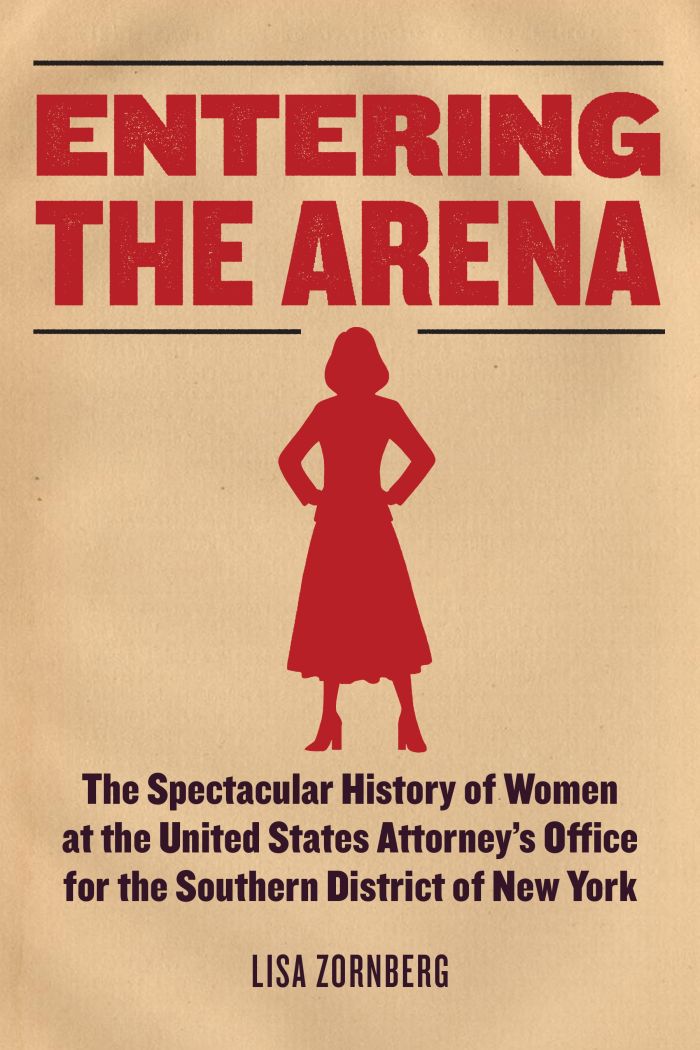
The author was a prosecutor there. Interesting book. 

Saturday, February 07, 2026

Developing A Scientific Temper

Gauhar Raza discussed his book, From Myths to Science: The Evolving Story of the Universe, on a recent Freedom From Religion Foundation podcast. It's a weekly broadcast on Thursday with one-half news, one-half usually some guest. 

He cited a quote from the Indian founding father, Nehru, in his book, Discovery of India.

The scientific approach, the adventurous and yet critical temper of science, the search for truth and new knowledge, the refusal to accept anything without testing and trial, the capacity to change previous conclusions in the face of new evidence, the reliance on observed fact and not on pre-conceived theory, the hard discipline of the mind, all this is necessary, not merely for the application of science but for life itself and the solution of its many problems.

The Indian Constitution has a section of "fundamental duties," which includes “to develop the scientific temper, humanism and the spirit of inquiry and reform.” Among the other duties are "to protect and improve the natural environment including forests, lakes, rivers and wild life, and to have compassion for living creatures."

The fundamental duties are civic guidelines that apparently are "not justiciable." That is, they are not rights and obligations that are legally binding. Still, they provide a vision to follow. If some legal dispute arises, it also would seem reasonable to apply the law, if reasonably possible, without violating such duties.

As always, it is interesting to consider other national constitutions and laws. How do they govern and apply principles with some universal appeal?  

We should take more careful attention to such things, especially for a country that now challenges China as the most populous in the world.  

National Prayer Breakfast 

It's that time again. 

The National Prayer Breakfast, which as Stephen Colbert notes, threatens the separation of church and breakfast. It also has other issues.

Various groups encouraged politicians to boycott the event. Trump took the occasion to be horrible himself, including bashing Democrats, and selling how he is helping bring God back to this country. 

A time for politicians to join together and pray can be a useful event. It can be a benign one where they humbly respect their religious beliefs. It's possible. 

Trump goes another way and underlines why it was a tragic day in our nation when the people elected him in 2024. His profaning of religion included. 

Saturday, October 25, 2025

Early Voting Begins

It is that time of the year again. Early voting has begun. Around five years ago, New York began to provide ten days of early voting. 

We also have "no excuse" vote by mail. I even convinced a voting-hesitant person to use it after years of not voting. She used an option where it is automatically sent to the voter, which is an incentive to vote as compared to those who would have to personally choose to vote each time. 

New York also provides a voting guide, though it does not cover judicial races. I find that dubious. 

I understand the value of convenience. I had to walk a significant way (not too long) the first time. Now, an early voting location is five minutes away. I will man the polls on Election Day.

(There is a race for governor going on in New Jersey. One person I follow on Bluesky is scaring me by warning us that the Democrat is not putting up enough of a fight. This is where we are at. Even NJ is not totally safe regarding not voting for the Trump Party.) 

Civic Duty 

I think in-person voting is an important symbolic act.

So, a little part of me doesn't like mail-in voting. But I understand there is a value there, especially for certain voters. It is best to have various options. 

Some argue Election Day should be a holiday to help some of these voters. It makes some sense, especially given the importance of voting overall to democracy.

But early voting helps to fill in that gap. After all, many people are already off today, Saturday, the first day of early voting. I don't think a whole day off is necessary. Early voting and many voting locations will also cut down wait times and other problems. 

Overall, we have a moral duty to vote. It is our civic duty. Some people are annoyed with that claim. 

How dare you tell me I have a duty to vote! I'm not (though it might work) talking about a penalty for refusing to vote. The state doesn't penalize being mean to mom. Is a minimal thing like voting too much for citizens to manage? Perhaps this helps explain things.

A fraction of the public voting has various problems. One problem is that it encourages very partisan representatives. Low turnout in primary elections is especially problematic when they are likely the "real" election in safe districts. AOC first won her primary with a tiny fraction of the vote. 

New York City Elections 

The two big things in NYC this year are the mayoral race and some ballot measures. 

Mayoral Race 

Zohran Mamdani is favored to win the mayoral race. He is a fitting answer to the times. Put aside the exaggerated, often bullshit criticisms. The main concern is that he is too young and inexperienced. He's more experienced than the Republican choice. 

And, as Mamdani said, Cuomo's "experience" is a big part of the problem. Plus, just what experience does he have to govern New York City well? Mamdani's campaign, including being open to respectfully listening, has shown a basic quality Cuomo lacks. 

It is a good thing that Mamdani and Cuomo (who should have simply dropped out) are not the only options. Mamdani's opposition hates that the anti-Mamdani vote is split. But do we really want Republicans and independents to only have to vote for Cuomo? It's as if Bill Clinton were the alternative to a very liberal presidential option in 1996.  

I'm obviously biased, but I am honest in saying that. My Republican city councilwoman (I have not seen a single campaign sign in the neighborhood of her competition; the Democrat deserves to lose), along with the rest of the small Republican caucus, endorsed Curtis Sliwa. If nothing else, Sliwa is not an asshole, Democratic, and likes cats. 

Sliwa is still not a serious option if you truly thought Republicans had a chance. He ran unopposed in the primary, probably because they felt Cuomo would win. He didn't. Too bad, Republicans. 

Additional candidates have filed to run on other ballot lines in the general election but have not raised significant funds or polled among leading candidates. They include Irene Estrada (Conservative Party) and Joseph Hernandez (Quality of Life Party). Walden and Adams will both still appear on the ballot, despite suspending their campaigns.

Some long-shot candidate (Walden) floated himself as an alternative for a little while. He waited too long to concede he had no shot and remained on the ballot. 

Eric Adams, who wound up endorsing Cuomo, is still on the ballot. Filling out the ballot is the first time I heard of the "quality of life" party. 

The biggest question is probably whether Mamdani receives over 50% of the vote. Cuomo concedes it is a longshot for him to win with Sliwa in the race. 

I am also interested in whether Adams or anyone else will receive a significant amount of the vote. I reckon Adams' loyalists might give him a percentage or two at least. I don't expect miracles with Mamdani.

But I think he gives us a chance to obtain some good things, including a suitably strong counter to Donald Trump. Plus, Adams is so darn crooked. 

Ballot Measures 

Mamdani has played it safe lately, including not stating his opinion on the ballot measures. 

I don't think the reason was the state measure concerning the use of wilderness land for development (more land will be put aside to compensate) or one about new maps. That is, the two I supported. A sixth measure about ending off-year elections (it is not the final step, even if it passed) is challenged here. 

The three housing measures, a "gift" of sorts from Zombie Candidate (he is still on the ballot), Mayor Eric Adams, are particularly touchy since the City Council hates them. It's logical since a major point is to reduce their role, to help speed up the process. 

Affordable housing advocates support the measures, though the League of Women Voters was agnostic about one of them. A "yes" vote seems reasonable, even a good idea. Still, I was hesitant. I decided to vote "no" out of caution. 

I am wary of direct democracy, especially regarding specialty issues and/or things that warrant the balancing of interests. This issue is a reasonable exception since it specifically challenges the City Council's role, and they are self-interested. 

Other Races 

One more thing. New York has a form of instant run-off voting for city races (district attorney is a state race). It is only available during the primary. 

There are other local races. Sometimes, you could vote third party (e.g., Working Families Party) instead of voting Democratic or Republican. For whatever reason, not every candidate runs on two lines.

It helps send a message that you support that cause. Third parties in even years also need significant vote totals to remain on the ballot. That doesn't seem like an issue in 2025. A few voters are confused and want to fill in the ovals for a candidate in both places! 

Sometimes, there is a third option, such as the "Unity" Party, which is meant to be a third "unity" type alternative. Only a few people vote for these candidates. Still, as with the chance to fill in your own candidate, it is helpful to provide other options. 

The comptroller and public advocate (who is the next in line if the mayorality is vacant) are decent Democratic sorts who will win. 

The city council races are generally not in doubt. Maybe there is some upset or two possible somewhere city-wide. I would hope that maybe my city council district (after an upset last time) would go back to being Democratic. But that candidate has basically not shown up. It is annoying.  

Judges 

Two local judicial candidates are also running unopposed in my district. This is common. 

It also underlines the stupidity of judicial races being on the ballot. Some states have more active judicial elections, and there are some ethically dubious things going on. Here, it is largely just something you fill in. 

The average voter knows little or nothing about them. Not that it often matters since (you can write in a name; I usually do), there often is no actual race. 

Final Thoughts 

I continue to find it reassuring that voters have a chance to decide on Election Day. Often, yes, things seem pro forma. The winners and losers are obvious.

Enough times to matter, however, there are actual races. That happened this year, too, especially the mayoral primary race. Either way, the act of voting, our civic duty, is a wondrous thing.

Some people argue that democracy is dead now that Trump is in power. Or, at the very least, it is in suspended animation, somewhat akin to Han Solo in that Star Wars movie. Fuck that. 

I got my sticker. And, voting still matters. It is still going on. Some might want to interfere, but we don't have to let them. Happy voting. 

Sunday, October 19, 2025

NYC Ballot Proposals

New York City has six ballot measures this year. 

One is a state measure required by the state constitution that protects wilderness land. Other than Curtis Sliwa ("no" on all), there doesn't seem to be much opposition to it. Some private land is being swapped for wilderness land.

One local measure creates a centralized digital City Map maintained by the Department of City Planning. Again, there doesn't appear to be much opposition to this measure. Sliwa, notwithstanding. 

The most controversial ones, which the City Council hates, involve streamlining the process for affordable housing. Mamdani needs the support of the City Council and other groups who are not fans. 

So, he is taking a while to decide. I realize it is probably a political move as much as or more than him truly being unsure. Still, helps me be wary. 

Affordable housing advocates, from what I can tell, generally support the measures. The League of Women Voters is agnostic about one of the three measures. It is a battle of the City Council (popular control) and concerns of NIMBY-ism. 

I generally favor legislative decision-making over direct democracy. There are times when direct democracy is a valid counterbalance to legislative difficulties. I am guardedly supportive of them. 

Abortion rights in red states come to mind. OTOH, some issues are complicated policy matters that should be left to legislators, who know about such things, and can negotiate the various policy issues.

The final measure involves ending local elections in off-years. A "yes" vote is not final since the state legislature has to be involved. This makes the measure somewhat lower in temperature. 

OTOH, this "no" argument is fairly convincing. 

==

There is a 10-day period of early voting, so the time to vote is rapidly approaching. And, the vote-by-mail ballots (I know someone who has one) have already been sent out. Still, I have a bit of time to decide. 

Wednesday, June 18, 2025

SCOTUS Watch: Anti-Pride Month Edition

Financial Disclosures 

The Supreme Court released financial disclosures, part of the ethical rules currently in place. The SCOTUSblog coverage notes (without adding "and he should have been impeached"):

Justice Clarence Thomas, whose failures to disclose (among other things) private jet and superyacht trips in prior years led to investigations by ProPublica and calls for ethics reform by the justices, did not list any non-investment income, any travel reimbursements, or any gifts for 2024.

Justice Alito delayed providing his probably because he has a lot of investments. It would be helpful if these things were cross-referenced to recusals. 

Opinion Days

If you go to the Supreme Court website, there is a calendar. Click such and such a day and see if anything is scheduled. Wednesday and (eventually) Friday were labeled as days when opinions might come down. They nearly always will be. 

There is no livestreaming of opinion announcements. Nonetheless, reporters live blog them, including at SCOTUSblog and Bluesky. So, for instance, we know how many boxes of opinions are out. Today it was three. That means a bunch of opinions. 

The opinions are released in reverse order of seniority (Jackson to Roberts; any unsigned per curiam comes last). The first was handed down by Kavanaugh, but then it was Thomas handing down a not too divisive case. The next opinion was either Thomas's or Roberts's. A big opinion was likely.  

The Others 

The justices (Gorsuch, with Alito and Thomas dissenting) found a way to avoid a tricky case involving the disposal of nuclear waste on standing grounds. Kavanaugh has done that before.

Thomas handled two environmental cases. Gorsuch (with Roberts, with a relatively rare dissent) disagreed with how he handled it, dissenting in one case and concurring in the other. 

After the big decision, Roberts had a good opinion that expanded access to a jury trial under the Prison Litigation Reform Act. Barrett wrote the dissent there for the other conservatives (minus Gorsuch).  

Some are sneering at the NYT article on maverick Barrett, but it also had multiple people warning "ignorant conservatives and wishful liberals" expecting too much. I did hope she would not be too bad on trans issues. Oh well. So did a trans activist.

Trans Medical Care  

Judge Sutton and the 6th Circuit ruled against same sex marriage, unlike nearly every other court. This led the Supreme Court to take up the issue ten years ago. Sutton was behind the anti-trans ruling, too.

We have a different Supreme Court now. It was risky to bring an appeal. This was not a statutory case involving employment. The regulation of medical care for minors would give the necessary justices more room for concern. Gorsuch, who wrote the Bostock opinion, didn't even open his mouth during the oral argument. The question was how bad it would be. 

Tennessee’s legislature passed the law, known as SB1, in 2023. SB1 emphasizes that the state has a “legitimate, substantial, and compelling interest in encouraging minors to appreciate their sex, particularly as they undergo puberty.” It prohibits (as relevant here) the use of puberty blockers and hormone therapy for transgender teens while allowing the use of the same treatments for other purposes. 

[The bold is from two linked articles.]

Not good, though it could have been worse. Roberts wrote the majority, though a lot of the 118 pages were concurrences and dissents (Sotomayor dissented from the bench; Kagan didn't join one part while Jackson joined all of Sotomayor's dissent).  

The opinion didn't go far enough for Barrett, Alito, and Thomas. They would have bluntly said that transgender people should not receive heightened scrutiny. Roberts claimed the case didn't bring up the question. Alito was more honest than that. 

Significantly, Tennessee’s law is also quite explicit that the purpose of this law is to ensure that young people do not depart from their sex assigned at birth. The law declares that its purpose is to “encourag[e] minors to appreciate their sex” and to prevent young people from becoming “disdainful of their sex.” That is an explicit sex-based classification. Patients who Roberts refers to as “biological women” are allowed to fully embrace femininity in Tennessee. But a child who is assigned male at birth may not.

Roberts could have done less than he did, given the limited question presented. Kagan separately talked about that. I had hoped perhaps someone like Barrett (not thinking she was so anti-trans) could write a minimalist opinion. Unfortunately, Barrett decided to instead reach out to belittle the risks of trans people.

Roberts didn't go as far as he could. It still is not good. For instance, "We have not yet considered whether Bostock’s reasoning reaches beyond the Title VII context, and we need not do so here." The Bostock author went along with this possibly "applying it to its facts" limitation without comment. 

The Bostock logic should apply to other federal and state legislation with similar "because of sex" language. The "Title VII context" isn't somehow unique. I'm worried about that possible poison pill. 

The opinion cites Dobbs and an old "pregnancy discrimination isn't sex discrimination" precedent to add insult to injury.  The opinion is sort of a bad Roberts special: it has a desired result, sounds reasonable, but the reasoning falls apart with scrutiny. 

Chris Geidner and Erin Reed have more. CG argues there are avenues left open, including when animus is shown. Some, however, (rightly) argue that it was present here. He notes the "disingenuous wordplay" involved. And, this was the better half of the majority.

Erin Reed speaks about how "devastating" the ruling is while also noting its limited reach: 

The case raised foundational constitutional questions: whether transgender people constitute a class triggering higher constitutional scrutiny, whether laws targeting them violate equal protection, and whether the Constitution guarantees their right to access medically necessary treatment. The Court sidestepped nearly all of those questions.

ER covers how the opinion is horrible and poorly argued within the context covered. This includes Orwellian language that uses the criteria of trans people to classify and says the state is not classifying by trans status. A big TBD:

The ruling effectively greenlights medical care bans across the country and may pave the way for broader restrictions, including for adults, while leaving lower court rulings on bathrooms, schools, sports, and employment remain intact—for now.

The opinion, overall, should not be exaggerated to some degree -- it covers a limited ground -- but it is true (to quote Blackmun) that an ill wind blows.  

(Sotomayor provides her dissent "in sadness" instead of "respectfully." She should say "in anger," which is expressed in various parts of her dissent.)  

On a related subject. I watched Newton's Law, an Australian show, on DVD. It had a trans healthcare storyline. Another episode of the enjoyable legal drama involved a property dispute over a dog. A good change that addresses the old "pets are just property" concept was recently put in place.

A recent book about a German sex researcher provides a more open and liberal minded vision that apparently is still ahead of its time a hundred years later.  

Trump Checks In 

Meanwhile, the Trump Administration is continuing its anti-LGBTQ efforts:

President Trump’s administration has ordered a crisis service for LGBTQ youth to close within 30 days in a move that opponents have said will have dire consequences. 

Since federal spending is involved, the Substance Abuse and Mental Health Services Administration referenced "LGB+ youth," editing out trans people. 

To be continued ... 

Friday, March 07, 2025

SCOTUS Watch

The Supreme Court had a busy week with orders on Monday, oral arguments Monday to Wednesday, opinions on Tuesday and Wednesday, and a conference on Friday. After another Order List next Monday, they have another break until February 21. 

Order List

The Order List this week was less busy than last time. They did take a case [Barrett v. United States] involving double jeopardy. 

Alito and Kagan did not take part in one case each. As usual, only the liberals explain why they recused themselves. 

Alito and Thomas would have taken a case involving “bias response teams" at schools where people are encouraged to report expressions of bias. This is voiced as a concern for free speech, though it seems rather overblown. Thomas wrote a dissent from denial largely focused on standing to sue. 

Opinions 

Tuesday and Wednesday were opinion days. 

As usual, I think if they want to have opinion announcements (and they are fine), we should have audio and transcripts. It's nice that they drop their opinions online right away. Immediate comments can also be found online.

The first is an environmental case summarized by Barrett in partial dissent for the women justices:

The Environmental Protection Agency issued San Francisco a permit allowing it to discharge pollutants from its combined sewer system into the Pacific Ocean. The permit, of course, does not give the city free rein, and among its conditions are prohibitions on discharges that contribute to a violation of applicable water quality standards. San Francisco challenges these conditions on the ground that EPA lacks statutory authority to impose them. The city is wrong. 

Alito wrote the opinion for the Court. The justices (Gorsuch did not join that section but didn't say why) agreed the city was wrong on one point. They split on the other. An interview with the city side is here. 

Wednesday's opinion was a 7-2 Veterans Affairs disability claims. Thomas wrote the majority opinion denying the challenge. Not sure why they needed two opinion days to hand down two opinions.

Jackson (again) had a strong dissent, this time joined by Gorsuch (who will repeatedly go along with challenges on the federal government). Jackson has repeatedly argued that the Court wrongly applied the congressional intent and text. 

Joint Speech

“Thank you again. Thank you again. Won’t forget it." 

Chief Justice Roberts, Kagan, Kavanaugh, and Barrett along with retired Justice Kennedy was at Trump's Joint Congressional Address. Breyer usually went to these ceremonial things. Is he done with them now that he is retired? I suppose he might be glad.

Kennedy said something to Trump when he engaged with the audience. Trump thanked Roberts and pat him on the back, which didn't seem to go over too well. (Others got a "thank you," but the extra bit and pat was just for Roberts). Right after the handshakes, Roberts got the heck out of there.  

Roberts earned the thanks. Trump v. U.S. He also earned the disdain he has received:

But this time Trump did it to the sitting Supreme Court chief justice in public on the floor of the House. Whatever high regard John Roberts still held himself in has been directly challenged in the most excruciating and a dignity-robbing way. Trump has a way of doing that to everyone who comes in contact with him. Roberts had it coming. 

Joan Biskupic separately has an interesting analysis of Roberts clerkship in an article analyzing Rehnquist's papers. The release of justices' papers had led to some interesting details, including O'Connor's papers. 

Foreign Aid Order

The Supreme Court followed the next morning, in an interestingly timed 5-4 order, denying the Trump request to block enforcing an order involving foreign aid. Steve Vladeck (Amy Howe has the prize for speed, dropping her summary by 9:45 AM) has a summary of the ongoing complex litigation. 

Bottom line: It involves foreign aid authorized by Congress for work already completed. Trump wants to illegally and unconstitutionally “impound” the funds. It’s one of many such efforts.

Roberts and Barrett joined the liberals. Vladeck noted on Bluesky that the 5-4 line-up showed up four times so far, each time in emergency order situations. They involved Texas' challenge involving razor wire on the border, ghost guns, and allowing the sentencing of Trump in the NY case.  

Not quite Team Resistance.* The goal will be to get two conservatives to sometimes limit the damage. Or, at least, slow down its execution. As Chris Geidner notes, even if this was a "win for democracy, accountability, and separation of powers," the money still hasn't been paid. It is all a holding action now. 

Meanwhile, as Geidner and Vladeck note, Alito is "shocked" in his usual hypocritical Casablanca sort of way. With a healthy quality of bullshit. This includes both a sudden concern for legislative power (cf. Biden years) and lower court judge overreach (ditto). 

The case is procedurally complicated, and the win for sanity limited. Ultimately, we are still in "to be continued" territory. BTW, let's remember the name of the case: Department of State v. AIDS Vaccine Advocacy Coalition. Just to remember the stakes. 

(Limited) Trump Win

Hampton Dellinger sued when Trump illegally fired him. The district court blocked the firing. 

The Supreme Court denied an attempt to intervene. The D.C. Court of Appeals (the panel was 2-1, Republican appointee) unanimously allowed Dellinger to be removed pending the appeal. 

Dellinger gave up his challenge with a statement saying changes of success were unlikely. This was unfortunate, but maybe there is a pragmatic reason, too, since it would avoid a bad precedent.  

SCOTUS then declared a Trump challenge of the district order was moot. The breadth of executive power to remove officials is still an open question. 

ETA: The D.C. Circuit dropped an opinion later anyway. Rightly or wrongly, he had an uphill battle.

==

* It is too much for some Trump loyalists, who have called her "evil" or a "DEI-hire" (the new "woke") for occasionally not going along with the conservatives. 

One Trump loyalist said she did not provide the proper "look of admiration" at the joint speech. 

He should have been like Anthony Kennedy and pleasantly chatted with Trump. Jay Willis on Bluesky thought AK said "You're teaching young people to love America." Yes, Trump is big for civics! Maybe, Sotomayor, who is big on that, should check him out!

I think Breyer (not just Souter, who avoids these things like a plague) made the right move here.

Thursday, February 20, 2025

More Trump BS

CONGESTION PRICING IS DEAD. Manhattan, and all of New York, is SAVED.” Trump posted to his Truth Social. “LONG LIVE THE KING!

Trump probably thinks he is trolling people, including showing Time magazine with him wearing a crown. It does seem a bit much. And, he is acting like a king, down to becoming the chair of the Kennedy Center.

Congestion pricing is a long-negotiated policy to address traffic and promote public transportation. Gov. Hochul, who took a while before finally supporting a reduced toll, strongly opposed the Trump move. She's having some moments.

[She, however, said "no" on removing Adams.]

BTW, the Transportation Secretary (yes, I miss you, Pete Buttigieg) received over twenty "no" votes, but both N.Y. senators voted for him.

Hegseth’s biggest concession to Russia, though, was his warning that “stark strategic realities prevent the United States of America from being primarily focused on the security of Europe.” Also on Wednesday, President Donald Trump spoke to Russia’s president, Vladimir Putin, for nearly an hour and a half and came out echoing Putin’s rationale for his attack on Ukraine. Trump’s social media account posted that the call had been “highly productive,” and said the two leaders would visit each other’s countries, offering a White House visit to Putin, who has been isolated from other nations since his attacks on Ukraine.

Heather Cox Richardson touches upon Trump's moves against Western Europe, Ukraine (calling the leader a "dictator"), and helping Putin. MAGA requires supporting other nation's autocrats. 

Citing ‘Biological Truth,’ Kennedy Issues Guidance Recognizing Only Two Sexes

Finally, the new Secretary of Health and Human Services (sic), Robert F-ing Kennedy Jr., went along with Trump to attack LGBTQ+ people. When he ran, he said trans issues were not something he thought people were worrying about. But, now he's part of the Borg, so has to go along.

Next up: oh so much, including the "we have to go after our MAGA enemies" guy to head the FBI. 

Friday, December 20, 2024

SCOTUS Watch

The Supreme Court continues to do some notable things as they go into a mini-recess. Of sorts. 

Order List 

The final conference of the year led to two grants and a non-descript order list on the following Monday. The Supreme Court separately amended a grant to specify that they were not concerned with the second question submitted for review.

In the Order List, Thomas publicly said (without comment) that he would take an issue involving the EPA. Alito did not take part in a case without saying why. Only the liberals explain their non-involvement.

Other Orders 

The justices without comment denied an "application to recall and stay the mandate" involving a habeas claim. The lower court (citing the petition) "held that a new expert report based on a previously available claim can restart the clock for filing a habeas petition that is otherwise untimely by years."  

The Supreme Court provided accelerated oral argument (January 10) in the TikTok case. Steve Vladeck supported the move with the law going into effect on January 19th. 

I bow to his knowledge but note that the Court can speed things along if it wants to do so. Cf. Trump cases. Also, will this be the current S.G.'s swan song?

(A media advisory is a red flag that there promises to be some extra call for seats for the TikTok orals.) 

The Supreme Court also granted a case involving Medicaid funding for Planned Parenthood. A quite different solicitor general will handle that one. 

Broadway Debut

Some coverage of Justice Jackson's Broadway debut including some behind-the-scenes video. She is not the first person who popped up on screen like this. 

Justice Sotomayor was on an episode of Sesame Street. Justice Blackmun waited until he was retired for a cameo in Amistad, playing someone a couple decades younger than him. Breyer replaced Blackmun on the Court and Jackson replaced Breyer.  

Lower Courts  

President nominated Adeel A. Mangi as a court of appeals judge and he would have been the first Muslim in that role. He was blocked for bullshit reasons with three Democrats going along with all the Republicans. Mangi used a letter to President Biden to make some parting shots, providing receipts. 

This was a sad day for America, including for religious liberty. I cited the letter on a blog, and someone responded with a bunch of invective. 

The letter provides multiple refutations. Chris Geidner has more. 

A lower court judge was flagged (since they have binding ethics) for criticizing Alito. Another (James Ho, who surely seems like he is pining for a seat on SCOTUS even if a supporter denies it) can spout partisan cant willy-nilly though. 

The new budget increases money provided to defend justices' safety. Perhaps, a quid pro quo requiring more ethics in return would be justified.  

Friday, December 13, 2024

SCOTUS Watch: Orders and Opinions

Order List

After granting cases on Friday, the Supreme Court released the usual ho-hum Order List on Monday. 

Alito didn't take part in a couple of cases, as usual, not saying why. I will continue to flag that until the conservatives join the liberals in saying why they recuse, which the new ethical guidelines encourage. 

As usual, there were various odds and ends. The most notable thing is some statements/dissents from some conservatives in hot-button cases. 

Alito/Thomas would have taken a case involving affirmative action while Gorsuch said the matter is moot with a change of policy. 

Thomas/Alito and Gorsuch (less bluntly) flagged a case where the Hawaii Supreme Court received some attempt by thumbing their nose at the current SCOTUS gun policy. They granted it was not a ripe case but were concerned about the issues. 

Kavanaugh without comment and Alito/Thomas (on standing) would have taken a case involving parents asserting a right to know if their children came out as trans at school. Alito was sympathetic about an unenumerated right of parents raising their kids, a week after the trans case involving parents concerned about the health care of their children.  

Alito argued that standing has been used to wrongly avoid certain cases. Justices are selectively worried about such prudential standing decisions.  Chris Geidner shows how hypocritical/FOX News-y Alito/Thomas is here to reach out to take this case. 

Opinions

The first two opinions were a per curiam and a one-line statement that said a case was improvidently granted. IOW, "We shouldn't have taken it."

On Human Rights Day, we had the first signed opinion of the 2024 Term. The day was the 76th anniversary of the passage of the Universal Declaration of Human Rights. Our courts, including the Supreme Court, provide a fundamental means to uphold our rights. Rights ultimately rely on us all.

Anyways, back to the Supreme Court, and its first signed opinion of the term.  Justice Jackson, who will get a chance to fulfill a dream on the stage, wrote a unanimous opinion in an immigration dispute. 

The facts might be sympathetic, but the Court determined that a challenge to an alleged "sham marriage" determination should fail. Jackson argued the law gives the agency involved discretion without the courts having the authority to second guess. 

There was a dispute over the law here so the answer to the question was not totally clear. I will not pretend to argue that I know the right answer. Suffice it to say, that a unanimous court is not necessarily a right court. Ultimately, the value here is to have an agreed-upon answer that can be applied consistently.  

As usual, the opinion announcement was not live-streamed, so you will have to wait for Oyez.com to release it sometime after the term (or find where it is stored and access it). Now, the whole thing is announced on social media, including court reporters telling us how many boxes of opinions there are as a sign of how many opinions there might be. 

The Court decided having an opinion day was so much fun that they would have one on Wednesday too. As with the first "opinion day," it turned out to be another case of them deposing the case as improvidentially granted ("DIG"), which was not surprising from the coverage of the oral argument. 

The case involved the use of NVIDIA chips by crypto miners. Okay. So we had four opinions this term, one a per curiam (unsigned opinion of the court) released separately. Two opinion days involved DIGS and only one with a signed opinion. 

More Orders 

The Supreme Court rejected a stay of a coal regulation. The "brief" order business is the standard talk for a standard rejection without comment. Stays are not usually granted though sometimes justices at least show some concern about the EPA these days.  

The Court also dropped an order after their Friday conference that added two more arguments. Thus, two of the matters they "relisted" for further discussion have been addressed. More orders are due Monday. 

Court Seating 

The Supreme Court livestreams audio but does not provide video of oral arguments. Also, people like to be present in the room. But, there is limited seating, resulting in some problems. The Supreme Court is starting a trial lottery process for public seating.  

The inability to provide video or photographs leads to the usage of sketch artists. William Hennessey, a long-time SCOTUS sketch artist, has died. 

Thus ends a busy if not too profound week. 

Monday, October 21, 2024

SCOTUS Watch: Order List

Today's Order List will be the last scheduled thing until November. It was brief but had a few notables. 

The Supreme Court took some more EPA cases (as I said last time, the conservatives have been concerned about them overreaching for a while) and another case with this fascinating subject:

Whether, even though Congress excluded 18 U.S.C. § 3553(a)(2)(A) from 18 U.S.C. § 3583(e)’s list of factors to consider when revoking supervised release, a district court may rely on the Section 3553(a)(2)(A) factors when revoking supervised release.

Alito isn't taking part in two of the EPA cases for whatever reason. We have the usual cert denials with a note (without comment) that "The petition for a writ of certiorari is denied. Justice Thomas, Justice Gorsuch, and Justice Kavanaugh would grant the petition for a writ of certiorari" in a takings case. 

(A consistent -- no joke -- libertarian argues here that the case would be a bad "vehicle" as they say to address the subject.) 

More from Amy Howe.  

Meanwhile, a good Supreme Court piece on how they have been against corruption laws (at times unanimously) for years. [Insert joke here.]

Friday, October 18, 2024

SCOTUS Watch

After the holiday, the Supreme Court dropped a nothingburger Order List. As usual, only liberals explained why they did not participate in certain cases.

EPA Cases 

The two argument days were nothing too hot-button, though one was yet another EPA case that might cause some problems. EPA cases seem to get five or six justices going, all concerned about overreach. 

They also finally got around to a stay request (after 2.5 months according to Steve Vladeck) in a set of EPA cases. Thomas (without comment) would grant. Kavanaugh (with Gorsuch) felt they had a good case to some degree but there was no immediate burden. 

So, they joined the rest to deny the stay. Alito did not take part for whatever reason.  Five votes would have to agree to the stay. Hard to see them counting to five there. Not sure what the delay was regarding announcing the result. 

More Oral Arguments 

There was also an oral argument involving an immigrant -- SCOTUS over the years taken many cases involving various questions involving them -- which has a human interest story. 

Gorsuch is regularly a possible "get" when the federal government is involved. I don't know how the technicals will fall out though the under fifty-minute argument time is notable. 

We had a procedural case involving pet food last week. This week it was medicinal marijuana. Neither involves the merits of the issues though the subject matter is likely to catch some eyeballs. 

It is also notable that the oral argument involved two women advocates because there is still an imbalance between men and women advocates. Lisa Blatt, a veteran SCOTUS advocate, went against Easha Anand, an up-and-comer with progressive bona fides.

Justice Follies 

More on that report on how the FBI screwed up the Kavanaugh investigation with links to a lot more about what is wrong and otherwise doubtful about his nomination. I might not think all of them are compelling but there is way too much smoke for there not to be some fire. 

Trump = a conservative justice. It in no way had to be him. And, the overall thing was a slipshod usage of the Senate confirmation process. The Republicans should have some agency and have to answer for it. Again, the Supreme Court is on the ballot. 

Kavanaugh reminds us of how the Thomas hearings were a mess. Thomas then became -- I don't know of any hint of what was to come -- ethically compromised with all his financial dealings, including some that might violate multiple criminal laws. A special prosecutor would be warranted. If Kamala Harris won in November, would that be a possibility?

[A good ethics process would have a procedure that requires such an appointment when a certain quantum of evidence -- which appears to have been reached in spades -- has been met.]  

We referenced Gorsuch's FOX News-type anti-regulation book here in the past. Another article shows how it is a slanted (where are all the cases where liberals are hurt?) hack job.  

Upcoming 

There is an order list scheduled for Monday after a conference this Friday. 

SCOTUS then goes on a mini-break from scheduled conferences, order lists, and oral arguments until November. Miscellaneous orders and other behind-the-scenes stuff is possible.   

Meanwhile, we now know the cases scheduled for December, including a major trans rights case. 

Saturday, October 12, 2024

New York City Ballot Measures

Federal Races 

The most important thing on the ballot in November, as people have already begun to vote, is the defeat of Donald Trump. 

It would be appalling if Trump, a convicted felon who is unfit across the board, wins. Do we want to be a nation where his message and cause is endorsed by the people at large?

We also need to focus on Congress. Both to act legislatively in a positive way, and to not endorse Trump enablers and supporters, congressional races matter. The path to a House majority includes a few swing districts in New York. 

The Senate remains an uphill battle. It would be appalling (less so than Trump winning) if President Harris is handcuffed by Senate Republicans. It is time for change in places like Texas and Florida. 

State/Local Races 

State and local races also matter. 

Attorney generals and local prosecutors have much power. The counting of votes in the presidential election in 2020 significantly turned on state and local officials. States have much discretion. 

Ballot measures also are an important means for the public to make policy. Abortion is on the ballot in over ten states. Any number of other issues, including marijuana policy, are covered by such proposals. 

New York State Proposal

New York City residents also will vote on six proposals (back of the ballot). 

The first is a statewide measure which is repeatedly promoted and/or thought of as a "state ERA" or an an abortion rights measure. It covers more ground:

This proposal would protect against unequal treatment based on ethnicity, national origin, age, disability, and sex, including sexual orientation, gender identity and pregnancy. It also protects against unequal treatment based on reproductive healthcare and autonomy.

Some criticism its wording. Why not directly talk about abortion rights? The proposal (rightly) covers more ground. Abortion rights are part of a wider whole, involving "pregnancy, pregnancy outcomes, and reproductive healthcare and autonomy." 

The amendment also covers more ground that that. The measure covers "ethnicity, national origin, age, disability." The first categories expand and clarify existing protections regarding race and color. 

The next two expand existing protections in other areas. Without knowing for sure, it appears to me a more significant addition to the state constitution. 

I guess it might be argued that too much is being added at once. It also allows specific classifications being "piggy backed."  I figure less people are worried about "age' while "disability" will interest a specific sector of the population more than others.  

New York City Proposals

New York City residents have five proposals, which are basically the result of mayoral action. There is some mayor v. City Council drama involved. Some argue that mayoral overreaching alone makes all of these provisions dubious. 

Mayor Adams is now under federal indictment for campaign related crimes involving foreign deals. Many city residents (I will count myself among them) are not that so happy with his overall reign. 

The provisions also involve various inside baseball proposals that seem dubious fodder for the ordinary public. The support of a general equal protection measure is something the average vote can have a basic sense about. These measures? Not so much. 

Some form of both of these concerns leads me to be wary about most of the city measures. How important one of more of them will be in practice is far from clear. Nonetheless, as a matter of principle, I am included to vote "no" down the line.

The one exception might be the second ballot measure overall (and first city ballot measure), which involves sanitation. It seems benign:

This proposal would amend the City Charter to expand and clarify the Department of Sanitation’s power to clean streets and other City property and require disposal of waste in containers.

Granting that is unclear if it is necessary to use a ballot measure to do this, the overall sentiment makes sense. Some areas now fall outside of the Department of Sanitation's jurisdiction. It seems sensible to be more comprehensive. 

And, if you like the mayor's policies involving new garbage cans and the like (from what I can see, a modest but important good sense policy proposal from Adams), that's another reason to support it. 

I have concerns that make me lean toward "no." First, again, the overall process involved here is questionable. I am not inclined to give this mayor the benefit of the doubt. Overall, I would let the City Council handle making sanitation policy, not the public at large via ballot proposals.  

Second, the measure involves additional power to regulate vendors. There is a connection there and sanitation. Nonetheless, as the linked article notes, it appears that the measure misleads the public -- if more power to regular venders is at issue, why not openly mention it? 

This is the sort of inside policy details that makes me wary about policy by ballot. Sometimes, there is some obscure proposal on the ballot involving state law. For instance, something about regulating parkland. Why is this on the ballot? The state constitution apparently requires it in various instances. Fine if annoying.

There is no such compelling need for these measures to be on the ballot. Again, one or more might not be problematic, or even might be useful. 

But there is some debate on the matter.  Like voting for some local judges with little clarity on whom you are voting for and often little discretion ("pick three" and there are only three options), sometimes there is too much democracy. That might sound bad but republican democracy involves a balance there.   

It is counterproductive in an overall civics sense to have people vote for things for which they have little grounds to make a sound choice. People have a rough idea who to pick when voting for major candidates, especially when they have party-based choices. 

Some ballot measures will confuse people. We can reasonably hope that a half-way sound approach will be possible when the people vote. At some point, however, a line is crossed. When we get to:

“This proposal would amend the City Charter to require fiscal analysis from the Council before hearings and votes on laws, authorize fiscal analysis from the Mayor, and update budget deadlines.”

I think we crossed it. Anyway, early voting in New York will begin on October 26th and run to November 3 (also "fall back" time day). Then, you will have a day off to worry about Election Day itself. 

Not that it will be the end of things either though except for the stray race it might be in New York.  

Monday, October 07, 2024

SCOTUS 2024 Term Begins

The final actions of the 2023 term took place with some Friday orders. 

The Supreme Court granted thirteen more cases (technically 15, but two sets cover the same topic), including one involving Mexico and guns. It did not block two EPA rules.

As Steve Vladeck noted:

The Court also ended the week (and the October 2023 Term) with two unsigned, unexplained rulings on Friday—rejecting, without public dissent, two of the three sets of applications challenging new EPA rules. 

(The denials were of the challenges to the new methane and mercury standards; the eight even more important challenges to the new power-plant emissions rules filed back in July remain pending.)

As Amy Howe noted in the linked discussion:

The court has not yet acted on a third set of requests to stay a different EPA rule, aimed at reducing emissions of carbon dioxide by power plants. Those requests were filed beginning in late July and have been fully briefed for over a month.

The reasons why here are not clarified though Vladeck noted on Twitter that the implication is that the justices are more divided about this final set of regulations. Court watchers thrive on this stuff. 

These actions completed the term's "emergency" docket, part of its "shadow" docket (Vladeck wrote a book on that): 

For those scoring at home, that brings the total number of full Court rulings on emergency applications for OT2023 to 122(!) That’s the most, by quite a fair margin, since I’ve been tracking the total (OT2022’s total, for comparison, was 76, and OT2021’s total was 72.)

The Supreme Court first had terms in August (they met in New York City; August in D.C. in 1789 was rather unpleasant) and February. They also started "the first Monday" of the month. 

The current first Monday in October practice began in 1917. It is set by Congress. As Vladeck notes, the term began the second Monday in 1873, but additional work warranted pushing things forward a week. 

The Supreme Court disposed of its "long conference" work by dropping a housekeeping order this morning. What stands out for me is that the liberals (Kagan and Jackson here) continued to explain why they did not take part in certain cases while all conservatives continued to fail to follow their lead.

It is unclear why this is so. What it implies to me is that the conservatives do not want to do the bare minimum here, namely openly apply their guidelines to help show the public they can be trusted.

A mild lesson to the voting public as they are already starting to vote in the November elections. The Court is on the ballot. 

ETA: There has been some singling out of the Supreme Court -- among the many cases not taken -- refusing a Biden Administration request involving emergency abortion care in Texas.  

After they punted in a related Idaho case at the end of last term, I do not think it too surprising that the justices do not want to immediately address this issue. 

It should be noted that the Supreme Court more often than not does grant the case when the U.S. government so requests. At least, that was the general norm. Do not know how the statistics these days.  

The Supreme Court does not take cases, including those with appealing facts, for a variety of reasons. Overall, even if the denial was justified (no justice commented), the baseline fact that Dobbs continues to threaten the life and health of women is true.