About Me

My photo
This blog is the work of an educated civilian, not of an expert in the fields discussed.
Showing posts with label Supreme Court. Show all posts

Tuesday, July 28, 2026

Florida's Double Execution

Carrying out multiple executions within a day is rare in the modern era, with only two states doing so in the past 26 years: Arkansas in 2017 and Texas in 2000. Florida hasn’t executed more than one person in a single day since 1964, according to the state’s correctional records.

The Supreme Court rejected final appeals in two death penalty cases from Florida. A core concern: Florida was executing two people on the same day. 

Questions have arisen about the state's lethal injection execution protocols after execution logs were released last year that seem to show cases where insufficient or even different chemicals were used, and autopsy records for 33 executed inmates that showed each one suffered flash pulmonary edema, which causes a feeling like drowning.

That makes it more likely for problems to occur. Problems repeatedly alleged to have been ongoing. Not that anyone, except for Sotomayor (once), said a word about such claims.

Occhicone, convicted of the 1986 murder of his ex-fiancée's parents, is scheduled to be executed by lethal injection six hours after the planned execution of another man, former Lake County police officer James Duckett, convicted of the 1987 rape and murder of 11-year-old Teresa Mae McAbee. If both executions go as planned, it would be the first multiple execution in Florida since 1964.
 
Florida continues to execute people first sentenced years back. They keep on having a new "oldest inmate to be executed," this time someone eighty. That adds another layer to the reasons for complaint: older people having various ailments affecting the execution. 

These lengthy delays create two special constitutional difficulties. First, a lengthy delay in and of itself is especially cruel because it “subjects death row inmates to decades of especially severe, dehumanizing conditions of confinement.” Second, a lengthy delay undermines the death penalty’s penological rationale.

There remains the general concern regarding executing people after such a long time, which no current justice has deemed problematic. The second crime specifically is particularly heinous. But it happened 40 years ago.

Volokh Conspiracy had several Supreme Court posts, including talking about leaks. One comment (not from a troll) noted that the justices explained their "decisions." 

That is bullshit unless you are using it narrowly to apply to a small subset of decision-making. Steve Vladeck's book covers that ground. Today's "no comment" orders underline the point. A "decision" was made. No explanation.

Many will say that the final appeals were weak tea. They don't deserve any comment. 

I disagree, including when the challenge regards something occurring only for the third time in sixty years. The last time didn't go smoothly. 

Either way, a decision was made. No comment. It's the shadow docket. Sorry, Justice Kagan. 

Florida executed both. 

One thing that stands out in that discussion is that a jury split 7-5 on giving one of the two the death penalty. This sort of thing repeatedly occurred. But it doesn't really become less troubling. 

The other (more heinous) defendant partially alleged innocence. DNA evidence that might provide proof, however, was at best inconclusive. 

I have not found a comprehensive take on how recent executions in Florida match the allegations of problems. Each article I see simply states the person was executed. 

Friday, July 24, 2026

SCOTUS Watch: Summer Order List

The Mets came back and played competitively against two good teams. A misplayed ball by Baty, who shouldn't have been playing the outfield, was a major reason why they didn't win both series. 

Order List

Oh. This is supposed to be about the Supreme Court. Well, the week was somewhat bland. 

The big news was that they granted cert in a case involving the Excessive Fines Clause. It is somewhat unclear why it did so now, but it isn't shocking or anything. They, for whatever reason, got it over with. 

The first scheduled summer order list was otherwise, as usual, basically a housekeeping matter. As noted here, did provide a way to finalize some things sooner rather than later. Nothing special, though.

The cert grant had a catchy hook about someone's plane being seized for illegally transporting a "six pack of beer" to a dry town in Alaska. That is more sloganeering than the full story. There was much more beer involved. 

OTOH, along with them taking the case when the lower court ruled against the defendant, it might have been a sign of what is to come. 

Kagan Spins 

Justice Kagan, during her joint testimony with Barrett, pushed against the "shadow docket" label since they have been doing a better job at transparency. 

It is a work in progress. It was as much spin as truth.

I re-read Steve Vladeck's book on the subject. He's writing a new one on judicial reform. A new edition of The Shadow Docket would have a new introduction, which would show that there are a lot of shadows remaining. Sorry, William Baude.

She also told the Ninth Circuit, where she's the circuit justice, that the Supreme Court is not a "rubber stamp" for Trump. Hey, look at the tariffs and birthright citizenship decisions!

Kagan has to work with these people. She is trying to win as much as she can. She can't say they are just a rubber stamp. They acted like one regularly, though. 

And Also ...

Thomas Goldstein, previously of SCOTUSBlog, has been sentenced. Sounds like a prime candidate for a Trump pardon. 

Upcoming

There are two more scheduled summer order lists. Two executions are likely next week. 

The Nixon Tapes case was handed down fifty-two years ago. Nixon resigned soon afterwards.


Wasn't that fun? 

---

Shadow Docket: Let's do a bit of a deep dive here on this issue. The "shadow docket" is, as Steve Vladeck notes in his book, a collection of things. 

It would include the choices made in the Order List, such as choosing this specific Eighth Amendment case over numerous others involving a person serving a long prison sentence. 

The shadow docket is not just the "emergency docket," though final death penalty appeals both fit that bill and underline that the term still fits. If anything, we have less transparency; Sotomayor, for instance, provides fewer statements in such cases.

Baude (and the new SCOTUSBlog) wants to use "the Interim Docket," which is bullshit. 

As Vladeck and others note regularly, the things decided there are effectively final. We saw that with a lot of the Trump administrative state destruction. 

Baude (see the link in the main discussion) is upset—is he afraid of Alito? -- that the term sounds "nefarious."  Also, we see what they do (often digging deep on the docket pages, not linked to the main orders, where their bare decisions are noted), so it is not really "hard to see."

Again, that is bullshit. We do not know a lot about their decision-making. They still largely work in the shadows, including decision-making (this is cited in the book) by not posting transcripts on the website.

Ginsburg did so. Kagan, after defending her colleagues for being more transparent, did not. 

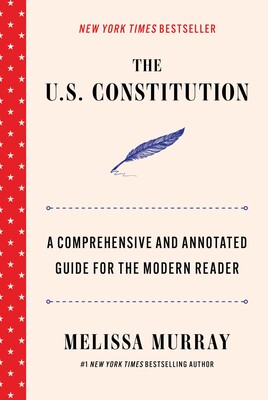
ETA: I also was excited about Melissa Murray's new constitutional commentary. Eh.

The preface was a quick summary of its creation that seemed like forcing a bunch of stuff into a few pages. And doing so in a somewhat simplistic way.

The summary of each section is helpful, if often a tad too basic for someone who already has more than a passing understanding. It isn't meant to be comprehensive, but sometimes it seems a tad thin. 

It serves its function as a one-volume reference book for the average reader (though now and then tossing in words like "chattel" without comment). Sometimes, there are particularly interesting discussions, at times, with very up-to-date material. 

Murray provides a balanced view, including points of view that she personally doesn't support. At times, you do get the idea she isn't some originalist. 

The subtitle is "A Comprehensive and Annotated Guide for the Modern Reader." It does cover the whole document in annotated form and is written for the modern reader. It has Civics 101 potential.  

The book is formatted comfortably. OTOH, there are no charts, pictures, or anything of that sort. 

I enjoyed Linda Monk's books better. 

Sunday, July 12, 2026

Senator Lindsey Graham Dies

He had his moments. He was lately a tired, pathetic Trump supporter. More here with an extended bit on Mitch McConnell. 

Friday, July 10, 2026

SCOTUS Watch

Justices Amy Coney Barrett and Elena Kagan will appear July 14 before the House Appropriations Subcommittee on Financial Services and General Government, which has jurisdiction over the annual spending measure that funds the Supreme Court, according to a scheduling announcement from House Appropriations Chair Tom Cole (R-Okla.).

The Supreme Court might be in recess, but it is still in session. Odds and ends still occur.* 

The most notable news, however, is that two justices will (for the first time since COVID) appear before Congress. Thomas, for some reason, stopped by recently. Not in an official capacity. 

The usual procedure was to have a liberal and a conservative justice, as we have here. The appearance provides members to ask justices non-budget related questions. 

“the right to have rights—to freely participate in our political community”

We will also have many term round-ups. 

Prof. Dorf discusses a controversial reference in the birthright citizenship opinion. I don't think he quite salvages the reference. Yes, noncitizenship is "less secure." Noncitizens still have rights.

Prof. Segall talks about Kavanaugh's de facto acceptance of living constitutionalism. Brett has to bow down to the originalist god, including talking about how constitutional "meanings" hold firm. 

As with the English language generally, however, meanings change over time, too. Sorry dude. 

==

Note: The summer is sometimes so lacking in SCOTUS news that I am left to cite the website providing a typo correction to one of its opinions. 

The Court used to fix typos silently as if there were editing elves doing so out of public view. Now, they openly cite even the smallest edits. 

They also provide the final "bound" version of the opinion, which in the past took years but now starts during the term itself, including any changes at the bottom of the page.  

Check out here. There are "revisions" with the date provided. You can also look down the page and see the first twenty or so opinions now have exact page locations. 

The changes, like the different versions of biblical verses (h/t Bart Ehrman), are often trivial. Nonetheless, it is a good bit of open government. 

ETA: Graham Platner finally formally removed himself from the Senate race. The new replacement of Senator "Kavanaugh Won't Overturn Roe!" will hopefully be picked later this month. 

Wednesday, July 01, 2026

SCOTUS Watch: Summer Recess

The shitty trans athletes opinion shows the importance of voluntary trans protections, including those in New York.

The summer recess begins. The justices will have to address some things that pop up. They also have scheduled stuff:

For your planning purposes, summer order lists are scheduled to be issued on Monday, July 20; Monday, August 17; and Friday, September 4, 2026. Summer order lists usually consist of actions taken by the Court on motions in pending cases, petitions for rehearing, and other miscellaneous matters. Emergency orders, such as in applications for stays, will continue to be released as required.

Fix the Court suggests justices should circuit ride. I think it would be a decent idea if they spent more time in the lower courts. One idea: have each circuit justice preside over en banc hearings. 

The justices (minus two) might not be great at being district court judges. But I'm open to some thoughts.

We can spend the summer thinking about the Supreme Court. People think "court reform" means more justices. Let's think further. It's more than that. 

ETA: A pending case on the shadow docket involved a stay for reporter Catherine Herridge, who faced a daily $800 fine for refusing to name her sources in a Privacy Act lawsuit. 

Chris Geidner has the details. The facts go back at least to 2017, but now she has superlawyer Paul Clement on her side. No dice. Only Kavanaugh, without comment, would have granted the stay. 

(The lower panel had judges from the Carter, Biden, and Trump administrations, nomination-wise.) 

The final decision was handed down Thursday. It shows that we still will have some miscellaneous stuff popping up during the summer recess. 

Once upon a time, the Supreme Court was officially out of session. If it wanted to hear something as a group, they had to make a special effort. Individual justices handled things in the meanwhile.  

That is no longer the case. The individual justices still handle circuit matters. Nonetheless, the Court as a whole is still in session.  

Monday, June 29, 2026

SCOTUS Watch: Opinions/Orders

Orders

The Order List had some notable content, including multiple grants and no grant in the E.J. Carroll case. Maybe, just maybe, Trump will have to pay up for his sexual assault.

Gorsuch (with Alito and Thomas) returns to his concern about health workers not being able to obtain an exemption from vaccine mandates. NY, among other things, argues it is a bad "vehicle" for review. 

Thomas (with Gorsuch) wants to re-examine NYT v. Sullivan, citing original understanding (the case involves Alan Dershowitz suing CNN). If they want to quote original understanding, quite a few modern-day First Amendment cases should be decided the other way. A lot more limits were allowed back then. 

Sotomayor, for the liberals, dissented in a qualified immunity case involving a prisoner alleging mistreatment. There is a good originalist argument, ignored by conservative justices, that juries should have wide discretion to find government officials liable for wrongdoing. The Founding generation thought juries were the "palladium of liberty," even more than judges, who were creatures of the state.  

Each Trump nominee did not take part in a case without saying why. 

There should be another "clean-up" order, with perhaps more recusals, later in the week.

Opinions 

Barrett (with Roberts + the liberals) upholds a rule regarding mail-in ballots. Rick Hasen argues that "text,  history, and longstanding practice going back to the Civil War" back her up. A somewhat unhinged Alito opinion, however, still received four votes. 

Kagan continues the expansion of the reach of the Fourth Amendment to "geofence warrants," regarding the location of cellphone users. Alito, Thomas, and Barrett dissented. Gorsuch concurs but tosses in some cosplay about original understanding.

[Orin Kerr of Volokh Conspiracy is one resource for this topic.]

Roberts had the big two for the day involving agencies. The Federal Reserve, 5-4, can retain its "for cause" removal rules. The dissenters partially complain about the reach of the opinion, which broadly rules to bring clarity to the question.

(People are arguing that Roberts/Kavanaugh selectively exempt the Federal Reserve "to protect their stock portfolios." The special exemption is dubious. OTOH, various agencies regulate financial matters. They also affect stock portfolios.)

Not so for other agencies, overturning long practice (at least from the late 19th Century) and precedent (from the 1930s). The whole thing is bullshit, 6-3, Sotomayor (Kagan usually handles this issue) with the dissenting opinion for the liberals. 

(Her dissent, which she read from the bench, is very good. We should have audio/video.) 

The First Congress split various ways regarding the proper constitutional and policy rules for removal. It is a political question that should be left to congressional discretion. The dissent is correct that the majority forgets its "place." The voters need to secure a new Congress that reminds them. 

The 6-3 majority puts its thumb on one side. Perhaps, it is an ironic move to honor the 250th Anniversary of the Declaration of Independence (tyrannical king). 

Some more opinions tomorrow.

ETA: A discussion about them. 

Wednesday, June 24, 2026

SCOTUS Watch: First Opinion Day

The first opinion day of the week (yesterday) disposed of five cases, all somewhat also-rans. The opinions largely broke down 6-3. 

The oral argument didn't bode well for a prisoner trying to obtain damages against state prison officials for violating his religious liberty. The reason was not that the conservative justices only care about Christians. 

Holt v. Hobbs, for instance, protected the rights of a Muslim prisoner. The justices do somewhat selectively care about religious liberty. Nonetheless, the reason for the opinion here is likely somewhat different. Wrong all the same

Kagan and Jackson joined the result in a case about the Alien Tort Statute (the trend has been limited protections), but joined much of Sotomayor's dissent on why the majority went too far. 

The liberals fully disagreed with the conservatives in an immigration case. Thomas for the conservatives.

The one kumbaya moment was an overreach of a case involving the Takings Clause. Fair market value is fair enough when the government sells a property in a tax sale, as long as the whole thing is otherwise fair. 

Some libertarians might be upset, but I looked into the details (did so in response to an early response to this guy), and this was no great travesty or anything.  This is the case that it's okay to give to Alito. 

There will be more pain for the liberal side of things (and more hot-button cases) in the upcoming days. 

Monday, June 22, 2026

SCOTUS Watch: Orders

The Order List was longer than usual. So, we had additional writings, particularly an apparent 6-3 per curiam, summarized by Mark Joseph Stern on Bluesky this way:

By a 6–3 vote, the Supreme Court reverses a decision in favor of Pedro Hernandez, a mentally impaired man who was pressured into an allegedly false confession of murder through these👇unconstitutional tactics. The supermajority says he did not face a deprivation of "clearly established" rights.

The liberals wouldn't have taken the case. It amounts to an "error correction" of an allegedly misapplication of the rules for federal habeas appeals. Some local coverage

Alito and Thomas would have taken or decided some crime-related cases (one involving the use of race) the other way. 

Jackson followed her practice regarding not rejecting certain appeals by incarcerated people allegedly abusing the pauper's petition rules. 

Sotomayor, for the liberals, would have taken a case involving a claim of intellectual disability in a capital case. Texas supported the appeal, but the Texas courts (this happened before) blocked it from happening below. Four justices earlier would have tightened the rules in such cases, so this isn't surprising. 

The Supreme Court granted another so-called "Bivens" case, involving a remedy for constitutionally based abuses. The claim won below, and Bivens has been much disfavored. So, it doesn't bode well. Congress can address the situation. 

We will have  (signed) opinions on Tuesday and Thursday. There is likely to be at least one more opinion day. Toss is a scheduled execution. 

Sunday, June 21, 2026

Pot and Guns

This morning, the Court issued its decision in United States v. Hemani. The Justices unanimously agreed that 18 U.S.C. 922(g)(3), as applied to Mr. Hemani, violated his Second Amendment rights. 

I talked about U.S. v. Hemani on my Substack; one entry linked in my last SCOTUS entry. It was a 9-0 opinion with multiple concurrences. It received support from both liberals and conservatives. Just what it decided is unclear. 

The link argues it is a limited decision. People should, on some level, carefully remember that it decided a limited question. It did not broadly, in all ways, allow users of marijuana (and other controlled substances) to own firearms. 

Gorsuch wrote the opinion of the Court. He summarizes the facts in a way that particularly favors the defendant. The government thought the guy was a terrorist. He was not. 

(There are implications that he and his family -- he is a dual Pakistani and U.S. citizen -- were profiled in some fashion.) 

He cooperated. He lived with his parents and had a stable job. He ultimately was charged merely with owning a gun while being an "unlawful user." It wasn't related to drug trafficking or "anything like that." 

He was just someone who used marijuana "every other day."  Oh. He had cocaine, too. But, hey, he said he didn't use it recently, or anything.  

The justices, including Jackson (with Sotomayor), who concurred to say it was stupid, granted that Bruen was good law. "All Americans" (what does that mean? are longstanding residents who are not citizens, "Americans"?) have an individual right to keep and bear arms for self-defense. 

The opinion didn't provide a whole quote from that opinion. For instance, Bruen opens with a basic statement that "ordinary, law-abiding citizens have a similar right to carry handguns publicly for their self-defense." 

Marijuana possession is a federal crime. Hemani was not a "law-abiding" citizen. He admitted it. Note also that this opinion doesn't say "citizen." It speaks of "All Americans." 

We should, however, look at what the Court specifically decided. That often requires some nuance. Reporting and a quick read often lead to wider assumptions.

The opinion reminds that regulations need to be “consistent with the Nation’s historical tradition of firearm regulation." The federal government said that the specific provision involved matches up with "habitual drunkard" laws.

Gorsuch argues the "how" and "why" of such laws don't match the current provision. Again, framing things Hemani's way, he notes that otherwise the law in question allows for "prison for up to 15 years and disarmed for life." 

The opinion notes the government "seeks to prosecute" Hemani. It is unlikely they will seek a term anywhere near that length. The lifetime disarmament fears are also somewhat premature. 

Habitual drunkard laws generally disarmed people who were typically so drunk that they could not go about their normal business. That is not what is involved here. Unlawful use regularly doesn't involve people being drugged out of their minds daily. 

(The provision also could apply to something like Adderall. People regularly use that, including to "cram for exams." They aren't like "habitual drunkards.") 

The opinion reminds us that at the time of the Founding, people drank a lot of alcohol. Yes. 

For various reasons, including the fact that it was safer than most beverages. Our drinking habits are different now. We are also a much more populated society, with more dangerous guns, and more ways they are liable to cause harm. Also, in time, we determined that drugs could cause various harms, leading to regulation.

The specific focus on "habitual drunkard" laws, which are cited by the government to satisfy the Court's own rules, leads to a limited result. The provision here is a bad fit, yes, but the forcing is the Court's fault.

The Court flags that many drug users would not be violent. The law in question does not provide a hearing before disarming. Okay? 

Congress determined that certain drugs were dangerous enough as such. These developments happened later. Appeals to original history are of limited value here. 

Sometimes, the drugs involved are regulated for health reasons. This is not the same as being "categorically" dangerous. Recent events regarding rescheduling marijuana only emphasize this. 

The opinion ends by underlining that various types of firearm bans still might be acceptable. For instance, those that cover people actually intoxicated. Hemani regularly is intoxicated. 

Thomas references the Commerce Clause, which the majority notes wasn't involved here. The link to interstate commerce depends on the situation, including how the gun was obtained. 

Jackson cites the problem with Bruen. She favors "means-ends" scrutiny instead of so much focus on "contested historical questions." 

Scrutinizing the fit between a challenged law’s justification and its operation is an essential part of any sensible framework for Second Amendment adjudication.

Alito adds more on how marijuana is generally accepted today in his concurrence with Kagan. It's a reasonable-sounding opinion, though, having a "living constitutionalist" flavor. Not that I find that problematic. It cites how current practices are like original ones, but don't know how much that adds. 

The question presented directly addressed the Second Amendment. It probably would have been better if the opinion had simply, perhaps as a matter of constitutional avoidance, found the provision too vague and arbitrary. It said as much in a fashion.

The law literally would cover everyone who uses the covered substances. It might result in extreme results. See also, prosecutorial discretion, and its usage in this case, arising from an apparently mistaken investigation. "Morals" legislation, including drugs, regularly leads to such arbitrary results. 

[Underlining the value of careful scrutiny.]

The government, however, provided a narrower application. Just what that entails, however, is vague and open to arbitrary application. Since constitutional rights are at stake, it would be best to avoid that, including by raising procedural due process red flags. 

(A law that threatens free speech might be held to be overbroad even if the specific speech involved can be criminalized. The citation of Adderall fits in here.)

If we grant a constitutional right to own a firearm, it is reasonable to require a careful process to be in place before criminalization. The law here, like the reference to Adderall suggests, is not just about marijuana. I understand the result.

Nonetheless, the appeal to "habitual drunkard" laws was the road to confusion. Yes, the law isn't really like that. It was just cited to try to fit things into Bruen

The specific person here was a regular user of marijuana. It is an intoxicant. I think marijuana should be legal, and I appreciate the move to reschedule (which was done after Hemani's possession). But Hemani was an "unlawful" user of a drug, which (rarely unenforced, it might be) had serious penalties.

Again, this raises due process concerns, like other morals crimes. So, the result here is sound, on some level. The details, however, turn me off.

For instance, the overall logic of the opinion suggests you really don't have to be a "law-abiding citizen" to have RKBA. People can possess and even regularly use illegal substances. The government has to provide a careful process to show that the usage is dangerous enough not to own a firearm. 

And, what of other law-breakers? One lower court addressed people who commit welfare fraud. What level of law-breaking warrants disarmament? And, is a "lifetime ban" particularly a problem? 

The Supreme Court in the past referenced 14A, sec. 2, to allow felony disenfranchisement. Is gun possession different? The militia and voting are likely connected. See also jury service. The opinion not referencing the "law-abiding" language ... is that notable? 

Anyway, I doubt the Hawaii decision will be unanimous. We are likely to see it later this week. They should have decided the two opinions together. Show how the Court "reasonably" disagrees, with one gun case unanimous, the other likely 6-3. 

Finally, will marijuana usage now show up as polite in other cases? Some people claim marijuana has religious uses. The arguments tended to fail, but now litigants have a supportive opinion, especially if selectively quoted. 

Will federal RFRA claims work now? Time will tell.  

Monday, June 15, 2026

SCOTUS Watch

We are focused on Supreme Court things lately. The regular term will end soon, and there will be fewer.

The Order List again had a few interesting tidbits, including granting a case to determine if states need twelve-person juries for felony cases. The different policies regarding juries have led the Supreme Court not to nationalize all the federal rules (see, e.g., grand juries) there yet. 

They did not (without comment) take a challenge involving a now nearly 100-year-old federal judge who has been taken off regular service. It is a bit of a conservative cause celebre in some quarters. Others aren't too excited. They figure Congress set forth guidelines that allow courts of appeal to regulate such things, and it wasn't unjustly applied here. 

Jackson (with reason) and Alito (not) recused without saying why. Alito (with Thomas) wanted to take a criminal justice case. Alito wanted to take a case involving schoolchildren:

When she sought approval to hang flyers at school to advertise club meetups, school administrators would not approve the flyers because they contained pictures of students with “Defund Planned Parenthood” placards. 

Alito and various conservatives are more open to the federal courts intervening when conservative causes are involved. Meanwhile, the justices are preparing for the final burst of opinions, many of the twenty or so left "hot button" issues. 

There is only one (Thursday) opinion day scheduled so far. Granting another next Thursday is a gimmee; that is still not enough. At least two more should be necessary. Having one tomorrow would have been logical. We shall see how things go.  

Meanwhile, like usual, the Order List has some notable matters, even if nothing earth-shattering. 

===

ETA: I talk about the opinions handed down later in the week, including marijuana/guns, here

Thursday, June 11, 2026

Alabama Doesn't Executes Jeffrey Lee

Lee, who has been on death row for 25 years, was convicted of the 1998 murders of Jimmy Ellis and Elaine Thompson during a pawn shop robbery in Dallas County. He was also found guilty of the attempted murder of Helen King.

The death sentence and planned execution are problematic on multiple grounds, but only a few justices (at most) have agreed with the reasons.  

Twenty-five years is too long. Justice Breyer explained why. I will continue to cite his dissent. 

Sotomayor, for the liberals, flagged the problems with nitrogen gas. The others think "not enough."

An Alabama jury recommended 7-5 that he receive life without parole. A judge overrode them. 

The policy is no longer in place. The justices have rejected multiple appeals that flagged the problem. 

The jury, even without other potentially mitigating evidence, did not find him guilty enough to die. A double robbery/homicide clearly has aggravating circumstances. A majority of the jurors still thought he did not deserve to die.

The lower courts split one last time. The district court found some problems with nitrogen gas, but not enough. The court of appeals disagreed, sending it back to determine if a backup method (the firing squad) was available.* The state appealed. 

Steve Vladeck argued that the Supreme Court intervening, given the technical status of the case, would be particularly dubious. Hours after the execution was scheduled, the appeal was rejected. 

(I find it asinine that things work this way. That we have a finale on execution night. It is how it is set up. The state is partially to blame. It should change.) 

The machinery of death, with Thomas, Alito, and Gorsuch dissenting, was stopped. For now. 

I have argued that final refusals to intervene, even if hopeless appeals, should be at least minimally explained in death penalty cases. I think so here. 

Anyway, Jeffrey Lee shouldn't be executed. A majority of his jury said so. Too long ago. 

If he's executed, he shouldn't be executed by nitrogen gas. There is too much doubt. I know. Is the firing squad better? I guess? 

Maybe, just let's not execute him at all. Alabama hasn't for over twenty-five years. Why start now?

===

Note: The rules hold that if you challenge an execution method, you need to provide an alternative. 

Maybe, see Glossip v. Gross, things would be different if the state used crucifixion or something, but they haven't found any such method now exists.

So, the firing squad was chosen. Is it better? Some experts suggest that it is. People think it is barbaric. It sounds like it would be. But pain and suffering-wise, it very well might be the best approach.

Not free from botching, of course.  

SCOTUS Watch: Opinions

The Supreme Court is running out of no-drama opinions. We had three today. One split 6-3, but it was not a major dispute.

Jackson had a unanimous bankruptcy ruling. Thomas (with Gorsuch) said, "Let's go big." Sotomayor said, "Let's not."

Kagan had a unanimous statutory ruling. Bluesky legal minds flagged a notable comment that might limit the Trump Administration's current activities somewhat:

We hold that a defendant charged with violating §1519 must be tried in the district where the falsification occurred; he cannot be tried in a different district where the investigation was located.

The third case was a 6-3 opinion (Barrett v. Jackson) with Jackson having an extended discussion about legislative history. She's big about that sort of thing.

Kagan got off the bus there:

Reliance on legislative history may be appropriate when statutory text in context remains, after careful review, stubbornly ambiguous.

Kagan thought "text, structure, and statutory history" did the trick here. She did not (unlike Sotomayor) join Jackson on the rest. A reasonable position, succinctly expressed. 

I don't know who's correct as to the merits. I do generally trust Kagan's judgment when there is a disagreement. But her overall reasonableness is a guide for us all.  

Constitutionalism 

David Strauss, about fifteen years ago, wrote a helpful little book discussing "living constitutionalism." 

He argues that a form of common law, restrained somewhat by text (especially about clear matters such as the number of senators), is the appropriate path. 

Strauss goes a bit too far on how the amendments overall have been of little consequence. They do repeatedly do less than one might think. 

For instance, the Sixteenth Amendment overruled a dubious 5-4 income tax opinion decided in the 1890s. The original Constitution, on its own, authorizes income taxes.

On the other hand, acknowledging Jim Crow, the Fifteenth Amendment did signficantly advance racial equality, especially in the North. It helped in the South, even then, at least for a few decades. 

Originalism is a dubious path. It is not some big restraint. The alternatives are not just "make stuff up." And, originalists do that too, in a fashion. 

One online comment accepted the approach for rights but not powers. Doesn't work. The two are connected. And, appeals to original understanding to apply the Commerce Clause or whatever is silly business. 

Monday, June 08, 2026

SCOTUS Watch: Order List

The Order List was fifteen pages, which suggested there was some sort of opinion. And, there was another (it is her thing) Sotomayor statement flagging a criminal justice issue:

Although I agree with the Court’s decision to deny certiorari for the reason explained below, I write separately to address the problematic standard the Mississippi Supreme Court applied to the claim petitioner Tony Terrell Clark raised under Batson v. Kentucky [racial discrimination in peremptory challenges], 476 U. S. 79 (1986), in the context of his ineffective-assistance-of-counsel claim.

Mark Joseph Stern also flags on Bluesky:

SCOTUS tosses out a 4th Circuit decision allowing compassionate release under the First Step Act when there are arbitrary sentencing disparities between a defendant and his co-conspirators. Orders reconsideration in light of Rutherford. KBJ and Sotomayor dissent.

This is a typical "GVR," where they "grant, vacate, remand" a case so that the lower court can apply a related opinion. Kagan dissented in Rutherford and joined the limited concurrence written by Sotomayor in the other case referenced in the GVR.

As Stern notes, it isn't fully clear what this means, but it is concerning since it appears to suggest the lower court should apply the (dubious) rulings even broader than necessary.  

Alito and Barrett didn't take part in cases without saying why. Only Kagan and Jackson consistently do so. I prefer that approach. 

One tidbit is that "The United States’ claims in this case are hereby dismissed with prejudice" in an interstate dispute. No reason provided. 

There will be opinions on Thursday. There is also an upcoming execution, which I will discuss separately. 

ETA: Amy Howe posted her summary.

One tidbit is the rare request for a reply to a request for a rehearing. The request is by Lisa Blatt,  superlawyer, and cites changing lower court precedent. Also, looking at the docket page, the Supreme Court posted a request earlier, but it was removed as a mistake. So, one big trivia question.

==

The error flagged here is not uncommon. 

I have repeatedly seen it assumed that the original First Amendment would require thousands of members. A case of not reading closely.

Checking, the House reached 200 members in the 1820s. The measure was bound to be out of date eventually. It was suitably not ratified as written. 

Thursday, June 04, 2026

SCOTUS Watch: Opinions

An expected shadow docket decision in an election lawsuit makes it no less shitty. See here

Opinion day had three opinions, only one dissent (and concurrence) by Thomas. Some long-shot claims. Minimalist specials.

ETA: As noted here, one opinion might be another faux minimalist opinion with near unanimity obtained by a rule with future bite.

Tuesday, June 02, 2026

Andrew Lukehart Execution

Andrew Lukehart, after previously being found guilty of child abuse, was sentenced to die by Florida for the death of a five-month-old child. He first made up a kidnapping story.

That was thirty years ago. Breyer explained why it is constitutionally and otherwise problematic to execute someone after all that time. Florida is making it a habit.

The first article suggests it is still somewhat unclear what exactly happened. Why did he murder the child? Child abuse, including lethal child abuse, arises for various reasons.

The crime is horrible, especially when you look at the picture of the child. The news article starts with a trigger warning. Still, thirty years in prison is a very serious punishment. 

The final appeal, rejected by the Supreme Court the day before without comment, was a standard red flag about Florida execution procedures. Old ground

It also added a novel argument that forcing him to choose an alternative means of execution (you must do so if you challenge the method) is a violation of his religious liberty. There is a federal statute protecting the religious liberty of prisoners. 

His execution doesn't provide much value, in my opinion, to the public welfare. Safeguarding children is precious. An arbitrary execution does little to advance it. 

Monday, June 01, 2026

Supreme Court Order List

Today's Order List was a bit long since the justices tossed back a death penalty case (7-2) because the lower court wrongly took into consideration evidence the jury didn't see. They granted a case first sought by a pro se prisoner. Also, the "bill of complaint" issue (two views) came up again. I basically agree with Michael Dorf. 

Tuesday, May 26, 2026

SCOTUS Order List

The weekly Order List had some interesting bits.

The justices decided the appeals court wrongly decided on procedural grounds a lawsuit involving the free speech rights of immigration judges (not Art. III judges). Thomas (with Barrett) also disagreed on the merits. Free speech fails, for now. 

[The backstory is that the administrative process was broken because of Trump's obstructionism. Helped b by the court conservatives. The lower court tried a workaround and was called out.] 

The justices, following standard practices since at least the 1970s, rejected even accepting a "bill of complaint" involving a dispute among states. 

Thomas (with Alito) took their usual stance (reasonable) that they should at least examine the merits. They also added some right-wing comments on the merits of a dispute involving undocumented people having driver's licenses. 

Kavanaugh would have taken a dispute involving arbitration (New York Football Giants v. Brian Flores). He didn't comment on why. 

Alito and Thomas would have summarily reversed a lower court opinion involving excessive force and the Fourth Amendment. They cited a lower court opinion they "essentially" agreed with. 

Alito (no comment), Kagan, and Jackson (referencing ethical guidelines) did not take part in deciding three cases.  I continue to prefer the latter approach. 

Finally, in a "to be continued" sort of way, a lower court continued to reject a redistricting map, holding it is racially discriminatory. The Supreme Court, with the liberals dissenting, sent it back. 

It is likely to come back.  

==

Meanwhile, this is an interesting discussion of the Supreme Court's relation with social media, including suggestions on how it can dip its toes in.

ETA/Opinions: 

Barrett, for the conservatives, ruled against two "compassionate release" claims. Sotomayor (with Kagan) concurred on limited grounds in one case, dissented in the other. Jackson dissented in both.

Kavanaugh, it being one of his concerns, wrote a 5-4 opinion supporting a claim alleging racial discrimination in jury selection. Roberts joined, as did the liberals. Gorsuch dissented for the rest.

Gorsuch wrote a brief (less than eight pages) and unanimous arbitration opinion.  

Thursday, May 21, 2026

Executions

There were three executions scheduled this week:

May 20 AZ Leroy McGill

May 21 TN Tony Carruthers

May 21 FL Richard Knight

Tony Carruthers is most troubling. 

But in the decade that followed the trial, as post-conviction litigation played out in the courts, testimony from other forensic experts cast serious doubt on those supposed facts. Now, with the state set to execute Carruthers on May 21, his attorneys are arguing not only that forensic testing might prove his innocence, but that his death sentence was based on an inflammatory falsehood. 

Other than the three-decade wait, which yet again is a problem, this execution has a bunch of issues. We had a serious innocence claim, mental health issues, self-representation, and more. 

He was released in late 2015. Before his release, how­ever, in 2010 and 2011, he met with members of a fed­er­al defense team and affirmed what Mr. Carruthers had long main­tained: Mr. Carruthers was not involved in the crime. Instead, he point­ed to an alter­nate sus­pect who was killed in 2002 but whose fin­ger­prints and DNA sam­ple are on file with the med­ical examiner’s office. 

I understand that liberals feel they should pick their spots. But this is a case that deserved at least a statement. Instead, we had multiple "no comment" orders rejected various claims. 

It also deserved a commutation. The co-defendant is out of prison. Instead ... he wasn't executed.

Why? They botched it. See you in 2027?

==

McGill flagged procedural problems and didn't have a final appeal. Horrible crime, which happened about twenty-five years ago. Again, that's too long ago. (Breyer, dissenting.)

Florida has executed some long-in-tooth cases. This one was "only" about twenty years ago. Domestic crime where the person also murdered a child. 

The challenges repeated stuff that was rejected before. Understandably, no justice commented. 

Both were executed. 

==

The first case is particularly arbitrary. 

The other two are more standard "death penalty as a whole is a bad policy" cases. 

PUNT

The Supreme Court handed down three opinions today. Jackson wrote a quickie on ERISA, Kagan had a solo dissent in a second, and they punted.

(More next Thursday.) 

Hamm v. Smith involved the rules in determining when someone is intellectually disabled enough to avoid execution. Some worried that it would result in a significant shift rightward, perhaps on much more than the specific subject matter.  

The justices decided to "DIG" it as improvidently granted. You can hear Alito grumbling. 

Kagan, Barrett, and Kavanaugh didn't provide any thoughts. Sotomayor (with Jackson) explained why they thought it a bad vehicle and responded to Alito's dissent (with Thomas joined in full, Roberts and Gorsuch mostly). A lot of writing for a DIG. 

Thomas, on his own, also strongly dissented, wanting to toss Atkins v. Virginia (intellectually disabled cannot be executed) entirely. 

Net result: The Supreme Court, on a 5-4 vote, lets stand lower court decisions tossing out Joseph Clifton Smith's death sentence in Alabama because the court found he is intellectually disabled.

Monday, May 18, 2026

SCOTUS Watch: Order List

A ten-page Order List with various odds and ends.

Chris Geidner notes on Bluesky:

Also in today’s orders, SCOTUS sidesteps ruling on private enforcement of Section 2 of the Voting Rights Act, sending two cases back for post-Callais reconsideration. Jackson dissents, pointing out that Callais had nothing to do with private enforcement and saying she would have summarily reversed.

Rick Hasen summarized:

Justice Jackson dissented from the order, on the sensible grounds that Callais did not consider the right to sue question. Of course, the stakes are much lower now that Section 2 is essentially dead no matter who sues.

(His colleague was more sympathetic.) 

Also, a cert grant (per Geidner):

The Supreme Court takes up a case over whether employees of federally funded schools can sue to enforce Title IX’s sex discrimination bar. 

Kavanaugh, without comment, noted he would have granted cert. in another case. If you do a docket search (on another page since the Order page does not provide links):

Whether a multiemployer pension plan that terminated through mass withdrawal before the 2020 plan year is eligible for Special Financial Assistance under 29 U.S.C. 1432(b)(1)(A).

Alito and Barrett didn't take part in the examination of a couple of cases. Again, only Kagan and Jackson regularly explain why they do that. 

Sotomayor added a brief statement noting that she agreed with the court not taking a criminal case because the government admitted error and the defendant received all that was requested for. 

The next thing on the schedule is an opinion day on Thursday. Next week's orders will be on Tuesday because of the holiday. 

===

I agree with Steve Vladeck that justices should show up more in front of Congress. Court reform includes multiple things, including some that should have bipartisan support. This is one such proposal. 

Friday, May 15, 2026

SCOTUS Watch

The Supreme Court is beginning its final end-of-term push. They will meet on Thursdays until the end of June. Opinions dropping will be likely.

More VRA News 

They had no Order List on Monday. No problem. They often make news outside of those often no-drama orders.

For instance, the aftermath of a major Voting Rights Act decision continued. It involved Alabama. Sotomayor dissented for the liberals. 

The conservatives didn't explain themselves. Bad decision, but not the end of the line. Meanwhile, there continues to be a lot of jockeying in multiple states.

The Virginia state supreme court ruling was not a good decision. The Hail Mary federal challenge was also not good. It was rejected without comment. 

Arguments 

We don't get video or even audio (for opinion announcements) of the proceedings. 

Amy Howe showed up since we cannot. She promoted, as a witness, greater transparency during the proceedings of the Biden Supreme Court Commission. Her summary of this term's arguments is interesting. 

Opinions 

The usual practice is for the justices to drop a limited number of opinions in late May and early June. Then, we will have an influx, with multiple decision days in one week to complete the job. Late term rush.

There are worse things to worry about. All the same, this is a bad job of pacing yourselves. 

Anyway, as expected, the two opinions (both unanimous with one concurrence) are non-controversial. The usual sentiments about how such opinions are still of some significance aside, neither is not a "high profile" case worthy of much attention. 

Abortion Pill News

The Fifth Circuit dropped a ridiculous opinion preventing Mifepristone from being prescribed by telemedicine and delivered by mail. The decision is bad both procedurally (standing) and on the merits.

Justice Alito, in charge of the Fifth Circuit, granted a temporary halt (administrative stay). He (selectively) had it expire on Monday afternoon and then extended it to Thursday afternoon. So, after two opinions few cared about dropped, bigger news was forthcoming.

(The link underlines how the change in Administration matters.) 

The Court, about a half hour late, granted a regular stay. Thomas and Alito dissented for different reasons. Alito noted the Court did not explain itself (which is unfortunate), which he did not find problematic about an hour later, when an execution was involved.

One notable thing about Alito's dissent is that he references how a change of policy in the Biden Administration helped protect the supply of abortion pills after Dobbs. State shield laws, including in New York, were also quite important.

Michael Dorf has more, including a reference to a good article on the Comstock Act. A previous discussion, which includes a reference to a Biden DOJ policy statement, is also worthwhile. 

Busby Execution 

A murder apparently motivated by robbery led one person to be sentenced to death, the other to prison. 

After over twenty years, too long (Breyer), Texas was ready to execute him. There was a claim of intellectual disability, which even the state witness granted.

The Supreme Court has held that intellectual disability at a certain point will make execution unconstitutional. It is also a mitigating factor. 

The seriousness of the claim is suggested by the fact that even the conservative-leaning Fifth Circuit at least temporarily held up the execution. The justices overturned the stay without comment.

Kagan dissented without comment. Jackson (with Sotomayor) briefly noted how gratuitous it all is. 

He was the 600th execution in Texas since 1982.

Upcoming

Order List on Monday, and another opinion day on Thursday. Who will buy Souter's home