About Me

My photo
This blog is the work of an educated civilian, not of an expert in the fields discussed.

Tuesday, December 30, 2025

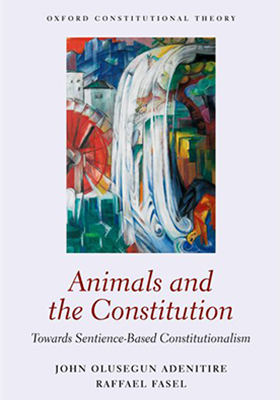
Animals and the Constitution

The U.S. Constitution provides many opportunities to discuss animals. One case struck down a local ordinance regulating animal sacrifices. The Supreme Court held it was a discriminatory burden on the free exercise of religion.  

Justice Blackmun (dropping a footnote citing multiple groups addressing the specific point) concurred, arguing for a broader view of free exercise that covered generally applicable laws. He added:

A harder case would be presented if petitioners were requesting an exemption from a generally applicable anticruelty law. The result in the case before the Court today, and the fact that every Member of the Court concurs in that result, does not necessarily reflect this Court's views of the strength of a State's interest in prohibiting cruelty to animals. 

Sherry Colb, who later regularly wrote about animal rights, was one of his law clerks. Her future husband, Michael Dorf (who told me about the book addressed below), once noted that she encouraged him to include that reference.  

Another issue would be the Fourth Amendment. Drug-sniffing dogs have popped up in multiple disputes. Another issue would be if dogs were included among the "effects" or in general among those matters protected by the amendment. 

Is a companion animal simply property for constitutional purposes? See also the Due Process Clause. If the Fourth Amendment (see, e.g., Justice Harlan's opinion in Poe v. Ullman) partially protects "family life," why not also bring in family pets? Simon is not a chair.

Can animals themselves have constitutional rights? Justice Douglas once famously (infamously?) argued that nature can have standing. But, he spoke for humans all the same:

Those people who have a meaningful relation to that body of water -- whether it be a fisherman, a canoeist, a zoologist, or a logger -- must be able to speak for the values which the river represents, and which are threatened with destruction.

Should animals as animals have standing to sue? A few cases tried to obtain habeas corpus protection, including using state constitutions. Michael Dorf supports that move to some degree. I'm sympathetic, if not given the current law.

I'm not an originalist. The fact that "original understanding" opposes something is not a complete barrier. The term "person" need not only include humans. We can imagine extraterrestrial life, such as Vulcans, which are humanoid in some fashion. Or tie personhood to sentience.

We come along with a long prologue to our book. The book is written in a scholarly fashion. I skimmed it myself. But it is not so unapproachable that I did not gain a general understanding of their arguments. 

The book is not about the American Constitution. It concerns constitutionalism in general. Can animals be included? The authors argue in the affirmative. 

It helpfully cites many constitutions worldwide, a few that, in some fashion, explicitly protect animal life and/or nature. Nonetheless, none of them goes as far as the thesis here. 

(Another book that provides a means to protect nature overall also provides a few citations to foreign constitutions. A wildlife-centered approach might be Native American-centric.) 

The book argues that sentience is a floor for constitutional rights. Merriam-Webster defines sentience as "capable of sensing or feeling: conscious of or responsive to the sensations of seeing, hearing, feeling, tasting, or smelling." An example given is "sentient beings."

The book offers various aspects of sentience to help explain why it should be the floor for rights. Sentient beings do not only feel pain, which is often cited as a line-drawing device. Thus, vegans often cite pain as a reason for not eating certain animals. 

But is that the only reason? People generally don't want to consume their pets. There is something else involved. Why are we not cannibals, avoiding brains and other parts that might cause disease? 

Sentient animals have experiences, thoughts, perceptions, and some sort of independent existence. They have a "self." They are in effect "persons." This provides a realistic floor for rights. 

Constitutionalism involves:

  • Fundamental rights
  • Proportionality
  • Rule of Law
  • Democracy
Sentient animals warrant the protections that constitutions provide. There is a general agreement that animals deserve some basic security. We don't like cruelty to animals. The book offers more.

Fundamental rights that can be applied to non-human animals include life, freedom, and protection from torture or degrading treatment. The habeas appeals, for instance, include attempts to free an elephant from an allegedly harmful zoo. People have tried to protect primates from medical experiments. 

And so on.

Rights are not absolute. Government is about balancing. A concept that is more often found in other constitutional systems (though Justice Breyer is a fan) is proportionality. Basic principles include legitimate regulations, suitability, necessity, and fair balancing.

Animals as constitutional persons (or even moral agents) change the balance. Food might be tasty. But if it causes harm to animals, mere pleasant taste is not (imho) enough to justify factory farming. 

(The book is only about 200 pages long. 

It is not about a bunch of case studies. So, we can debate line drawing. For instance, are seeing-eye dogs appropriate, or do some see them as a sort of involuntary servitude? 

Plus, there are obvious degrees. Abusive horse racing and singular usage for riding for pleasure are different things. Proportionality is a sensible general principle.) 

The rule of law is a basic constitutionality principle. It involves government by rules, not whim. 

The authors provide multiple criteria to help flesh out the rule of law. Law should be public, clear, stable, prospective (no ex post facto law), realistic, and subject to judicial review. There should be the basic rules of procedural due process, including the right to be heard and an appeal. Non-humans included. 

What about democracy? The United States Constitution begins with a reference to "We the People." Animals are governed. They are generally not seen as "the governed," as in "respect for the governed." 

Nonetheless, we respect the interests of young children and others, including the severely mentally disabled, who do not actively govern or choose those who govern. Why are non-human animals so completely lacking as constitutional agents?

The book argues that non-human animals should have their interests represented. The authors offer the concept of a segment (30% is offered as realistic) of the legislature to be representatives for non-humans.

We can carp on details. I don't mean to handwave that. It is a seriously complicated issue. There are loads of non-human animals with competing interests. How do we select non-human representatives? Simply having them represent "animals" seems unrealistic.

At the very least, granting the premise that non-human animals (NHA) should have a role in democracy, it seems wrong to suggest they are interchangeable. That seems to violate the basic rule of moral respect. 

Nonetheless, the general idea makes some degree of sense. People are chosen to defend the interests of children and others unable to adequately defend their legal interests. NHAs can have guardians, too.

Why not in other contexts? Justice Douglas (partially inspired by Christopher Stone) thought of nature in an instrumental fashion. His approach could be applied to protect nature (and/or animals) individually. 

Agencies can assign people or groups to protect the interests of NHAs. So can legislatures. We can debate about how to select such people. Or how they would respect the interests of NHAs. For instance, the book offers a referendum-type process. We can debate it. 

But it is our duty to address the matter overall if we are going to respect the sentient beings as constitutional persons. We should "listen" to our companion animals if we truly respect them.

The principle applies writ large. Our own constitution, to be local, can use some improvement. The baseline was set up in the 18th Century. 

We might be proud that it is still going (strong?), if with some amendments. Still, the 21st Century is on the phone (or whatever), and it is not totally impressed. NHAs are one thing to factor in. 

Thursday, December 25, 2025

Merry Christmas


Merry  Christmas. Here's a song about the 12 Symbols of Christmas. The "12 Days of Christmas" run from today until January 5. 

ETA: Trump went another way (Nigeria). 

Wednesday, December 24, 2025

Early SCOTUS Present

Whether the Supreme Court should pause an injunction requiring changes to the Pittsburgh Post-Gazette's employee health insurance plan.

The Supreme Court is officially off until the new year. Nonetheless, it continues to do some work. For instance, Alito dropped an administrative stay in this case. It is not one of the cases getting much of the attention, just one of the many cases to address. 

The big news was the justices, with three justices dissenting, rejecting a Trump Administration request for a stay in the case involving deploying the national guard in Chicago. 

The unsigned opinion (written in a conversational tone, including talking about how "We" did things; I think Roberts wrote it) is three pages long, which isn't long, but provides more discussion than a usual shadow docket ruling does. 

It is also a limited win as an analysis notes:

The loss in the Illinois case, however, was temporary and provisional, and all but dared the administration to make more extreme arguments. In particular, Mr. Trump could turn to the Insurrection Act, which he has not yet invoked to deploy military forces on domestic soil.

We firmly know it is a six-to-three opinion since the "Court" uses Professor Lederman's approach while Kavanaugh concurs separately.  Chris Geidner summarizes things here.

(Kavanaugh drops a footnote summarizing the rules for immigration authorities stopping people. Some people think this might be a case of him being triggered by the reference to "Kavanaugh stops," a dig at a past concurrence that handwaves the many problems ICE stops have brought.)

Alito (with Thomas) has a much longer dissent, criticizing the majority for using Prof. Lederman's argument since it is allegedly inappropriate to reach out to do so. Suffice it to say, that is far from clear. 

Also, overall, the typical rule is that granting a stay is a high bar. Refusing a stay should generally be the correct approach. The conservatives have all too often ignored that in the case of Donald Trump.  

The remaining arguments apparently are too weak. Gorsuch briefly says something similar. They are, however, not so cautious in other cases. Also, Gorsuch, this time, is not so concerned with federal authority. 

The Roberts Court has been much too supportive of the Trump Administration and Trump personally (Trump v. U.S.). (Alito thinks they are being rather aggressive.) They aren't 100% in the bag. 

The exceptions can be important. Let's keep it in perspective. Take the win while realizing it only goes so far. Merry Christmas and Happy Holidays!

Saturday, December 20, 2025

The Religious Test: Why We Must Question the Beliefs of Our Leaders

Damon Linker, who is actively posting on "Twitter," wrote this book fifteen years ago. 

So, it was writing about same sex marriage before it was recognized as a constitutional right. He thought it inevitable. He also discussed the unlikely possibility of Roe v. Wade being overturned. Oh well.

The Constitution bars religious tests. Many people understand that as a general principle in the United States. Let's quote the specific text:

no religious Test shall ever be required as a Qualification to any Office or public Trust under the United States.

The Fourteenth Amendment effectively "incorporated" this principle so that it applies to state and local offices. The presence of "Catholic" or "Jewish" seats on the Supreme Court underlines it was not applied to mean that any religious criteria are barred.  

Some might argue that such things are not a good idea. Still. Are we to take the clause literally in its broadest sense? If a person is selected to defend civil rights, are we to ignore their racist religious beliefs, while being able to be concerned if they belonged to the Nazi Party (political)?  Many would not think so.

Linker does not directly talk about the implications, for instance, when the Senate considers judicial nominations. For instance, John Kennedy (not that one) questioned a judicial nominee about his sermons. Is that a problem in the way he did so there? 

The book has a more general concern about the religious beliefs of people who might clash with liberal values. Not "liberal" as in "Democrat." No, a wider usage that recognizes the values of a free society, including a sense of moderation and openness. 

Many religious groups are illiberal in that sense. Some have political influence. And, this was pre-Trump. He includes radical atheists like Christopher Hitchens, who are not willing to "play nice" with religious beliefs. I can imagine his views on Trump. 

Linker also argues that a liberal society requires an individual rights view of gay and abortion matters. He cautions that we should tread carefully, for instance, recognizing the rights of those against same sex marriage. He draws the line at the marketplace. Again, I wonder how he felt about Hobby Lobby.

He lays this a bit thick sometimes. For instance, he wants public schools to carefully avoid driving more conservative-leaning parents away regarding social issues. Linker is adamant that it would not include avoiding teaching evolution. 

OTOH, he appears to not be too gung-ho on LGBTQ friendly curriculum plans. At some point, you won't win. Some parents will be upset if you even bring up Stonewall. 

His whole discussion on "traditional" marriage skips over much of the sexist aspects of the institution, including coverture. Linker also somewhat exaggerates how prevalent traditional morality was. See, e.g., Lawrence v. Texas on how the state largely avoided enforcing anti-sodomy laws unless the behavior took place in the open or involved minors. 

The debate over the details should not erase that the general message is valid. We should care about liberal values, and religion can interfere. It is not prejudicial to take this into consideration, especially if we also accept the right of free exercise. We allow speech we hate without merely listening to it without comment. 

The constitutional religious test rule bars, at the very least, formal qualifications by force of law based on religious doctrine. The No Religious Test Clause has a broader principle of separation of church and state. 

The clause does not, realistically cannot, mean we do not care about the beliefs (religious or otherwise) of governmental officials. The average official can do their job even when it somehow clashes with their beliefs. A pacifist can collect taxes that might be used for warfare. 

Still, the religious beliefs are relevant. And, many officials these days are not willing to uphold the separation of church and state. They by word and deed make this very clear. 

Linker provides a helpful summary of why religious beliefs are relevant. It is a conversation we should continue to have.

Friday, December 19, 2025

Shadow Docket News

Immigration judges are not Art. III judges. They do not have life tenure and have less independence. People in front of them have fewer rights. 

They challenged a limit on speaking engagements. The Trump Administration brought a request for the Supreme Court to intervene, even though the win was limited and only involved sending things back for more factfinding. 

In a limited bit of sanity on the shadow docket (sorry, SCOTUSblog; not the "interim" docket), the Supreme Court for now determined not to do so. It shouldn't be that notable, especially given the factual complexities involved. More at that link. 

But that's where we are at. The Shadow Docket Act tries to address the situation. It would require an explanation, and on the on-the-record vote count in certain cases. Not across the board. 

Justice Alito would likely find that demand an unconstitutional invasion of the separation of powers. OTOH, Art. III allows Congress to regulate the Supreme Court's appellate jurisdiction. The bill specifically does not cover original jurisdiction (interstate disputes over water rights, etc.). 

It is a "message bill" at the moment and fine on that level. Democrats (with Republicans willing to join them) should put forth markers that underline their long-term goals. A bill like this provides the neutral reforms that have wider support. 

Meanwhile, there are no more scheduled events for the justices until early January, but miscellaneous orders might pop up before then. Oh joy! 

Thursday, December 18, 2025

Another Execution (Two?)

Stacey Humphreys

In 2003, which is a long time ago [see Breyer] but not as long as some set for execution in 2025, Stacey Humphreys murdered two women. Robbery/homicide. 

He was brutally practical about it, having them strip nude (figuring that would lessen any difficulties) and murdering them execution style. The SCOTUS liberals in October flagged a problem with his jury. 

Georgia scheduled his execution on Wednesday, but the parole board held things up (apparently, there was a conflict issue). The execution warrant will be active until next week, so we will see how that goes. 

ETA: The warrant ran out without an execution, so he won't be executed this year. So, 2025 had 47 executions.

Frank Walls

Florida executed one more person on Thursday, being quite busy, having nearly 40% of the total (19/48), tossing in the Georgia execution that, for now, is held up. He was guilty of multiple rapes and murders.

Yet again (1980s), we have a case where the execution happened long after the crimes and trial. He is an example of someone for whom the death sentence is understandable. But, even there, there was an over thirty-year lag time, which is very problematic. 

(The jury issue in the first case underlines that even in particularly cruel cases -- and there the person also had a history of crime that he then upped a notch -- the death sentence repeatedly is problematic.) 

There was a last-ditch effort, as usual, that was turned aside without comment by SCOTUS. The issues cited included potential problems with the lethal injection and mental capacity issues.

===

No more executions are scheduled for 2025. We will see if the Georgia execution occurs. 

If so, it would be the 48th execution, 29 scattered in various non-Florida states. Trump had little to do with them, except for one case where someone was released from federal custody. 

Wednesday, December 17, 2025

NY Medical Aid-in-Dying

Gov. Hochul is deciding what to do about various things on her desk as the year is coming to an end. She has had a heavy veto pen in the past. 

I think the executive veto is used too much. One person gets to make a policy decision that overrides the legislature.

Anyway, she decided to sign the aid-in-dying legislation. She negotiated a few more safeguards. It only applies to someone found to only have six months to live. She explains why here. One notable thing is that she is Catholic, but nothing new there. See, e.g., Mario Cuomo and abortion.

I think the decision here is part of the right to privacy. Many things of that nature have line drawing issues, and it is appropriate for the legislature to have some discretion. Drugs in general have that flavor.

If anything, I think six months might be too tight a schedule, though there are other things you can do. You still have the right to refuse treatment. You can take drugs to deal with pain, and a lethal overdose is far from impossible. There is self-help.

But I think this is an appropriate move. If I ever have to face up to this issue, I would like the option. 

Abortion Thoughts 

Of course, the thing many will think about here is abortion. The other side of life. The subject came up in a discussion involving executive removal power (this provides a better take on that subject). 

I talked about it in comments. Someone with quite different beliefs challenged my good faith. I was "pretending" and "just had to" use a certain term. I responded in detail, including noting the term was used in Roe v. Wade. "Life," for instance, is a complicated term, dropping a link

The person didn't substantially respond. They just doubled down, tossing other usual concerns of that side. I find that tedious. It's not too uncommon online. People think certain things are obvious. If you don't agree, you are not arguing in good faith or are stupid.

Sometimes, people are not arguing in good faith. Or, at least, they are not arguing with a reasoned and informed take. People are not just Vulcans or rhetoricians who carefully make arguments. It makes engaging with some people again a tad bit tedious.

(On that website, I block the names of some people, including someone I tiresomely engaged with for around fifteen years. At some point, it's pointless, and it just annoys me. I'm no Stoic. I can't just ignore it.)

I'm not going to change people's minds, generally speaking. I do hope that sometimes people will respect that I'm trying to argue in good faith. Sometimes, they will acknowledge some lesser point, and not just see everything as a black/white issue with no shades. 

Sometimes, I just like to give my .02, and maybe someone else will find something I say of some usefulness at times. Some subjects, and abortion is one, have interested me for a long time.

I'm not pretending by saying that. 

Hanukkah and Journey to Bethelhem


Let's talk Hanukkah and a Christmas movie.

Monday, December 15, 2025

Bill of Rights Day

A slightly edited version of a previous entry in honor of Bill of Rights Day here, including a reference to today's mostly ho-hum Order List. 

Friday, December 12, 2025

Bush v. Gore 25th Anniversary: The Beat Goes On

And Also: Jim Ward, whom I know best from the Stephanie Miller Show, has been ill for years. He died this week. He had a long career in voice work.

SCOTUS Update

A look at the media advisories page on the SCOTUS website will show two recent additions about seating for January arguments. The cases involve transgender athletes and executive removal of officers in independent agencies. 

We already saw this week what is in the cards regarding the executive removal power. The only question is how far gone the opinion will be. How far gone it is from text, history, tradition, and overall good policy. 

The Supreme Court and transgender issues are also a matter of harm reduction. The results won't be good. But some good will come if there is some room left for opinions like this

Bush v. Gore 

Bush v. Gore was decided twenty-five years ago. I wrote about it years back. It was an act of judicial hubris. Things have not gone much better since then. 

A 5-4 act of judicial hubris. Yes. 

Four justices dissented. None of them, even if they might have felt something was wrong and would have offered up a compromise solution if they had their druthers, concurred in judgment. 

Anyway, the opinion was a symbol of an overheated view of the Supreme Court. A divided Congress and other factors likely meant Bush would have won in the end. But it would have seemed to be less of a stacked deck. And maybe each institution (Congress, Supreme Court, state government) would have operated a bit more like it should have. 

December 2000 also appears to be such a simpler time. Many thought a just result would be a Gore presidency, including when analyzing the likely choice of Florida voters. Partisan election officials (and the candidate's brother as governor) didn't help. 

Among other things.

This led to my first passionate excursion into online analysis of current events. I strongly opposed the Bush Administation. It seems almost a golden age (not quite, I know) next to now. 

SCOTUSblog

Yes, the new ownership of SCOTUSblog brings with it some unfortunate stuff. The analysis has a more conservative spin, including talk of an "interim docket." You can check the link for more.

I would be careful not to just throw the website into the trash pile as a useless entity. The continuing coverage from Amy Howe and others, including Relist Watch, does not seem to be notably different.

Maybe people can point to concerns there, too. Nonetheless, along with useful docket pages and other material, the website is still a good resource. 

Upcoming 

No late Friday SCOTUS news (as of 8:30 PM!). There will be an Order List on Monday. Two executions are also scheduled. There might be some SCOTUS-related news there, mostly likely a pro forma denial. 

Thursday, December 11, 2025

Two Executions

Mark Geralds [12/9, Florida]

A Florida man who stabbed a stay-at-home mom (in 1989) to death and later orchestrated a daring jailbreak has become the 18th man executed in the state this year, a record.

Another brutal murder in which (see below) the execution was problematically delayed for thirty-five years. The article cites Trump's support for an uptick in executions. If you take out Florida, the uptick is marginal. Trump had little to do with it so far. 

A statement released by the family was glad justice was done. There are many people in a "family," and some families of victims oppose the death penalty.  

The jailbreak took place in 1990 when he was awaiting trial. He was soon recaptured. The article does not flag later problems in prison. 

He had various appeals, some that reached SCOTUS, but no final one before he was executed this week. 

Harold Nichols (12/11, Tennessee)

Harold Wayne Nichols, 64, [was] executed by lethal injection on Thursday, Dec. 11, for the 1988 rape and murder of 20-year-old Karen Pulley, who was bludgeoned, raped, and left for dead.

On Jan. 3, 1989, he raped three separate women − including two single mothers whose children he threatened − and tried to rape a fourth woman, all within four hours of each other, court records say.

The over thirty-five delay in execution is constitutionally and otherwise problematic (Breyer). 

The final appeal focused on problems with lethal injection, including an apparent recent botched Tennessee execution. A serious issue that continues to be a concern, but not one the SCOTUS majority has shown much concern about. Ever. 

(The Supreme Court rejected the final appeal on the morning of the execution without comment.) 

The failed petition for clemency noted that two former prosecutors involved in the case and multiple jurors thought the death penalty was no longer appropriate. There is repeatedly a change in belief in that respect, including when other things are factored in. Such is the value of an opening for commutations. 

Nichols admitted his guilt and the need for him to be detained. Correction officers cited his good faith as a prisoner. Execution as forty years approaches appears gratuitous if not counterproductive (to encourage good behavior). 

There are two more executions scheduled this month.

==

I discuss Human Rights Day (12/10) here.

Tuesday, December 09, 2025

National Security Strategy (Trump)

The new National Security Strategy promotes the idea that Western Europe is a problem, and authoritarianism is not a problem. It is a "are we the baddies?" document. More here

Monday, December 08, 2025

SCOTUS Watch: Order List

The big news is the first oral argument this term involving executive removal power. It didn't go too well for text, history, sane public policy, and restraint of executive overreach (e.g., Trump).

First, there was an Order List. Among the usual housekeeping, there were a few notable things.

Mark Joseph Stern noted on Bluesky:

The Supreme Court just set aside a 2nd Circuit decision upholding New York's requirement that all school students, public and private, obtain certain vaccinations, without any religious exemptions. It orders the 2nd Circuit to reconsider the ruling in light of SCOTUS' LGBTQ school books decision.

The case involves New York changing its vaccine exemption rules after a measles outbreak. Note that the "LGBTQ" decision was not "only" about gays, lesbians, and trans people. It provided open-ended religious opt-outs. 

Someone else summarized a brief per curiam:

Doe v. Dynamic Physical Therapy, case 25-180. This time, a summary reversal. Doe claimed discrimination in medical care because he was HIV positive. Louisiana courts ruled that the state-declared COVID emergency barred his claims. Medical providers have broad immunity during a health emergency. The Supreme Court said the state can't overrule federal law like that and remanded to allow the petitioner to lose under federal law instead of state law.

(A person commenting at Volokh Conspiracy.)

This was a second brief, unsigned opinion that, in part, baldly cited the Supremacy Clause as if the lower court didn't understand that it existed. In both cases, I doubt that it is true. They didn't think it blocked their analysis. 

I think SCOTUS might have benefited from providing a bit more analysis on why the lower court was incorrect. 

Anyway, meanwhile, Sotomayor dropped a statement agreeing with a denial (briefly noting why) while pointing out something about the beyond a reasonable doubt rules.  

Kagan and Alito recused in two cases. Kagan explained why she did so. Kagan also explained what is wrong with the current removal law in her Seila Law dissent. New dissent pending. 

Saturday, December 06, 2025

And The Dragons Do Come

Sim Butler is an Alabama communications professor with two daughters. One is trans. "Kate" is around 15.

He uses a pseudonym, though early on noted she originally chose "Marina" as a feminine name. It's unclear if that means they did not use that name.  

Sim Butler discusses raising a trans child, including general information (about sports, health issues, and so on) and personal narrative. His state's passage of anti-trans legislation, including making him a felon if he provided health care to his child, led the family to leave the state.

(The state government's current mentality is suggested by this review of the book, which appears to be written by a conservative-leaning website that focuses on state news. The discussion keeps on, for instance, talking about "his son.") 

There is a depressing quality to that which is familiar. Becoming Nicole was written ten years ago. (The subject wrote her own book recently. She is now in her 20s.)  To be able to provide the best care for their daughter, the parents basically lived apart, so she could go to a supportive school.

Kate and her family received support from family, friends, and their liberal minded church when she first came out. Things went less well in first grade, though the school assured them things would go okay. 

A new teacher led things to go sideways. They went to another school, which required the author to get another job to afford to pay for it. What about people without similar resources? I ask rhetorically.

The author loves his home state, but is a tad bit naive, though he grants he is protected as a white, economically privileged individual. Alabama, in recent years, has had other conservative complications. The book, for instance, doesn't talk about reproductive rights. The author is liberal.

Butler references his grandfather, who was a sheriff for decades, ending around 1990. He vaguely references that, at first, a quick search suggested that the grandfather was not a "heavy" as compared to other officials during the Civil Rights Era. 

He then suggests maybe he was being a bit naive without going further. Yes, that seems to be true. Butler doesn't press the point, but perhaps figured he had to talk about his grandfather since he was a public figure. A jail was named after him, after all. 

The parents' fighting the dragons helped Kate have a safe space to develop. Her gender dysphoria, before having a chance to live her life in a way matching the gender she knew in her mind, led to various negative consequences. 

She was much happier when she was able to be her true self, including in a safe and supportive school environment. Which, perhaps a bit amazingly, did exist in Alabama in her early years. 

(Conservative politics in the state eventually targeted her supportive middle school.) 

She still worried about publicly being a girl (it led her to dislike organized sports) in such contexts. She worried about how others might see her. Non-trans boys and girls also sometimes have comparable gender issues. What is a "normal" gender identity? 

The book ends with the story incomplete. We live in anti-trans times. There is a reference to anti-trans legislation being proposed in their new, more purple-leaning (unnamed) Southern state. Kentucky? Georgia? Kate, however, seems to be doing well. 

The epilogue references Martin Niemoller and his famous "First they came for" quote. A useful comment, especially given all the targets these days. 

Trans people are a leading target these days. A majority of states have anti-trans legislation. 

The Supreme Court upheld anti-trans legislation, refusing to even acknowledge it as anti-trans. Shades of Plessy v. Ferguson, saying any feelings of discrimination are only "in their head"? 

Nonetheless, trans people continue to exist, and they and their families and communities keep on insisting they should be and can be happy, have support, and be treated as individuals. Parents play a leading role. 

I am somewhat amazed at how parents do it. Me and my siblings surely were no prizes. Oh well. 

Check out the book. Recommended. 

Friday, December 05, 2025

SCOTUS Watch

The justices heard oral (yawn) arguments, acted like hacks on the shadow docket (6-3, Texas redistricting) again, and took up birthright citizenship. Among other things. I cover it at my Substack. 

Monday, December 01, 2025

World AIDS Day

World AIDS Day is a global movement to unite people in the fight against HIV and AIDS. Since 1988, communities have stood together on World AIDS Day to show strength and solidarity against HIV stigma and to remember lives lost.

The Trump Administration is not a big fan:

The State Department issued a terse statement last week saying, "an awareness day is not a strategy."

The result is that on December 1, the United States is not commemorating World AIDS Day. It's the first time the U.S. has not participated since the World Health Organization created this day in 1988 to remember the millions of people who have died of AIDS-related illnesses and recommit to fighting the epidemic that still claims the lives of more than half a million people each year.

The move is typical:

The decision not to mark World AIDS Day is in line with the administration's broader approach to WHO and the United Nations more broadly. Trump has been critical of multilateral organizations like the U.N. and of WHO's handling of COVID. One of his first moves, on inauguration day, was to start the process of removing the U.S. from the WHO. 

However, the Trump Administration has marked other days designated by the UN, such as World Autism Awareness Day. The White House issued a proclamation for that day.

It is not totally off limits:

Employees and grantees may still “tout the work” being done through various programs “to counter this dangerous disease and other infectious diseases around the world,” the email said. And they may attend events related to the commemoration.

But they should “refrain from publicly promoting World AIDS Day through any communication channels, including social media, media engagements, speeches or other public-facing messaging.”

Chris Geidner has more