About Me

My photo
This blog is the work of an educated civilian, not of an expert in the fields discussed.
Showing posts with label education. Show all posts

Tuesday, September 08, 2026

SCOTUS Watch: Post Holiday Edition

James Wilson is an interesting guy. I liked the author's book on abolishing the Electoral College. I did not like this one. Charles Pinckney is also interesting. An older book on that guy is almost a monograph or something (it's small). Decent account. 

The Supreme Court didn't block a New York law denying religious exemptions to child vaccine requirements. Alito and Gorsuch, without comment, dissented. Good.

Kavanaugh, by himself, rejected a Republican redistricting lawsuit request. [The Court later also did so.] Limited bit of sanity.

Wednesday, July 29, 2026

Missionary, Birthright Citizenship, Gay USA

I cover various topics on Substack, including how the Trump Administration is honoring a Catholic martyr while violating all he stood for. Also, co-host of Gay USA retires after thirty years. 

I recently watched Once and Again on YouTube. I vaguely recall watching at least some of it. It was first on before this blog began (mid-2003). I found one passing reference on the blog. 

Friday, July 24, 2026

SCOTUS Watch: Summer Order List

The Mets came back and played competitively against two good teams. A misplayed ball by Baty, who shouldn't have been playing the outfield, was a major reason why they didn't win both series. 

Order List

Oh. This is supposed to be about the Supreme Court. Well, the week was somewhat bland. 

The big news was that they granted cert in a case involving the Excessive Fines Clause. It is somewhat unclear why it did so now, but it isn't shocking or anything. They, for whatever reason, got it over with. 

The first scheduled summer order list was otherwise, as usual, basically a housekeeping matter. As noted here, did provide a way to finalize some things sooner rather than later. Nothing special, though.

The cert grant had a catchy hook about someone's plane being seized for illegally transporting a "six pack of beer" to a dry town in Alaska. That is more sloganeering than the full story. There was much more beer involved. 

OTOH, along with them taking the case when the lower court ruled against the defendant, it might have been a sign of what is to come. 

Kagan Spins 

Justice Kagan, during her joint testimony with Barrett, pushed against the "shadow docket" label since they have been doing a better job at transparency. 

It is a work in progress. It was as much spin as truth.

I re-read Steve Vladeck's book on the subject. He's writing a new one on judicial reform. A new edition of The Shadow Docket would have a new introduction, which would show that there are a lot of shadows remaining. Sorry, William Baude.* 

She also told the Ninth Circuit, where she's the circuit justice, that the Supreme Court is not a "rubber stamp" for Trump. Hey, look at the tariffs and birthright citizenship decisions!

Kagan has to work with these people. She is trying to win as much as she can. She can't say they are just a rubber stamp. They acted like one regularly, though. 

And Also ...

Thomas Goldstein, previously of SCOTUSBlog, has been sentenced. Sounds like a prime candidate for a Trump pardon. 

Upcoming

There are two more scheduled summer order lists. Two executions are likely next week. 

The Nixon Tapes case was handed down fifty-two years ago. Nixon resigned soon afterwards.


Wasn't that fun? 

---

Shadow Docket: Let's do a bit of a deep dive here on this issue. The "shadow docket" is, as Steve Vladeck notes in his book, a collection of things. 

It would include the choices made in the Order List, such as choosing this specific Eighth Amendment case over numerous others involving a person serving a long prison sentence. 

The shadow docket is not just the "emergency docket," though final death penalty appeals both fit that bill and underline that the term still fits. If anything, we have less transparency; Sotomayor, for instance, provides fewer statements in such cases.

Baude (and the new SCOTUSBlog) wants to use "the Interim Docket," which is bullshit. 

As Vladeck and others note regularly, the things decided there are effectively final. We saw that with a lot of the Trump administrative state destruction. 

Baude (see the link in the main discussion) is upset—is he afraid of Alito? -- that the term sounds "nefarious."  Also, we see what they do (often digging deep on the docket pages, not linked to the main orders, where their bare decisions are noted), so it is not really "hard to see."

Again, that is bullshit. We do not know a lot about their decision-making. They still largely work in the shadows, including decision-making (this is cited in the book) by not posting transcripts on the website.

Ginsburg did so. Kagan, after defending her colleagues for being more transparent, did not. 

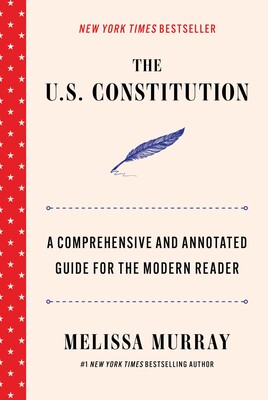
ETA: I also was excited about Melissa Murray's new constitutional commentary. Eh.

The preface was a quick summary of its creation that seemed like forcing a bunch of stuff into a few pages. And doing so in a somewhat simplistic way.

The summary of each section is helpful, if often a tad too basic for someone who already has more than a passing understanding. It isn't meant to be comprehensive, but sometimes it seems a tad thin. 

It serves its function as a one-volume reference book for the average reader (though now and then tossing in words like "chattel" without comment). Sometimes, there are particularly interesting discussions, at times, with very up-to-date material. 

Murray provides a balanced view, including points of view that she personally doesn't support. At times, you do get the idea she isn't some originalist. 

The subtitle is "A Comprehensive and Annotated Guide for the Modern Reader." It does cover the whole document in annotated form and is written for the modern reader. It has Civics 101 potential.  

The book is formatted comfortably. OTOH, there are no charts, pictures, or anything of that sort. 

I enjoyed Linda Monk's books better. 

Sunday, June 28, 2026

Texas Bible Reading List

I discuss Texas putting out a new reading list for schools that includes biblical stories. One theme is that we should think about such things, including the meaning of the Ten Commandments. Also, yes, this has a feel of an illegitimate sectarian establishment of religion. But let's go deeper. It's for 2030. We have time.

Monday, June 15, 2026

SCOTUS Watch

We are focused on Supreme Court things lately. The regular term will end soon, and there will be fewer.

The Order List again had a few interesting tidbits, including granting a case to determine if states need twelve-person juries for felony cases. The different policies regarding juries have led the Supreme Court not to nationalize all the federal rules (see, e.g., grand juries) there yet. 

They did not (without comment) take a challenge involving a now nearly 100-year-old federal judge who has been taken off regular service. It is a bit of a conservative cause celebre in some quarters. Others aren't too excited. They figure Congress set forth guidelines that allow courts of appeal to regulate such things, and it wasn't unjustly applied here. 

Jackson (with reason) and Alito (not) recused without saying why. Alito (with Thomas) wanted to take a criminal justice case. Alito wanted to take a case involving schoolchildren:

When she sought approval to hang flyers at school to advertise club meetups, school administrators would not approve the flyers because they contained pictures of students with “Defund Planned Parenthood” placards. 

Alito and various conservatives are more open to the federal courts intervening when conservative causes are involved. Meanwhile, the justices are preparing for the final burst of opinions, many of the twenty or so left "hot button" issues. 

There is only one (Thursday) opinion day scheduled so far. Granting another next Thursday is a gimmee; that is still not enough. At least two more should be necessary. Having one tomorrow would have been logical. We shall see how things go.  

Meanwhile, like usual, the Order List has some notable matters, even if nothing earth-shattering. 

===

ETA: I talk about the opinions handed down later in the week, including marijuana/guns, here. 

Monday, May 18, 2026

SCOTUS Watch: Order List

A ten-page Order List with various odds and ends.

Chris Geidner notes on Bluesky:

Also in today’s orders, SCOTUS sidesteps ruling on private enforcement of Section 2 of the Voting Rights Act, sending two cases back for post-Callais reconsideration. Jackson dissents, pointing out that Callais had nothing to do with private enforcement and saying she would have summarily reversed.

Rick Hasen summarized:

Justice Jackson dissented from the order, on the sensible grounds that Callais did not consider the right to sue question. Of course, the stakes are much lower now that Section 2 is essentially dead no matter who sues.

(His colleague was more sympathetic.) 

Also, a cert grant (per Geidner):

The Supreme Court takes up a case over whether employees of federally funded schools can sue to enforce Title IX’s sex discrimination bar. 

Kavanaugh, without comment, noted he would have granted cert. in another case. If you do a docket search (on another page since the Order page does not provide links):

Whether a multiemployer pension plan that terminated through mass withdrawal before the 2020 plan year is eligible for Special Financial Assistance under 29 U.S.C. 1432(b)(1)(A).

Alito and Barrett didn't take part in the examination of a couple of cases. Again, only Kagan and Jackson regularly explain why they do that. 

Sotomayor added a brief statement noting that she agreed with the court not taking a criminal case because the government admitted error and the defendant received all that was requested for. 

The next thing on the schedule is an opinion day on Thursday. Next week's orders will be on Tuesday because of the holiday. 

===

I agree with Steve Vladeck that justices should show up more in front of Congress. Court reform includes multiple things, including some that should have bipartisan support. This is one such proposal. 

Friday, March 06, 2026

SCOTUS Watch


Order List

Sotomayor (with Jackson) dissented from a denial regarding a case about prisoners having the right to split a filing fee. Kagan would have taken the case but did not join. Takes four to grant cert. 

We then went into an oral argument involving guns and drugs. Eric Segall has a good commentary. And then the long oral argument was done. 

But not the news for the day. 

"Emergency" Docket

Steve Vladeck and Chris Geidner discussed two irregular decisions involving a New York City redistricting matter and requiring a school to tell parents their children were using alternative pronouns and so forth. They are the usual 6-3 jobs with Sotomayor and Kagan handling dissents. 

Rick Hasen briefly raises red flags about the New York case. The problem there is procedural. Only Alito writes for the conservatives. But he might have an opinion for the Court in an election case soon. That one will matter. 

The case page provides the state brief in the trans case, which details various complexities that some skip over since they think the policy is wrong. Erin Reed puts things into a wider context. She covers trans issues. And the SCOTUS conservatives have, over and over again, shown disdain for trans rights. 

(The exception being the Bostock case, a statutory interpretation case that is an asterisk without more.) 

Overall, Kagan is correct. First, they should have taken it for full review. Second, they are hypocrites regarding substantive due process, including not taking a case where trans parents raised such claims in support of their children's transitioning. 

Vladeck flags that the majority -- unsigned though Barrett with Roberts and Kavanaugh concur separately, with a few comments about Dobbs, the abortion case -- rushes through the balancing required in granting the request. 

Okay, they did it, as he says, but they did it slipshod, including not being concerned about the interests of the students. For instance, even if you think the parents have a good case, the district court's order appears to be too broad. 

Ideally, parents, children, and schools should be on the same page. But things are not always ideal. Forced outing, against the will of the children, is bad too. 

A 6-3 "emergency" docket opinion is not the way to handle this situation. But, as Vladeck says, the conservatives are (selectively) impatient. 

Billy Leon Kearse Execution

Florida, after SCOTUS dropped a no comment order, executed another person on Tuesday.

Kearse murdered a police officer about thirty-five years ago. Murdering a police officer is one of those narrow classes of cases of particular heinousness. But it was 35 years ago. Too long.

And, even there, only a narrow majority below rejected claims that a death sentence was improper. He was 18 and had serious intellectual disability claims. 

The final appeal raised procedural arguments, including those involving the disability, which were probably rightly rejected in this posture. Still, even here, I wish they would briefly explain the ruling.

I continue to find these executions gratuitous and otherwise problematic without being APPALLED each and every time. 

Opinions

Wednesday was a scheduled opinion day, though the two unscheduled rulings took some attention off that. Regularly, SCOTUS does things off schedule.

Jackson (standard used in an immigration case) and Sotomayor (NJ Transit Corporation is not an arm of New Jersey, so no sovereign immunity) with unanimous opinions. SCOTUSblog had a live blog.

Upcoming

Another Order List is scheduled for Monday. There will be a two-week break before more oral arguments. 

No opinion days are scheduled, but as we have seen, unexpected news might arise at any time. For instance, two years ago, the Supreme Court announced over the weekend that there would be an opinion dropped, without them showing up (cowards). 

The Supreme Court does not usually announce news on the weekend. But this was a special case. It was the Trump v. Anderson opinion keeping him on the ballot. 

Thursday, February 05, 2026

RIP C.I.A. World Factbook

I found the CIA World Factbook a useful tool the last few years when doing research involving the countries (and territories) of the world. Others have found it a helpful tool for much longer. 

For instance, the Puerto Rico page provides basic facts. Now that page is down. There is an archived page. See here for the whole thing. 

A resource in place for over sixty years is suddenly gone. Why? Well, it's par for course with these guys.

The announcement posted to the CIA’s website offered no reason for the decision to end the Factbook, but it follows a vow from Director John Ratcliffe to end programs that don’t advance the agency’s core missions.

Its website tells us:

At its core, our mission is to gather and share intelligence to protect our Nation from threats. Our highest principles guide our vision and all that we do: integrity, service, excellence, courage, teamwork, and stewardship.

The CIA does not only collect and distribute covert information. Some argue that with the Internet, the factbook is obsolete. It is tedious to keep up to date. Why keep it?

The Internet allows for easy research. It does not remove the value of reliable, easy to access and peruse materials. The Factbook is not Wikipedia. 

Paul Musgrave, a political science professor, argues:

Killing the CIA World Factbook might seem like small potatoes, but it was a touchstone of curated facts in a sea of disinformation.

An Atlantic commentary argues it is "part of a broad war on information being waged by the Trump administration." Not part of the core mission?

The World Factbook was a public service that helped Americans and others around the globe be informed, created a positive association with a shadowy agency, and spread U.S. soft power by providing a useful service free to all. 

The sudden takedown is also part of a wider war on information. For instance:

The executive branch has removed data from its websites, such as those of the CDC, the Census Bureau, and other departments, or removed the webpages that hosted them. Almost 3,400 data sets were removed from Data.gov in the first month of Trump’s term alone.

The war on good government continues. 

Monday, January 12, 2026

SCOTUS Order List (and other stuff)

First off, I enjoyed Emily on Fire, a book co-written by James Patterson, which is a young adult novel whose title is a tad literal. I'm not usually a reader of Patterson (or Danielle Steel), but the cover drew me in at the library. 

Her mother died of cancer, and her sister committed suicide. Now, Emily plans to kill herself (you know how) to get the world to realize that we are fucked up and have to do something! The book mostly uses her point of view.

The book is raw (and honest, which is important) while retaining an empathy that provides some optimism that is much needed these days.

The only other news on the merits docket came Thursday—when the Clerk of the Court, in a letter to the parties, announced that Justice Alito is recusing from a case in which the Court is set to hear argument later today. 

Steve Vladeck explains an exception to the usual recusal without comment approach done by most of the justices, minus Kagan and Jackson. Sotomayor sometimes comments.

The norm (including applied to Alito vs. Kagan) was found on today's Order List. The Court granted some cases for review on Friday. Today, more so than normal perhaps, it was mainly about clearing brush -- a list of non-grants.

‪Sean Marotta‬, a lawyer, noted on Bluesky:

The #SCOTUS orders list today is a reminder of the shrinking commercial docket. Cases that would have been shoe-ins in the 90-case docket are getting denied regularly.

Kavanaugh, without saying why, noted he would have granted review in a bankruptcy dispute. As usual, I had to separately look up the docket number on the docket page, since the Supreme Court does not provide a link. Can you change that, guys?

The transgender athletes' oral argument is tomorrow. 

ETA: A comment in response to my reference to the Order List somewhere else flagged that there are two atypical requests for briefing respecting petitions for rehearing. I appreciate such information even though it encourages my excessive online habit. 

PFRhs are very rarely granted. The federal government waived a response in one case. In the other, it appears like they want to speed things along.

A bit of inside baseball during football playoff season.

==

I'm not too happy about most of the final scores in the first set of NFL playoff games. The Panthers (after two losses) gave the Rams a fight, but the end result was a third loss. I'm fine with the Bills winning.

A Jaguars' win would have been okay, too.

ETA: A close game, helped by the Texas QB screwing up, became a laugher in the 4th with Houston winning. It might be Rodgers's last game. 

I'm fine with that, particularly (1) not a fan of Aaron Rodgers, (2) Annoyed at the Week 18 win (they would have been better off losing that close game than yet another Steelers loss in the playoffs), (3) I'm fine with Houston, and (4) it's a better match-up with the Pats.

Saturday, December 06, 2025

And The Dragons Do Come

Sim Butler is an Alabama communications professor with two daughters. One is trans. "Kate" is around 15.

He uses a pseudonym, though early on noted she originally chose "Marina" as a feminine name. It's unclear if that means they did not use that name.  

Sim Butler discusses raising a trans child, including general information (about sports, health issues, and so on) and personal narrative. His state's passage of anti-trans legislation, including making him a felon if he provided health care to his child, led the family to leave the state.

(The state government's current mentality is suggested by this review of the book, which appears to be written by a conservative-leaning website that focuses on state news. The discussion keeps on, for instance, talking about "his son.") 

There is a depressing quality to that which is familiar. Becoming Nicole was written ten years ago. (The subject wrote her own book recently. She is now in her 20s.)  To be able to provide the best care for their daughter, the parents basically lived apart, so she could go to a supportive school.

Kate and her family received support from family, friends, and their liberal minded church when she first came out. Things went less well in first grade, though the school assured them things would go okay. 

A new teacher led things to go sideways. They went to another school, which required the author to get another job to afford to pay for it. What about people without similar resources? I ask rhetorically.

The author loves his home state, but is a tad bit naive, though he grants he is protected as a white, economically privileged individual. Alabama, in recent years, has had other conservative complications. The book, for instance, doesn't talk about reproductive rights. The author is liberal.

Butler references his grandfather, who was a sheriff for decades, ending around 1990. He vaguely references that, at first, a quick search suggested that the grandfather was not a "heavy" as compared to other officials during the Civil Rights Era. 

He then suggests maybe he was being a bit naive without going further. Yes, that seems to be true. Butler doesn't press the point, but perhaps figured he had to talk about his grandfather since he was a public figure. A jail was named after him, after all. 

The parents' fighting the dragons helped Kate have a safe space to develop. Her gender dysphoria, before having a chance to live her life in a way matching the gender she knew in her mind, led to various negative consequences. 

She was much happier when she was able to be her true self, including in a safe and supportive school environment. Which, perhaps a bit amazingly, did exist in Alabama in her early years. 

(Conservative politics in the state eventually targeted her supportive middle school.) 

She still worried about publicly being a girl (it led her to dislike organized sports) in such contexts. She worried about how others might see her. Non-trans boys and girls also sometimes have comparable gender issues. What is a "normal" gender identity? 

The book ends with the story incomplete. We live in anti-trans times. There is a reference to anti-trans legislation being proposed in their new, more purple-leaning (unnamed) Southern state. Kentucky? Georgia? Kate, however, seems to be doing well. 

The epilogue references Martin Niemoller and his famous "First they came for" quote. A useful comment, especially given all the targets these days. 

Trans people are a leading target these days. A majority of states have anti-trans legislation. 

The Supreme Court upheld anti-trans legislation, refusing to even acknowledge it as anti-trans. Shades of Plessy v. Ferguson, saying any feelings of discrimination are only "in their head"? 

Nonetheless, trans people continue to exist, and they and their families and communities keep on insisting they should be and can be happy, have support, and be treated as individuals. Parents play a leading role. 

I am somewhat amazed at how parents do it. Me and my siblings surely were no prizes. Oh well. 

Check out the book. Recommended. 

Sunday, November 16, 2025

I Wish You All the Best

I Wish You All The Best, directed by a trans person, has received good reviews. A Bronx connection: she went to Fordham University. This is her directorial debut. She was an actor in 13 Reasons Why, another case where I only read the book. 

I noticed Cole Sprouse had a supporting role as the protagonist's brother-in-law. I remember him as Ben, the son of Ross and Carol (a lesbian), on Friends. Now, he is in his 30s. Time flies. 

“Non-binary” is an umbrella term that includes those whose identity falls outside of or between male and female identities; as a person who can experience both male and female, at different times, or someone who does not experience or want to have a gender identity at all.

The film concerns another Ben, who is kicked out after they come out as nonbinary to their parents. They moved in with their sister, who had left the family years earlier. Ben has a path of self-discovery, including a cute romance. The book is overall well-written. 

Lena Dunham has a role in the film as an understanding art teacher. The character is Asian-American in the book. The film also, for some reason, also has the sister having a newborn. I don't see a Muslim nonbinary character listed, who plays an important role in the book as Ben's mentor.

Mild spoilers. In the book, things overall work out well for Ben. Their sister provides a safe haven. She and her husband have the resources to help them. It's convenient, for instance, that the brother-in-law is a teacher and helps Ben transfer to a new school. 

They and their parents do not reconcile. They overall do not come out well at all, hints of backward religious beliefs. The mother comes off better. She feels sorry about the pain she is causing her children. But, ultimately, she is loyal to the father. 

(I began using male pronouns for Ben when writing this piece. Even the hosts of Gay USA sometimes trip up with using preferred pronouns. It can be tricky.)

The book shows the value of therapy, the usage of anti-anxiety medication, and dealing with social anxiety. It also shows the essential nature of finding good support. Ben finds a support network that they did not have before, including in school. 

Before, they didn't hang out with people. Finding someone who here helped Ben find two more close friends was oh so important. This is a general principle and not limited to people on the LGBTQ+ spectrum. 

Attacking trans people is deemed acceptable by many governments, up to and including the Trump Administration. Transphobia is both understandable (as far as bigotry can be) and ridiculous.

Transphobia arises from different things. The Trump Administration being so anti-trans might confuse someone. It seems logical (if wrong) for them to target Democrats in illegitimate ways or monetize the government or demand utter loyalty to Dear Leader.  

Why the anti-trans stuff? It does have a right-wing religious angle. It is fitting that the Religion Clause Blog often has news on trans-related lawsuits. Sex and gender flexibility clash with right-wing religious beliefs. Not "Christian" beliefs. To be clear. 

Such beliefs do not only have a religious angle. People can be religious and support nonbinary and trans people. Religious positions often have more to them.

Gender fluidity endangers traditional masculine-dominant beliefs and practices. Fascism and authoritarian governments regularly promote such beliefs. It is fitting that one book about them is entitled Strongmen. Anti-trans policies fit in here.

A book (written by a non-binary person) and a film (directed by a trans person) respecting the self-actualization of a binary person are quite important. We need to be good people and provide support for those in need. We need to not focus on false issues.

A final word about young adult non-fiction. It is often not only for young adults. After all, people enjoy television shows and films about teenagers without being teenagers themselves. YA fiction can be similar.

Saturday, October 25, 2025

Two Meryl Wilsner Books

I briefly touched upon these two books, but since I have had some problems lately finding books, it makes sense to say a bit more. 

They were such easy reading. I read chunks of them at a time when I have repeatedly been unable to get into or complete both fiction and nonfiction. 

A pleasure sometimes when you just don't want to think too much and get into a good book. They also had some "nutritional" value, too.


Julia Roberts was on Stephen Colbert recently. I wanted to reserve this Julia Roberts film (the title, that is) and saw this book during the NYPL library search. It's a lesbian romance.

A Chinese-American showrunner and former actress (41) has a great Jewish-American assistant (27). Among other things, she "clicks" with her, and the assistant knows how to make her happy. So, she takes her to an awards show as a "buffer." 

They have a personal moment that is taken by the tabloids as a sign that they are actually an item. It takes them the rest of the book to realize that deep down they are. 

We get alternating points of view from each woman via an all-knowing narrator. I like those sorts of things -- like multiple perspectives. 

The showrunner is a successful celebrity/professional with an "ice queen" persona with a softer side. The assistant is more likely to wear her heart on her sleeve and is more at the beginning of her (promising) career path. Good match.

The book takes its time (it spans most of a year), and the attraction develops slowly. The sex scene is at the very end. Overall, I thought it was well-paced. 

It also throws in things such as sexual harassment (it was published in 2020), feminism, bestie/sister relationships, and more. And not "too much" either. 

There is a bit of an "easter egg" in that the television show involved in this book is referenced in passing in the second book. Nice drop-in for fans. 


The author's second book continues the age difference romance angle. Cassie (one reviewer calls her a "chapstick" type) is a college senior. She's apparently bi, though she seems to lean more same sex. Erin is her bestie's mom, who is 38, bisexual, and a doctor. 

So, there is an age difference, but smaller than you might think. The bestie is a frosh. At times, from Erin's comments, you'd think she was in her 40s at least. You are 38, Erin. That is still pretty young.  

(The couple in the third book is closer in age.) 

It is like someone said, "loved your first book but hoped for more sex." This book has sex from the first chapter, which is when both thought they were just having a one-time hook-up. They have a lot of sex after that. Cassie also spends a lot of time thinking about how MILF-y Erin is.  

[ETA: Erin is in her late thirties at the beginning of the book. She had a college-age daughter, so she is obviously a "MILF," but she would technically be so in her twenties. But this underlines the relative nature of "older women" and the MILF term generally.]

The book, overall, was well-paced. I liked the characters. Cassie had more engagement with other people. Erin was often by herself when the two were not together. That was somewhat unfortunate. A bit unbalanced. We get more of a sense of Cassie's life. 

Cassie had a bad childhood (father absent, trailer park/mom has issues), but found a way to create a family. That part of the book, including her dealing with some self-assurance issues, was nice. 

The college crew drinking a lot got a bit old. And, hey, it's nice, but Cassie and Erin having sex got a bit old, too. Their relationship developed into more than hook-ups. The book covered that. 

But the sex at some point got a tad repetitive. Again, it's not like I skipped over it. I think, however, the first book had more character development material. OTOH, two women enjoying sex has its place.

I'll add a bit of a spoiler since no one reads these things. At some point, the daughter obviously finds out about the romance. We then wait for the other shoe to drop. It takes a LONG time to do so. 

And, it turns out that in effect the daughter works things out "off screen!"  I think it might have been a good idea, at least for this portion, to have a section from the daughter's point of view. I know it might have required taking out a couple of sex scenes (both books are about the same length). Be worth it.  

One theme is that Erin needs to give herself the chance to be happy doing things for herself, as compared to what others expect from her. The willingness to enjoy a relationship with her daughter's friend (they are both consenting adults!) is a sign of this. Nice moment when she tells her therapist, and the therapist just says, "Okay." 

Erin expected judgment. Being a therapist is such a niche skillset. You have to handle people with serious issues and treat them correctly. You cannot judge them TOO much, but you also need to pick your spots. Of course, some mess things up. 

A final question would be if there is anything wrong with their relationship. There really isn't. 

It would be somewhat weird if your bestie turns out to be going out with your parent. But people do have relationships that overlap in comparable ways. 

A 17-year age difference might be a problem, but there are couples with that sort of age difference. Often, the problem is that the older man/younger woman relationship has a power differential. It is often less evident in same sex relationships. 

My biggest concern is that the cover photo doesn't do the characters justice. Cassie lusts after Erin regularly. I wanted a picture of her, even fully clothed! Cassie, too, but Erin sounds sexier! 

One more thing added in her second book was a firm happy ending. There is an epilogue, taking place four years later, that has a marriage proposal. 

The first book ends with them admitting to each other that they like each other, having sex, and then again going to an awards show, now firmly as a date. A blurb talks about "happily ever after," but that is not assured.  

ETA: June Lockhart, well-known classic t.v. mom and doctor in Petticoat Junction, who replaced the mom when the actress died, has died at age 100.  

We need a list of really old people (Dick Van Dyke, for instance) to keep track of people who are still alive. Then, we don't need to do the "still alive?" bit.

One article, in a curious place, referenced her "cougar" past when she was 47 and dated someone 21. The relationship lasted for over five years. 

The NYT obit references her liberal beliefs, including a comment she made about the Hollywood Blacklist. 

Her Wikipedia entry (which doesn't mention the cougar bit, but I found many hits via a search) notes she was a Roman Catholic and met the pope. OTOH, she was divorced twice. Seems a tad bit off. 

But her off-screen life—bold, unapologetic, and full of joy—adds depth to a legacy that continues to inspire.

That is from the "cougar" article. Erin would agree. 

Cleat Cute: I did not like her third book as much. 

It also has the competing perspective approach, but for some reason, she no longer labels the chapters by the person involved. Makes the book seem one continuous novel instead of a parallel affair. It's a minor thing, but I liked it better the other way.  

The characters are much closer in age (a few years apart), though different in personality and status (one is a long-term pro soccer player, the other a newbie). Again, though people of about the same age are fine enough, the age difference in the first two helped. 

(Neither was that old, as noted, but they were at different times of their lives and careers.)

I could not get into the story as much here and got bored. I stopped reading about a third in. Oh well. We'll see how the fourth is. Two good books are fine. 

More ETA: I re-read the first book in July 2026. 

I hold to my comments. I read the darn thing in 12 hours! I need that sort of comfort food (with some nutritional content) these days. 

I also glanced at the fourth book after writing my original entry. It didn't look promising. 

If you like it, including (as I recall) the nonbinary content, that's great. Also, I'm getting some hits for this entry (not that many -- it's a relative thing). Hi! 

Monday, October 20, 2025

Order List + Another Order

The Supreme Court disposes of lots of cases without comment. A few people want them to explain everything. That would be a tad silly. 

They dispose of thousands of things, including not granting patently meritless claims from (to use a legal term) kooks. My rule is that they should do it for executions and when they overturn the court below.

Some of the orders do have interesting details. Others are more trivia answers. That can be interesting too.

Friday's Order

They disposed of, without comment, an "order in pending case" on Friday. It was "application for a writ of injunction presented to Justice Kagan and by her referred to the Court is denied." 

The case concerned a desire to have a vaccine exemption for a student because the vaccine was somehow a product of an abortion. The Supreme Court didn't say why, as noted, but these requests are rarely provided. The merits are not the issue here.

Still, of course, the subject matter catches one's eye. It turns out that decades ago that fetal tissue was used to start a cell line that was involved in the production of the vaccine. It is not clear why the abortion occurred.

It's not like someone performed an abortion for scientific experiments. Once the abortion occurs, it is unclear why a fetal tissue sample can not be used. And, as noted here from a Catholic perspective:

As a practicing Catholic, I think the moral balance of indirectly benefitting from an abortion that occurred 50 years ago in order to take a vaccine that will prevent further death in the community is a no-brainer – especially considering that so many of the over 620,000 American deaths have occurred in the most vulnerable and marginalized in our society. We need to focus on saving lives right now. We need to care for our neighbors. 

The level of indirect involvement that is cited to demand an exemption, repeatedly to harm third parties (e.g., deny insurance benefits or make it harder to obtain them), is not only infuriating, it is immoral. And, bad as a matter of free exercise law. 

Order List 

The Monday Order List is the last scheduled thing on the schedule until November 3. (Happy Birthday, Bobby, who won't read this.)  Two executions are scheduled before then, so we shall see about that.

The Order List included various housekeeping measures. Notably, Alito (cert denial) and Gorsuch (habeas, the claimant cited for abusing the privilege of free cases) didn't participate in two of the denials. 

The Supreme Court has added three new cases -- involving arbitration, gun rights, and bankruptcy. All three are relists. 

The Second Amendment case involves prosecution of drug users (controlled substances). A sympathetic claim though (1) what drugs (2) how strong is the constitutional claim? The claim is notable too because Hunter Biden's crimes involved this matter. 

Another notable thing: the justices decided to wait to determine if Little v. Hecox is moot. The trans student in the case asked the Court to do so. They will wait until after oral argument (this is fairly normal). 

Funding

The Supreme Court announced that its funding has run out, given the current Republican government shutdown. Yet again, the public information office released a statement but did not post it on the website. 

They have a press release page for that, you idiots. There is a notice on the website:

Due to a lapse of appropriations, the Supreme Court Building will be closed to the public until further notice. The Building will remain open for official business.

So, sorry SCOTUS haters, this won't stop them from skullduggery. The public is just denied entry. 

On that subject, here's the December calendar. 

Tuesday, October 14, 2025

Order List + Execution Week Begins

SCOTUS

The Supreme Court added a case involving plea bargains to the docket on Friday. 

Saturday brought an article about lower court judges being upset about the shadow docket. 

Today was Order Day (given yesterday was a holiday). Kavanaugh, Alito, and Gorsuch recused themselves without stating why.  Sotomayor, for the liberals, flagged a troubling jury/capital case. 

Gorsuch said he is open to incorporating the Seventh Amendment. If so, go all the way, since the grand jury is also quite important, and the Third Amendment also has its importance. 

Alito (for Thomas and Gorsuch) also added a short statement noting his concern that schools do not notify parents about children transitioning. Such things, unlike abortion or birth control (Thomas), are a fundamental right. 

ETA: Both Sotomayor and Alito used the word "tragic."  We were able to hear the full opening material (e.g., bar admissions) on the first day of the term. Not so this time, apparently, since the C-SPAN audio starts with the first oral argument, with a tiny bit of Roberts swearing in lawyers. 

I also skimmed (it's too long for me to read; it might have been back in the day) the famous Learned Hand biography. There's a lot of interesting content, although some chapters are tedious. A nice anti-originalist quote:

[I]f our Constitution embalms inflexibly the habits of 1789 there may be something in the point. But it does not; its grants of power to Congress comprise, not only what was then known, but what the ingenuity of men should devise thereafter. Of course, the new subject-matter must have some relation to the grant;  but we interpret it by the general practices of civilized peoples in similar fields, for it is not a strait-jacket, but a charter for a living people.

Reiss v. National Quotation Bureau, 276 F. 717, 719 (S.D.N.Y. 1921).

His Bill of Rights lectures, however, simply go too far. Judicial review is part of our constitutional system. Yes, you can be quite wary about applying it. But it is a thing. His career as a whole wasn't such "judicial restraint on steroids" as all that.  

Two Executions 

It also marked the beginning of a busy week of executions. 

Texas, which has its moments, stopped (for now) an execution. It involved discredited shaken baby evidence. But we still will have a busy week.

Lance C. Shockley was sentenced to death for the murder of a Missouri police officer. That was twenty years ago, which (yet again) gives me a chance to cite Stephen Breyer's concerns that delays at some point are unconstitutional. 

Murder of police officers is one of those crimes even those wary of the death penalty might make an exception for. However, as usual, some red flags arose. For instance, the jury split on whether to give him the death penalty, with the judge deciding. 

(He also had a failed religious liberty claim regarding what he wanted at his execution.  The Supreme Court rejected it without comment, though it waited until sometime late afternoon execution day or so to do so.)

If there was going to be a busy week of executions in 2025, obviously, Florida would have to get involved. Samuel Lee Smithers murdered two women around thirty years ago (1996). He was the subject of "Deacon of Death," a true crime novel.

(He was a church deacon. He was also connected to church arsons. The murder victims here were prostitutes. Is there some twisted religion angle?)

Smithers was executed when he was in his early 70s. The question remains if it is legitimate to execute him after all this time. Mental issues were flagged, and a victim's father said she would not want him to be executed. What of the other victim?

An execution at this point does have shades of involuntary euthanasia. In fact, the final appeal (as usual disposed of by SCOTUS without comment) argues it is unconstitutional to execute the elderly. The long time that has passed is mixed in. 

Friday, October 03, 2025

A snapshot of religious liberty in the face of the current illiberal nation we live in

The famous flag salute case was written by Justice Robert Jackson, who later wrote an influential concurrence involving presidential power. 

The author of a book discussing this concurrence referenced the lower court opinions in the original flag salute case. They can be found online. The Supreme Court opinions in Minersville School District v. Gobitis are also worthwhile. 

The caption shows that the school district lost below. Both lower court opinions held that religious liberty won out. There was not a strong enough threat to the public welfare to require schoolchildren to pledge allegiance. The opinions protected some degree of religious action along with belief.

Justice Frankfurter's majority opinion voiced the importance of teaching patriotism and how the flag salute helped to unite us. The Supreme Court soon reversed itself. 

Three justices foreshadowed the result by admitting they made a mistake. The school district lost again below in West Virginia v. Barnette, the lower court somewhat dubiously predicting (if correctly) the Supreme Court would reverse itself.  Two new justices helped lead to a final 6-3 vote.

Frankfurter began with a strong statement on religious liberty. He later was a strong believer in the separation of church and state, including dissenting in a case involving funding bus fares to religious schools. Note the broad language of what is at stake:

Certainly, the affirmative pursuit of one's convictions about the ultimate mystery of the universe and man's relation to it is placed beyond the reach of law. Government may not interfere with organized or individual expression of belief or disbelief. 

Propagation of belief -- or even of disbelief -- in the supernatural is protected, whether in church or chapel, mosque or synagogue, tabernacle or meetinghouse. 

Likewise, the Constitution assures generous immunity to the individual from imposition of penalties for offending, in the course of his own religious activities, the religious views of others, be they a minority or those who are dominant in government.

[Paragraph breaks added.]

One justice dissented, if the person who was soon to be the new Chief Justice. His dissent provided some of the themes found in the ultimate Barnette case. Note, by the way, that both captions mispelled the families' names. 

Without recourse to such compulsion, the state is free to compel attendance at school and require teaching by instruction and study of all in our history and in the structure and organization of our government, including the guaranties of civil liberty which tend to inspire patriotism and love of country. I cannot say that government here is deprived of any interest or function which it is entitled to maintain at the expense of the protection of civil liberties by requiring it to resort to the alternatives which do not coerce an affirmation of belief.

The importance of education to teach and instill principles of "civil liberty" led people throughout our history to support public education. Education is a means. Knowledge and republican values, along with such things as learning how to live with each other with empathy and respect, are ends.  

These flag salute cases were decided during World War II. I'm reading a book about the final days of the European war, after Hitler and Eva Braun committed suicide. Those days provide some perspective on our own reality. 

We are not doing too well. One analysis provides evidence that we are an "illiberal democracy." Another states the state of the republic is "grim." It (rather convincingly) argues that if the forces of liberty can regain power, we should not try to simply fix our broken constitutional system. 

Maybe this buries the lede in a post that is mainly about a historical event of interest. Perhaps not. The cases involved school children being persecuted for practicing their religion. 

After the first opinion, children and adults were physically attacked. It was a dark time, in the middle of a world war. The Supreme Court responded, on Flag Day, with a paean to constitutional liberty. 

The current Administration is an illegitimate criminal conspiracy. It is fundamental to speak the truth. 

Our ancestors spoke of a tyrant in 1776. I am not exaggerating by saying that in various respects, George III was a piker next to the Trump Administration. 

I can toss in the Supreme Court, including stripping abortion rights. How dare they. The protections of the rights of some schoolchildren, with beliefs many of us oppose (even when they don't bother us by ringing our bells -- do they still do that? They did it when I was a child), are a type of fixed star to honor and remember while we fight the best we can.

I don't know what the future will bring. The big and necessary changes seem impossible on some level. Do they not always until they do occur? What did people think in 1775 or 1941? Or the early 1950s regarding racial equality?

History provides perspective, as we continue to live it. History is my jam. I studied it. I write about it. I find it interesting. I think it can teach some lessons. 

It's sometimes uncomfortable being a part of it.

Tuesday, September 30, 2025

Florida Executes Victor Tony Jones

Jones was sentenced to death for murdering his employers, 66-year-old Matilda Nestor and 67-year-old Jacob Nestor, later admitting he did it because they owed him money. Jacob shot Jones before he died. The police found Jones wounded at the scene. 

This took place thirty-five years ago. Justice Breyer (joined by Ginsburg, also citing earlier dissents by Stevens), whom I repeatedly cite, argued:

These lengthy delays create two special constitutional difficulties. First, a lengthy delay in and of itself is especially cruel because it subjects death row inmates to decades of especially severe, dehumanizing conditions of confinement. Second, lengthy delay undermines the death penalty’s penological rationale. [cleaned up]

His lawyers unsuccessfully raised various claims, including alleged intellectual disability. Mitigation evidence was cited in the final appeal (see below). 

They also attempted to use the abuse Jones suffered as a child at a notorious state reform school. At least 34 people who went to the school later were sentenced to death. Jones received a fiscal settlement earlier this year. The recent settlement arguably was new evidence (often these claims are procedurally barred as coming too late), but only one judge accepted that. 

My bottom line is that a long prison sentence was more appropriate. And, even if not, they waited too long. Yes, I am an "abolitionist," but even before that, only a tiny subset of "worst of the worst" situations should warrant an execution. The numbers from that study, however, are also rather glaring. 

The Supreme Court, mid-afternoon (a bit late), rejected a final appeal without comment. One claim was a technical procedural matter. The other somewhat emotionally asked:

Has the Florida Supreme Court repeatedly failed to take into account the diverse frailties of human kind in capital sentencing by consistently denigrating the force of proffered mitigating evidence. 

Maybe so, but it's academic now. 

There are eight executions, in seven states, scheduled in October. Five in four days. The last person has a suitable name for this whole process: "Grim."

Sunday, September 21, 2025

Eric Adams Is Bad Quickie

The NYT had a good guest essay on the corruption of Mayor Adams. The article also explains how the Supreme Court (at times unanimously) made fighting corruption harder in recent years. Yours truly, replied to this article, where the mayor made a switch to join NIMBY-ism. This matter has been a long-time concern. More bad.

Friday, September 19, 2025

The Fall of Affirmative Action (Not Quite)

I wrote about the Jimmy Kimmel (WTAF) suspension at my Substack. A very woke/triggering affair.


Justin Driver's first book was a long-form work about Supreme Court cases involving schools. This book is part of a series intended to be quick reading. 

It supports affirmative action, but generally takes the Supreme Court (to be specific) overruling race-based affirmative action as we know it as a given. It argues (1) that it is counterproductive even granting the majority's premises, (2) there are (quite imperfect) means left to fulfill the ultimate goals (e.g., targeting certain residential areas). 

Prof. Scalia (as he then was) wrote an anti-affirmative article, short and not so sweet, back in 1979 entitled The Disease as Cure: 'In Order to Get beyond Racism, We Must First Take Account of Race.' Let's say he was not a fan of Justice Blackmun's Bakke argument, later reaffirmed by Sotomayor and Jackson.  The familiar arguments are there.

My father came to this country when he was a teenager. Not only had he never profited from the sweat of any black man's brow, I don't think he had ever seen a black man. 

This could have been said (if he considered such things; I never recall him talking politics or such ideological sentiments) by my Italian father around that time. His father was an Italian immigrant. It would be a lie. 

The article doesn't even consistently demand the premise. Scalia later acknowledges that such white ethnics might have "been the beneficiaries of discrimination against blacks." It would just be comparing a "mountain with a molehill" to put it on par with slavery. 

Sotomayor and Jackson use their dissents in the 2023 opinion to summarize just how much racism is still a thing almost 45 years after he wrote that. Shades of Shelby v. Holder, but before Reagan was elected president, he sold a bill of goods that racism was really just a shadow of a problem.

Scalia argued he was fine with programs not based on race, even if most or all beneficiaries were black. He supported the needs of black people "because they have (many of them) special needs, and they are (all of them) my countrymen and (as I believe) my brothers."  

A nice sentiment, but dubious if we ignore specific needs and problems that are not general. They are racial, and the solutions will be racial too. Also, aside from the regular support of these people of racists (most recently, Trump), there is regularly no serious attempt to do the hard work to stop racism and its effects. 

It is hard to take claims of good faith. They are not akin to Justice Douglas, who opposed race-based affirmative action but was willing to require much heavy lifting to address racism in other ways. Some minority of affirmative action opponents (many of whom still vote for Trump) might be more willing than others. But in the end, they are wanting. 

Education is fundamental to republican government. The right to education is protected in state constitutions. It is an appropriate concern of the federal government. It should be deemed a fundamental right. Good education requires a lot of work by everyone involved. 

The book also argues that liberals sometimes are too wary about acknowledging that affirmative action is imperfect. The claim has some bite but is exaggerated. 

For instance, repeatedly in the dissents, it is emphasized that race is only a factor in affirmative action programs. They are carefully structured. Rightly so.

Conservatives, including Justice Thomas, argue that affirmative action leads people to assume that all blacks are unqualified. The author flags the concern while noting it is at least overblown. I firmly agree. 

The assumption exists that there is no affirmative action. Perhaps, the ultimate problem here is racism. A black lawyer passes the bar after an impressive academic record at Harvard. Why should a person doubt their qualifications? 

I think that a range of techniques should be used to promote both diversity and racial equality. These techniques require much work. The goals, however, are valid. DEI is a good thing. Diversity, equity, and inclusion are good things.

Republicans agree when it suits. The "praying coach" case reaffirmed the importance of a "free and diverse Republic." Religion can specifically benefit in promoting those ends. 

A specific enumerated concern about the establishment of religion does not change that. Ideally, the Supreme Court would more seriously respect how free exercise and the establishment concerns should be balanced. That's another fight.  

The Equal Protection Clause, some comments by Justice Scalia notwithstanding, does not reference "race." Sotomayor is correct to highlight the text. Equal protection sometimes requires considering individual characteristics. 

Race included. We must be careful. Race specifically is a concern of the Fourteenth Amendment. Still, the Equal Protection Clause is more open-ended, including over 150 years of using race to promote racial equality.  

The "end" of affirmative action -- even the majority opinion leaves open military academies, among other things -- has somewhat been exaggerated. The Supreme Court has overall just provided a misguided approach, often more lip service than real, in fighting the use of race.

Anyway, Justin Driver's book is well recommended. I have not fully covered many of the subjects covered. Check it out. 

Thursday, September 11, 2025

Undocumented Immigrants and the 4th Amendment

First off, the Supreme Court "refused to step in, for now, in a dispute over one transgender student's bathroom access in South Carolina." 

It stated that it was not ruling on the merits but was only acting, given the rules for emergency action. 

How they applied such rules was not cited. Notably, it gave that reminder here. Thomas, Alito, and Gorsuch, without saying why, would have granted a stay. 

It is depressing that this is still an issue in 2025, but that is where we are at. 

===

I also wanted to say more about this week's ruling regarding ICE searches and seizures of possible undocumented persons. Kavanaugh's concurrence assumes they have Fourth Amendment protections. 

Also, a major concern here is the wrongful treatment of documented persons and citizens. Still, what about undocumented immigrants, particularly? What rights do they have in this context? 

The Fourth Amendment speaks of "the people." Are undocumented persons members of this class? The question does not appear to have been conclusively decided by the Supreme Court. There is usually a way to avoid it, again, because the rights of clearly protected people are involved.

Undocumented persons are constitutional "persons" who are protected by the Fifth and Fourteenth Amendments. The Supreme Court has long held that those here "illegally" are protected. Shaughnessy v. U.S. (1953):

It is true that aliens who have once passed through our gates, even illegally, may be expelled only after proceedings conforming to traditional standards of fairness encompassed in due process of law. The Japanese Immigrant Case, 189 U. S. 86, 189 U. S. 100-101 (1903).

Plyer v. Doe reaffirmed that both due process and equal protection apply, including when the federal government is involved (the Fifth Amendment has an equal protection component). The right to expel someone does not bring unlimited power. 

Since unreasonable searches and seizures invade "liberty" (how else was it incorporated?), why doesn't due process cover this ground at any rate? The reference to "the right of the people" probably primarily limited the rights of slaves. 

U.S. v. Verdugo-Urquidez held that "the people" included "a class of persons who are part of a national community or who have otherwise developed sufficient connection with this country to be considered part of that community." 

Undocumented immigrants, at least some of them, should meet that test. They can be here for a long time, have jobs, citizen families, and so forth. That is, if you read that test reasonably. The law is not always reasonable. So what does it say? 

A previous Supreme Court opinion (INS v. Lopez-Mendoza) assumed they had Fourth Amendment protection. This one made sure to say that the question was left open since it was dicta. 

Undocumented persons are persons. They have rights. These rights are based on the Constitution, statute, and international law. Can an undocumented minor be subjected to a strip search in a way that shocks the conscience? 

All persons, no matter their documentation, will ultimately be protected from unreasonable searches and seizures. At least to some degree. 

ETA: Sotomayor stayed a trial pursuant to a request that argued it was warranted by an upcoming case. 

Tuesday, September 09, 2025

At SCOTUS

In early June, the Government launched “Operation At Large” in Los Angeles, deploying roving patrols of armed and masked immigration agents to local car washes, Home Depots, tow yards, bus stops, farms, recycling centers, churches, and parks. Over the course of the next month, the Government made nearly 2,800 immigration-related arrests and detained many more.

Justice Sotomayor, for the liberals, then explains how racial profiling was used. She also summarizes the lawsuit. The district court, as usual in these cases, writing an extensive opinion, held for the challengers. 

The judge is a well-experienced child of Ghanaian immigrants. The Ninth Circuit upheld the opinion. The Supreme Court stayed the opinion without saying why. Kavanaugh, in a dubious mansplaining way, alone has an opinion. The dissent is double the length. 

Law Dork has more. A reasonable (at some point, that is a sarcastic term), conservative-leaning professor defends the decision. I am not that keen on his take and tone, but hey, what am I to do to challenge a Fourth Amendment expert? 

It has a comment from "anon" that in part compares abusive practices by normal police and ICE agents:

There are disincentives to cops doing this. They can get sued, or evidence can get suppressed, and the case thrown out. Employers of cops also have incentives to train cops to make sure they don't run roughshod over the Fourth Amendment, since they can also be subject to liability (either directly or through indemnification), and since they would also rather not have evidence suppressed in criminal cases. Some of those employers also buy insurance for these sorts of situations, and those insurers are doubtless also keen to make sure that officers know the law.

Those disincentives don't apply to the ICE agents who participate in these roundups. Civil remedies against federal agents for violating Fourth Amendment rights are very weak. And these raids are not about detecting and punishing crime.

Another professor provides another take on a key standing point. Lots of legal minds found the decision quite appalling. There is also a hypocritical tint.
Meanwhile, Chief Justice Roberts handed down an administrative stay that seems to, in effect, overturn a 1930s Supreme Court opinion that protects many agency personnel from at-will presidential removal.

This might just be a temporary thing, since an administrative stay is temporary. Many are not that optimistic. We shall see.  

This all makes me feel fine. That is, f-ed insecure neurotic and emotional. 

Don't worry. Barrett, doing her book tour now, thinks there is no constitutional crisis. 

As Sotomayor noted, dropping the "respectfully," I dissent. "I dissent" should be the normal thing. 

==

Okay. That was yesterday. I was going to leave it there, but there was more action today. 

John Roberts issues another "administrative stay," this time blocking Judge Ali's preliminary injunction in the foreign aid funding case while the Supreme Court considers DOJ's request (which was denied by the DC Circuit). [h/t Chris Geinder]

They will also decide the "Trump tariffs" issue. They are speeding along. No slow walking like in the Trump immunity case. Why? It surely is not because there it helped Trump that things went slowly. 

The new term starts on the First Monday in October.