About Me

My photo
This blog is the work of an educated civilian, not of an expert in the fields discussed.

Thursday, December 18, 2014

"Religious" as a line drawing device

Andrew Koppelman provides a response to a criticism of use of "religion" as an accommodations classification (see, e.g., her last comment here -- one that is rather weak and uses "impose" to cover way too much ground to be helpful*). The discussion raises some interesting points, such as this:
Religion is an adequate proxy for multiple goods, some of which are not ones that can directly be aimed at. “Religion” denotes salvation (if you think you need to be saved), harmony with the transcendent origin of universal order (if it exists), responding to the fundamentally imperfect character of human life (if it is imperfect), courage in the face of the heartbreaking aspects of human existence (if that kind of encouragement helps), a transcendent underpinning for the resolution to act morally (if that kind of underpinning helps), contact with that which is awesome and indescribable (if awe is something you feel), and much else besides. Each of those goods is, at least, more likely to be salient in religious than in nonreligious contexts. The fact that there is so much contestation among religions as to which of these goods is most salient is itself a reason for the state to remain vague about this question. Because “religion”—or, at least, that subset of it that is likely to come before American courts—captures multiple goods, any substitute that aims at any one of them will be underinclusive.
The Supreme Court is loathe to define "religion" much though a few times there is a nod to there being some limits.  Sometimes, I have seen people be upset that "religion" get special attention, but so it does -- see the First Amendment. Other things can get special protection too, putting aside related things like "conscience" that is particularly "religious-like" though can be defended in other ways as well.  Still, "religion" is special, both for (free exercise) and against (establishment) in our system.  The extended quote above helps to show the word has a range of connotations, which range beyond "fantasy sky god" or the like. 

It's tricky and debating lines is fine.  Helps, however, if we don't use the level of naivety that comes off at the end of his commentary:
The Court’s decision essentially required that the same accommodation be extended to religious for-profit employers. This will create some administrative headaches, which is why the administration resisted. But the alternative was imposing a heavy burden on the owners of Hobby Lobby, who clearly take their religious scruples very seriously.
If filling out forms or corporations allowing employees to choose their plans akin to how they choose to use their salary in general will be "a heavy burden" (it really isn't; his assumption there is far from clear), a consistent application of this rule will not merely result in "administrative headaches." This crap from a liberal who supports the mandate is tiresome.  For profit corporations with employees of various faiths are not in the same position as non-profits often likely to be smaller and/or more fellow travelers. The two situations are different. Stop promoting ignorance.  Over and over again the other side does. Et tu, Brutus? 
So what could have been a disaster for women’s equality suddenly became a victory. Justice Alito noted in his majority opinion that the burden of the required accommodation on the women involved “would be precisely zero.” They will get the same free contraception that the challenged rule would have provided. Religious objections such as Hobby Lobby’s will be accommodated if and only if that continues to be the case.
The fact Alito says something doesn't make it true.  Even without taking into consideration some other Administration might do things differently, at best resulting in drawn out litigation or the like to put a stop to unwarranted burdens, the accommodation makes things harder. Personal example. I didn't know for some time that the health insurance provider I chose (nearby office / constantly saw ads for it) was Catholic based and does not cover various things. It has no direct concern for me but doubt I'm alone not looking at that too closely.  If I suddenly needed coverage, there would be lag time as I obtained another option -- if I had the wherewithal to do that.  The mandate in place in part is an incentive. 
Under those circumstances, religious accommodation, even of their peculiar beliefs, does not seem too much to ask.
So, even where there is a for profit corporation given special privileges in part in return of equal access and being separate from the personal individuals involved, there is no "substantial burden" (various people spelled out that test would not be met here) and because we are supposed to trust Alito (or rest on Kennedy, who is supportive on birth control, but who know about something else ... of course, nearly every case will rely on at most appellate judges of a mixed variety) that "precisely zero" burden is at issue here.  Koppelman wouldn't believe him there in various cases if police conduct was at stake, I gather.  Yes, the opinion could have been worse.  Making it out as a big win the other way is silly. I have covered this ground a lot here. But, ignorance is wickedly persistent.

A more minor disagreement. The article earlier on discussed a case where the Supreme Court decided 6-3 that it did not violate "free exercise" to open a public road in a way that interfered with the exercise of the religion of certain Native Americans.  The article notes:
Nonetheless, the Court, evidently persuaded that exemptions had to be based on conscience, held that there was no constitutionally cognizable burden, because the logging road had “no tendency to coerce individuals into acting contrary to their religious beliefs.” This result was quickly reversed by Congress, which evidently was not in the grip of this particular theory.
I think this discussion is somewhat misleading since the exemption involved the internal control of government property. In that context, every hindering of religious exercise (which surely doesn't just include conscience and/or belief in God but also things like rituals) is not the test when determining if the "prohibiting" of "free exercise" was violated. Meanwhile, O'Connor (who wrote the opinion) relied on compelling state interest, not merely that "coercion" was involved, when concurring in the Smith (peyote) case.  She realized more was involved.

Anyway, this is a tricky area, with a high volume of "wait a minute" fodder.

 ---

* How much does many a religion "impose" on others exactly? What does that word mean in this context? The reply answered a question regarding an employer imposing on an employee by denying certain types of insurance coverage. My favored line drawing here in part arises out of this being in a "public" context where restrictions are more appropriate.  But, if all religions "impose," what are we talking about?  Impose on believers who agree to join? On unwanted observers to even things like wearing religious garb? Pretty unhelpful word choice.

The Founding Foodies: How Washington, Jefferson, and Franklin Revolutionized American Cuisine

Got this as part of a food related gift box for someone and found it somewhat wanting. First, John Smith is more appropriately in the subtitle -- Franklin is barely covered. Jefferson is treated a bit too politely (big friend of slaves, was he?) too. OTOH, it was a decent book on a lower expectations level, giving some sense of early American dining. This a tad harsh. But, the book surely didn't show how even Washington or Jefferson "revolutionized" much here.

Wednesday, December 17, 2014

Border News

Over the dissents of three Justices, the Supreme Court today rejected Arizona’s request to allow it to deny driver’s licenses to young undocumented immigrants who have been permitted by Obama administration policy to remain in the United States. No prize if you guess the three dissenters. Meanwhile, certain Republicans whining about the sane Cuban policy move. Sen. Marco "I'm a little boy" Rubio especially sounded lame.

It Isn't All Bad ...

None of the funds made available in this Act to the Department of Justice may be used ... to prevent such States [with current medical marijuana laws] from implementing their own State laws that authorize the use, distribution, possession, or cultivation of medical marijuana.

With this, moves to reestablish relations with Cuba and Cuomo to ban hydraulic fracturing, I take we only need five more Hanukkah miracles. Can Mets getting a new SS be one?

"The Eclectic Reader"

My result in this test. Seems fitting.

Tuesday, December 16, 2014

"Conflicted Emotions About Kosilek Case"

Petitioner is a transsexual who is currently serving a 20-year sentence in an all male federal prison for credit card fraud. Although a biological male, petitioner has undergone treatment for silicone breast implants and unsuccessful surgery to have his testicles removed. Despite his overtly feminine characteristics, and his previous segregation at a different federal prison because of safety concerns, see [lower court opinion], prison officials at the United States Penitentiary in Terre Haute, Indiana, housed him in the general population of that maximum security prison. Less than two weeks later, petitioner was brutally beaten and raped by another inmate in petitioner's cell.
This was from a passionate concurring opinion by Justice Blackmun in a prison rights case (with a mixed result as this article marking its twenty years anniversary notes). It shows that sometimes transsexual rights arise in the prison context though someone there for credit card fraud is more sympathetic than a murderer.  As the article notes, ironically Justice Souter in the more restrictive majority opinion avoided pronouns while Blackmun used masculine ones ("him").  The use of the feminine by the defense was still notable though these days insisting to use "him" there would be mostly left to conservative voices.

Michelle Kosilek's long and convoluted journey continued today when the First Circuit* decided en banc (showing its size, the ruling was 3-2) to overturn a ruling that allowed her to have sex reassignment surgery (SRS).  The Reagan appointed district judge had determined that given the facts of her case and the decisions of the institution's own doctors, that was compelled by the 8A. The details are pretty blatant -- including a suicide attempt -- and your garden variety transsexual might not have such a compelling argument. One dissent noted this -- we trust district judges with fact-finding and the decision was reasonable. Such would be my feeling. The other dissent was more passionate, ending with a comparison to Korematsu and Plessy

Taking it as quite possible that the nature of the condition here motivated the majority opinion, thus it is a black mark for transsexuals generally, I think comparing it the nation-wide segregation or the interment of a hundred thousand or so people is a bit much all the same.  The case is pure tabloid fodder -- paying thousands of dollars for a sex change for a convicted murderer. But, there is a minimum standard of care required when you imprison people.  The doctors themselves deemed this required. It wasn't just a prisoner saying "he" wanted to look pretty or something. Tabloid reaction alone shouldn't be grounds to overturn expert findings.  Seems arbitrary and discriminatory.

I have read a bit about transsexualism and won't claim to be some sort of expert on the matter. The flexibility of gender is pretty clear to me. The next step where you actually have a sex change operation is the big one. But, secondary sexual characteristics are not the only reason, I'd think, that I am a male.  It does ultimately seem to arise in the brain.  The matter is somewhat fascinating to me -- the complexity of the human animal and all.  Anyway, the medical experts here should be trusted.  Sorry, Sen. Warren. IOW, the details have to be taken as they come. Chelsea Manning in some fashion might have  different issues.  Case by case. 

Hard cases are said to make bad law. We should not let cases like this color too much the fight for transsexual rights generally.  Sex change operations are the most extreme issues here in an area with a range of concerns, including the right to voluntarily transition, live as a gender that does not match your apparent sex and so forth. Same sex marriage is one area that arises here -- for a subset, transsexuals are involved, including those states that legally deem chromosomes to be the test.  In some states where SSM is not recognized, this has the somewhat crazy result of a de facto SSM being allowed, since one party is legally not the sex most people think. Life does have its absurdities.

---

* The 1CA basically covers New England and its small size probably explains why Puerto Rico was tossed its way, even though that area to me seems more appropriately combined with the Second Circuit (NY etc.).  It at times appears to be somewhat conservative, so it is not totally apparent to me if it would in fact overturn the anti-SSM Puerto Rico district ruling.

Monday, December 15, 2014

Scalia/Kagan Watch (Ginsburg Jealous?)

And Also: In the world of football, local teams beat subpar opponents (the NYG showed already this is not a gimme -- see Jaguars game ... this time, they still had to win from behind, but sealed it in the Second Half)  though it took something for the Jets to win. An unsportsmanlike extended the drive that clinched it though the Titans were given one second more at the end of the game and nearly hook and lateraled it home.

Given this hurt the Jets in the "picks" race, not only some Titan fans were upset about this result.  Only works against Buffalo, perhaps, who today upset the Packers.  Ex-Jets QB lost last night to hurt the Eagles playoff chances. If New Orleans loses to the Bears tonight, the Panthers (using a back-up now) will actually lead the NFC South.  On their second (third?) back-up, especially given how Seattle is playing, Arizona is hanging on to first place with their fingernails.  Did clinch a playoff spot yesterday. 
Though Scalia generally sides with conservatives on the court and Kagan generally sides with liberals, the two have built a friendship around hunting. Kagan has said that during her confirmation process, she received many questions about hunting and asked Scalia to teach her. Kagan said during a talk at Princeton University in November that she and Scalia would come to Mississippi in December, in part, to hunt ducks.
Yes.  On the live blog over at SCOTUSBlog, we were informed that they were present for today's session/opinion announcements, but it was noted that hunting wasn't the reason.  This report suggests that even if they aren't hunting today specifically, it still is part of their trip.  I'm more a favor of Scalia and Ginsburg's love of opera than a means for Kagan to chuckle at public events over Scalia/Kagan's love of shooting defenseless animals. Not a fan of arming the ducks, mind you, though it might be more sporting. Or, perhaps, only really intelligent ones -- trying to hunt Bugs Bunny shows in that respect that there is at least a real sporting chance. 

Scalia wrote the dissent (which Kagan et. al. joined) in the jurisdictional dispute but did not deem it so important to be one of those rare cases where you announce/read it from the bench.  Kagan/Ginsburg, to add a bit, wrote a brief concurrence to the 4A ruling, highlighting in part that a reasonable mistake regarding an opaque traffic law doesn't mean police have no limits here. Meanwhile, a per curiam decree regarding a boundary dispute was released as well. 

SCOTUS Watch

Lower court case striking down limits on "medical abortions" left standing. Kagan splits with the liberals in a jurisdiction dispute, but it was 8-1 to uphold a stop based on a ("reasonable") mistake on the traffic laws at stake. Sotomayor's dissent, including concerns about "human consequences" of community relations with police given stress of stops, was appreciated. But, as a national rule, the majority is both unsurprising/probably acceptable.

Saturday, December 13, 2014

Judge Souter on Begging

I am not aware of Justice Stevens doing so, but O'Connor and Souter continues judicial service on appellate tribunals. Doing a search, a recent NYT article flags the latter in a case involving "aggressive" begging. Troubling breadth to the law upheld, including merely begging at night and/or in fairly broad areas (a twenty feet from a bus stop, e.g., is pretty far). Aspects of the law might be okay, but there is a difference from let's say limits of begging inside a subway car and half a block down from a bus stop. Doubtful the USSC will take it.

Rabbi Joe: Hanukkah

In response to a Slate article, I spoke about this holiday in the past, which is coming up in a few days.  Looking at Wikipedia and elsewhere (including my handy Oxford Companion to the Bible) provides some background, including the usual realization that the holiday as celebrated today includes various things that were added on over the years and/or adapted from other things.  II Maccabees (there are four books here, related in subject, but not a true series)  itself references an earlier "dedication" (what the holiday means) that they were apparently patterning it on.

It is sometimes good fun for some to do things like note that the original Pilgrims were not great people in some ways, particularly somewhat after the events we usually celebrate (one person, e.g., referred to their involvement in the Pequot War, which happened fifteen years later than the landing of the Mayflower; things significantly had changed by this point).  We can play this game with the Maccabees, who might have been fighting for self-rule, but it was in large part just another of many power struggles before Rome stepped in to take over the field. 

Basically, after Alexander the Great, the area in question was fought over by Syrian and Egyptian forces (III Maccabees actually takes place earlier than the first two and involves an Egyptian leader). This led to various factions trying to get on the good side of such and such leader, which factors into the preview of the events here.  Also, money was involved -- targeting a priest (shades of Henry VIII) looks to be more as a ready source of funds than some disfavoring for religion specifically. 

Finally, "Hellenizing" (taking on Greek culture) was done by various factions.  It isn't clear that anyone was particularly trying to deprive the Jews of practicing their religion until events led a Syrian (Seleucid) king to do so more as a way to show who was boss (from Persian times, the end of the Hebrew Bible, a sort of local option approach was the norm). As I noted in my earlier discussion, "moderation in all things" might have been the best policy there.  This added fuel to the "Maccabean Revolt" (the name meaning "hammer"). The original Hanukkah was an eight day celebration to honor the rededication of the Temple; the miracle of a little bit of oil lasting eight days a myth added later. 

Whatever the origins, the holiday can still be seen as a remembrance of the importance of religious freedom. Some might use it to help the cause of Zionism or Jewish nationalism.  Many just use it -- like many cultures -- as a type of late year celebration event.  The menorah, like the creche, loses a lot of its spiritual and religious significance here and is just a symbol for the holiday.  I'm with the justices here that this doesn't mean it is so secular that official displays are no longer controversial. But, that's perhaps an argument for another day.*  Doing so using your own personal cultural and religious (or whatever) flavor is fine enough. 

I put it out there that Madeira wine could be a Christmas gift, noting it has historical significance given CJ John Marshall and others drank the stuff. One person didn't find this an overly sensible reason to pick a wine. Find that a bit lacking fun and such myself, but it's a way of looking at things. Some might not be overly concerned with deep looks at the holiday season either.  But, how I look at things, it can be of some interest and insight.

---

* Christmas display cases are not in various ways deeply important, but as I said in the past, it matters to some degree:
Display cases remind us about such issues [e.g., things like "under God" provide mild but still sectarian benefits] as well as the value of not getting the government too involved with religious symbols and messages. Individual government agents might express their own views, including President Obama citing his views as to what good religious belief promotes. Religion is part of whom we are and influences political positions. But, when the government as a whole is involved, strict neutrality should be our guide. Christmas clearly has secular components, its very timing arising from pagan practices, but its religious aspects are basically none of the government's business (again, collectively speaking).
But, then complications arise, like perhaps Jewish groups want a representation of their holiday (e.g., a menorah), while others rather not. This leads me -- again without forgetting there are bigger problems out there -- to think big displays of creches, menorahs and so forth should be left to private parties.  Trying to remove every speck of religious significance from any governmental display is something of a fool's errand, but there are lines, and something like that seems to cross them.

Update:  Interesting recent article on this matter from a Jewish perspective. The debate apparently continues.

Friday, December 12, 2014

"political differences"

Update: For some reason, Justice Scalia thought it a good idea again to opine about how torture can be constitutional. I agree with Stevens/Ginsburg/Kennedy in Chavez v. Martinez, but even the controlling majority understood coerced testimony not used for a criminal case or punishment (though de facto, it probably was here too) was actionable at some point. 

Someone flagged Eric Posner's discussion regarding (allegedly) "the legal and normative problems with prosecution" as well as a potential additional barrier arising from the Detainee Treatment Act of 2005.  He can be used as a sort of example for a trend of thought, which is the usual value of such references on blogs, Twitter and the like. Glenn Greenwald, who is a tool but has some good points, once noted this and it helps answer the "it's just one person" response.  We always are making selections here.

[For those who rather read sentiments from those who seem likely to actually support restraint of executive discretion in this context, this blog might be a good place to start.]

Eric Posner's strong executive power beliefs does not lead me to take his comments totally at face value.  He does voice some of the realistic reasons why prosecution isn't likely. If prosecuting a single police officer is so hard, you know what you are up against.  But, "hopeless cases" are self-fulfilling prophecies when the line is that it is just "not done" to prosecute this sort of thing. Also, as Lederman and Barron wrote etc., there is no total "unwritten norm" that Congress "cannot criminalize certain behavior that the president authorizes on national-security grounds." Our "system works" by putting limits. Political means aren't the only checks.  

Finally, it underlines why I can't take Posner totally at face value if he says the "best argument" is that "criminalizing politics" is wrong. TORTURE shouldn't be seen as mere "politics."  But, Posner voices the mindset of a lot of people. Torture horrified people for hundreds of years. It is quite firmly "worse than death" -- death even of civilians is allowed in wartime. Torture is not. Posner is helping the segment of the population that wants to degrade torture.  This is a key reason why the report is important even if it doesn't bring prosecutions. It helps fight this mindset. That torture is like some tax policy -- its "politics" that one administration might support, another might not.

As to the Detainee Treatment Act of 2005, experts can debate it, but think it wouldn't necessarily serve an out for all involved, especially given what was known by those involved.  At some point, I also wonder if a too wide exception here would violate international law restraints. However, I guess perhaps only us peons don't have an "ignorance of the law" excuse. Finally, regarding the "they are just hypocrites" philosophy, various nations actually seriously have upheld such norms, including Great Britain and Canada in recent years.  And, we should try to lead, not follow. Maher Arar is a sad example.

Ultimately, things are often wrong for various reasons -- pragmatic, principle and proportionality (extreme arguments) might be one way to think of it.  The report is powerful in that it can be used in more than one fashion.  If something doesn't work or leads to negative blowback, it often is easier to respect principle.  I think ultimately our own souls here are very important, even if we don't care about the bodies and lives of others. 

Thursday, December 11, 2014

Kory Stamper Alert

The picture isn't quite as fun as some of the looks in some of her videos or pictures, but fun (just her voice is very playful) and informative interview. More about her, plus a recent "go to" about the word "serious." She tweets and sometimes blogs.

"Why the Founding Fathers thought banning Torture Foundational to the US Constitution"

Juan Cole. Fifth and Eighth Amendments particularly.

This Film Isn't That "Blue" Either

Yesterday's quote is somewhat related to later watching this 1950s French film (aka "The Lovers") that was the subject of the case where Justice Stewart famously gave his test for hard core pornography ("I know it when I see it").  Perhaps getting digs about that even then, Stewart shortly after provided a bit more detail on what that sort of thing entails (mostly skipped over by those who use his line as evidence of some "test" that is totally subjective).  But, mostly anyone watching this film would agree with him.

The only thing that is hard to believe is that three justices actually held that a state could determine showing this film warrants anyone being "fined $500 on the first count and $2,000 on the second, and was sentenced to the workhouse if the fines were not paid."  In 1964.  Justice Harlan basically rested on federalism (the case cited yesterday was a federal prosecution, where he was stricter) -- let the states decide. Warren/Clark didn't actually comment on the actual film really -- the dissent basically suggested they didn't want the responsibility to deal with this stuff, it basically speaking in generalities better applied to some of the other films handled. 

The film basically has no nudity.  I have to say "basically" since a guy does take off his shirt and if you look real close, you might get a glance of "side boob" in one scene.  Though adultery is in the air (but the film does a switch on with whom late), it only is carried out in the last reel.  Even there, half of the extended scene (which again, to me comes out of left field -- the guy does not seem like a love interest at all until then, except perhaps that he made her laugh -- ah, foreshadowing in hindsight) involves them walking around in a field and such.  There eventually is a love scene, followed by a quick bit in the bath, but that scene in From Here to Eternity with Burt Lancaster and Deborah Kerr rolling on the beach is more sexy.  Plus, this film drips with class and art ... if this film doesn't have enough "social value" to count, don't know what would.  The idea this film is "prurient" as compared to lots of Hollywood films in the '30s and '40s is ridiculous. 

On the merits, the film was pretty good -- the lead actress dripped of class, it had style and kept your interest.  I think the last reel was somewhat silly really, but one has to respect the time and place.  A couple years later, after allowing Fanny Hill (earlier, Tropic of Cancer and another French film, this one sounds a bit more risque also met the test ... along with the "beefcake" magazines of a homosexual nature in the case cited yesterday, though three justices rested on a procedural point*), the Court upheld convictions of three written works more risque than this film. It was a shoddy effort by Justice Brennan that basically invented a "pandering" charge -- apparently, "borderline" material can be prosecuted for that reason.

On the same day, the Supreme Court also upheld prosecutions (providing a helpful reading list) of some fetish magazines (Douglas talked about them in the last case; Black didn't watch the stuff ... Douglas as seen by his off Court activities was more into the sex thing) described as "relatively normal heterosexual relations, but more depict such deviations as sado-masochism, fetishism, and homosexuality."  Justice Stewart, in a brief opinion this time, just said they weren't hard core enough to count.  This underlines Brennan was somewhat more of a prude than one might have though.  It took him a while to give up on this obscenity thing -- he didn't even go along with Justice Marshall at first in Stanley v. Georgia, which upheld the right to at least possess it in the home.**

The die was cast at this point though -- and "The Lovers" was an important point in the process along with the "utterly without redeeming value" tossed in when they dealt with Fanny Hill (didn't read ... did check out some of Moll Flanders -- she was okay with most everything, except for incest with a brother she never knew she had).  Some of the stuff that they handled (earlier it was The Miracle) was about as "PG" at best rated, others more pornographic.  You can imagine some line between this stuff, but the fact this sort of film (and others not much worse) was felt to be on the wrong side is telling.  Plus, the fact some late nite soft porn and the like is in some fashion "garbage" is not really a good reason to make an exception to the First Amendment anyhow.

Anyway, it was interesting to see the film and the oral argument regarding it (and other cases) can be found here

---

* Later, it was noted that these obscenity rulings were important to help upheld sexual freedom generally, the first move allowing even talking about it. The oral argument in that case, e.g., is striking in its open expression of homosexuality. After upholding two obscenity convictions, but using the Roth case to put people on notice that much more sexual material will be acceptable, the Supreme Court also -- without comment -- voted to protect a homosexual magazine. This might be counted as the first homosexuals rights case won at that level.

**  Stanley, unlike previous majority opinions, also actually seriously addressed the rationales for obscenity prosecutions, finding them lacking except perhaps dealing with minors (but see the later violent video game case) and unwilling viewers.  Pandering might fit in there somehow, to be generous.  As with the privacy stuff, it's useful when the Court seriously takes the time to discuss this stuff.  And, this includes Douglas talking about the material. Black and Stewart speaking in generalities about how speech is protected is fine up to a point. It shouldn't matter. But, sometimes, it helps to show that something falls even if you go half-way with the other side:
Some of the tracts for which these publishers go to prison concern normal sex, some homosexuality, some the masochistic yearning that is probably present in everyone and dominant in some. Masochism is a desire to be punished or subdued. In the broad frame of reference the desire may be expressed in the longing to be whipped and lashed, bound and gagged, and cruelly treated. Why is it unlawful to cater to the needs of this group? They are, to be sure, somewhat offbeat, nonconformist, and odd.

But we are not in the realm of criminal conduct, only ideas and tastes. Some like Chopin. others like "rock and roll." Some are "normal," some are masochistic, some deviant in other respects, such as the homosexual. Another group also represented here translates mundane articles into sexual symbols. This group, like those embracing masochism, are anathema to the so-called stable majority.

But why is freedom of the press and expression denied them? Are they to be barred from communicating in symbolisms important to them? When the Court today speaks of "social value," does it mean a "value" to the majority? Why is not a minority "value" cognizable? The masochistic group is one; the deviant group is another. Is it not important that members of those groups communicate with each other? Why is communication by the "written word" forbidden? If we were wise enough, we might know that communication may have greater therapeutical value than any sermon that those of the "normal" community can ever offer. But if the communication is of value to the masochistic community or to others of the deviant community, how can it be said to be "utterly without redeeming social importance"? "Redeeming" to whom? "Importance" to whom?

If we were wise enough, we might know that communication may have greater therapeutical value than any sermon that those of the "normal" community can ever offer. But if the communication is of value to the masochistic community or to others of the deviant community, how can it be said to be "utterly without redeeming social importance"? "Redeeming" to whom? "Importance" to whom?
[space breaks inserted] True enough -- why isn't "crap" of some value for various reasons?  If talk radio has its value, somewhat "low" art does as well.  The importance "pulps" had to homosexuals and others (even today, romance novels provide a certain release, soap operas repeatedly were ahead of the curve on covering many issues)  has been well discussed. Something doesn't have to have a "deep" meaning to have some value to someone and the little things often are quite important. This pops up in various contexts, small wrongs often leading to major hurts.

Wednesday, December 10, 2014

Manual Enterprises, Inc. v. Day

MR. JUSTICE CLARK, dissenting:

While those in the majority like ancient Gaul are split into three parts, the ultimate holding of the Court today, despite the clear congressional mandate found in § 1461, requires the United States Post Office to be the world's largest disseminator of smut and Grand Informer of the names and places where obscene material may be obtained.

Definitely up there in great openings. One opinion notes "the most that can be said of them is that they are dismally unpleasant, uncouth, and tawdry." This is somewhat unsurprising given the nature of the photographs in them, if not too bad given the time period.

Wolf to Doe

Update: I added the section on torture and a link in memory of the recent death of the woman involved in Mapp v. OhioAl Smith also has died, his alleged private right to practice religion as he saw fit relevant to my overall discussion as well.  The difficulties on talking about abortion was the subject of a recent blog post as well with notable comments.
Due process of law thus conveys neither formal nor fixed nor narrow requirements. It is the compendious expression for all those rights which the courts must enforce because they are basic to our free society. as of any one time, even though, as a as of any one time, even though, as a matter of human experience, some may not too rhetorically be called eternal verities. It is of the very nature of a free society to advance in its standards of what is deemed reasonable and right. Representing as it does a living principle, due process is not confined within a permanent catalogue of what may at a given time be deemed the limits or the essentials of fundamental rights.
This is example of Justice Frankfurter's discussion of the meaning of "due process of law" and query if it is any less flowery or somewhat over the top than the language at times sneered out by Douglas or these days Kennedy. Justice Black didn't like such language -- he thought it was a sort of "whatever turns my stomach" test as compared to principled judging. But, Black was dissenting from standard language, not that it is the only way to do things. His First Amendment absolutism, which didn't stop him from dissenting in the armband and "fuck the draft" cases, shows broadly applying specific provisions can do the trick. It also shows that lines -- inexact and debatable in many cases -- will be drawn all the same, since few rights are truly absolute as all that.


The case itself -- Wolf v. Colorado (1948) -- is noted for at least two reasons given the last post.  First, it deals with an illegal abortion.  Second, it is one of many times where a right of privacy was cited in the years before Griswold v. Connecticut
The security of one's privacy against arbitrary intrusion by the police-which is at the core of the Fourth Amendment-is basic to a free society.
The problem for the physician here is that the ruling did not apply the so-called exclusionary rule to the states -- another case that also spoke of a right to privacy did over a decade later -- so the seized evidence was still allowed to be used against him. It was left to Justice Tom Clark, a conservative in various ways (including communism cases, obscenity and various criminal justice rulings)  to later write Mapp v. Ohio (RIP), noting that excluding evidence is the only realistic way to defend against wrongly seized evidence.  Justice Stewart concurred on other grounds, but later after he retired wrote a defense of the rule in question.

Wolf cited a case that is quite topical today with the release of the Senate report on torture. Brown v. Mississippi was a 1930s case, an era before the the Bill of Rights as a whole were applied to the states. Still, it held that "that state action, whether through one agency or another, shall be consistent with the fundamental principles of liberty and justice which lie at the base of all our civil and political institutions." The action found in violation here was "compulsion by torture." The concern holds today as well, since torture is illegitimate even when not done to obtain evidence eventually used against you in trial. A complete respect for basic constitutional rights here protects the suspect held in custody as well as the woman whose bodily autonomy is possibly invaded in another fashion.

Anyway, as noted, before deciding Roe v. Wade and Doe v. Bolton, the USSC dealt with U.S. v. Vuitch, which upheld the law, but gave a broad definition of "health."  In the long run, this was seen as basically a strategic victory on the abortion legalization side, except for some who was pushing for a legislative repeal strategy (the ruling made more restrictive laws with "health" exceptions -- which could rest things on the whim of the physician or hospital in question -- seem less extreme).  I don't know the numbers exactly, but four states before Roe passed some broad repeal, while some others had various exceptions. It took a governor's veto to save the NY repeal and Connecticut reaffirmed its ban after the first go around in the Abele v. Markle case cited, reaffirming unborn life was key to that state.

The Vuitch ruling particularly was appreciated by many physicians and the like since it furthered the moderate "reform" approach that allowed "health" exceptions.  The government even during oral argument showed a willingness to fit a rape or severely deformed fetus (an issue with thalidomide scares and the like) if "mental" health was affected. Again, early abortion was safer than childbirth. It might be seen as too much of a stretch to include all the personal reasons behind abortion as "health," though honestly I wonder, but it still could cover a lot of ground.* 

Events overwhelming this, of course, with Roe v. Wade answering a total ban (with merely a life of the mother exception, if one less restrictively applied than some countries') with a broad ruling for abortion choice.  Personally, I think the opinion didn't have to go as far as it did. Multiple lower court rules struck down broad bans, made a general statement that abortions had to be allowed early in the pregnancy, but did not set up the "trimester scheme" involved there. Still, the basics would still be necessary, so again, the criticism to me only goes so far.  A limited ruling, letting later cases deal with specifics would have been ideal though. 

Doe v. Bolton did require more since Georgia's law had various exceptions.  The "abortion is special" restrictions problem came into play here. Special accreditation rules, committee approval and two doctor involvement were found to illegitimately single out abortion and wrongly interfere with the private choice with her physician whether or not to have one. Abortion need not be "on demand." A "physician or any other employee" can even for "moral or religious" reasons not take part.** It should however not be treated unlike other medical procedures without proper cause. The opinion also is an early flag that such restrictions can burden abortion choice in ways the harm health.  The law also was found to violate the Privileges and Immunities Clause since it limited abortions to state residents.

The proper balance here continues to be the subject of constant litigation, the Casey ruling pushing things the government's way. 

---

* Doe v. Bolton reaffirmed this by interpreting a provision in the Georgia law regarding allowance of "necessary" abortions broadly:
the medical judgment may be exercised in the light of all factors—physical, emotional, psychological, familial, and the woman's age—relevant to the wellbeing of the patient. All these factors may relate to health.
I find this telling myself and later divisions of abortions into "therapeutic" and "non-therapeutic" for purposes of denying health coverage (e.g., Medicaid) to me is unreasonable.  Each abortion is "therapeutic" in some fashion. Some very well might not want to see this as merely a health issue, which is fine, but to me it in a significant fashion quite is.

** The opinion appears to be interpreting the "right" protected by the state statute here, but by implication, the woman's right is not being illicitly violated in the process.  Just how far these people have an independent state or federal constitutional right not to be involved is a separate question. And, what if it was a medical emergency? 

Tuesday, December 09, 2014

Abortion Cases -- Another Historical Recollection

Some more thoughts on the privacy stuff, particularly regarding abortion. Linda Greenhouse co-wrote a good collection that covers the lead-up to Roe v. Wade as well as material related to that case itself.  David Garrow also covers the ground in detail in Liberty and Sexuality: The Right to Privacy and the Making of Roe v. Wade.  Oyez.com provides a chance to listen to various oral arguments in Supreme Court cases. 

The run-up abortion case that reached the Supreme Court was U.S. v. Vuitch, which dealt with a D.C. law that allowed abortions for "health." The justices split in various ways, but the controlling opinion held that the law was not vague if the term "includes psychological as well as physical wellbeing." This broad understanding of "health" along with abortion generally being safer than childbirth is telling. One justice argued this basically gives physicians carte blanche to decide the matter with their patients.  Justice Douglas thought the law was vague but also addressed the substantive liberty claims that later was decided in Roe.

Again, the Supreme Court didn't address the right to privacy issue in Vuitch though it was raised below and talked about during oral argument. The government did touch upon the government interest in the embryo/fetus in a way that addresses the appeal of some to the old rule where abortion was allowed until "quickening." In effect, and we realize this in other situations, that was based on out of date reasoning. As was noted there:
The common law drew the line at quickening because it was generally felt then that a quickening is when the baby became alive.  But the -- during the 19th Century the medical profession realized that was really relatively insignificant. It may have had an effect on the mother, she at that point she realized that something was moving inside.  But that -- from a medical point of view, from the moment of conception on there was a fairly steady development which continues to --
(interrupted for a question).  The matter has to be looked upon as a whole. For instance, as brought up in Roe, Texas courts for years (until basically at the last minute) noted that their abortion ban treated the women was the victim. It was seen as a security for her health and well-being, not for the unborn life.  A woman could self-abort and it was not a crime (not all states so held).  And, how those bans were carried out in various ways makes reliance on that interest of limited value. Still, merely hand-waving the concern as makeweight is something of a weak argument. It does factor in the bans and the current line (viability) particularly accepted this.

He walked it back some (e.g., saying bans affecting homosexuals were not really much harder for the affected people than bans on abortion? sort of stupid), but a lot of mileage was obtained from liberal John Hart Ely's "Crying Wolf" criticism of Roe. One thing he flagged was that the personhood of the embryo/fetus wasn't necessary for a ban -- we after all allow states to ban killing dogs, even in the promotion of political speech. The comparison was stupid for various reasons, including because of the narrow burden (how often does one just have to kill dogs to make a point? cf. this to the alternatives to abortion to protect bodily integrity).  Another was that both Texas and Georgia in the abortion cases relied heavily on personhood as a compelling state interest. 

It is repeated noted in accounts that Texas didn't put up a good show in the orals in Roe v. Wade, including the first time deciding to open with a joke about getting a word in edgewise with female advocates on the other side both sides in Doe v. Bolton were represented by a woman). Garrow touches upon the advocate for Georgia, Dorothy Beasley, who is somewhat of a forgotten person here.  Putting aside her striking voice, she was if anything the most experienced of the bunch -- she also was part of the Furman v. Georgia (death penalty) orals among others.  She had a long career, including as state judge. The others pale in comparison.

Beasley provided a strong argument that the unborn were "persons" but that the state was allowed to balance various interests there. The argument wasn't fully addressed, I guess, but her argument was a serious defense of something that rarely is made (as compared to a defense of state discretion over health services or the like) in this context.  Texas had a more absolute ban, so when it relied on that as the major argument (perhaps knowing by then other outs were somewhat lost causes), it has something of an easier argument here. Still, such absoluteness made it seem more extreme (so, e.g., in passing, it is suggested there was a policy to allow rape victims to have early abortions), plus the argument itself was less artful.

The ultimate problem is that too much reliance of embryos/fetuses being "persons" leads to a question posed to the Texas advocate -- well, how can states allow abortions then?  Beasley's argument requires in effect to admit we are dealing with a somewhat less degree of "personhood" here, one where exceptions of rape, severe fetal defect and serious health problems for the pregnant woman are legitimate reasons to override said "persons" right to life. The state after all did about the same time also defend a death penalty law, but we are talking about quite a different matter, including the number of alleged "persons" allowed to be killed.  If so, on the other side, Sarah Weddington gave up a bit too much saying that she would have an extremely difficult case if the unborn was a constitutional person.  She started to say earlier that would still require a balancing (think of the attaching a violinist to you for nine months hypo), but when pressed later, in effect said it would lead her to lose her case. Not necessarily. 

Moving on, there is a tendency to slam Roe v. Wade as an opinion "everyone" admits is badly written. This is a tell -- like "as you know" or something.  Really not.  The opinion as a whole works fairly well though we could do without the long section on the history of abortion.  I think the opinion could have connected the dots regarding how past precedents lead to this one somewhat better -- see Douglas and Stewart's concurring opinions and a few lower court opinions on the issue -- but a pretty good summary of the cases are given.  We then have this:
Although the results are divided, most of these courts have agreed that the right of privacy, however based, is broad enough to cover the abortion decision; that the right, nonetheless, is not absolute, and is subject to some limitations; and that, at some point, the state interests as to protection of health, medical standards, and prenatal life, become dominant. We agree with this approach.
[The opinion noted that though morality ala the use of contraceptives in past cases was a possible state interest, Texas did not rely on it, so it was not addressed. Of course, along with such things as appropriate female roles etc. such things clearly influence the laws here, repeatedly illicitly.  As suggested below, some things simply are not addressed much, but it is something with which both sides can be faulted.] 

True enough. The problem is that the "trimester scheme" set up is questionable, a bit too "legislative" to draw lines so cleanly, including because at "approximately" at the end of the first trimester abortions were safer than childbirth. It is done in other cases (many areas have "tests" or "lines" drawn), so this criticism goes only so far.  Still, even there, they tend to be drawn after the law is developed, not in the first case out of the gate.  This is a limited criticism though.  A health interest is valid when it is not in fact a cover (as it often is) to target abortion specifically. Ideally, courts wouldn't have to manage what would usually be a matter of state health policy, but given the constitutional rights and "trap" laws etc., it was (however ideally done) a duty they were right to take on. 

The other concern is the line at viability. The line was drawn since that is when the fetus could survive outside the womb. Again, it was quite relevant to the state advocates if a "person" was at issue, and the opinion provides a good effort to show it is not in a constitutional sense. Viability could make sense there since then someone who could survive as a constitutional person is involved. The opinion also covers how quickening used to be the line, the various philosophical/religious lines drawn and how medical standards now favored viability. Since many justices saw abortion as a largely a medical question as a whole, this was important.

Again, a criticism could be made that the opinion does not do a good enough job in justifying the specific line. Looking at lower court cases, most doesn't do that much to justify a line either -- a standard approach was to say that early development isn't compelling enough to override a woman's choice without much discussion. The courts generally dealt with broad bans ("reform" laws with limited exceptions was by this time the "moderate" approach; many laws were like Texas).  A few do note viability would run into the question of live births, which could be a compelling concern. Also, the later in the pregnancy, the more united is the agreement that it is a compelling concern.  Those interested can use the list of lower court opinions cited in Roe and search them. Abele v. Markle is one of the best ones and influenced Justice Stewart and probably others.

Later cases clarified that this provides a clear line and time for the woman to make a decision. Again, arguably, other lines might be appropriate here.  Some argue it is good in part because it is around the time brain consciousness comes into being.  Overall, most abortions occur much earlier, later ones generally having health reasons or a result of delays.  And, it is usually accepted that at least some abortions should be allowed earlier on. So, the breadth of the problem is unclear.  Ultimately, imperfect as the line might be, lines tend to be imperfect, and it's quite defensible on balance. As Justice Blackmun later noted, hindsight and experience providing a crisper summary of the rationale:
The viability line reflects the biological facts and truths of fetal development; it marks that threshold moment prior to which a fetus cannot survive separate from the woman and cannot reasonably and objectively be regarded as a subject of rights or interests distinct from, or paramount to, those of the pregnant woman. At the same time, the viability standard takes account of the undeniable fact that as the fetus evolves into its postnatal form, and as it loses its dependence on the uterine environment, the State's interest in the fetus' potential human life, and in fostering a regard for human life in general, becomes compelling. As a practical matter, because viability follows "quickening" — the point at which a woman feels movement in her womb — and because viability occurs no earlier than 23 weeks gestational age, it establishes an easily applicable standard for regulating abortion while providing a pregnant woman ample time to exercise her fundamental right with her responsible physician to terminate her pregnancy.

Given the strong criticism of Roe, and the fact that the lower courts split on this question (one reason why the Supreme Court appropriately addressed it) via substantive opinions on both sides, it is striking that it was a 7-2 ruling. Not only that, the dissents were so thin. Justice White actually wrote a decent opinion* later on voicing his p.o.v. with Stevens answering him. White -- who joined Griswold recall -- has a brief opinion that rejects (without analysis) the application of precedents to abortion, says the Texas law is not vague (the lower court held it was -- a doctor would not know when "life" was so threatened to allow it) and suggested a significant amount of women (rather "putative mothers") for "no reason" got abortions. It is an offensive and shoddy effort.

Justice Rehnquist also wrote a short dissent, which broadly rejected the general approach of the majority.  First, it wanted to avoid deciding since "Roe" was not pregnant. How this question should be decided given the length of the appellate process is unclear. (Texas' advocate once bluntly said it very well might not be able to be done.)  Next, "privacy" was given a limited meaning and/or not accepted as a fundamental right warranted heightened review. This would mean a lot more than abortion rights were negatively affected (Griswold wasn't decided on a minimal rationality test; this complication was simply not addressed).  General remarks about how far and intricate the majority opinion was.  And, how ongoing abortion laws shows that an appeal to a "so rooted in the traditions and conscience of our people as to be ranked as fundamental" test would fail here.

Rehnquist appealed to this latest argument in later cases too, including applied to homosexuals. In effect, times might be changing, but let the legislatures handle that.  He's not a strict judicial restraint guy in other cases, that is, when he feels the Constitution requires striking things down.  And, this applies here.  The test cited has been used.  But, what does it mean?  For instance, if a general principle like marriage privacy is cited, is that what we should rely on, or specific regulations that might violate the principle, but still be widely on the books in some fashion?  And, what if the regulations are unevenly applied or if the original justifications no longer stand up to the test of time? 

Sarah Weddington in her first go around (there were two oral arguments for Roe and Doe) provided a long discussion on how forced pregnancy negatively affects the lives of women to show how the choice here was "fundamental."  Justice Stewart warily suggested that she was making a policy argument. But, she was on to something -- "fundamental rights" is an old term and there were and are various ways to flesh out its meaning.  And, Stewart himself came around as he expressed in his own concurring opinion:
Certainly the interests of a woman in giving of her physical and emotional self during pregnancy and the interests that will be affected throughout her life by the birth and raising of a child are of a far greater degree of significance and personal intimacy than the right to send a child to private school or the right to teach a foreign language [protected in past cases]. 
The basic right to "liberty" protected by the Due Process Clause (etc.) covers this ground. One last thing.  Roe v. Wade cites Terry v. Ohio, the stop and frisk case that honors the right to privacy, here freedom from unwarranted seizure.  But, Roe was argued mostly as a reproductive choice case. Casey later did also note that various cases protected bodily integrity overall, including against such things as unwarranted blood transfusions, forced vomiting of evidence, being required to take mind altering drugs and so forth. Along with the equal protection component, doctrinally in its infancy at the time, this was something of a missed opportunity. 

But, such is the value of ever developing law.

---

* The opinion still has the basic problem -- noted by Stevens -- that the rights  honored before conception suddenly stop after.  Why?  Well, there is something unique about the fertilized egg, the beginning of a new human.  The Catholic Church among others, however, don't draw that line. Roe etc. details how society and law doesn't treat such an entity in such a special fashion to overwhelm basic rights.  It basically comes off as arbitrary. Still, it is appreciated that the matter was seriously addressed.

Monday, December 08, 2014

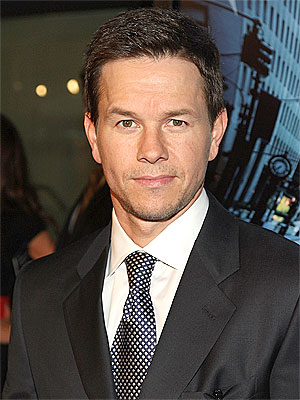
Mark Wahlberg Pardon Request

In Simpson’s words to this Court, “I was a monster.”

One day in Cody, Wyoming, when Simpson was in high school, he and some friends “went out to do damage.” They went to an abandoned war relocation structure and decided to “torch” it. They committed arson on federal property, a crime now punishable by up to twenty years in prison if no one is hurt, and punishable by up to life in prison if the arson causes a person’s death. Luckily for Simpson, no one was injured in the blaze.

Simpson not only played with fire, but also with guns. He played a game with his friends in which they shot at rocks close to one another, at times using bullets they stole from the local hardware store. The goal of the game was to come as close as possible to striking someone without actually doing so. Again, Simpson was lucky: no one was killed or seriously injured.

Simpson and his friends went shooting throughout their community. They fired their rifles at mailboxes, blowing holes in several and killing a cow. They fired their weapons at a road grader. “We just raised hell,” Simpson says. Federal authorities charged Simpson with destroying government property and Simpson pleaded guilty. He received two years of probation and was required to make restitution from his own funds – funds that he was supposed to obtain by holding down a job.

... As he [Simpson] has described it, “The older you get, the more you realize . . . your own attitude is stupefying, and arrogant, and cocky, and a miserable way to live.”
This was from a brief joined by former Sen. Alan Simpson (R), who came off as something of an old snarky coot in recent years, supporting a challenge against life without a chance of parole for non-capital teen offenders.  These are not all benign crimes and could have lead to serious injuries. It is appreciated that he joined the opposition, realizing in effect "by the grace of God that could have be me."  The sort of thing some might have though Clarence Thomas meant when he said something similar during his confirmation hearing, if perhaps meaning something else.

This was brought to mind by a good catch by TPM respecting a white movie star trying to get his own record from his teen years expunged. Since he must know that doing so would be made known and publicized, I take this was a thought out decision. Mark Wahlberg's crimes were surely "a well-publicized incident" (to quote the Boston Globe article linked), but me personally, news to me.  And, to quote the TPM piece:
Let’s take it piece by piece. For one thing, there’s the fact that Wahlberg was unharmed while being arrested, despite having committed two violent crimes. According to media reports, while strung out on cocaine, Wahlberg brutally assaulted a Vietnamese man named Thanh Lam while stealing two cases of beer from him, in the process calling Lam a series of racial epithets. Wahlberg then assaulted another man, Hoa Trinh, beating him so badly that he was left blinded in one eye. Yet like so many other white, violent criminals—even heavily armed, rampaging mass shooters like James Holmes and Jared Loughner—Wahlberg suffered no injuries while being apprehended by police. That’s as it should be. But given how many African-American suspects, like Brown and Garner, are wounded or killed during their encounters with police, the discrepancy is striking.
He got a month and a half in prison and was able to succeed in the music business a few years later.  The article notes the "white privilege" involved here and there is some of that.  I do think that non-whites also have been involved in crimes as teenagers that are very serious and have been able to put it behind them.  Also, "like many other" black and Hispanic criminals, he suffered no injuries.  The average suspect is arrested without being put in a choke-hold. The fact too many are not treated the right way notwithstanding.

Is this concern trolling?  I don't really think so. It is notable to remind people that "thugs" are not just scary black people. And, statistically, whites are treated differently. etc. etc.  But, there are various celebrities of various races with a violent past.  Lest we forget. Again, I appreciate the article. It does need repeating that people who look like this:
are involved here. But, at some point, it gets too much. So, yet again, opposition to Obama was deemed racial on a talk show today.  I lived thru the (Bill) Clinton years.  Okay?  It isn't just because he's black.

Privilege comes in various forms, suffice to say. Thanks Mark for reminding us.  And, like others, given time and from a look at the serious efforts you made to redeem yourself, the request (ill timed or not) should be granted.  Either way, it is a "teachable moment."

Sunday, December 07, 2014

Rev. Joe: "In Seven States, Atheists Push to End Largely Forgotten Ban"

Yes, helped by school children reaffirming it daily, it is just a de facto one.

High School Honor Student By Day ... Hollywood Hooker By Night


I remember the tagline line from the video store (remember them?). The film is something of a tease though there is a bit of gratuitous nudity (the star not included). Got bored a third or so in. Might work in the right frame of mind. Yes, that's actually Rory Calhoun in it.

Saturday, December 06, 2014

"Speciesism in Chimpanzee Habeas Case"

Interesting discussion and comments regarding a mid-level NY appeals case that denied standing as a person on as noted by one comment hand-waving assumptions. I comment more here but also like the "break it, you own it" responsibility comment. Standard simplistic view of "rights" comes up now and then, including in the "if right to have sex, why not bestiality" type threads. Ultimately, "rights" can include legal protections animals have.

A film for college football game day ...

Very touching and well done film portraying tragedy and its aftermath. The first third or so is probably the best but the rest has enough good scenes make it good to the last whistle. The first link was added to provide discussion (amidst a positive review) of the dramatic license used. News articles should be taken with a healthy grain of salt; films, with a shaker.

What So Proudly We Hailed

This is a good straightforward biography of Francis Scott Key, best known for penning what later became the national anthem (though few know past the first stanza; no great loss), but has some other pretty interesting stories. A some bit dull at times, it is to praised for its workmanlike effort, including touching upon some of his less praiseworthy times such as hounding a botanist with abolitionist leanings (OTD: 13A ratified!).

Night School

I found out about this film - which I watched appropriately at night while it rained outside -- from a website by a young woman aficionado of horror films, her website named in honor of the original title of I Spit On Your Grave. Agree Night School was very good, the reference to Italian detective ("giallo") films is appropriate -- it is not a "slasher film" really, though decapitations are key to the plot, but in effect a serial killer murder mystery. The director has an interesting resume, down to an eighty year old Mae West in Sexette.  It had a few questionable touches, but lots of very well put together and creepy scenes, including an early chase. 

The blog is a serious look at horror films and appreciate that she also was struck by that one -- many, including Roger Ebert, thought it trash. As "guest" there notes, it was not exactly high art in various ways, but it definitely had some artistic qualities that an aficionado of the genre or of film in general might appreciate. That blog had various posts about the remake as it was developed, down to talking about the poster (the original spoke of "five" people when only four were involved).

But, then it seemed to skip over talking about the film when it came out! Asked about this in comments, she made a joke about how it wasn't worthy of comment.  Watching it, I sort of agree -- the remake loses some of the bucolic, low budget feel of the original, pads on unnecessary material and the revenge killings are done in a particularly unbelievable and convoluted fashion. Realize the original wasn't totally believable there, but its simplicity had a certain powerful charm.  Don't know about everyone, but for this fan of the original "cult classic," the remake was an insult.

Anyway, Night School isn't that sort of movie though both were made around the same time (this one a few years later) and were not mere "slasher" films (the other film was of the Death Wish revenge variety with that film's nod to seriousness; have not seen them, but the sequels supposedly are more pedestrian exploitation flicks).  Key to Night School are the good leads (particularly the detective and Rachel Ward, who in hindsight is the most recognizable / in her first film role) and the atmosphere retained throughout.  The movie has a sort of trick to it, which is handled well too.  The blog post touches on that.

I was able to rent the film for $2.99 via a download on my television package, but it is also available cheap on Amazon instant download and I'd suppose Netflix. It was a nice little find.

Friday, December 05, 2014

ROBERTS v. UNITED STATES JAYCEES and Privacy Rights

Although the laws involved in Bowers and here purport to do no more than prohibit a particular sexual act, their penalties and purposes have more far-reaching consequences, touching upon the most private human conduct, sexual behavior, and in the most private of places, the home.
I recently continued my fascination with privacy rulings by commenting on Griswold, the excuse being recent retrospective in honor of its upcoming fifty years anniversary.  I have a new one.

It is unfortunate Griswold and Roe did not do more to discuss the basis of the right to privacy, even though its authors themselves spent time in concurring and dissenting opinions doing so (Poe v. Ullman, Doe v. Bolton, and Bowers v. Hardwick would be examples here). As to the last, it is also pretty unjust that Lawrence v. Texas doesn't honor Justice Blackmun, even as it quotes Stevens (yes, he was the one still on the Court). That opinion even uses the two-prong (space and choice) privacy approach as Blackmun did in that seminal dissent without even a h/t.  There is a preference to base things on "liberty," but the excerpt above underlines that such a freestanding principle has specific prongs too. 

There are some cases -- this is a value of Planned Parenthood v. Casey, even if we are upset about how the "undue burden" test opens the way to too much regulation -- that do provide some meat to privacy rights and the like.  Lawrence does this in a fashion.  Roberts v. U.S. Jaycees is as well. The case involves a law requiring equal treatment for women in regard to that business organization, which was not seen as a violation of their right to association. The opinion uses this to note there are two forms of constitutional right to association -- intimate and expressive.

Various types of association are easily seen as an expression of 1A values, an easy "penumbra" right. Others such as families would have some of that probably but a general liberal interest is involved. As the opinion summarizes: "certain kinds of personal bonds have played a critical role in the culture and traditions of the Nation by cultivating and transmitting shared ideals and beliefs; they thereby foster diversity and act as critical buffers between the individual and the power of the State."  This sort of association are generally intimate, small, in nature, one way the Jaycees was differentiated. There also was the compelling state interest of sex equality, which is a factor that is raised in current controversies too. For instance, the right not to sell cakes in public bakeries to certain people.

This is what Justice Douglas was getting at in his dissent in Poe v. Ullman, which might have been somewhat rambling but more expansive than Griswold, when he explained that a certain amount of privacy was necessary for a free society.  Take this quotation:
One of the earmarks of the totalitarian understanding of society is that it seeks to make all subcommunities -- family, school, business, press, church -- completely subject to control by the State. The State then is not one vital institution among others: a policeman, a referee, and a source of initiative for the common good. Instead, it seeks to be coextensive with family and school, press, business community, and the Church, so that all of these component interest groups are, in principle, reduced to organs and agencies of the State. In a democratic political order, this megatherian concept is expressly rejected as out of accord with the democratic understanding of social good, and with the actual makeup of the human community.
IOW, there are certain buffers to the state, both associations and general freedom of action, that must be protected. Many times, the intimate associations protected were related to family life, leading some (e.g., Bowers v. Hardwick) to provide a limited view. But, aside from the various possible definitions of "family" and the right in effect not to have one (possible explanation for giving a right to contraceptives to the unmarried, e.g.), the overall principle at stake is more expansive.  This also was the overall spirit appealed to by the "they are trying to force us to eat broccoli" brigade. It is not just a concern of enumerated powers, but an appeal to liberty overall. The knee-jerk sentiment rests on something,** it just has no sense of perceptive both on just what is being done (no one is being forced to eat something) and the "necessary and proper" nature of the regulation (an economic act, with a readily available tax alternative) in question. 

Lawrence v. Texas noted: "Liberty presumes an autonomy of self that includes freedom of thought, belief, expression, and certain intimate conduct." Jaycees provides some basis to not see that case about an individual act alone, but an expression of intimate association.  On some level, it might seem a bit silly to treat a sex act in that fashion, especially given the transitory nature of some of them.  But, sex is but one sort of act that overall is very well but an expression of "personal bonds" in various ways.  We are not usually talking about masturbation here after all (Stanley v. Ohio, involving viewing pornography in the home is a better case there).

It is helpful to keep in mind the underlining basis of various liberties, including the autonomy provided in intimate associations. People like Cass Sunstein sometimes support minimalist rulings that provide a narrow basis of decision, since broad ones are liable to be more controversial and less readily accepted. And, cases often are a matter of applying precedent, not deep examinations of first principles.  Still, especially when said principles on some level remain controversial (e.g., how much the Constitution protects it against legislative action), it is useful to do examine underlining principles as well.   

---

* "An individual's freedom to speak, to worship, and to petition the government for the redress of grievances could not be vigorously protected from interference by the State unless a correlative freedom to engage in group effort toward those ends were not also guaranteed."

** In Justice Clark's influential article on abortion, he notes that personal choices over day-to-day habits [corrected -- not "diet" specifically] is a part of privacy rights.  In a later short article, he both supported the legalization of marijuana and in passing cited Griswold as suggesting it is constitutionally protected.  

Alaska applied its own specific state constitutional privacy protection to include "the ingestion of food, beverages, or other substance," including marijuana. Other states have such constitutional protections explicitly or implicitly, but didn't go as far as legalizing that substance. Some did argue private religious choice includes the ingestion of peyote. In the Ravin v. State case, the Alaska Supreme Court did cite state courts that held things like adults biking without a helmet was protected by a right of privacy. 

Thursday, December 04, 2014

Actually, More Than One Night


Perhaps, this should be labeled Barbara Stanwyck's "other Christmas movie" along with Christmas in Connecticut (darn if it was on another channel), the first of four with the "My Three Sons" actor. Sweet movie with some sharp touches. The "comic relief" black servant must have been hard to take for some even then though.

Since We Need Something Light ...


Just saw a ginger cat, so a quick word on this addition to the Hallmark movie batch. Nice to see Gregory Harrison (better actually than the male lead, who is kinda stiff) in a supporting role. Female lead good. Doesn't quite have enough for two hours, but not bad.

Wednesday, December 03, 2014

Cameras Help?

As I note in comments here, probably some. It's no panacea. Subjective too. Like "duh."

"NYC Police Officer Won't Be Charged In Chokehold Death Case"

The result are protests in my city, including near what usually is better known for Christmas trees and spectaculars (Rockefeller Plaza). One question for me is -- putting aside assumptions -- the numbers of police killing suspects and racial breakdowns. We need better data. When trivia columns are doing more to provide info than some outlets, we are in trouble. Talk of "felons" shot doesn't help me enough when it is far from clear "felons" were involved in this case or Ferguson. This sort of data should be readily provided or demanded.

Alito/Scalia

Alito empathy. Scalia presides over SSM.

Tuesday, December 02, 2014

Same Sex Schools

"Women have breasts. You have to learn to concentrate. You might as well learn it when you’re 12."
I personally am inclined to think that school should prepare you for the world, a world with more than one sex. This article suggests some science in support of that. Meanwhile, good article on Connie "Tammi Taylor" Britton. And, film and lawyering.

Gerrymandering

There are various reasons why Democrats lose elections, even when they as a whole get more votes (see 2000), but gerrymandering does factor in. I don't know how much, but some attempts to belittle it (as compared to let's say Democrats stacked into urban areas) overall seem at least somewhat overplayed. And, it can be a bipartisan problem.

Development of Law

The legal system is not based upon the blind application of established rules to specific cases. Rather, the common law is a process of applying known rules to newly made claims through a reasoned elaboration of principle.
Trying to find a privacy article cited a few times in stuff related to my recent Griswold post, found this one with this good summary of applying current law to develop new. See text surrounding FN44. This is more sensible than 'originalist' appeals. Yes, this is inexact and the "law" changes over time. Real life can be messy; it's more true than fantasy though.

Monday, December 01, 2014

Joke Toward A Good Cause

No idea who this woman is really but as noted here any outrage at her little prank is silly. Plus, the speech itself is actually a rather impressive brief for animal welfare in respect to raising chickens. And, she has spoken in support of animal welfare in the past.

Marion Bridge

Good movie; DVD has good commentary with director and Molly Parker.