About Me

My photo
This blog is the work of an educated civilian, not of an expert in the fields discussed.
Showing posts with label lawsuits. Show all posts

Monday, June 22, 2026

SCOTUS Watch: Orders

The Order List was longer than usual. So, we had additional writings, particularly an apparent 6-3 per curiam, summarized by Mark Joseph Stern on Bluesky this way:

By a 6–3 vote, the Supreme Court reverses a decision in favor of Pedro Hernandez, a mentally impaired man who was pressured into an allegedly false confession of murder through these👇unconstitutional tactics. The supermajority says he did not face a deprivation of "clearly established" rights.

The liberals wouldn't have taken the case. It amounts to an "error correction" of an allegedly misapplication of the rules for federal habeas appeals. Some local coverage. 

Alito and Thomas would have taken or decided some crime-related cases (one involving the use of race) the other way. 

Jackson followed her practice regarding not rejecting certain appeals by incarcerated people allegedly abusing the pauper's petition rules. 

Sotomayor, for the liberals, would have taken a case involving a claim of intellectual disability in a capital case. Texas supported the appeal, but the Texas courts (this happened before) blocked it from happening below. Four justices earlier would have tightened the rules in such cases, so this isn't surprising. 

The Supreme Court granted another so-called "Bivens" case, involving a remedy for constitutionally based abuses. The claim won below, and Bivens has been much disfavored. So, it doesn't bode well. Congress can address the situation. 

We will have  (signed) opinions on Tuesday and Thursday. There is likely to be at least one more opinion day. Toss is a scheduled execution. 

Thursday, June 04, 2026

SCOTUS Watch: Opinions

An expected shadow docket decision in an election lawsuit makes it no less shitty. See here. 

Opinion day had three opinions, only one dissent (and concurrence) by Thomas. Some long-shot claims. Minimalist specials.

ETA: As noted here, one opinion might be another faux minimalist opinion with near unanimity obtained by a rule with future bite.

Tuesday, May 26, 2026

SCOTUS Order List

The weekly Order List had some interesting bits.

The justices decided the appeals court wrongly decided on procedural grounds a lawsuit involving the free speech rights of immigration judges (not Art. III judges). Thomas (with Barrett) also disagreed on the merits. Free speech fails, for now. 

[The backstory is that the administrative process was broken because of Trump's obstructionism. Helped b by the court conservatives. The lower court tried a workaround and was called out.] 

The justices, following standard practices since at least the 1970s, rejected even accepting a "bill of complaint" involving a dispute among states. 

Thomas (with Alito) took their usual stance (reasonable) that they should at least examine the merits. They also added some right-wing comments on the merits of a dispute involving undocumented people having driver's licenses. 

Kavanaugh would have taken a dispute involving arbitration (New York Football Giants v. Brian Flores). He didn't comment on why. 

Alito and Thomas would have summarily reversed a lower court opinion involving excessive force and the Fourth Amendment. They cited a lower court opinion they "essentially" agreed with. 

Alito (no comment), Kagan, and Jackson (referencing ethical guidelines) did not take part in deciding three cases.  I continue to prefer the latter approach. 

Finally, in a "to be continued" sort of way, a lower court continued to reject a redistricting map, holding it is racially discriminatory. The Supreme Court, with the liberals dissenting, sent it back. 

It is likely to come back.  

==

Meanwhile, this is an interesting discussion of the Supreme Court's relation with social media, including suggestions on how it can dip its toes in.

ETA/Opinions: 

Barrett, for the conservatives, ruled against two "compassionate release" claims. Sotomayor (with Kagan) concurred on limited grounds in one case, dissented in the other. Jackson dissented in both.

Kavanaugh, it being one of his concerns, wrote a 5-4 opinion supporting a claim alleging racial discrimination in jury selection. Roberts joined, as did the liberals. Gorsuch dissented for the rest.

Gorsuch wrote a brief (less than eight pages) and unanimous arbitration opinion.  

Thursday, May 21, 2026

Executions

There were three executions scheduled this week:

May 20 AZ Leroy McGill

May 21 TN Tony Carruthers

May 21 FL Richard Knight

Tony Carruthers is most troubling. 

But in the decade that followed the trial, as post-conviction litigation played out in the courts, testimony from other forensic experts cast serious doubt on those supposed facts. Now, with the state set to execute Carruthers on May 21, his attorneys are arguing not only that forensic testing might prove his innocence, but that his death sentence was based on an inflammatory falsehood. 

Other than the three-decade wait, which yet again is a problem, this execution has a bunch of issues. We had a serious innocence claim, mental health issues, self-representation, and more. 

He was released in late 2015. Before his release, how­ever, in 2010 and 2011, he met with members of a fed­er­al defense team and affirmed what Mr. Carruthers had long main­tained: Mr. Carruthers was not involved in the crime. Instead, he point­ed to an alter­nate sus­pect who was killed in 2002 but whose fin­ger­prints and DNA sam­ple are on file with the med­ical examiner’s office. 

I understand that liberals feel they should pick their spots. But this is a case that deserved at least a statement. Instead, we had multiple "no comment" orders rejected various claims. 

It also deserved a commutation. The co-defendant is out of prison. Instead ... he wasn't executed.

Why? They botched it. See you in 2027?

==

McGill flagged procedural problems and didn't have a final appeal. Horrible crime, which happened about twenty-five years ago. Again, that's too long ago. (Breyer, dissenting.)

Florida has executed some long-in-tooth cases. This one was "only" about twenty years ago. Domestic crime where the person also murdered a child. 

The challenges repeated stuff that was rejected before. Understandably, no justice commented. 

Both were executed. 

==

The first case is particularly arbitrary. 

The other two are more standard "death penalty as a whole is a bad policy" cases. 

PUNT

The Supreme Court handed down three opinions today. Jackson wrote a quickie on ERISA, Kagan had a solo dissent in a second, and they punted.

(More next Thursday.) 

Hamm v. Smith involved the rules in determining when someone is intellectually disabled enough to avoid execution. Some worried that it would result in a significant shift rightward, perhaps on much more than the specific subject matter.  

The justices decided to "DIG" it as improvidently granted. You can hear Alito grumbling. 

Kagan, Barrett, and Kavanaugh didn't provide any thoughts. Sotomayor (with Jackson) explained why they thought it a bad vehicle and responded to Alito's dissent (with Thomas joined in full, Roberts and Gorsuch mostly). A lot of writing for a DIG. 

Thomas, on his own, also strongly dissented, wanting to toss Atkins v. Virginia (intellectually disabled cannot be executed) entirely. 

Net result: The Supreme Court, on a 5-4 vote, lets stand lower court decisions tossing out Joseph Clifton Smith's death sentence in Alabama because the court found he is intellectually disabled.

Friday, May 15, 2026

SCOTUS Watch

The Supreme Court is beginning its final end-of-term push. They will meet on Thursdays until the end of June. Opinions dropping will be likely.

More VRA News 

They had no Order List on Monday. No problem. They often make news outside of those often no-drama orders.

For instance, the aftermath of a major Voting Rights Act decision continued. It involved Alabama. Sotomayor dissented for the liberals. 

The conservatives didn't explain themselves. Bad decision, but not the end of the line. Meanwhile, there continues to be a lot of jockeying in multiple states.

The Virginia state supreme court ruling was not a good decision. The Hail Mary federal challenge was also not good. It was rejected without comment. 

Arguments 

We don't get video or even audio (for opinion announcements) of the proceedings. 

Amy Howe showed up since we cannot. She promoted, as a witness, greater transparency during the proceedings of the Biden Supreme Court Commission. Her summary of this term's arguments is interesting. 

Opinions 

The usual practice is for the justices to drop a limited number of opinions in late May and early June. Then, we will have an influx, with multiple decision days in one week to complete the job. Late term rush.

There are worse things to worry about. All the same, this is a bad job of pacing yourselves. 

Anyway, as expected, the two opinions (both unanimous with one concurrence) are non-controversial. The usual sentiments about how such opinions are still of some significance aside, neither is not a "high profile" case worthy of much attention. 

Abortion Pill News

The Fifth Circuit dropped a ridiculous opinion preventing Mifepristone from being prescribed by telemedicine and delivered by mail. The decision is bad both procedurally (standing) and on the merits.

Justice Alito, in charge of the Fifth Circuit, granted a temporary halt (administrative stay). He (selectively) had it expire on Monday afternoon and then extended it to Thursday afternoon. So, after two opinions few cared about dropped, bigger news was forthcoming.

(The link underlines how the change in Administration matters.) 

The Court, about a half hour late, granted a regular stay. Thomas and Alito dissented for different reasons. Alito noted the Court did not explain itself (which is unfortunate), which he did not find problematic about an hour later, when an execution was involved.

One notable thing about Alito's dissent is that he references how a change of policy in the Biden Administration helped protect the supply of abortion pills after Dobbs. State shield laws, including in New York, were also quite important.

Michael Dorf has more, including a reference to a good article on the Comstock Act. A previous discussion, which includes a reference to a Biden DOJ policy statement, is also worthwhile. 

Busby Execution 

A murder apparently motivated by robbery led one person to be sentenced to death, the other to prison. 

After over twenty years, too long (Breyer), Texas was ready to execute him. There was a claim of intellectual disability, which even the state witness granted.

The Supreme Court has held that intellectual disability at a certain point will make execution unconstitutional. It is also a mitigating factor. 

The seriousness of the claim is suggested by the fact that even the conservative-leaning Fifth Circuit at least temporarily held up the execution. The justices overturned the stay without comment.

Kagan dissented without comment. Jackson (with Sotomayor) briefly noted how gratuitous it all is. 

He was the 600th execution in Texas since 1982.

Upcoming

Order List on Monday, and another opinion day on Thursday. Who will buy Souter's home? 

Friday, May 01, 2026

SCOTUS Watch: Oral Arguments Wind Down

Order List

Two things stood out for me in a four-page order list. As Rick Hasen summarized on Bluesky:

The Supreme Court won't hear the case where a lower court temporarily stopped Texas from using its re-redistricted congressional maps. The Supreme Court just reversed that order without hearing argument or getting more briefs.

The liberals dissented (without opinion). There is a story here. We have another reversal, based on a short per curiam, of a 160-page or whatever district court opinion on the shadow docket. 

Steve Vladeck is on the case, not having patronizing conservatives referencing the "hysteria" over the question. Wow. Breyer says all is well. An accommodationist who is loath to criticize. I think his replacement is more on the money. 

(Vladeck, after the voting rights decision, wrote a partially paywalled piece on reforming the Supreme Court. He opposes court expansion.) 

Meanwhile, quoting Chris Geidner, they also granted another case:

SCOTUS grants another post-Jarkesy case about administrative agencies’ adjudicative powers, involving the Labor Department.

The liberals didn't like Jarkesy, but some left-leaning sorts thought it was correct to require additional usage of the federal courts. So, it's not a crystal-clear issue.

Arguments

The Supreme Court then spent two hours (too long) talking about "geofence" warrants. Sounds like a tricky case that they will try to rule on narrowly. OTOH, maybe it's too soon to judge.

The other notable oral argument (for me) is a late addition involving Trump's immigration policy. And with that, the oral arguments are likely done. 

Now, they will get to opinion writing, probably finishing by the end of June for their summer baseball camp plans or whatever they want to do. We will also likely see if Alito really is going to stay on. 

Opinions

Rick Hasen (Election Law guy) is EXTREMELY concerned about a big 6-3 (Alito v. Kagan) voting rights case handed down. It is "one of the most pernicious and damaging Supreme Court decisions of the last century." He's not one to exaggerate.

Kagan's concern is suggested by her dissent from the bench. Since we don't have audio (Oyez.com will provide it eventually after the term is over) or video, we can just read about both Alito (longer than usual) and Kagan's bench statements. 

Congress could, and eventually should, pass a new voting rights law. They have done so in the past in response to statutory construction. The current executive and legislature are not likely to do so.

I think Congress should have a fast-track process to address Court rulings regarding federal statutes. The 6-3 Supreme Court might then flag an alleged constitutional barrier to the legislation.

This is where court reform comes in. You have ethics reform, tweaking qualified immunity, term limits, and so forth. Various good policies on their own. 

A constitutional decision like Shelby v. Holder sometimes can be addressed (e.g., update the process there deemed out of date). Other times, you will run into a roadblock, like the Trump v. U.S. ruling. 

Some want to expand the Supreme Court. Others worry this will result in tit-for-tat responses and overall diminish the Court. 

Hardball will make for tough decisions at some point, including jurisdiction stripping and targeting their budget (minus reduction in salaries, which the Constitution prohibits). After all, if you use the budget to "blackmail" (pressure) the Court, does that not have some potential at threatening its integrity? 

I think we should put everything on the table. Reform will be tough. Serious reform, whatever it entails, might require ending the filibuster. Whenever bad opinions, especially ones with political/partisan valence like this one, arise, this talk does as well.

A trifecta is necessary. Let's start thinking. Meanwhile, jockeying by both sides in a districting race to the bottom continues. 

==

The first opinion was unanimous. The result in a future case could help liberals or conservatives. It involved the investigation of crisis pregnancy centers. 

Maybe it was the right decision, and it wasn't on the merits, though judges below disagreed. Was it that obvious? Shrugs. More on the background here. 

Executions

James Garfield Broadnax was nineteen when he was part of the robbery/murder of two people in 2008. Texas executed him. 

There is debate over how serious his role is, the use of race in jury selection, and other issues. Two confessed, one was given the death penalty. 

No comment by SCOTUS when rejecting the final appeals. The whole thing seems arbitrary. 

(A few judges have shown some concern about executing people under 21. The line now is eighteen.)

Florida executed someone sentenced to die for the rape/murder of his teenage step-niece, committed in 1976. James Hitchcock is not someone many will have sympathy for. It still is patently ridiculous to execute someone after 50 years. 

Florida is making a habit of this, though, even for them, 50 years is longer than most. As usual, I cite Breyer's dissent in Glossip v. Gross on this issue.

Since only a few justices over the years, none on the Court now, flagged that problem, his final appeals rested on other claims. His lawyers, yet again, raised a claim that the Florida lethal injection process is flawed.

Also, they again raise an innocence claim. It isn't new, so hard to see it working at this late date. He claims his brother did it. I doubt it. The time lag is my issue.

He committed horrible crimes. He was in prison for fifty years. Some members of the victim's family will obtain closure. That is a variable thing, and anyway, not enough to justify a few arbitrary executions.

A long prison term might also have led some to have closure. A lingering execution might have hindered the process as they waited a bit more time for it to happen.

Upcoming

No more oral arguments. 

There will be releases of orders (Monday) and non-argument sessions (often admission of bar members, but some opinion days might be mixed in) and conferences (Thursdays) until the end of June. At least, after a ten-day break after Monday (orders). 

(Memorial Day pushes one order day to Tuesday.)

There will also be various other days with orders and opinions, especially as things speed up in June. And probably a surprise or two mixed in. So, it goes.

Friday, April 17, 2026

Sotomayor Apologies

Justice Sotomayor publicly called out Kavanaugh for his Kavanaugh stop opinion, basically saying his privileged upbringing made him not understand the people involved. Some people handwaved it, but others acknowledged it was a significant comment. 

At a recent appearance at the University of Kansas School of Law, I referred to a disagreement with one of my colleagues in a prior case, but I made remarks that were inappropriate. I regret my hurtful comments. I have apologized to my colleague.

She had second thoughts. She publicly apologized via the public information office. 

It would be interesting to know what happened. Did Kavanaugh suggest his feelings were hurt? Did colleagues tell her she crossed the line? Did she realize Murc's Law (only Democrats have agency)? 

Chris Geidner, after some people pushed back, posted a discussion on why the apology made sense. Eh. Sure. Typical small group dynamics, even beyond the importance of his vote. 

Plus, it's the classy thing to do. You apologize sometimes when you deep down don't think you should have to do so. 

It reminds me of when there was talk that Sotomayor was bothered about Gorsuch not wearing a mask. He was sitting next to a senior citizen with diabetes. He apparently thought people were being too "woke" about COVID or something.

They released a treacly joint statement about how they were pals. She didn't ask him to wear a mask. It was one big misunderstanding. Sure.

Did a conservative justice ever apologize? Ginsburg apologized for publicly saying she didn't want Trump elected. Stevens, during the Kavanaugh confirmation, noted people told him he was too public about his opposition to Kavanaugh after his outburst. He seemed a bit embarrassed.

When did a conservative justice apologize? That's what rankles. She has to publicly apologize for that asshole? Well, that's what adults do, I guess. 

Thomas Speaks 

I have seen her remarks compared to Justice Thomas criticizing "progressives." 

Thomas has promoted his conservative values for years. He has strongly supported his wife, who is a big Trump supporter, including after the 2020 elections.

He was not specifically criticizing a colleague. I do not think some of his more overheated dogma should get a pass. Still, it is not really the same thing. 

OTOH, if the assumed problem is that Sotomayor is opining generally on ideological grounds, Thomas and other conservatives show that she is far from alone. 

Thomas Writes 

The single opinion released today:

Chevron has plausibly alleged a close relationship between its challenged crude-oil production and the performance of its federal avgas refining duties—not a tenuous, remote, or peripheral one—and has therefore satisfied the “relating to” requirement of the federal officer removal statute. 

Thomas, as he often does in these technical cases, wrote the opinion. Jackson disagreed in part. 

Her concurrence includes her concern about legislative intent and the message that judges should follow legislative will. She separately criticized the use of the shadow/interim/emergency/whatever docket. Even a "minor" case has some bit of interest.

On that front, this was the case that Alito belatedly decided to recuse himself. His recusals generally involve financial conflicts. Sometimes, honestly, a judge doesn't catch a possible conflict early enough.

Recusals often do not change the result of the case. The case here was largely unanimous. Sometimes, a recusal might matter more. The principle of even the appearance of impropriety matters the most. 

It is rarely a compelling matter to take a specific case. The specific legal question is likely to arise again, if it's worth worrying about.  

There is more flexibility in lower courts, including a district judge sitting my assignment on a panel. There should be a way to do that with the Supreme Court.

OTOH, as noted, it rarely matters too much. 

ETA: A housekeeping order was released. One tidbit: "The motion of petitioners for leave to file the joint appendix in an 8½- by 11-inch format is granted."

The motion noted that since the Court sped things along, it would be difficult to use the usual format within time constraints. Okay. 

Thursday, April 02, 2026

SCOTUS Watch

Order List

The Supreme Court on Monday agreed to weigh in on a procedural question arising from a pregnancy discrimination case – specifically, whether a defendant can raise an affirmative defense (that is, a legal excuse or justification) later in the proceedings when it did not raise that defense in the answer to the plaintiff’s complaint.

After a brief order list, Sotomayor (with Jackson) spends some time explaining why the justices should have taken a criminal justice case. Finding troubling criminal justice cases that suggest the arbitrary nature of the criminal justice system is her thing.  

(The opening link provides more details) 

Opinions 

Happy Trans Visibility Day, which once was allegedly an anti-Easter plot or something, since it coincidentally overlapped that year. By chance, the justices decided the conversion therapy case.

Justice Gorsuch, having the opinion (which, like multiple other opinions he had in cultural war cases, was procedurally dubious), was a bad sign. Worse, only Jackson dissented. It was a good dissent. 

(Jackson used a Calvinball ruling -- see Breyer's angry dissent -- to her benefit. Okay. But realistically, that is how it is going to be. Selective application.) 

The conservatives upheld anti-trans care policies, even though such policies clearly have ideological motivations. This time, when trans people are protected, the regulation is suddenly thought control.

The law involves the regulation of people with a state license to practice medicine and only covers minors. So, it is not about the conversion therapy of adults or therapy by unlicensed people, including clergy. 

Under this logic, any medical treatment delivered through words rather than instruments could now carry First Amendment protection—a framework that could shield a doctor who encourages a patient to commit suicide, a dietician who tells an anorexic patient to eat less, or a therapist who deliberately steers a vulnerable client away from life-saving treatment. It could also extend well beyond medicine: a financial advisor who talks an elderly client into a bad investment is exercising speech-based professional conduct, as is a lawyer who gives harmful legal advice.

Not good. Kagan (with Sotomayor) concurred in full, citing an alleged limitation. But, as Jackson noted, the limitation in context is fictional. If they concurred strategically, Gorsuch's language is far from restrained.

The opinion says strict scrutiny is required. Some misleading coverage aside, the Court did not strike down the law. Colorado has a higher test to meet. 

But that is usually an uphill battle. Gorsuch's rhetoric, as SCOTUSBlog flags, is also not reassuring:

But the Supreme Court also strongly hinted that the ban would fail that test. In his 23-page opinion, Gorsuch stressed that in cases like Chiles’, Colorado’s ban “censors speech based on viewpoint.” Because the First Amendment “reflects … a judgment that every American possesses an inalienable right to think and speak freely, and a faith in the free marketplace of ideas as the best means for discovering truth,” Gorsuch continued, “any law that suppresses speech based on viewpoint represents an ‘egregious’ assault on both of those commitments.”

The possible Robert Kennedy Jr.-ing of medical care is not ideal. I say that even if the opinion leaves open a way to uphold this law (strict scrutiny met) or to craft another policy that will protect children. 

Kagan, in the past, disliked "Lochner-ing" or the weaponizing of the First Amendment. Blah. 

Upcoming

The conference was on Thursday, given the Easter weekend. Monday will be an Order List. They then take a two-week break until April 17th. 

A media advisory regarding an oral argument that will likely have more demand for sitting flags the change at the top of Homeland Security. 

(ETA: The SCOTUS PIO released a statement on a news story involving Alito going to get checked out -- he is in his 70s, so this wasn't that notable on its own -- but didn't post it on the website. Yet again.)

Birthright Citizenship Trivia

Trump showed up for the birthright citizenship oral argument (left after the solicitor general was done), which would be the first time a sitting president did so. Notably, he picked this case to do so.

Talk about this being an "attempt to intimidate the justices" seems a tad overblown. Separation of powers? Eh. Members of Congress show up. 

Nixon and John Quincy Adams argued cases. Lincoln, too (a more forgotten detail). Not while in office, of course. Taft became Chief Justice. Ditto. 

John Marshall served as Secretary of State briefly after becoming Chief Justice. The Constitution does not -- unlike for members of Congress -- clearly ban that sort of thing. Justices also served in diplomatic roles. Robert Jackson was a prosecutor at Nuremberg.

Monday, March 23, 2026

SCOTUS Watch: Sotomayor Dissents a Lot Edition

Order List

There was a long order list today. This implied an unsigned opinion and/or dissent. We had both. 

A brief, unsigned opinion (per curiam) held that a lower court incorrectly didn't provide qualified immunity in an excessive force case. The justices argued that precedent did not settle the question. The liberals disagreed.

Qualified immunity is a major concern. Congress can and should address the situation. Too often, even that ability to try is removed. 

This also should be disfavored from a historical point of view. Things have changed over time, so I don't just rely on that. But some judges allegedly rely on that a lot. Allowing juries to decide would also be democratic. Now, judges too often close things off.

Sotomayor had all three dissents. She also argued for the liberals that the justices should have taken a case involving DNA evidence in a capital case. 

DNA evidence isn't magic. The government fears people will demand DNA evidence, here perhaps tainted in some fashion, and too much will be made out of it. But DNA evidence can also be powerful. A possibly tainted execution is also a tiebreaker. 

A third case involving denial of cert of a case involving alleged retaliation against an online journalist was a solo effort. That case had some support from conservatives below (Judge Willett was cited). Sotomayor provides a sympathetic reading. She also flags an apparent circuit split, making it a helpful "vehicle" for SCOTUS review.  

I'm not an expert. I don't do "deep dives" in these cases. For instance, in the capital cases, arguments are flagged that might not hold up. 

I cannot tell you if she is right that the circuit split is "cert worthy." It is important to note that the Supreme Court is more than a "court of error correction." A circuit split is a major reason for taking a case. 

Sometimes, there is a case that troubles one or more justices on the facts. They might flag that the case is not "cert worthy" while still noting their concern. They might also note the case raises issues that the Supreme Court should take up in a different case.

Meanwhile, Alito and Gorsuch did not take part in cases addressed in the Order List. As usual, we don't have any official explanation for why. Only Kagan and Jackson do that. The others should join them.

Oral Argument

Some of the conservatives were on vibes during the oral argument regarding the regulation of mail-in voting. This time, some Republican Southern state defending their discretion to regulate had a more sympathetic hearing from the liberal side. 

Rick Hasen has more.

Upcoming

We should have one or more opinions on Wednesday.

ETA: Sotomayor also appeared to be on the dissenting side during the oral argument in an asylum case. 

Gorsuch had his first opinion (only Alito dissented). Thomas wrote a copyright opinion (Sotomayor concurred in the result with Jackson). 

... and we will have another opinion day next week.

Friday, March 06, 2026

SCOTUS Watch


Order List

Sotomayor (with Jackson) dissented from a denial regarding a case about prisoners having the right to split a filing fee. Kagan would have taken the case but did not join. Takes four to grant cert. 

We then went into an oral argument involving guns and drugs. Eric Segall has a good commentary. And then the long oral argument was done. 

But not the news for the day. 

"Emergency" Docket

Steve Vladeck and Chris Geidner discussed two irregular decisions involving a New York City redistricting matter and requiring a school to tell parents their children were using alternative pronouns and so forth. They are the usual 6-3 jobs with Sotomayor and Kagan handling dissents. 

Rick Hasen briefly raises red flags about the New York case. The problem there is procedural. Only Alito writes for the conservatives. But he might have an opinion for the Court in an election case soon. That one will matter. 

The case page provides the state brief in the trans case, which details various complexities that some skip over since they think the policy is wrong. Erin Reed puts things into a wider context. She covers trans issues. And the SCOTUS conservatives have, over and over again, shown disdain for trans rights. 

(The exception being the Bostock case, a statutory interpretation case that is an asterisk without more.) 

Overall, Kagan is correct. First, they should have taken it for full review. Second, they are hypocrites regarding substantive due process, including not taking a case where trans parents raised such claims in support of their children's transitioning. 

Vladeck flags that the majority -- unsigned though Barrett with Roberts and Kavanaugh concur separately, with a few comments about Dobbs, the abortion case -- rushes through the balancing required in granting the request. 

Okay, they did it, as he says, but they did it slipshod, including not being concerned about the interests of the students. For instance, even if you think the parents have a good case, the district court's order appears to be too broad. 

Ideally, parents, children, and schools should be on the same page. But things are not always ideal. Forced outing, against the will of the children, is bad too. 

A 6-3 "emergency" docket opinion is not the way to handle this situation. But, as Vladeck says, the conservatives are (selectively) impatient. 

Billy Leon Kearse Execution

Florida, after SCOTUS dropped a no comment order, executed another person on Tuesday.

Kearse murdered a police officer about thirty-five years ago. Murdering a police officer is one of those narrow classes of cases of particular heinousness. But it was 35 years ago. Too long.

And, even there, only a narrow majority below rejected claims that a death sentence was improper. He was 18 and had serious intellectual disability claims. 

The final appeal raised procedural arguments, including those involving the disability, which were probably rightly rejected in this posture. Still, even here, I wish they would briefly explain the ruling.

I continue to find these executions gratuitous and otherwise problematic without being APPALLED each and every time. 

Opinions

Wednesday was a scheduled opinion day, though the two unscheduled rulings took some attention off that. Regularly, SCOTUS does things off schedule.

Jackson (standard used in an immigration case) and Sotomayor (NJ Transit Corporation is not an arm of New Jersey, so no sovereign immunity) with unanimous opinions. SCOTUSblog had a live blog.

Upcoming

Another Order List is scheduled for Monday. There will be a two-week break before more oral arguments. 

No opinion days are scheduled, but as we have seen, unexpected news might arise at any time. For instance, two years ago, the Supreme Court announced over the weekend that there would be an opinion dropped, without them showing up (cowards). 

The Supreme Court does not usually announce news on the weekend. But this was a special case. It was the Trump v. Anderson opinion keeping him on the ballot. 

Wednesday, February 25, 2026

SCOTUS: More Opinions

Opinions

Two opinions dropped on Tuesday. 

[1]

Sotomayor handled a civil procedure case relatively quickly. It involved a dispute about allegedly tainted baby food. Thomas added a concurrence to flag yet another issue he is concerned about. 

[2]

Thomas had the majority in the second case regarding the limits of sovereign immunity in a case alleging race discrimination by the post office. 

Sotomayor, for the liberals, and Gorsuch (a limit on federal agencies of any type is his thing) dissented. She felt the woman had a right to sue. 

The facts make this a sympathetic case. The split shows the limits of textualism. On that general subject, Eric Segall has a good blog post. 

Congress can pass a new statute to clarify matters. This is often the case. Many cases involve statutory matters for which the legislature can tweak things. Congress might fail to do this (see tariffs), and in response, the courts increase in power.  

[3]

Kagan and Jackson wrote the Wednesday opinions. So, readers can expect things to go pretty well. Each was unanimous in result, with a few conservatives adding comments. A brief summary below.

Justice Jackson affirms the Texas Court of Criminal Appeals on the scope of the right to counsel during breaks in trials. Accepts some limits on counsel engaging with the defendant (as a witness), adding some clarifying details about the rules.  

[4]

Kagan has an opinion on whether a government contractor can immediately appeal an order rejecting its claim to sovereign immunity derived from its work for the government. They can't.

One of the many technical cases they take. Kagan often can write these opinions in at least a halfway understandable way.  

The case also has a topical connection. Appeals take a long time. The facts are now around ten years old. They involve facts alleging a contractor's work policies for detainees violate a federal bar on forced labor and Colorado’s prohibition on unjust enrichment.

Melvin Trotter Execution 

A crack addict named Melvin Trotter fatally stabbed 70-year-old Virgie Langford in the corner grocery store she ran for 50 years. Trotter has been on death row for nearly 40 years for the murder.

Colorful summary. His lawyers argued that the claim of "premeditation" is dubious when he seized a knife at the scene. That is a big reason why he got the death penalty. Even bad crimes might not warrant it. 

An organization against the death penalty argued:

Melvin’s death sentence was handed down by a non-unanimous jury on two separate occasions. Florida is one of the only states that allows a death sentence to be given without the full confidence of the jury, making it widely recognized as unreliable. Melvin’s life was shaped by severe trauma, instability, and intellectual limitations that were never meaningfully addressed in court.

The final appeal alleged problems with the Florida execution protocol. Sotomayor (for herself) dropped a statement "
to express concern about Florida’s implementation of its execution protocol and the secrecy surrounding it." 

Sotomayor has been the justice most concerned about lethal injection protocols. She noted the claim alleged flagged problems like "incorrect drug doses, the use of nonprotocol drugs, and recordkeeping lapses that could mask yet additional failing."

She joined the "no comment" denial because there wasn't (in her view) enough evidence in this case. It is rare to see any discussion in these final appeals. 

I continue, like apparently no justice is left on the Court, to find it problematic to only execute someone decades after the conviction. Forty years on death row is punishment enough.

Florida executed him a few hours later. 

Opinion Announcements

We also have good news: Fix the Court managed to access last term's opinion announcements. They are (for now) in a harder-to-access form, but the effort is appreciated. It would be simpler if SCOTUS posted it themselves. They think it is worthwhile to have them.

Upcoming

More orders and oral arguments next week/month.

ETA: There will also probably be one or more opinions dropping on Wednesday. Also, Tom Goldstein, founder of SCOTUSblog, was convicted.

Monday, February 23, 2026

SCOTUS: Orders

Steven Vladeck references one other SCOTUS rule change (other than the monetary recusal matter that received signficiant attention): 

The second, which got no media coverage, clarifies that, even when a party electronically files a cert. petition through the Court’s e-filing system on or before the day that it is due, it must still complete physical service of the petition within three days. (The sequencing of electronic filing and physical service had been unclear under the previous iteration of the rule; my own risk-averse approach had been to ensure that they happened on the same day.)

Today's Order List mostly deposed many petitions while only granting one for review. They accepted the second question.

Issue: (1) Whether federal law precludes state-law claims seeking relief for injuries allegedly caused by the effects of interstate and international greenhouse-gas emissions on the global climate; and (2) Whether this court has statutory and Article III jurisdiction to hear this case.

Mark Joseph Stern on Bluesky:

The Supreme Court takes up a MAJOR climate case that asks whether federal law preempts (that is, forbids) state-level claims against fossil fuel companies for damages related to climate change.

(See also this discussion from a conservative p.o.v.) 

Kagan, noting why, recused from the determination of two cases. Jackson followed her new rule of not going along with blocking free petitions deemed from those abusing the privilege if the person is currently incarcerated.

There are two opinion days scheduled, so we might get a bit more news than that. There are also oral arguments, including one about the Takings Clause, but they aren't too notable. 

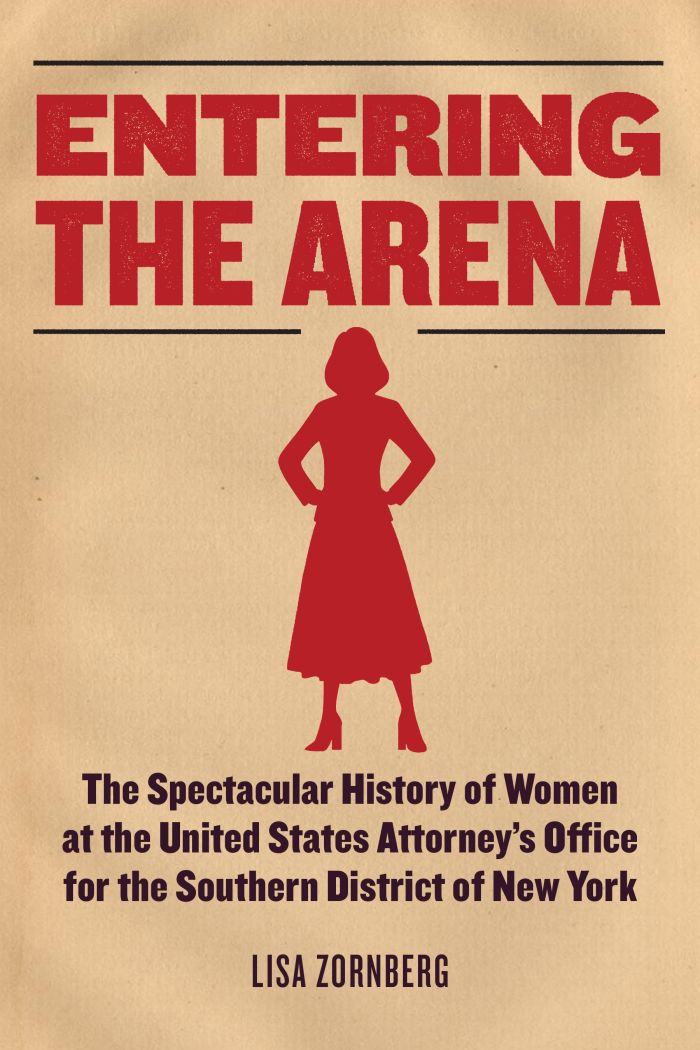
The author was a prosecutor there. Interesting book. 

Monday, November 24, 2025

SCOTUS Watch: Orders

Texas Restricting

I started this blog in the middle of the first Bush43 Administration. Various shenanigans going on now, including mid-decade redistricting to obtain partisan ends, went on back then, too. A feeling of deja vu.

A 2-1 Fifth Circuit opinion provided a surprising win for the Democrats when the mid-decade Texas redistricting (which led to a retaliatory California effort) was struck down as an illegitimate racial gerrymander. Trump Administration shenanigans were involved. Their incompetence strikes again. 

The Supreme Court earlier held that political gerrymanders are non-justiciable in federal court. The Rucho opinion ended a 4-4-1 stalemate where conservatives wanted to prohibit such appeals and liberals tried to get Kennedy to agree to join them the other way. Kennedy, while not giving a firm "no," never gave them that fifth vote. 

The Supreme Court left such appeals open in the 1980s. I don't know how much the federal courts actually restrained the process. 

I am not aware of any SCOTUS case that struck down a partisan gerrymander (racial gerrymanders were found). The blog discussions against Rucho tend to skip over that part. Not saying Rucho was meaningless. Curious how much it changed things.

There was a very unhinged (and somewhat counterproductive) dissent to the court of appeals opinion. Justice Alito on Friday granted Texas an "administrative stay" on Friday and sped up the briefing. A response is required by 5p.m. today. 

Never-ending drama.

Order List 

Today's Order List is the last thing scheduled until the beginning of December. It had some interesting bits.

As Chris Geidner noted on Bluesky:

The Supreme Court grants no new cases for merits review in today’s orders list, but it does summarily reverse two lower court rulings in criminal cases—one holding a constitutional error in a Mississippi trial, the other holding the Fourth Circuit improperly ordered a new trial in a Maryland case.

The Mississippi case struck down as unconstitutional a law providing a blanket ability to screen child witnesses. A split SCOTUS opinion earlier upheld the practice, but held it must be "case specific." The Court, in a five-page opinion, left open the possibility that the screen would be harmless error in this case.

The case first came last spring and was distributed to multiple conferences. This suggests some concern. I think the case should have been accepted for full review and oral argument.

The Court also (again) refused to take a case to reconsider the Feres doctrine regarding immunity regarding certain military claims. 

Gorsuch would have taken it. Thomas again wrote to explain why he thinks so, too. Sotomayor is sympathetic but argues that stare decisis warrants leaving it to Congress to fix. She makes a good case. 

The petition for a writ of certiorari is denied. The Chief Justice and Justice Alito took no part in the consideration or decision of this petition.

Only Kagan and Jackson (and somewhat inconsistently Sotomayor) deign to explain why they recuse.

===

The justices will hold oral arguments in the first two weeks of December. 

Then, there is an Order List scheduled for 12/15. That is the last thing scheduled for 2025. 

Other stuff is likely to drop.

ETA: A reference in my daily SCOTUSblog email warrants an addendum.

plainly, courts “call balls and strikes”; they don’t get a turn at bat

The second criminal per curium given short shrift in my comments drops a "balls and strike" reference. 

The lower court explained how the Supreme Court allowed them to raise a problem with a trial that was not cited by the petitioners. So, it is unclear whether the justices were right to call them out here. 

But, overall, the justices don't just call balls and strikes. The Supreme Court repeatedly gets a turn at bat, including changing the questions raised by the lawyers for appeal. 

They also have a lot of power over the batters, including who will get a time at bat, when they will get a time at bat, and what they should do there.

The per curiam quotes an earlier opinion (by Kagan):

In line with our duty to call balls and strikes, we granted certiorari to resolve the split, 589 U. S. ___ (2019), and we now affirm.

Do umpires generally "call balls and strikes" by settling nationwide disagreements on strike calls via official statements of what the rules are?

Meanwhile, here's some more (from me) on judicial review, one of some new essays on that website. 

Monday, November 17, 2025

SCOTUS Watch: Order List

Monday's Order List (no more oral arguments until December) had a few interesting tidbits.

In the most common types of habeas corpus proceedings in the United States federal courts, a certificate of appealability is a legal document that must be issued before a petitioner may appeal from a denial of the writ. The certificate may only be issued when the petitioner has made a "substantial showing of the denial of a constitutional right".

There were the usual housekeeping orders, which made some go "hmm." For instance, only those with knowledge of some inside baseball know what a "certificate of appealability" entails. Where is that Orders FAQ page?

The justices granted one case involving asylum seekers. The SCOTUSblog summary references "aliens," though the lower court opinion uses the more and more standard "noncitizens." 

I would have granted certiorari to terminate the longstanding and unlawful prison-building order at the center of this case. In 2019, the District Court ordered New Orleans to construct a new facility for inmates with mental health needs. 

Alito (with Thomas) had a short dissent from denial regarding a case; the federal government had to be pushed to provide a response to the challenge. Gorsuch would have granted, though he did not join the dissent. It turns on procedural matters.

The facts harken back (going by the briefing) to at least 2013. The new facility was only two-thirds complete as of July 2025. The case is out of the Fifth Circuit, and the usual conservative suspects (including Judge Ho) dissented below.  

The Trump Administration, however, did not deem it certworthy. A tad bit telling as compared to Justice Alito arguing it is compelled by the Prison Litigation Reform Act of 1995 (limiting lawsuits) and so on.

==

More about that case involving a major human rights judgment against Ferdinand Marcos, where Sotomayor on Friday rejected a stay request. 

Steven Vladeck, in his Substack today, also suggested the request for a stay could have at least partially been raised to put the government on the record (see Sotomayor's final order).  

Upcoming

There is a non-argument session scheduled on Friday. These are usually used to swear people to the Supreme Court Bar. Vladeck notes there is a small chance it will be used to dispose of an easy case.

An execution is also scheduled on Thursday. 

Some miscellaneous orders might drop. The next scheduled Order Day is next Monday. That closes the official events scheduled for November. 

Monday, October 20, 2025

Order List + Another Order

The Supreme Court disposes of lots of cases without comment. A few people want them to explain everything. That would be a tad silly. 

They dispose of thousands of things, including not granting patently meritless claims from (to use a legal term) kooks. My rule is that they should do it for executions and when they overturn the court below.

Some of the orders do have interesting details. Others are more trivia answers. That can be interesting too.

Friday's Order

They disposed of, without comment, an "order in pending case" on Friday. It was "application for a writ of injunction presented to Justice Kagan and by her referred to the Court is denied." 

The case concerned a desire to have a vaccine exemption for a student because the vaccine was somehow a product of an abortion. The Supreme Court didn't say why, as noted, but these requests are rarely provided. The merits are not the issue here.

Still, of course, the subject matter catches one's eye. It turns out that decades ago that fetal tissue was used to start a cell line that was involved in the production of the vaccine. It is not clear why the abortion occurred.

It's not like someone performed an abortion for scientific experiments. Once the abortion occurs, it is unclear why a fetal tissue sample can not be used. And, as noted here from a Catholic perspective:

As a practicing Catholic, I think the moral balance of indirectly benefitting from an abortion that occurred 50 years ago in order to take a vaccine that will prevent further death in the community is a no-brainer – especially considering that so many of the over 620,000 American deaths have occurred in the most vulnerable and marginalized in our society. We need to focus on saving lives right now. We need to care for our neighbors. 

The level of indirect involvement that is cited to demand an exemption, repeatedly to harm third parties (e.g., deny insurance benefits or make it harder to obtain them), is not only infuriating, it is immoral. And, bad as a matter of free exercise law. 

Order List 

The Monday Order List is the last scheduled thing on the schedule until November 3. (Happy Birthday, Bobby, who won't read this.)  Two executions are scheduled before then, so we shall see about that.

The Order List included various housekeeping measures. Notably, Alito (cert denial) and Gorsuch (habeas, the claimant cited for abusing the privilege of free cases) didn't participate in two of the denials. 

The Supreme Court has added three new cases -- involving arbitration, gun rights, and bankruptcy. All three are relists. 

The Second Amendment case involves prosecution of drug users (controlled substances). A sympathetic claim though (1) what drugs (2) how strong is the constitutional claim? The claim is notable too because Hunter Biden's crimes involved this matter. 

Another notable thing: the justices decided to wait to determine if Little v. Hecox is moot. The trans student in the case asked the Court to do so. They will wait until after oral argument (this is fairly normal). 

Funding

The Supreme Court announced that its funding has run out, given the current Republican government shutdown. Yet again, the public information office released a statement but did not post it on the website. 

They have a press release page for that, you idiots. There is a notice on the website:

Due to a lapse of appropriations, the Supreme Court Building will be closed to the public until further notice. The Building will remain open for official business.

So, sorry SCOTUS haters, this won't stop them from skullduggery. The public is just denied entry. 

On that subject, here's the December calendar. 

Friday, June 20, 2025

SCOTUS Watch: Sotomayor/Jackson Dissent a Lot Edition

More Opinions

Friday brought six more opinions. There are ten left, which might be two days of opinions. Maybe three, which I would not be surprised about. So, they are mostly on schedule. 

There was a good amount of writing, though we are not talking hot-button stuff overall. The things covered included various regulatory issues, a disability claim that led to a strong dissent by Jackson, and a unanimous (on result; the one case Sotomayor and Jackson simply went along). decision about jurisdiction in a lawsuit against the PLO.

Kagan had a strong dissent for the liberals in a regulatory matter arising from fax machines (just the fax, ma'am). She was not happy about the result ("Those words mean what they say, or anyway should.") I usually trust her judgment. 

Alito (with Gorsuch) grumbled some in dissent that provided a limited liberal result in a sentencing case. "Veteran trial judges often complain that their appellate colleagues live in a world of airy abstractions." The two former district court judges joined the majority opinion. Barrett replied at one point in a footnote regarding his "curious" allegations. 

Jackson, who used to be a sentencing commission member, concurred to partially disagree with some aspects of the opinion. She had a strong dissent (Sotomayor went along part of the way) in that disability case. 

Jackson included an on-point footnote answering Gorsuch's charge that she avoided relying on pure textualism as "insufficiently pliable." She noted that "ambiguous text" requires using multiple interpretive approaches because "pure textualism is incessantly malleable." 

Yes. People too often are cocksure about what the text means, sometimes in annoying Gorsuch-like fashion accusing people of making shit up because they are biased if they don't agree. This is not just something conservatives do, though they often are more likely to do so.  

Text is not always so clear. We often look at it through a glass, darkly, to quote Saint Paul. The appropriate means of interpreting the English language includes factoring in multiple criteria. Pure textualism, whatever that means, alone means using textual interpretative devices (with obligatory citations of a Scalia text) that offer multiple options.

Anyway, the cases are not overly exciting, and Kagan only dissented in one. They are of some importance, which again explains why Sotomayor and Jackson have so many separate writings. There are various lessons to be learned.

Eric Segall (Dorf on Law) on Bluesky noted:

The Court’s 4th case, for standing nerds, basically stands for the proposition that companies seeking profits have a much better chance of getting standing than civil rights groups and journalists. Pitiful and pathetic.

I'm not a standing nerd but respect his opinion (up to a point) on such matters. Jackson's dissent (Sotomayor dissents less strenuously) basically agrees with him, referencing eroding public trust and so forth. 

Jackson today knows her role -- liberal dissenter, speaking for the future. She has the "lone ranger" role Rehnquist had in the 1970s. This makes a Bluesky comment about her being a future Chief Justice even more apt. Took fifteen years, so have a ways to go. 

Mark Joseph Stern: "What you see in today's opinions is the three liberals assuming different roles. 

Kagan is the conciliator, siding with the conservatives to assure them she's reasonable. KBJ is ready to shoot flaming arrows and burn it all down. 

[#TeamJackson!] 

Sotomayor is in between them, trying to find middle ground and keep the peace." Sotomayor as peacemaker is almost amusing, but she does that. She had spoken of "her friend Gorsuch," for instance. 

Chris Geidner also has more on the trans health case, which deserves firm denunciation. 

Trump Enabling Watch 

The 9th Circuit helped Trump regarding his power to send the National Guard to California. They provided a rather low bar for determining normal means was not enough. 

Courts will be loath to interfere with executive discretion in such cases, but Judge Breyer (not that one) had a point. Overall, procedurally, it was a limited win for Trump.  

Meanwhile, the Supreme Court handed down an order that "the motion of petitioners to expedite consideration of the petition for a writ of certiorari before judgment is denied" in a tariff case. 

Coming Up

We are coming up to the home stretch of the June home stretch. Another Order List on Monday. At least two opinion days. Two executions scheduled. 

The next opinion day for now is Thursday. That would allow for opinions days on Thursday and Friday, with a clean-up on the following Monday (June 30). 

Wednesday, June 18, 2025

SCOTUS Watch: Anti-Pride Month Edition

Financial Disclosures 

The Supreme Court released financial disclosures, part of the ethical rules currently in place. The SCOTUSblog coverage notes (without adding "and he should have been impeached"):

Justice Clarence Thomas, whose failures to disclose (among other things) private jet and superyacht trips in prior years led to investigations by ProPublica and calls for ethics reform by the justices, did not list any non-investment income, any travel reimbursements, or any gifts for 2024.

Justice Alito delayed providing his probably because he has a lot of investments. It would be helpful if these things were cross-referenced to recusals. 

Opinion Days

If you go to the Supreme Court website, there is a calendar. Click such and such a day and see if anything is scheduled. Wednesday and (eventually) Friday were labeled as days when opinions might come down. They nearly always will be. 

There is no livestreaming of opinion announcements. Nonetheless, reporters live blog them, including at SCOTUSblog and Bluesky. So, for instance, we know how many boxes of opinions are out. Today it was three. That means a bunch of opinions. 

The opinions are released in reverse order of seniority (Jackson to Roberts; any unsigned per curiam comes last). The first was handed down by Kavanaugh, but then it was Thomas handing down a not too divisive case. The next opinion was either Thomas's or Roberts's. A big opinion was likely.  

The Others 

The justices (Gorsuch, with Alito and Thomas dissenting) found a way to avoid a tricky case involving the disposal of nuclear waste on standing grounds. Kavanaugh has done that before.

Thomas handled two environmental cases. Gorsuch (with Roberts, with a relatively rare dissent) disagreed with how he handled it, dissenting in one case and concurring in the other. 

After the big decision, Roberts had a good opinion that expanded access to a jury trial under the Prison Litigation Reform Act. Barrett wrote the dissent there for the other conservatives (minus Gorsuch).  

Some are sneering at the NYT article on maverick Barrett, but it also had multiple people warning "ignorant conservatives and wishful liberals" expecting too much. I did hope she would not be too bad on trans issues. Oh well. So did a trans activist.

Trans Medical Care  

Judge Sutton and the 6th Circuit ruled against same sex marriage, unlike nearly every other court. This led the Supreme Court to take up the issue ten years ago. Sutton was behind the anti-trans ruling, too.

We have a different Supreme Court now. It was risky to bring an appeal. This was not a statutory case involving employment. The regulation of medical care for minors would give the necessary justices more room for concern. Gorsuch, who wrote the Bostock opinion, didn't even open his mouth during the oral argument. The question was how bad it would be. 

Tennessee’s legislature passed the law, known as SB1, in 2023. SB1 emphasizes that the state has a “legitimate, substantial, and compelling interest in encouraging minors to appreciate their sex, particularly as they undergo puberty.” It prohibits (as relevant here) the use of puberty blockers and hormone therapy for transgender teens while allowing the use of the same treatments for other purposes. 

[The bold is from two linked articles.]

Not good, though it could have been worse. Roberts wrote the majority, though a lot of the 118 pages were concurrences and dissents (Sotomayor dissented from the bench; Kagan didn't join one part while Jackson joined all of Sotomayor's dissent).  

The opinion didn't go far enough for Barrett, Alito, and Thomas. They would have bluntly said that transgender people should not receive heightened scrutiny. Roberts claimed the case didn't bring up the question. Alito was more honest than that. 

Significantly, Tennessee’s law is also quite explicit that the purpose of this law is to ensure that young people do not depart from their sex assigned at birth. The law declares that its purpose is to “encourag[e] minors to appreciate their sex” and to prevent young people from becoming “disdainful of their sex.” That is an explicit sex-based classification. Patients who Roberts refers to as “biological women” are allowed to fully embrace femininity in Tennessee. But a child who is assigned male at birth may not.

Roberts could have done less than he did, given the limited question presented. Kagan separately talked about that. I had hoped perhaps someone like Barrett (not thinking she was so anti-trans) could write a minimalist opinion. Unfortunately, Barrett decided to instead reach out to belittle the risks of trans people.

Roberts didn't go as far as he could. It still is not good. For instance, "We have not yet considered whether Bostock’s reasoning reaches beyond the Title VII context, and we need not do so here." The Bostock author went along with this possibly "applying it to its facts" limitation without comment. 

The Bostock logic should apply to other federal and state legislation with similar "because of sex" language. The "Title VII context" isn't somehow unique. I'm worried about that possible poison pill. 

The opinion cites Dobbs and an old "pregnancy discrimination isn't sex discrimination" precedent to add insult to injury.  The opinion is sort of a bad Roberts special: it has a desired result, sounds reasonable, but the reasoning falls apart with scrutiny. 

Chris Geidner and Erin Reed have more. CG argues there are avenues left open, including when animus is shown. Some, however, (rightly) argue that it was present here. He notes the "disingenuous wordplay" involved. And, this was the better half of the majority.

Erin Reed speaks about how "devastating" the ruling is while also noting its limited reach: 

The case raised foundational constitutional questions: whether transgender people constitute a class triggering higher constitutional scrutiny, whether laws targeting them violate equal protection, and whether the Constitution guarantees their right to access medically necessary treatment. The Court sidestepped nearly all of those questions.

ER covers how the opinion is horrible and poorly argued within the context covered. This includes Orwellian language that uses the criteria of trans people to classify and says the state is not classifying by trans status. A big TBD:

The ruling effectively greenlights medical care bans across the country and may pave the way for broader restrictions, including for adults, while leaving lower court rulings on bathrooms, schools, sports, and employment remain intact—for now.

The opinion, overall, should not be exaggerated to some degree -- it covers a limited ground -- but it is true (to quote Blackmun) that an ill wind blows.  

(Sotomayor provides her dissent "in sadness" instead of "respectfully." She should say "in anger," which is expressed in various parts of her dissent.)  

On a related subject. I watched Newton's Law, an Australian show, on DVD. It had a trans healthcare storyline. Another episode of the enjoyable legal drama involved a property dispute over a dog. A good change that addresses the old "pets are just property" concept was recently put in place.

A recent book about a German sex researcher provides a more open and liberal minded vision that apparently is still ahead of its time a hundred years later.  

Trump Checks In 

Meanwhile, the Trump Administration is continuing its anti-LGBTQ efforts:

President Trump’s administration has ordered a crisis service for LGBTQ youth to close within 30 days in a move that opponents have said will have dire consequences. 

Since federal spending is involved, the Substance Abuse and Mental Health Services Administration referenced "LGB+ youth," editing out trans people. 

To be continued ...