About Me

My photo
This blog is the work of an educated civilian, not of an expert in the fields discussed.

Monday, May 18, 2026

SCOTUS Watch: Order List

A ten-page Order List with various odds and ends.

Chris Geidner notes on Bluesky:

Also in today’s orders, SCOTUS sidesteps ruling on private enforcement of Section 2 of the Voting Rights Act, sending two cases back for post-Callais reconsideration. Jackson dissents, pointing out that Callais had nothing to do with private enforcement and saying she would have summarily reversed.

Rick Hasen summarized:

Justice Jackson dissented from the order, on the sensible grounds that Callais did not consider the right to sue question. Of course, the stakes are much lower now that Section 2 is essentially dead no matter who sues.

(His colleague was more sympathetic.) 

Also, a cert grant (per Geidner):

The Supreme Court takes up a case over whether employees of federally funded schools can sue to enforce Title IX’s sex discrimination bar. 

Kavanaugh, without comment, noted he would have granted cert. in another case. If you do a docket search (on another page since the Order page does not provide links):

Whether a multiemployer pension plan that terminated through mass withdrawal before the 2020 plan year is eligible for Special Financial Assistance under 29 U.S.C. 1432(b)(1)(A).

Alito and Barrett didn't take part in the examination of a couple of cases. Again, only Kagan and Jackson regularly explain why they do that. 

Sotomayor added a brief statement noting that she agreed with the court not taking a criminal case because the government admitted error and the defendant received all that was requested for. 

The next thing on the schedule is an opinion day on Thursday. Next week's orders will be on Tuesday because of the holiday. 

===

I agree with Steve Vladeck that justices should show up more in front of Congress. Court reform includes multiple things, including some that should have bipartisan support. This is one such proposal. 

Sunday, May 17, 2026

“Rededicate 250"

The “Rededicate 250: A National Jubilee of Prayer, Praise & Thanksgiving” event in D.C. today had a Christian Nationalism feel. 

The Washington Post article's title:


It was not merely a private event:

A crowd of thousands transformed a block of the National Mall into an evangelical-style worship service Sunday at an event backed by President Donald Trump and funded with millions of taxpayer dollars.

Trump didn't show up. They played a video of his reading a Christian Nationalism-friendly biblical quote from a different event. A few signs of religious diversity (including the usual Judeo-Christian touches with Judaism as a the clearly junior party) aside, the dominating force was apparent:

People described a variety of reasons for coming — to bring awareness to what they see as harassment of or disfavor toward conservative Christians, to pray for the country to repent for its sins, or to fortify what they call the Christian roots of the country — in particular against Islam or other faiths outside Christianity or Judaism. 

Pete Hegseth referencing the mythical story of General Washington kneeling to pray story is the flavor of "history" we will see here. An honest accounting of our nation's religious story would be helpful. 

This bunch, with Trump as their false god, won't give it to you.  It is more likely to be blasphemous, including to many Christian believers. And, to our overall values.  

Friday, May 15, 2026

SCOTUS Watch

The Supreme Court is beginning its final end-of-term push. They will meet on Thursdays until the end of June. Opinions dropping will be likely.

More VRA News 

They had no Order List on Monday. No problem. They often make news outside of those often no-drama orders.

For instance, the aftermath of a major Voting Rights Act decision continued. It involved Alabama. Sotomayor dissented for the liberals. 

The conservatives didn't explain themselves. Bad decision, but not the end of the line. Meanwhile, there continues to be a lot of jockeying in multiple states.

The Virginia state supreme court ruling was not a good decision. The Hail Mary federal challenge was also not good. It was rejected without comment. 

Arguments 

We don't get video or even audio (for opinion announcements) of the proceedings. 

Amy Howe showed up since we cannot. She promoted, as a witness, greater transparency during the proceedings of the Biden Supreme Court Commission. Her summary of this term's arguments is interesting. 

Opinions 

The usual practice is for the justices to drop a limited number of opinions in late May and early June. Then, we will have an influx, with multiple decision days in one week to complete the job. Late term rush.

There are worse things to worry about. All the same, this is a bad job of pacing yourselves. 

Anyway, as expected, the two opinions (both unanimous with one concurrence) are non-controversial. The usual sentiments about how such opinions are still of some significance aside, neither is not a "high profile" case worthy of much attention. 

Abortion Pill News

The Fifth Circuit dropped a ridiculous opinion preventing Mifepristone from being prescribed by telemedicine and delivered by mail. The decision is bad both procedurally (standing) and on the merits.

Justice Alito, in charge of the Fifth Circuit, granted a temporary halt (administrative stay). He (selectively) had it expire on Monday afternoon and then extended it to Thursday afternoon. So, after two opinions few cared about dropped, bigger news was forthcoming.

(The link underlines how the change in Administration matters.) 

The Court, about a half hour late, granted a regular stay. Thomas and Alito dissented for different reasons. Alito noted the Court did not explain itself (which is unfortunate), which he did not find problematic about an hour later, when an execution was involved.

One notable thing about Alito's dissent is that he references how a change of policy in the Biden Administration helped protect the supply of abortion pills after Dobbs. State shield laws, including in New York, were also quite important.

Michael Dorf has more, including a reference to a good article on the Comstock Act. A previous discussion, which includes a reference to a Biden DOJ policy statement, is also worthwhile. 

Busby Execution 

A murder apparently motivated by robbery led one person to be sentenced to death, the other to prison. 

After over twenty years, too long (Breyer), Texas was ready to execute him. There was a claim of intellectual disability, which even the state witness granted.

The Supreme Court has held that intellectual disability at a certain point will make execution unconstitutional. It is also a mitigating factor. 

The seriousness of the claim is suggested by the fact that even the conservative-leaning Fifth Circuit at least temporarily held up the execution. The justices overturned the stay without comment.

Kagan dissented without comment. Jackson (with Sotomayor) briefly noted how gratuitous it all is. 

He was the 600th execution in Texas since 1982.

Upcoming

Order List on Monday, and another opinion day on Thursday. Who will buy Souter's home? 

Wednesday, May 13, 2026

In-Lawfully Yours

I referenced this film about six years ago. The video I used is blocked. I summarized:

Up Channel has "new" films on Sunday nights at 7/11 that are actually not new but promoted as new. For a few weeks now, the picks have been overall pretty good. 

This week, we had a city girl, not much into God, come to help her old mother-in-law (as in ex -- the hubby cheated on her) move after the father-in-law died. She falls for the new minister, whose deceased wife was her sister-in-law. 

Thus, the punny title. Various familiar faces, including two people in current shows and two from old shows. It has light touches mixed with a lot of serious content. 

Well-acted, with the story pretty well paced too. Sorta topical.

The film was a Regents University production. The DVD behind-the-scenes extra talks about that, including how film students were involved. 

Its website offers:

Experience the difference of America’s Premier Christian University that offers over 150 areas of study online and on campus in Virginia Beach, Virginia.

"Christian" means a variety of things. The film promotes an open-minded view. After all, the minister might be a widower, but the other love interest is a divorcee. 

At one point, her ex comes back pretending to want to reunite. He claims to be reformed. It is a trick. Some Christians would find that troublesome. Why not make it a redemption story and save her from the evils of divorce?!

She asks a lot of questions about the Bible and religion in the film. The film cheats a bit by not providing too many answers to her questions. 

Yes, how do you know you chose the right religion? Yes, how did Job getting a new family really help him after his old one all died?  

The film does know that a "message" film should first be a good film. The Bible is filled with stories that teach us. They are also enjoyable stories. They were passed down for more than their moral lessons.

I re-watched the film (at least for a third time) and still enjoyed it. The husband's coming back is a bit heavy-handed, but it is an understandable plot device. Got to earn that nice ending. 

Still, I want to get past that and back to the pastor and his sister-in-law building a relationship. They are a good couple. And both are well-rounded, complex characters. 

Sunday, May 10, 2026

Mets at the 1/4 Way Point


A lot of mediocre teams. A lot of teams are under .500. After 40 games, the Mets are at the bottom of the pack at 15-25. A lot of baseball is left. Still, that's pretty bad.

Update: Good week, including an "instant classic" win vs. the Yanks. 

Friday, May 08, 2026

Umpire John

Judge Sotomayor, before becoming a justice, noted that appellate judges make policy. They set forth rules while district judges largely determine facts.

As Lawrence Hurley reported for NBC News, Roberts continued: “I think they view us as truly political actors, which I don’t think is an accurate understanding of what we do. I would say that’s the main difficulty. “

What is a "political actor?" Let's go the dictionary:

political

adjective

po·​lit·​i·​cal pə-ˈli-ti-kəl 

1a: of or relating to government, a government, or the conduct of government

b: of, relating to, or concerned with the making as distinguished from the administration of governmental policy

2: of, relating to, involving, or involved in politics and especially party politics

3: organized in governmental terms

political units

4: involving or charged or concerned with acts against a government or a political system

political prisoners

The Supreme Court plays a significant role in setting forth policy. It does so in ways with many political implications. Fitting those definitions. 

The term "political" is disfavored by many judges. It sounds like they are "politicians" who are shady sorts. Judges are supposed to be above the fray. They are special.

We accept too much the idea that politicians, who represent us, are allowed to be "dirty." It helps Trump some since "they are all bad, right?" 

But John Roberts is setting forth an artificial dynamic here. The Supreme Court has a political role. His saying after the recent Voting Rights Act opinions is even harder to take. 

Each branch of government has different roles in our system. Courts have a role that is more independent in certain respects. They, however, are not just off on the side, outside of the political system.

Honesty can help us determine how to react, including what sort of reforms of the courts should be sought. 

===

Talking political, I talk about the Virginia Supreme Court (4-3) overturning the redistricting measure here. tl;dr: It was not a scam that they waited to decide, but how they ruled looks pretty sketchy. 

Thursday, May 07, 2026

National Day of Prayer

I agree with the Freedom From Religion Foundation, whose lawsuit was successful at the district court level before losing on standing, that this is unconstitutional. (Link to litigation at that linked discussion.) Good luck doing so these days.

The President shall issue each year a proclamation designating the first Thursday in May as a National Day of Prayer on which the people of the United States may turn to God in prayer and meditation at churches, in groups, and as individuals.

Congress should not be selectively advising people, especially the president [though this one is quite willing to do so without being pushed], to pray. The district court opinion from the before times referenced Justice Blackmun's opinion in a creche case (Allegheny):

It is worth noting that just because Marsh sustained the validity of legislative prayer, it does not necessarily follow that practices like proclaiming a National Day of Prayer are constitutional. Legislative prayer does not urge citizens to engage in religious practices, and on that basis could well be distinguishable from an exhortation from government to the people that they engage in religious conduct. But, as this practice is not before us, we express no judgment about its constitutionality.

The dissent acknowledged that the legislation “is a straightforward endorsement of the concept of turning to God in prayer." [cleaned up] These days, that sort of thing is more and more allowed. It still is bad under the First Amendment.

The word "may" aside, the legislation has the purpose and effect of promoting prayer. It is a "National Day of Prayer." Baptists who respect the separation of church and state see the problem while realizing there are worse breaches.

(There is a reference to meditation, but it remains a day of prayer. And not everyone does that either.) 

I again note that -- though prayer is something many religions do -- the language favors Christianity. There is a reference to "churches," not places of worship. 

Religious liberty warrants a separation of church and state. It also warrants avoiding favoritism, including selectively instructing the president to proclaim about certain religious activities. 

Wednesday, May 06, 2026

What We Stand For

Joanne Freeman, the historian, argued on BlueSky: 

  • Empathy 
  • Diversity 
  • Equity 
  • Humanity (& the humanities) 
  • A broad idea of “WE THE PEOPLE” 
  • Concern for ANY kind of “we” Truth 
  • (Real) history 

The current regime opposes these things. 

Needs to be stated plainly.

Monday, May 04, 2026

SCOTUS Monday (Not a Fun Day)

It started blandly with a four page Order List. Then, Alito provided an expected administrative (temporary) stay to the wrongminded abortion pill ruling. Then, it granted a request to immediately put the Voting Rights Act ruling into effect. Jackson dissented. Alito (with Thomas/Gorsuch) whined about it. Hit too close to home, Sam?

ETA: A request to recall the judgment was denied.

Saturday, May 02, 2026

Trump Supports Anti-Christian Bias

Religion Clause Blog reports: 

Yesterday, the President's Task Force to Eradicate anti-Christian Bias issued a report (full text) titled Eradicating Anti-Christian Bias within the Federal Government. The 197-page Report (with an additional 368 pages of Exhibits) focuses on policies of the Biden Administration.

The report has the usual Trump anti-Biden bullshit. Biden, whose expression of religious beliefs was much more honest than Trump's, supposedly is "anti-Christian." 

Biden regularly wore his religion on his sleeve and did so a lot more credibly than the current occupant. His Administration also respected equality, including the diversity of Christian beliefs. 

Trump's Administration selectively weaponizes Christian beliefs, promoting Christian nationalism, while disrespecting many Christians. This includes changing long in place policy regarding ICE enforcement at places of worship.

Where is this so-called anti-Christian bias? For instance, people who blocked clinics, motivated partially by religious beliefs, were not allowed merely to continue to do so. Laws protecting clinics were enforced. So, people could freely obtain health care, pursuant to their (often Christian) moral beliefs.

Vaccine mandates were also enforced. First, the average Christian doesn't find vaccines problematic. Second, requiring workers, including health care workers, to vaccinate or use alternative methods to protect others, is not "anti-Christian bias."  

There are rules in place respecting non-profits with tax breaks. Religions and religious organizations, whatever the religion, don't deserve a special exemption from the rules here. 

And so, it goes on and on. The Trump Administration promotes a selective form of Christian nationalism. The Baptist Joint Committee for Religious Liberty has flagged the problems of Christian Nationalism. But then, they aren't the "Christians" the Administration is concerned about.

Religious liberty is a fundamental aspect of freedom, not just in the promotion of some favored ones. It is too precious to let such special pleading go on without comment. See also, Justice Thomas and his confused and biased take on how "they" ignore the true meaning of the Declaration of Independence. 

"Christianity" is not just a conservative form of it. "The left" are alleged to be anti-Christian and anti-religious. This is a vicious slander. 

Friday, May 01, 2026

SCOTUS Watch: Oral Arguments Wind Down

Order List

Two things stood out for me in a four-page order list. As Rick Hasen summarized on Bluesky:

The Supreme Court won't hear the case where a lower court temporarily stopped Texas from using its re-redistricted congressional maps. The Supreme Court just reversed that order without hearing argument or getting more briefs.

The liberals dissented (without opinion). There is a story here. We have another reversal, based on a short per curiam, of a 160-page or whatever district court opinion on the shadow docket. 

Steve Vladeck is on the case, not having patronizing conservatives referencing the "hysteria" over the question. Wow. Breyer says all is well. An accommodationist who is loath to criticize. I think his replacement is more on the money. 

(Vladeck, after the voting rights decision, wrote a partially paywalled piece on reforming the Supreme Court. He opposes court expansion.) 

Meanwhile, quoting Chris Geidner, they also granted another case:

SCOTUS grants another post-Jarkesy case about administrative agencies’ adjudicative powers, involving the Labor Department.

The liberals didn't like Jarkesy, but some left-leaning sorts thought it was correct to require additional usage of the federal courts. So, it's not a crystal-clear issue.

Arguments

The Supreme Court then spent two hours (too long) talking about "geofence" warrants. Sounds like a tricky case that they will try to rule on narrowly. OTOH, maybe it's too soon to judge.

The other notable oral argument (for me) is a late addition involving Trump's immigration policy. And with that, the oral arguments are likely done. 

Now, they will get to opinion writing, probably finishing by the end of June for their summer baseball camp plans or whatever they want to do. We will also likely see if Alito really is going to stay on. 

Opinions

Rick Hasen (Election Law guy) is EXTREMELY concerned about a big 6-3 (Alito v. Kagan) voting rights case handed down. It is "one of the most pernicious and damaging Supreme Court decisions of the last century." He's not one to exaggerate.

Kagan's concern is suggested by her dissent from the bench. Since we don't have audio (Oyez.com will provide it eventually after the term is over) or video, we can just read about both Alito (longer than usual) and Kagan's bench statements. 

Congress could, and eventually should, pass a new voting rights law. They have done so in the past in response to statutory construction. The current executive and legislature are not likely to do so.

I think Congress should have a fast-track process to address Court rulings regarding federal statutes. The 6-3 Supreme Court might then flag an alleged constitutional barrier to the legislation.

This is where court reform comes in. You have ethics reform, tweaking qualified immunity, term limits, and so forth. Various good policies on their own. 

A constitutional decision like Shelby v. Holder sometimes can be addressed (e.g., update the process there deemed out of date). Other times, you will run into a roadblock, like the Trump v. U.S. ruling. 

Some want to expand the Supreme Court. Others worry this will result in tit-for-tat responses and overall diminish the Court. 

Hardball will make for tough decisions at some point, including jurisdiction stripping and targeting their budget (minus reduction in salaries, which the Constitution prohibits). After all, if you use the budget to "blackmail" (pressure) the Court, does that not have some potential at threatening its integrity? 

I think we should put everything on the table. Reform will be tough. Serious reform, whatever it entails, might require ending the filibuster. Whenever bad opinions, especially ones with political/partisan valence like this one, arise, this talk does as well.

A trifecta is necessary. Let's start thinking. Meanwhile, jockeying by both sides in a districting race to the bottom continues. 

==

The first opinion was unanimous. The result in a future case could help liberals or conservatives. It involved the investigation of crisis pregnancy centers. 

Maybe it was the right decision, and it wasn't on the merits, though judges below disagreed. Was it that obvious? Shrugs. More on the background here. 

Executions

James Garfield Broadnax was nineteen when he was part of the robbery/murder of two people in 2008. Texas executed him. 

There is debate over how serious his role is, the use of race in jury selection, and other issues. Two confessed, one was given the death penalty. 

No comment by SCOTUS when rejecting the final appeals. The whole thing seems arbitrary. 

(A few judges have shown some concern about executing people under 21. The line now is eighteen.)

Florida executed someone sentenced to die for the rape/murder of his teenage step-niece, committed in 1976. James Hitchcock is not someone many will have sympathy for. It still is patently ridiculous to execute someone after 50 years. 

Florida is making a habit of this, though, even for them, 50 years is longer than most. As usual, I cite Breyer's dissent in Glossip v. Gross on this issue.

Since only a few justices over the years, none on the Court now, flagged that problem, his final appeals rested on other claims. His lawyers, yet again, raised a claim that the Florida lethal injection process is flawed.

Also, they again raise an innocence claim. It isn't new, so hard to see it working at this late date. He claims his brother did it. I doubt it. The time lag is my issue.

He committed horrible crimes. He was in prison for fifty years. Some members of the victim's family will obtain closure. That is a variable thing, and anyway, not enough to justify a few arbitrary executions.

A long prison term might also have led some to have closure. A lingering execution might have hindered the process as they waited a bit more time for it to happen.

Upcoming

No more oral arguments. 

There will be releases of orders (Monday) and non-argument sessions (often admission of bar members, but some opinion days might be mixed in) and conferences (Thursdays) until the end of June. At least, after a ten-day break after Monday (orders). 

(Memorial Day pushes one order day to Tuesday.)

There will also be various other days with orders and opinions, especially as things speed up in June. And probably a surprise or two mixed in. So, it goes.

Tuesday, April 21, 2026

Chadwick Willacy Executed

On September 5, 1990, Willacy, then 24, was burglarizing Sather's Palm Bay home when she returned home unexpectedly. Willacy bludgeoned Sather, 56, bound her hands and feet with wire and duct tape, and brutally strangled her with a cord. He later disabled smoke detectors, doused her with gasoline, placed a fan at her feet, and set her on fire.

Florida executed another person who committed heinous crimes decades ago. The Supreme Court never held, even if a few justices flagged the problem, that such lag times were constitutionally problematic. 

(See, e.g., Breyer's dissenting opinion in Glossip v. Gross, including how the state interest decreases over time. The person did serve three decades in prison.) 

The last appeal also had a repetitive feel. His lawyers sought information regarding the lethal injection process. Sotomayor recently noted she was concerned about possible problems, especially since everything was not out in the open. 

A long prison sentence is appropriate in these cases. The capital punishment system is too flawed to be trusted. Executing a few people among a bunch of horrible people, including decades later, is not a good use of the public welfare. 

ETA: Trump Death Penalty Watch

The Garland Justice Department placed a moratorium on executions. A final report flagged problems with lethal injection usage. 

The Trump Justice Department [I use that label advisedly] has addressed a different sort of problem. Recently, there have been issues with obtaining execution drugs. Also, some botching of executions.

The TJD has decided to provide an open season for alternatives. They will leave open the usage of electrocution, nitrogen gas, and firing squads. 

Trump 1.0 waited until mid-2020 to start executing people. There are now only three people (mass murderers all) on federal death row. It would be remarkably quick for some newly applied death sentence to be carried out in less than four years.

The three people on death row were sentenced in 2015, 2017, and 2023. Realistically, it would be difficult to see more than two of them being executed by January 2029. I might be wrong. But five years would be rather fast. 

I'm strongly against the death penalty. I acknowledge my anguish if any of those three are executed would be rather low in comparison to many other things these clowns are doing. 

The Biden commutations have realistically limited the ultimate harm they can do on this front. They can try to get some death sentences. Even there, their efforts might be somewhat limited. 

One person in federal custody for other crimes was released to state custody, where he was executed. States might manage to execute someone else somehow, too, including among those Biden commuted. So, Trump has some room there.

Still, on the "execution" front, he has done a lot more damage, illegally killing people, including in Caribbean boat attacks. 

Monday, April 20, 2026

SCOTUS Watch: Order List and Other News

Order List

Today's Order List was long enough that it suggested additional writings. It also had some notable developments, including a case that might further weaken Oregon v. Smith (general applicable laws are generally acceptable for religious liberty purposes).

One case on the "shadow docket":

By a 6–3 vote, and with no opinion, the Supreme Court throws out a lower court decision denying qualified immunity who killed an unarmed, mentally ill man by using "bodyweight force" to restrain him. All three liberals dissented.

A per curiam error corrects a lower court Fourth Amendment decision. Sotomayor, without comment, wouldn't provide relief. Jackson dissents with an opinion. 

Sotomayor, in a statement, discusses a dispute involving a child abduction measure. She agrees it is something they should eventually address. 

This specific lawsuit, however, is procedurally inappropriate to take. Nonetheless, she argues it was at least partially a self-inflicted wound by the Court.

Sotomayor, without comment, also noted she would have granted a case alleging evidence was not properly supplied in a criminal case. 

Justices Alito, Kavanaugh, and Barrett didn't take part in some decisions without saying why. Only Kagan and Jackson consistently provide their reasons. 

Shadow Docket Story

Steve Vladeck addresses a NYT article, with internal documents, discussing a major change in the shadow/emergency/interim docket in 2016. I agree with his overall analysis. The articles provide sunlight on issues of special concern. The actions are troubling.

Fix the Court suggests a proper response would be congressional legislation requiring transparency. If they abuse the process, jurisdiction stripping and budget cuts would be some possible consequences. 

(This was suggested in an email I received via a subscription.)

Or we can go the route of certain conservatives who think the leak is the biggest problem. The overall comments there, as I noted in a comment, ignore that internal deliberations are regularly leaked. Full documents are a step beyond that, but that might be appropriate (e.g., Pentagon Papers).

Thomas vs. Progressives

Prof. Segall focuses on his corruption -- Harlan Crow -- but also links to a wider discussion, how his usual "just so" historical account is garbled. This is who conservatives deem their model judge. 

Happy Birthday, Justice John Paul Stevens. And Adolf Hitler, apparently, going by Justice Thomas. 

Meanwhile ...

Some good news in a lower state court in Pennsylvania, which, on state constitutional grounds, struck down a Hyde Amendment. A concurring opinion also cited religious liberty. 

Some state courts went this route in the past. The principle should be applied nationwide. 

ETA: Two non-ideological opinions were handed down on Wednesday. Sotomayor had the unanimous opinion for one. Thomas had the other opinion, with a dissent by Alito, Roberts (relatively rare dissenter), and Kavanaugh. Sometimes, disagreements aren't always along the expected lines. But 6-3 is still a thing. 

Sunday, April 19, 2026

Mets ... 0-11

The Rockies managed to beat the Dodgers at least once! They went 3-10. The Mets lost 11 in a row! Multiple teams (including the Phils, Astros, and Blue Jays) are struggling. But that is some losing streak. 

Saturday, April 18, 2026

Bible Reading Marathon

Trump Will Participate in a Marathon Bible Reading

He will read a passage from the Old Testament that his Christian supporters cite as a call to national repentance and divine blessing.

I have long had an interest in the Bible. I listen to Bart Ehrman's weekly podcast. I took a New Testament course a long time ago. I have read a lot about the subject. I once read the whole Bible. 

I am reading this book by Rachel Held Evans' sister. It works both as a general discussion of grief and grief rituals as well as a Christian discussion. She comes from that tradition. She's a good writer. 

People will have a cynical reaction to this effort. Trump surely doesn't seem like an honest broker here. The verse he read is somewhat ironic if read honestly:

If my people, which are called by my name, shall humble themselves, and pray, and seek my face, and turn from their wicked ways; then will I hear from heaven, and will forgive their sin, and will heal their land.

Certain evangelicals read some biblical quotes in a Christian Nationalist way. The original context was the Jewish people in ancient times. The current meaning should not be inferred to be a statement of Trump triumphalism. 

I think, quite honestly, our nation should humble itself and seek forgiveness for its wicked ways. It has supported Trump and committed much damage beyond that. It needs to accept what it did. It has to work toward healing.

Susie Wiles, the White House chief of staff, will read Proverbs 31, which includes a wide-ranging list of qualities of “a wife of noble character” that has become a touchstone for many Christian women.

This is another somewhat ironic choice. How would the original author feel about her position? How noble is it to be Trump's chief of staff?

Rachel Held Evans spoke repeatedly about that chapter, about "women of valor." Rachel did not just read the Bible. She studied it in depth. That is the best way. Also, it's a good thing to discuss. 

I suppose when the whole "Bible" is read, it will be the Protestant Bible. I was taught using the Catholic Bible, which has additional material. 

Congress, some time back, read the whole Constitution. Well, not really. They edited it somewhat, skipping over amended parts. That allowed them to skip over the slavery stuff. Did they read the whole thing when they did it again more recently? They should read the whole thing.

The Bible can get tedious, especially all those genealogies and rules and regulations. A few of the prophets go on for quite a long time. But it's okay if they want to read the whole thing. Should be done humbly and not as a partisan thing.

We see the world through a glass, darkly. 

ETA: I liked the book on grief. The chapters sometimes went too long. 

It is significantly a personal narrative, since she had multiple miscarriages and her sister died. (Her grandmother also died, but that is fairly typical for someone her age.) She is a bit privileged.

She has a husband, family, friends, and a rewarding career. Lots of people don't have all of that to fall back on. Toss in faith, no matter how she noted she sometimes struggled with it.

I respect her overall, helped by an overall liberal outlook. Still, that got to be a bit much after a while, especially with all the talk of rituals involving the community. Not everyone has "a community."

I also am not a Christian. Christianity can be fine. Stephen Colbert is a Christian and all that. 

This addendum is not about my disagreement with the basics of Christian doctrine. Still, the whole died for sins business. Such a great sacrifice!!!!!

That has long annoyed me. Many people suffer and die for a whole lot less. They often don't even know if their death will mean much. They might sacrifice for one person. Imagine dying to save humanity?

(I'll grant the premise! Still dubious!) 

And, sorry to bring this up, why did they need to be saved in the first place? Oh well.

Friday, April 17, 2026

Sotomayor Apologies

Justice Sotomayor publicly called out Kavanaugh for his Kavanaugh stop opinion, basically saying his privileged upbringing made him not understand the people involved. Some people handwaved it, but others acknowledged it was a significant comment. 

At a recent appearance at the University of Kansas School of Law, I referred to a disagreement with one of my colleagues in a prior case, but I made remarks that were inappropriate. I regret my hurtful comments. I have apologized to my colleague.

She had second thoughts. She publicly apologized via the public information office. 

It would be interesting to know what happened. Did Kavanaugh suggest his feelings were hurt? Did colleagues tell her she crossed the line? Did she realize Murc's Law (only Democrats have agency)? 

Chris Geidner, after some people pushed back, posted a discussion on why the apology made sense. Eh. Sure. Typical small group dynamics, even beyond the importance of his vote. 

Plus, it's the classy thing to do. You apologize sometimes when you deep down don't think you should have to do so. 

It reminds me of when there was talk that Sotomayor was bothered about Gorsuch not wearing a mask. He was sitting next to a senior citizen with diabetes. He apparently thought people were being too "woke" about COVID or something.

They released a treacly joint statement about how they were pals. She didn't ask him to wear a mask. It was one big misunderstanding. Sure.

Did a conservative justice ever apologize? Ginsburg apologized for publicly saying she didn't want Trump elected. Stevens, during the Kavanaugh confirmation, noted people told him he was too public about his opposition to Kavanaugh after his outburst. He seemed a bit embarrassed.

When did a conservative justice apologize? That's what rankles. She has to publicly apologize for that asshole? Well, that's what adults do, I guess. 

Thomas Speaks 

I have seen her remarks compared to Justice Thomas criticizing "progressives." 

Thomas has promoted his conservative values for years. He has strongly supported his wife, who is a big Trump supporter, including after the 2020 elections.

He was not specifically criticizing a colleague. I do not think some of his more overheated dogma should get a pass. Still, it is not really the same thing. 

OTOH, if the assumed problem is that Sotomayor is opining generally on ideological grounds, Thomas and other conservatives show that she is far from alone. 

Thomas Writes 

The single opinion released today:

Chevron has plausibly alleged a close relationship between its challenged crude-oil production and the performance of its federal avgas refining duties—not a tenuous, remote, or peripheral one—and has therefore satisfied the “relating to” requirement of the federal officer removal statute. 

Thomas, as he often does in these technical cases, wrote the opinion. Jackson disagreed in part. 

Her concurrence includes her concern about legislative intent and the message that judges should follow legislative will. She separately criticized the use of the shadow/interim/emergency/whatever docket. Even a "minor" case has some bit of interest.

On that front, this was the case that Alito belatedly decided to recuse himself. His recusals generally involve financial conflicts. Sometimes, honestly, a judge doesn't catch a possible conflict early enough.

Recusals often do not change the result of the case. The case here was largely unanimous. Sometimes, a recusal might matter more. The principle of even the appearance of impropriety matters the most. 

It is rarely a compelling matter to take a specific case. The specific legal question is likely to arise again, if it's worth worrying about.  

There is more flexibility in lower courts, including a district judge sitting my assignment on a panel. There should be a way to do that with the Supreme Court.

OTOH, as noted, it rarely matters too much. 

ETA: A housekeeping order was released. One tidbit: "The motion of petitioners for leave to file the joint appendix in an 8½- by 11-inch format is granted."

The motion noted that since the Court sped things along, it would be difficult to use the usual format within time constraints. Okay. 

Wednesday, April 15, 2026

Religious Liberty Commission Follies

At a Monday (April 13) hearing at the Museum of the Bible in Washington, D.C., Texas Lt. Gov. Dan Patrick, a Republican and the chair of the commission, asked, “Would it not be a good recommendation that every school, every university, every business, has to have that one sheet on the bulletin board about protecting people’s religious liberty, and that the separation of church and state is the biggest lie that’s been told in America since our founding?”

The Trump Religious Liberty Commission meeting at the Museum of the Bible (book) is fitting. The museum is an evangelical enterprise significantly funded by Hobby Lobby. 

The chair argued that "the anti-God left has used ["separation of church and state"] to suppress people of religion in our country." This is the "biggest lie" told in America since our founding. "Slavery is a positive good" is third or fourth, perhaps. 

Religious liberty is extremely important. It is also highly debated. But the commission is not set up for an honest discussion. The discussion might offer references to Baptists, Madison, and Jefferson strongly supporting state/church separation. 

This caricature of right-wing beliefs leads some to disdain any talk about religion. We will get references to fantasy people in the sky or some such thing. 

A pending case reflects one single-minded view. A Catholic organization wants an exception to an LGBTQ equality provision. Another lawsuit involves a hospice that claims a religious exemption from a trans equality provision. 

I find such litigation selfish. Not all Catholics believe in this anti-LGBTQ doctrine. Regardless, if you want to take part in public affairs, including public welfare services, it is not outrageous that basic equality has to be followed. 

Is this what you want to worry about when providing hospice care to people? Not allowing them rooms in their self-designated genders? Will you only provide them care if they pray to Jesus Christ, too? How shallow a Christian you are. 

(Catholic nuns don't use birth control.* That is b.s., too. The concern has to be the employees. 

Some janitors at a school can't have birth control, even if it is their own employment-based health care. Some sisters realize that it is moronic.)

Last month, Meenu Batra, 53, who has lived in the South Texas border colonia of Laguna Heights since 2002, was on her way to Milwaukee, Wisconsin, to work another case. She’s been a court interpreter for over 20 years, the only one licensed in Texas for Hindi, Punjabi, or Urdu. Her language skills are requested nationwide, where she’s contracted to help people making their way through the immigration court system, just as she did for herself 35 years ago when she immigrated from India to New Jersey before settling in Texas.

I think this is probably a more troublesome threat to religious liberty. Such a translator is likely used by Hindus and other minority faiths partially to obtain religious services. 

Respect for immigrants is generally a religious obligation in many faiths. Some people do oppose anti-immigration policies, especially those of a Trumpian nature, on religious grounds.

Is the presence of "woke" religions a "big lie," too? 

==

Note: Maybe some Catholic nuns do use birth control. Some gay priests are sexually active. 

The "birth control" also sometimes has other health uses. I'm not sure how much that comes up with Catholic nuns. I assume they are not deemed "sluts" if they use it for non-contraceptive reasons. 

Tuesday, April 14, 2026

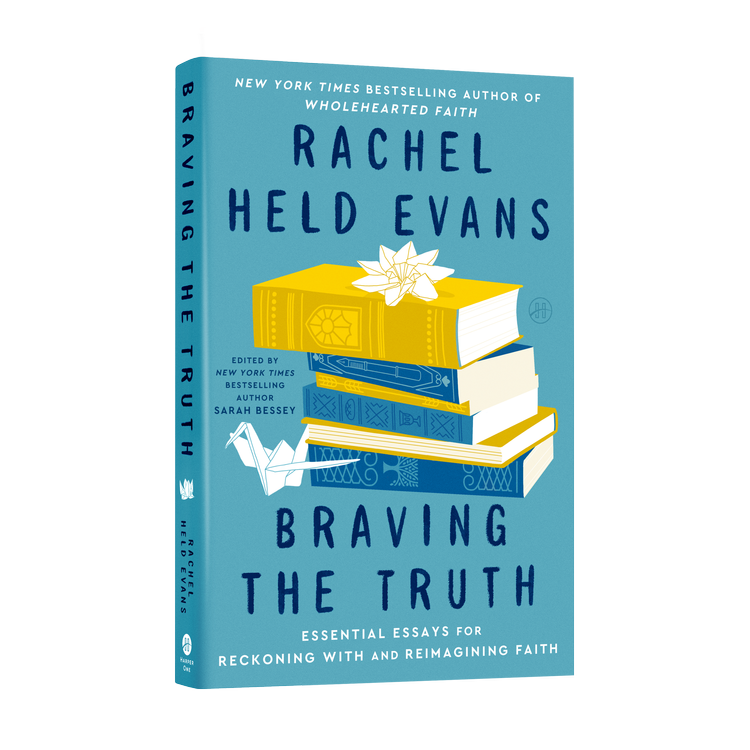
Braving the Truth


Rachel Held Evans died in 2019. Multiple additional books, including this collection of essays (with additional commentary by others), followed. I talk about it here and here. With additional Trump b.s. 

Monday, April 06, 2026

SCOTUS Watch: Order List [And Other Stuff]

The Supreme Court handed down a short Order List before going on a little mid-April break. One grant:

Issue: Whether the Veterans’ Judicial Review Act stripped district courts of the jurisdiction, recognized by this court in Johnson v. Robison, to hear challenges to the constitutionality of acts of Congress affecting veterans’ benefits.

A bit of lay-up since both sides agreed they should take the case. The solicitor general also argued that the court below was correct. He also suggested the plaintiff sued the wrong person, helping to explain the curious "U.S. Congress" part of this case. 

Meanwhile, among the orders is one in which Gorsuch did not take part. Only Kagan and Jackson explain themselves when such a recusal happens. They are right to do so. 

Again, nothing is scheduled until next week, on Friday (conference/non-argument session, likely to swear in people), but something might come up. 

Steve Bannon

SCOTUSBlog provides more details that show that even a brief, bland-looking Order List can have some interesting details. More Trump news, too:

The justices also sent the case of Stephen Bannon, a former adviser to President Donald Trump who was convicted of contempt of Congress, back to the lower court, where the Department of Justice has filed a motion to dismiss his indictment.

Bannon served his brief sentence. This has a symbolic quality. After an extended -- ridiculously so -- process, which must be reformed, Bannon actually was punished for obstruction of Congress.

This, of course, has to be discouraged. I am being sarcastic. Anyway, this seems to have a gratuitous feel to it. The United States provided a brief reply that it was dismissing the indictment "in the interests of justice." Yes. Justice for Trump stooges.

They had the prosecutorial discretion to do this, though in this case, it is horribly applied. Once they do so, the argument is made that the procedure applied here in this order is appropriate. 

Iowa decided to supply an amicus as part of its Republican/Trump support role. It is laughable that Iowa felt it necessary to get involved here. 

The procedural move here does not appear improper. The ultimate problem is that Trump yet again finds a way to remove even the bare minimum justice for the past wrongs he and his minions inflicted. 

I'm open to being proven wrong. It does seem wrong that the Justice Department can step in at this point. But if the prosecution was actually improper, a later action of this sort might be sensible. 

So, again, it does seem like it turns on discretion. 

ETA: On the odds and ends front, some more rules (Appellate/Bankruptcy/Evidence) were released. 

SCOTUS doesn't intervene in an election dispute. Sounds like a blatant case, even if you don't like the law. Might have line drawing issues. Easy case here.

I say more here including about Sotomayor stuff. 

Sunday, April 05, 2026

The Autobiography of Malcolm X

I read a book about Roots, which was written by Alex Haley, who wrote an extended epilogue to this volume. My copy also had a foreword by Malcolm's oldest daughter. The book as a whole was quite readable, if somewhat repetitive. Don't trust all of his citations of ancient history. Tragically, he was assassinated right when he was taking a more open-minded approach. But it was like it was fated.

Extended Discussion.

Saturday, April 04, 2026

DALLAS v. STANGLIN

Stanglin was released on April 3, so was part of a list of cases on a website that provides day-by-day summaries. The case involves a law that "authorizes the licensing of 'Class E' dancehalls, restricting admission thereto to persons between the ages of 14 and 18 and limiting their hours of operation."*

I have written various posts on this blog dealing with privacy-related cases, particularly involving birth control and abortion. This case came up a couple of times, including a review of a book on dance. 

The challenger ended his oral argument in this case on a privacy note, though freedom of association was a key issue. The lower court cited precedent to show that "social" association is included there.** 

The right to freely associate is not limited to "political" assemblies, but includes those that "pertain to the social, legal, and economic benefit of our citizens."

The Supreme Court overturned. It cited a recent case limiting "intimate" association to small groups (the dance halls had hundreds of people). The case, the majority by Chief Justice Rehnquist argued, also did not expand "expressive" association to social dancing. 

Rehnquist applied "social" narrowly to mean "nothing more than that the right of expressive association extends to groups organized to engage in speech that does not pertain directly to politics." That's dubious. 

Justice Stevens (with Blackmun) agreed that the law was legitimate while noting in an opinion concurring in judgment that:

the opportunity to make friends and enjoy the company of other people — in a dance hall or elsewhere — is an aspect of liberty protected by the Fourteenth Amendment.

He did not provide an analysis for this conclusion, but it is correct. We have a right to marry, for instance, and that entails meeting people in various contexts on the road to marriage. 

(I'll toss in that even non-expressive athletic dancing is important to personal wellness to a degree that it is not a trivial aspect of personal freedom.)

The opinion is partially concerned with limits. Anything -- we saw this with the conversion therapy case -- might involve expression. 

We express ourselves in some fashion by basically anything we do. Dance halls are also not the first thing you think about regarding the "right to association." 

Nonetheless, people go to dance halls quite literally to associate. They meet people and interact. They express themselves. Dancing, including "social" dancing, is a means of expression. The importance of dances in Jane Austin novels comes to mind. 

A social gathering at a restaurant is also not what many people would associate (ha) with the First Amendment. But it has some of that character. We meet and talk. We associate. We share ideas.  

I found it troubling years ago, and still do, that Brennan and Marshall just went along with the open-ended language of the majority opinion. The concurrence provided a way to underline that there were constitutional interests involved. 

They probably thought the case was not worth worrying about. Easy cases, if this is one, however, leave open the possibility of troublingly open-ended legal conclusions. The ability, if sometimes taken too far, to regulate minors was a way to uphold the law.

Likewise, the regulation of business establishments, including those with a large number of people, might warrant freer rein. The law did not deny teenagers the ability to dance with adults. It regulated a certain type of for-profit establishment of a certain size. 

Stevens argues that this law, if anything, furthered the constitutional rights that the class of teenagers had. No need to say they have none (other than some general right against arbitrary treatment) in this context. 

A question by Rehnquist suggests a red flag. Could the government (when this could be criminalized) ban two men dancing to advance anti-same sex sodomy laws? Limits of gay bars, including bars with large clientele, had First Amendment and right to privacy implications. Social activity = rights.

Social dancing should not be treated on the same level of constitutional scrutiny as the regulation of eyewear and other "rational basis" cases. The case is a troubling overreach and unnecessarily so. 

Justice Brennan was careful not to even let cases involving alleged child pornography (e.g., Osbourne v. Ohio) be used to limit the right of privacy and other constitutional rights. His silence here was dubious. 

 ==

* The enterprise appears to have arisen from another daily SCOTUS history project, which provides single moments involving various subjects. It always not case specific. Some key cases are not chosen.

I comment there now. A recent comment on a school prayer case received more than usual attention. I stopped replying since I think I said enough. 

** Griswold v. Connecticut cited free speech and freedom of association cases to help show how privacy is necessary to protect constitutional rights. Multiple cases also protect, if to a somewhat more limited degree, the constitutional rights of minors. 

Friday, April 03, 2026

Sex of Comments

People commenting online often either have masculine or neutral-sounding handles. I generally assume, especially if they are assholes, that these people are men. But there are enough shitty people who are not men that I probably assume too much.

Sigh

I enjoy commenting online. I have done so for decades now. But some people repeatedly cannot handle discussing things reasonably. They often, sarcastically, "translate" what you have to say in ignorant ways using a biased translator. They make snide remarks based on ignorance. They don't want to or have the ability to honestly engage, no matter how much you work at it. It is so tiresome. 

Thursday, April 02, 2026

SCOTUS Watch

Order List

The Supreme Court on Monday agreed to weigh in on a procedural question arising from a pregnancy discrimination case – specifically, whether a defendant can raise an affirmative defense (that is, a legal excuse or justification) later in the proceedings when it did not raise that defense in the answer to the plaintiff’s complaint.

After a brief order list, Sotomayor (with Jackson) spends some time explaining why the justices should have taken a criminal justice case. Finding troubling criminal justice cases that suggest the arbitrary nature of the criminal justice system is her thing.  

(The opening link provides more details) 

Opinions 

Happy Trans Visibility Day, which once was allegedly an anti-Easter plot or something, since it coincidentally overlapped that year. By chance, the justices decided the conversion therapy case.

Justice Gorsuch, having the opinion (which, like multiple other opinions he had in cultural war cases, was procedurally dubious), was a bad sign. Worse, only Jackson dissented. It was a good dissent. 

(Jackson used a Calvinball ruling -- see Breyer's angry dissent -- to her benefit. Okay. But realistically, that is how it is going to be. Selective application.) 

The conservatives upheld anti-trans care policies, even though such policies clearly have ideological motivations. This time, when trans people are protected, the regulation is suddenly thought control.

The law involves the regulation of people with a state license to practice medicine and only covers minors. So, it is not about the conversion therapy of adults or therapy by unlicensed people, including clergy. 

Under this logic, any medical treatment delivered through words rather than instruments could now carry First Amendment protection—a framework that could shield a doctor who encourages a patient to commit suicide, a dietician who tells an anorexic patient to eat less, or a therapist who deliberately steers a vulnerable client away from life-saving treatment. It could also extend well beyond medicine: a financial advisor who talks an elderly client into a bad investment is exercising speech-based professional conduct, as is a lawyer who gives harmful legal advice.

Not good. Kagan (with Sotomayor) concurred in full, citing an alleged limitation. But, as Jackson noted, the limitation in context is fictional. If they concurred strategically, Gorsuch's language is far from restrained.

The opinion says strict scrutiny is required. Some misleading coverage aside, the Court did not strike down the law. Colorado has a higher test to meet. 

But that is usually an uphill battle. Gorsuch's rhetoric, as SCOTUSBlog flags, is also not reassuring:

But the Supreme Court also strongly hinted that the ban would fail that test. In his 23-page opinion, Gorsuch stressed that in cases like Chiles’, Colorado’s ban “censors speech based on viewpoint.” Because the First Amendment “reflects … a judgment that every American possesses an inalienable right to think and speak freely, and a faith in the free marketplace of ideas as the best means for discovering truth,” Gorsuch continued, “any law that suppresses speech based on viewpoint represents an ‘egregious’ assault on both of those commitments.”

The possible Robert Kennedy Jr.-ing of medical care is not ideal. I say that even if the opinion leaves open a way to uphold this law (strict scrutiny met) or to craft another policy that will protect children. 

Kagan, in the past, disliked "Lochner-ing" or the weaponizing of the First Amendment. Blah. 

Upcoming

The conference was on Thursday, given the Easter weekend. Monday will be an Order List. They then take a two-week break until April 17th. 

A media advisory regarding an oral argument that will likely have more demand for sitting flags the change at the top of Homeland Security. 

(ETA: The SCOTUS PIO released a statement on a news story involving Alito going to get checked out -- he is in his 70s, so this wasn't that notable on its own -- but didn't post it on the website. Yet again.)

Birthright Citizenship Trivia

Trump showed up for the birthright citizenship oral argument (left after the solicitor general was done), which would be the first time a sitting president did so. Notably, he picked this case to do so.

Talk about this being an "attempt to intimidate the justices" seems a tad overblown. Separation of powers? Eh. Members of Congress show up. 

Nixon and John Quincy Adams argued cases. Lincoln, too (a more forgotten detail). Not while in office, of course. Taft became Chief Justice. Ditto. 

John Marshall served as Secretary of State briefly after becoming Chief Justice. The Constitution does not -- unlike for members of Congress -- clearly ban that sort of thing. Justices also served in diplomatic roles. Robert Jackson was a prosecutor at Nuremberg.