Lots of coverage on this case. Found this commentary from a defense perspective helpful. This one might go a bit too far (e.g., the liberals focused on capital cases when opposing victim impact statements; think they are more okay in some cases) but agree that recall in response to one dubious ruling is bad policy. Big thing here is the dad's lack of empathy for the victim ("twenty minutes" line etc.) and over the top comments for the aggressor. The judge was a former prosecutor of sex crimes. But, for this specific defendant ...
About Me

- Joe
- This blog is the work of an educated civilian, not of an expert in the fields discussed.
Thursday, June 09, 2016
Tuesday, June 07, 2016
Super Tuesday: The Final Chapter
Trump (shocker) swept the states (California just closed) though over 30% voted not-Trump in South Dakota. Worthy of a nod. More than one state provided a chance for the likes of Carly Fiorina to get a few votes. Sanders won the final caucus (ND) and Clinton so far won NJ, NM and looks to win SD. D.C. is next Tuesday (that's it!). Nice victory speech. Update: Clinton won California but Sanders did get Montana. Kudos to the not Trump bitter enders! 25% in California and Montana showed a bit of honor. How about November?
Monday, June 06, 2016
SCOTUS Watch
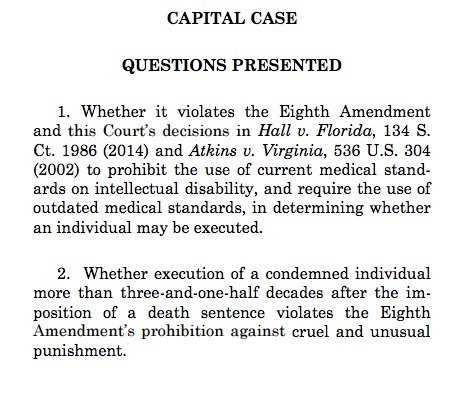
The orders today brought three "grants," two death penalty cases that have received some notice. One case case concerns how intellectual disability is proven in Texas but also includes a question about length of time on death row, a long term concern of Breyer. If solitary confinement is involved, that would also be a concern for Kennedy. The third is a racial gerrymander case; the two unanimous opinions (by Kagan/Sotomayor) appear pretty boring. Update: Never mind. Corrected order; length of time not being decided. To be fair, as seen here, these "boring" opinions are of some importance at least in a baby step way.
Freedom Is A Mixed Bag
From an earlier shot of feasting on a carcass, the basic idea (think Bambi's mother being killed as a baby and being raised by the person who killed her) to another killed lion, this film is not for the faint of heart. Nor, if you look up and see what happened in a few years to Elsa. But, the sense of realism of animal life plus human sentiment helps make this film a classic.
Sunday, June 05, 2016
Weekend Politics
Yesterday, Clinton won all seven Virgin Islands delegates since Sanders did not meet the 15% threshold. There is a little over 100K people there and we apparently got control in large part because of WWI concerns. Clinton looks to get something like 60/40 in Puerto Rico, its delegate rules convoluted though prisoners can vote. A lot more disenfranchised there in November. Bankruptcy and double jeopardy rules to be decided by Supreme Court in June.
Saving Time
Someone brought up this name and happened to see the DVD at the library. OTOH, this trailer basically seems to sum up the film, plus doesn't seem that good. Will skip it.
Saturday, June 04, 2016
Racism and Ali
R.I.P. Muhammad Ali. This provides a good summary of why we should honor him. His fight for a draft deferral went to the Supreme Court (and was the subject of a HBO film). The backstory includes Justice Harlan at the last minute examining the facts and throwing the case his way. The Trump/Mexican thing is germane including why yes it's "racism." Comments there cover the gambit, including how word trolls aren't convincing.
Friday, June 03, 2016
Thursday, June 02, 2016
Kristol's Choice is so dumb, let's just deal with a side issue
Griswold and privacy specifically has been a popular topic for me but basically the opinion holds up. It is just that his Poe v. Ullman dissent was better by being a more comprehensive defense. The "penumbra" principle is fine too; it is just that a general right of privacy probably requires a bit more. I add more here including on the Third Amendment.
Wednesday, June 01, 2016
Court Stuff
Trump continues the theme from earlier in going after a judge in a fraud case, bring up his ethnicity. Odds and ends from the Supreme Court (one boring opinion), including Breyer/RBG focusing on geographical disproportionate death sentences. Local control, encouraged by the 6A (local juries), furthers this. But, death is different and "unusual" punishments are of special concern. A per curiam shows that. June here: big cases coming. Update: More on the geographical point here. The counterarguments come off as exaggerated and it simply is not merely an "abolitionist" thing. It's a general rule. Also, if you can't trust someone who might be against a litigant's belief's, that applies to all beliefs including those you like. Gay judge? No "defense of marriage" litigants! Can't be the rule.
Wednesday, May 25, 2016
Prosecutors Will Seek the Death Penalty for Dylann Roof for Charleston Black Church Massacre
Ugh. State is already seeking the death penalty. Question if the feds even should prosecute in a crime that is heinous but seems local (basically hate crime charges provide federal hook). There was already a big move by victims to forgive him and not dwell on revenge. Who knows the details, but there appears to have been an offer of a plea/life imprisonment on the table. Whole thing seems gratuitous even without double jeopardy concerns.
Anti-Abortion GOP Lawmaker’s Wife Goes Public About Own Abortion As A Teen
If you look past the pro-life language (it sounds like central casting), this account is in a fashion pro-choice. She made a bad "choice." She shows the problems of not having the support you need to make said "choice." She doesn't talk about criminalization. And so on. Various rather negative comments, not surprising, but look deeper please. And, I don't know what was really the right choice for her at the time. All teens don't abort.
Tuesday, May 24, 2016
Washington Primary
The particulars discussed here; Trump likely to win around 75%, being around 1200 in delegates. Kasich almost at Rubio's delegate count. Sigh. Is this thing over yet?! Two weeks?! Update: Clinton did well in the likely more accurate/democratic primary but as noted in that link, didn't count. The "please Sanders (over the top baby?) when possible" point? Yeah. More: There were various unbound delegates and some have come out for Trump. So, he is over the top. Taking a few days off, but got to toss that in there.
Fun Guests Last Night ... Didn't Like the Bits
She was on Life Unexpected, a show that had potential but not quite good enough writing. Unreal might have been on my list if they stuck with Megyn Price (replaced after unaired pilot but might be on new sitcom) in a key role. Um. That top was a bit distracting. The first guest, even though I'm not a Game of Thrones fan, was fun too. She had fun with accents.
Monday, May 23, 2016
SCOTUS Watch
Orders continued to deal with juvenile sentencing and contraceptive mandate cases. Election law case disposed on standing. Alito/Thomas added a lot of material to both orders and opinions (two cases). Use of "amica curiae"; appointment covered here. Meanwhile, Clinton's anti-Heller comment framed as a potentially fairly narrow regulation issue. Update: Here's a summary of all three cases that might be deemed "baby steps for racial justice." No concurring opinion (Marshall, Breyer/Souter noted support in the past) about ending peremptory challenges etc. As have I. That case is particularly about a unusual case involving a past era where such blatant gotchas were more likely. But, one step at a time.
Sunday, May 22, 2016
The Ghost and Mrs. Muir
Did this backwards -- back in the day, watched reruns of the t.v. show, then saw the movie and now read the book (almost a novella). All have their charms, each different in a fashion. The book has her stay alone, the movie has her find someone to love and the show had her more a regular part of small town life. Reruns on a classics channel and YouTube now.
Spotlight
Overall, liked this movie though it seemed a bit off at first -- like we were coming in a few minutes late to an ongoing investigation of the Church. But, that was okay and it was a good ensemble cast -- cf. this to The Big Short as a film, and you can see why it won an Oscar for Best Picture. Catholicism has a lot going for it, but it's pretty f-ed up too.
Saturday, May 21, 2016
Oklahoma Governor Vetoes Abortion Ban
Was blatantly unconstitutional including under Supreme Court precedent though could be attacked on monetary/policy grounds too. The governor used a crafty approach (use as policy warrants!) -- a narrow vagueness reason that would apply to any criminal bill and tacked on an op-ed to change the Supreme Court. Her chances of being Trump's v.p. is trending up.
Friday, May 20, 2016
It's hard sometimes to not say something stupid ... but let's try to respect those who usually do not
In a blog's comments, someone linked "oh fuck" to a notice of Morley Safer dying. I noted that given his age, retirement and health problems that it wasn't that though rest in peace etc. Get a reply about how nice it is I'm telling the person how to react (I'm merely stating my opinion, sorry, don't have some special powers here) to some person s/he admires. Like I'm a little shit. My comment was misguided and so be it. But, you know, I'm not a little shit and there's a way to say someone is wrong without doing that. Get the situation.
Thursday, May 19, 2016
SCOTUS Watch
A few more opinions of some mild interest. Two are cited here with the blogger getting something of a special citation. Sotomayor (with Breyer and Thomas) dissented in one statutory matter. A third offered Thomas for the third time today in some fashion not simply to go along with the majority. And, as noted here, I'm sympathetic with the 4-4 results in judicial moderation idea (Garland helps there), but still am a #DoYourJob person. Update: In a sort of addendum to Glossip, an Oklahoma grand jury report on execution follies was released; Chris Geidner provided summary on Twitter about sixty tweets long. Also, this article suggests how far the Overton Window has shifted. Now is not a great time for it, but perhaps a strong liberal/libertarian nominee would be appreciated.
Wednesday, May 18, 2016
Primary Day
News of the day is that some Bernie supporters went overboard when their efforts to get a few more delegates in Nevada (which Clinton won a while back) went badly. Look like tools and makes party look bad too. HC wins Kentucky in a squeaker. Oregon allows Cruz/Kasich to obtain a few more delegates. Sanders looks to have won Oregon, 55/45 or so at this point.
Monday, May 16, 2016
SCOTUS Watch
The oral arguments are over; now it is time to clear the deck by the end of the term.
The fact that things other than normal decisions will matter even at this late in day -- thus even a full Court in May 2017 will matter -- was seen in the recent refusal to overturn a stay of execution (4-4). Today is also a scheduled "orders day" and the continued low granting of new cases clearly grows out of the realization that a final settlement can be hard without a full Court. This includes various cases where the result is narrower than it might be to avoid division. Some might like the resulting weaker results, but that doesn't erase the net effect of the whole thing.
The Supreme Court website, SCOTUSBlog and other places can be sought out to get information on the multiple opinions and orders handed down today. Other than not taking a lot of things (Thomas dissented regarding a favorite target of Scalia et. al.), the opening gambit was a per curiam, which unsurprisingly -- the usual subject of such things and more often than not against the prisoner -- involving a federal habeas matter. The technical question at hand was settled 6-2 with Sotomayor/RBG dissenting for the prisoner.
The "big" news of the day opinion-wise was that the Supreme Court (later orders applied it to other cases) punting on the contraceptive mandate case. They foreshadowed this result with a special order requesting further briefing that appeared to try to find a way to settle the matter. A possible option was suggested in the request, which might not have been the best solution, but it would have at least settled the matter and probably would be mostly workable. Maybe, especially with only eight justices, the decision really wouldn't have done that -- it would have left things open for yet more objections. Now, it is up to the courts of appeals in the cases (most of which at first held against the challengers), and maybe we will see this back later.
Breyer and Kagan, for whatever reason, silently went along. SS/RBG wrote a short concurrence (everything was nine pages, pages of captions included) to remind that the Court's per curiam wasn't really deciding anything. The Court noted it wasn't saying anything to interfere with the government providing approved contraceptives without cost. This is nice, but the ultimate problem here is that the exemptions will in some fashion "cost" something -- it's why they are exemptions, not standard practice. And, this level of micromanaging for each potential issue imho is simply impractical. In practice, certain views and subjects will obtain more concern, which results in religious freedom problems in itself. Religious freedom is a comprehensive thing.
Update: Upon reflection, a 4-4 evenly divided Court might have been the best approach. Nearly all of the lower courts rejected the accommodations. Now, that is up in the air, Sotomayor's concurrence aside, one or more of them might take a "hint" from the request for further briefing etc. A split like that could have led to a few courts to accept the challenges (one or more currently; hard to keep track of all these lawsuits -- need a spreadsheet with these mass litigation efforts) but the government there might offer the tweak suggested in the order. OTOH, perhaps the parties would try to re-open things themselves but a 4-4 Court would suggest four justices didn't think further accommodation was necessary. Who knows.
There were other cases decided of more limited concern if having some importance in the long run given jurisdictional matters having a broad possible reach. One case that might be most approachable for the average person since they might be familiar with the search engine involved appears to be fairly limited (Ginsburg/SS dissented, but RBG noted she agreed with much of the majority's position) without more. In reply to the link -- she's a good resource and pleasant Twitter presence (lots of tweets this morning) -- RBG notes how wrongful detail that wrongly pads one's resume can be a problem. The case though very well might be the sort of overly easy case taken to draw boundaries without helping much long term. Sotomayor (a bit roving lately) concurred with Thomas in one of these opinions, maybe a first.
A couple other cases (with but one justice dissenting in one) helped start to clear the 30 or so cases still to be decided. One somewhat interesting involved using state letterhead when private parties are used to collect debts owed to the state. This was unanimously found not to violate a federal law against deceptive debt collection practices.
Note: I added to my comment on the contraceptive mandate case and SCOTUSBlog has an interesting discussion of this one, which will logically get less attention today. The bit about the conservative appellate judge (probably on short lists for a Republican President) is interesting inside baseball; Sutton wrote the one appellate ruling against supporting SSM rights while also an earlier one accepting the constitutionality of PPACA.
Sunday, May 15, 2016
Logan's Run
I saw at least part of this on t.v. a long time ago but saw the whole film now. A future utopia limits life to 30; it takes place around the time of Star Trek. The best things are some of the sets etc. for mid-1970s; less so the logic and the fairly weak ending. [The computer blows up; how will they survive in a world they never saw? Hard to handwave.] Overall fairly fun. Update: Checking, my question is addressed in the books, especially what sounds like a rather dark sequel. Michael York (Logan) is part of the DVD commentary track.
"The Death Penalty & the Dignity Clauses"
Interesting new paper connecting the use of "dignity" in current equal protection jurisprudence and the like with the death penalty. Justice Kennedy is particularly concerned with dignity, but as suggested by my reply, not just him. Open-ended things like "unreasonable" searches, "cruel" or what "equality" means require standards and "dignity" is a concept that is used here. Also, no, the 5A doesn't prove the death penalty is constitutional.
Saturday, May 14, 2016
Cancelled Shows

Amusing "Adam" from Rules of Engagement ["Jeff's" new show was cancelled; wasn't that good] played a very different role and from what I can saw, Connie Britton was great. But, did not get into this show after watching a bit when it started. Nice outfit.
Friday, May 13, 2016
Forgiving My Daughter's Killer
The story discussed in this book (their previous relationship with the daughter's teen bf makes it a bit different from something like this) is summarized in this article. The mother with her husband founded "a charitable fund to promote forgiveness and restorative justice practices," which is a type of restitution that has positive public policy implications beyond being a reflection of their faith. Justice and religious faith comes in various shades.
Wednesday, May 11, 2016
Missouri man executed for killing deputy, 2 others
After the Supreme Court without comment refused a final appeal based on a broad argument against the death penalty (unlike some arguments, okay this lost cause received no comment from Breyer et. al.), a rather unsympathetic character was executed. The death penalty doesn't just apply to such people and even there problems arise including the lightening strike effect where one or two random horrible miscreants are executed over others.
Update: In another case, where a lower court held up an execution, the justices split. Stay remains. The assumption would be if Scalia was still alive, the guy will soon be dead.
Nebraska / WVA Primary
Trump dominated Nebraska (about 60% / 90% vote count in) and West Virginia (75%) while Sanders has about 50% (rounding, 15% was "other") in WVA (Obama only received 60% in '12 vs. a felon at the time in prison). Yes, still keeping track. Meanwhile, found a copy of Trumbo (documentary was good) that wasn't scratched. A bit simplistic but enjoyed it. Update: Cruz retains control of his delegates in key states to have some influence in the convention, apparently, and perhaps that Nebraska result (after Cruz suspends) suggests some voters not quite ready to just accept Trump too. Stages of grief and sure -- someone with around six hundred delegates should have a say. To be continued.
Monday, May 09, 2016
Mockingbird: A Portrait of Harper Lee
Charles J. Shields, with a fairly brief update that takes us to her death, provides a workmanlike biography of Harper Lee with a particularly interesting chapter (including this) on her trip with Truman Capote to research what later was In Cold Blood. There are no great reveals or unique special psychological insights but the basics are there in an easy to read fashion. Good details though story tapers off in the late 1960s.
Saturday, May 07, 2016
Bartolo Colón Homers
Too bad it wasn't at home but there was a lot of Mets fans on board and Gary Cohen and Howie on the radio were both real excited ... like many watching. So fun. Mets being the Mets, it was soon 4-3 and we sweated until a couple more homers in the 9th made it 6-3.
Guam Caucus (D)
Things were decided rather late for Republicans this year -- Indiana being deemed the presumptive end (though by delegates, it wasn't) and Sanders still is out there rallying the troops. This is as it should be with CA and various other places left to vote. It's a bit sad that Kasich (never having a real shot for some time anyway) didn't stay in. Guam today. Guam concern: unjust they cannot vote in November. Puerto Rico (6/5) has own issues. Update: Clinton won.
Thursday, May 05, 2016
National Day of Prayer
Today is not merely Cinco de Mayo but also the National Day of Prayer. I think it a violation of the First Amendment to specifically favor "God in prayer and meditation at churches, in groups, and as individuals," but Obama tends to do things in an inclusive way.
Wednesday, May 04, 2016
Indiana For Trump ... Assumed Nominee Now
Trump is the chickens coming the roost for the Republican Party, even if some (but not THAT many) still are in the "Never Trump" camp. Indiana sealed the deal though its fifty or so delegates wouldn't have been enough either way. Kasich due to suspend now to totally settle the deal. Why not stay in to let dissenters vote for him? Bernie not ready, still talking "contested" convention. Kinda sounds like an ass at times, but hard to give up the ghost. Update: To underline the point, Cruz losing does suggest that the few places left he seemed to be favored in would not vote for him as much. But, especially without the unbound delegates from PA, the math is still close on paper.
Tuesday, May 03, 2016
Bad Girls Young Women, Sex, and Rebellion before the Sixties

"In this innovative and revealing study of midcentury American sex and culture, Amanda Littauer traces the origins of the "sexual revolution" of the 1960s." The book is a bit too much of a college seminar sort of thing, trudge, but some interesting stuff.
Monday, May 02, 2016
SCOTUS Watch
A few orders and grants of mild interest. Breyer continued his concern for capital appeals that last decades. A statutory opinion split the justices various ways depending on how they looked at things, suggesting law is a bit messy. Another Sotomayor/Roberts pairing. Except for the possible order, justices now will work on their opinions for a couple weeks.
Sunday, May 01, 2016
The Car
The Svengoolie movie this week was this 1970s B-movie with various familiar faces about a demon car. It was overall a pretty fun "bad movie" and a good pick if a bit "modern" (had to black out a guy giving the finger!) given the regular picks. Good Sven bits.
Friday, April 29, 2016
Highsmith: A Romance of the 1950's (Marijane Meaker)

“He was the most wonderful cat: black–perhaps partly Siamese–with enormous green eyes. And very intelligent. You could tell he had been a writer’s cat. He would sit by me, seriously, as I wrote, while all my other cats filtered away.” Know this author as the YA author ME Kerr; this is about her relationship with the author of the book behind Carol. Interesting. The book isn't deep but interesting snapshot of the times and a more unpleasant Highsmith years later.
Thursday, April 28, 2016
Various
The NY Daily News got on Kelly Ripa repeatedly for staying away a few days after her co-host leaving the show being handled in a disrespectful way. Calm down. Not sure if A followed from B, but if it did, appreciate my online communication to a local councilman actually did lead to fixing a barrier set up for construction in a way that you had to climb over something after crossing the street. Stevens with a new speech (in honor of Scalia but on various topics). SCOTUS without comment rejected a last minute death penalty appeal. He's dead.
Tuesday, April 26, 2016
Latest "Super" Tuesday
Trump sweeps five races by sizable margins. Sentiment now is he's basically the nominee, a contested convention unlikely (this sort of thing helps clinches things if he comes a tad short). [Trump has about 950 of 1237; NJ will probably give him 50 and unbound PA etc. should give him at least 50 / really needs less than 200 of the other 400+.] Sanders only won Rhode Island and effectively concedes -- statement speaks of getting as many delegates/staying in to the end but not about "winning." Sorta knew that the whole time.
Jesus Before the Gospels: How the Earliest Christians Remembered, Changed, & Invented Their Stories of the Savior
Bart Ehrman (along with Elaine Pagels, a repeat go-to for early Christian thought, including Gnostic teachings) has a new book out. It was an interesting discussion of memory and how it affected how Christianity was remembered pre-gospels. Think the point was made about two-thirds the way in but overall he is as usual good reading. Again, do think the historian can examine miraculous beliefs, psychological and other techniques available to understand what "really happened." Plus, as part of history, it needs to be covered more than he does.
Monday, April 25, 2016
U.S. Appeals Court Reinstates Tom Brady’s Four-Game Deflategate Suspension
Some orders from SCOTUS but the big legal news so far is that the 2CA upheld the NFL regarding four game suspension of pretty boy. My take: four games sounds too much, but the players negotiated for a procedure and second guessing by a federal court unless it was simply unreasonable is asinine. And, that test wasn't met. To be continued. Update: Only SCOTUS opinion this week amounts to a minor 1A case. Major case this week is a public corruption prosecution to be heard on Wednesday. An equally divided court is possible which would (to me a bit unfairly) result in the prosecution being upheld.
Sunday, April 24, 2016
TV Watch
Veep is back in a few minutes while the second season of Better Call Saul ended on what amounts to a cliffhanger last Monday. Looks like his brother has a confession of tape, but it's still brother's word v. brother's word, one who (feigned or not) appeared truly to be off the deep end. Saul easily can say with cause for belief that he "confessed" to settle down Chuck. Meanwhile, one more episode in "series 2" for Grantchester, tonight's episode ending with Sidney distraught after the person he encouraged to confess was hanged. Summer shows?
Murders in the Zoo
Some years ago, I enjoyed the early (1933) Loretta Young film Zoo in Budapest.
Last night, from the same year, Svengoolie's pick was a bit more gruesome. He noted in his introduction that they would warn people before scenes that might upset some (the Hollywood Production Code not being enforced as strictly at the time) -- maybe, he should have done so at the opening since the film started with the twisted villain sewing a (live/awake) guy's mouth shut for flirting with his wife. His wife (actress famous for her role in Island of Lost Souls) was surprised when told the guy went out alone and asked what he said before leaving. The husband calmly noted "nothing." Do think that the two scenes we were warned about -- the wife dying in an alligator pit and some animals fighting (and perhaps the attempted murder of a scientist, also in that segment) actually might have been a bit less gruesome in a fashion than that one. Still, the "code" should have been happy -- adultery was not left unpunished here!
[Update: My DVR had a glitch a few times and apparently missed the reference regarding the first scene according to people here.]
Svengoolie is on at 10P.M. (EST) on ME (Memorable; a classics station) TV on Saturday nights over here and that is a pretty good time -- back in the day, and perhaps for some today, that sort of would be a "late show" for many people. Do think the midnight hour is the best time for this sort of thing and if you DVR the thing, you can fast forward past the commercials. OTOH, I have repeatedly actually watched the movie on Sunday morning, watching a half hour here, a half hour there while doing other things and waiting for afternoon sports. As noted in the past, find these films a mixed bag, some not paced or otherwise of the style that I prefer. This would include some fairly classic films. Others have been rather good, including this one as a whole. The Svengoolie bits also were pretty amusing and since the actual film was only around an hour, he added an "on the road" segment at a convention.
Classic stations, now even more prevalent with extra channels, and VCRs etc. allow people these days to enjoy old films, even a few silents. As with today, of course, the films are a mixed bag, but have seen a decent number of films from that decade over the years. For instance, I noted enjoying Fay Wray (who had a credit as late as Gideon's Trumpet, almost fifty years later from her most well known role in King Kong) as a lawyer. The film had various interesting aspects, including her first big moment in a trial involving a guy caught in a breach of contract suit that turned on a woman "passing" as white. After reading about her in a book on film censorship, I also checked out Hedy Lamarr (no, not the guy in Blazing Saddles) in the 1941 romance Come Live With Me (the title turns out to be a bit of a spoiler). Didn't quite like how the film developed, but the early scenes were good and Lamarr (with her accent and brunette hair etc.) definitely was enjoyable, even if she was not quite as risque as in Ecstasy. The ending aside, the early adultery does seem contrary to code.*
The charm with Murders in the Zoo included good pacing, a wickedly good lead, a doomed wife with a nice touch of style and an amusing bit of comic relief in a goofy press agent for the moment off the bottle. Various supporting characters rounded things out, including two rather bland roles, one an early role for Randolph Scott -- that scientist that appeared to be doomed. Given the similar times, I wonder if the zoo in the two movies were set in the same place. From what I recall, the entry-way looked alike, but perhaps gates at zoos would look alike. (As for zoos overall, I'm wary of them, at least for confining certain animals in small enclosures. Guess there is a way to have some animals that wouldn't mind the set-up, but others clearly rather not be so confined). Scott might have survived, but really shouldn't have -- he figures out a guy has killed at least two people (not clear if he knew about that other guy), who already accused him of negligence connected to the deaths and even brought a civil suit against the scientist. And, then invites the guy to his office to have it out!
Luckily, off-screen, the scientist did figure out how to develop a serum (which the villain ironically helped him with by bring back a poisonous snake) so his assistant (and love interest) was able to save him after he was attacked with the same toxin that killed the wife's lover (per the footnote, well, they did "love" each other and "made love" in the Jane Austen sense!). He might have been played by the person that turned out to be the biggest star (though others had some success too) but here was a rather bland sort of character. The villain was suitably killed by a large snake (the on screen summary of the film on Fios' listing saying just that would happen!) while trying to escape the zoo as some police or guards looked on without trying to do anything really.
The wife vaguely suggested the husband had some reason to blackmail her to stay, even though she didn't love him, but we never find out what. The movie ended (after we see the scientist is okay) with a comic bit of the press agent, now off the wagon, running into a large cat and bumping him on the head to shoo him/her (not it!) away. All and all, it was an enjoyable film. And, Svengoolie's Captain Spaulding (a Groucho Marx character) bit was quite good. Plus, the final joke about a contest where you try to get at some "steaks" high on a bar -- you either win or have to pay for everyone's drinks ... the "stakes" were too high! -- was pretty clever. Next week's movie is The Car, sometimes a later film included (here a forgettable 1970s thriller).
---
* Lamarr's character is "from the country that used to be Austria" (thus the film has a bit of an edge), whose visa ran out. She hides under an assumed name, but immigration catches up with her. But, the agent is impressed when she takes the news calmly, and when her male admirer pleads with him to help, the agent suggests she get married to an American citizen. As you see, that is a well worn plot device.
She finds a willing party in a down on his luck Jimmy Stewart, who is so unwilling to take advantage of the opportunity, he doesn't even let her round up from $17.80 (itself a very conservative figure of his needs) stipend. An early scene includes Stewart interacting with a profession bum that turns out to have a wad of cash -- a bit harsh given many people around then begging for money really were in need. Though the male admirer (today it would be more easy to call him a "lover") was the one who was the very catalyst of the idea, she doesn't tell her about it, saying the reason she was able to stay was "a secret." Jimmy Stewart stays in his cheap flat but soon (who wouldn't?) falls in love with her.
But, the admirer tells her he actually is willing to divorce his wife, so she goes to JS asking for a divorce -- something without travel (the other guy's route) to Nevada a tricky thing in NY then and later. OTOH, if the authorities found out they weren't even living together, figure the whole thing would likely be annulled anyhow. That might help her immigration status though. Jimmy Stewart's honorable man routine (including not willing to take a buck from the bum that clearly didn't need it) was a bit much but again Hedy Lamarr was quite fetching.
My classic movies guide suggests many of her films as a whole weren't that good, but why need they be with such a draw?
Friday, April 22, 2016
Lesbian Film Night
Carol, based on a 1950s novel, concerns a married woman in that time who falls for a younger shopgirl & vice versa. Carol's husband (Kyle Chandler in an atypical role) loves her but that doesn't change that they are not to be. Good film and allows the two a happy ending. Jenny's Wedding about a woman (Katherine Heigl, decent) who finally comes out to her family (complications ensue) when she decides it is time to marry her partner (didn't recognize Alexis Bledel at first!) in the present) is not as good, but its heart is in the right place.
Thursday, April 21, 2016
U.S. v. The Spirit of '76
I first recall U.S. v. The Spirit of '76 (a film) as a reference in a Howard Zinn history, an oh so obvious example of U.S. overreaching. More detail was provided in Dirty Words and Filthy Pictures: Film and the First Amendment, which also referenced a book complied by film historian by the same name. This book had some introductory and supplemental (ads, two lower court opinions) material along with an unpublished 1927 account by the convicted writer/producer himself. The movie itself is lost.
The account is rather a drudge, starting with around thirty tedious pages on his struggles getting funding and so forth, but obviously is a useful historical source of his side of things. The whole thing is a tragic footnote in the history of film and the First Amendment, but a bit less so than the accounts I first read suggested as to Robert Goldstein himself. Goldstein was an American Jew of Irish-German (his father) ancestry, which probably didn't help matters when he was arrested for being seditious in connection to showing his film on the American Revolution during in 1917. The film has some melodrama (in the account, Goldstein himself notes the female lead is a symbolic composite of two people; the historian for some reason misses this and cites only one of the women) but he got in the most trouble for a few violent scenes portraying British atrocities.
The whole thing was also discussed after the first book but long before the second in a series of Chatterbox articles in Slate, which helpfully provides various details, including the suggestion that the alleged attempt by him to show the scenes even after censors told him not to very well might have been a mistake or misunderstanding. Dirty Words spends a few pages on the case, but not in as much detail and along with the earlier book assumes Goldstein died in the Holocaust, since the last we hear of him is out of money and in trouble with the German authorities in the 1930s. But, another researcher found a later message from him that references an expulsion from Germany. Seems like he died in obscurity in the U.S. A more recent NYPL account notes this as well. A bit of a research fail but also a reminder mistakes happen.
There were various travesties during WWI involving free speech matters though Robert Goldstein was particularly singled out as far as filmmakers go. The film historian references a few other cases of film censorship, but Goldstein actually was imprisoned for a few years. His ethnic and religious background, opposition of the war and the timing of the release -- right when the U.S. entered the war -- didn't help. The tenor of the times is seen by one court opinion in the case where WWI is deemed the "greatest emergency" in U.S. history, the Civil War apparently trivial or something. The chance that a few scenes in a long film* would cause insubordination of troops or more so it was a "willful" attempt to do seems mostly to be assumed. Film itself a few years earlier were not deemed protected by the Supreme Court.
As is often the case, behind the case (and rather ironic case caption) there is an interesting story. A costumer that helped supply The Birth of a Nation himself gets the film bug and makes a picture. There is various behind the scenes matters, some as noted above rather dull to dwell over including financing and such things as tidbits like the fact film at the time was played at different speeds depending on the action. An ordinary man gets caught in the times and becomes a tragic footnote. But, his life continues afterwards, if a series of failures which his own account portrays with some pathos. A possible subject of a film.
---
* It is unclear if ANY showing the Revolutionary War would be deemed a problematic attack on an ally, but certain scenes -- which Goldstein notes amount to seconds of film -- were highlighted. Stabbing of a baby etc. does sound gruesome. There is one general scene involving a massacre, Native Americans a major factor in the plot, the lead actress half-Indian.
Wednesday, April 20, 2016
The Case of Lisandra P.
The author is French, but the book takes place in Argentina in the 1980s, multiple characters greatly affected by the murderous dictator in power a few years before. A patient tries to determine the true story about the death of the wife of her psychoanalyst, currently in prison after being accused of the crime. It provides things from various perspectives, including the voice of patients. This style attracts me given my overall way of looking at things. Overall, liked it, but at times it goes into a basic stream of consciousness style that is a bit much.
NY Primary
While Trump and Clinton both received around 60% (Kasich apparently picked up a few stray delegates in NYC), two crooks from the NY Senate were being replaced too. Might be too close to call, but there is a chance (for now) the NY Senate will swing back to the Dems. The presidential results were fairly expected but now it's "Sanders' time is up" and "Trump is alive again." A handful of primaries next Tuesday, perhaps a finale for Sanders. We'll see.
Update: Apparently not -- certain people don't really deserve the label "D."
Tuesday, April 19, 2016
SCOTUS Watch
Special opinion day (which SCOTUS didn't announce on their website) to hand down a criminal justice opinion yesterday. There were time restraints but couldn't wait a day? U.S. v. Texas was heard -- talk is a 4-4 split or punting on standing. Two technical rulings today, one partially 4-4 with a discussion on the rules for full faith and credit of "acts." The context was narrow (and written by Breyer) but can see the "equally dignified" states rhetoric used in a Shelby v. Holder (problem there was a reasonable ground for different treatment) context.
NY Primary Day
Since we don't have id laws and voting is very quick without problems in the news much at all (do pop up) like other places, NY election laws seem okay to me. Plus, the races rarely are close though that isn't the only reason votes "matter." But, there are many problems. Voted today; wonder how many votes Carson will get. Think voting for delegates (who are allotted by percentage of win), Bernie not having enough to give him the seven for my district, and candidates open to confusion. Still support the ceremony of in person voting.
Monday, April 18, 2016
"Why Do Women Get Paid Less Than Men?"
People are familiar with the some pennies on the dollar figure of women v. men's pay, but think many wonder -- but it's not like "x" position pays less for women than men. More complicated than that -- you have to look at the whole picture. The excerpt, for instance, shows the limits of simple "free choice" here. Still, even the blatant form of discrimination is still around in some forms, probably. True equality goes beyond that though.
Show Me Love (Fucking Åmål)
YouTube has clips but they aren't coming up at the top of basic searches for some reason. Anyway, this is from 1998 (original Swedish date) and watched it again. Charming coming to age film that is a good look at teenage life overall including beyond the two leads.
Sunday, April 17, 2016
Confirmation
The HBO movie on the Hill/Thomas hearings was decent. Melissa-Harris Perry interviewed Anita Hill recently. At the time, I believed he didn't have the qualifications (EEOC head, short term federal judge) to be a justice. Cf. Souter's extended time as a state judge. I believe Hill but at some point you have to accept he's a justice; different then. Ultimately, we have to see this as a step in the extended path of justice including sexual harassment/equal justice. And, Thomas' use of race -- given his views -- comes off as real hypocritical.
Saturday, April 16, 2016
More On The Last Subject
In 1948, in an anti-trust case where the matter was not determinative, the Supreme Court in passing noted that: "We have no doubt that moving pictures, like newspapers and radio, are included in the press whose freedom is guaranteed by the First Amendment." A few years later. it held that merely the fact a film is "sacrilegious" (in part given its vagueness) could not be reason for a ban. Nor, adultery. And, in the late 1950s it noted that "Sex, a great and mysterious motive force in human life, has indisputably been a subject of absorbing interest to mankind through the ages; it is one of the vital problems of human interest and public concern." Thus, there were limits to what can be declared obscene in the interests of "social interest in order and morality."
But, as covered in detail in the book just referenced, state and federal courts have long held that films can be banned for such interests. The book cites three core concerns that were present since the early days of film: films show subject matter that should be left to the private sphere, if even there, and thus was seen as a violation of Victorian morality. Movie theaters allowed for a mixed audience, who were exposed to a medium that even the most uneducated could easily view in the most "vivid" (to quote an early opinion) way. In the 18th and 19th Century, novels were a similar concern for the emotional appeals, especially to women readers. One early concern here that touched upon both (the photos in the book included shirtless male boxers) were boxing films, repeatedly banned. Finally, the subject matter had the potential to mock authority as well as raise other sensitive subjects. The turning point in the Supreme Court was a short Italian film ("The Miracle") involving illicit sex and sacrilege (an uneducated woman thinks the person is a saint) but right behind it was the "passing" film Pinky, which was dealt with per curiam without an opinion.
The banning of films generally brings to mind obscenity and perhaps dirty words like George Carlin's favorite monologue. But, for over a half-century, a range of topics (including illegal drug use, race issues including the Little Rascals in an integrated classroom and any number of other issues in movie codes) was involved here. For years, though there was some push-back in lower courts (generally from overapplication of statutes regarding what can be banned), a 1915 Supreme Court opinion involving a licensing law even made the general medium not considered worthy of First Amendment protection. The unanimous opinion in the day when the First Amendment did not receive must attention generally did suggest the power of film:
This suggests a balancing test akin to other cases where free speech was protected up to a point. However:
The Supreme Court ultimately rejected any number of areas of forbidden content except for obscenity, including animal cruelty, violence against women (in a per curiam reversal), violent video games (even for children) and even virtual child pornography. The test for obscenity for children is somewhat looser, both participants and what can be sold to them. This includes on television and the radio, thus the infamous "seven dirty words" opinion. However, in this day of cable and the Internet, it is unclear of that opinion's staying power. The outer limits of use of real children is probably something of an open question, but minors nude and involved in simulated sex acts has been allowed via European movies shown here. The appropriate limits there are open to debate though much easier to defend than obscenity laws, especially in the day of being able to download them in the privacy of one's own home.
The obscenity exception is to me unconstitutional. The book covers various films such as The Lovers [Les Amants] the film Justice Stewart rightly said "this isn't it" (he later cited a bit clearer test than "I know it when I see it") for which that label is ridiculous. The film deals with an unhappy wife who ultimately has sex with someone not her husband in a montage that is just not very explicit at all -- can't imagine that it could not be shown on broadcast television. But, three justices thought it was okay to criminalize it! Other films (which years ago I borrowed from the NYPL) like I am Curious (Yellow) actually has explicit scenes of sex and nudity but is mostly not sexual in nature -- various judges might have found them dull (it is rather pedantic) and we even had some potshots at the actress (an average looking sort). All the same, considering it "obscene" as in so patently offensive, prurient and lacking in any value to not warrant First Amendment protection is among other things silly.
And, there are a range of other films not very nutritious, let's say, but no reason to ban them. There are and always were films that basically were a means to show people (more often women though as noted one banned film was homosexual in nature) nude (such as the nudist film) and in various types of sexual relationships. Some, much more in recent decades, are rather crude and yes disgusting. Trying to justify the "social value," e.g., of Nazi porn on some level is as silly as arguing The Lovers is obscene. But, as Justice Douglas once said about fetish magazines, why shouldn't this be deemed having some sort of value? The fetishes of the average person are legion and there are a range of complex reasons they are in place.
All the same, simply put, why should the fact material of a sexual nature that turns people on or offends people make it open to prosecution? We do not let offense in other respects for censorship as a general matter. Put aside concerns about keeping nudity private and from unwilling viewers or children. Very early obscenity laws (as seen in Roth v. U.S., which strengthened the protection of sexual speech within limits) overlapped with blasphemy. And, I think that is a key issue here -- sex is deemed sacred on some level and obscenity defames it. But, if vitriolic racist speech is allowed, why not this? Sex isn't the only thing "patently offensive" and to be though the word often has a sexual connotation, nor is only that "prurient."
Some questions will arise regarding television and showing things to minors that touch upon materials most will agree with serious fare. But, obscenity these days usually amounts to what is basically porn. The line there is hazy -- romance novels are basically a sort of porn, especially if you read some of the scenes involved. Ditto the stuff on soap operas and many television shows, especially on cable. Still, there is a basic line that you can generally see there regarding the stuff you will see late night on Showtime and Cinemax. They show "soft porn" -- basically you will never see cocks, rarely vagina (and Japan be alert, unlike the 1970s, usually shaved, if not always totally) and no actual penetration (I'm actually interested in a book on the average porn shoot myself). There is hard core material but you have to pay extra for that sort of thing. Well, maybe not online.
Again, putting aside the concerns of penetration (which until recently was often unprotected fornication), what exactly is so much different about the stuff still open to prosecution? The line seems hazy enough that as various justices noted in 1970s cases etc. there is a due process vagueness issue. Either way, what exactly is so much worse here than protected material, granting some of this is rather unpleasant material? OTOH, we remain is some ways a Puritan country, sex taboo in films while we wallow in explicit violence. The book ends with reference to some federal prosecutions in recent years and state attempts at zoning out theaters. The Obama Administration dealt with a few lingering cases but basically did not concern itself with that sort of thing.
I think it should basically be determined that downloading sexual materials (putting aside child porn) is protected in the privacy of one's own home, following the sexual intimacy protections of Lawrence v. Texas combined with Stanley v. Georgia (obscenity protected in the home). We can then concern ourselves with minors, unconsenting/mistreated participants (guidelines regarding AIDS checking and the like is appropriate for movies involving sharing of fluids) and such things as trying to avoid taxation and the like. Worrying about explicit language during the day also seems silly though I'm okay with you know not letting explicit porn on broadcast channels -- figure they have no interest to do that anyways though if they did, people could block the material given current technology.
There is something of an antiquated feel about all of this though again things will arise like what to show children in schools and so on. The basic ability to see sexual materials, however, should be protected. If the Supreme Court can deal with "crush videos" and such, perhaps, it will one of these days more clearly say as much.
But, as covered in detail in the book just referenced, state and federal courts have long held that films can be banned for such interests. The book cites three core concerns that were present since the early days of film: films show subject matter that should be left to the private sphere, if even there, and thus was seen as a violation of Victorian morality. Movie theaters allowed for a mixed audience, who were exposed to a medium that even the most uneducated could easily view in the most "vivid" (to quote an early opinion) way. In the 18th and 19th Century, novels were a similar concern for the emotional appeals, especially to women readers. One early concern here that touched upon both (the photos in the book included shirtless male boxers) were boxing films, repeatedly banned. Finally, the subject matter had the potential to mock authority as well as raise other sensitive subjects. The turning point in the Supreme Court was a short Italian film ("The Miracle") involving illicit sex and sacrilege (an uneducated woman thinks the person is a saint) but right behind it was the "passing" film Pinky, which was dealt with per curiam without an opinion.
The banning of films generally brings to mind obscenity and perhaps dirty words like George Carlin's favorite monologue. But, for over a half-century, a range of topics (including illegal drug use, race issues including the Little Rascals in an integrated classroom and any number of other issues in movie codes) was involved here. For years, though there was some push-back in lower courts (generally from overapplication of statutes regarding what can be banned), a 1915 Supreme Court opinion involving a licensing law even made the general medium not considered worthy of First Amendment protection. The unanimous opinion in the day when the First Amendment did not receive must attention generally did suggest the power of film:
Their power of amusement, and, it may be, education, the audiences they assemble, not of women alone nor of men alone, but together, not of adults only, but of children, make them the more insidious in corruption by a pretense of worthy purpose or if they should degenerate from worthy purpose. Indeed, we may go beyond that possibility. They take their attraction from the general interest, eager and wholesome it may be, in their subjects, but a prurient interest may be excited and appealed to. Besides, there are some things which should not have pictorial representation in public places and to all audiences. And not only the State of Ohio, but other states, have considered it to be in the interest of the public morals and welfare to supervise moving picture exhibitions. We would have to shut our eyes to the facts of the world to regard the precaution unreasonable or the legislation to effect it a mere wanton interference with personal liberty.
This suggests a balancing test akin to other cases where free speech was protected up to a point. However:
It cannot be put out of view that the exhibition of moving pictures is a business, pure and simple, originated and conducted for profit, like other spectacles, not to be regarded, nor intended to be regarded by the Ohio [and federal] Constitution, we think, as part of the press of the country, or as organs of public opinion. They are mere representations of events, of ideas and sentiments published and known; vivid, useful, and entertaining, no doubt, but, as we have said, capable of evil, having power for it, the greater because of their attractiveness and manner of exhibition.The Supreme Court even the 1910s -- if somewhat in passing -- suggested free expression was a "personal liberty" that warrants some protection. Therefore, in Justice Holmes' famous "clear and present danger" ruling, he noted the speech in question very well might be protected in peace time. He was even going to write a dissenting opinion in a wartime case, but the government got the message that they overreached that time and dropped the prosecution. The Supreme Court (along with other courts -- the book includes many state court opinions over the years though the protection of film still seems a bit abrupt; I think there might have been a few more hints of what was to come) slowly had a more respectful concern for free speech. And, as more and more speech became protected, the idea that film should be an illegitimate child here (they got protection too in the 1960s) was basically absurd. Thus, the 1950s opinions.
The Supreme Court ultimately rejected any number of areas of forbidden content except for obscenity, including animal cruelty, violence against women (in a per curiam reversal), violent video games (even for children) and even virtual child pornography. The test for obscenity for children is somewhat looser, both participants and what can be sold to them. This includes on television and the radio, thus the infamous "seven dirty words" opinion. However, in this day of cable and the Internet, it is unclear of that opinion's staying power. The outer limits of use of real children is probably something of an open question, but minors nude and involved in simulated sex acts has been allowed via European movies shown here. The appropriate limits there are open to debate though much easier to defend than obscenity laws, especially in the day of being able to download them in the privacy of one's own home.
The obscenity exception is to me unconstitutional. The book covers various films such as The Lovers [Les Amants] the film Justice Stewart rightly said "this isn't it" (he later cited a bit clearer test than "I know it when I see it") for which that label is ridiculous. The film deals with an unhappy wife who ultimately has sex with someone not her husband in a montage that is just not very explicit at all -- can't imagine that it could not be shown on broadcast television. But, three justices thought it was okay to criminalize it! Other films (which years ago I borrowed from the NYPL) like I am Curious (Yellow) actually has explicit scenes of sex and nudity but is mostly not sexual in nature -- various judges might have found them dull (it is rather pedantic) and we even had some potshots at the actress (an average looking sort). All the same, considering it "obscene" as in so patently offensive, prurient and lacking in any value to not warrant First Amendment protection is among other things silly.
And, there are a range of other films not very nutritious, let's say, but no reason to ban them. There are and always were films that basically were a means to show people (more often women though as noted one banned film was homosexual in nature) nude (such as the nudist film) and in various types of sexual relationships. Some, much more in recent decades, are rather crude and yes disgusting. Trying to justify the "social value," e.g., of Nazi porn on some level is as silly as arguing The Lovers is obscene. But, as Justice Douglas once said about fetish magazines, why shouldn't this be deemed having some sort of value? The fetishes of the average person are legion and there are a range of complex reasons they are in place.
All the same, simply put, why should the fact material of a sexual nature that turns people on or offends people make it open to prosecution? We do not let offense in other respects for censorship as a general matter. Put aside concerns about keeping nudity private and from unwilling viewers or children. Very early obscenity laws (as seen in Roth v. U.S., which strengthened the protection of sexual speech within limits) overlapped with blasphemy. And, I think that is a key issue here -- sex is deemed sacred on some level and obscenity defames it. But, if vitriolic racist speech is allowed, why not this? Sex isn't the only thing "patently offensive" and to be though the word often has a sexual connotation, nor is only that "prurient."
Some questions will arise regarding television and showing things to minors that touch upon materials most will agree with serious fare. But, obscenity these days usually amounts to what is basically porn. The line there is hazy -- romance novels are basically a sort of porn, especially if you read some of the scenes involved. Ditto the stuff on soap operas and many television shows, especially on cable. Still, there is a basic line that you can generally see there regarding the stuff you will see late night on Showtime and Cinemax. They show "soft porn" -- basically you will never see cocks, rarely vagina (and Japan be alert, unlike the 1970s, usually shaved, if not always totally) and no actual penetration (I'm actually interested in a book on the average porn shoot myself). There is hard core material but you have to pay extra for that sort of thing. Well, maybe not online.
Again, putting aside the concerns of penetration (which until recently was often unprotected fornication), what exactly is so much different about the stuff still open to prosecution? The line seems hazy enough that as various justices noted in 1970s cases etc. there is a due process vagueness issue. Either way, what exactly is so much worse here than protected material, granting some of this is rather unpleasant material? OTOH, we remain is some ways a Puritan country, sex taboo in films while we wallow in explicit violence. The book ends with reference to some federal prosecutions in recent years and state attempts at zoning out theaters. The Obama Administration dealt with a few lingering cases but basically did not concern itself with that sort of thing.
I think it should basically be determined that downloading sexual materials (putting aside child porn) is protected in the privacy of one's own home, following the sexual intimacy protections of Lawrence v. Texas combined with Stanley v. Georgia (obscenity protected in the home). We can then concern ourselves with minors, unconsenting/mistreated participants (guidelines regarding AIDS checking and the like is appropriate for movies involving sharing of fluids) and such things as trying to avoid taxation and the like. Worrying about explicit language during the day also seems silly though I'm okay with you know not letting explicit porn on broadcast channels -- figure they have no interest to do that anyways though if they did, people could block the material given current technology.
There is something of an antiquated feel about all of this though again things will arise like what to show children in schools and so on. The basic ability to see sexual materials, however, should be protected. If the Supreme Court can deal with "crush videos" and such, perhaps, it will one of these days more clearly say as much.
Friday, April 15, 2016
Dirty Words and Filthy Pictures: Film and the First Amendment
A lot to cover -- starting from the 1890s -- so not quite comprehensive. Most interesting is the early years, the later stuff covering more well-trod ground. Some great photos. One interesting film discussed was a 1960s homosexual prison short that actually lost in the Supreme Court (5-4), if without an opinion. YouTube provides some clips including this one.
California board recommends parole for former "Manson family member" Leslie Van Houten
As noted, here, she's both not up there on my concerns about people in prison but nor would her release concern me as compared to a range of others. Heinous crimes, especially by teenagers, need not mean lifetime in prison. If the review board agrees, over forty-five years is enough for me. The notoriety of the crime probably matters here.
Thursday, April 14, 2016
More on Cruz and "Beating Hearts"
Update: When pressed, he proclaimed some libertarian view of what one does in the privacy of one's home (even though the case involved sale). His conservative friends know about this? Anyways, the point here would be not some likelihood of federal laws against dildos, but a narrow understanding by judges etc. about what is constitutionally protected.
Plus, not sure how far "people do in their own private time with themselves is their own business and it’s none of government’s business" actually would be taken. Marijuana smoking? No more bans on downloading obscene porn? Various federal personnel would be covered to like members of the military which even today has limits there. So, you know, don't believe ya.
A bit more on recent subjects.
It does seem rather dubious not to protect sex toys after Lawrence v. Texas protecting sexual intimacy overall, even if the opinion allows those who try to perhaps make a reasonable go at it. Justice Kennedy favors a certain balancing approach mixed with illegitimate motives and effects (e.g., the animus cited in Romer and Windsor) that helps. But, I think someone who actually tries to apply the opinions honestly should basically understand what is allowable here. Contraceptives are bought and sold, so sale cannot be the problem (and the law there didn't even require money to change hands). Trying to apply things narrowly ala Washington v. Glucksberg (with five justices speaking separately, four of them merely concurring in judgment, O'Connor doing her "concurring but on my terms" move) doesn't wash. The narrow view of "liberty" as applied to "new" or "newer" application of rights simply never consistently had five votes of late.
OTOH, a conservative might not want to apply things here in a liberal fashion, or even a reasonable one that aims to evenhandedly advance the basic principles involved. This is the general concern of Cruz and the sort of judges he is likely to pick. You can say he merely was doing his job in the Texas case, but he's a conservative -- his broad view of proper state regulation of morality was by all lights also his own. His old college roommate taking potshots at his own masturbation practices notwithstanding. Morals laws tend to be applied in a selective and hypocritical fashion. Note too how he supports the offensive law out of North Carolina and so on.
So, though it is humorous and on some level ridicule is appropriate to underline how ridiculous it should be, the tidbit of news is noteworthy to help explain the candidate's overall ideology.
====
I also noted reading Beating Hearts: Abortion and Animal Rights. The authors draw the line at sentience -- an entity has rights based on that. The rights can be earned so that even if the person is later unconscious or such that they remain -- thus, a temporarily brain dead person found in an icy river should be treated as a person with rights as well. OTOH, the rights of others, such as a woman carrying a sentient fetus, can provide a "compelling state interest" even there. Plus, pragmatics should factor in; thus, e.g., at least now, animal rights should not mean raising animals for food should be illegal. Limited laws such as against foie gras are not covered here. In fact, limited laws that take for granted raising animals for food is acceptable within in limits are looked upon as counterproductive.
The book as I noted reasons things out a lot but ultimately some points seem to the authors basically obvious. This is one -- people basically accept that feeling pain matters and this includes for animals. The problem is they selectively apply that rule, taking for granted that humans also have a right to use animals for certain purposes even if it will hurt. We don't like to dwell on that (talking about how sausage is made is not an idiom for nothing) but it is an example of people aren't purely consistent. The best thing there is to try to make people consistent enough. Still, I simply find it hard to believe even the authors would accept using animal parts for life saving transplants for themselves or their children wrong.
The authors basically say they cannot argue against religious beliefs but many differentiate here on just that ground -- humans having souls or at least God saying it's okay. Plus, the book for some reason limits its arrows, focusing on sentience. But, at least one of the authors (Michael Dorf on his blog) noted there are other reasons to say not consume shellfish etc. (e.g., environmental though risk to sentient animals also a reason). Respect for nature or life in general can be used to protect bees, e.g., but perhaps the problem there is that limited usage of animals might be allowed too. Likewise, a broader concern for life can also factor in with regard to abortion. This is so even if the life itself doesn't have interests.
So, at times, I felt the book didn't quite address the issues enough. One more thing to toss out there that also arose in Sherry Colb's (a co-author) earlier book on questions people have for vegans is a focus on vertebrae. Her book spoke a bit on honey and her comment here talks about that issue. But, this book has basically nothing, except for a brief endnote that uses a scientific name (bivalves?) to note how vegans extend "nonfood" past sentient beings (for safety purposes apparently). The usual cows, pigs, chicken and so forth (and their milk/eggs) are focused upon with fish tossed in without much emphasis (personally, I don't like fish that much, so it wasn't hard not to skip).
I realize those things are most important, but if you are "vegan," you don't eat or use animal products. Honey, lobster, shellfish etc. covers significant ground there. Warrants a bit more, I think. Again, I see in that older link cited that insects are discussed (bees fitting in there). And, this again brings to the table that veganism is not merely about sentience. There are other reasons that go along that for not eating seafood aside from the likelihood that the dishes will not be vegan for other reasons (e.g., usage of butter). This is particularly the case regarding usage of bees given the beauty of their lives generally and the benefits they have for a range of things. As noted in the comments, raising of plants might still affect them as they might kill small rodents etc. But, net, veganism is best there in many cases.
Anyway, it warrants coverage, especially since people will ask. A final thing since one of my blog reads covered regulation of cage-free eggs. Again, the authors are very wary of such reforms seeing it as an animal welfare technique that furthers the principle that animals can be killed for our benefits if done in a nice enough way. Plus, the reforms still leave in place harmful behaviors and can encourage people to consume animals, let's say, since now their consciences are salved. They are not sure given the evidence available, but their guts at least don't find such laws productive. Both also rejected Temple Grandin's efforts to make slaughter less stressful for animals when I brought it up on their blog in the past.
Find this misguided -- reforms happen in installments. Also, the laws here do accept a certain duty to animals. And, many backers will accept they are compromises. We are still harming animals to some degree. The chance such laws will lead people to the next step -- that the very act of raising food is not warranted given it is not necessary -- is as likely to me than it merely salving consciences. Plus, it still makes the animals' lives somewhat easier. Grandin herself has spoken of her respect for their interests given her own autism and we cannot really speak about how horrible slaughter is for the cow without being happy about making it somewhat less horrible for them. As long as the system will be in place for the foreseeable future, I think various reforms are worth the candle.
The authors argue that the efforts provided toward mild reforms that might in some cases largely be cosmetic especially given underenforcement [TG's work to me isn't so trivial] can be a waste of limited time and resources. Promoting a vegan diet, e.g., can be more worthwhile. I think both can be done myself and the efforts can help the larger cause. For instance, improving the means of executing people on some level might seem trivial, but is the effort not worth it? If nothing else, does it not help show the problems, at times on a visceral level, with the death penalty? Using their logic, however, I wonder if they would think it worth it especially if the people involved grant the death penalty might be okay in some fashion.
Anyway, at various points, the book didn't quite do it for me. The overall journey was worth it and I appreciate overall the ethos of the authors. Still, they have a somewhat limited view on animal rights that troubles me a bit, especially the if I can say it this way the all eggs in one basket sentience focus. That might be a philosophical choice since as noted they do have other reasons for their actions here but still it's a bit weird. Plus, maybe there was a space restraint factor, the book under two hundred pages without the notes. At times, I thought a bit more was needed.
To be honest, good try, but mixed bag.
Plus, not sure how far "people do in their own private time with themselves is their own business and it’s none of government’s business" actually would be taken. Marijuana smoking? No more bans on downloading obscene porn? Various federal personnel would be covered to like members of the military which even today has limits there. So, you know, don't believe ya.
A bit more on recent subjects.
This is all fun stuff and will no doubt lead to some very clever jokes on The Daily Show. But there were also some very serious legal questions at stake. Namely, what limits does the U.S. Constitution place on the legislative power of state governments, and what role do federal judges play in enforcing those limits? Related to that, what sort of unenumerated rights (if any) are protected from state infringement by the 14th Amendment?Reason takes the Cruz defending sex toys seriously, linking to an extended Mother Jones discussion as well. And, as I noted, the issue was covered in a range of litigation in the first decade of this century alone, in fact the federal appeals ruling that struck down the Texas statute at issue clashed with another earlier opinion (see the opinion itself).
It does seem rather dubious not to protect sex toys after Lawrence v. Texas protecting sexual intimacy overall, even if the opinion allows those who try to perhaps make a reasonable go at it. Justice Kennedy favors a certain balancing approach mixed with illegitimate motives and effects (e.g., the animus cited in Romer and Windsor) that helps. But, I think someone who actually tries to apply the opinions honestly should basically understand what is allowable here. Contraceptives are bought and sold, so sale cannot be the problem (and the law there didn't even require money to change hands). Trying to apply things narrowly ala Washington v. Glucksberg (with five justices speaking separately, four of them merely concurring in judgment, O'Connor doing her "concurring but on my terms" move) doesn't wash. The narrow view of "liberty" as applied to "new" or "newer" application of rights simply never consistently had five votes of late.
OTOH, a conservative might not want to apply things here in a liberal fashion, or even a reasonable one that aims to evenhandedly advance the basic principles involved. This is the general concern of Cruz and the sort of judges he is likely to pick. You can say he merely was doing his job in the Texas case, but he's a conservative -- his broad view of proper state regulation of morality was by all lights also his own. His old college roommate taking potshots at his own masturbation practices notwithstanding. Morals laws tend to be applied in a selective and hypocritical fashion. Note too how he supports the offensive law out of North Carolina and so on.
So, though it is humorous and on some level ridicule is appropriate to underline how ridiculous it should be, the tidbit of news is noteworthy to help explain the candidate's overall ideology.
====
I also noted reading Beating Hearts: Abortion and Animal Rights. The authors draw the line at sentience -- an entity has rights based on that. The rights can be earned so that even if the person is later unconscious or such that they remain -- thus, a temporarily brain dead person found in an icy river should be treated as a person with rights as well. OTOH, the rights of others, such as a woman carrying a sentient fetus, can provide a "compelling state interest" even there. Plus, pragmatics should factor in; thus, e.g., at least now, animal rights should not mean raising animals for food should be illegal. Limited laws such as against foie gras are not covered here. In fact, limited laws that take for granted raising animals for food is acceptable within in limits are looked upon as counterproductive.
The book as I noted reasons things out a lot but ultimately some points seem to the authors basically obvious. This is one -- people basically accept that feeling pain matters and this includes for animals. The problem is they selectively apply that rule, taking for granted that humans also have a right to use animals for certain purposes even if it will hurt. We don't like to dwell on that (talking about how sausage is made is not an idiom for nothing) but it is an example of people aren't purely consistent. The best thing there is to try to make people consistent enough. Still, I simply find it hard to believe even the authors would accept using animal parts for life saving transplants for themselves or their children wrong.
The authors basically say they cannot argue against religious beliefs but many differentiate here on just that ground -- humans having souls or at least God saying it's okay. Plus, the book for some reason limits its arrows, focusing on sentience. But, at least one of the authors (Michael Dorf on his blog) noted there are other reasons to say not consume shellfish etc. (e.g., environmental though risk to sentient animals also a reason). Respect for nature or life in general can be used to protect bees, e.g., but perhaps the problem there is that limited usage of animals might be allowed too. Likewise, a broader concern for life can also factor in with regard to abortion. This is so even if the life itself doesn't have interests.
So, at times, I felt the book didn't quite address the issues enough. One more thing to toss out there that also arose in Sherry Colb's (a co-author) earlier book on questions people have for vegans is a focus on vertebrae. Her book spoke a bit on honey and her comment here talks about that issue. But, this book has basically nothing, except for a brief endnote that uses a scientific name (bivalves?) to note how vegans extend "nonfood" past sentient beings (for safety purposes apparently). The usual cows, pigs, chicken and so forth (and their milk/eggs) are focused upon with fish tossed in without much emphasis (personally, I don't like fish that much, so it wasn't hard not to skip).
I realize those things are most important, but if you are "vegan," you don't eat or use animal products. Honey, lobster, shellfish etc. covers significant ground there. Warrants a bit more, I think. Again, I see in that older link cited that insects are discussed (bees fitting in there). And, this again brings to the table that veganism is not merely about sentience. There are other reasons that go along that for not eating seafood aside from the likelihood that the dishes will not be vegan for other reasons (e.g., usage of butter). This is particularly the case regarding usage of bees given the beauty of their lives generally and the benefits they have for a range of things. As noted in the comments, raising of plants might still affect them as they might kill small rodents etc. But, net, veganism is best there in many cases.
Anyway, it warrants coverage, especially since people will ask. A final thing since one of my blog reads covered regulation of cage-free eggs. Again, the authors are very wary of such reforms seeing it as an animal welfare technique that furthers the principle that animals can be killed for our benefits if done in a nice enough way. Plus, the reforms still leave in place harmful behaviors and can encourage people to consume animals, let's say, since now their consciences are salved. They are not sure given the evidence available, but their guts at least don't find such laws productive. Both also rejected Temple Grandin's efforts to make slaughter less stressful for animals when I brought it up on their blog in the past.
Find this misguided -- reforms happen in installments. Also, the laws here do accept a certain duty to animals. And, many backers will accept they are compromises. We are still harming animals to some degree. The chance such laws will lead people to the next step -- that the very act of raising food is not warranted given it is not necessary -- is as likely to me than it merely salving consciences. Plus, it still makes the animals' lives somewhat easier. Grandin herself has spoken of her respect for their interests given her own autism and we cannot really speak about how horrible slaughter is for the cow without being happy about making it somewhat less horrible for them. As long as the system will be in place for the foreseeable future, I think various reforms are worth the candle.
The authors argue that the efforts provided toward mild reforms that might in some cases largely be cosmetic especially given underenforcement [TG's work to me isn't so trivial] can be a waste of limited time and resources. Promoting a vegan diet, e.g., can be more worthwhile. I think both can be done myself and the efforts can help the larger cause. For instance, improving the means of executing people on some level might seem trivial, but is the effort not worth it? If nothing else, does it not help show the problems, at times on a visceral level, with the death penalty? Using their logic, however, I wonder if they would think it worth it especially if the people involved grant the death penalty might be okay in some fashion.
Anyway, at various points, the book didn't quite do it for me. The overall journey was worth it and I appreciate overall the ethos of the authors. Still, they have a somewhat limited view on animal rights that troubles me a bit, especially the if I can say it this way the all eggs in one basket sentience focus. That might be a philosophical choice since as noted they do have other reasons for their actions here but still it's a bit weird. Plus, maybe there was a space restraint factor, the book under two hundred pages without the notes. At times, I thought a bit more was needed.
To be honest, good try, but mixed bag.
Wednesday, April 13, 2016
"Likely Republican Presidential Nominee Made Key Contribution to Epochal Constitutional Battle"
We are getting a lot of this with news Cruz defended an anti-sex toy law, but there were various lawsuits like that. Bottom line, this wasn't just business -- he's promoting conservative values that allow for this narrow view of sexual liberty.
Court Says Flying Spaghetti Monster Is Not a "Religion"
We already had someone with a right to wear certain gear in a license photo. This was trickier since it involved a prison and the judge said "no, it is a parody." Part of the problem was the litigant didn't say much about his beliefs. As the judge notes, fictional religions (or parodies?) can conceivably be taken seriously. I would rely on that, look at the specific person. Probably borderline. Is non-belief so different from parody advancing same point? Many do it for the fun, but who's to say there isn't also some ultimate beliefs too?
Tuesday, April 12, 2016
Supreme Court Won’t Stop Georgia Execution Despite Juror’s Racist Statement
The Supreme Court without comment, including from the two justices who think the death penalty itself is likely unconstitutional, rejected a claim that a biased juror [subject of an upcoming case] tainted a death sentence. There are possible reasons for this, including the specific matter not properly submitted. Seems perhaps worthy of comment from some justice though. Justices don't always show their work. [He has been executed.]
Sister Wives Case Declared Moot
This case is around five years old at this point -- it started long before the SSM onslaught started to happen in the federal courts -- but I have always thought there was something there. But, at best, the sensible path was a narrower ruling. The drawn out lower court opinion was interesting but dubious. And, if there is no real chance of prosecution etc., this seems appropriate. They will appeal and but don't think the en banc court wants this either.
Monday, April 11, 2016
Beating Hearts: Abortion and Animal Rights
I read the authors at Verdict and Dorf on Law and appreciate their reasoning and overall positions including on veganism and women's rights. The book here is a mixed bag, at times a bit tedious reasoning-wise (at times, things basically peter out, so we spend pages on a failed argument) and some things don't quite work for me. For instance, don't think animal welfare laws that work within the bad system fail as much as they do. But, worthwhile.
Sunday, April 10, 2016
Rev. Joe: ULC Church Reprise
The ULC has no traditional doctrine. We, the organization, only believe in that which is RIGHT. Each individual has the privilege and the responsibility to determine what is RIGHT for him as long as it does not infringe on the RIGHTS of others.A federal appellate ruling out of the 7CA a couple years ago referenced the ULC Church is an opinion holding that if you allow a minister to solemnize a marriage, you constitutionally must also allow a humanist officiant to do so. As I have noted in the past, reading NYT wedding announcements will lead one to consistently notice the usage of ULC officiants. And, contra the comment in the opinion, the church does not "sell" ordinations though it has various products for a fee. You can get ordained for free.
A clergyman or minister of any religion, or by the senior leader, or any of the other leaders, of The Society for Ethical Culture in the city of New York, having its principal office in the borough of Manhattan, or by the leader of The Brooklyn Society for Ethical Culture, having its principal office in the borough of Brooklyn of the city of New York, or of the Westchester Ethical Society, having its principal office in Westchester county, or of the Ethical Culture Society of Long Island, having its principal office in Nassau county, or of the Riverdale-Yonkers Ethical Society having its principal office in Bronx county, or by the leader of any other Ethical Culture Society affiliated with the American Ethical Union.This is from the NYC city's clerk office and NYC does accept ULC Church credentials to register as a wedding officiant. I myself obtained this a few years back. As covered in the past, a handful of lower court rulings in NY read "clergyman or minister" more narrowly. I would note that singling out certain ethical culture societies like this does appear problematic. Looking at the state domestic legislation in more detail provides this caveat:
provided that no clergyman or minister as defined in section two of the religious corporations law, or Society for Ethical Culture leader shall be required to solemnize any marriage when acting in his or her capacity under this subdivision.So, don't worry, you won't be forced to solemnize same sex weddings or those that involve someone divorced. Anyway, the original provision sounds open-ended, but moving down on the state page, you see this:
The term “clergyman” or “minister” when used in this article, shall include those defined in section two of the religious corporations.Such is the wrinkle and a court covering 3/5 of NYC held that it did not apply to ULC Church. Years later, a different mid-level appeals court held differently. I am not aware of any judgment in the other two, including the one that covers the other 2/5 (Bronx and Manhattan) of NYC. As noted in this recent article, having a non-traditional officiant, including a friend and loved one, is quite popular these days. And, I think it is a basic liberty with general First Amendment overtones to have a broad right to choose here. The ULC Church has been subject to various litigation over the years,including competing decisions nation-wide on if they are "churchy" enough to count for this purpose. Only a handful of cases arose in NY, but it would be useful to settle this thing.
The ULC Church or some analogue at times seems like something of a joke. The first link discusses how I would argue that it is a specific religion with certain basic doctrines. Basically, it rests on individual conscience though is not an "anything goes" sort of thing. Hurting others would not seem to be appropriate. You don't necessarily have to join a specific religion to be guided by such principles and many for instance believe in God or Jesus Christ without belonging to a specific denomination. Does this make them any less a believer? Joining a specific group has value to people though, including a sort of messaging function.
The ULC Church started years ago and the presidency passed to the wife and then son of the founder. Looking at one link, "what's new" referenced 2005 though found a NPR piece five years later. Amy Long, ULC Seminary President used to have periodic YouTube videos where she talked about various topics. But, the last one I see is from a year ago. There is a "ULC" website with up to date content (see, e.g., an April 2016 blog) but is it the "official" one connected to the founder's church? Well, bluntly, who cares really? It seems to violate the spirit of universalism to worry too much about the "right" church here. The whole point here is individual conscience, not worrying about the credentials of some specific minister or branch. The whole thing is a bit convoluted.
Who is who here seems important largely to see who would get the profits for various wedding materials and other stuff you can buy. The purity of whomever is running "ULC" when ministers become so by submitting their names is of limited importance. There is of course some basic concern about who is involved and if they are miscreants, they shouldn't be supported. But, when someone wants to get married by a "ULC" minister, all of that doesn't really matter. They are basically saying that they want to solemnize the occasion by means of an ordinary person who expresses individual moral beliefs. "ULC" is a sort of shorthand means to do this, familiar since so many did so in the past. That's fine.
The main concern, I guess, is like when being a member of the "press" gives someone certain special privileges. So, New York and certain other states allowed "ministers" to solemnize weddings, but wanted that to have a bit of cachet, so to speak. But, as I noted in the past, trying to draw a line there among certain religions has 1A problems, including establishment concerns about choosing those with a certain type of clergy. If you want officiants to have a bit of knowledge about marriage law or take some sort of oath or affirmation, fine. If a small group of people think such and such a person is blessed by God is not exactly saying much about their bona fides though. Some sort of minimum membership seems off too. Is truth a matter of numbers? Best to allow marriages to be "exercised" broadly.
The same basic thing would be true regarding other acts of "ministers" here including let's say have a ULC minister serve as counselor in prison or at a hospital. Money used merely for such duties should also be tax exempt. OTOH, some open-ended thing like saying your bakery business is in honor of God or something should not be enough. Any exemption that is appropriate can be done via some sort of "conscience" rule and ULC Church ministers should count as much as anything else. So, that shouldn't be an issue. Again, I think "ULC" just amounts to a shorthand that can be present without going through some online exercise and getting paperwork from some third party. But, whatever works for you.
I don't go around telling people I'm "Rev. Joe" of the Universal Life Church or anything. I was raised as a Roman Catholic though my mom eventually was turned off by them and chose another Christian church. I respect Catholicism on certain matters but find their beliefs on a range of things not only absurd but at times simply harmful. Many Catholics go their own way on such issues (including abortion), relying on their own conscience. They can still call themselves "Catholic" though such cafeteria personal choice decision-making sounds pretty Protestant to me.
Seems kinda ULC-like. Oh well. Choose the path the works for you, just try to be good and make the world a little better for you being there. That's not always that easy, believe me.
Saturday, April 09, 2016
Decoding Annie Parker
I have a lot less patience with films these days and took out three duds really; actually watched this all the way. Blah. Thru the decades, a researcher [Helen Hunt, not given much to work with] tries to find a breast cancer gene as a woman lives her life as she survives multiple outbreaks (her mom/sis [and separately, her ex!] not so lucky). Samantha Morton is very good but the film as a whole is very garbled. A lot of "hey! that's" in the cast.
Friday, April 08, 2016
The Union That Shaped the Confederacy: Robert Toombs and Alexander H. Stephens
I couldn't find another book on Alexander Stephens, so checked out this one. Felt the book somewhat plodding and the two came out as unpleasant characters. Cute title but couldn't get into the book. Also checked out Closed Chambers, which I probably read back in the day. Pretty long book but focuses on a few legal issues (abortion, race, death penalty) and pads things with covering the issues as a whole. Why? His insider view as a law clerk is the point here, right? Needs more of that. Only skimmed it this time, but seems disappointing.
Tuesday, April 05, 2016
Searching for Sappho
It's National Poetry Month. This is an interesting biography of the ancient poet, largely relying on general understanding of the times [amounting to centuries] to get a sense of the details of her life. We know little about her exact life and a "full" listing of her poems here largely amounts to fragments. But, within the limitations, good quick account for the general reader.
Monday, April 04, 2016
Supreme Court Watch
A tricky jury case (line-drawing problems) was taken for argument and another habeas ruling disposed of by per curiam. Sex offender won unanimously regarding a statutory matter. Small win, but notable. And, important election case (importance of apportionment covering non-voters covered; see, e.g., pre-19A) was decided unanimously though Alito deemed part of RBG's opinion "meretricious." Thomas would toss "one person, one vote."
Sunday, April 03, 2016
Engines of Liberty: The Power of Citizen Activists to Make Constitutional Law
Agree with the thesis of this book on the importance of civil institutions in the development of constitutional law. It covers a lot of ground and interestingly suggests over time the Bush Administration did greatly change its ways. Found the discussion a tad tiresome though perhaps since it covered old ground in a way didn't find too fresh and caught various errors (e.g., Clement didn't really defend the law in Heller) that annoyed me. Worthwhile overall.
House of Horrors
Fun Svengoolie film last nite -- find a lot of these things not paced right or whatever but this was overall a good one with some old movie silliness. Yes, that doomed newspaper man was on Car 54, Where Are You as a pussycat police commander mistaken for a tyrant. Think the sculptor (looking like a young Dr. Zachary Smith) was supposed to be gay -- he was no fan of women. Unfortunately, that charming statuesque model accidentally was killed over the tiresome tough talking dame who ended up giving up her job. Anti-feminist to boot!
Saturday, April 02, 2016
Double Red Cell Donation
After hearing a fellow student give a speech about it, as I recall, I have been giving blood regularly for the last twenty or so years. But, special incentives like tickets etc. do help. Plus, it's an easy way to contribute [heck you are lying down!] and get snacks in return. Went for this again this time and it's a pretty high tech process. Thor on the t.v.; blah.