About Me

My photo
This blog is the work of an educated civilian, not of an expert in the fields discussed.

Wednesday, April 15, 2026

Religious Liberty Commission Follies

At a Monday (April 13) hearing at the Museum of the Bible in Washington, D.C., Texas Lt. Gov. Dan Patrick, a Republican and the chair of the commission, asked, “Would it not be a good recommendation that every school, every university, every business, has to have that one sheet on the bulletin board about protecting people’s religious liberty, and that the separation of church and state is the biggest lie that’s been told in America since our founding?”

The Trump Religious Liberty Commission meeting at the Museum of the Bible (book) is fitting. The museum is an evangelical enterprise significantly funded by Hobby Lobby. 

The chair argued that "the anti-God left has used ["separation of church and state"] to suppress people of religion in our country." This is the "biggest lie" told in America since our founding. "Slavery is a positive good" is third or fourth, perhaps. 

Religious liberty is extremely important. It is also highly debated. But the commission is not set up for an honest discussion. The discussion might offer references to Baptists, Madison, and Jefferson strongly supporting state/church separation. 

This caricature of right-wing beliefs leads some to disdain any talk about religion. We will get references to fantasy people in the sky or some such thing. 

A pending case reflects one single-minded view. A Catholic organization wants an exception to an LGBTQ equality provision. Another lawsuit involves a hospice that claims a religious exemption from a trans equality provision. 

I find such litigation selfish. Not all Catholics believe in this anti-LGBTQ doctrine. Regardless, if you want to take part in public affairs, including public welfare services, it is not outrageous that basic equality has to be followed. 

Is this what you want to worry about when providing hospice care to people? Not allowing them rooms in their self-designated genders? Will you only provide them care if they pray to Jesus Christ, too? How shallow a Christian you are. 

(Catholic nuns don't use birth control.* That is b.s., too. The concern has to be the employees. 

Some janitors at a school can't have birth control, even if it is their own employment-based health care. Some sisters realize that it is moronic.)

Last month, Meenu Batra, 53, who has lived in the South Texas border colonia of Laguna Heights since 2002, was on her way to Milwaukee, Wisconsin, to work another case. She’s been a court interpreter for over 20 years, the only one licensed in Texas for Hindi, Punjabi, or Urdu. Her language skills are requested nationwide, where she’s contracted to help people making their way through the immigration court system, just as she did for herself 35 years ago when she immigrated from India to New Jersey before settling in Texas.

I think this is probably a more troublesome threat to religious liberty. Such a translator is likely used by Hindus and other minority faiths partially to obtain religious services. 

Respect for immigrants is generally a religious obligation in many faiths. Some people do oppose anti-immigration policies, especially those of a Trumpian nature, on religious grounds.

Is the presence of "woke" religions a "big lie," too? 

==

Note: Maybe some Catholic nuns do use birth control. Some gay priests are sexually active. 

The "birth control" also sometimes has other health uses. I'm not sure how much that comes up with Catholic nuns. I assume they are not deemed "sluts" if they use it for non-contraceptive reasons

Tuesday, April 14, 2026

Braving the Truth


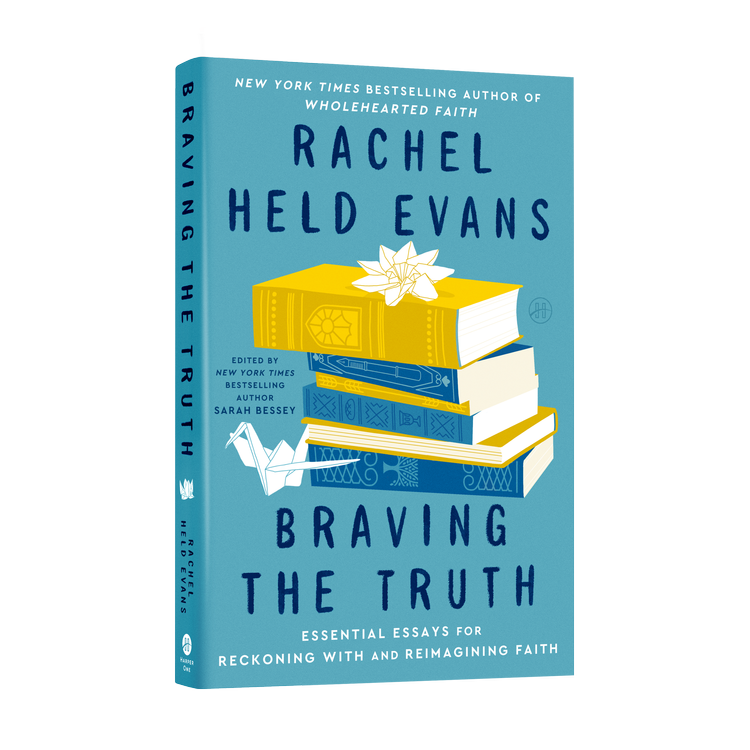
Rachel Held Evans died in 2019. Multiple additional books, including this collection of essays (with additional commentary by others), followed. I talk about it here and here. With additional Trump b.s. 

Monday, April 06, 2026

SCOTUS Watch: Order List [And Other Stuff]

The Supreme Court handed down a short Order List before going on a little mid-April break. One grant:

Issue: Whether the Veterans’ Judicial Review Act stripped district courts of the jurisdiction, recognized by this court in Johnson v. Robison, to hear challenges to the constitutionality of acts of Congress affecting veterans’ benefits.

A bit of lay-up since both sides agreed they should take the case. The solicitor general also argued that the court below was correct. He also suggested the plaintiff sued the wrong person, helping to explain the curious "U.S. Congress" part of this case. 

Meanwhile, among the orders is one in which Gorsuch did not take part. Only Kagan and Jackson explain themselves when such a recusal happens. They are right to do so. 

Again, nothing is scheduled until next week, on Friday (conference/non-argument session, likely to swear in people), but something might come up. 

Steve Bannon

SCOTUSBlog provides more details that show that even a brief, bland-looking Order List can have some interesting details. More Trump news, too:

The justices also sent the case of Stephen Bannon, a former adviser to President Donald Trump who was convicted of contempt of Congress, back to the lower court, where the Department of Justice has filed a motion to dismiss his indictment.

Bannon served his brief sentence. This has a symbolic quality. After an extended -- ridiculously so -- process, which must be reformed, Bannon actually was punished for obstruction of Congress.

This, of course, has to be discouraged. I am being sarcastic. Anyway, this seems to have a gratuitous feel to it. The United States provided a brief reply that it was dismissing the indictment "in the interests of justice." Yes. Justice for Trump stooges.

They had the prosecutorial discretion to do this, though in this case, it is horribly applied. Once they do so, the argument is made that the procedure applied here in this order is appropriate. 

Iowa decided to supply an amicus as part of its Republican/Trump support role. It is laughable that Iowa felt it necessary to get involved here. 

The procedural move here does not appear improper. The ultimate problem is that Trump yet again finds a way to remove even the bare minimum justice for the past wrongs he and his minions inflicted. 

I'm open to being proven wrong. It does seem wrong that the Justice Department can step in at this point. But if the prosecution was actually improper, a later action of this sort might be sensible. 

So, again, it does seem like it turns on discretion. 

ETA: On the odds and ends front, some more rules (Appellate/Bankruptcy/Evidence) were released. 

SCOTUS doesn't intervene in an election dispute. Sounds like a blatant case, even if you don't like the law. Might have line drawing issues. Easy case here.

I say more here including about Sotomayor stuff. 

Sunday, April 05, 2026

The Autobiography of Malcolm X

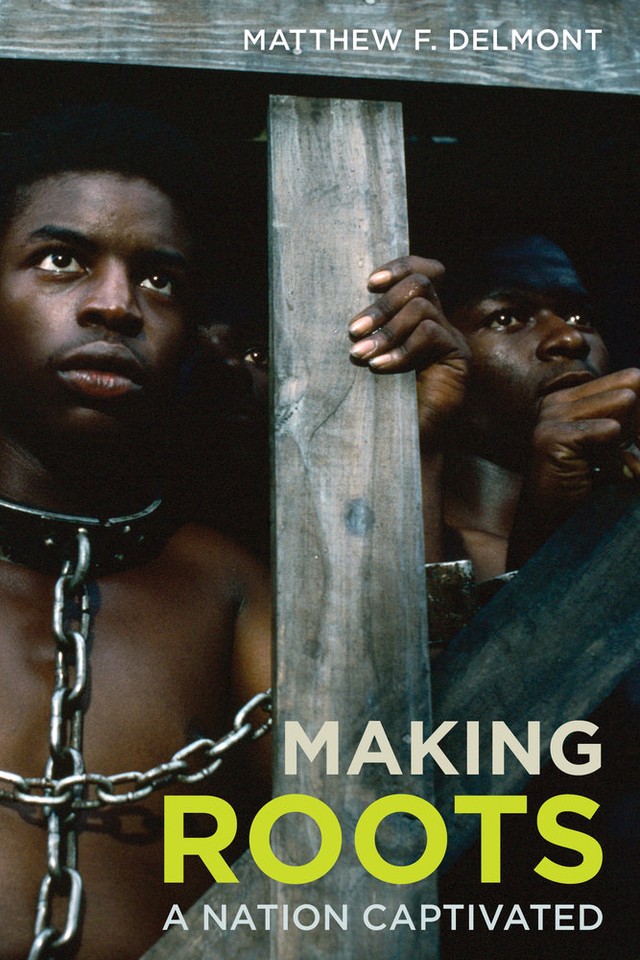
I read a book about Roots, which was written by Alex Haley, who wrote an extended epilogue to this volume. My copy also had a foreword by Malcolm's oldest daughter. The book as a whole was quite readable, if somewhat repetitive. Don't trust all of his citations of ancient history. Tragically, he was assassinated right when he was taking a more open-minded approach. But it was like it was fated.

Extended Discussion.

Saturday, April 04, 2026

DALLAS v. STANGLIN

Stanglin was released on April 3, so was part of a list of cases on a website that provides day-by-day summaries. The case involves a law that "authorizes the licensing of 'Class E' dancehalls, restricting admission thereto to persons between the ages of 14 and 18 and limiting their hours of operation."*

I have written various posts on this blog dealing with privacy-related cases, particularly involving birth control and abortion. This case came up a couple of times, including a review of a book on dance. 

The challenger ended his oral argument in this case on a privacy note, though freedom of association was a key issue. The lower court cited precedent to show that "social" association is included there.** 

The right to freely associate is not limited to "political" assemblies, but includes those that "pertain to the social, legal, and economic benefit of our citizens."

The Supreme Court overturned. It cited a recent case limiting "intimate" association to small groups (the dance halls had hundreds of people). The case, the majority by Chief Justice Rehnquist argued, also did not expand "expressive" association to social dancing. 

Rehnquist applied "social" narrowly to mean "nothing more than that the right of expressive association extends to groups organized to engage in speech that does not pertain directly to politics." That's dubious. 

Justice Stevens (with Blackmun) agreed that the law was legitimate while noting in an opinion concurring in judgment that:

the opportunity to make friends and enjoy the company of other people — in a dance hall or elsewhere — is an aspect of liberty protected by the Fourteenth Amendment.

He did not provide an analysis for this conclusion, but it is correct. We have a right to marry, for instance, and that entails meeting people in various contexts on the road to marriage. 

(I'll toss in that even non-expressive athletic dancing is important to personal wellness to a degree that it is not a trivial aspect of personal freedom.)

The opinion is partially concerned with limits. Anything -- we saw this with the conversion therapy case -- might involve expression. 

We express ourselves in some fashion by basically anything we do. Dance halls are also not the first thing you think about regarding the "right to association." 

Nonetheless, people go to dance halls quite literally to associate. They meet people and interact. They express themselves. Dancing, including "social" dancing, is a means of expression. The importance of dances in Jane Austin novels comes to mind. 

A social gathering at a restaurant is also not what many people would associate (ha) with the First Amendment. But it has some of that character. We meet and talk. We associate. We share ideas.  

I found it troubling years ago, and still do, that Brennan and Marshall just went along with the open-ended language of the majority opinion. The concurrence provided a way to underline that there were constitutional interests involved. 

They probably thought the case was not worth worrying about. Easy cases, if this is one, however, leave open the possibility of troublingly open-ended legal conclusions. The ability, if sometimes taken too far, to regulate minors was a way to uphold the law.

Likewise, the regulation of business establishments, including those with a large number of people, might warrant freer rein. The law did not deny teenagers the ability to dance with adults. It regulated a certain type of for-profit establishment of a certain size. 

Stevens argues that this law, if anything, furthered the constitutional rights that the class of teenagers had. No need to say they have none (other than some general right against arbitrary treatment) in this context. 

A question by Rehnquist suggests a red flag. Could the government (when this could be criminalized) ban two men dancing to advance anti-same sex sodomy laws? Limits of gay bars, including bars with large clientele, had First Amendment and right to privacy implications. Social activity = rights.

Social dancing should not be treated on the same level of constitutional scrutiny as the regulation of eyewear and other "rational basis" cases. The case is a troubling overreach and unnecessarily so. 

Justice Brennan was careful not to even let cases involving alleged child pornography (e.g., Osbourne v. Ohio) be used to limit the right of privacy and other constitutional rights. His silence here was dubious. 

 ==

* The enterprise appears to have arisen from another daily SCOTUS history project, which provides single moments involving various subjects. It always not case specific. Some key cases are not chosen.

I comment there now. A recent comment on a school prayer case received more than usual attention. I stopped replying since I think I said enough. 

** Griswold v. Connecticut cited free speech and freedom of association cases to help show how privacy is necessary to protect constitutional rights. Multiple cases also protect, if to a somewhat more limited degree, the constitutional rights of minors. 

Friday, April 03, 2026

Sex of Comments

People commenting online often either have masculine or neutral-sounding handles. I generally assume, especially if they are assholes, that these people are men. But there are enough shitty people who are not men that I probably assume too much.

Sigh

I enjoy commenting online. I have done so for decades now. But some people repeatedly cannot handle discussing things reasonably. They often, sarcastically, "translate" what you have to say in ignorant ways using a biased translator. They make snide remarks based on ignorance. They don't want to or have the ability to honestly engage, no matter how much you work at it. It is so tiresome. 

Thursday, April 02, 2026

SCOTUS Watch

Order List

The Supreme Court on Monday agreed to weigh in on a procedural question arising from a pregnancy discrimination case – specifically, whether a defendant can raise an affirmative defense (that is, a legal excuse or justification) later in the proceedings when it did not raise that defense in the answer to the plaintiff’s complaint.

After a brief order list, Sotomayor (with Jackson) spends some time explaining why the justices should have taken a criminal justice case. Finding troubling criminal justice cases that suggest the arbitrary nature of the criminal justice system is her thing.  

(The opening link provides more details) 

Opinions 

Happy Trans Visibility Day, which once was allegedly an anti-Easter plot or something, since it coincidentally overlapped that year. By chance, the justices decided the conversion therapy case.

Justice Gorsuch, having the opinion (which, like multiple other opinions he had in cultural war cases, was procedurally dubious), was a bad sign. Worse, only Jackson dissented. It was a good dissent. 

(Jackson used a Calvinball ruling -- see Breyer's angry dissent -- to her benefit. Okay. But realistically, that is how it is going to be. Selective application.) 

The conservatives upheld anti-trans care policies, even though such policies clearly have ideological motivations. This time, when trans people are protected, the regulation is suddenly thought control.

The law involves the regulation of people with a state license to practice medicine and only covers minors. So, it is not about the conversion therapy of adults or therapy by unlicensed people, including clergy. 

Under this logic, any medical treatment delivered through words rather than instruments could now carry First Amendment protection—a framework that could shield a doctor who encourages a patient to commit suicide, a dietician who tells an anorexic patient to eat less, or a therapist who deliberately steers a vulnerable client away from life-saving treatment. It could also extend well beyond medicine: a financial advisor who talks an elderly client into a bad investment is exercising speech-based professional conduct, as is a lawyer who gives harmful legal advice.

Not good. Kagan (with Sotomayor) concurred in full, citing an alleged limitation. But, as Jackson noted, the limitation in context is fictional. If they concurred strategically, Gorsuch's language is far from restrained.

The opinion says strict scrutiny is required. Some misleading coverage aside, the Court did not strike down the law. Colorado has a higher test to meet. 

But that is usually an uphill battle. Gorsuch's rhetoric, as SCOTUSBlog flags, is also not reassuring:

But the Supreme Court also strongly hinted that the ban would fail that test. In his 23-page opinion, Gorsuch stressed that in cases like Chiles’, Colorado’s ban “censors speech based on viewpoint.” Because the First Amendment “reflects … a judgment that every American possesses an inalienable right to think and speak freely, and a faith in the free marketplace of ideas as the best means for discovering truth,” Gorsuch continued, “any law that suppresses speech based on viewpoint represents an ‘egregious’ assault on both of those commitments.”

The possible Robert Kennedy Jr.-ing of medical care is not ideal. I say that even if the opinion leaves open a way to uphold this law (strict scrutiny met) or to craft another policy that will protect children. 

Kagan, in the past, disliked "Lochner-ing" or the weaponizing of the First Amendment. Blah. 

Upcoming

The conference was on Thursday, given the Easter weekend. Monday will be an Order List. They then take a two-week break until April 17th. 

A media advisory regarding an oral argument that will likely have more demand for sitting flags the change at the top of Homeland Security. 

(ETA: The SCOTUS PIO released a statement on a news story involving Alito going to get checked out -- he is in his 70s, so this wasn't that notable on its own -- but didn't post it on the website. Yet again.)

Birthright Citizenship Trivia

Trump showed up for the birthright citizenship oral argument (left after the solicitor general was done), which would be the first time a sitting president did so. Notably, he picked this case to do so.

Talk about this being an "attempt to intimidate the justices" seems a tad overblown. Separation of powers? Eh. Members of Congress show up. 

Nixon and John Quincy Adams argued cases. Lincoln, too (a more forgotten detail). Not while in office, of course. Taft became Chief Justice. Ditto. 

John Marshall served as Secretary of State briefly after becoming Chief Justice. The Constitution does not -- unlike for members of Congress -- clearly ban that sort of thing. Justices also served in diplomatic roles. Robert Jackson was a prosecutor at Nuremberg.

Wednesday, March 25, 2026

Two Books, Same Author, One Better

I mostly enjoyed this book that combines the anti-war activism of Coretta Scott King with the ultimately tragic story of a Medal of Honor winner (PTSD and a tragic death). Quick reading, smooth narratives.

The King story did sort of peter out. Her anti-war work was important. The author's discussion about it did become repetitive at some point. And then, the war is over, and we basically skip to her dying. 


I found the subject matter of this book interesting.

The publication of Roots and the airing of the miniseries in the mid-1970s were major cultural moments. Alex Haley was also important for his work on the "Autobiography" of Malcolm X. 

Good subject matter.

The book, which is shorter by over one hundred pages than the most recent one (putting aside many photographs), however, is harder to read. I also was left wanting, including regarding a short chapter summarizing the book as compared to a more detailed (up to a point) chapter of the miniseries.

The book got too into the weeds of Alex Haley blathering about how great the book would be. The book was okay, but the subject matter warrants a better presentation. 

I never read either book or watched the miniseries. 

ETA: I found Strikingly Familiar (plagiarism) interesting and written in a down-to-earth fashion.

The book there is an uplifting book about a gay couple who adopted a child. The book does not explain why it was published nearly 15 years after the end of the events covered. The baby was found in 2000, so he must be in his mid-20s by now. 

Another version of the story was released in 2020. I suppose that makes some sense since it would be shortly after Kevin is an adult. That book is not referenced in this volume. I find it all a bit weird. 

Monday, March 23, 2026

SCOTUS Watch: Sotomayor Dissents a Lot Edition

Order List

There was a long order list today. This implied an unsigned opinion and/or dissent. We had both. 

A brief, unsigned opinion (per curiam) held that a lower court incorrectly didn't provide qualified immunity in an excessive force case. The justices argued that precedent did not settle the question. The liberals disagreed.

Qualified immunity is a major concern. Congress can and should address the situation. Too often, even that ability to try is removed. 

This also should be disfavored from a historical point of view. Things have changed over time, so I don't just rely on that. But some judges allegedly rely on that a lot. Allowing juries to decide would also be democratic. Now, judges too often close things off.

Sotomayor had all three dissents. She also argued for the liberals that the justices should have taken a case involving DNA evidence in a capital case. 

DNA evidence isn't magic. The government fears people will demand DNA evidence, here perhaps tainted in some fashion, and too much will be made out of it. But DNA evidence can also be powerful. A possibly tainted execution is also a tiebreaker. 

A third case involving denial of cert of a case involving alleged retaliation against an online journalist was a solo effort. That case had some support from conservatives below (Judge Willett was cited). Sotomayor provides a sympathetic reading. She also flags an apparent circuit split, making it a helpful "vehicle" for SCOTUS review.  

I'm not an expert. I don't do "deep dives" in these cases. For instance, in the capital cases, arguments are flagged that might not hold up. 

I cannot tell you if she is right that the circuit split is "cert worthy." It is important to note that the Supreme Court is more than a "court of error correction." A circuit split is a major reason for taking a case. 

Sometimes, there is a case that troubles one or more justices on the facts. They might flag that the case is not "cert worthy" while still noting their concern. They might also note the case raises issues that the Supreme Court should take up in a different case.

Meanwhile, Alito and Gorsuch did not take part in cases addressed in the Order List. As usual, we don't have any official explanation for why. Only Kagan and Jackson do that. The others should join them.

Oral Argument

Some of the conservatives were on vibes during the oral argument regarding the regulation of mail-in voting. This time, some Republican Southern state defending their discretion to regulate had a more sympathetic hearing from the liberal side. 

Rick Hasen has more.

Upcoming

We should have one or more opinions on Wednesday.

ETA: Sotomayor also appeared to be on the dissenting side during the oral argument in an asylum case. 

Gorsuch had his first opinion (only Alito dissented). Thomas wrote a copyright opinion (Sotomayor concurred in the result with Jackson). 

... and we will have another opinion day next week.

Sunday, March 22, 2026

More Illegal Boat Strikes

The ongoing illegal monstrosity that the Republican Congress is just letting Trump unconstitutionally carry out in Iran should not lead us to forget other things.

A U.S. military strike on a vessel suspected [SUSPECTED!] of hauling drugs prompted the rescue of a sole survivor, the second known instance of a successful recovery in a campaign that has killed dozens of people.

U.S. forces struck a “low profile” vessel Thursday in the Eastern Pacific transiting a common smuggling route, according to a post on social media by U.S. Southern Command, which oversees the ongoing boat strike campaign against alleged smugglers in Latin America. The strike was the 46th since early September, officials said, totaling 159 people killed.

This is still going on. 159 people killed. Murdered.

Saturday, March 21, 2026

RIP Robert Mueller

Robert Mueller, an honorable public servant, has died. The usual comments and responses will now come.

Trump metaphorically pissing on his grave is understandable. Some of the comments? Understandable but depressing.

People had some fantasy vision of "Mueller Time," regarding a Sessions Justice Department (Trump 1.0) appointment, who was acting within the limits of that role. This includes not indicting sitting presidents.

[Trump was very concerned behind the scenes that the investigation would screw him over. It would end his presidency! The crybaby eventually realized how much the system was stacked in his favor.] 

OTOH, can you imagine someone like him being appointed now and Pam Bondi recusing herself?

He still offered a "roadmap" of sorts. He didn't have to do so. It was the responsibility of others, not taken, to carry things through. This includes a report that provided repeated evidence of wrongdoing, including the Trump campaign (family members like Kushner, too) engaging with Russian agents. 

These actions were consistent with President Trump’s previous invitations of foreign interference in United States elections.

[First impeachment.]

Impeachment managers repeatedly warned us about what Trump would do if you didn't stop him. People have this fantasy image of "daddy" saving us, when they are not sneering at the idea of relying on them.

Mueller honorably served, including leading an investigation akin to that of Jack Smith. Smith, to be clear, investigated a former president. He had more discretion to prosecute, as well as having more serious crimes to use to do so. 

OTOH, when Trump was re-elected, to the shame of "We the People," Jack Smith knew the game was up. 

The video is when celebrities reenacted the Mueller Report. Powerful stuff. RIP and don't join with Trump pissing on his grave. Thanks. 

Does Bruen Violate the Tenth Amendment?

Eric Segall reviews a new article co-written by Jake Charles (a law professor with an expertise in Second Amendment issues who teaches at Pepperdine, that is, not a liberal school) that comes at criticism of Bruen from a state rights lens

The opinion, limited by a later case, uses a historical analogue approach. Modern day regulations need to overlap with regulations, and there have to be enough examples (how many?) to satisfy the justices, from the founding era. Not totally clear if that would be 1791 (2A) or 1868 (14A).  

This approach can be challenged on multiple grounds. A major criticism is that it is simply not practical. It has led to confusion in the lower courts. There is also the general problem with originalist-like approaches. Things change. We cannot sensibly be tied to what was done in the distant past.

The powers not delegated to the United States by the Constitution, nor prohibited by it to the States, are reserved to the States respectively, or to the people.

The article frames things in a Tenth Amendment fashion. The Tenth Amendment is a statement of principle. Applying that principle can take us in various directions. It overall promotes federalism, including protecting state power in different ways.

The authors argue that federalism includes the principle that states have the discretion to make policy. This discretion is limited by individual rights and congressional powers. This is not about a criticism of the RKBA overall. It is about the discretion states have to regulate, with the right taken for granted.

States did not regulate in the past for a variety of reasons. They were limited by constitutional requirements. A state cannot censor based on viewpoint. It cannot favor certain religious sects.

OTOH, just because they did not regulate did not mean they could not regulate. Bruen, along with other misplaced "history and tradition" tests, wrongly limit state discretion based on what they did not do. 

Why didn't they do it? A range of reasons, including different times requiring different rules. This is where a "living" (the horror!) approach reaffirms basic constitutional principles.  States, over time, develop new ways of doing things, learning as they go along. That is fine. The Constitution allows it. 

Eric Segall offers that the argument is open-ended. It does provide a basic rule that guards against misguided interference with state power. Depending on the specifics, it can apply to cases (think abortion rights) that liberals like. But that also goes to underlining rights. 

Things often can be framed in different ways. Lawyers know this. They can acknowledge or use certain frames to advance their goals. Some frames are appreciated by certain people. 

Conservatives regularly support state rights. Liberals call out their hypocrisy for selectively supporting them. Conservatives will tend to explain, "This is different." It can be helpful to use the same language and debate details.

The article frames things as a matter of Tenth Amendment rights and powers. The people have the right to pass certain types of laws and have the discretion to do so. 

This is not about a dislike of guns. It is about how artificial restraints interfere with legitimate state power. The argument fits in with "originalist" arguments. The article has plenty of 19th-century quotes to back up its arguments. History, like religion, is not just something for conservatives. 

The sloppiness of Bruen (as Segall notes) is not something to ignore. It's part of the overall discussion. If you like the RKBA, effectively upholding it should be a concern of yours. A sloppy approach, one that has to be treated like a round peg in a square hole to sensibly apply, is rather counterproductive. 

The article, however, is not just a disagreement with the opinion or statement on why it is impractical. It provides a federalism-friendly approach that brings together both sides.  

One criticism that I saw suggests it wrongly tries to argue that it provides a novel new theory. If you want to say it doesn't say anything special, that's fine. Articles can reinforce old principles, sometimes in slightly different ways.

It does not, as the person claimed, merely disagree with Bruen. It notes upfront that there are different ways to disagree with the opinion. It frames things a certain way. It grants RKBA. It honors federalism. 

The article is a helpful approach to provide a reasonable criticism of the current law that offers a sane path. It has implications that will not please all critics. For instance, if you are not a fan of gun rights or are rather absolutist about upholding them.

Overall, I think it is a helpful approach. Not magic. 

==

Note:  A true "history and tradition" approach to rights would leave open a lot of regulations, more than most people support under current law. 

Many people selectively realize this. They will accept more rights when applying the Constitution today, even if originally people would not think them necessary in one area of the law, but not others. 

Then, it will be "no one would have thought about that!" Cf. corporate speech with LGBTQ rights. 

Friday, March 20, 2026

SCOTUS Watch

More Trump News 

Steve Vladeck in his weekly SCOTUS Substack:

I wanted to use today’s “Long Read” to bring folks up to speed on the series of ongoing cases involving efforts by the Department of Homeland Security to revoke “Temporary Protected Status” (TPS) on a country-by-country basis for hundreds of thousands of immigrants from Haiti, Syria, Venezuela, and elsewhere—two of which have reached the Supreme Court through the Trump administration’s 33rd and 34th emergency applications. 

(He also references the racism involved.) 

SCOTUS took the matter for review later in the day. The oral argument will be in late April. 

Eugenio Suárez’s hit in the top of the ninth later in the week provided the deciding run to allow Venezuela to win the World Baseball Classic over the United States. He earlier spoke out about how immigrant baseball players worry about current policies. He noted a family member lost TPS status. 

Another Execution 

It also rejected a final appeal in a capital case.

Michael Lee King, 54, is scheduled to receive a three-drug injection starting at 6 p.m. at Florida State Prison near Starke. King was sentenced to death in 2009 after being convicted of first-degree murder, sexual battery, and kidnapping.

(The death sentence is not patently outrageous. The system can be arbitrary and overall, not helpful to the public welfare, without each and every case being similarly bad.) 

Florida apparently is moving on to executing one or more people who haven't been on death row for over twenty years. The final appeal basically addressed red flags regarding the state's lethal injection procedures. 

Sotomayor recently referenced the matter. She didn't comment this time, but there is a comparable reason why a SCOTUS stay of execution is questionable without erasing the problems with the procedures.  

Chief Justice Roberts Speaks Out

"The problem sometimes is that the criticism can move from a focus on legal analysis to personalities. And you see from all over, I mean, not just any one political perspective on it, that it's more directed in a personal way, and that, frankly, can be actually quite dangerous," Roberts said.

I saw people respond with an expletive. It's understandable. First, it sounds like he is upset about the justices being criticized. Second, the conservative justices were hoisted on their own petard by enabling Trump. And, yes, his criticism is specifically at issue. 

Trump repeatedly, in personal ways, attacked judges for ruling against him. The problem also arose during his civil and criminal trials. Judges repeatedly criticized him or even sanctioned him for crossing the line. He is back to using such rhetoric to attack judges for the 2020 elections. We know how that went. 

There has been a dangerous uptick in harassment of judges. People send pizzas to their homes in the name of a murdered son of a judge. Judges get harassing phone calls. A few judges in the past were physically attacked or even killed. 

Strong criticism is part of the program. Some will be fair, some unfair. But, especially when people like Trump (or other members of the government) attack judges personally, sometimes targeting other people along the way (family members, prosecutors, etc.), a line begins to be crossed. The unjust delegitimizing of the court system alone is a problem. It can get worse. 

A new article flagged some lower court judges addressing the problem. It notes that the pizza thing might have, in some sense, been a foreign job. 

I didn't catch that aspect before. It should be carefully checked out. It surely would not be the only attempt at foreign interference with our institutions. 

Another way to look at this is to examine a major reason lower court judges have received some strong criticism. Conservative justices have, at times, with little or no explanation, overturned their rulings. 

This effectively is a big "fu" to lower court judges, who regularly are just doing their jobs, provided extended explanations when doing so. The judges come off as "judicial activists" who deserve strong criticism. As the article notes, "thanks a lot, John."

When you flag this, some people think you are just making it about Trump. He obviously has significant influence and has used it in unhinged ways. 

But it isn't just him. So "what about Schumer" won't be much of a comeback. Put aside his comments and influence simply are not comparable. If you can find something bad liberals say, fine. 

We need to protect our institutions. This should not be a partisan issue. Too often, it seems that it is. 

Justice O'Connor

There was a special event on Thursday to honor Justice O'Connor. The Supreme Court website provided a rare livestream video link. 

There were two parts. There was a bar event, and then they had a special court session. The livestream only covered the first part. A ceremonial occasion would be an ideal situation to provide SCOTUS video. 

Some documentary materials were supplied, including an extended biographic statement. O'Connor was a moderate conservative from another age. 

Her role in Bush v. Gore for some is disqualifying. But she's no Justice Alito. She was, as noted, a reasonable conservative who carefully and pragmatically (influenced by her legislative experience) applied the law. She also supported civics education, making it her focus after leaving the Court.  

Opinions

The justices were back for opinions and a conference on Friday. There will be oral arguments next week.

They handed down a single opinion, by Kagan, which unanimously allowed someone to sue to protect his free speech rights. The person feared future prosecution. The case is not about damages.

Kagan handles things, tossing in some Kagan-esque colloquial "let's chat about this" phrasings (e.g., "For anyone who has followed along this far") quickly in a Roberts Court special. It's a good, limited opinion. 

(Robert Court specials unite the justices, often with short opinions, by opinions of limited reach that avoid divisive questions. Sometimes, they clearly paper over certain disputes, the seams at times fairly blatant.) 

Other Stuff 

The Court also dropped a housekeeping order

They will hear oral arguments next week after dropping an Order List on Monday. 

Think Big

A local paper published my letter to the editor:

Bronx: We need major changes, including term limits for Supreme Court justices and limits on presidential power. This might require changing the Constitution. But we should think big. We had no amendments for more than 30 years. It’s time. 

Really 50 years. The 27A is a joke. 

Thursday, March 19, 2026

Daughter of Daring

I used to keep track of and watch the Oscars. Now, I am barely familiar with some of the films. Instead, I read Daughter of Daring, which is not only a biography of a stuntwoman/actor, but a history of film and Hollywood (with a woman's focus) overall. 

I have also read her Creature from the Black Lagoon book. Both are good. Down-to-earth style, while quite detailed. Fun footnotes. 

ETA: One interesting tidbit is how cliffhanger serials and other films attracted women viewers as escapes and an example of women having agency, including for lower class women.

Wednesday, March 18, 2026

Venezuela Wins World Baseball Classic

The World Baseball Classic divides baseball players into international teams (Puerto Rico has a team). Italy was a surprise hit this time. They made it to the semifinals. Overall, it went well.

The U.S. team looked a bit stale, but made it to the finals. A promising Mets rookie started the game and did pretty well. Venezuela won in the ninth, 3-2. They were very excited to do so.

Sunday, March 15, 2026

Blondie Plays Cupid

A retro channel shows "Blondie" films (1940s; there was also a couple of television series based on the comic strip, plus a radio show) each Saturday morning. I talked about this over the years. 

The 28 films are of mixed quality. For whatever reason, one film is not shown in the rotation (about a "haunted" house). Blondie Plays Cupid is a good one.

The film is effectively a series of vignettes. It starts with the Fourth of July coming up. Blondie is not a fan of Dagwood and Baby Dumpling's fireworks. 

She wants to go somewhere quiet. How about her relatives in the country? Some home and office scenes (where a plan to trick Dagwood backfires; the coworker involved is played by someone else in later films) take place. 

Then, an amusing scene on the train, with a familiar face (the grumpy railroad executive on Petticoat Junction; the actor was in lots of character roles). Fans of old shows and films will see other familiar faces throughout the series. 

The busy film then shifts to the country, where a young Glenn Ford offers them a ride. That's where the title drop comes in -- he has fallen in love with the neighbor's daughter, but the father opposes the match. The justice of the peace gives an amusing performance. 

More hijinks and things end (as they always do) happily. The film is well-paced and well-written, with the interrelated scenes fitting together nicely. 

One amusing bit of the "I see what they did there" variety involves Baby Dumpling winding up in a haystack after a joyride. Something is poking him. Turns out to be a needle. In a haystack.

There is also a cute final joke. The last bit involves something that would be rather serious (painful burns) if we took it seriously. The Wikipedia page at the moment somewhat misleadingly notes how things wound up. They don't simply enjoy the end of their vacation peacefully in the country.  

The films have various expected components, including the postman getting hit by Dagwood (the film has a twist, including him having a chance to get Dagwood back) during an early scene involving the family having breakfast. The smart aleck neighborhood kid usually gets involved somehow.  

Dagwood bumbles a lot, which at some point is a bit tedious. There is also some stereotypical Blondie stuff, including a bit too many scenes of her being jealous or upset (often arising from some misunderstanding) for some reason. She is not as sexy looking as in the comic strip.

Blondie started as a flapper-type character, while Dagwood was a rich man's son who gave up his money out of love. The films skip that backstory.

The strips, at least when I read them much later, also had them being close friends with their neighbors. This film has Blondie talking to the wife on the phone. Most of the films, however, skip them, and one late film has the neighbors annoyed at Dagwood.

The family grows over the decade or so of the films. "Baby Dumpling" becomes Alexander. And, they have a daughter named Cookie. The boss is "J.C" Dithers, though he is replaced later in the series except for the last film. That is, Julius Caesar Dithers.

Today is the Ides of March. It's all connected.

Saturday, March 14, 2026

Mayor Mamdani appoints trans woman to run first-ever NYC Office of LGBTQIA+ Affairs

We are amidst a time of attack, from the executive department of the U.S. on down, against trans people. 

The Supreme Court has (except in the Bostock case) looked on and said, "You go!" though a few justices would say, "Go faster!" It is not all dark. But it is quite scary for many.

Mayor Mamdani was a strong ally during his campaign. Trans people now, even though it has been less than three months, are impatient for action

Some, including those noting they are part of the community (one on Bluesky said they had a trans child), are willing to optimistically give him a chance. Others are more pessimistic and/or cynical.

Given the stakes and situation, that's understandable.  Again, there is no single reaction here. We need to generally practice human empathy and discernment. 

The establishment of the office comes at an uncertain time for access to gender-affirming care for trans youth in New York — a city that also functions as a sanctuary destination for families elsewhere in the U.S. seeking such care. In February, NYU Langone, one of the foremost providers of gender-affirming care in the city, announced that it would cease the provision of such care to minors, citing the “current regulatory environment.” 

NY Attorney General Letitia James demanded that the hospital resume, with a deadline that just passed, because of state human rights law. We shall see. 

The move, a form of obedience in advance, by NYU Langone, shows some of the results of the human rights violations of the Trump Administration, which is a disgrace to this nation every second they (illegally) continue their injustices. 

We need more anger and passion about how horrible things are. One day, we will have to reconstruct our nation. The will to do so has to come with an understanding of the stakes. The harm to trans people is just one of so many examples of what we have to address. It is taken to such cruel levels. 

My "impatient" link shows that there are means for the city government to address the situation. Erin Reed and other trans advocates want to know what the mayor is going to do. 

The establishment of the first Mayor’s Office for LGBTQIA+ affairs and the appointment of the first out trans person to lead a New York City office as director provide a key avenue to address such things. 

A question posed at the announcement addressed the hospital issue:

Question: I'm curious how you see the city's role, potentially this office's role, in responding to actions like NYU Langone and other health institutions moving to end gender-affirming care. And I'm wondering if the city has a role in responding to that, and if you've talked about that at all in discussions with President Trump. 

Mayor Mamdani: I think the city has a role in standing up for the rights of New Yorkers and ensuring the compliance with the law. And that is regardless of who impedes upon it. And I made very clear my opposition to the decisions made by NYU Langone. I will continue to make that clear as the mayor of our city. And I am frankly looking forward to working with our new director on seeing the many ways our city can stand up for queer and trans New Yorkers.  

That's nice, though it is nothing specific. Such replies warrant follow-up. It annoys me when none come. 

The new office, specifically, would be the direct avenue to address it. The leader sounds like a great choice:

Taylor Brown — who is currently working in the state Attorney General’s office in its civil rights bureau, and assisted in a lawsuit launched against Nassau County and its ban on transgender women and girls from playing sports in county facilities — will head the new office. She will be the highest-ranking trans person in New York City government.

Brown also worked for Lambda Legal Defense and Education Fund and the American Civil Liberties Union, where she was a part of the legal team behind a landmark lawsuit for trans people looking to amend birth certificates in West Virginia.

Change must come from below before it reaches the top. This office is what people voted for. What I voted for. 

As Out Magazine noted:

The historic move not only marks an institutional shift for the city but also highlights Mamdani's commitment to the LGBTQ+ community. This draws a stark contrast with other Democrats at a time when the Democratic Party is being urged to "do more" for queer people.

Good luck and godspeed. 

Friday, March 13, 2026

SCOTUS Watch

Order List

There was a seven-page Order List on Monday. The Court granted one case for review. SCOTUSBlog:

In Prutehi Guahan, the justices will weigh in on a dispute that arises from the U.S. Air Force’s disposal of unexploded ordnance, which it burns or blows up, on a base in Guam. 

So notable concern, but based on technical issues:

Four years ago, Prutehi Guahan, an environmental group, went to federal court to challenge the Air Force’s then-pending application to renew its permit, granted to it by Guam’s Environmental Protection Agency under a federal law called the Resource Conservation and Recovery Act, for its disposal of ordnance. The group contended that before the Air Force submitted its application, it should have prepared an environmental impact statement, as required by a different federal law, the National Environmental Policy Act.

Kavanaugh didn't take part in deciding a case without saying why. Jackson dissented from a refusal to a motion based on an alleged abuse of the in forma pauperis policy, following her recent practice of doing so for incarcerated persons. 

Gorsuch dissents from a denial of cert. As Mark Joseph Stern (Slate) summarizes on Bluesky (noting his position received four votes in the past):

Gorsuch dissents from the Supreme Court's refusal to consider whether a judge (not a jury) can extend a person's prison sentence by finding, by a preponderance of evidence (not beyond a reasonable doubt), that he violated supervised release.

Charles Burton Doesn't Die

Charles Burton has been in prison for over thirty years for his involvement in a robbery/homicide. Burton is in his mid-70s and in a wheelchair. A final SCOTUS appeal (involving procedural issues) was pending. 

I firmly believe that the death penalty is just punishment for society’s most heinous offenders, as shown by the 25 executions I have presided over as governor,” Ivey said in a statement on Tuesday. “In order to ensure the continued viability of the death penalty, however, I also believe that a government’s most consequential action must be administered fairly and proportionately.

Alabama's strongly conservative governor commuted his sentence to life. That's the right move, except that he should really be paroled. He is ailing and was not directly involved in the actual killing. He has already served more than enough for his crime. 

Burton wasn't even there when it happened. It was a particularly poor usage of the "felony murder rule."  I appreciate her principled pro-capital punishment statement. Yes, I can grant that.

Alabama has not had a great run in recent years executing people, especially respecting the procedure, which led them to shift to nitrogen gas. Give credit where it's due and all that, all the same. 

The victim's daughter opposed the execution. That happens, though some seem to think honoring the victims is a one-way ratchet. Still, executions are in the name of the public, not private parties. 

The actual killer was sentenced to death. His sentence was overturned on appeal. The government eventually sentenced him to LWOP. He died in prison.  

Burton's lawyers removed their final appeal as moot.

Cedric Ricks Execution

Cedric Ricks was sentenced to death for the May 2013 killings of 30-year-old Roxann Sanchez [girlfriend] and her son Anthony Figueroa at their apartment in Bedford, a suburb in the Dallas-Fort Worth area. Sanchez’s 12-year-old son, Marcus Figueroa, was injured during the attack.

His attorneys had asked the Supreme Court to stay his execution, arguing that prosecutors violated Ricks’ constitutional rights by eliminating potential jurors on the basis of race. 

Previous appeals by Ricks that alleged ineffective counsel and called for the suppression of evidence in the case have been denied.

A horrible domestic violence crime like this warrants serious punishment. It is not, in my view, the "worst of the worst" type murder that warrants the death penalty.

(Texas has executed a handful of people annually in recent years. It is a form of lottery to execute him.) 

One more death will not stop the cycle of violence involved. I don't know if the due process concerns flagged tainted the conviction. 

They probably are not "cert worthy" since they are most likely singular, not the special class warranting SCOTUS review. The justices should still not have denied without comment. 

Justice Joe would provide a brief statement explaining my denial, noting that the taking of a life (especially given my overall constitutional concern about the death penalty) warrants a special exception to the usual "no comment" cert denial policy. 

He was executed, providing an apology in his final statement. Media coverage continues to provide the public with information about such final moments. 

The almost thirteen-year lag time would have been notable back in the day. It's relatively quick, FWIW, as things go now. COVID probably helped add a few more years that might not have been there otherwise. 

Upcoming 

I noticed that a media advisory I missed flagged that there will be limited seating for the upcoming birthright citizenship oral argument. 

There is an execution scheduled on the 17th. There might be a final order to dispose of like the ones above.

The next scheduled thing is a special event honoring Justice O'Connor (next Thursday) with a livestream. Various Trump officials will take part. 

The justices will officially return next Friday. They probably (there is a notice they "may") will hand down one or more opinions. They will also have a conference to consider pending matters. 

Other News 

Oyez did not have last term's opinion announcements. 

The delay led Fix the Court to reach out and obtain them (in a raw form that is harder to access and contains other audio mixed in). 

Oyez now has (some) of the opinion announcements up. They are easier to access, but not complete yet. 

Thursday, March 12, 2026

Senator Tuberville's Bigotry

On X, Tuberville reposted an image of Mamdani next to a photo of the deadly 9/11 terror attacks in New York City along with the words "the enemy is inside the gates."
Definitely one of the top idiots in the Senate. Largely crickets from Republicans. Not the only example of anti-Muslim bigotry. 

Sunday, March 08, 2026

Some Books

I have had mixed experiences with books recently. I have had better luck lately. A variety of books with different subject matters are worth noting. 

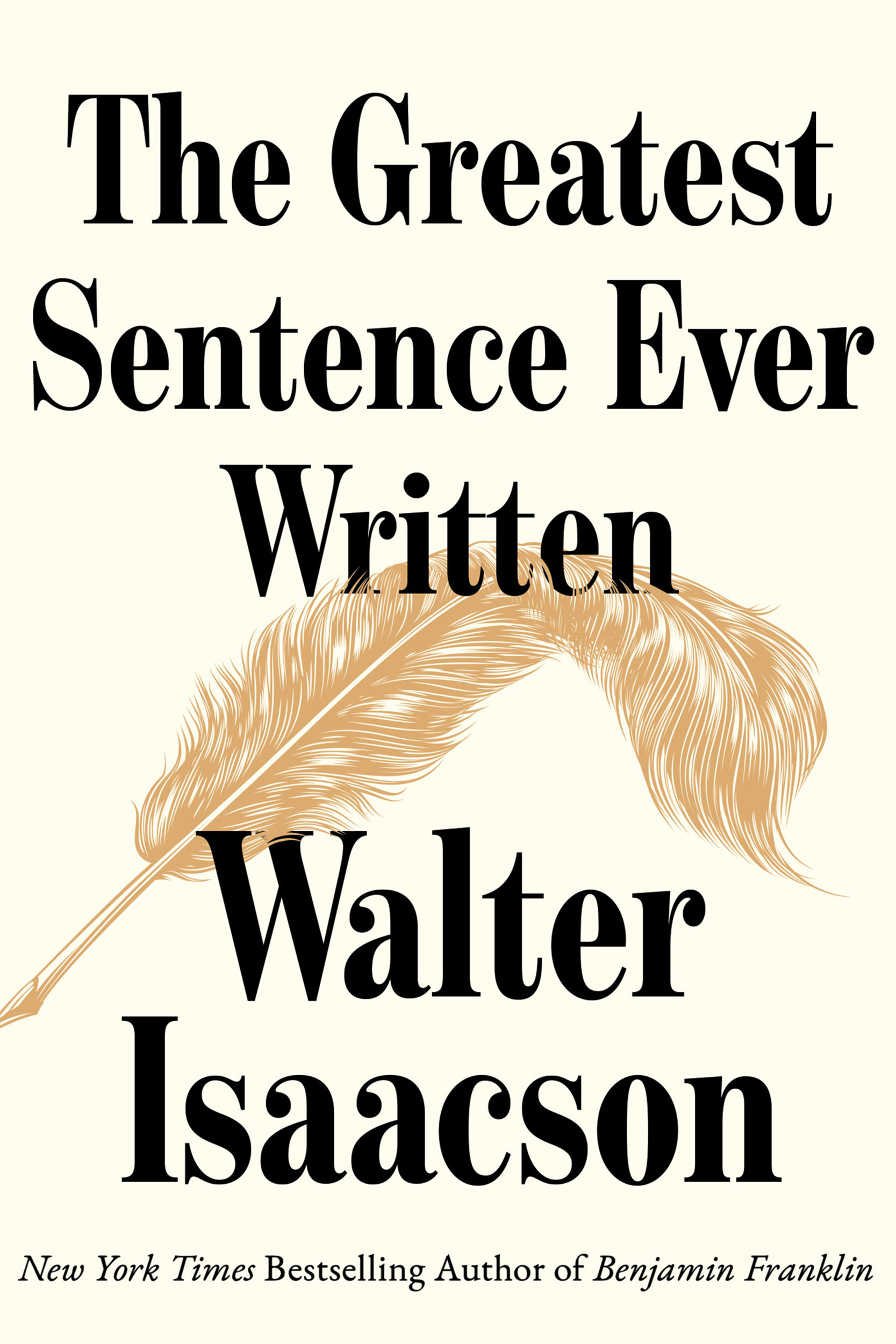
Walter Isaacson’s new book, “The Greatest Sentence Ever Written,” takes as its focal point the document’s second line: “We hold these truths to be self-evident, that all men are created equal, that they are endowed by their Creator with certain unalienable Rights, that among these are Life, Liberty and the Pursuit of Happiness.”

An apt entry for the 250th anniversary of our independence. The book is tiny -- it is around sixty-four pages -- and half of it isn't even directly about the sentence. He includes an essay about the importance of supporting the common good. He also includes multiple documents, including a first draft.

I also liked Edward Larson's, best known for his book on the Scopes Trial, book on 1776 overall. 


I found this author because she has a new book. This is an older one that was at the library. The "Jenna" book club references Bush43's daughter. 

It covers the life of its character from 7-18 (for whatever reason, the plot ends about a decade before the book was published) or thereabouts. It is not a young adult book, but it reads like one. It is in her voice. 

Her father is unreliable, her mother is trying to survive with two children from different fathers, and Sam likes to climb. We get some plot from when she is younger, but a chunk takes place when she is around 15-18. 

I liked it overall, though it probably went too long. 


I found a picture of this book and the next one, which were read over fifteen years ago. I listened to this one (don't recall doing so) while reading it this time. 

I did listen to The Devil in the Junior League, which is a summer read that I put on the side panel (btw, one image appears to not show up on some browsers). A good performance -- appropriate Southern accent (though one person said it wasn't Texan ... I didn't notice the difference -- IITW took place in Texas btw) with a nice sound effect simulating phone calls and use of a microphone. Got a kick out of it -- sometimes, it doesn't take much to amuse me.

The author had a bunch of romance novels. This one was inspired by her own life (she moved to NYC from Texas). It was a fun story of a twenty-something whose comfortable life falls to the wayside, but she manages to find a way. 

One thing that originally attracted me to the book was that I watched a LGBTQ film (It's In the Water) that took place in a similar milieu. That is, a junior leaguer stepped outside of her comfort zone, this time accepting her lesbianism. 


Blechman’s forte clearly is in his character studies of these and other pigeon enthusiasts. His account of the historical pigeon, on the other hand, is a bit mottled by his lack of footnotes or bibliography. One can neither check up on details nor expand one’s knowledge. The engaged reader, of course, wants to do both.

The book covers various subjects (including Darwin, beauty contests, food, and target practice) but emphasizes pigeon racing. It is well written. Pigeon enthusiasts might want a bit more about the birds themselves. 

The bird racing was familiar. My dad raced birds. He fit the m.o., coming from a working-class ethnic background. We had a coop on the roof. 

He had one of those clocks that were used to track when birds arrived. I'm not sure how he started. For whatever reason, he eventually stopped. 


Midaq Alley (Arabic: زقاق المدق, romanized: Zuqāq al-Midaqq) is a 1947 novel by Egyptian author Naguib Mahfouz, first published in English in 1966. The story is about Midaq Alley in Khan el-Khalili, a teeming back street in Cairo which is presented as a microcosm of the world.

I found out about this book because it was adapted into a film (taking place in Mexico). The book is a tad risqué (involving homosexuality, prostitution, and other mature topics) with various human dramas taking place. Good translation. 

Mahfouz was a leading Egyptian novelist who repeatedly used "alleys" in his works. I don't read much fiction, especially "classic" novels. Overall, I enjoyed it, though now and then the exposition went on a bit too long. 

I never saw the film. 


Ted Danson, during his appearance on Stephen Colbert, recently referenced that he has a podcast. There are lots of podcasts out there. 

I checked it out. He has some interesting interviews. 

I listen to a few podcasts. I often get bored with podcasts. Strict Scrutiny Podcast, concerning the Supreme Court, which is a prime interest of mine, often goes too long. 

But I listened to both parts (about two hours total) of the interview he had with his wife. They met while doing a film together. They acknowledged the film didn't do well. 

The marriage did. It has been around thirty years. 

Friday, March 06, 2026

SCOTUS Watch


Order List

Sotomayor (with Jackson) dissented from a denial regarding a case about prisoners having the right to split a filing fee. Kagan would have taken the case but did not join. Takes four to grant cert. 

We then went into an oral argument involving guns and drugs. Eric Segall has a good commentary. And then the long oral argument was done. 

But not the news for the day. 

"Emergency" Docket

Steve Vladeck and Chris Geidner discussed two irregular decisions involving a New York City redistricting matter and requiring a school to tell parents their children were using alternative pronouns and so forth. They are the usual 6-3 jobs with Sotomayor and Kagan handling dissents. 

Rick Hasen briefly raises red flags about the New York case. The problem there is procedural. Only Alito writes for the conservatives. But he might have an opinion for the Court in an election case soon. That one will matter. 

The case page provides the state brief in the trans case, which details various complexities that some skip over since they think the policy is wrong. Erin Reed puts things into a wider context. She covers trans issues. And the SCOTUS conservatives have, over and over again, shown disdain for trans rights. 

(The exception being the Bostock case, a statutory interpretation case that is an asterisk without more.) 

Overall, Kagan is correct. First, they should have taken it for full review. Second, they are hypocrites regarding substantive due process, including not taking a case where trans parents raised such claims in support of their children's transitioning. 

Vladeck flags that the majority -- unsigned though Barrett with Roberts and Kavanaugh concur separately, with a few comments about Dobbs, the abortion case -- rushes through the balancing required in granting the request. 

Okay, they did it, as he says, but they did it slipshod, including not being concerned about the interests of the students. For instance, even if you think the parents have a good case, the district court's order appears to be too broad. 

Ideally, parents, children, and schools should be on the same page. But things are not always ideal. Forced outing, against the will of the children, is bad too. 

A 6-3 "emergency" docket opinion is not the way to handle this situation. But, as Vladeck says, the conservatives are (selectively) impatient. 

Billy Leon Kearse Execution

Florida, after SCOTUS dropped a no comment order, executed another person on Tuesday.

Kearse murdered a police officer about thirty-five years ago. Murdering a police officer is one of those narrow classes of cases of particular heinousness. But it was 35 years ago. Too long.

And, even there, only a narrow majority below rejected claims that a death sentence was improper. He was 18 and had serious intellectual disability claims. 

The final appeal raised procedural arguments, including those involving the disability, which were probably rightly rejected in this posture. Still, even here, I wish they would briefly explain the ruling.

I continue to find these executions gratuitous and otherwise problematic without being APPALLED each and every time. 

Opinions

Wednesday was a scheduled opinion day, though the two unscheduled rulings took some attention off that. Regularly, SCOTUS does things off schedule.

Jackson (standard used in an immigration case) and Sotomayor (NJ Transit Corporation is not an arm of New Jersey, so no sovereign immunity) with unanimous opinions. SCOTUSblog had a live blog.

Upcoming

Another Order List is scheduled for Monday. There will be a two-week break before more oral arguments. 

No opinion days are scheduled, but as we have seen, unexpected news might arise at any time. For instance, two years ago, the Supreme Court announced over the weekend that there would be an opinion dropped, without them showing up (cowards). 

The Supreme Court does not usually announce news on the weekend. But this was a special case. It was the Trump v. Anderson opinion keeping him on the ballot. 

Tuesday, March 03, 2026

War With Iran

Dorf on Law has two good entries on how the war (sic) with Iran is illegal. I have my upfront .02. Stephen Colbert was great last night, too, covering it, both his monologue and first guest.